Browsing the archives for the Soliloquy category.

DeSlumifying the New Lagos

I’ve heard it referred to as “the most expensive slum in the world”, usually, after a torrential rainfall that exposes the ugly underbelly of the city’s otherwise pleasant covering. The gutters overflow and the effluence spills onto the roads with smell and other ugly contents. It is the same sight as when riding on a speedboat on one of its waters and having to stop said boat a couple of times during the journey in order to rid the engine of plastic debris and other floating trash. The overwhelming feeling is that management of the city (as improved as it is now from over decades ago) still needs a lot of work.

Lekki, after rainfall

Lekki, after rainfall

Otherwise, it would not be that Lekki, Ajah, VGC, Victoria Island, Ikoyi, and other highbrow areas of the new Lagos (as opposed to the old mainland) would magically transform to the ugliest sights at the first instance of rain. Simple basic necessities as improved and efficient drainage systems would be in place and water would be properly channeled away from view. It is an island, after all. The last thing one would expect to see again on the little land area remaining would be water in abundance, and in unwanted places. We have the shorelines for that. In the age of threatened deluge from climate change, it’s hardly an encouraging feeling to wake up in the morning to a pond of water having taken over the road meant for motorists and pedestrians.

It “Island” scam isn’t limited to the havoc of rain, of course. In other parts of the world (one imagines places like Jamaica, Cuba, or Barbados), the very idea of an island is that of an exotic location with access to – in the very least – basic ocean amenities and food: shrimps, coconut, squid, fish, etc, at an unbelievably affordable rate. Not in Lagos. Here, to get seafood, one still has to drive for hours in search for one of the highbrow restaurants at Victoria Island. And to get shrimps, one has to get to an expensive supermarket. It begs the question, among others, what our numerous Ilaje fishermen do when they set out in the morning into the deep. They do catch something, right? Where is the crayfish? Catfish? Shrimps? Lobsters? It shouldn’t be that one who lives on the island pays just as expensively as one on the mainland (or in Ibadan, to give an example of a faraway town) for simple pleasures that should be a staple island diet, right? Right?
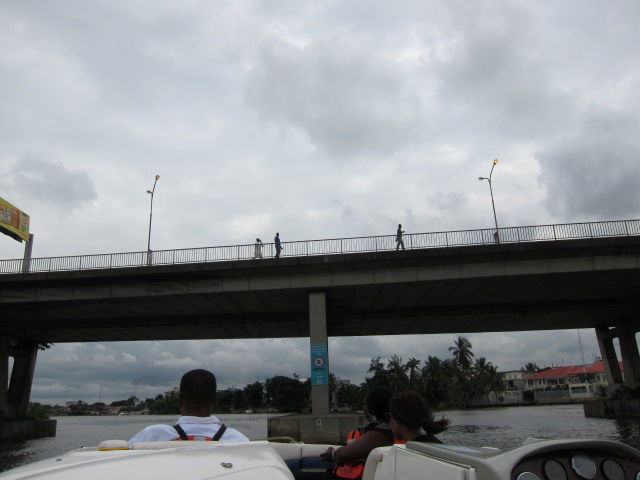
IMG_1285From my experience of the past week, riding by speedboat through some new parts of the city, I eventually realized the potential that has been talked about for so long, by everyone from local journalists to Forbes to local and international politicians. Lagos is the city of the future. Like Lisbon or Venice, the potential for inland water transportation for leisure or for business is huge. Think of gondolas, or kayaks, or just private luxury boats for upwardly-mobile middle class citizens. And like New York, its skyline is ripe for big top class investments in real estate and architecture. We already see traces of it everyday in new construction works (though one hopes that the cultural worldview of the land at least stamps itself, in some way, on the architectural landscape). And what of investments in ferries to move people around in order to clear the roads of so many cars that needn’t be there but serve only to pollute the environment even more (and of course serve the ostentatious needs of their owners).

Well, how do I end this? Friends who read previous posts have advised me to contact the Lagos State ministries in order to share with them my ideas and dreams of a new Lagos where all the possibilities are profitably and usefully exploited. No, I have replied. I don’t have dreams of governing. But I can blog, and detail the things I see. Maybe someone connected to those in charge might see this and begin to think in the right directions. From the history of the new government of the state, it is clear that there is already progress. As citizens, the best way to engage will continue to be giving feedback when necessary, and demanding for more, as the case demands.

Send me your observations at kt@ktravula.com


Worth Nothing: Bring Back Our Girls!

It has been more than three weeks since over 200 girls were abducted at Chibok in Borno State by the Boko Haram terrorist organization. They have not been found yet.

TweetDeck - Google Chrome 582014 75221 AM.bmpMore than three weeks ago, about 234 girls from a school in Chibok Local Government in Borno State in the North-east of Nigeria were kidnapped from school. Only two or so of the girls escaped. The disturbing event has turned attention of the world on my country again, for the wrong reasons. Boko Haram, the group that carried out the attack and took responsibility, have been a present threat in the country since about five years now (and a few have asked why it took this long to get the world’s attention).

Many things have happened since the news of this abduction took place. Concerned Nigerians have forced the Nigerian government to acknowledge the abduction, and finally accept the offer of help from the United States Government. This is a good thing. It might however be too late as intelligence reports have pointed to the likelihood that the girls may have been scattered or sold to different parts of the region. Today, the US special forces arrived in the country. The next couple of days and weeks should be interesting.

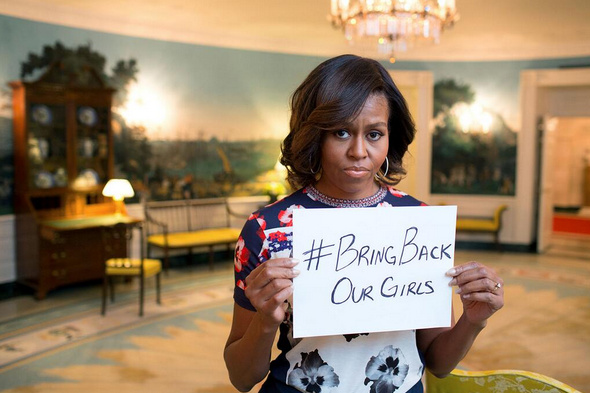
Meanwhile, the social media campaign that forced our inept and unresponsive government to finally say, if not do, something, continues. Here was the first tweet carrying the hashtag. It was inspired by a passionate plea by Oby Ezekwesili, a former Nigerian Minister, at an event in Port Harcourt, Nigeria about a week after the kidnapping (though, in a somewhat sad and predictable twist, ABC News today attributed the organic, locally-generated campaign to a Los Angeles woman who joined in at least a solid week AFTER Nigerians already lit up twitter with the hashtag).

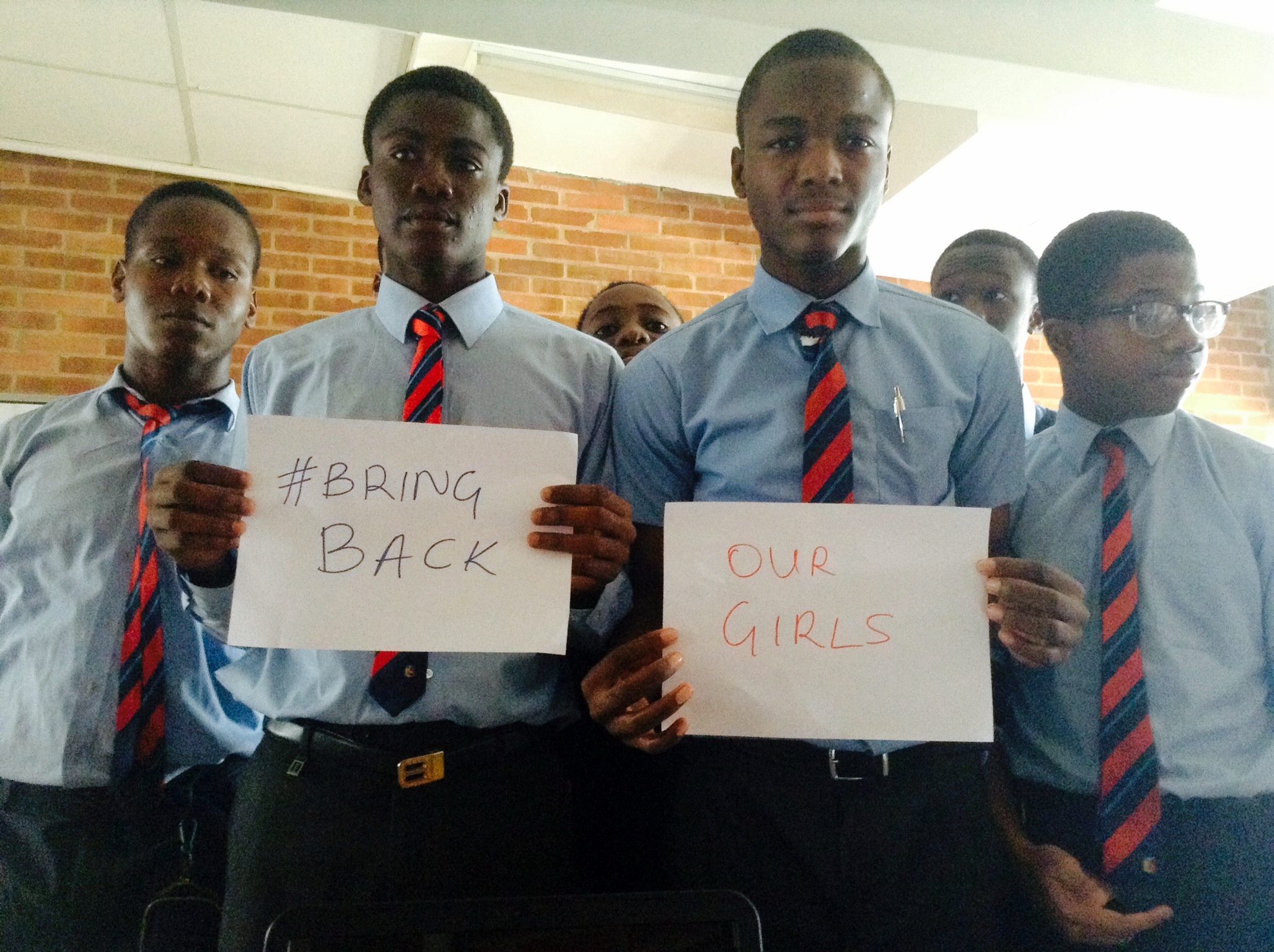
photo (3)As a teacher of school kids of similar age range, the presence (and success) of Boko Haram threatens everything I hold dear. Unfortunately, I live in a country where the government, as properly described by the New York Times editorial is “deeply troubled”, “corrupt”, with “little credibility”, and if I might add, filled with unjustified hubris that cares only for the sustenance of its own political survival. Nothing illustrates this more than the fact that it took foreign, outside, pressure (acquired through the dogged use of social media by concerned citizens with the #BringBackOurGirls hashtag) to even get the president to address the issue or acknowledge its existence after about two weeks!)

There are already op-ed pieces in the nation’s journals calling attention to the possibility that we may never find those girls anymore. Not in one place anymore, obviously. More importantly, not in the same sane and decent state of mind. A very legitimate concern poignantly illustrated in this piece in the New Yorker. Nigeria has a number of deep and troubling issues, top of which is leadership. Every other issue (corruption, terrorism, poverty, decaying infrastructure) has stemmed from this first issue of leadership.

Since the attention of the world is on us now, legitimately, though for an uncomfortable reason, it’s also a time for some self reflection. But those interested in a more nuanced discussion about our expectations from this foreign intervention should follow Nigerian writer Teju Cole on twitter. This is what I mean. The girls may be found. Actually, now with the help of the US Special Forces, it is likely that the trails may get clearer. What kinds of girls are we getting back, however? What would be left of them physically and psychologically, and into which country are they returning? The same one that let them down in the first place? How many more will be killed and maimed, and how do we defeat an ideology that has refused to die?

In the end, it will not just be a Nigerian, but a human, problem. And we should not be deceived as to its quick and clean resolution. I’m not.

To My Wife

It has been a while since I’ve been mushy, but seeing my wife through the physical and emotional burden of being the primary caregiver for our little son has filled me with tremendous appreciation for the role of mothers in the life of children, and as pillars of families. Yes, I provide support in all the best ways I can, but nothing compares to being the sole source of food and care for a tiny being who also happened to have lived in your uterus for about 9 full months. There were the days of crazy cravings of pregnancy, and those involving spontaneous vomiting in uncomfortable places. There were the fevers, and the cramps, and the final days in the labour ward. And now, even after all that, a tiny thing latches onto your body for survival for about a couple of months more. Sleepless nights, nipple sores, worry, and days spent fretting about every new development in the stages of the newborn’s life.

For many, like her, driven and ambitious career-wise, giving up full-time work is just one of the sacrifices to make in pursuit of the having it all. And in today’s patriarchal societies with no paid maternity or paternity leave, it is often a costly trade-off. Maybe if everyone lived in Sweden, for instance (with a reported 13 weeks paid leave for parents of a new child), or Canada (with about 35 weeks of paid maternity/paternity leave, life might be a bit easier for everyone. A shame, in this case, that Nigeria, the 26th largest economy in the world, and the largest in Africa, can’t afford to give its citizens the comfort and peace of mind that comes from paid leave for child care.

This post is to appreciate all the mothers doing well by their families, sometimes at the expense of their own careers of individual pursuits. This post is to appreciate my wife for all her work and dedication to the building of a great, functional, and healthy family.

Four Days a Father

This is a cliche, I realize, that there are no books to teach you about how to become a good father. This is probably true of everything else: being a good husband, being a good wife, being a good teacher, etc. They can only share experiences of others, and suggest coping or improvement mechanisms. The rest – and the most important work – has to be done by the subject himself/herself, through plodding grit.

altAtBD9XUv6HRcOXuPjLM6EWL8H5rPmxl3xdMsqO4XdoO_I’ve been a father for four days, and I don’t know how to describe it. (To be fair, I’m still at an advantage compared to other new fathers as I haven’t set physical eyes on the little rascal that has now come to turn my wife’s breasts into a mammary tap. I was there in the labour room only via Skype, and the first photos I took of him, taken about thirty seconds after he emerged from her body, adjusting his tiny eyes to the concept of light, have gripped me since). It’s a slow but intense bonding experience.

“So, what is it like to be a father?” I’ve been asked.

“It’s the weirdest, beautiful and complex feeling in the world. Here’s a little, helpless, creature that I helped to make, and I must now raise and protect with all I have.” I respond.

It will get more complex after I’ve handled regular diaper change, and a number of sleepless nights. Perhaps a little more intense after I’ve held him in my hands and against my chest for a number of hours.  But it would never ever be less beautiful, like the face of that sleeping child.

We Must Free Our Imagination

For those who haven’t been following the matter (or who didn’t know there was any matter to begin with), the coming out of Kenyan-born writer Binyavanga Wainaina as gay added a personal and human dimension to the culture wars brewing currently on the continent on the wings of religious fervour, bigotry, and intolerance on the one side, and that of freedom, compassion, and inclusiveness on the other.

In this six-part YouTube video series, recorded and released after the coming out declaration was made, the author makes a case for the expansion of the imagination – beyond the limits of the boxes imposed by colonialism, religion, and our own cultural myopia.

Must watch.

Also: Here, a recommended read, from Think Africa Press