Browsing the archives for the Soliloquy category.

Growing up to ’11: A Nigerian Story

My first memories of elections in Nigeria takes me to June 1993 when the biggest political event of my generation took place. Before then, the most memorable memory I had was the death of someone called “The best president Nigeria never had.” That was Chief Obafemi Awolowo who, as the premier of the Western Region (another name for an area that covers all of Yorubaland), brought the first television station in Africa to Ibadan, my hometown, in 1959.

When Awolowo died in 1987, I was only six years old. Not technically though, since the man died around July – I think. My sixth birthday was to be in September. The most memorable thing I remembered from that day was lazing around my father’s living room and watching on television the lying-in-state of the man that came to define Nigeria’s postcolonial political history. The corpse laid in a glass casket. He had his wig on, and a pair of glasses. I also remember someone asking how they intended to inter someone with his spectacles on. I was too young to make sense of it all – the man’s political dominance and influence – but I heard his name a lot. It would take me years of research (reading his memoirs which my father gave me, among many other publications) to know all I needed to know. Father also made a record album in honour of Awolowo a few months later.

Now in 1993, I was much older. I was twelve and in secondary school. Much of my political consciousness came from rhetorics of elder brothers and their friends, and the media. MKO Abiola had promised to abolish poverty – sort of like promising to make it snow in Nigeria. When his election was annulled by the military dictator, and riots broke out, school was closed, and students spilled to the streets in protest. University students led protests and came to get us out of our schools. We all spilled in the street and fought with police and military men. It was exhilarating for me. I didn’t have much political consciousness to have been able to take sides, but the crises charged me up. We were tear gassed, and shot at. We walked great with friends and fellow rebels from school back home to the embrace of worried parents. It was the best of times for a curious almost teenager. It was also the worst of times for the country. A year later, there was a change of government, from one military dictatorship to another, and darkness descended on the country.

In 1998, I remember exactly where I was when I heard that Sani Abacha was dead, and I didn’t believe it. He had after all survived many rumours of death. A day before, Pope John Paul II had just left Abuja after a state visit (and also to plead for clemency for the lives of a bunch of military men sentenced to death for plotting a coup d’etaat.) The Pope wore white. Abacha wore black. They were both was on the NTA network news and Abacha looked as sick as Tell Magazine of a few weeks earlier said he was, but he looked strong and resolute as well, and mean. But he died. A few hours later, all the suya sellers were nowhere to be found. Their stalls and sheds had been destroyed by happy citizens giddy to be finally free from military dictatorship. Exactly one month later, MKO Abiola, the presumed winner of the election had died of poisoning after meeting with Kofi Annan, the Secretary General of the United Nations and some other “American” visitors. Conspiracy theories abound, but by the end of the year, it was clear that the campaign message “Hope” from 1993 had gone forever.

And 1999 came, time for the new gentle looking military man to go. He had set machineries in place for democracy to return. I was out of secondary school. I was teaching in a primary school in Ibadan earning the lowest payable wage for that position and qualification while I waited for news of my admission into the University. The candidates were Olusegun Obasanjo (a former military ruler and a UN/Africa statesman), and Olu Falae, an economist: both Yorubas chosen to appease the region after the 1993 annulment and subsequent miscarriage of justice. The South-West voted for Falae. I wasn’t eighteen yet, so I didn’t vote, but I hoped that Falae would win. He didn’t. Obasanjo won from votes from all the other parts of the country. Again in 2003, Obasanjo won again for the second term. In 2007, he handed over to Yar’adua whose deputy was Goodluck Jonathan. Yaradua died last year in Saudi Arabia after a protracted illness. Goodluck Jonathan took over and has since consolidated his hold on power. I am here in the United States as a graduate student.

Last night, as I listened to the result of the votes in the primaries of the country’s largest political party, I was reminded of the memories of my participation in the politics of Nigeria: the sweat, the riots, the rhetorics, the fiery but always independent media, and the national obsession with the figures and players. It isn’t “Hope ’93” all over again, because now I can discern and see through songs and slogans of “MKO: Action! Abiola: Progress!! Na im be the hope for better tomorrow!!!” or Abiola=good and Tofa=bad etc. The coming election that will likely find me in an American class discussing language and society will be between candidates that we hope to get a chance to question, and examine. They will get to power again through our votes, but for the first time, I hope to get a chance to take them to task on what they would do: about Jos, about electricity, about health and higher education, and about a better environment for the people of the Niger Delta and other ethnic minorities. I have come of age, and so has my vote, and I am not giving it away for free, if I’m giving it away at all. I hope that there’d be televised and online debates as well as town hall meetings to question the candidates and ask them how they plan to move the country forward.

I’m proud of the progress taking place in Nigeria today and I hope that there would be public televised and online debates to listen to the candidates as well as town hall meetings to question them as to how they plan to solve problems. If I could go back in time, what a pleasure it would be to relive those experiences again, rebelling, challenging authorities and paying my dues of youth on the streets of a country that I love.

Subzero in the Midwest

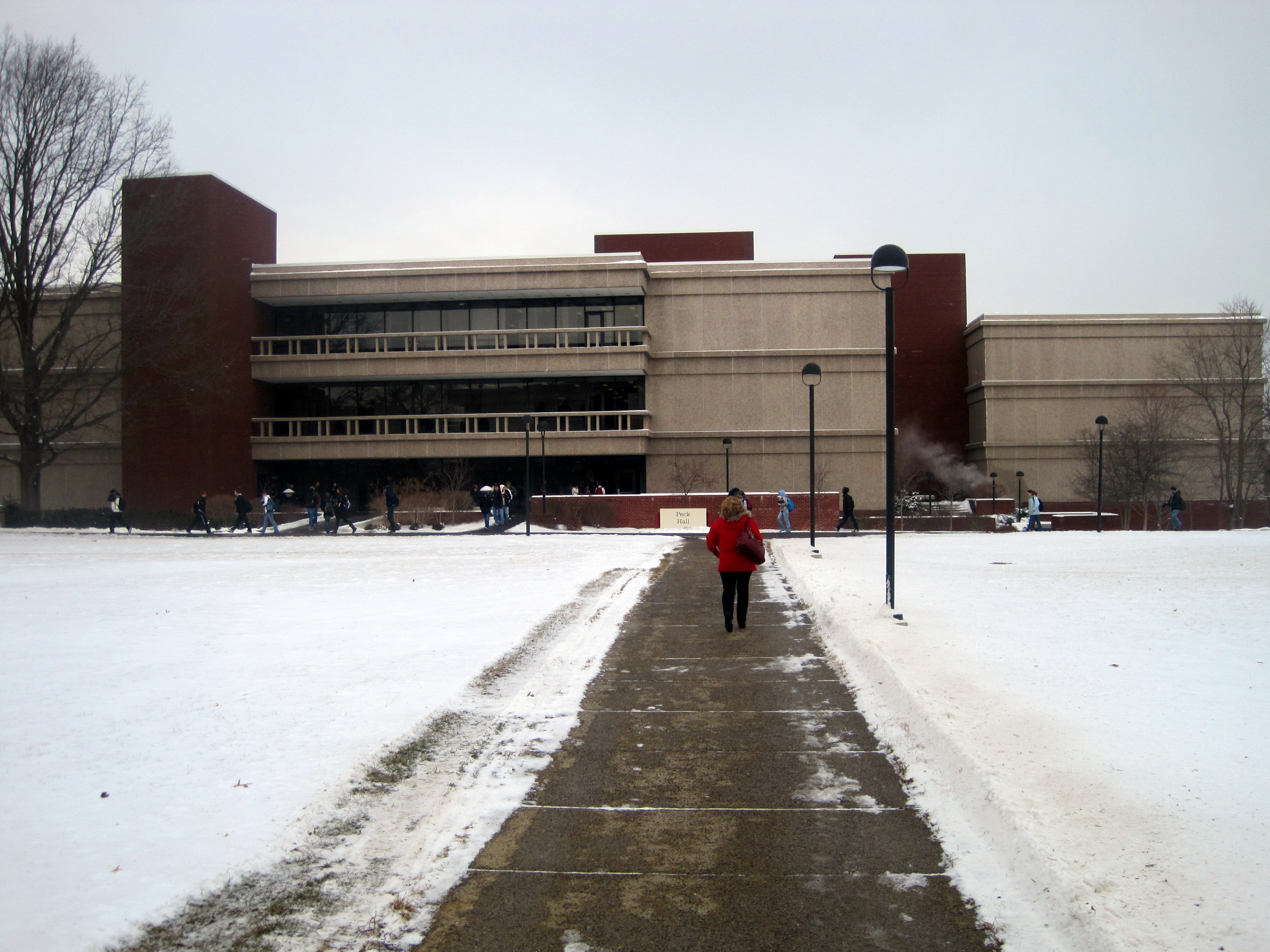
This is how to freeze: move from a tropical town in an African country to live in a part of town in America where four inches of snow and (up to) minus ten degrees of cold is never enough to close the school even for one day. Have a series of clothes that will look a little weird when stacked upon another in a fashion meant just to defy the weather. Have a series of apartment mates whose idea of a hot temperature on the house heater is different from yours. Have classes that take place in the evenings when it is usually the coldest. Lastly, well, be thin enough to let into your chest all the cold air that blows. Be restless. Resent all the fatty American-style food that, even though may be junk – sometimes have what’s required to battle cold: fat.

The result is usually the same: a week or more of terrible flu, discomfort, and bed rest. And after a while, and plenty of fluids, and sometimes after breaking one’s promise never to dabble into American medication for worry about ever present contraindications, one is back up again. It also helps to have lost one of one’s pair of gloves.

PS: Clarissa seems to have had it worse than me. Please give her some love.

On Jos, Again

This is how I usually know that something bad has happened in Jos again. My stat counter starts showing new readers coming in after searching for phrases like “Jos killing” or “Jos crises” or “fight in Jos” or “hausa and fulani”.  It’s heartbreaking. Every day, new figures of people killing each other makes it even harder to grieve without asking if there’s not much more we can do to prevent future occurrences.Government won’t solve it either so we’re here wringing hands.

I have written a few posts on my thoughts on Jos, my visit to the town in July 2010, and a conversation I had with a few citizens while there. We have even raised money to send to the victims of the first major wave of attacks last year. Now, all of it seems so grossly inadequate to deal with a deteriorating state of things in a once peaceful place. Security officials are complicit and nothing seems to be working. Greedy politicians are busy slugging it out with themselves for the ticket to the next election while compatriots reduce themselves to ruins. Plateau has turned into a state of nature, and yes, it does have fanatical religion tied to its root cause.

So what needs to be done? Another state-of-emergency? A dialogue among all stakeholders so that they find a permanent solution to the conflict? A UN intervention? More guns, so that when each side is armed, there will be no monopoly on violence? Or a continued preaching of love so that everyone gets along? Do we need the African Union? I’m open to ideas because I haven’t come up with a satisfactory one.

Language and Oversimplification

What is happening here? In one or two instances today during a chat conversation, I have used the word “color”. I think I might be losing my identity. This is exactly how it begins: colour becomes color, travelling becomes traveling, aeroplane becomes airplane, lift becomes elevator, boot becomes trunk and mum becomes mom. It is subtle, it is charming, and in spite of my wall of protection built against such influences as these I am afraid that resistances are falling and I am fighting it as hard as possible. I have already given in to the problematic writing of dates with months first and days later (even though when it is not specified as MMDDYYYY, I still relapse into old habits, and feel good about it.

Now one day, maybe in the days of my descendants, English language as we know it will be dead. It will die different deaths in different parts of the world. In Nigeria, it might evolve through pidginization and more linguistic autonomy into whatever fits the political and ethnic situation of the country. In America however, I am very sure of the form that the writing will take, thanks to the internet, and media glamourizatoin that make it fashionable to invent new ways of expression. A few months ago, I started making a list of some words that have evolved already, going by the ways students use them. So far I’ve come up with these:

Than/then. e.g “I’ll make more money then you…”. This is a classic case of word spelling changing to suit the pronunciation. Too/to. e.g “I love you to.” All you need to do to see examples of this is to go to any popular website and read the comments. When did these changes happen though, and why didn’t I get the memo? The word “definitely” has also been variously spelt as “definately” while I’ve read many instances of “Your a fool…” on Facebook and everywhere else. Language tends towards simplification, linguists believe, and this makes sense. Humans will always look for more ways to reduce the efforts they put into speaking and hope to convey even more information in very little time. “You are” becomes “You’re” and now “Your”. In the nearest future, we might just have to write it as “Yor” to convey the same sense. e.g “Yor an idiot to.” So far, it is still English-sounding, if not totally English-looking.

Now, search me. I do not intend to let go of the “u”s in my “colour”, “labour”, “honour” or “rigour” just yet. Neither do I intend to adopt chat-style lingo of the just emerging generation. If that leaves me as an exotic specimen of humanity just a few years from now, I will just have to live with it , but I look forward to more mutations of the language in the future. “When you are born, you get a ticket to the freak show. When you’re born in America, you get a front row seat”, says George Carlin. Now I know what exactly he means. As a bilingual person, I have an even freakier experience of the language evolution. In some other parts of the internet today, speakers of Yoruba who can’t be bothered about sticking to its rules of spelling write were (mad person) as “wayray”, maalu (cow) as “maloo” and joo (please) as “jor” in order to convey the sound as well as the sense all at once and without having to bother with tone marks. It is a system that seems to work as planned, and little by little, the two languages that I speak with some measure of proficiency evolve through a series of interesting matrices into each other. In a few decades now, it will be interesting to see how both of them have fared.

In a related but not so similar development, the text of Mark Twain’s two masterpieces The Adventures of Tom Sawyer and Adventures of Huckleberry Finn are now going to be rewritten to replace the words nigger/negro that were used to call attentions to the reality and evils of slavery in the book with the word slave, among other “corrections”. While they are at it, many commentators have also suggested that they go ahead and re-write Alex Haley’s Roots, and Martin Luther King’s many speeches because of the simple use of words that now would be deemed shocking, notwithstanding the context in which they were used in those texts, or their significance as historical materials. I mean, not even Adolf Hitler’s Mein Kampf – which could be deemed an actually evil text would warrant a revision for any reason as this. But what do I know. America always springs it surprises when one least expects. Or maybe it’s not America but humanity’s tendency to sometimes take itself too seriously to examine its own hubris.

A Nigerian Journey

Those interested in what Christmas looks like in Nigeria should read this evocative piece by Lauren Halloran. While you are at it, check out Kevin’s description of typical Nigerian hospitality in his “Then Nigeria Happened” blog post. Faraway in the American mid-west away from the warm tropics of Western Nigeria, all I have is the perception of others of my (perhaps altogether imaginary) homeland. How do strangers see us? What has changed since all this years? What are the things that I – as a citizen of that land – have taken for granted and have assumed as part of the normal part of the landscape without questioning? What are the new features? What do I miss? What do the visitors see?

In November, I read another blogpost about a man who was going through Africa on a bicycle from London to Cape Town. Along the way he passed through many African cities and he wrote about them. The one that interested me the most was obviously his post about entering Nigeria for the first time. For someone coming with a British eye on a bicycle, what does he see? How does he see it? More, how interesting is it to travel through such a large continent on a bicycle? What was the desert like? What of the shores and the mountains? What about the weather?

The prospects of travelling opened up to me the first time I got on a bicycle – the small BMX-type that I inherited from my brother when I grew tall enough to get on it. How far will one go? And what lay out there? The idealistic cravings of those adolescent days have given way to the reality of cars, aeroplanes and internet pages, and we live every day through the eyes of others. Part in delight, part in envy for the authentic realities of their journeys and the occasional weather-conditioned limits of mine, we watch with required fascination. The world is not so big after all.