Browsing the archives for the Poetry category.

On “Songs of Myself” by Tanure Ojaide

Songs of Myself (KraftGriots, 2016) is a collection of poems by Tanure Ojaide. It is the most personal of the three on the shortlist of this year’s Nigeria Prize, the most introspective, and also the one most (even if inadvertently) expressive of the melancholic aspiration I had prematurely expected from Ogaga Ifowodo’s A Good Mourning because of its ominous title.

Ojaide has published poetry since 1973 and has published twenty collections of poems many of which have won prizes, local and international, like the Commonwealth Poetry Prize (1987), All Africa Okigbo Poetry Prize (1988, 1997), the BBC Arts and Poetry Award (1988), and poetry awards of the Association of Nigerian Authors (1988, 1994, 2003, 2011).  The new work is approachable and deceptively simple, like thin ice over a frozen lake. More on this style later.
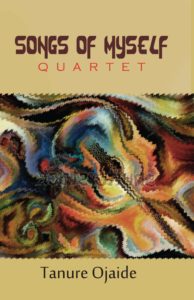
The title of the book invites us to approach the collection as work about the author to varying degrees: songs of myself. But in the foreword (which I had personally considered superfluous in a poetry collection, except in a notable instance like in The Heresiad, an exception which I’ll explain in my review of the book), the author explains his approach as incorporating “some of…aspects of oral poetic genre”, particularly of the great Udje poets of Urhoboland, which “deals with self-examination and the minstrel’s alter-ego” in the work as a way of attempting to know oneself with “self-mockery that justifies mocking others.”

This intention changes how I eventually approach the work, not as Ojaide himself recounting his thoughts and opinion on a number of relevant political and social issues alone, but as the voice of an invented poet-persona using a traditional poetic form to interrogate himself and thus the society. The Udje, as he explained it to me in our YouTube interview, are traditional Urhobo griot-poets who work carry social and political significance, and are present as conduits for commentary on the public condition.

So what is this condition? In the book, it is both personal and societal. The poet is both an old man (Gently; page 14) and a young adult (We Have Grown: 155). He’s both the country (Self-Defense; 91) and an individual (On My Birthday; 26). He is a happy observer of the passing of time (For The Muse of Peace) as a cynical record keeper of slights and injuries (Masika; 47). He’s a parent (They Say My Child is Ugly Like a Goat; 107), and a son (Family Counselor; 85); a hopeful lover (Secret Love 147) and a self-critical poet (Wayo Man; 87). The issues addressed are as disparate as they are familiar. Nigeria, the country and the government, is an ever-present villain in most, as are other social issues which the author addresses with sardonic candour.

If I were to ask my people

what they wanted the most,

they would definitely choose money over every other thing,

iincluding good health and peace

that I know there’s a dearth of

because of oil and gas everywhere

that by right should bring us wealth.

(Page 132)

From afar, especially with a misconstrued intention of the writer’s narrative angle, most of the poems appear conditioned into a tried-and-tested style of political and social protest poetry through this staid and resigned voice. But on close contact, especially against the background of its traditional dimension of style, they reveal themselves as both original and intentional, carrying an unflappable tone couched in the simplicity of cynicism. Who is a poet – I ask myself a few times – and what makes a good poem or poetry collection? Is it a successful deployment of inventive gymnastics of modern conventions that appeal to sophisticated palates, or is it an honest recounting of home-grown truths directed at a selected audience even if in a least colourful, or less popularly accessible voice?

So many questions I can’t answer.


After all the birds fall silent in the delta,

how can there be Rex Lawson

with the polyrhythm of weaverbird, sunbird,

carpenter-bird, solos and ensembles?

(page 134)

The question is important in judging the language choice that Ojaide deploys in this work which many times doesn’t read as elevated as one typically expects of offerings of this kind of ambition. Against the background of his stated intention, however, possibilities can be suggested of this character of theirs being defined both by the limitation of translating the cultural and linguistic cadence of Urhobo poetry into English and, less charitably, the author’s helplessness in the face of this challenge. The answer will be resolved by the judges of the Nigeria Prize in a couple of weeks.

When I asked him about his use of language and the idea that the use of English as a conduit for African poetic traditions can be a limiting factor at best and a catalyst for the extinction of those languages, he was less acquiescent. “You must know that there are many Englishes,” he said, to which I say yes, as long as each different variant is able to successfully carry to fruition the stated intentions behind its use, and reach new audiences. In this case, I am not as sold as I should have been, not about the homage to traditional oral poetry, which other authors (and perhaps this one in previous works) have done to great success; but about its seamless and effective deployment. Maybe I have been spoilt.

In many of the poems, the writer includes footnotes, like in the first poem on page 15 where he explains that Dede-e dede-e is an “onomatopoeic expression of ‘gently’ in the Urhobo language.” Of this incursion, there are strong arguments to be made, especially in this work, for doing away with them totally. Footnotes are often distracting, and – to return to contemporary arguments about the audience of our literature – needless. Those who value the work enough to engage with it will do the work needed to unlock much of its secrets. The counter-argument, of course, is that a reader like me who is approaching the work on short notice for the purpose of a review would not have figured out that Aridon is a “god of memory and song/poetry among the Urhobo people” (page 17). That same argument, though, fails in the face of less justifiable ones like “NDDC” on page 133, or “ICU”  on page 24. If I did not know that ICU meant “Intensive Care Unit” either from the context of the work, or from having lived in modern society, then the writer hasn’t done his work or I need to return to school.

These kinds of conflicts show up in other places too, springing up the question of who exactly is the poet’s audience in this case. Since his last five books, Ojaide has started publishing his work first in Nigeria before re-issuing them with foreign publishers, a reversal he said was conditioned by his renewed sensitivity to his role as a poet primarily addressing an African (nay, Nigerian) audience. The justification for this almost “reclusive accessibility” of his literary voice will depend on those to whom the work is addressed or the successful domestication of the reader’s mind to the traditions from which the experiment emerged. It could be that the author isn’t “speaking English” at all, but Urhobo, just barely accessible to us through a shared common lexicon.

They mock me because of my child

whom they say is ugly like a goat.


Don’t mind them who see nothing good.

My pickin fine pass goat.


Where are the mockers when my child

fetches water and runs errads for me?

(page 107)


There are about 91 poems in this collection, making it the bulkiest of the three on the shortlist. In four different sections, the poet bares himself to the world like a local minstrel, under different guises and situations, in an outlook that is mostly dark, self-critical and confrontational in equal parts. The subject matter, a look at the world through a personal self-reflection, is certainly an important addition to current social and political conversations. The language is simple, accessible, and direct. It is a collection that anyone can pick up and enjoy. The prolific nature of the writer’s career and the breadth of this work’s take on Nigeria and Africa’s social and political issues makes it an important presence in the shortlist. And even if I will quibble with the inclusion of some of the poems there for not being strong enough to represent such an accomplished poet on such an important list, I’ll still rate Songs of Myself as an important peek into Ojaide’s poetics, experimentation, and voice. The potential for impact of this type of language and style direction, however, will be subject to practical, and more verifiable, manifestation.

_____

My interview with Tanure Ojaide can be found here. Find a link to the previous reviews here.
NLNG 2017 Literature Prize Interviews and Reviews

As promised, over the last week, this blog has featured reviews of the shortlisted work on the 2017 NLNG Nigeria Prize for Literature (Poetry), as well as interviews with the shortlisted writers, and the prize coordinators. You can now read and watch them here, below:

Monday, September 25, 2017: A Review of A Good Mourning” by Ogaga Ifowodo

Thursday, September 28, 2017: A Review of Songs of Myself by Tanure Ojaide

Sunday, October 1, 2017: A Review of The Heresiad by Ikeogu Oke

Monday, October 2, 2017: Conversation with Professor Ben Elugbe, member of the advisory board of the Nigeria Prize (video)

Tuesday, October 3, 2017: Conversation with Ogaga Ifowodo, author of A Good Mourning (video)

Wednesday, October 4, 2017: Conversation with Tanure Ojaide, author of Songs of Myself (video)

Thursday, October 5, 2017: Conversation with Ikeogu Oke, author of The Heresiad (video)

Friday, October 6, 2017: Excerpts from each of the collections (video)

Sunday, October 8, 2017: Conversation with Kudo Eresia-Eke, General Manager, External Relations for NLNG (video)

Monday, October 9, 2017: Prize Announcement/World Press Conference.

Update: October 9, 2017: Ikeogu Oke’s The Heresiad is the winner of the 2017 Nigeria Prize for Literature. 

The intention behind this effort was to help engage the community of writers and give visibility to each year’s shortlist as a way to better improve the prize through conversations and constructive criticism. The end game, of course, is the hope to stimulate an improved culture of reading and appreciation of literature around the country.

____

Follow us on twitter at @ktravula.

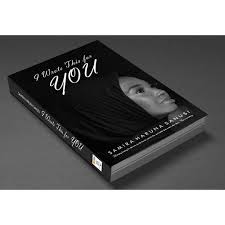
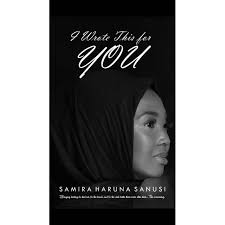
“I Wrote This For You”: Mapping Triumph in the Midst of Pain

Samira Sanusi’s new poetry collection is a map of pain. Line after line, in her book I Wrote This For You (WRR/Authorpedia; 2017), the author traces a tough path through difficult memories like a hot iron through wax. It appears like an uncomfortable experience at first, one with a rebound of traumatic recollection. But what emerges, for sure, is triumph. Survival.

I first met Sanusi in Kaduna at the maiden edition of the Kaduna Book and Arts Festival (KABAFEST) where she was a guest on a panel discussing the issue of sickle cell anemia (full panel video here).  She had written a book called S is for Survivor detailing the path of her healing from a sufferer and victim to a survivor and warrior. After many years of suffering through medical trials, twenty-eight surgeries, and other travails, she was finally healed when a bone marrow transplant turned her blood from a sickle cell blood to AA. She is now the President of the Samira Sanusi Sickle Cell Foundation (SSSCF), an Abuja based NGO.

Until then, I’d never heard of the idea of a blood transplant changing one’s genotype. But I haven’t followed the advances in medical science in this regard. So the revelation, as well as the heartbreaking tale of her survival, was both thrilling and heartwarming. I wanted to read her book. In this collection, Samira opens up in the best way she knows how: in words, mostly written to self, documenting the painful process of this journey to survival and all the attendant doubts, setbacks, despair, joy, and hope.

I finished reading this book a couple of weeks ago but I didn’t have the time to put down my thoughts about it, many of which I wrote down in a notebook I’ve now had to dig out from under a pile of other books. Here, a few of my favourite and memorable lines.

“That you have seen worse, doesn’t

mean the hell I’m seeing is a second-hand fire.

My worse is valid, even

when your bad is worse than mine.”

This came at the beginning of the book which – to my embarrassment – I’d initially assumed to be another prose work from the author. Nothing on the cover prepared the reader for poetry, so the words that came at me from the opening pages seemed, at first, like the preface to something else until they led one into each other throughout the book. It would appear that she had been documenting her thoughts and feelings about her pain and process throughout her encounter with the sickle cell trauma.

“Keep your truth away from me.

You don’t know what lies I have to tell myself

to sleep at night.”

But don’t expect a clean arrangement either. The words flow into each other sometimes like aphorisms, separated by asterisks or other special characters. At other times, they appear as chapters carefully grouped together in a specified theme. But there were no chapters. Only verses. We walk through the lines as though experiencing the process and pain of the writer’s lived experiences.

Who she was addressing wasn’t always obvious, but that was never a prerequisite to understanding or enjoying what was offered in the most private of words. In baring herself this way, the author invites us to see her not as a perfect survivor but one who had only persistently endured, with her head held up high, but with a few notable scars to show.

“She was so beautiful, the way

She kept people from falling into

Pieces as she broke apart.”

In the book are several themes which sometimes morph into each other, even in contrast. There is self-loving sometimes with self-loathing. There is gratitude as much as bewilderment, there is surrender and sometimes defiance.

“If you ask me about my dreams,

I would tell you to watch me,

for I am living them.”

Sometimes, she talks to herself, either in pity or in a berating tone.

“Looking into your eyes

I can tell you went to war

And did not come back with yourself.”

And sometimes with a challenge:

“You must come back to yourself

to find you waiting on the couch,

hoping to kiss and make up. Begging

for another chance at self-love.”

In other matters, she hints at love, lust, rejection, and romance:

“The first time he touched me

I yelled ‘Don’t hold my hand and don’t touch my heart!’

He asked, ‘Who happened to you?’

‘Your access pass to come in and save me so they can call you

Hero is rejected!”

Feminism? It sure seems so. Yet a certain religious conservatism also present underneath the soft and vulnerable persona the author presents in this book seems to sometimes intrude to confuse us as to whether the narrator is a helpless character in a patriarchal space or a defiant voice against it. Evidence of both can sometimes be found.

“Whose idea was it to look

at a boy’s eyes, filled with tears

and tell them men don’t cry?”

And on another…

“Dear Arewa woman
You’re not just somebody with a body
You’re body, mind, heart and soul
They’re all yours to share, as you please.”

I enjoyed reading the work in all its rollercoaster of emotions, aspirations, reflections, and ruminations.

Parts of the book do sometimes let go of its aspirations to poetry and spread out in plain prose, towards the end. But even in them are relevant nuggets of inspiration directed at an imagined audience of readers, and sometimes at the writer herself. The result is a book that both defies categorization as much as it defines it, expanding the possibilities for artistic self-reflection. I have not read many books of poetry from Northern Nigeria. But if Samira’s offering is any indication of what to expect when vulnerability and a questing mind meet at the junction of a page of poetry, then we are in for a good time.

The irony of enjoying work written in pain isn’t lost on the reader of course. But the writer never intended it as an invitation to pity. Rather, it is a celebration of triumph, survival. Each verse in the collection, whether intended to please, to stimulate, or to instruct, comes across in a form that also delights in soluble bites. I look forward to reading more from this author, this warrior, in whose survival we have also come to discover beauty, grace, and strength.

Three Writers Set for Artmosphere Lagos Reading

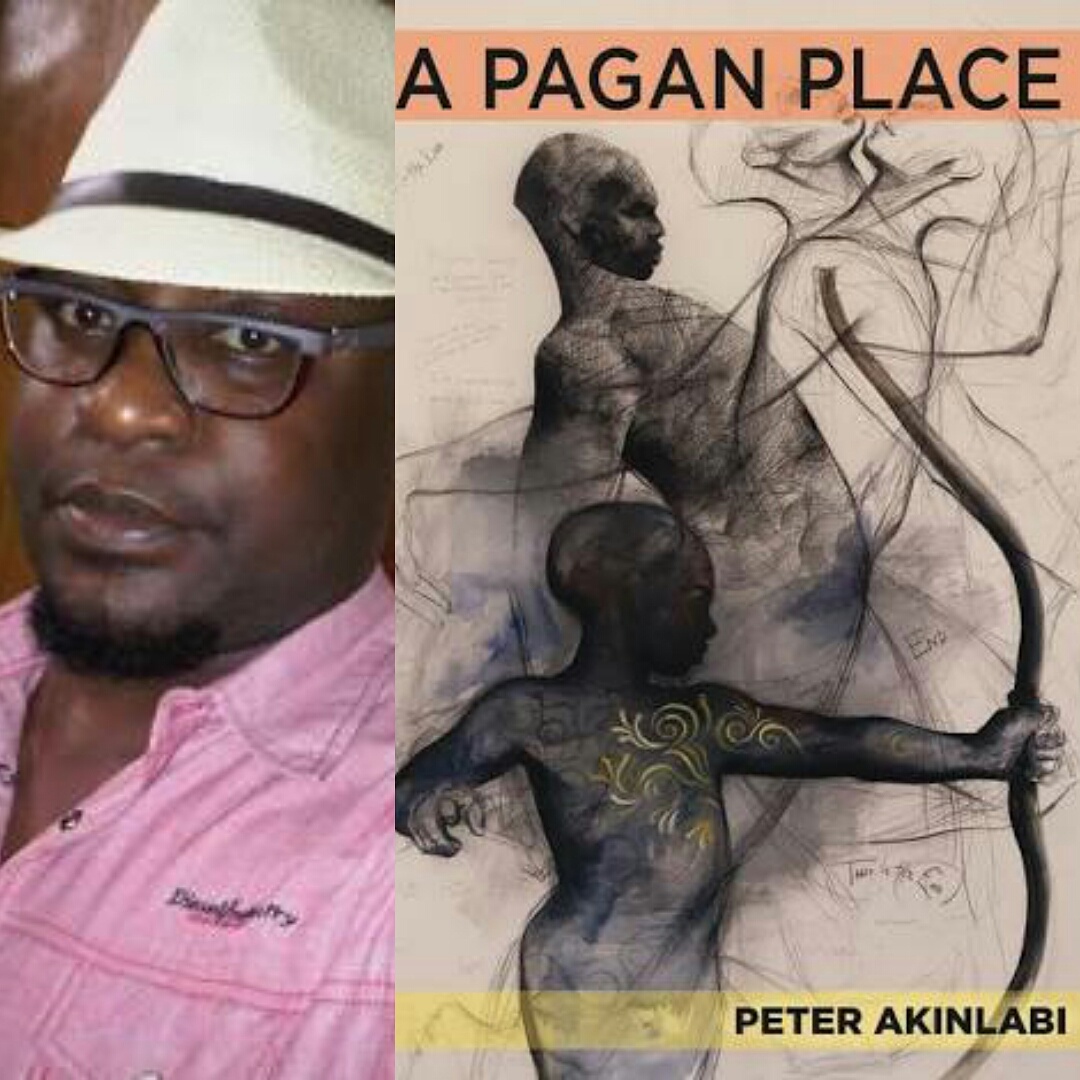
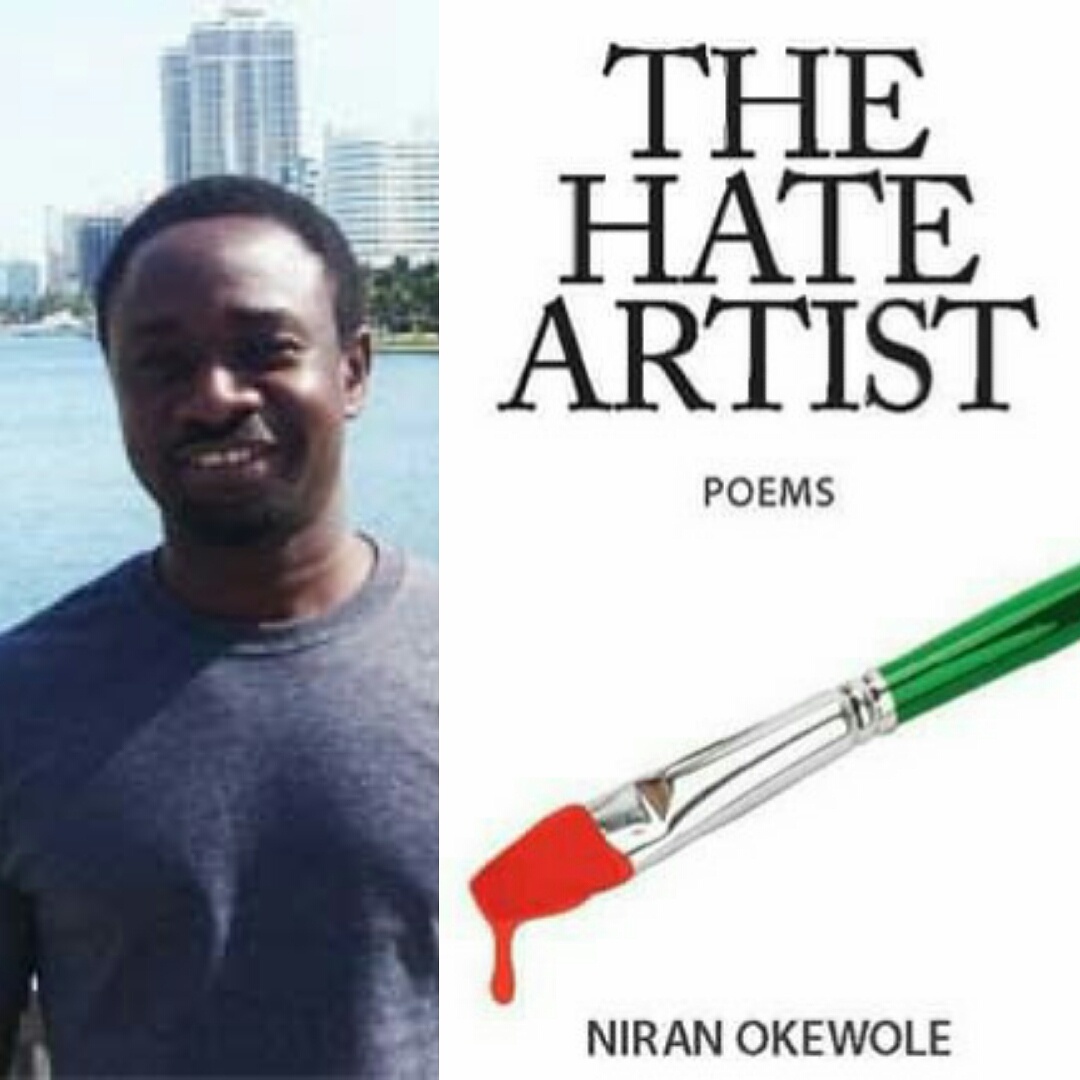
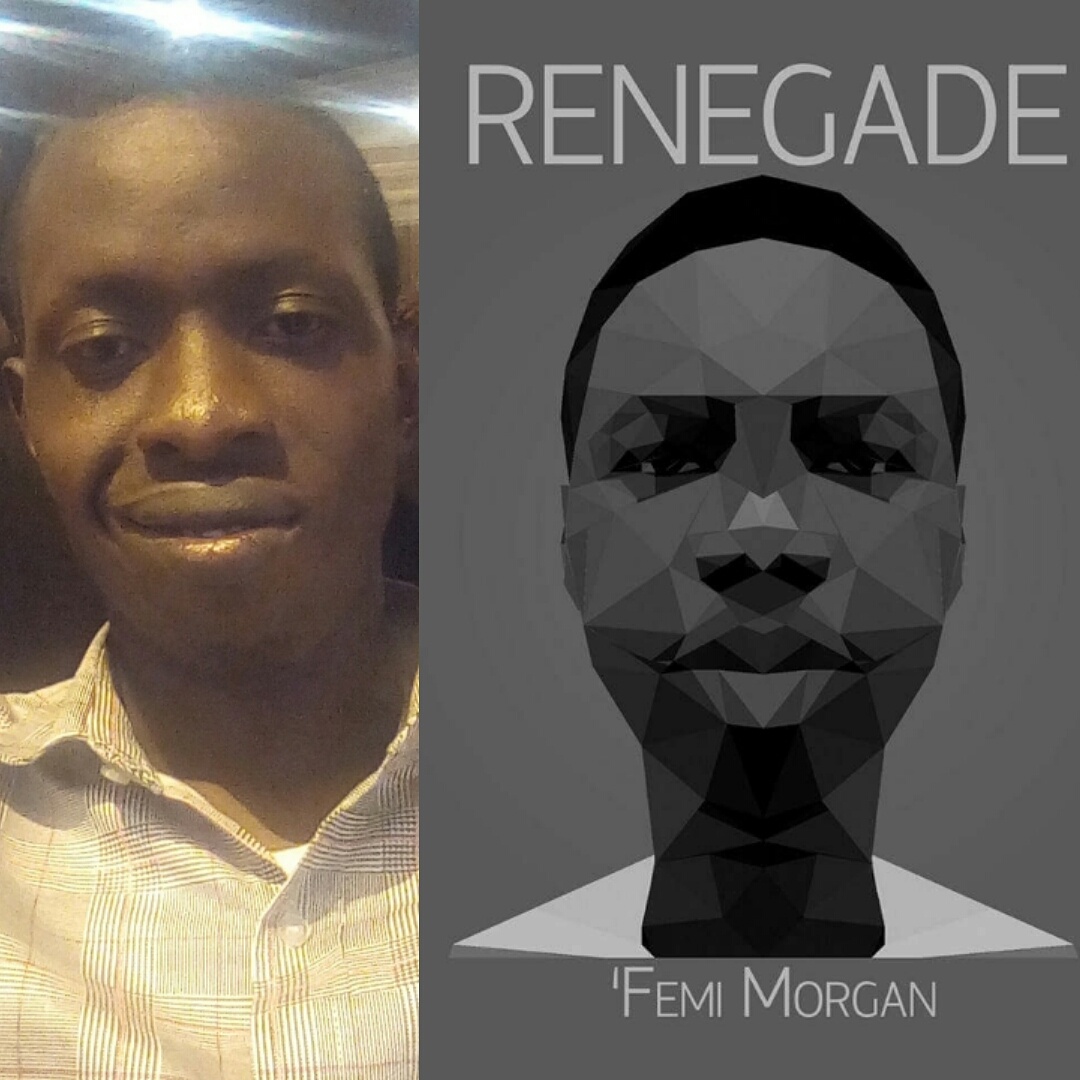
IMG_20160829_155222Artmosphere, one of Nigeria’s leading culture, literature and arts events, will be hosting three poets in the city of Lagos. The event will involve poetry readings and conversations from the myriad themes written by the poets. Poets, Peter Akinlabí, winner of the Sentinel Quarterly Poetry Competition and author of the Akashic chapbook, A Pagan Place, Níran Òkéwọlé, winner of the Muson Prize for Poetry and author of The Hate Artist, and Fẹ́mi Morgan, arts curator and author of Renegade. The Artmosphere Lagos event is in collaboration with Khalam editions, an imprint of an avant-garde publishing house, Khalam Publishers.

IMG_20160829_155039It is scheduled for 2pm on Saturday, 3rd of September, 2016 at the Patabah Bookstore, Shop B 18, Adéníran Ògúnsànyà Shopping Mall, Adéníran Ògúnsànya Street, Sùrùlérè, Lagos, Nigeria.

The poets were chosen for their philosophic disposition to persona, racial and global discourses, for their penchant to write outside the orientation of the popular style and artistic crafting. The book parley will be a gathering of Lagos residents and individuals who are interested in open conversations about art, social, political and cosmopolitan issues that affect our lives.

IMG_20160829_155420Artmosphere has curated literature, arts and culture events in Ibadan for the past five years. It has hosted writers, poets, philosophers, social and culture activists in the country, like Níyì Ọ̀súndáre, Tanure Ojaide, Sam Omatseye, Victor Ehikhamenor, Túndé Adégbọlá, Efe Paul Azino, Aiye Ola Mabiaku, Jùmọ̀kẹ́ Verissimo, Fúnmi Àlùkò, Ìfẹ́olúwa Adéníyì, Saddiq Dzukogi, Ahmed Maiwada, amongst others. It has also organized the Writer’s Notable Series, occasional readings in honour of exceptional writers and creative mentors in Nigeria, which hosted Tádé Ìpàdéọlá in Lagos, in 2013. Artmosphere Lagos will offer the Lagos public the arts, culture and literature conversations that has become a staple in the city of Ibadan.

For Ọlákìítán (April 30, 1984 – May 31, 2016)

Laitanxxby Yemi Adésànyà

“I will see you when I return”, I said

But the reply came as an empty sound

Followed by a reverberating crash

And simultaneous burst of love-laden eyes

Caked over a closed retina of time and reminiscences,

Congealed bonds that neither bleed nor budge

Baked over thirty-two fleeting years in a familial furnace.

Six green bottles on the village wall

One fell to the horror of a purblind audience

Sending shreds of tears through transatlantic waves

Mouths ripped by ripples of shock

As phones ululated in mournful ring back tunes

Disbelief became the punctuation for grieving souls

But the rainbow was already sealed in an obdurate cask.

Raw hearts flickered and shivered

In muted sopranos and suppressed throes

Rising to a crescendo of idiomatic anguish

As the creator chose to wield his pleasure wand

On the eve of an otherwise joyful birth.

Life began before we saw it emerge

A fair maiden in head-turning pageant strides

when we met her with a full possessive embrace.

Laitanx

Nobody warned us that our hold was too snug

We wouldn’t have heeded anyway

And together, we journeyed through laughter and storms

There is no earthly cure for this riling wound

Tears are too slippery for any tangible grip.

No support holds true for our flailing souls

Words fall flat, too dry and blunt,

Drained to ashes of their ephemeral meanings.

Prayers have become snails, crawling to heaven.

Will they return to us in time with a consoling riposte?

This loss is fine sand on the clean Gambian beach

UbiquitousLaitan1

No matter how boxy your shoes are

It permeates

Deep inside the craters between your soul’s toes.

Far away on a smothering homeland bed

A bright star had dropped from an impossible height

Piercing the earth with its sharp, stringent, edges

Sending particles flying into the eyes of all

Who watched its illumination.

We could only look on in helplessness

The ship already sailed with our prized possession.

Larceny! We cried on top of our frail lungs

Then we were told she wasn’t ours to keep

We can only hold on to memories now;

Those are safely stashed away

Where no bandit can snatch them.

Poetry will not heal us of this loss

Tomorrow will surely be celebrated in a wan frock

Till we meet again on the blue skies of dreams

One-sixth of me died with Mayowa in May.

________

Ọláìtán Máyọ̀wá Adéníran (nee Ọlátúbọ̀sún) is my only younger sister.