Browsing the archives for the Opinion category.

Culture Shock

This is a guest-post by my cool and brilliant colleague Professor of Spanish language and literature who also blogs as Clarissa on issues of feminism, literature, journalism , immigration, politics, and her love for the Kindle. 🙂 Originally from Ukraine, she migrated to Canada, and she got her PhD at Yale University in the United States. She has recently taught at Cornell University before coming over to our prestigious SI University. Hers is the first in a series of guest blogposts coming on this blog in the coming weeks. Thank you Clarissa for the post. Find her blog here.

____________________________________________________________________

When I was 22, I emigrated from Ukraine to Canada. I was fully prepared to experience a massive culture shock but none came. Sure, it took some time to get used to the idea of a credit card and a check-book, realize that a bus driver doesn’t give out change and there is no need to negotiate the price of a ride with the cab-driver before getting into the cab, and figure out why maple syrup can be poured on bacon and eggs. The process of learning these small things was really fun and caused me no shock whatsoever.
Five years later I decided to go to graduate school in the United States. Having lived in North America for a while, watching American TV and reading American books and newspapers, I expected even less of a culture shock on this change of residence. I was only moving to Connecticut, where the climate and the way of life were supposed to be pretty similar to what I had gotten used to in Canada.

Boy, was I ever wrong. A massive culture shock hit me immediately after crossing the US border and remained with me for years to come. It took time and effort to understand this new reality, learn to like, and eventually even love it.

I the US I discovered a deeply divided society. Glaring class inequalities, the likes of which I never saw back in Canada, racism, religious fanaticism, gender inequalities, economically devastated areas with the kind of poverty I never saw even back in Ukraine, crime, violence, inept governmental strcutures. All this was very different from the US I had seen in movies and TV shows.

But soon I also discovered that yet another US exists. The country of intellectuals, thinkers, artists. The country of hard-working, kind, generous people, who have not abandoned the struggle for the perfect society they inherited from their founders. The country of intellectually curious people. The country of people who hate injustice and inequality. The country that deserves better than the corrupt structures governing them.

When people read the very critical things I write about the US on my blog, they sometimes ask me, “Why do you live in this country if you dislike it so much?”. But I ask, does hating injustice and inequality mean hating America? Or is it just the opposite?

______________________________

I love Clarissa’s blog because of the way she looks at the world. Even though she hasn’t called it that, her blog is a travelogue of sorts as well – a response to the American society from the viewpoint of an immigrant. And as expected of someone of her level of brilliance, she doesn’t suffer fools gladly, and she says what’s in her mind no matter whose ox is gored. I particularly like the way she responds to the people who make foolish or hateful comments on her blog. I wish I could be that quick-witted sometimes. 🙂

Barking In A Foreign Language

This post was first published on Clarissa’s Blog today as part of a guest-writing project. Clarissa a cool Professor of Spanish language and literature at my department will also be a guest-blogger on KTravula.com in the coming days. Watch out.

___________________________________________________

Prompted by two related observations in my mind at the moment…

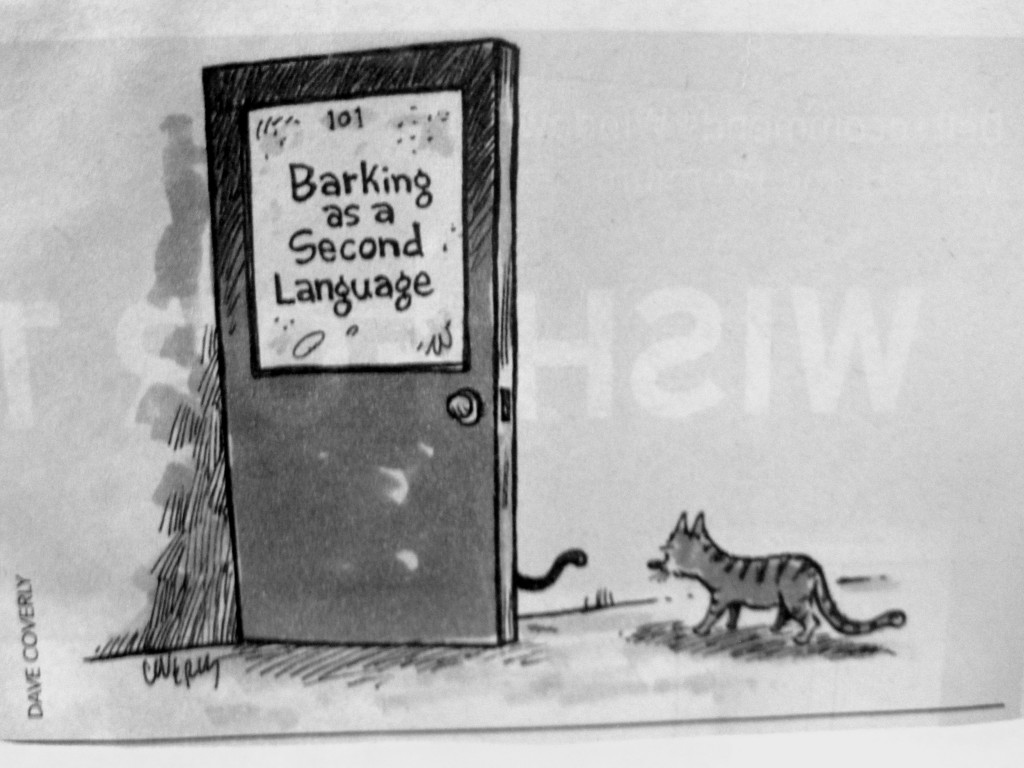
One was the search term in my blog statistics today. Some random person had apparently been directed to my blog by searching for the term “barking in a foreign language”. This is not so strange when I realize that I had once made a blog post about the cartoon that I found on the glass entrance to my department.

The second was this very comprehensive article, and discussion, in the New York times about why, or whether Americans will really, learn Chinese. I enjoyed reading it and picked up a few nuggets, one of which was the fact that the interest of many Americans in learning foreign languages came from political and economic expediencies: They learnt Russian during the Cold War, Arabic after 9/11, Spanish because of their neighbours, and now Chinese in the wake of China’s global economic uprising. Thus said the writers of the article. Not me, even though I have learnt also from a few  interactions on the matter that many American students now study Chinese for the purpose of gaining leverage in the emerging economic world.

The article doesn’t mention Yoruba, Swahili, or any of the other minority world languages being learnt in Universities all over America, but that is not the point – I guess. As much as this point in the article could be seen as a generalization of perhaps a genuine interest of students in expanding their worldviews, I believe that there’s something interesting about the said American foreign language fad. For a fact, the govenment of the United States has shown more interest in languages spoken in parts of the world with some economic, political or cultural relevance to its own survival. At the Fulbright conference in December, I had made friends with a guy called Osama from Yemen, a Fulbrighter on a similar programme. That was before the Christmas Day bombing attempt, and its subsequent link to Yemen. After the terror attempt, I asked a friend if she thought that Yemen will now get a lesser slot in subsequent Fulbright programmes because of the terrorism incendent, and she said NO. Quite the opposite, she said. If this all rings true, then Hausa will also soon become another language of interest for Americans in the coming years, because of the failed bombing attempt of Christmas day. This creed can then be summarized somewhat thusly:

“If he has tried to kick your ass, kick his ass too, and then learn his language. You might understand him more, and thus prevent any further aggression.”

Whether this is true, or whether it ever works as planned in the long term, is of course subject to debate.


Non-Pretty Telecom Ramblings

It wasn’t always likely that I would have spent half a year in one of the world’s biggest telecommunication’s markets – the United States of America – without a mobile phone. Surely, six months ago, I couldn’t have envisioned my current position. Two feet away from my left hand at this moment is a telephone that could only remind me of Nigeria. Not even the current day Nigeria, but the Nigeria of 1990. The telephone is hooked into the wall via a transparent cable. It has a dialing pad attached to the receiver, and it doesn’t have an answering machine, and it has a coiling cord that always used to give me nightmares. The last time I came across a phone with this kind of winding cable connecting the receiver to the box was in my grandfather’s house in the early to mid-nineties when we made the best of times by making prank calls to local Fire and Police Stations telling them of a raging fire. I therefore could not immediately believe when I walked into my designated apartment back in August that I was indeed in the United States of America. It was a kind of culture shock to come in contact with a land line phone of this ancient kind. There is usually a three-lettered abbreviation to respond to this kind of encounter. I went with OMG!

Cut to six months later, I am surprised to have survived it. My little nephews and nieces who are used to Nigeria’s now ubiquitous mobile phone services might be shocked now to see that phones exist in this kind of form. The only reason I can think of why I backed down from my promise to buy myself one of either the Samsung Omnia, the Nokia Maemo, the Apple iPhone, the Palm Pre, the Google HTC or the Blackberry among so many others new inventions competing for attention then was the contract system that made it a prerequisite that one had a payment plan with a major telecommunications network before getting a good smart phone. No can do, I said to Apple, which was my very first choice, and effectively walked away from the rest of them. There was no way I could sign up for a two year plan when my programme was going to end in eleven months. For phone calls home therefore, I depended on Skype, and Rebtel. For text messages, there was Skype, and my good old smart Nokia that followed me from across the ocean. For calls within campus, there remained my good old ancient line now hooked to the wall. It works just fine except I manage to step out of the room when the incoming call rings.

Needless to say, the non-possession of an American-network-powered mobile phone has never failed to generate very long conversations within friends and acquaintances whenever I bring it up. “Why don’t you just buy one of those little mobiles that you can recharge and use at will without a contact? Walmart has them,” I’ve been told. “I just can’t care less,” I respond, “In Nigeria, you can just walk up to any shop and buy a sim card without a contract, then buy the kind of smart mobile phone you want and still get all the services you require; a service you can walk away from at any time without loss. In America, it’s well almost an impossibility without a certain discomfort. Even the new iPad comes with the prerequisite of an AT&T contract. I mean what kind of exclusivity is that? Thankfully, I have been able to do without them all. Not like my friend Vera however. Read what she has to say about a phone contract with T-mobile. It is not just the figures, but the whole thing about a contract that just ticks me off.

It is just the sorry sight of this land line on my bed that reminds me of why Nigerians quickly got rid of the military government, and welcomed a civilian one. Today, even for “third world” Nigeria, I would never buy a phone like this. Not when I can buy the new contract-free Google Nexus combine it with an MTN simcard that costs less than a dollar. This sight reminds me of why I am a true ghoul in the forest!

PS: Amount so far raised via KTravulaid for Jos, for Haiti = $230, out of which $100 has already been sent to Jos. Thanks to Dee, Clarissa and Tee.

Adventures in (Dis)honesty

There’s no reason why I should be impressed, really. This is how things should be in a normal society. But I guess that the event has sufficiently moved me to write about it only because a few months ago, an even far less careless slip had cost me so much more. What happened then was that I had gone to Six Flags for the first time, with friends, and at some point decided that I would join some of them in swimming. Now my small point-and-shoot Canon camera has always had a spot in its pouch around my waist. My belt always held it firm, and it was easier to bring out at the slightest notice of any memorable sight. Then I had to remove my jeans in public since none of us wanted to go into the locker rooms. We were all outside, beside a tall tree full of leaves. The process must have been: remove shoes, remove socks, unbuckle belt, unbuckle jeans, remove jeans, take everything off the ground and proceed to the pool. Approximately thirty seconds later, when I must havhollye taken not more than twenty steps from that spot, it struck me that my camera was missing, and there was only one place where it could have been: that spot outside the locker room. I went back there and it was missing, for good. I made a report, asked around, hoped and prayed, even searched Craigslist for lost items, but I didn’t get it back. It wasn’t so much for the camera but for the photos in it. In any case, there was no reason for me to have hoped that such a crowded public place like Six Flags would have been a safe place to leave a camera for that long, even for less than a minute. It kind of reminded me of some places in Lagos.

That could be why I may have been impressed when I arrived in class on Wednesday and found that my iPod earphones were still on the front table, exactly where I had forgotten to take it off from after the class on Monday. I have tried to rationalize it this way: the table is used mostly by Professors when they stand in front of the class, and it is not likely that any Professor would fancy a used $30 Apple earphone that doesn’t belong to them. I made a similar rationalization for the many students who had used the class between 3pm on Monday and 1.30pm on Wednesday, yet I did not doubt that a few of them must have noticed it lying there idly seemingly belonging to no one, and just ignored it. I should really not have been impressed. Nothing extraordinary has happened, right? Wrong. Right. I have no idea, but I am not taking up the challenge of my now mischievous self to make an experiment with my iPod classic. Place it carelessly in a public spot and come back after two days to see if it’s still there. That stuff cost me $250!

One of the very first things Papa Rudy told me the first day he gave me his bike to take home was this: “Never ever forget to lock the bicycle up whenever you’re outside, cos they’re gonna steal it. That’s why I’ve given you a lock with it.” He spoke in earnest and I did not doubt his conviction for a second that the bike would be stolen if I ever left it outside the house without fastening it properly with a solid lock. The second time I heard this kind of talk was from Holly Ruff, my friend the artist. It was Halloween night. According to her, all the times her bicycles had been stolen, it has always been on Halloween nights, and not always because she didn’t lock them properly. People always seemed bolder on that prank night that they get away, it seems, with anything. For that, she had warned me sternly to not think about coming out of the house with my bicycle – lock or no luck – for that one night. Last week when Mafoya and I went to the swimming pool with Ben, I went with a lock in my bag. But when we were putting our stuff in the available lockers in the gymnasium locker room, Ben looked at me calmly and said, “You don’t have to worry about that. Nobody’ll mess with your shit,” and I sighed, then smiled. My “shit” included a passport, an iPod, my wallet and cards, my camera and some cash, so I shrugged and locked it firmly away anyway. It felt better to be safe than sorry, but we both came back to find our things still intact. I remember having lost my bike helmet on campus more than two times since August. I always found it at the same spot where I left it, untouched. It might be safe to say that this campus environment is generally a safe one for personal items.

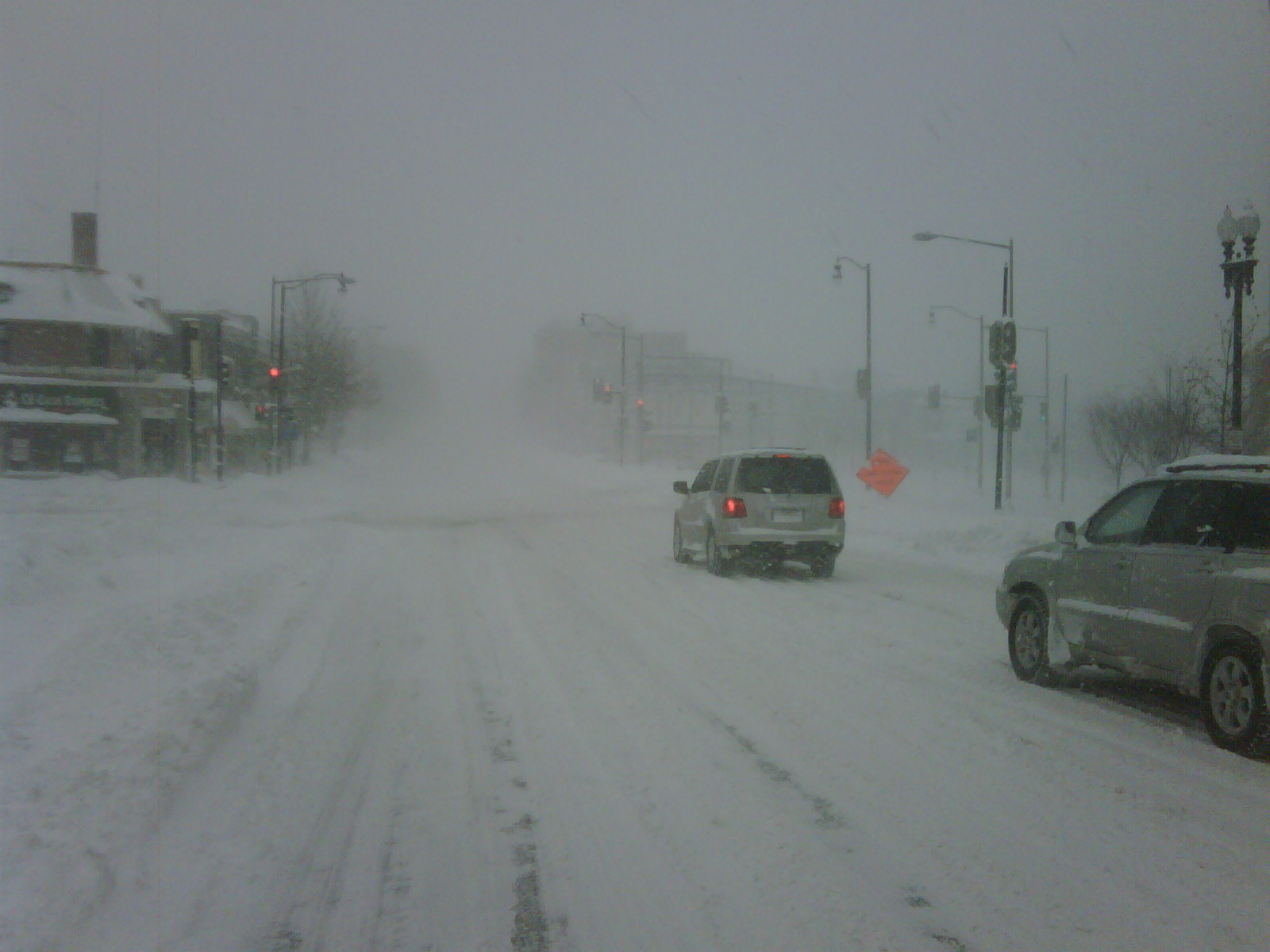
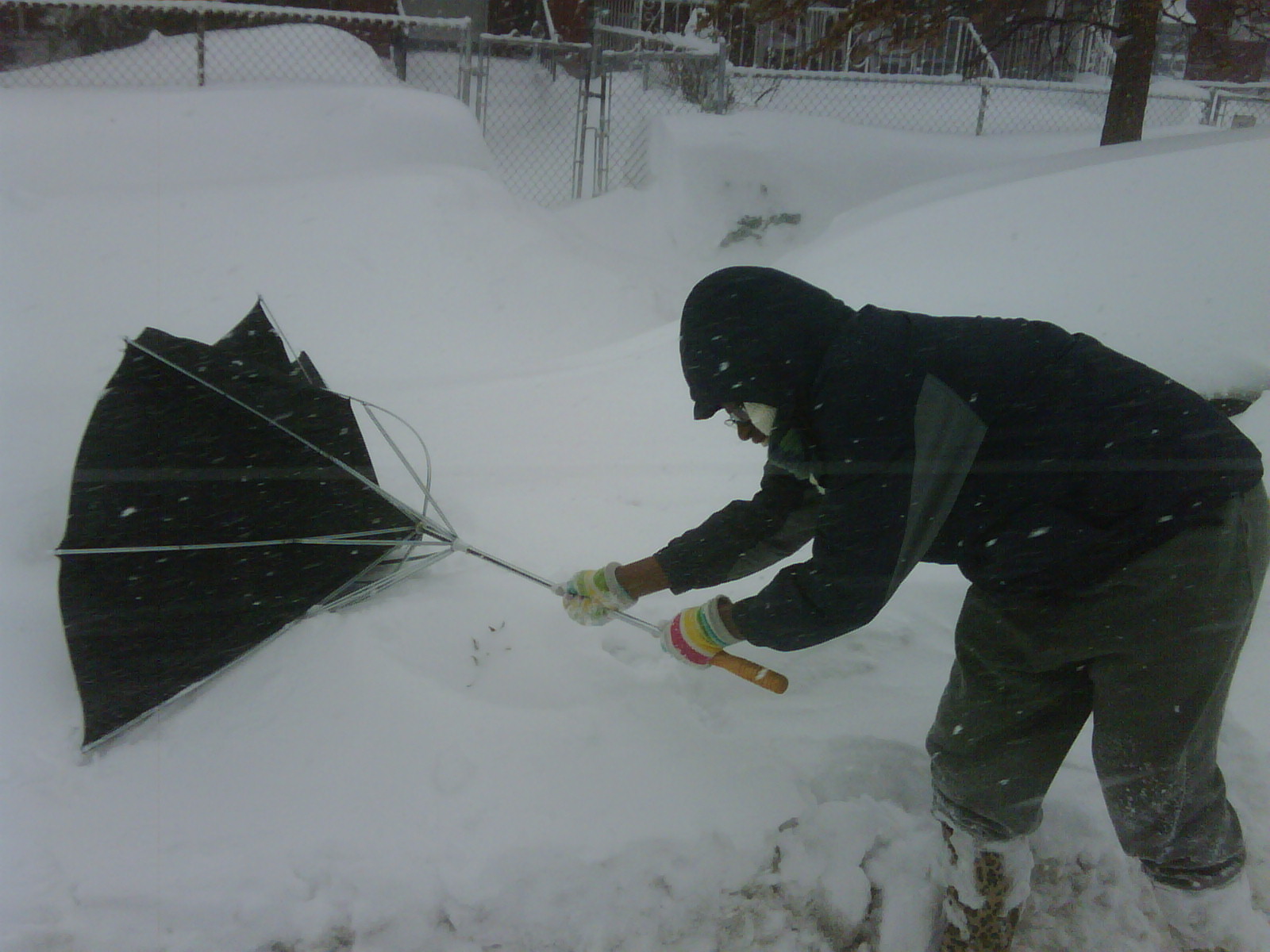
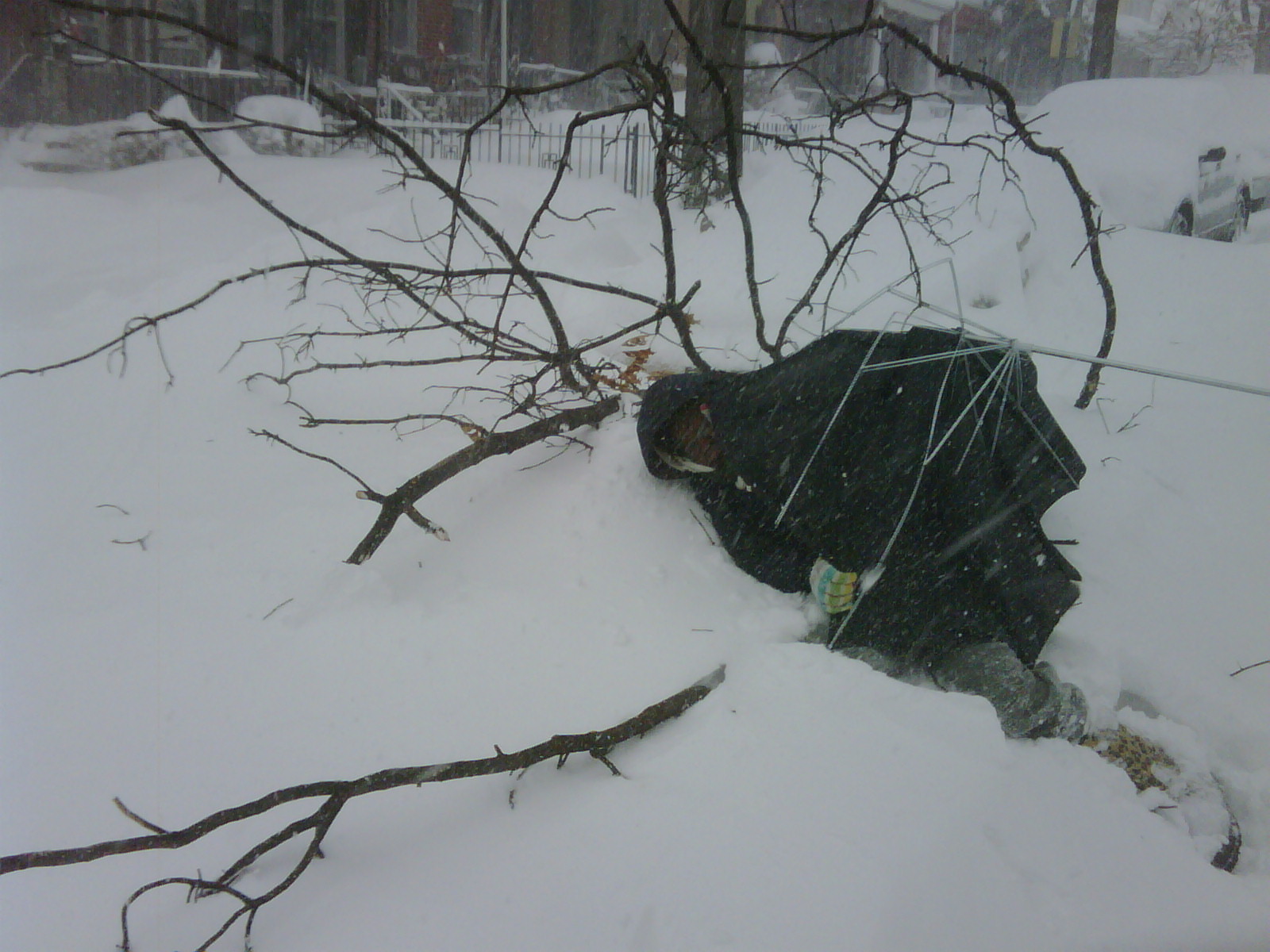
The last time it snowed here, I had gone out for a walk behind my apartment when I noticed a mobile phone in the snow around a series of small footsteps that went out towards the parking lot. Nobody else in sight, and the phone wasting away in the snow, I picked it up and took it into my apartment. Later in the evening, I told Mafoya about it, and we both waited for the owner to show up. He did about seven days later while I was out, and was very grateful that someone had kept his mobile phone for him even though he had no idea where he had lost it. He was a teenager or so. Now, I wonder whether, like me at the sight of my earphones lying there on the table, he was impressed that nobody had taken the item and made it theirs. Perhaps he was relieved, and grateful, that it didn’t take him too long to locate his property after countless calls to the number and no one answering. (I’d left it in the living room and I always missed the calls, not deliberately.) Or perhaps he took it for granted as a contented citizen, believer in the power of good: “Nobody needs another person’s phone anyway. This is America. Everyone has their own mobile phones…

I would never know, because I never met him.

We’re No Longer At Ease

Here is the text of an open letter released by Nigerian Writers in reaction to the current political situation in Nigeria. Over thirty writers have currently signed up to the letter which has this morning been released to the media. It calls on concerned Nigerians to add their signature, and support, in a comment box beneath. You can also listen to and download an audio version by clicking on this link: audio. I support this because I think it represent some of the best aspirations of all Nigerians in pursuit of happiness, good health, success, and aspiration for country worthy of its name and one that lives up to its potentials. I like the introductory paragraph, especially.

An Open Letter from Nigerian Writers

Nigeria’s failure to make the progress commensurate with 50 years of nation-building is not just a failure of leadership. It is first and most catastrophically, a failure of followership.

As ordinary Nigerians, we have failed to create an environment where good leadership can thrive. By glamorising fraud and ineptitude, we have created a country hostile to probity. Our expectation from Government House is mediocrity, so that good government surprises us pleasantly and excellence continues to amaze us. Instead of an environment of accountability, we have fostered sycophancy. We have been content to follow every stripe of leader, from the thief to the buffoon. The consequence is that for months we have been happy to be ruled even in absentia.

Today, we say, no more.

Protest is not a dirty word. Even babies have a voice, long before they learn language or discernment. The child that is too docile to cry when it hungers or ails might die in the hands of the most benevolent mother. A leadership, however benevolent, requires an intelligent, demanding, and courageous followership to excel.

It is the responsibility of every Nigerian to voice the legitimate expectations of nation and to establish the standards to which our leaders must be held. We must expect great things from this country, so we must look for the leaders who can deliver. There is an acceptable standard of leadership, and then there is an unacceptable standard. We must honour leaders who excel, and censure leaders – at every level, and in every arm of government – who betray our trust.

If failure is not censured, there is no incentive in pursuing excellence. If sacrificial leadership is not recognised, then leaders of merit will not come forward, and the heroes in our cenotaphs will be the very architects of our failure as a nation. Although we are justly famous for our generosity of spirit, for our ability to forgive and forget the gravest transgressions, Nigerians must also now boldly condemn the errors of leadership, and end the complacency that has brought us so low as a country. The only reason for the existence of political leaders is to offer service to nation. Leadership is not an end in itself. It is a privilege to serve your country; leadership is not a right to be served by your country.

Today, Nigeria stands on a precipice. Behind us is a history that can push us, irrevocably, over the brink. Yet, we are writers. If we bring anything collectively to society, it must be the imagination and the inspiration to bridge impossible gulfs. Today, we must plumb our history, not to evoke despair, but to inspire resolve. Today, we call on Nigerians to hold hands across the trenches of our deep divisions and, somehow, find the resolution to dream again. Let us, as ordinary Nigerians, reject the ethnic fictions that local despots have used to colonise this country over the past five decades.

Let us dream a simple dream made fantastic by our present circumstances. Let us dream of a Nigeria that works, that evokes pride, and that inspires faith. Let us dream of a Nigeria of servant-leaders and sacrificial statesmen, a Nigeria which calls the best characteristics out of ordinary men and women. Let us call on that capacity for renewal to bring opportunity out of this crisis.

Let us recreate the excitement – and the possibilities – with which we approached the Independence Day of 1960. In 50 years, the resources and destiny of this great country have been hijacked by private carpetbaggers and adventurers. Let us take back the sanctity of our polls. Let us rejuvenate the recall process. Let us police our resources, our leadership. We must liberate Nigeria anew. Today, we must take back our country.

As writers, the past and the future are fertile fields for the work of our imagination. Today, in this love-letter to our nation, we call on all Nigerians to take authorship of our nation’s next 50 years. Our destiny is in our own hands. Shall we write into it a bigger civil war? Another half-century of mediocrity and international disgrace? Then we need do nothing.

But if we, the people of Nigeria, must write an inspirational epic of a humbled nation on her knees, who, breaking free of bondage, soars into the keep of eagles, we must begin by demanding only the best of our leaders. In the days and months to come, we the people must find our voice, our votes, and our true values. And we must make them count.

Thank you.

(Culled from African-writing.com)