Browsing the archives for the Opinion category.

Random Week/Nigeria

Talking with Ben about starting a business in Nigeria has reminded me once again of the problems that mitigate against successful enterprises in Nigeria. The chief is still electricity. Then security. Why do we have guards at our gates in Nigeria? I’ve never asked myself that question. Now, I can answer it. I think it is from the absence of a right to bear arms. If everyone had guns, we won’t need to pay people to watch over our houses. And now I believe that just mentioning to an intending immigrant/visitor to the country the fact that most residential houses in industrial areas of the country have guards that watch over them at night could be a very strong deterrent. In any case, just like the problem of electricity, water or good roads, it is a failure of government.

A second victory was in one moment of magical discovery, that in Nigeria the Press is actually more responsible, and responsive than the police. Maybe a little tyrannical as well at times, but they’re usually on the side of the people. So in a moment of epiphany while reeling out the things to remember if one wants to move to Nigeria as an expatriate, I said to Ben that if an expatriate was to ever be in any kind of trouble while in Nigeria, he should call a journalist first, before calling the police. Thinking about it again now, I’ve discovered that newspapers in Nigeria should actually adopt it as a public brand. Police cars here in the US go around with the large writing on the body of their car “When in trouble, dial 911”. It’s there for everyone to see, and even three year olds in America today know the short code in case any bad thing happens. Think about something like that on the front page of all newspapers in Nigeria every day. “When you’re in trouble, call 419” or any other easily-memorable number. The truth is that the police are held more accountable by the media than by the politicians, and there is a chance of redress if said victim brings a journalist along to the police station while reporting an incident. It works even better for expatriates/foreigners.

Don’t call the police first – they’re not your friend. Call a journalist!

_______________

PS:

  • I got a mobile phone at last. It is a T-mobile, and it gives me all I want from a phone. So far, so good. The best part of it is the answering machine with which I can receive messages when I’m not in a position to talk – which is like most of the days that I teach.
  • Western Union has not responded to my request.
  • I have sent out postcards to all who asked for them, and I will send some more this week.
  • I’m still seeking more guest-bloggers. I like the exciting idea of sharing and exchanging ideas this way.
  • The post I made last week about my friends has now been removed, regrettably. Lesson learnt: respect other people’s need for privacy, and never assume anything.
  • After a lot of fumbling around, and goading from a persistent friend, I have now solved the problem of blog comment editing, thanks to WordPress. Anyone who leaves comments will have up to five minutes after said comment is submitted to edit its content, or request a deletion.  I like the idea.

India and its Plethora of Languages

Updated

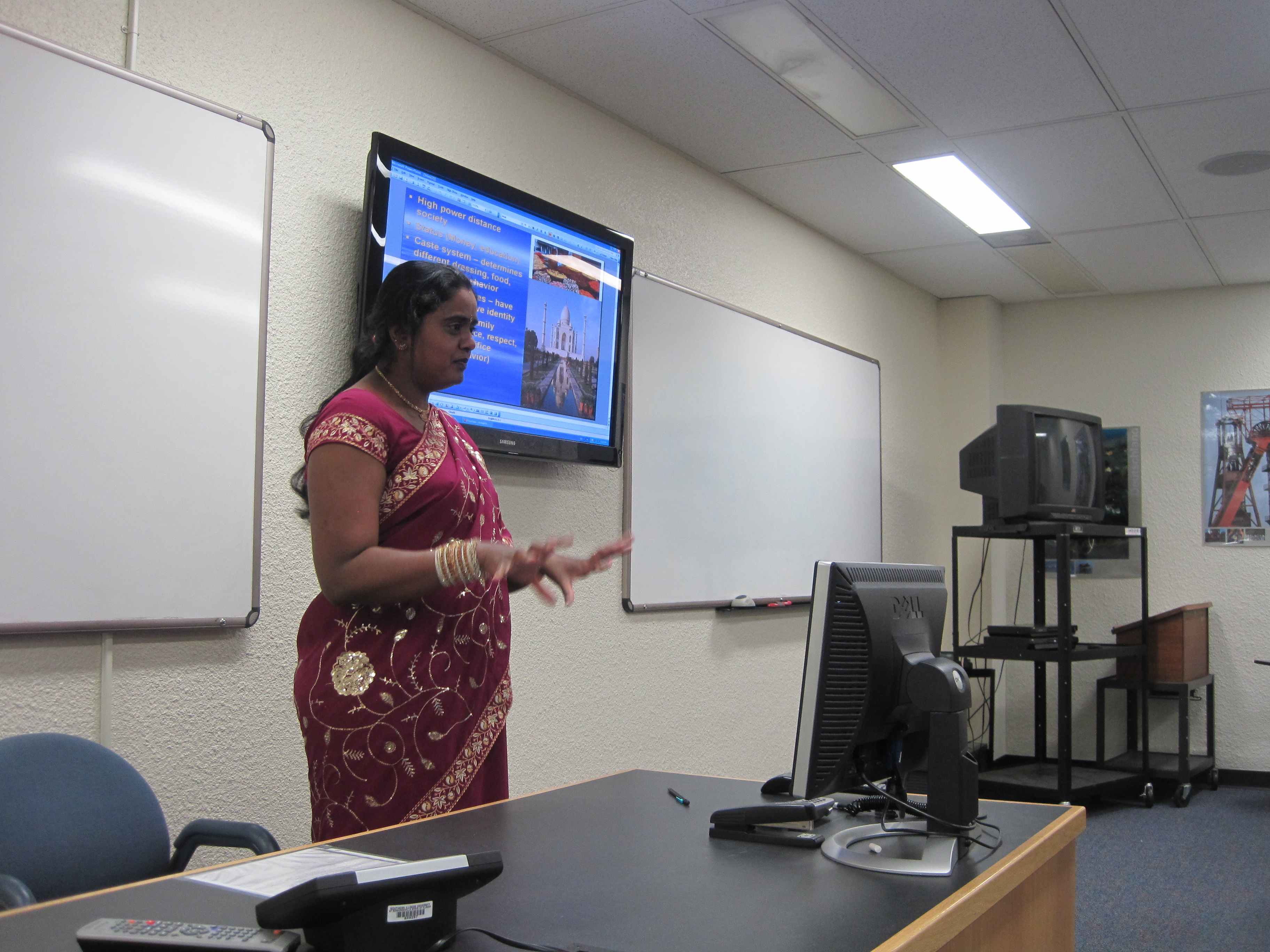
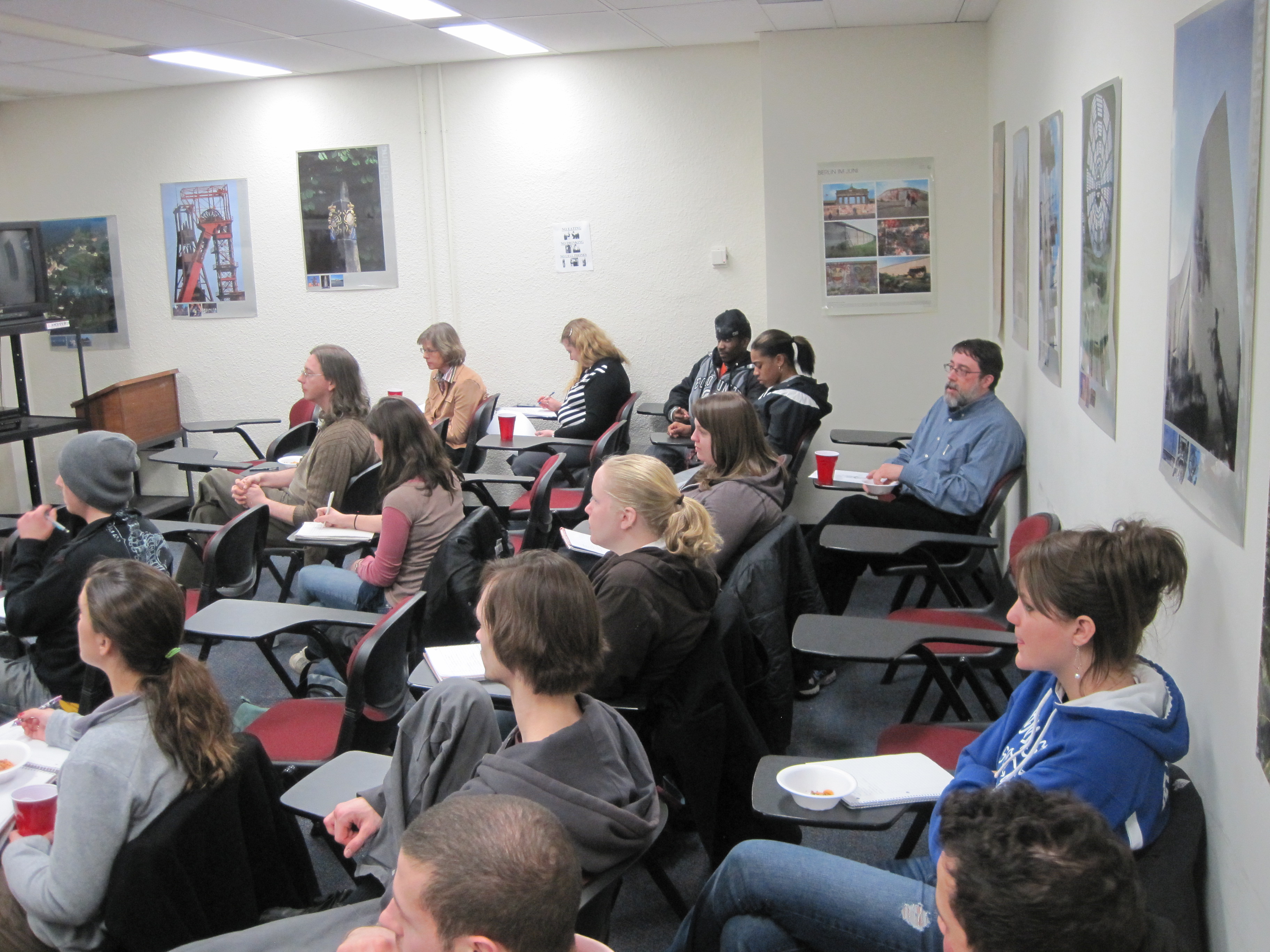
The third event in my department marking the “Discover Languages Month” took place on Wednesday and it was a talk by a graduate student of the department Catherine Xavier who spoke about India and its “Plethora of Language and Culture.”

I learnt some new things about India at this talk, one of which was that the country – as large as it is in population and land area – had only about twenty-two languages spoken in official capacity. The biggest of them was Hindi which everyone spoke and understood, but there were so many others. Much of the talk was along the lines of mine: i.e a comparison of Indian and American cultures, their similarities and differences. And from the presentation, I found that India is not much different from Nigeria as I previously thought.

One of the things she skipped however was the subject of the Karma Sutra which I believe is one of India’s biggest export to the world, and the influences of the literatures of Salman Rushdie and V.S. Naipaul – the two biggest and perhaps controversial names in Indian/English literature. According to Catherine, they were names that always stirred emotions and she had left them out in order not to make people uncomfortable or be polarizing. I do not take it against her because it doesn’t remove from the breadth of the talk, which lasted an hour and dealt with so many other things including economy, taxes, eve teasing, transportation, speech patterns, greetings and interpersonal relationship of Indians in foreign lands, and many more. As conservative as the culture in India is, it still managed to have produced a deep and colourful legacy of sensual exploration of the human body and I’d have loved to have been able to ask about it during the event. I couldn’t. It was a nice presentation over all with many laugh-out-loud moments during the talk and during some of the video clips that she played.

I love it because it was a balanced presentation of the positives and negatives of the country, unlike mine of two weeks ago which was mainly a positive representation of myself and culture. Clarissa has already accused me of being too positive about everything I observe, so it is just as well. Many of Catherine’s points reminded of me of what Nigeria and India have in common as a society. Famous Indian people in the presentation were Mother Theresa and Mohandas Gandhi.

Reacciones

I do not read nor speak Spanish much, so these don’t really count as vanity. Or maybe they do. They’re responses from students of an intermediate Spanish class who attended my talk two weeks ago. Culled from the class Facebook group, thanks to Professor Cuervo.

  • Fui a la presentación oral de Kola. La población de Nigeria es más que 50 millón. El tiempo en Nigeria es muy muy caliente. Kola dijo que la gente de Yoruba mira muchas películas de los estados unidos. Aprendí que cuando Kola llegó en los estados unidos él fue muy frío pero Kola llegó en agosto. También aprendí que hay poetas y cantantes en los estados unidos que son de Yoruba. – K. Mraz
  • Me encanta la presentación de Kola sobre la cultura de Yoruba. Fue muy interesante. Aprendí que el país de Nigeria tiene más que 500 idiomas. El idioma de Yoruba es el segundo popular de todos los idiomas en el país. Tambíen, aprendí que los raíces “ola” y “ayo” son muy popular en los nombres de la gente de Yoruba. Los raíces “ola” y “ayo” significan riqueza. – A. DeLuca
  • Yo fui a el evento, Cultura de Yoruba, y pense que son fue muy interesante. Aprendí que “ola” significa “riqueza” en Yoruba. Kola es el nombre del hombre de Yoruba, y su nombre significa riqueza también. Kola hablas cinco lenguas! Yoruba es en Africa y hay 15,000,000 personas que habla la lengua,Yoruba. Kola él lleva un sombrero llamó un “fila”. El dijo que el clima es muy diferente aquí. La presentación fue muy de información. – J.M. Ritter
  • Me gusta mucho la cultura de Yoruba. Las comidas que tuvieron para tratar fueron deliciosas. El hombre de Yoruba fue muy cómico con su presentación. Habló de cerveza y fiestas para unos minutos. También habló de la clima mucho. Dijo que el tiempo es muy diferente aquí en los estados unidos. Una amiga de él (ella vive en África) llamó por teléfono y dijo que fue muy fría en África ayer. Él dijo, “¿Que fue el tiempo?” y ella respondió, “Fue 82 grados”. Pienso que esto es muy cómico porque ella fue seria. El hombre Yoruba nos dijo que tiene miedo porque muchas personas le dicen que tiempos más frías están llegando antes de la primavera. En totalidad, su presentación fue muy interesante. – T. Dent
  • Fui a la presentación sobre la cultura de la Yoruba. El hombre (no recuerdo su nombre) tiene veinte y ocho años, y sabe seis lenguas, pero en su cultura hay quinientas lenguas. Hay muchas personas famosas de Yoruba como Seal, Sade Adu, Hakeem Olajuwon, y Wole Soyinka que ganó el Premio Nobel en 1986. En nombres, la palabra “riqueza” es mencionada muchos tiempos. Nosotros podemos tratar el jugo de arándanos y galletas de plátano. – L. Murphy

Old Man’s Winter Guide To Beating The Snowpocalypse Blues

This is a guest-post by the blogger Rayo from Washington DC. All I know about her is that she is Yoruba, from Nigeria, and that she once attended Howard University. She also takes some very nice pictures. You can check her blog here. I’m featuring this post because for the first time in a long time according to the news, there was snow in all the states of the United States, except Hawaii. The people in the Washington DC and East Coast area were the worst hit with many feet of snow. Rayo has humorously captured her reaction to the season in twelve short informative nuggets. Enjoy.

_____________________________

In the wake of the current record-breaking winter weather in the Washington, DC, area, I decided to explore my neighborhood and assess the damages that this record-breaking snowfall has caused.  Boy was I surprised when I came across Old Man Winter! This little guy hasn’t been sighted in over 110 years—since the “Snowmageddon of 1899”—so it caught me by surprise when I saw him just chilling by the side of the road a few days ago.  After much coaxing (he’s camera shy), my friend and I were able to convince him to pose for some photographs as well as give us some Do’s and Don’ts for surviving the Snowpocalypse.  It’s a pretty good guide, especially for those that aren’t used to so much snow.

1.       DO go grocery shopping before the snowfall gets too heavy.  If you don’t, you might find that when you get hungry and realize that there’s nothing in the fridge, the grocery store will be closed.

2.       DO take caution when “ice-walking” more than two miles under white-out conditions to your favorite Chinese food carryout because the grocery store is closed and the carryout is the only place crazy enough to stay open.  Remember that, since the sidewalks will become mountains of snow, you will have to walk on the road. Make sure you’re walking in the opposite direction of traffic.  This way, you’ll know when to jump when a car is sliding towards you.

3.       DO buy thick gloves and a ski mask (or thick scarf) in order to prevent your hands and face from freezing and falling off while walking in hurricane-like winter conditions.

4.       DO make sure you have at least two back-up means of transportation.  You might wake up and find (or not find) your car in this type of situation.  Not good. You might also find that the Metro buses are either out of service or are only running on “special routes,” or that only underground train stations are open and even those stations have special delays. In short, be prepared to walk.

5.       DO be patient with the public transit employees. Remember that even though you don’t have to work and you’re only on your way to a snowball fight, they have to work. Plus, there’s nothing like the comfort of feeling like you’re in a meatpacking factory.

6.       DO try to make it into work at least one day during the Snowpocalypse. Although you might be annoyed to discover how many people are actually going to come into your office with complaints, do try to smile as much as possible.

7.       DO NOT WEAR HEELS!!! You WILL fall! Safety before vanity. If you must wear heels or open shoes, put them in a bag and change into them when you arrive safely at your destination.

8.       It’s sad that I have to say this but I just saw someone wearing a pair.…DO NOT WEAR FLIP FLOPS!!!!!!!!!!!!!!!

9.   DO invest in snow boots or shoes with good traction. There’s nothing funnier than seeing someone fall face-first in 50-something inches of snow…unless the person falling is you.  Although the snow might cushion your fall, it’s still better to have not fallen at all.

10.   DO attend mass snowball fights—they’re a great way to get your daily exercise; practice your war-game skills; have fun in the snow; and they also help to prevent the dreaded cabin fever.

11.   DO go to the movies…FOR FREE!!! There are many websites out there that allow people to attend movie premieres for free (i.e. www.eventful.com). This way, you can get a first-hand look at new movies even before they start playing in theaters. You might have to trek though the snow to get there but if the movie is good enough (and hopefully it will be good), it’ll be worth the trek.

12.   DO pay homage to your fallen comrades. Here’s to the trees and umbrellas and power lines and even cars that did not survive the hurricane-like winds and heavy snow.

____________________________________

Thank you Rayo for this wonderful post.

What In The World

“Twenty-five years ago, we recorded We Are the World to help Africa. Now it’s time to help Haiti”

Thus begins the introduction to this remake by legendary trumpeter and producer Quincy Jones, and Grammy Award winner Lionel Ritchie of the classic We Are The World song first recorded in 1985 to aid relief efforts in parts of Africa (not all of Africa). From the first chords in this new track to the first shot on the screen, be prepared to be re-introduced to the same magical emotions that defined the first version of the song. There are more participants, the vocals are wide in range, and very endearing; and for good reason, the writers have removed and re-written the utterly useless phrase from the first version of the song that read “As God has shown us/by turning stone to bread” – since God never turned stone to bread in any known text of the scriptures anyway.

But here’s the caveat: Please, I beg of you, when you watch the video, do NOT see it beyond the 5.50 time mark. Much of everything else from there falls downhill into the category of “What in the World!”. For me it was such a disappointing buzz-kill, and for a long time after seeing it, I was in a burning rage that dominated my first series of tweets in response to the video. It was from a kind of shock, I guess, that I could not immediately place. How could a song with so much resources and potential at eliciting genuine empathy bungle such a great chance on conformity to popular culture. Now I’ve realized that it was from too much expectation, on my part, and perhaps from too much holding on to the solemn standard of the 1985 version. I shouldn’t spoil it for you then, so maybe you should watch it and make up your mind. But beside that, and beside the quite abrupt ending, everything else seems fine, and much of the video quite enjoyable.

Look out for great vocals from Jenifer Hudson, Celine Dion, Lil Wayne, Wyclef Jean, Mary J. Blige, Barbra Streisand, Toni Braxton, and (of course) Michael Jackson. I especially liked the parts sung in Haitian creole, and I wished that part was longer. It is also doubly memorable for having been recorded in the exact same studio where the first version was recorded in 1985.

PS: In spite of my rants above, I still do love the song, very much. So to download the video and the song, the proceeds of which goes towards the relief efforts in Haiti, go to www.world25.org