Browsing the archives for the Opinion category.

Nominated!

This blog was yesterday nominated for eleven categories in the Nigerian Blog Awards 2010. This is overwhelming for a blog less than a year old. And for that, I say a big KTravula thank you to all of you who did the nomination on behalf of our fans, friends, readers, commenters and guest-posters. Big hugs to you.

Voting for the categories start on May 31 and ends on June 6. A full list of the categories and nominees can be found here.

Winner for the Nigerian Blog of the Year gets to be the president of Nigeria for one day, and gets a chance to make any government policy s/he wants. Oh, I wish ;).

How My Bank Lost Me

When I travelled to the US, I left some amount in my bank account that I can’t remember anymore now. I also had a debit card just in case I find myself stranded on returning to the country and I have to use some money. It was a little surprise then to find out on returning to my bank last week that very many changes have taken place. One of them was that old debit cards were no longer tenable and that customers had to get new ones. Now, here’s the snag: you had to pay for the new card.

I have never figured out how financial institutions functioned, but I know that they are supposed to make their money only from trading with the funds we deposit into their care. The rude awakening to me then on return there to the help desk was that not only would they profit from changing my debit cards, but from my monthly use of it.
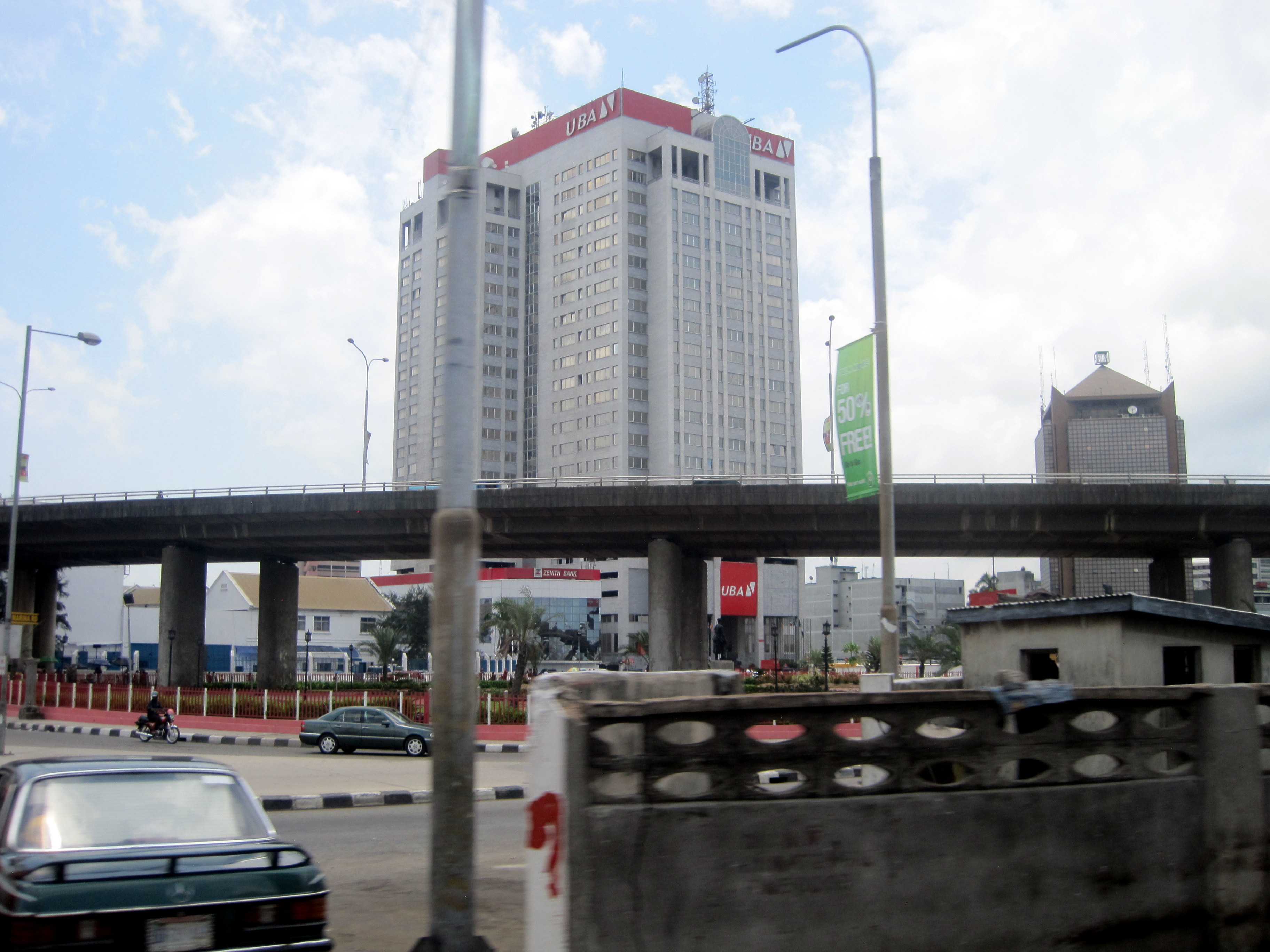
So here it is: to change my card due to a sudden change in policy which I didn’t authorize or have any voice in formulating, I pay up to 600 naira. And then – the most annoying (fine print) clause in the new debit card application form – I get to pay 105 naira every month for keeping the said debit card.  Access charge, they called it. This part, I really still couldn’t understand. What it means of course is that when next I leave some money in the bank and I travel out of the country, it is possible that by the time I return – depending on how long I spend out of the country – there might not be anything left in the account. The bank would remove it every month to service my unused debit card. So there. This is not just an unfair business practice, and greed, it capitalism at some of its worst.

Needless to say, I went to a branch of the bank yesterday to ask them to close my account, and the staff at the desk responded that I have to go to the branch where I first registered the account before I could close it. But I registered the bank account while I was a Youth Corper in Jos five years ago! She gave me a straight face and a shrug. “That’s the company policy,” she said. “You have to go back to Jos to close it.” While she was saying this, the television flashed an update in the security situation in Jos.  Three Fulani nomad cattle herders had been killed again, and the city would become volatile again from now on.

So here I am, already decided as to what to do next: withdraw everything drawable from my account, and erase the bank from my memory. I’m just another lost customer that can be ignored, I guess, but I at least have a safe haven on the internet where I can vent my anger. Bye bye now UBA. 🙁  Now let’s see what GTB has to offer.
More Lagos – Noise!

This fast city, known for its dirt as for its fast cars, runs on adrenaline. Panting for air in the back of a rickety bus of uneven metals, one wonders where exactly everyone is rushing to. I had this same feeling in Chicago, but not while in a public bus. Compared to my little village in Edwardsville, Lagos feels like hell on steroids. I’ve told you about the noise, right? When you’re not being deafened by the generators from every household that have resorted to using them to supplement electricity supply, you are being hassled on the road by incorrigibly noisy vendors on the road, bus conductors, and bus drivers with lead hands on vehicle horns. Aaaargh! Give me Cougar Village. Or, at least, give me Ibadan for now.

In my room at Cougar Village, I have never put the volume of my computer up higher than 50% of the total volume, and it was always loud enough to be heard at the front door from my room on the other end of the apartment. Right now in my sister’s house, with roaming children, a roaring fan and a rumbling generator, I can barely hear anything even at my Dell Vostro 1510’s loudest volume level.

When we talk about Climate change, we have always incorrectly assumed that the culprits are big oil corporations in the Niger Delta, or big industries in developed countries. Ask me now, and I’ll tell you that fumes from Lagos generators and commuting vans, and so much of this useless noise contribute even more to the degradation of the environment. And we say the Atlantic Ocean is now encroaching on the Lagos Island through the Bar Beach. Why won’t it? The amount of heat generated by these machines should be enough to deplete even more of the ozone layer. And what about the dirt, plastic bags on roadsides that will eventually find their ways into gutters and clog the flow of water when it rains? Well, there are some working trash cans, but are there sufficient implementation of laws regarding proper waste disposals? Are there such laws to begin with? And does anyone obey them?

My suggestions would include more road signs, stop signs, speed limit signs, traffic lights, required speedometer laws for each vehicle, and a ban on all honking throughout the day. As for the generators, there’s no solution yet although I could say let’s scrap them all totally, and force everyone to get solar panels – after all, we have the sun in abundance. The world is moving everyday towards new clean sources of energy: wind, and solar. Not only to reduce pollution, it will also reduce noise, which I believe must account for much of the disruptive behavioural patterns we see manifest in much of our public life.

Pictures coming soon. Apparently I’m not as used to whipping out my camera on the streets as I was a few months ago.

Blending In

Technically, I should be sleeping. I have a debt of more than 24 hours on my body clock. My eyes close by themselves at intervals, yet instead of going to bed, I am here. A few minutes ago, on the way back from a short lunch at one of Lagos’ famous malls, I slept off in the bus and missed my stop. I had to pay something close to a dollar to get back home. Yes, I should sleep now. But not before this short rant of my first culture shock experiences:

1. Private and public vehicles delight in honking their car horns every five seconds, for NO GOOD REASON! I’ve never seen this kind of madness anywhere else. Well, I may not have been to many places, but this must rank as one of the biggest nuisances of Lagos (nay, Nigerian) roads. Gosh!

2. More than half of the trash baskets in the public places are open in the bottom, thus pretty useless. Those that are not are almost full, rendering useless also the concept of a clean and fresh-smelling environment.

3. There is no visible speed limit on the roads. Although I’ve never felt this way before, I suddenly realized that I’m afraid to now commute in Lagos’ public transports anymore. They drive too fast, and too roughly. There is no visible speed limit on the roads. Most of the transport vans don’t have working speedometers, and there are no responsive health workers on the road in case of emergencies.

4. I’ve been prepared for NEPA (the electric power people), but not in this way. I got out of the airplane to discover that the escalator in the airport didn’t work. I had to walk on it like the normal steps. I heard that last week, there was a power outage at the airport, a now regular occurrence, that lasted almost three hours. Question then: how did the captain of my plane successfully land the plane without working satellite guiding devices at the airport that uses electricity?

5. As for the rest, I’ve discovered that the food in restaurants are not as nice as I envisioned them to be. And they’re more expensive than they should be. Heat is unbearable, and I can’t go out topless as I’d have loved to do. They might mistake me for a miscreant. What else is there to do than to come back here and rant?

It’s not really culture shock. It is just seeing things from a better perspective. More sanity can definitely be introduced, especially from the very little things. Welcome to Lagos, traveller. Just wait a few days more, then pack your things and head home to Ibadan. Maybe the heat will abate. And maybe you’ll at least get some sanity in your lush quasi-country/University life. For now, off to bed I go.

Travellers, we all.

The thought had crossed my mind at the dinner table at the house of a Palestinian professor of history Tamari’s on Wednesday evening. On one side of the table was my head of department, and on the other was Reham the Egyptian. Joyce, the oldest, was American, and I am you-already-know-what. The head of department, had just made a startling confession: her parents were German Jews who fled from Germany in 1939, first to Canada, and then to the United States. The confession, in its ordinariness, however brought a new dimension to a conversation on history, the commonness of our humanity, and migration.

Where are Jewish people originally from? I don’t know. But now they occupy the Palestinian region as a Jewish state of Israel. They used to live all over Europe and the Middle East for thousands of years. Sitting down there trying to get it all in, here was what my brain was trying to process: Jewish people in Europe (who had gone there from the middle east) were gassed in millions and some managed to flee to other parts of the world, adopting a new nationality and a new home. (Well, not quite. Belinda has confessed to have felt a certain homeliness anytime she visits Germany, in spite of the contradictions of the occasional meeting with descendants of people who just a couple of decades ago could have murdered her parents or sent them to the gas chamber.) As a result of their new nationalities, these travellers have become a new people: Americans. Not even a Jewish Americans or an American Jew, she is every inch American albeit with a certain longing for the beauty of Germany. Had Hitler not begun killing, she probably would not have been born, or she might not have been born in the United States. And there won’t have been the State of Israel, perhaps, and the displacement of the Palestinian people. But now, she’s no longer German. She wasn’t born in Germany; nor is she really Jewish. She doesn’t practice Judaism. Alright.

Now, our host professor is Palestinian. His people are regularly killed and/or victimized in Gaza and parts of today’s Israel by settlers (or state soldiers meant to protect settlers) many of whom are likely descendants of survivors from the pogrom of 1940 Europe. A sign at the entrance to his house says “No more war” or something to that effect. He is one of the softly-spoken people I’ve ever met. Brilliant and level-headed. He is a professor of history and he is as knowledgeable in the Palestinian cause as he is in the subject of the Jewish holocaust. Had he lived in Palestine or Israel today, he could have been killed by suicide bombers, or the Jewish state soldiers either for looking like a terrorist or throwing a rock at a soldier, or arrested for being outspoken against the state. Had Hiltler not started killing Jews in Europe, he could also have been born and raised in Palestine, where his ancestors lived and had land before they were evicted, living there till old age, and not ever having to have migrated to the United States, or meeting someone like Belinda, or myself.

Of course, if instead of coming to the West, Belinda’s parents had instead gone with the folks who founded the State of Israel, she could be a citizen of Israel by now, or a settler on occupied areas, or a supporter/descendant of those who evicted Palestinians from their lands, some of who might be related to Tamari. Just sitting there in their midst brought to me a new sense of amazement, at how something as little as migration could have changed the course of history.