Browsing the archives for the Observations category.

Lingua Fracas as a Positive

It is 5.47am in Ostana, Cuneo, a small town in Italy (close to the border with France). It has only seventy-four inhabitants, and became world-famous earlier this year from the arrival of a baby, Pablo, its first in 28 years. It is also regarded as one of the most beautiful Italian towns. I am here all the way from Lagos, Nigeria, in order to receive a “Special Prize” called the Il Premio Ostana in Lingua Madre (The Premio Ostana Prize for Mother tongue Literature), organised by a small community organisation who has, for eight years, organised cultural and literary art activities in celebration of the language of the region, Occitan, and other minority languages of the world.

IMG_5867

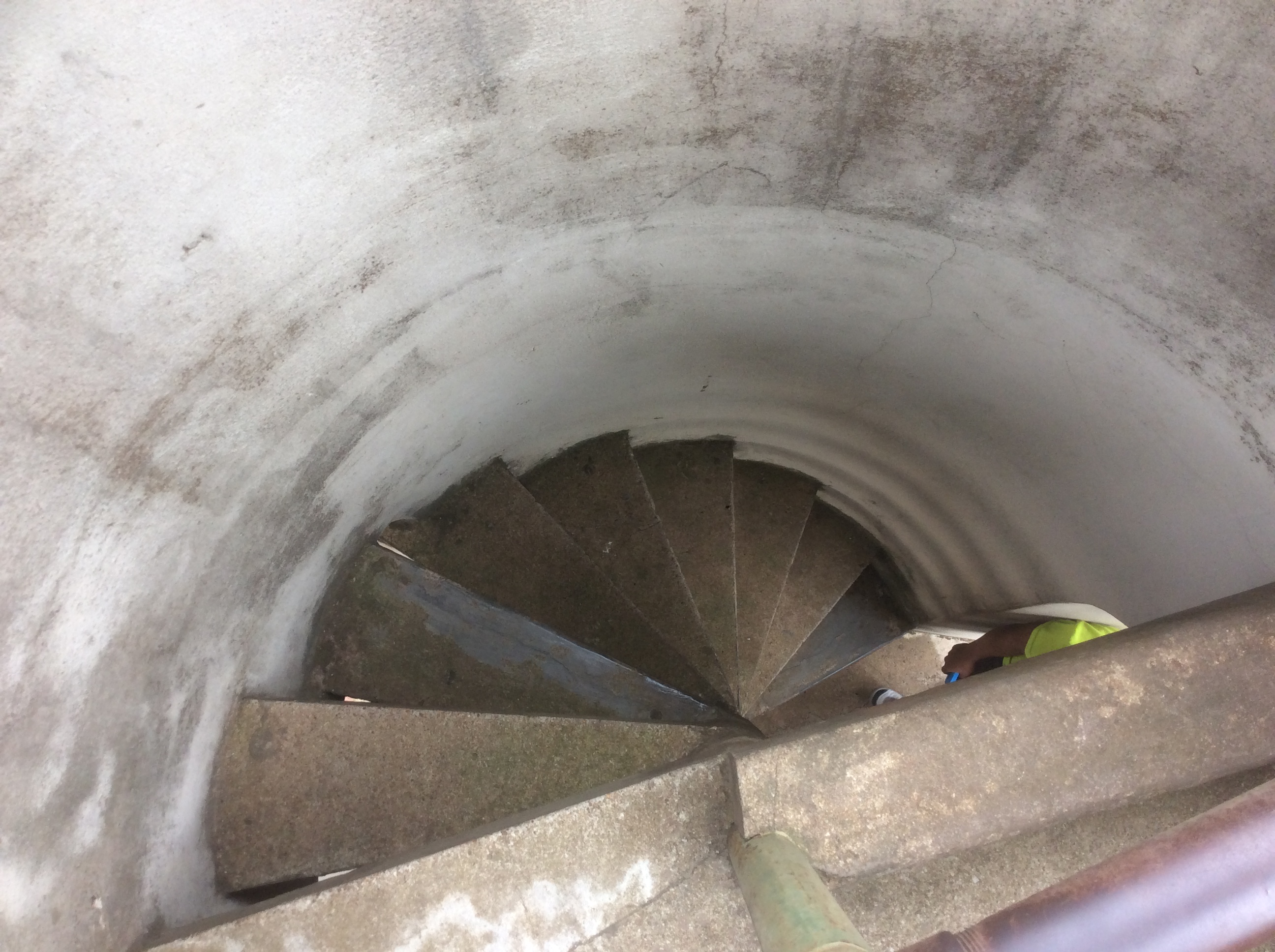
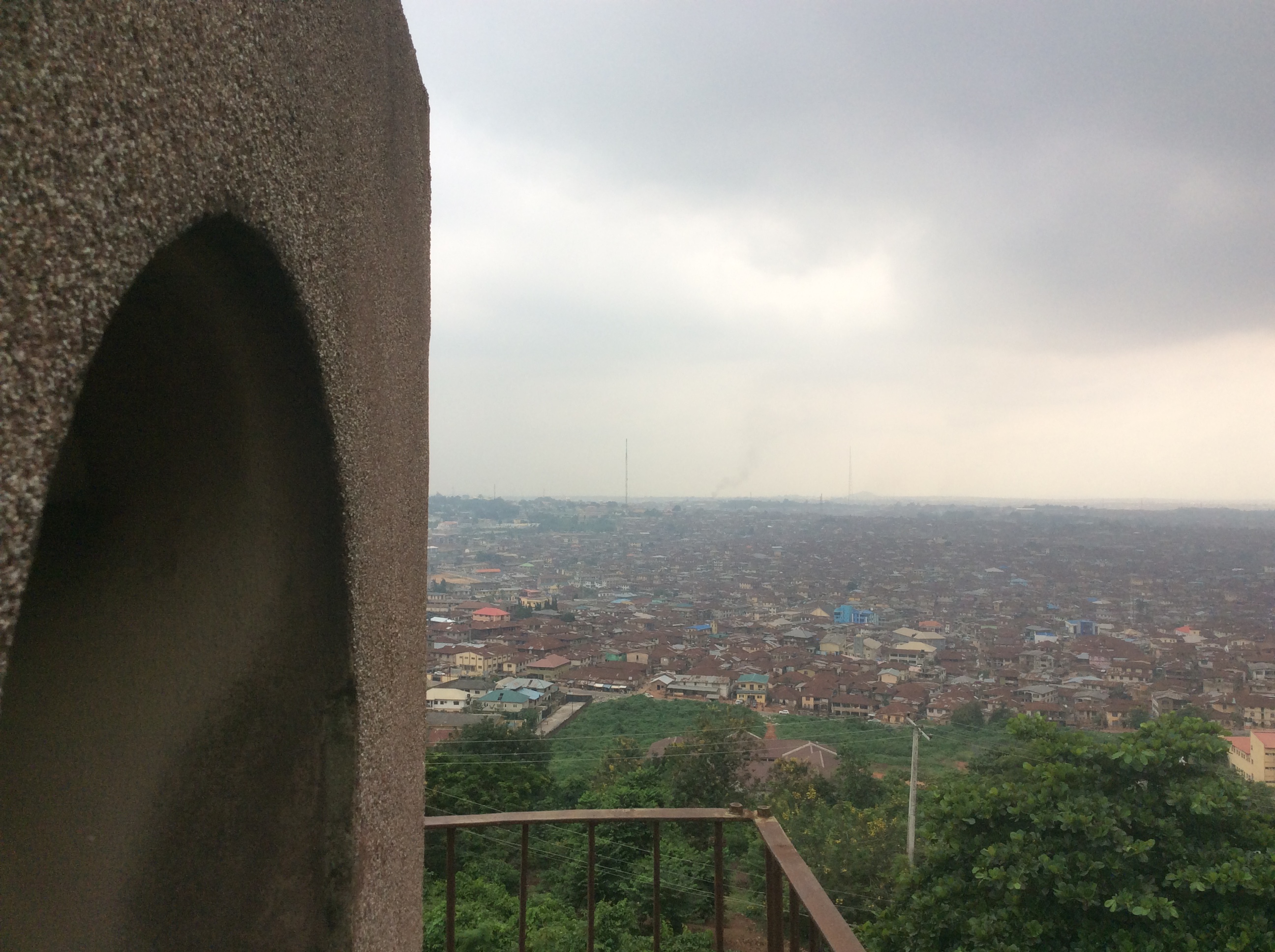
Although it is barely six am, it is already bright, and the view from my room overlooking some of the tallest mountains in the Alps is breathtaking. The mountain closest to me, shaped like a pyramid with a paramount top, is called Monviso, or “my face” because of the way it is arranged with other peaks around it to look like the human face. The name of the mountain is in Occitan, like many phrases one hears thrown around this place. When the clouds are not covering its peaks as they have done for much of my time here, we see its caps, dotted with greens from trees, and patches of black from the face of rock formations from hundreds of years back. Down at the foot of the hill from where I sit on my bed, a man of middle age is tending a small garden with a long hoe. If I open the glass windows, fresh breeze as cold as fifteen degrees, wafts into the room forcing us to hug the bed covers a little tighter.

The trip from the airport in Turin was a fascinating one, taking about two hours, and journeying through some of the most beautiful views of Italy. Travellers in Nigeria would have felt a similar sense of wonder traveling to parts of Nassarawa, or Ondo states where rocks and hills line each side of the road like guardian masquerades. But this is not Idanre, as the clashing of tongues around one’s ears will immediately reveal. This is the Italian Alps, in a region that once was autonomous as “Occitania”, spanning the land from this north-western part of Italy into the other part of southeastern France, united by a common language and culture. Over time, as the nation of France and Italy formed a stronger national identity, they imposed an artificial border that divided Occitania into two, one part staying in France and the other in Italy. And over time, the influence of the stronger languages and culture began to intrude until Occitan became just an endangered minority language needing protection.

This, in many ways is similar to the story of many African languages, from Yorùbá to Hausa to Swahili, forcibly broken down and eventually watered down by colonial boundaries that kept its speakers having to learn a bigger, more imposing language at the expense of the local one. Where the difference lies is in what has been done over time to acknowledge and mitigate the problem of endangerment by the people who care about it. In Ostana, for the last eight years, concerned stakeholders have come to this mountainous region to celebrate the language, and – more importantly – to celebrate other people working on other endangered languages around the world, making resources and networks available for a shared approach to keeping the languages alive.

Yesterday, at a public panel, Nigerian writer Lola Shoneyin described the state of languages in Nigeria, the history of our regressive attitude to mother tongue education, and the problem that has caused in both our educational and also, sadly, in our political culture. She cited the Ife Six-Year Primary Project, headed by Professor Babatunde Fafunwa the result of which proved that students can and should be educated in their mother tongues for a better educational experience, and how that ideal is now totally lost, and the research result swept under the carpet by succeeding government administrations. During the Question and Answer segment where I was interviewed by a member of the event’s organising body, I also pointed to the ideals that were written in our constitution and our National Policy on Education encouraging education to be conducted in the mother tongue for a few first years of the child’s life, and how that had ended up being just a suggestion rather than a policy statement, and how the National Institute of Nigerian Languages (NINLA) – a body established to train language teachers from every part of the country – had become just a toothless tiger. Members in attendance were appalled to know that over the last thirty years, the Nigerian educational system (particularly in the South) has slowly degenerated from a time when subject can even be taught in the mother tongue in a number of government primary schools, to now when Nigerian languages – even as subjects no longer exist in the syllabi. “It is the opposite here,” someone volunteered. Thirty years ago, no one spoke Occitan, but now it has come back as a language of common use. I got the same experience in Wales, just a few months ago, where Welsh-medium schools have sprung up to supplant and surpass many English-only schools, with impressive results.

Around me in Ostana are varying tongues. Our driver from the Turin airport spoke English as a fourth language, after Provinçale (French version of Occitan), Italian, and French. His colleague spoke only French and Italian. The conversation in his car consisted of him making a point and then running into a language block, unable to remember what English word he needed to use to communicate a point. He’d then translate himself into Italian for his colleague who sometimes then gave him the word in French. My wife and I speak a smattering of French and we’d sometimes then understand it, suggesting the appropriate word in English. Or we won’t get the word right and the conversation would move on only for the process to repeat itself again in a few minutes. For a linguist, it was the ultimate beautiful thing, especially since none of these occasional misunderstandings prevented us from fully bonding and sharing other less untranslatable experiences among ourselves. But it was also a celebration of the beauty in the diversity of our tongues and worldviews. My wife noted halfway into the trip, with mock wonder, how it was that none of the road signs we had seen was written in English. Welcome to Italy. But also, welcome to the real world where education and enlightenment isn’t judged only on the basis of competence in just that one language.

I wondered myself a few minutes later what would be said of a town in any part of Nigeria where all the signs there are written in the one language common to the speakers living in the area, and how we’d have resorted to that common pejorative in order to tarnish that hypothetical village: “tribalism”. We would have reacted as though the town is saying to outsiders: “Do not come in here because you speak a different language. We hate you!” But we would be wrong. The experience I have had traveling all over the world, especially in places where value is placed on the local language, from Kenya to Wales to Ostana, leads me to a better understanding of this hypothetical town’s message to the world: “Come here and share with us the experience of our language and culture. Bring your language with you, by all means, but come in ready to share in ours, in celebration of life and this important diversity.”

And from that, we can learn a whole lot!

______________

First published on Premium Times on June 3, 2016.

The Herdsmen of Ostana

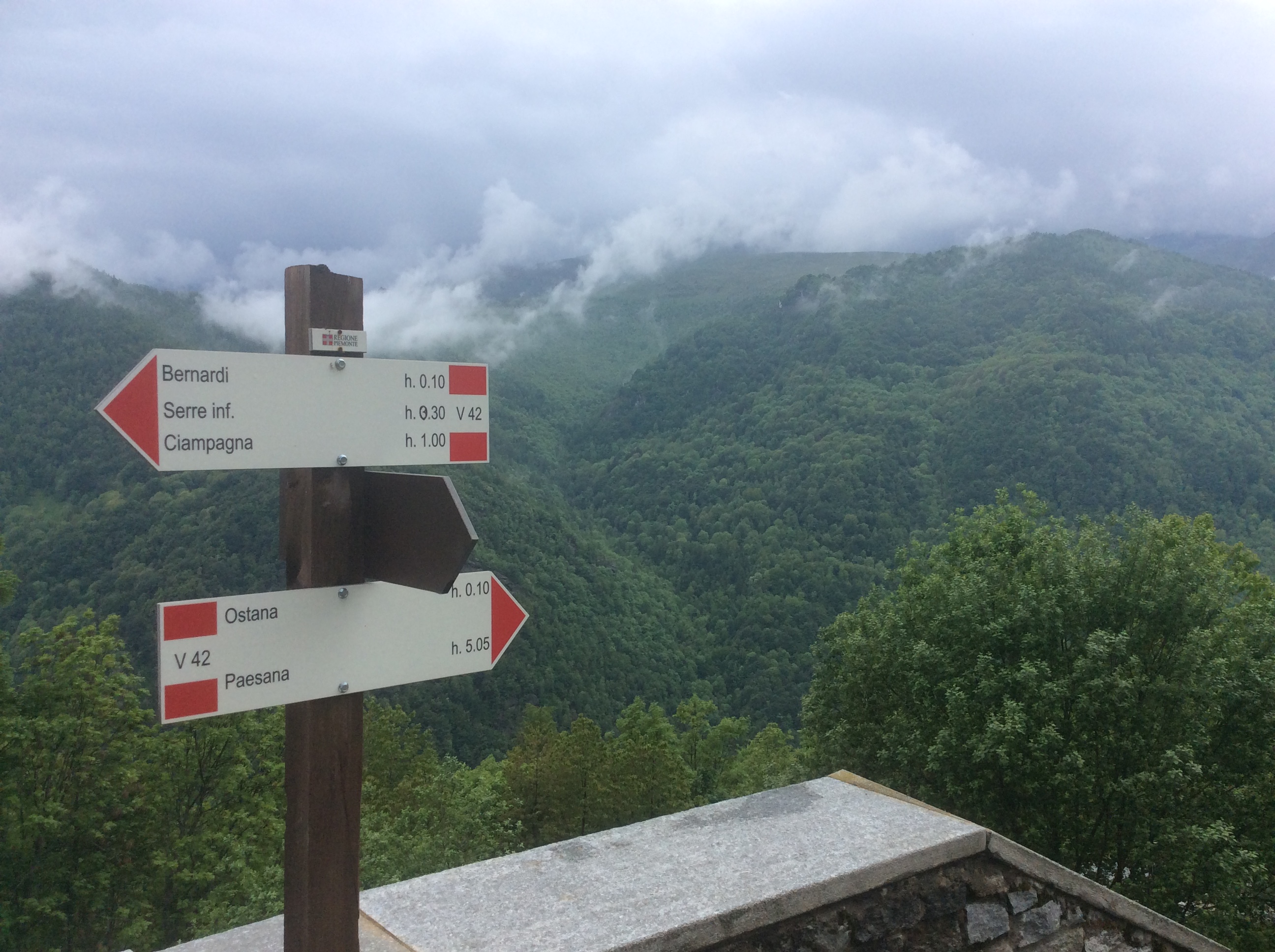
Two Thursdays ago, about fifteen hundred feet above sea level, I was beholding one of the most picturesque landscapes in Italy from a vantage point in Ostana, a town 60km Southwest of Turin where I’d gone for a week-long celebration of the diversity of language, among other things. It was an elective choice. The Monviso, the most famous rock head in the area, had obscured itself among the clouds for so long during the week that my patience had run out waiting to get a complete view. The problem was that this, like other days, was not going to work either. Rain had just begun to fall.

IMG_5833

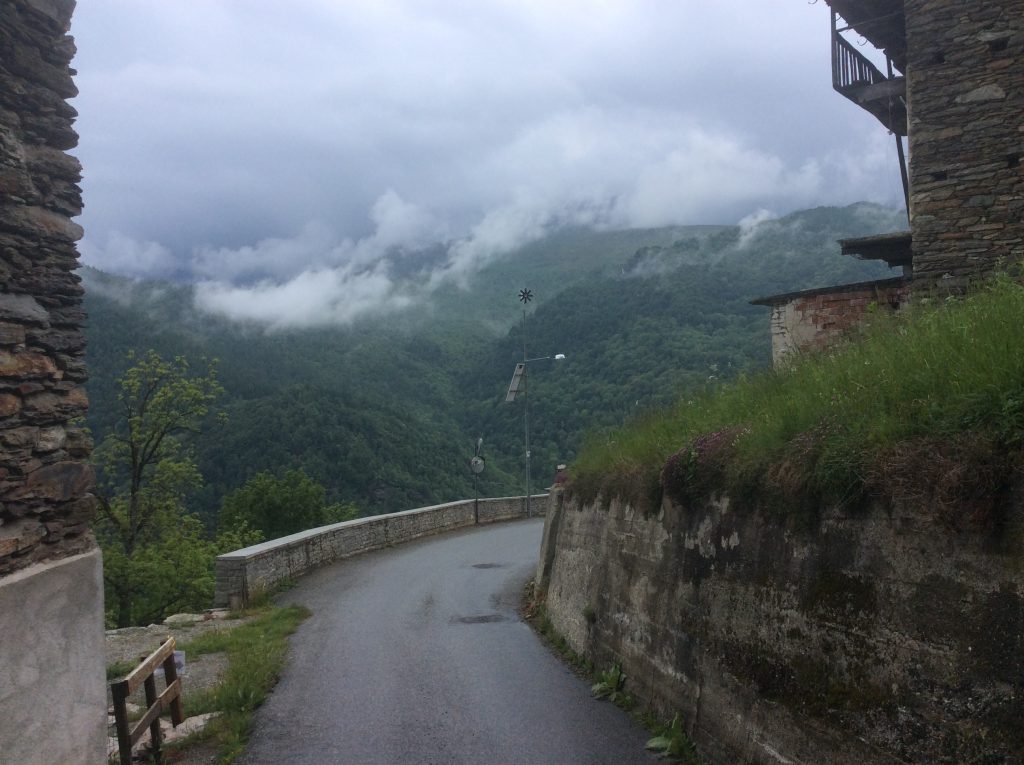
But that wasn’t a deterrent for an intransigent guest insistent on a wholesome experience of this strange and charming place. Having spent the previous days in warm and stimulating company, in festival days with Italian and Occitan conversations and activities, the legs had begun to make other demands on one’s curious mind: what would it be like to walk down this hill on foot? Who would one meet on the road, and what kind of reaction would this African stranger elicit, especially for a native resident unaware of the international festival taking place way up the hill. All the trips up the hill where daily festival interactions took place (aside from feeding) from the Rifugio Galaberna (where we made lodging) always happened through rides in the vehicle of one of the festival participants.

IMG_5868

And walking down the hill wasn’t as bad as previously thought – if one removes slipping on the wet grass and almost splitting one’s limbs apart as a likely disadvantage. It was the price of short-cutting the winding road to walk instead through the grassy corners that ran through small chalets on the side of the hill. And with the drizzling cold rain dripping onto my back, the only other positive left in the air was the anticipation of a room warm enough to spend the rest of the afternoon in the company of a fellow traveller from Lagos, my wife, who had elected, since that morning, to spend the day alone resting from the previous day’s extroverted engagement. And then, the bells!

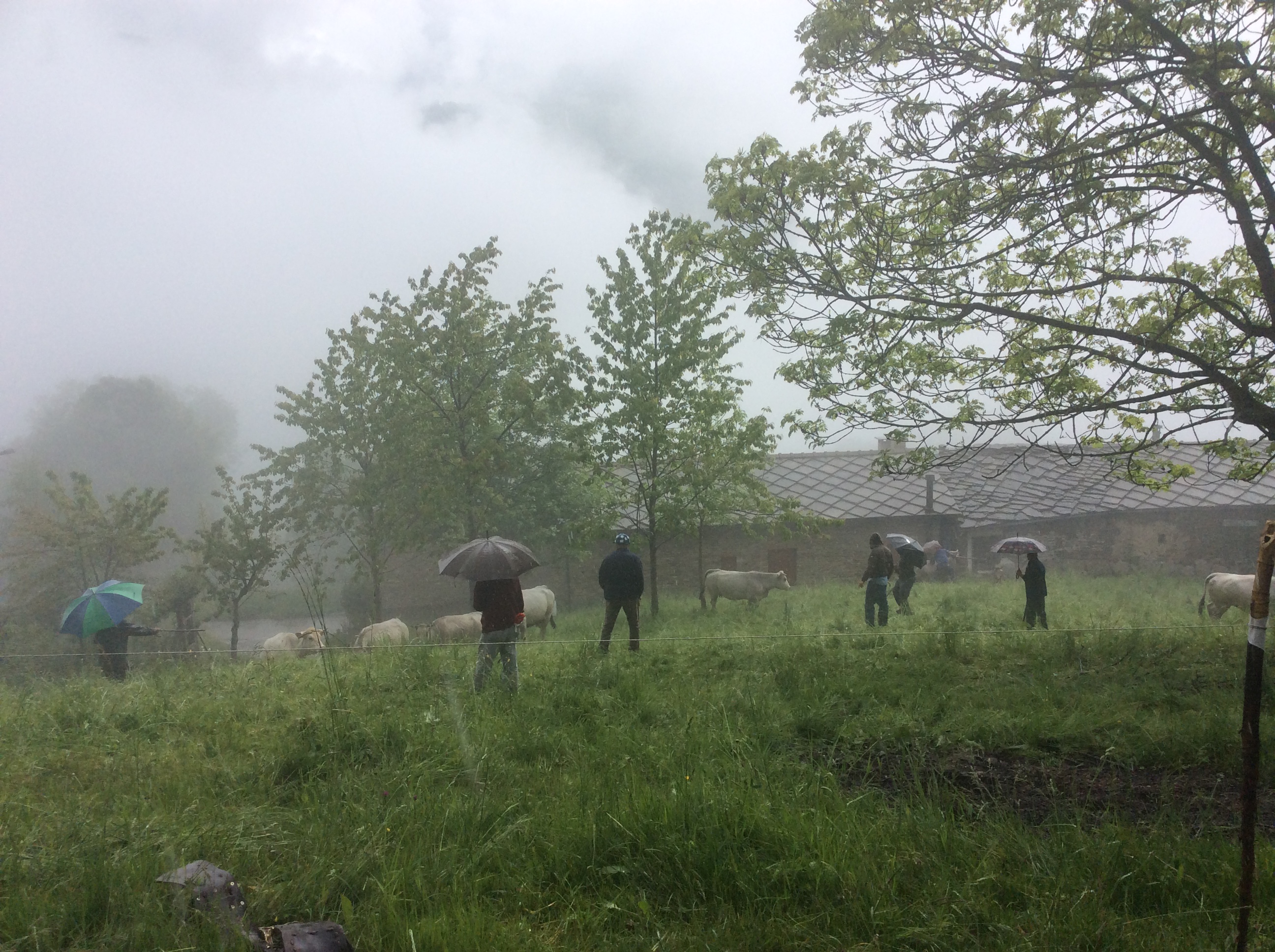
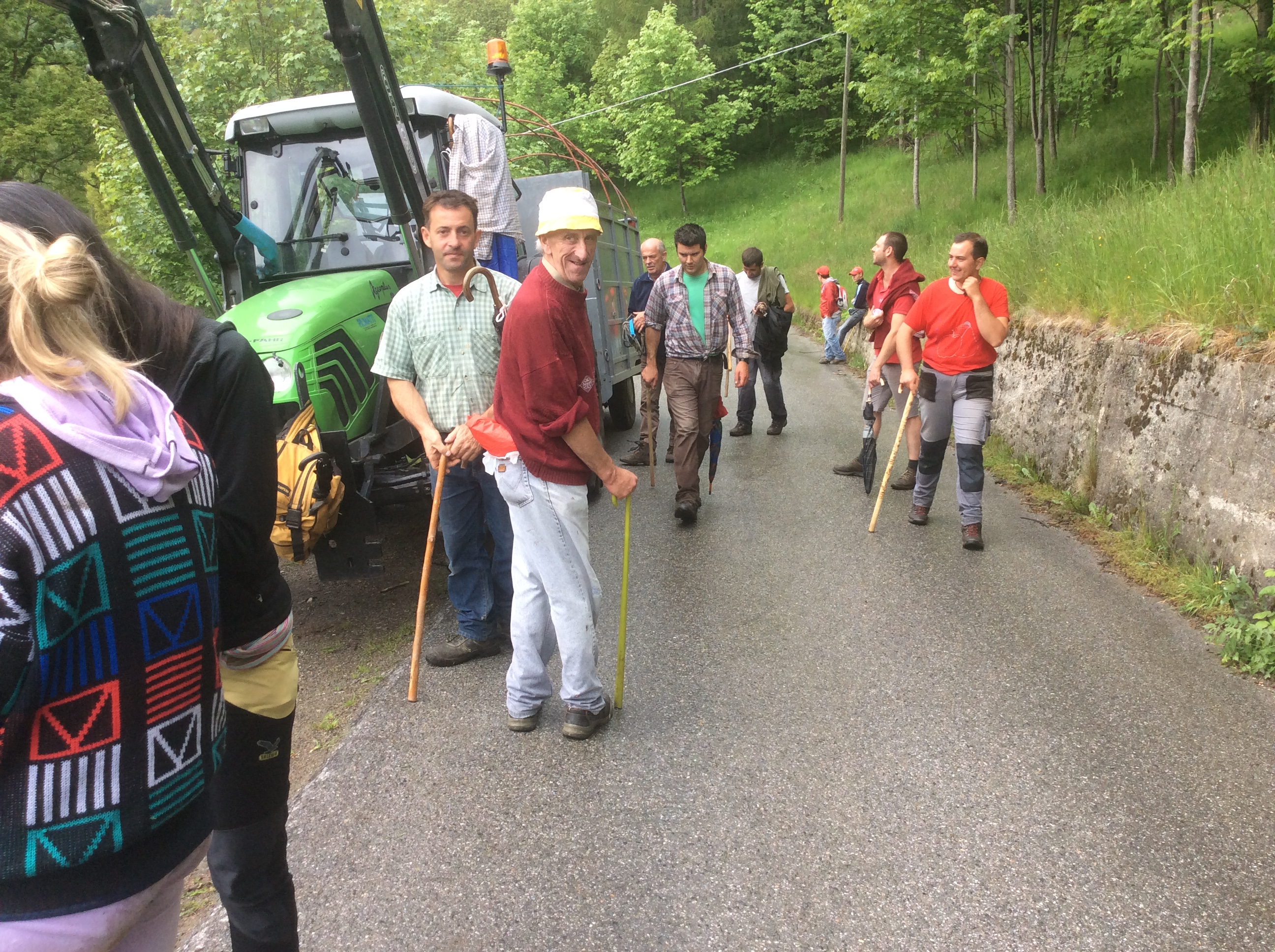
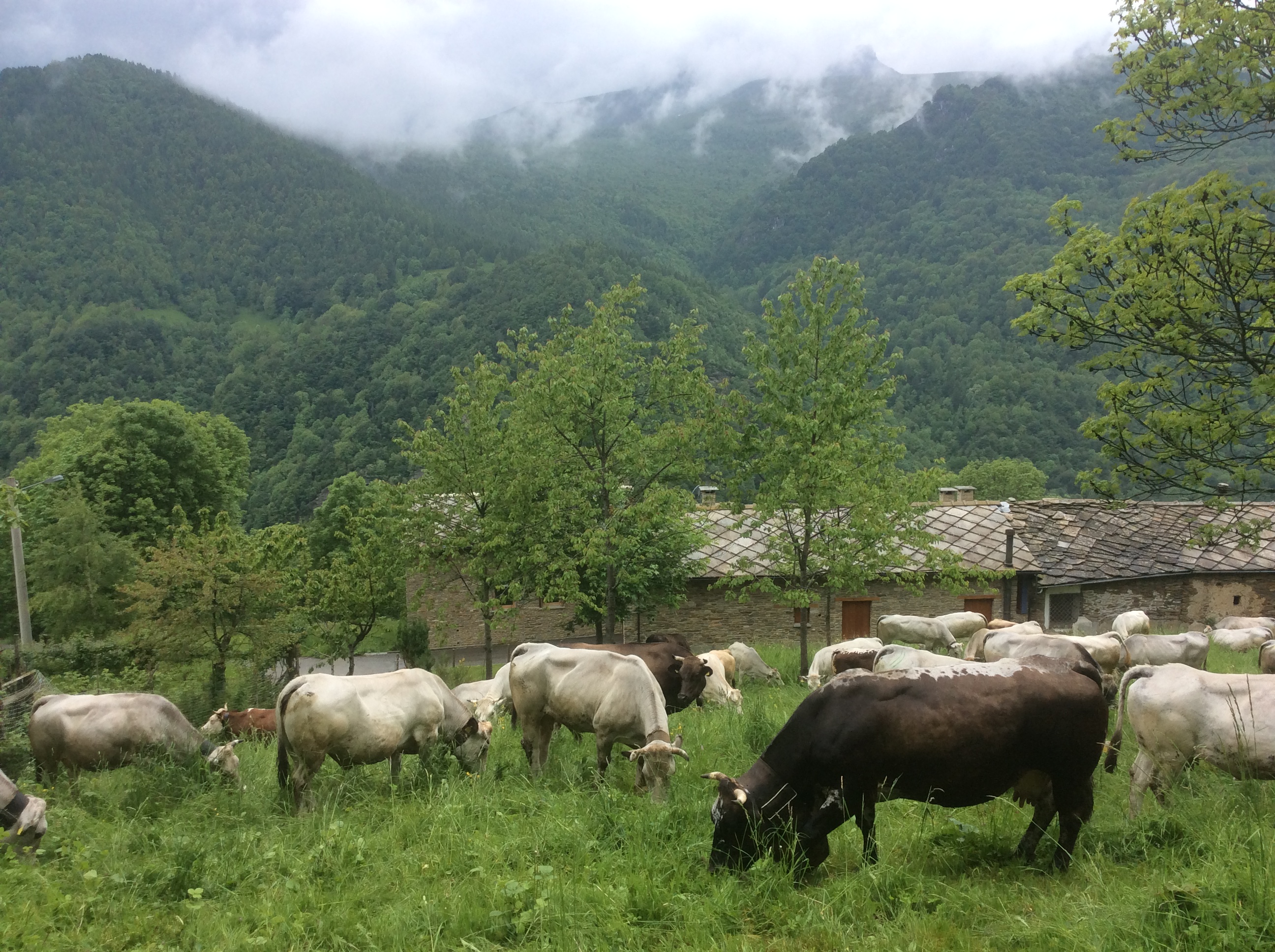
I’ve heard of “cow bells” and seen them in animated advertising for its eponymous brand of milk in Nigeria, Cowbell Milk, but I had never heard nor seen them before, so the clanging that called me from on top of the hill had an initial promise of a surprise carnival of which I, as a stranger, had just not been made aware. Maybe there was a masquerade too, and a dance. It could have been a nice relief from the now boring walk down a lonely road down a pretty hill. I was joined, a few minutes later, by Valentina, my host and sponsor, who had begun to look for me to come for a photo shoot for prizewinners which had been slated for that afternoon. As a researcher, she had once followed a herd of shepherd up the hill for months in order to document their habits. So she, too, enarmoured by the clanging below, abandoned her vehicle and walked with me towards the charming sound. And there they were: herdsmen and their cattles!

IMG_5884 IMG_5882 IMG_5877 IMG_5875IMG_587313423927_580621048784775_4200197664268343497_n

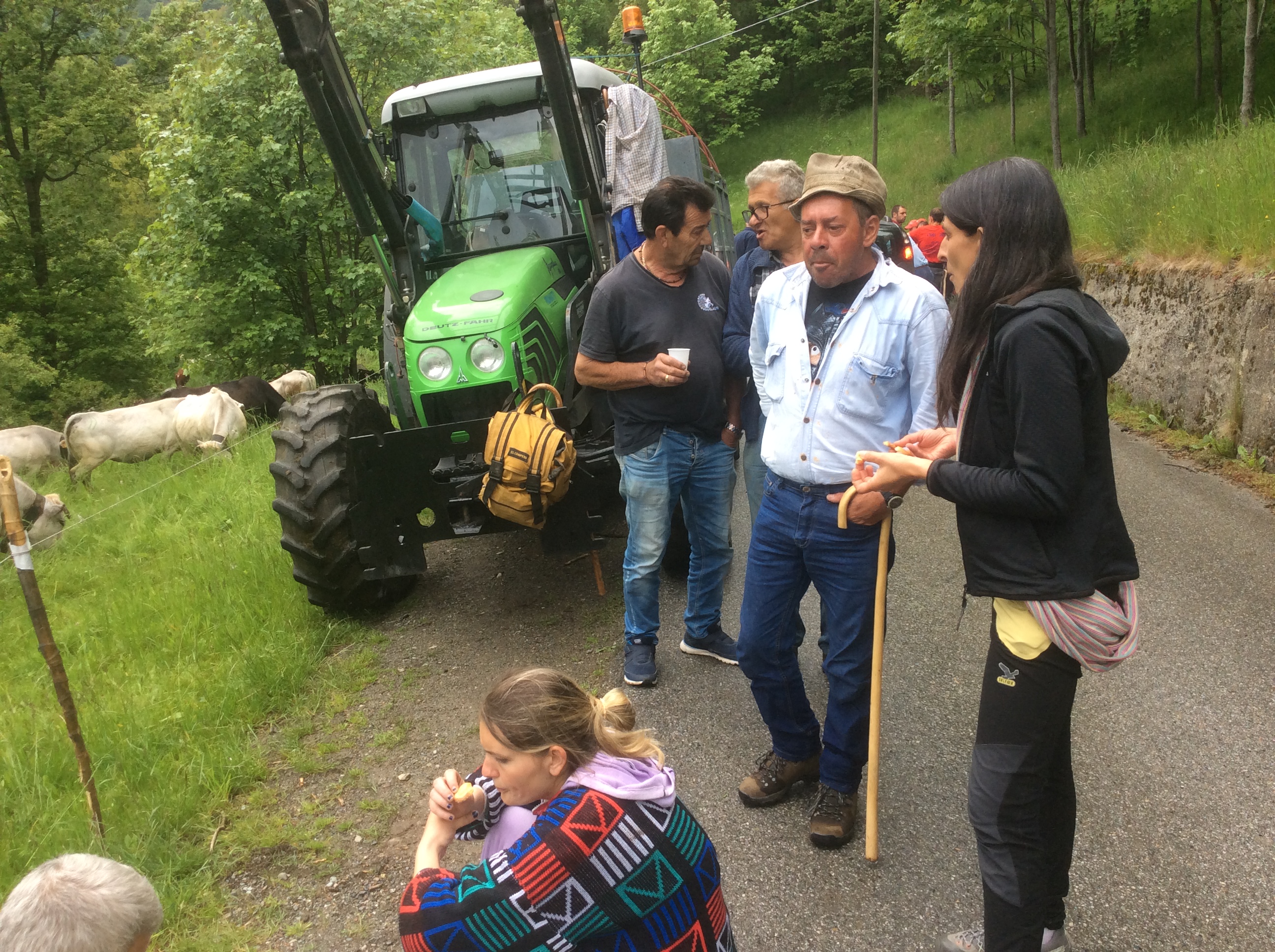
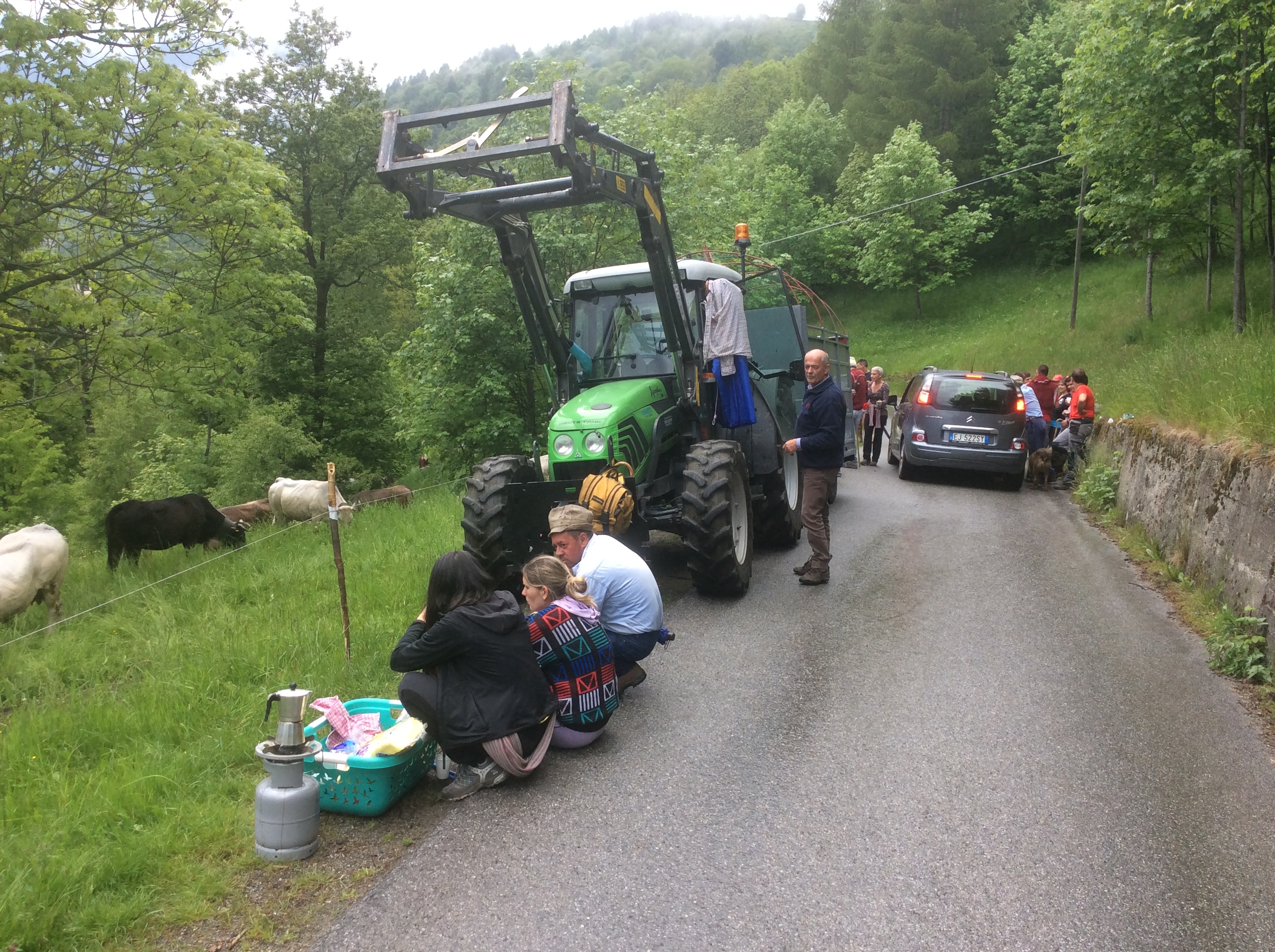
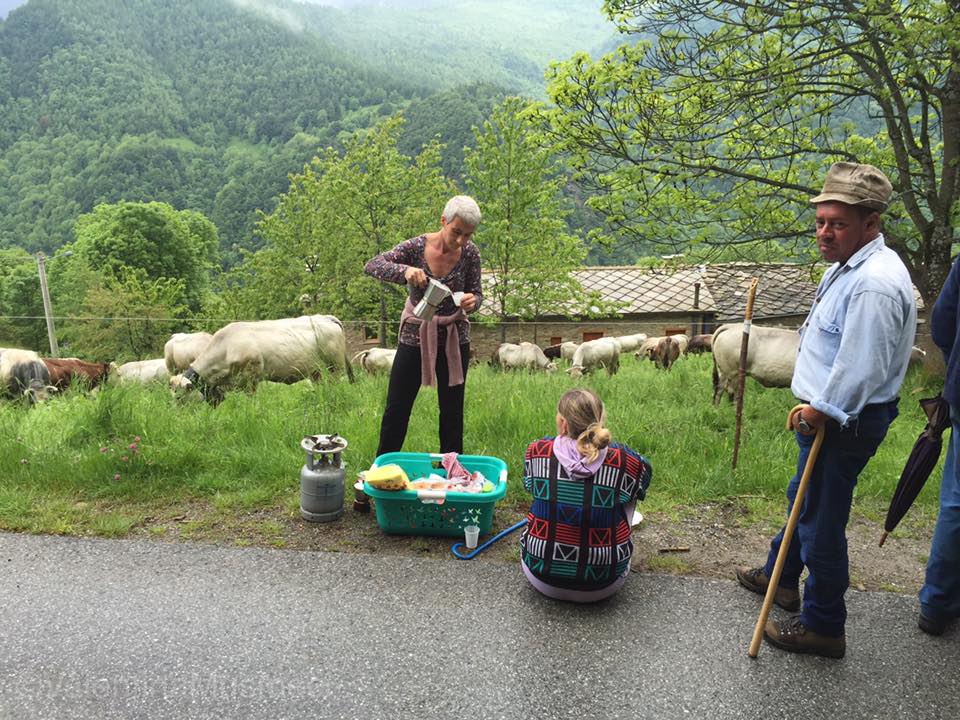
This migration, we learn, starts at this time of the year, when the leaves are green and summer is ripening, and lasts for four months during which the cattle and their herders trudge up the hill on foot until they reach its summit, in early fall, for access to all the greenery as far as eyes can see. And when winter begins, then return home, perhaps more rapidly this time, in time for milking and selling the cows as the case may be. But this slow, deliberate, march is a celebrated fact of life for the mountain shepherd and his family. From observation, the roles seem well marked: the woman/women take care of the feeding and well-being of the men, keeping a steady flow of hot coffee on a gas stove, and charming every passer-by with a taste of that and other snacks, and conversation. The men watch the animals, with the help of herding sticks and hunting dogs.

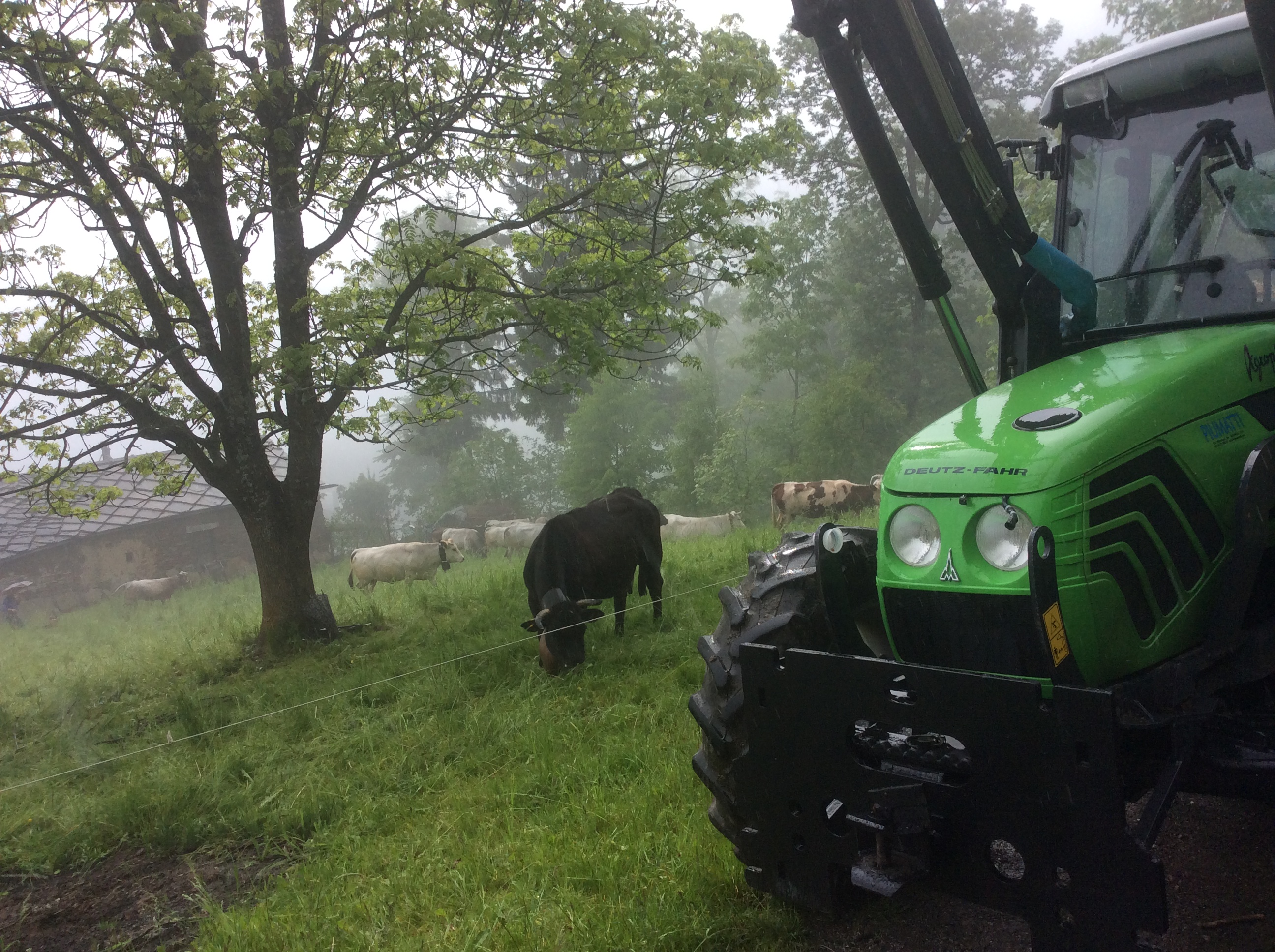
There are small cars too, following the herd like guardians. They will be used as places of rest during the day or during the night if nightfall ever finds them in uncomfortable locations. In this case, they were able to leave the cows at this choice pasture in order to return in the morning and continue the journey. It didn’t hurt either that there is some place where the herders can hide whenever the elements got too harsh. In short, it was a sophisticated set-up, befitting of such a lifestyle in such a region. But can’t help wondering what it was like before the tools of technology made it easier to be a shepherd with a vehicle.

IMG_5879

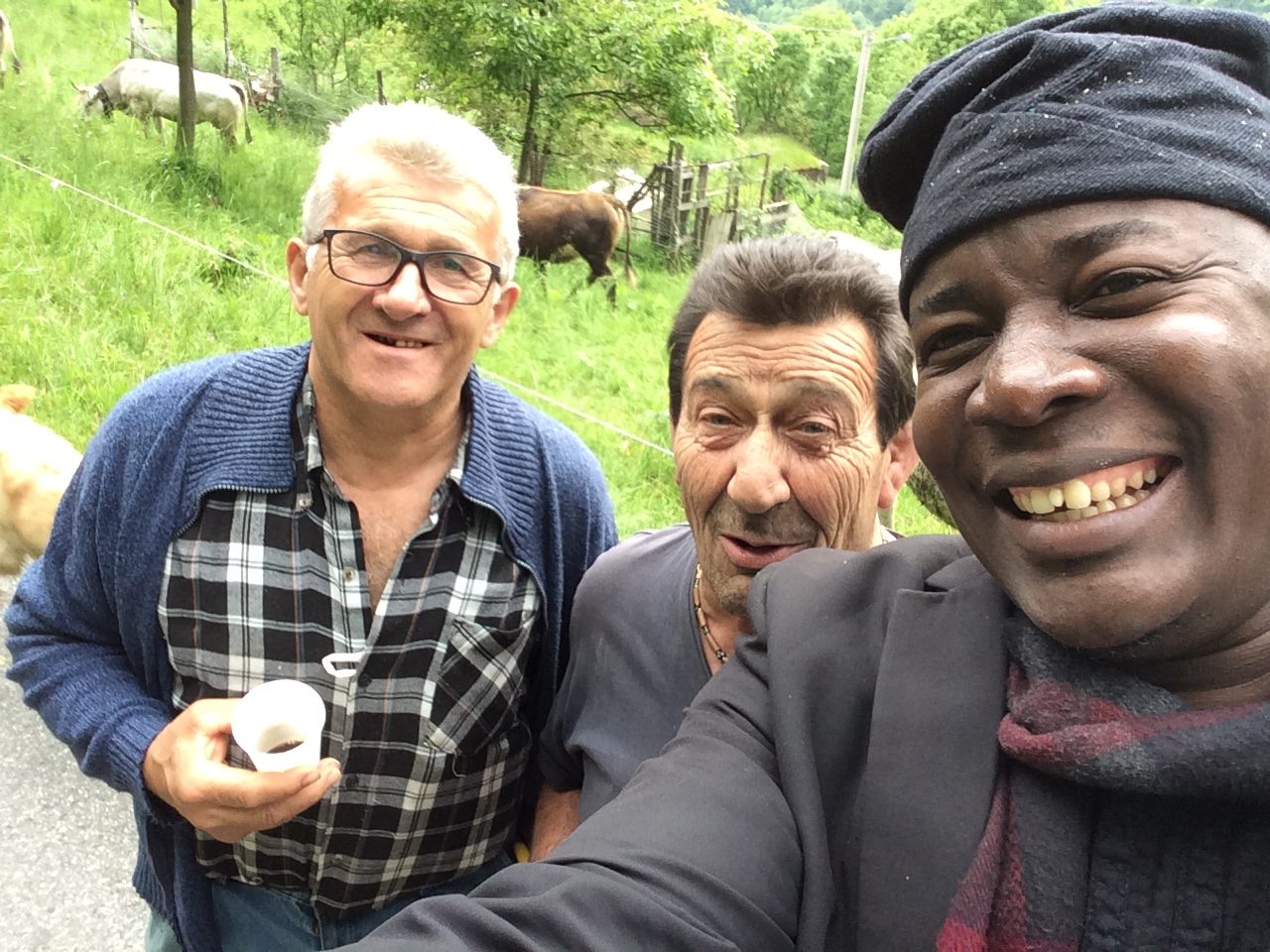
The men and women, like most residents of this area, speak Italian and French, two languages capable of all relevant needs, until the party encounters a stranger who only speaks English and Yorùbá with a smattering of French. Yet communication takes place, in the most ribald of ways as one would expect of a team of mostly male shepherds. Two young teenage children of the patriarch seemed more enchanted by what they’d assumed to be an interracial couple of Valentina and me, and would not let go. “Amante!” they screamed in mischief as we found our way back, out of their grip, back up the mountain. “No! Amigo!” I replied, in whatever language that translated.

IMG_5885

Later that evening, we heard the next day, some of the cows found their way down the hill, perhaps through sleepwalking, and had to be rescued with a truck that the shepherds always had nearby. The next morning, the clearing around the path where the cows grazed the previous day – and their dung deposits all around, including on the road – had shown how much damage a bunch of hungry cattle could do. “Thankfully,” I volunteered, they don’t trespass onto private properties. Someone told me not to be so confident. The only saving grace is that trespassers are dealt with appropriately enough to deter erring herdsmen from taking laws into their hands. Herdsmen also pay a form of tax for being able to graze on public lands, even if not in cash, at least in warmth and respect for the host communities. Shepherd culture might be the same everywhere, I thought. At the crux of their existence is a travelling gene and a desire to bridge boundaries while supporting the ecosystem through a dialogue with the land and animal relationship with it. But I also immediately conceded that the friendliness and warmth of this variant is a welcome departure from what is currently familiar.

____

Photo from the blogger and Valentina Musmeci

“I Don’t Stumble Upon a Scene” – Interview with Zaynab Odunsi

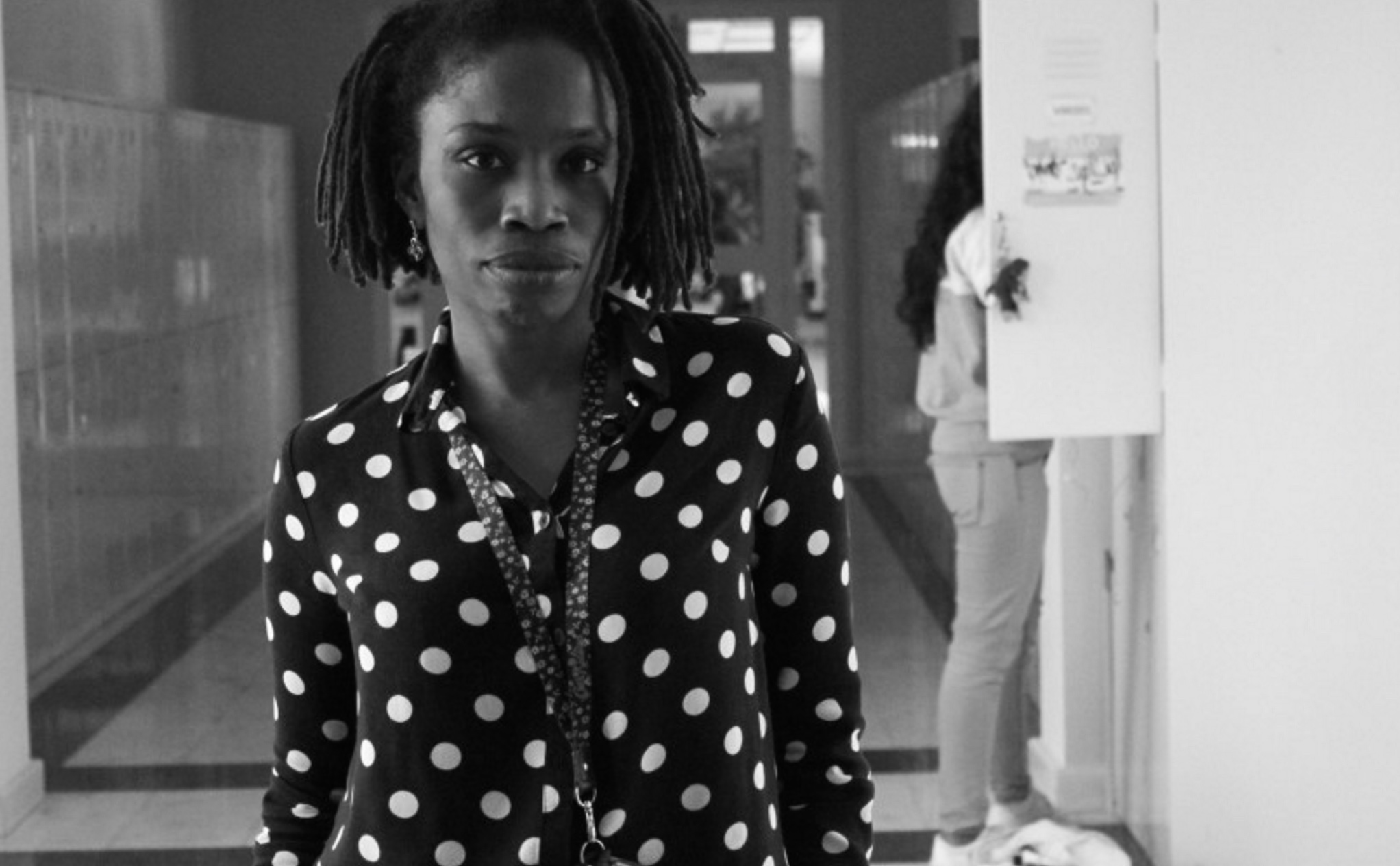
The Invisible Borders “Borders Within” road trip has begun. Every week, I’ll bring you a conversation with each participant. Two weeks ago, I spoke with Emeka Okereke and Emmanuel Iduma. Today, I speak with Zaynab Ọdúnsì, an award-winning photographer who also works as a full time lecturer at Dar Al Hekma University, Jeddah, Saudi Arabia. She holds an MA in Photography from the University of the Arts London and was the recipient of the residency award by the Mairie de Paris and Cites International des Arts- Residency in 2006. Enjoy.

________________

Zaynab
Wow, you live in Saudi Arabia? That certainly pops out instantly. From the scratch, what misconceptions do you think I need to get out of my mind immediately?

Yeahhh I have lived here for over 9 years now. I would say the prevalent misconception people have of women in KSA as a direct result of the Western media’s agenda to perpetuate this laughable perception would be the one to disregard. Saudi women don’t hide behind a veil – they don’t stay hidden away – they hold positions of power in both the private and public sectors. Sure we all have to wear an abaya (it can be any colour and design you want it to be and we spend ridiculous amounts of money on them.   

Which one, particularly, would I be shocked to find untrue or unsubstantiated?

That all Saudis are loaded. That you have to walk around in black and covered. No, women absolutely do not have to wear hijab, the head covering.

But do you have to walk with a male relative before you walk in public?

I wish you could have seen my face when I read this question. Bwahahahahahaa. Oh mannn I forgot that was yet another big Saudi myth. Noooooo you do not have to go out in the company of a male. That is so far removed from the truth I go out with my friends all the time. I guess the fact that women are not allowed to drive (yeahh boo hiss big time to that) we always need a driver but they just get in the car and go where we ask them to take us. Exactly like women do in Lagos all the time – we have drivers and there’s always Uber, husbands, brothers we don’t care who just as long as they well.. just drive us wherever! Be it to work, uni, restaurants, the beach, friends’, the malls… sure I would like the choice to drive myself but actually I quite like not driving. But no I don’t need to be “in the company” of a man in the capacity of a chaperone.

How did you find yourself in the Middle East, anyway? What do you do there, and how has it been?

My husband studied Arabic and his job brought us here all those years ago. I started working at a very progressive all women’s private university where I teach the photography courses in the school of design and architecture. Basically the introduction to darkroom (yes!), alternative processes, and the digital studio photography courses.

The British school that my kids attend is exceptionally good – I live on an expatriate compound with families from all corners of the world. Cost of living is low and for a wild weekend Dubai and Abu Dhabi are a couple of hours away.

I don’t really do things I don’t like to do so I will say it’s been great. Of course it’s not for everybody – you know, women still have to abide by rules of modesty in public and for some this can feel restrictive. I mean you can’t walk around Jeddah in shorts and a bikini. I have many close Saudi friends and met more people from different nationalities than I ever did living in the UK or Nigeria. My kids don’t know anything else so to them for now at least this is home.

I have many close Saudi friends.

What languages do you speak at home, especially to the children? Have you ever worried about them losing access to their mother tongue as a result of this distance?

I speak Yorùbá fluently but sadly only speak in English to my kids at home and they pick up Arabic from school and our neighbours on the compound.

I think the fact that my husband doesn’t speak Yorùbá (German/British)  compounds it.

Do I feel sad that they don’t speak or at least understand it? yes big time. But we all know about language and kids – I think one or two long summers in Nigeria over the next few years and they will pick it up. To be fair I didn’t really speak a lot of Yorùbá growing up I just found myself in my late teens realising that I was completely fluent. But saying that, I was living in Nigeria until my mid teens and was exposed to the language.

As a photographer, what is your biggest challenge working in such a conservative country where the public (I’d mistakenly written “pubic” at first) gaze is not always a welcome presence?

Lol. Pubic eh?

Challenges are twofold. As a photographer – the biggest challenge for me like most working mums is juggling work and family commitments, this compounds the dilemma of me actually finding time to do my own personal (creative) work. Language used to be a major barrier but not so much anymore. I am not really a street photographer so I guess it’s easier for me. The way that I now approach my work is more about long term projects that can unfold without being intrusive.

As a teacher, I have students that produce really compelling highly personal work but due to the conservative nature of their backgrounds many of my students’ work is usually for my eyes only – for assessment. They do not even go in my course files. This can be frustrating at times when I want to share the work with colleagues or organisations that would be truly moved by their originality and novelty.

I’ve taken a look at your site but couldn’t understand what you were doing? Tell me more about the Hekayat Ashara photography project .

So after years of living in Jeddah I went with some students to an area called Al Ruwais district, which is known for its multicultural multi ethnic residents. It is also has a notorious reputation as a no go area. Rumours of drugs, prostitution etc are rife and in the government’s sight for “rejuvenation”. Inhabitants of Ruwais make up the lowest income earners in Jeddah.

So I launched a community based project called Hekayat Ashara (The story of 10) where 10 women of different nationalities/backgrounds living or working in Ruwais were given photography workshops in order to document the area before the proposed changes. We met every week and paired each Ruwais lady with one student from the school of design and architecture over a 1-year period. The project was hugely successful with proposals for a second edition in the Holy City of Makkah.

zaynab2

Zaynab is third from the right

Your bio says you’ve worked for British Airways, The Nigerian Conservation Foundation, and Guaranty Trust Bank. Can I ask what you did for them as a photographer?

British Airways were sponsors of an “Expedition of Goodwill” to commemorate the 200th anniversary of the birth of Richard Lander and to celebrate the Lander brothers’ in November 2004 to retrace their historic river journey. I was hired to follow and document their experience.

Guaranty Trust Bank sponsored and renovated a school called St. George in Ikoyi and I was hired to make some images of the school and the kids during this transition period for their annual reports and other in house purposes.

Hired by the NCF to travel to Gashaka Gumti national park – photographs for promotional materials.

As a photographer, what do you look for in a scene? What kind of environment most inspires you to reach out for the camera?

As you rightly asked about the notion of the gaze living in a country where I don’t really have the opportunity to go around pointing the camera around I tend to plan my shoots in advance. I don’t stumble upon a scene – I always somehow have to orchestrate what unfolds in front of my lens. This means that I spend more time planning props, location and especially lighting. Of course the downside is that I  miss out on the spontaneous potential of the medium. This is what I am most excited and nervous about the road trip – the fact that I have to produce work on the go. Looking for these elements that I usually meticulously plan every day on the go in a new city everyday.

What has been your most memorable experience as a woman working, either in the UK, in Nigeria, and in the Middle East, either in comparison or in contrast?

My fondest memories or experiences as a female photographer I would say was definitely during the active years of the collective Depth of field. Working in a group it always felt like a welcome change of perspective to get the input of the guys (Uche, Zulu, Emeka and Amaize).

I just go about my work though usually – my gender is inconsequential most days.

What is your favourite work and why?

I like different work for different reasons – some for what I learned about myself, some for what I learned about others. I am very fond of the work that I did with the very popular traffic warden opposite Law School years ago.

How did you get into the Invisible Borders Project?

I have known Emeka for years – we are members of the collective Depth of Field and the worked together on projects in the past. I had been planning to join the IB road trip for a few years now but work commitments never made it quite possible. Luckily this year it’s worked out and I am really excited to be a part of the borders within edition.

What is your biggest expectation for the trip?

My biggest expectation is producing meaningful work as being a university lecturer, great emphasis is placed on research. and I am hopeful that collaboration especially with the writers will support and help me with my writing to support the research-based body of work I expect to produce.

What is your biggest fear?

I have a few worries mostly related to hygiene, staying clean, but for sure my biggest fear on the road trip is falling sick. My kids are worried about mama getting taken by those bad guys!

If I interview you again at the end of the trip, what do you expect would have changed either in your appreciation of travel, your craft, or Nigeria in general?

Honestly I’m not too sure. But sure I won’t be the same Zaynab from 45 days before. I love travel and I am not naive as to think that travelling is easy. I know that we must rely heavily on the mercy of our creator to bless us as we pull into every new city. I pray that we will encounter people that will be merciful and kind to us – people that will help us on this seemingly crazy adventure.

I hope more than anything that people will see the value of such projects and be driven to support more readily in the future.

Thank you for talking to me.

Anytime. Thank you!

___________

Photos from Invisible Borders.

Bloody Morning: The Ukpabi-Nimbo Massacre

Guest post by Chijioke Ngobili

On Monday, 25th April, 2016, just before it was 7am, the unarmed indigenes of Ukpabi-Nimbo, Uzo-Uwani LG of Enugu State, South-eastern Nigeria were attacked with machetes, guns and other dangerous weapons. It was a bloodbath. The news filtered in and pictures of mangled bodies were shared on social media. My Facebook newsfeed began giving me snippets of the carnage around 1pm on 25th April, 2016. I read and searched out more information on it and I was embittered by what I read—some false, some exaggerated and some compellingly true. But then I had begun considering a travel to Nsukka.

On 26th April, 2016, by 6.20pm, I was at the Bishop Shanahan Hospital, Nsukka situated along Enugu Road. I asked the security men that I be directed to the ward where the victims of the Fulani massacre were, and they did. On entering this very ward, anguish and sorrow greeted me with their smell and wisps. One must have to double his guts to endure the sight of blood, deep cuts and wounds. I did before I entered a particular partition of the two wards.

The doctors, nurses were very busy and proactive in managing an overwhelming situation. The victims and their caregivers looked at me with suspicion. They were very careful and looked traumatized. I spoke in Igbo immediately and introduced myself mentioning my place of work so as to douse the growing tension and discomfort. I realised that it would be wise if I limited my speaking to one or two persons as not to attract the attentions of the doctors, nurses and other people in there, else I may be unable to extract any information at all since I’m no journalist by profession.

Nimbo 1 (1)

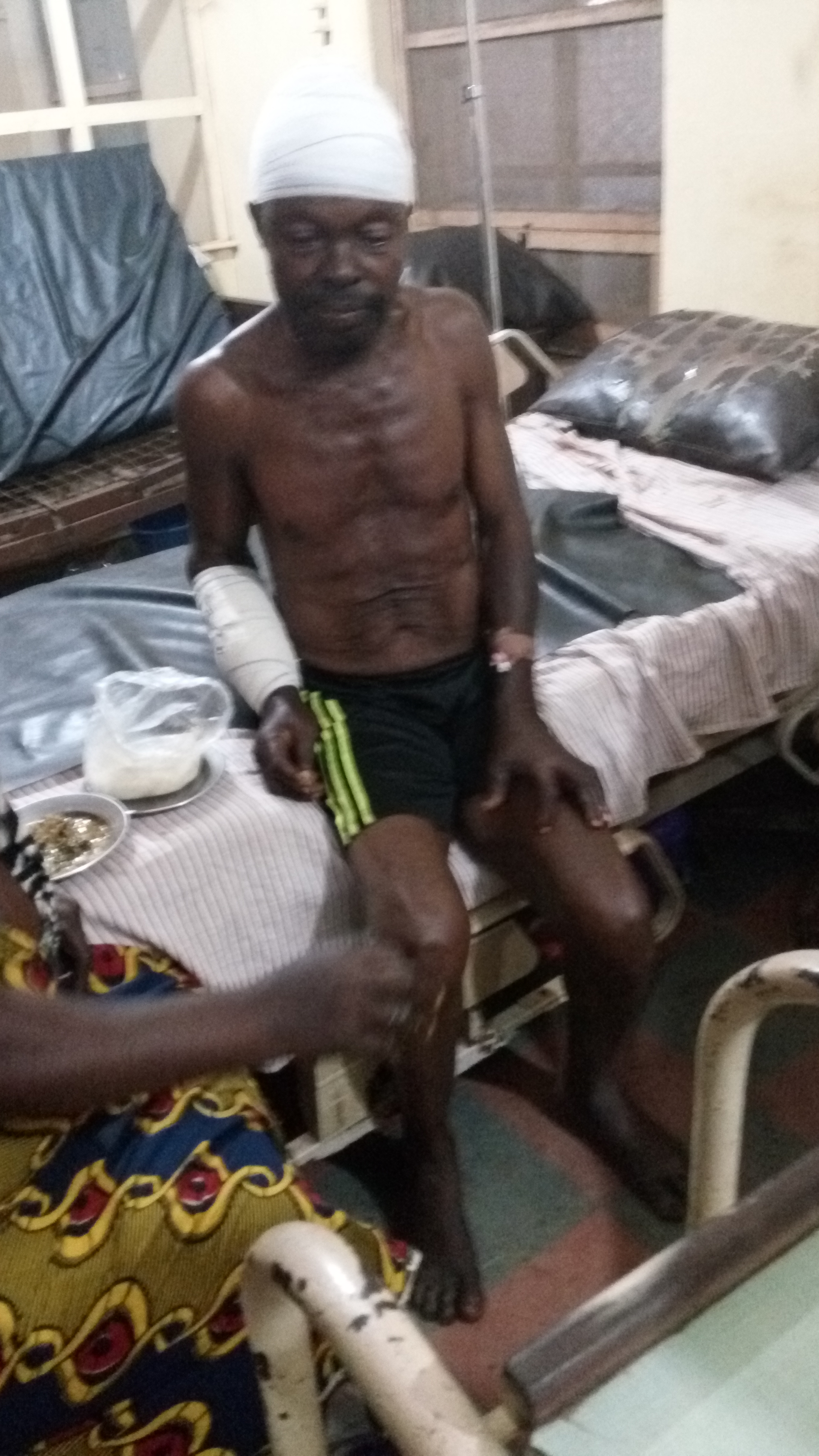
Samuel Uzoh – one of the victims.

Samuel Uzoh (pictured above) was the first victim I tried speaking to. He had a fiery temper. He understandably barked at me when I tried asking him questions directly: “So, when you get the answer, what will you do with it?” When I tried to explain, he ignored me and continued eating the food his sister was feeding him. It was this sister of his—who declined giving her own name—that told me her brother’s name and gave me a sketchy report of the horrendous incident before withdrawing from saying more when she saw me getting out my phone to record some of the things she said. Despite his massive wounds, Samuel’s mouth remained sharp and mind alert. You need not know that he engaged the herdsmen who wielded machetes and guns, and paid for it. This was his brief story: He is a farmer. He was going to early morning farming around 6am when the marauders attacked him. He refused to submit to death. Instead, he fought and lived to sustain the wounds on his head and right arm.

When I looked to my left, on the other row of the hospital beds, I saw a much younger man laid on the bed with a young woman of his age looking over him. I approached them. The young lady was more friendly and welcoming. She struck as more exposed and educated judging from her response in good English and the unexpected courtesy she showed me after I had introduced myself. 

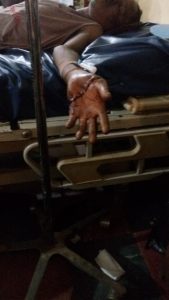
Celestine Ajogwu (pictured below) was the name of her brother. I had asked if she was Celestine’s wife. “No. We are siblings from same father but not same mother. He is Celestine Ajogwu while I am Chioma Ezugwu”, she said. His brother’s left palm was cut with a machete by the Fulani herdsmen as can be seen in the picture. His head and jaw were equally hit with a machete as he lost three teeth in the process. Celestine managed to say a few things to me despite the badly hurt mouth that affected his speaking. His sister, Chioma, helped him to narrate to me how it all happened in their town of Nimbo in the wee hours of April 25th, 2016: “I was in Onicha, Anambra State where I live when they called me to come home; that our community was raided”, she said. “I didn’t even know that my brother was among the victims until I saw people being carried out of the vehicle. I was shocked to speechlessness on seeing him in his very bad condition”.

Nimbo 1 (2)

Celestine Ajogwu – one of the victims.

Chioma then took me down memory lane as far back as 2006 when their traditional leader of Nimbo community naïvely thought that Fulani herdsmen could be pacified with money as to leave his people in peace, only for them to tell him how they desired to acquire more lands. “The man who is our Igwe (name withheld) was away from us for a long time. He returned from Abroad (maybe US/UK) and became the Igwe following some traditional succession”, Chioma revealed. “In 2006 or thereabout, after he had been deluged with complaints from our people on the destruction of farmlands by the Fulani herds of cattle, he invited the Fulani herdsmen and asked them how much he can give them as to vacate from our community entirely and in peace. The Fulani Cattle breeders asked for 10 million naira and our Igwe raised it and gave them, only for them to return to their excessive grazing with the claims that we have a wide expanse of lands”, Chioma told me. Since that year 2006 when the Igwe made that offer and before then, “…it has been endless conflicts between our people and the Fulani cattle breeders”, she emphasised.

Recently, the Fulani herdsmen wrote a letter to the Igwe, informing him with untold bravado, of their intention to revenge the clash they have been having with the men of the community on the issue of excessive grazing. On learning that, the Igwe alerted the State and Local authorities. Policemen were mobilised to the town and stationed to protect the people. But something suspicious and conspiratorial mixed up to birth the eventual misfortune.

Celestine Ajogwu told me himself: “I had slept the night before seeing the policemen around our community and so felt relaxed. Early in the morning, around 6am, I had woken to move out. I saw unusually numerous men dressed in black thinking they were the security men I saw the other night. But when I noticed they were blindfolded, I grew afraid and ran back to my house not knowing they had seen me. Some of them came to my house and struggled with me before dragging me out to butcher. In the process, I fell down to the ground pretending to be dead. That was when they left me alone thinking I had died”.  Chioma took over to straighten the wavy mix of how the indigenes managed to save many lives by escaping an army of numerous marauders. “These Fulani had planned not to raise dust in the killing which is why you can see that many of the victims were mainly butchered and were barely shot with a gun. They planned a smooth ethnic cleansing such that no one around would know what is happening until they are done with the cleansing. But it took one of our men who had woken much earlier to shout out when they struggled with him. The man was coming out with his bike when he saw something unusual about the people they thought were protecting them. With his shouting, people scampered for safety and the killers managed to kill the much they could. My brother, though badly hurt, managed to alert other people he could alert using his phone”.

Nimbo 1 (3)

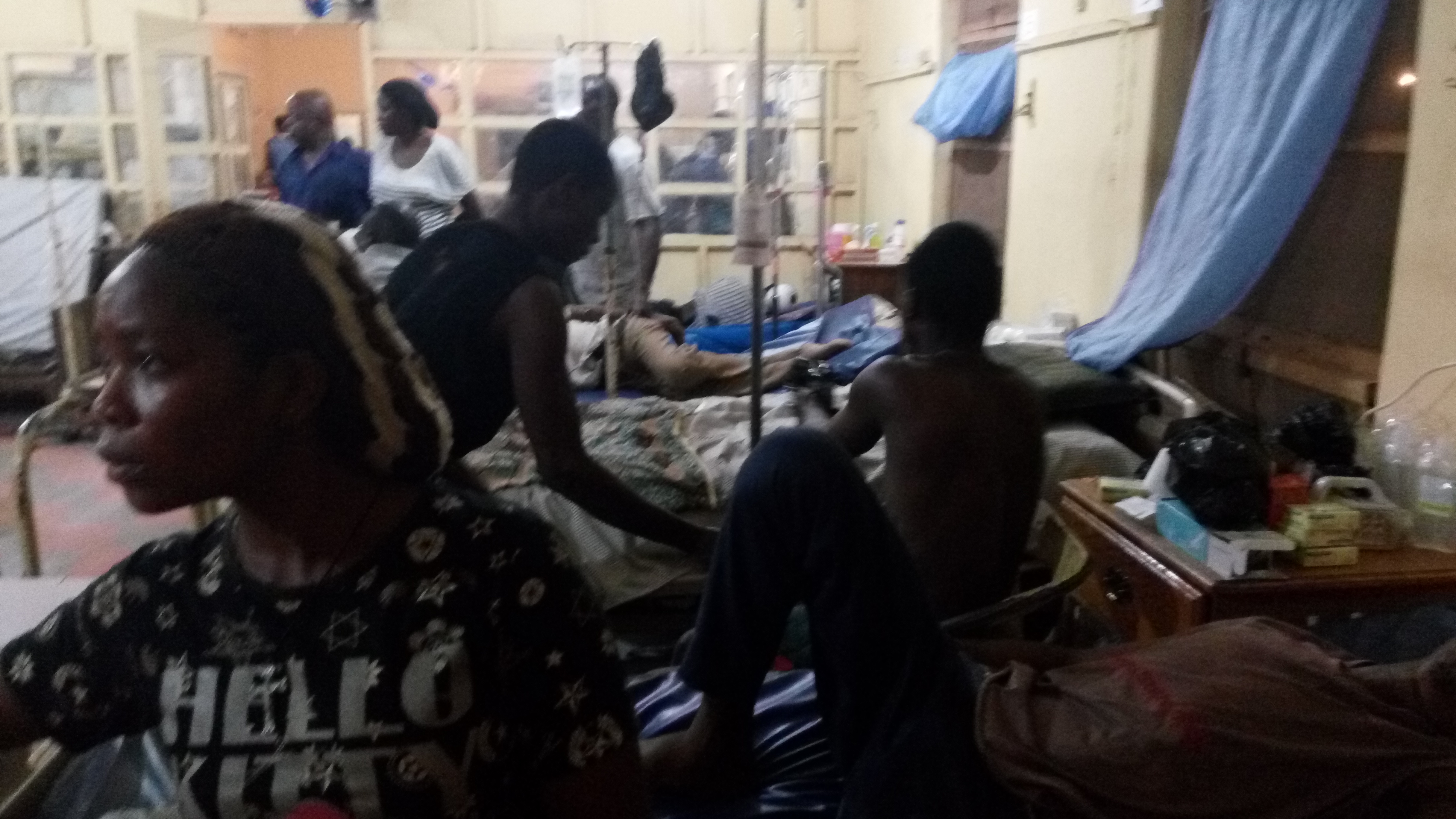
Chioma Ezugwu—my main source of information and resource person—with people milling around in the hospital ward.

I also gathered that the Catholic parish priest in the town earlier escaped the carnage even when the killers approached his house and found no one. In all these, something is significant but rarely noticed: The women were barely part of the victims. I checked the five patients in that ward and noticed that they were all men. Chioma had brought this to my attention saying: “Even if women are gathered in hundreds, they would just pass by and leave them. They said it’s the men they are looking for; that it’s our men that have offended them most and refused them on our lands”. On asking the actual number of deaths so far, Chioma said she had been able to count nine dead bodies brought to the morgue with her own eyes despite the conflicting figures thrown about the media. She pointed at a bed adjacent to theirs: “This evening, the man here died and was taken to the morgue. He was old and couldn’t endure the pains of the deep wounds he sustained”. Chioma didn’t clarify to me if the recently dead man added up the dead bodies to 10 or completed them 9. She also reminded me that there were other victims taken to the General Hospital in the same Nsukka; and definitely, other dead bodies will be there too, plus those who may have equally died in the process. She told me how Governor Ifeanyi Ugwuanyi, the governor of their State, visited them and gave them each a hundred thousand naira each, just as the Senator representing Nsukka Senatorial Zone, Chukwuka Utazi gave them fifty thousand naira each; making it a hundred and fifty thousand naira each. (They were 5 patients in that very ward as at 26th evening of April, 2016). Also according to Chioma, the governor paid their bills and informed them that they’d be transferred to University of Nigeria, Teaching Hospital, Ituku-Ozalla between that evening and the next morning.

Celestine and Chioma, in a nutshell, believed that there is a conspiracy somewhere which resulted to the bloodbath. They believed there was an insider who facilitated it even though they refrained from mentioning the people/group they might have suspected. They are right! The constant pulse in that suspicion is this: An enemy served you a threat. You provided a security to avert it, yet the threat became real. So, what actually did the security agents do after all? Why did they leave their station only for the enemies to surface in a space of few hours? Were where those enemies all along? In the bush? Or did they use the same roads you guard to assess the community of Nimbo? Too many questions begged for answers in my mind.

“We can’t even wait for morning to come, so that we can be transferred to Enugu”, Chioma said resolutely. “This place doesn’t seem safe judging from two of the victims in the other ward who couldn’t speak Igbo when the doctors and nurses asked for their names. I am afraid of their body languages and facial expressions so far. They can possibly be informants who consciously got wounded as to keep penetrating our people further”. I left them at 8pm after showing them some little financial gestures. I assured them that I would keep checking on them and that if anyone who gets to learn of their story from me offers anything for them, I’d surely make it reach them. 

_____________

Chijioke is a musician, writer and freelance journalist. He wrote from Nsukka.

_____________

Photo credit: Chijioke Ngobili

Making Lemonade from Distance

In yesterday’s episode of the Late Show with Stephen Colbert, chef and writer Eddie Huang spoke of his experience as an American man of Chinese descent, particularly about using food as a way of connecting with his heritage. He spoke of one particular experience where he had visited China as an American chef, and made a Chinese meal to a local audience and hoping for validation. Does this food taste Chinese enough or is my American background too much of an influence? The response he got, or his retelling it in this clip below, gave me goose bumps:

“You don’t have to keep thinking about whether you’re Chinese because you are Chinese. The diaspora is very important. Wherever you are, if you’re Jamaican or Puerto Rican, or Chinese, and you’re born in America… you’re part of it. You’re not disconnected. You can’t be disconnected. And whatever you do, it is Chinese. Or, it is Jamaican, or it is Puerto Rican. But it’s in your own voice.”


I found it relevant now as I’ve been thinking of the import of Beyoncé’s new visual album Lemonade which caught the world by storm a few days ago, and its relevance as a cultural phenomenon. I have seen the accompanying video to the album once, and listened to many of the songs many times. I have come to realise that as a robust and relevant work of art, it is way more than just an American woman’s expression of a range of emotions, a black woman’s embrace of vulnerability as a powerful virtue, or a woman’s documentation of marital tribulations as therapy. It is all of those things and more. It is an extension of a long tradition of strong (and yes black) womanhood that is not often found in the Western media.

What I saw, in Beyoncé’s ankara prints which she wore throughout, the cameos by scorned and bereaved black women, the imagery of the Yorùbá goddess Ọṣun all around the album, the costume, the deeply personal poetry, and the general black self-confidence that has pissed off smug commentators like Piers Morgan is a reclaiming of a lost space of black normalcy (and yes, occasional militancy directed at real or symbolic obstacles). But it is also an extension of the black experience which is not – as we’ve often believed – just an American variant. Being unashamedly black in this album, unlike how she’d been in previous ones, does more to connect her back to a tradition of black female strength and resilience very much alive on the home continent than it does to detract. I assume that this was her intention all along.

I find this angle in the artiste’s work more compelling than any other (including the rumoured infidelity). Has Beyoncé been trying to connect the African diaspora with the homeland all along? From the many generations of suspicion between descendants of slaves who became African-Americans, and descendants slavers and survivors many of who now run most of African countries, there have always been something cold and distant. What part of the African-American experience speaks the most to the African audience, and what parts should? If the guilt of our past and the violence that birthed it can be properly aired and then forgiven, can we share each other’s success as an extension of each other’s hopes, aspirations and disappointments?

We may have been asking the wrong question all along. The right question, which the album might help answering in its dizzying brilliance, is “isn’t a fuller dimension representation of the black woman in popular culture a long needed intervention in today’s media?”