Browsing the archives for the Observations category.

On Word Predestinations

One of the premises of linguistic determinism is that “the structures, hierarchies, and hidden associations of our individual human languages determine the conclusions that we reach in our logic, the aspirations of our lived lives, and all our emotional content.” (Wiki). As opposed to linguistic relativity – a flip side of the debate which allows for more latitude as relates to the purpose and limits of language and thought, determinism suggests that all events are caused by all previous events, and – similar to predestination – that they were meant only for a particular purpose.
My fascination with words and poetry stems from a similar line of thought – at least as it relates to those still benign implications of the school of thought. One of my favourite parts of Czeslaw Milosz’s Visions from San Francisco Bay was where he was contemplating the source of words, and whether somewhere on a mere conceptual plane they had been predestined to fulfill the roles they do in poetry, jokes and fiction. A song by Rihanna titled “We found love in a hopeless place” was recently satirized as “We found Dove in a soapless place”, successfully replicating the rhyme and rhythm, and yet providing sufficient absurdity to make it a joke. Last week, a host on Fox news joked about the Sandra Fluke contraception controversy and its tv coverage, saying, “You don’t judge a Fluke by its coverage.” Boom.

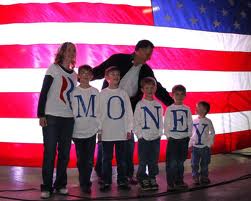
There are a thousand and one instances of lexical serendipity to support a theory for “poetic determinism” (my coinage). Like Milosz, I find more than just co-incidences in the abundant evidence of the hand of the mystic in our communication patterns. I noted it when Obama killed Osama, or when the most remarkable election in America’s recent history just happened to feature a man with a middle name “Hussein” right during a war in Iraq. Mitt Romney’s last name has been occasionally anagrammed as “R-Money”, for good reason, and poetic justice. And just two days ago, a video surfaced that successfully arranged all his public gaffes into a rap song scored by – wait for it: another Michigan native – Eminem. Watch below:

Of course, due credit must go to the genius of the people patient enough to arrange such a brilliant collection of sound bites into a meaningful piece of poetic art. A bigger credit – for those convinced of such a thing as the predestination of words – must go to the mischief-making lexical muses of the realm. And then sometime last year, a congressman who tweeted pictures of his genitals just happened to have been named “Wiener”. Don’t even get me started on the endless tonal possibilities of ambiguity in the Yoruba language. Well, here’s one more:

Words with Jason

Jason Braun, a spoken word poet operates out of Edwardsville. He’s a friend and a Hemingway aficionado. I spoke with him a few days ago about his influences and his opinion on spoken word poetry. His spoken word mixtape is entitled  “Made This For You: The Mix Tape as Literature” given away yesterday at Jasonandthebeast.com. This mixtape was a product of the Association of Writers Programs & Writing Programs (AWP) Conference, Chicago. 

Tell me about the source of your fascination with rap and poetry.

I started writing poetry in high school after reading Shakespeare. I was listening to the Wu Tang Clan at the same time. Eventually I realized that these two things were more similar than they were different. Then for a long time I was influenced by the Poetry Slam, the Beats and the Black Arts Movement. I was lucky to get to study with Eugene B. Redmond at siue and his jazz backed album was a big influence on me.

Later I started a band called Jupiter Jazz with Jerry Hill (DJ Uptown) and it was Hip Hop, Jazz, and Poetry. We had some big breaks and played some great shows including Riverfest in Little Rock, Arkansas with people like B.B. King and The Wallflowers. I then started the “Jason and The Beast” project to make sonnets into a Hip Hop album.

“Made This For You: The Mix Tape as Literature” is about pushing the boundaries of what music, poetry, can do and where they can do it.

“What direction do you see for spoken word poetry in today’s world, especially because of the influence of social media?”

I see it moving in at least two directions. On the one hand you have spoken word and slam as new place that publishing poets can come from. I don’t want to call them academic poets but they’re poets that want to publish books. Two of my favorite poets that started in Slam and have left it behind are Patricia Smith and Tyehimba Jess. On the other hand spoken word poetry is being put to good use in the global community by people like my friend Michael Rothenberg and his”100 Thousand Poets for Change.”

These two directions won’t diminish the great thing that Marc Kelly Smith started when he created the Poetry Slam. He’ll still be drawing a crowd at the Green Mill in Chicago.

Do you see spoken word poetry as complementing publishing or standing alone from it. Do spoken word poets have to publish poems or does it just suffice to participate in the trade as oral griots.

I like to make stuff. Books, CD’s, downloads, apps, backpacks that prepare people for the coming mayan apocalypse–I’ve got all of those things in the works. Really. And I like to put on shows, sing, rap, and teach. The griots and Homer might be closer to my heart. I think about this a lot.

Are there any other shows that you’ve participated in that you can highlight? Where and when?

I’ve co-directed a multi media show for Adrian Matejka’s National Poetry Series winning book, Mixology. Me and DJ Uptown played a short set there. It great to rap for my professors and former professors and help try to bring Matejka’s amazing book into 3D.

Beside the jasonandthebeast website, where else can we find you (online and elsewhere)?

If you’re in Chicago from Feb 29th-March 3rd you can find me and some of my collaborators at the AWP Book fair by going to the Sou’wester table G5. If you don’t have tickets to AWP you can probably find me during the evening at the main bar at the Hilton Chicago (720 South Michigan Ave) or hanging out at The Green Mill (4802 N. Broadway), where Marc Smith once put me on as a featured guest of his Poetry Slam.

In the St. Louis area:
On Tuesday, March 27 from 12:30 – 2pm in the Maple/Dogwood Rooms of the MUC, Jason Braun will be presenting at SIUE’s College of Arts and Sciences Colloquium during the creative writing panel on “Thinking about Space.”

On Thursday, March 29th at 7pm Jason Braun will be featured at the SIUE bookstore as part of the Graduate Writers Read Series.

On Saturday, March the 31st from 7pm Jason Braun will be featured by the St. Louis Writers Guild for a night of poetry and music, which will be at Kirkwood Train Station. Raven Wolf will be doing jazz back-ups. Other poets include Treasure Shields Redmond, Nicky Rainey, Erin Chapman, Gerry Mandel.

And on 88.1 KDHX Monday Nights from 9-10pm hosting “Literature for the Halibut.” You can listen from anywhere in the world at kdhx.org

You can find more about Jason’s mixtape here.

Ramblings: On A Few Personal Things

Hi Blog,

It has been a while, or has it? In-between worrying about the direction of this darned thesis (which is as interesting/exciting as it is burdening), and looking all around the internet for good English teaching opportunities in East Africa after this long American adventure winds up in a few months, and managing a language lab that caters to all students of foreign languages in this university, you have been a consistent friend. Even while worrying all through the last couple of weeks deciding which photographs to enter into that Juried Show, and eventually, the little details of its presentation, you have been here. Here’s my hug to you. Hold it tight. You deserve it.

Do you also remember that new position that was tossed on my lap from those brainy folks at Nigerianstalk? Adding a literary component to the already popular site of Nigerian news/thought aggregation, a LitMag was debut with a purpose of harnessing the strength of new literature on the continent and I was made the editor. Tell me, how easy was the task of transitioning from a distant critic of Nigeria/Africa’s new writing into an influential hand in its new directions? The first published pieces came from people we already had close by. I have now discovered Facebook – and twitter – as a treasure trove of other new writings while still unrelenting in trawling the web for as many more as one could find. Young/Old Nigerians and non-Nigerians are writing new, brilliant things. If we can use the LitMag to bring them to the attention of the world, and produce one or two best-selling authors (and maybe a Caine/Booker prize-winning author), that would have been a success, wouldn’t it? For now, I invite you over to read short stories by Anja Choon and Olumide Abimbola, poetry by Benson Eluma and Kolade Ajayi, reviews by Adebiyi Olusolape, and a delightful non-fiction by Temie Giwa. All delightful, really.

Yesterday, I played around with tumblr. I have been told consistently that it is a better portal for photo exhibition than Facebook or twitter. I didn’t pay attention to it much because – frankly – I wasn’t really ready to deal with the work of pruning a whole photo database of thousands of pictures for weed and tare. Now that some of the work in that department has got some attention, it might be necessary to take these advice seriously. People who access the tumblr page would be able to see my works-in-progress, and photos that I would rather not have to delete. After all, Facebook has now been fully privatized. Giving hard, creative work to Mr. Zuckerberg for free will bring neither pleasure nor profit. One could suggest that artists/writers who use that platform for exhibition of their work should get something back from the pool of advertising revenue that Facebook rakes in everyday… but one would be but one voice in the wilderness.

Valentine’s Day always reminded me more of that old picture I took on the way to campus in the winter of 2009/10: a student couple staring idly at the restful lake. There were just three shots, and only one of them became the super great piece that it eventually became. Sometimes I think of them. Would they recognize themselves in the photo today if presented with it? All the viewer sees is their backs turned to the photographer. Ahead of them is a serene lake disturbed only by the restless geese. Another thought: if that picture were to make it to a great exhibition somewhere in New York City sometime in the future, how much would it fetch? And, how does one quantify the value of being at the right place at the right time with the right kind of camera, and stealth?

The day, of course, always reminded of that one last year that ended with a speeding ticket on my driver’s license in St. Louis. Somehow, in spite of my enduring affection for that riverfront town, we always managed to run headfirst into each other’s restless ego. Last year was also memorable for a very remarkable congress of us five student friends watching the Grammy with wine, chips, food, and class homework. A year later, we are all mildly dispersed in all directions of the state. Next year will surely find us in even more disparate circumstances. As the Yorubas say, “twenty children will never typically play for twenty straight years.” (Good luck explaining that to a monastery).

The curator of the art show slated for Friday told me that the opening day is the only day that I am obliged to show up – in order to meet with other artists, and to talk to the guests. For the other days of the one-month event, visitors and guests will just wander around observing, reading artist statements, and pointing to particular artworks that catch their attention enough to bring out their credit cards.  The long nights between now and Friday will hopefully be filled with more productive endeavour. (I really hate bringing up thoughts about this thesis, as much as I have enjoyed working on it. I’m guessing that this is what a pregnancy feels like). As usual, there are a few new, and a few incomplete, novels all around my bed. None of them will be read to the end at the moment. Maybe this is a good time to return to editing that copy of Headfirst into the Meddle which my e-publisher has requested for a re-issuing. This year might be a good year for creativity after all – in spite of that damned blessed thesis.

Thank you blog for being there. I love you too. If you remain good, I promise to spend a lot more time with you when the thesis is over. Deal? I also have a story I want to tell you. Many stories, in fact, but there is this one about a personal brush with Intellectual Property violation on the internet. Will you still be here?

Sincerely Yours,

KT

PS: Supervisor just sent me a mail that began with the following: “Something else I forgot to mention… You will probably need to develop some facility at multi-tasking…”

The Lovejoy Connection (2)

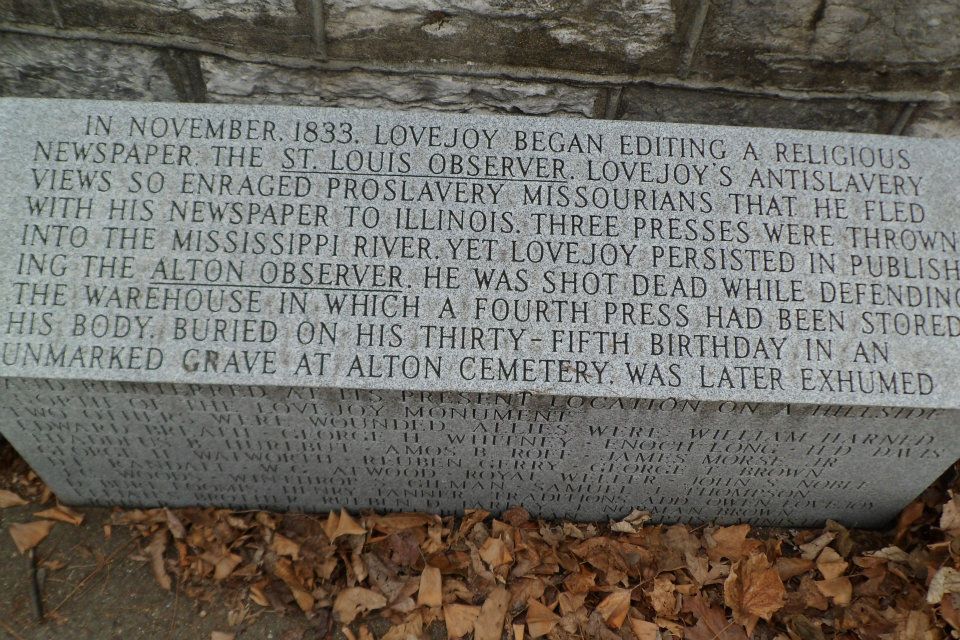
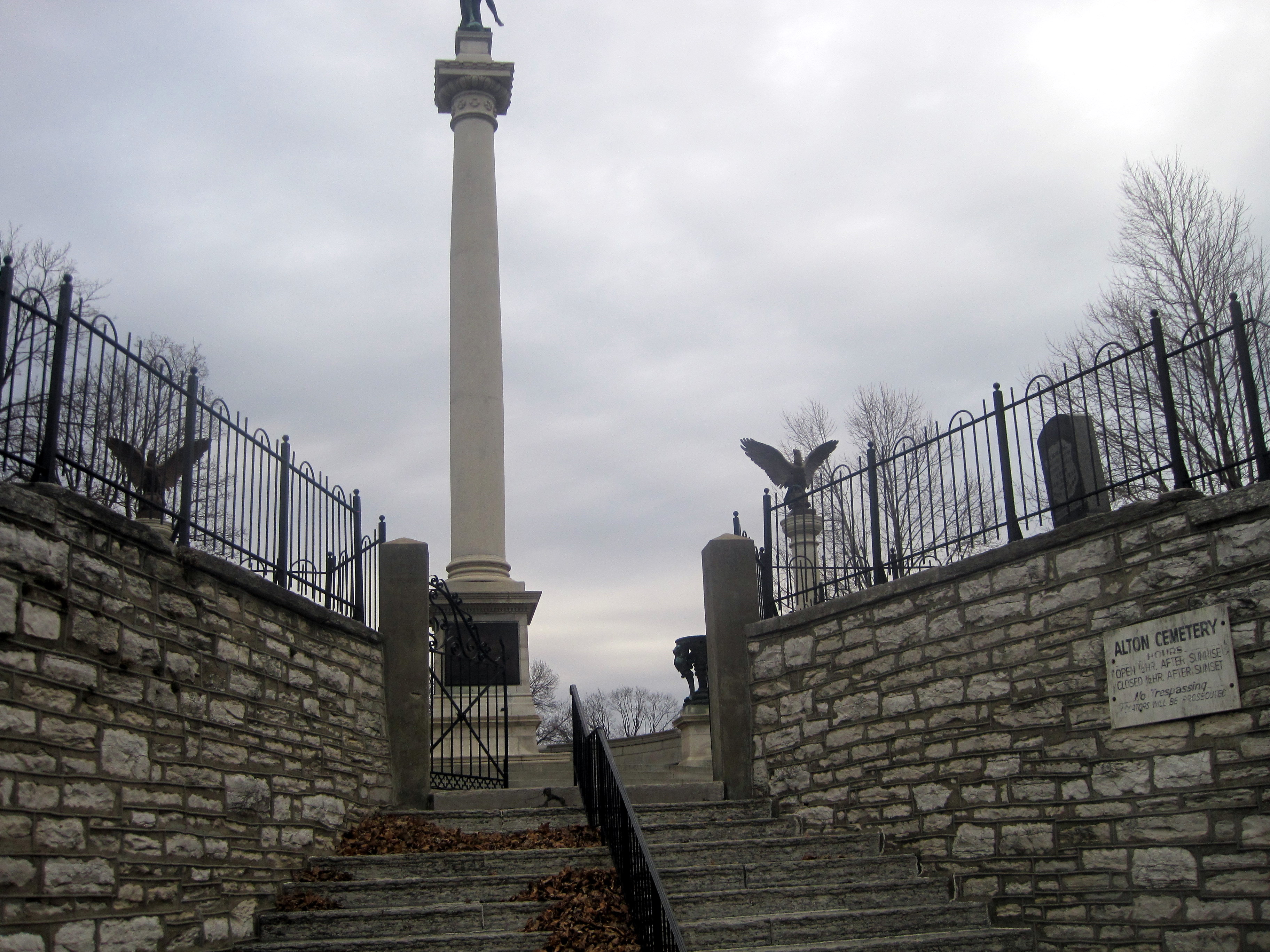
Elijah Lovejoy (after whom the Library at the Southern Illinois University was named) became the first (white) victim of the American Civil War when he was killed by a mob in Alton in 1837.

He was thirty-five years old, a Presbyterian minister, publisher and activist.

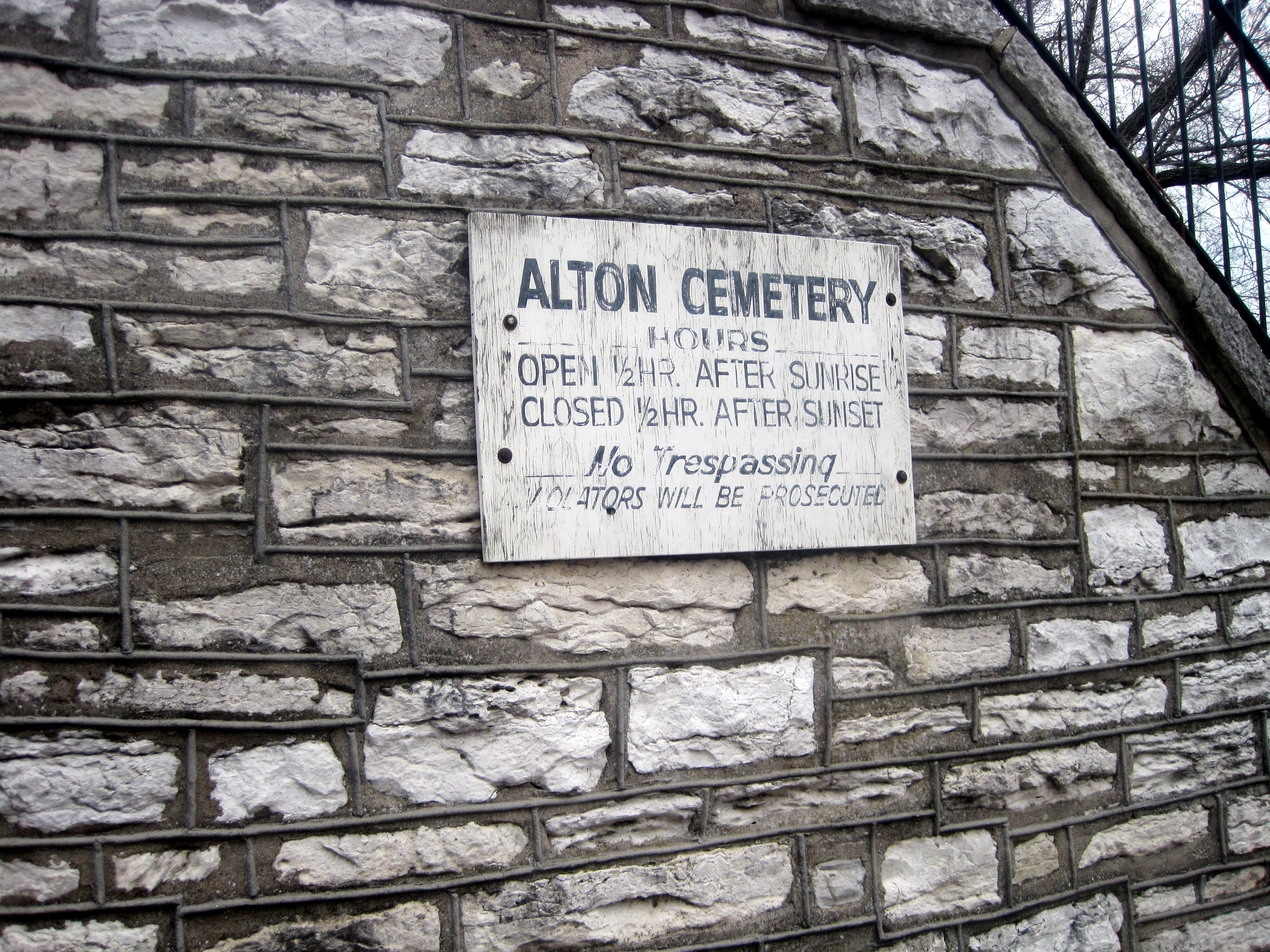
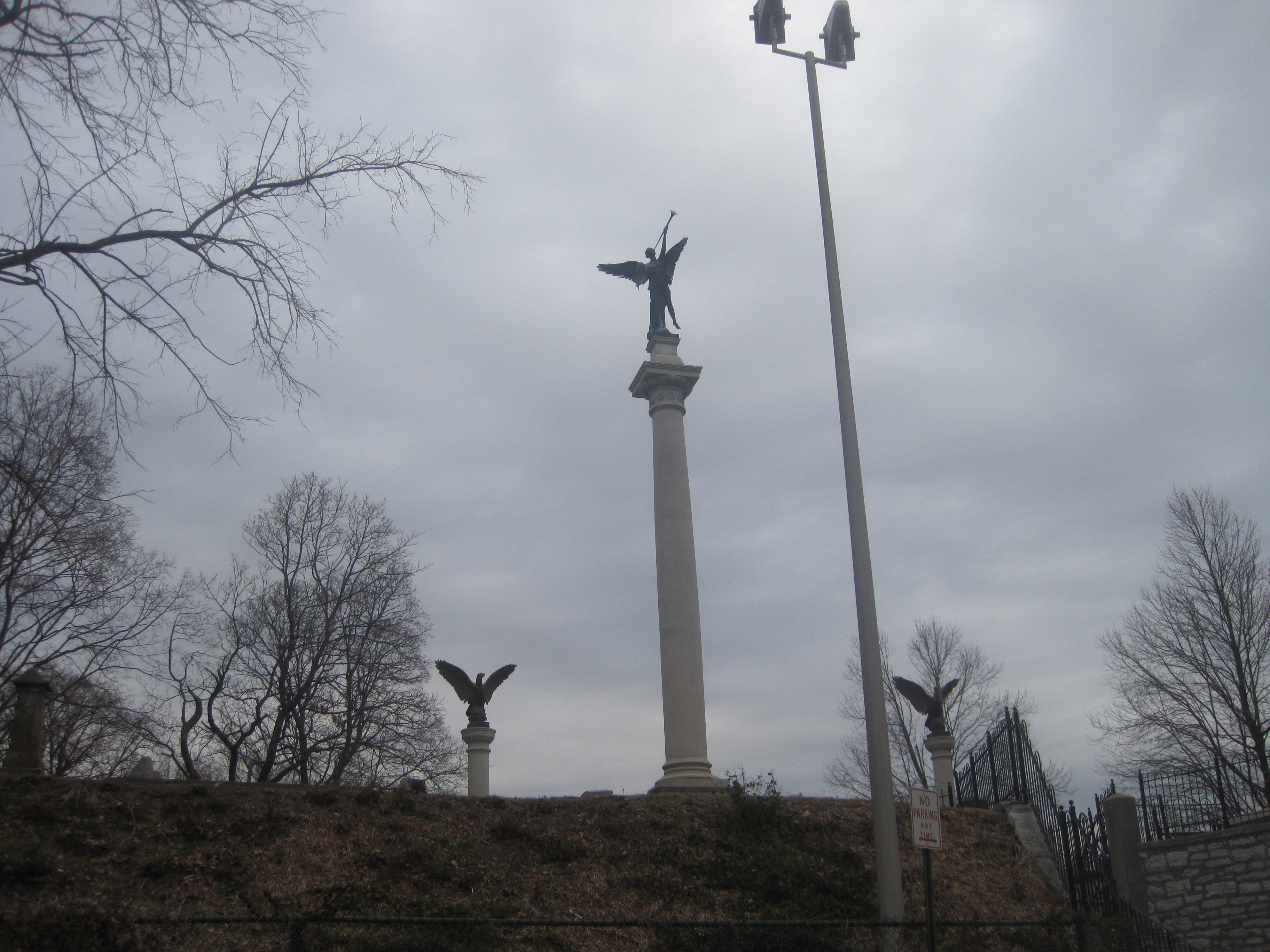
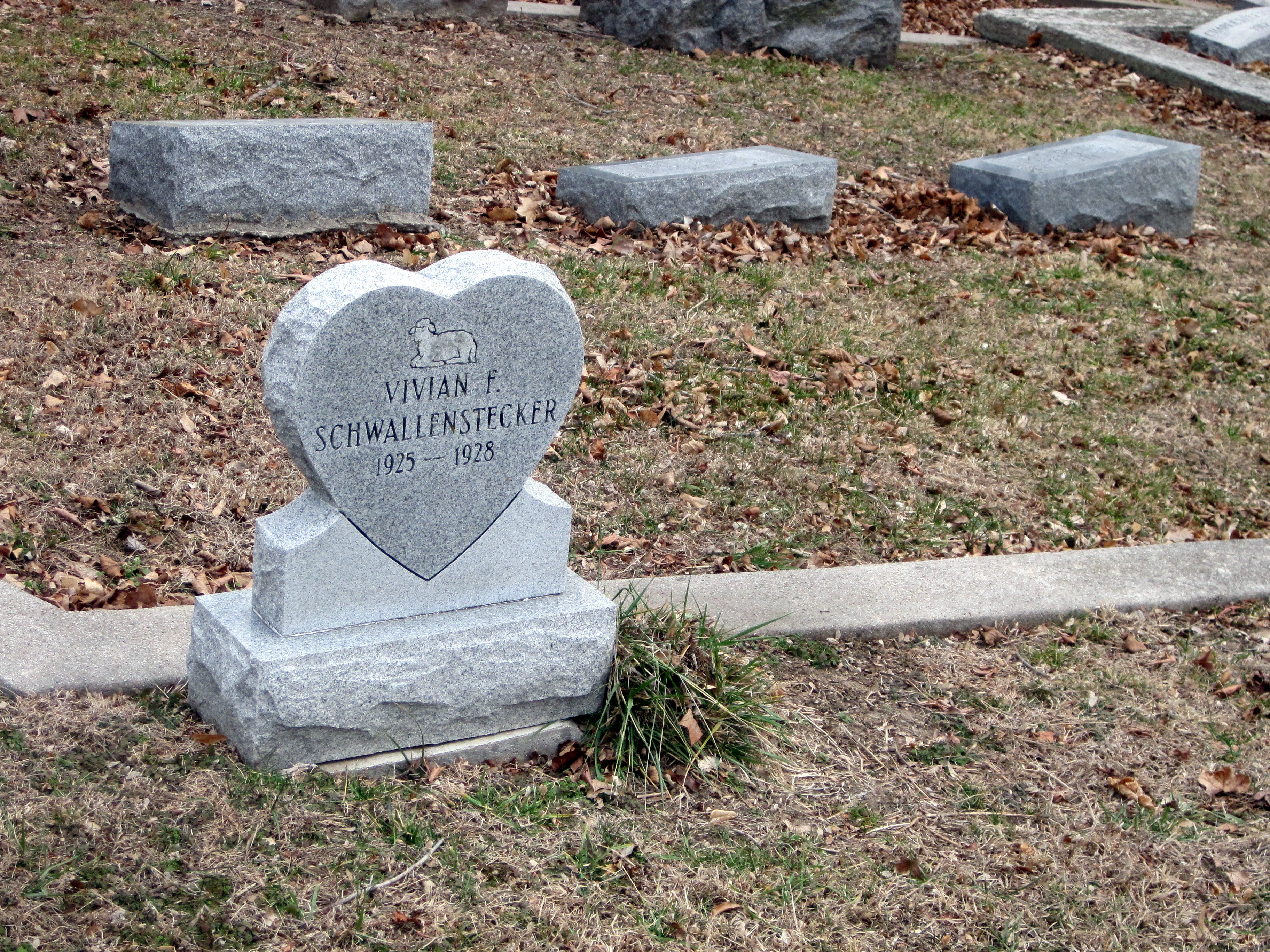
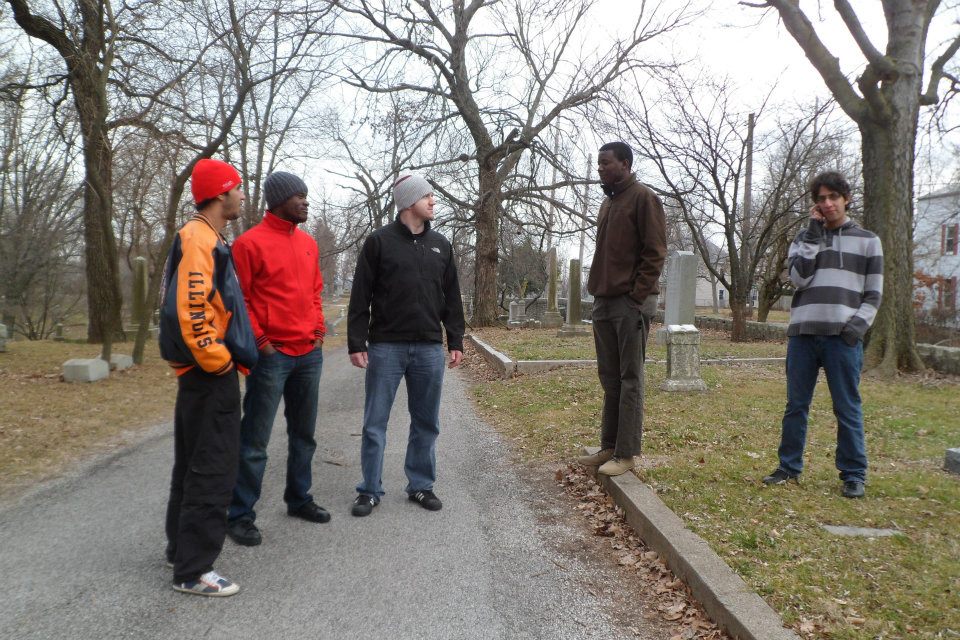
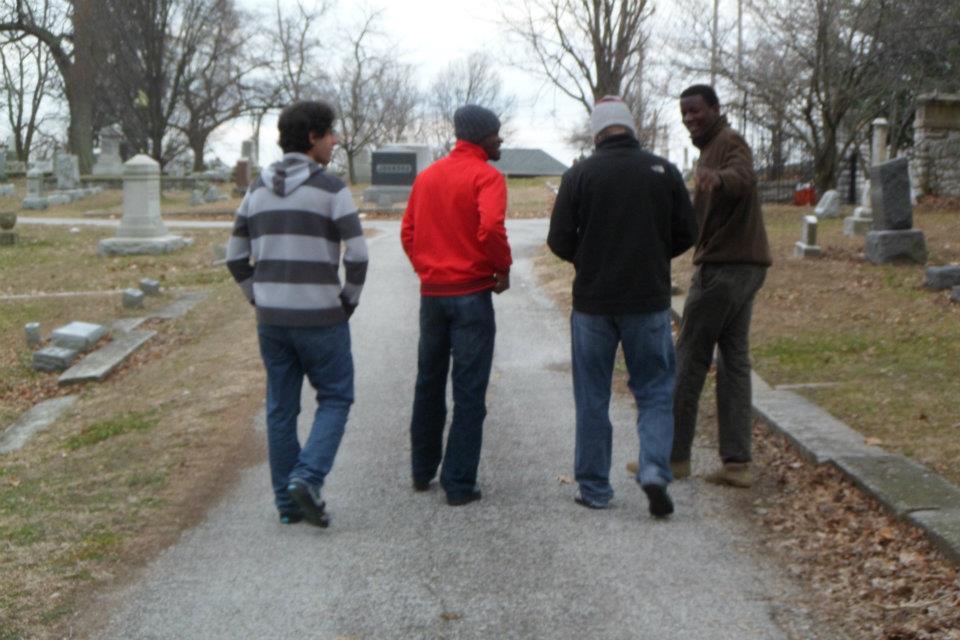
These are pictures from a visit to the Elijah Lovejoy monument (and city cemetery), about twenty minutes away from here.

The cemetery had some of the most peculiar European names we had ever seen, some long, some short. Many of them are most likely no longer used. It also boasts of a certain serenity guarded by a few commemorative plinths overlooking the cemetery and the Mississippi river down below.

Monolingualism Worries

This article in the New York times examines the oft-repeated claim that Americans are mostly monolingual, monolingual by choice, and fare worse in the world precisely because of it.

The claim, it seems, is the same as (or similar to) an old argument between whether literacy equals sophistication, or whether someone without (Western) education in a developing country is smart enough to correctly adjust to the complexity of the (21st century) world. There is no substantial evidence to support the “for” argument, of course, as those with brilliant, sophisticated yet uneducated grandparents will attest, but the discussion is one that underlies much of today’s governmental and social intervention in local, traditional ways of life.

I am a linguist, however, and thus will remain on the side of multilingualism – and multiculturalism – as an important, yet fascinating, catalyst of social change.