Browsing the archives for the News category.

Judging Panel for 2015 Etisalat Prize for Literature Announced

Lagos, Nigeria; June 23, 2015: Fastest growing and most innovative telecommunications company Etisalat Nigeria, has announced members of the judging panel who will decide the winner of the 2015 Etisalat Prize for Literature. The judging panel will be chaired by Professor Ato Quayson a Professor of English and inaugural Director of the Centre for Diaspora Studies at the University of Toronto; completing the panel is Molara Wood, writer, blogger, journalist, critic and editor and Zukiswa Wanner, author of The Madam and Men of the South.

Commenting on the choice of judges for the prize, Chief Executive Officer, Etisalat Nigeria, Matthew Willsher stated that Etisalat carried out extensive research and consultation in deciding the choice of judges for this year, and also expressed the belief that the selected judges will bring their experience to bear on the Etisalat Prize for Literature. The judges, he said, will have the responsibility to develop the long list of nine novels as well as a shortlist of three novels before finally selecting a winner. Submission of entries are ongoing, having opened June 18, 2015 and would close on the 27th of August 2015.

The Etisalat prize is designed to foster writing in Africa, bring exciting new African writers to the attention of a wider audience, and promote a reading culture within the continent while also telling the African story. The winner will receive a cash prize of £15,000 in addition to a fellowship at the prestigious University of East Anglia, UK under the mentorship of the award-winning author, Professor Giles Foden. The winner will also receive a sponsored three-city book tour. In addition, the two other shortlisted writers will receive a sponsored two-city book tour to promote their books. The Etisalat Prize for Literature also supports publishers by purchasing 1000 copies of the shortlisted books for distribution within the continent.

This prize accepts submitted works which must be a writer’s first work of fiction with over 30,000 words, and published within the last 24 months. The Etisalat Prize will also launch the online based flash fiction prize later in the year to engage the rising stars of fiction.

Rules and guidelines for entry are available at prize.etisalat.com.ng

Profile of Etisalat Prize for Literature Judges

Professor Ato Quayson
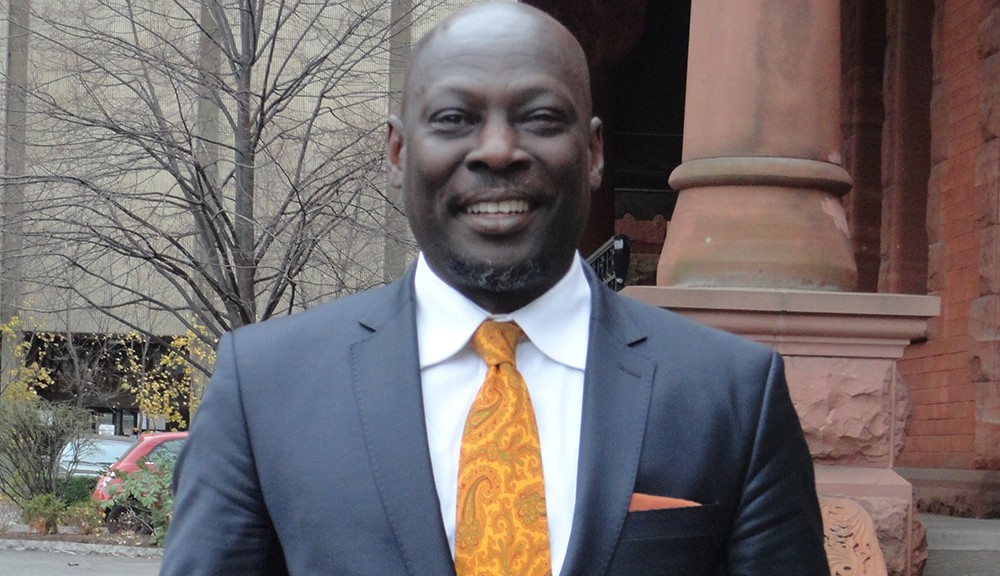
QuaysonProfessor Ato Quayson is Professor of English and inaugural Director of the Centre for Diaspora Studies at the University of Toronto. He studied at the University of Ghana and the University of Cambridge and was also a Fellow of Pembroke College, Director of the Centre for African Studies, and on the Faculty of English at Cambridge.  He was the 2011/12 Distinguished Cornille Visiting Professor in the Humanities at the Newhouse Centre at Wellesley College; he held research fellowships at Wolfson College, Oxford (1994/95) and at the Du Bois Institute for African-American Studies at Harvard (2004).  He is a Fellow of the Ghana Academy of Arts and Sciences and of the Royal Society of Canada.


Molara Wood
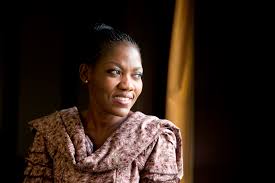
Molara WoodMolara Wood is a writer, editor, journalist, blogger and critic. A former art columnist for the Lagos Guardian, she won the inaugural John La Rose Memorial Short Story Competition; and received an award from the Commonwealth Broadcasting Association. As Arts and Culture Editor of NEXT Newspaper (2008 to 2011), she steered a groundbreaking weekly supplement on the arts. More recently she served as Special Assistant on Documentation to Nigeria’s former President Jonathan. A culture activist, she is involved in many artistic projects in collaboration with groups and organisations, including the Africa Movie Academy (AMA) and the Africa International Film Festival (AFRIFF). She is the author of Indigo, a collection of short stories.

Zukiswa Wanner
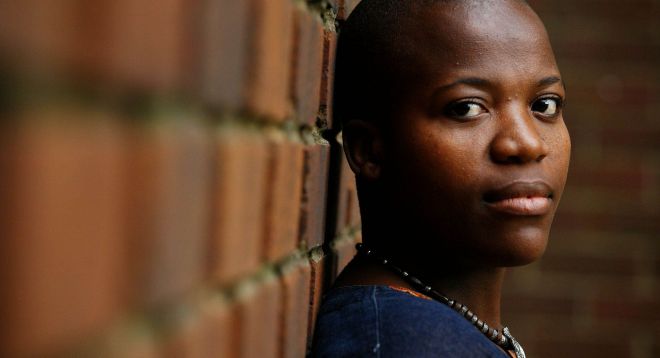
ZukiswaZukiswa Wanner is the author of the novel The Madams (2006) shortlisted for the South African Literary Award’s K. Sello Duiker Award; Behind Every Successful Man (2008); Men of the South (2010) shortlisted for the Commonwealth Best Book Africa Region 2011; London Cape Town Joburg (2014). Her short story The Dress That Fed the Suit was selected as one of the top 20 stories in South Africa’s 20 years of democracy (1994-2014) and she was selected as one of the top 39 sub-Saharan African writers under 40 (Africa39). She co-edited the African-Asian anthology Behind the Shadows (2012) with Indian author/editor Rohini Chowdhury and co-authored the Mandela home biography 8115: A Prisoner’s Home (2010) with the late veteran photographer, Alf Kumalo.
Wanner has facilitated writing workshops in South Africa, Uganda, Denmark, Germany, Zimbabwe, Kenya, Tanzania and Ghana. She sits on the board of the continental writing initiative, Writivism.
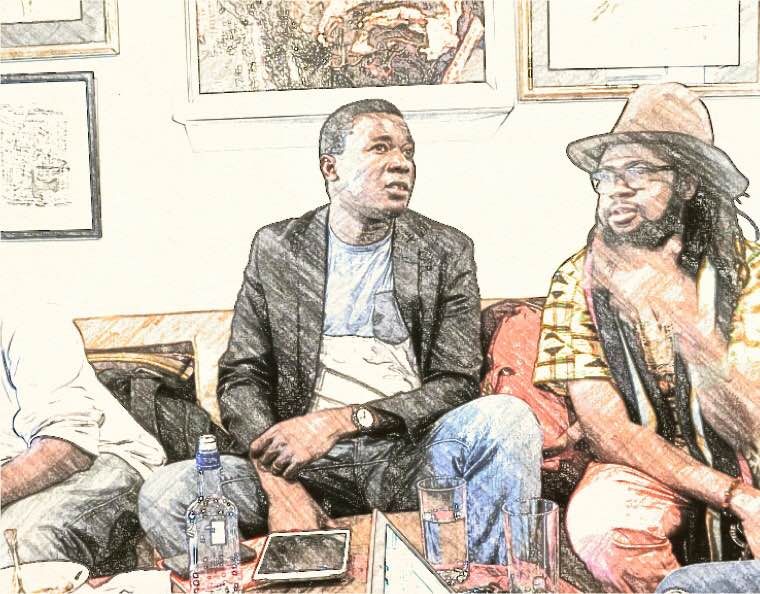
Kola Tubosun joins “WE THE HUMANITIES” Platform as Curator

PRESS RELEASE

25/02/2015, Lagos, Nigeria—Kola Tubosun: linguist, teacher and writer at Whitesands School, Lagos, Nigeria, will be joining the international humanities Twitter account, We the Humanities, as next week’s guest curator.

@wethehumanities is a rotation-curation account which offers a central platform for discussion and news of the humanities in all its forms. It is open to anyone working in or with the humanities in any form, and hopes to follow the success achieved by the science platform, @realscientists.

IMG_0395Kola is a linguist and aspiring lexicographer with years of work in language teaching and language documentation under his belt. He will be tweeting about mother tongue use, language endangerment, and particularly a subject that is dear to him: Yoruba language use in Nigeria. He is currently building a multimedia dictionary of Yoruba names at www.yorubaname.com . Kola can be found on twitter at @baroka, and on his blog at KTravula.com

Co-founder Jessica Sage (@academicjess) comments: “The We the Humanities project engages with people from around the world, exposing them to humanities research, experience and ideas they perhaps didn’t know existed.  Each week a new academic or practitioner takes over the account, tweeting about their work and provoking conversations about the diversity and importance of the humanities.  We really look forward to Kola Tubosun running the account this coming week, and in particular his take on linguistics, second language use, and Yoruba language.”

We the Humanities, which is now in its second year, has attracted tweeters from across six continents, ranging from professors to Masters students and from museum curators to musicians.  The discussions engage with more than 2400 followers from across the world, including everyone from lifetime specialists to the mildly curious. The account has developed to include a blog and events listings, housed at http://www.wethehumanities.org.

Kristina West (@krisreadsbooks), co-founder of WtH, adds: “We encourage anyone working within the humanities who might be interested in curating the account to get in touch through the website. We aim to create a vibrant, international community to raise awareness of the diversity, relevance and challenges that encompass what is called the humanities.”

~ends~

Contact details:

Jessica Sage, We the Humanities: tel: +44 (0)7731840380, e-mail: j.sage@reading.ac.uk

Kristina West, We the Humanities: tel: +44 (0) 7525 009744, email: k.j.west@pgr.reading.ac.uk


About We The Humanities:


A rotation-curation Twitter account showcasing the creativity and diversity of the humanities and reiterating the fact that the humanities are more widely important than current public funding suggests.


Like most things on Twitter, it began with a seemingly innocuous tweet.  On 5th January 2014 @academicjess asked a few people “Does anyone know of a humanities equivalent to @realscientists & if not would you be interested?” and it snowballed from there.


It is currently just being administrated by Jessica, Kristina and Emma Butcher (@EmmaButcher_).


Disclaimer: The views expressed at the @wethehumanities Twitter account are those of the weekly guest editor and not those of the administrator or previous/subsequent curators. The views expressed on the blog are the views of named posters and not those of the administrators.  


Goodluck, Gridlock, Gone!

We’ve been at this stage before, in Nigeria, a couple of times in fact: a government welcomed with wary but open arms gradually wastes all the goodwill it has once enjoyed on one distraction or the other until it eventually runs out of favour with the electorate. Then it begins to panic and seeks means to prevent itself from being thrown out. First the strategy looks benign, then gets desperate, and eventually destructive in a way that almost takes down the whole country with it.

Looking back to much of the crises of administration in Nigeria’s history, this has been the pattern: Akintola in the defunct Western Region, Yakubu Gowon in the seventies, Ibrahim Babangida during the June 12 crises, Sani Abacha afterwards, and Olusegun Obasanjo with the Third Term Agenda. In all these instances, the common denominator is an eventual disgracing of the principal, and the ushering in of a new administration. In a few cases, it comes with loss of lives, properties, and the well-being of the country. Babangida’s hubris ended with a transitional government and a coup d’etat. Sani Abacha’s, with the bite of an apple.

Yesterday, the administration of Mr. Goodluck Ebele Jonathan joined the infamous list of Nigerian rulers incapable of looking away from the lure of interminable power. A man ushered into office on the huge enthusiasm and hope of all Nigerians in 2011, after two years as a substitute for a dead principal, has now finally come full circle as nothing but the same old power-hungry model we’ve known too well. Yesterday, 11 hours after major news outlets broke the news, the chairman of the electoral body INEC announced that he has been arm-twisted into postponing elections previously slated to hold on February 14 to a later date six weeks away. The excuse made no sense, and people saw through it immediately. But that didn’t stop the emperor with no clothes.

Yesterday, before the announcement was made, military men were seen patrolling Lagos and other major states around the country, ostensibly to keep the peace (that wasn’t threatened), but in reality to put the nation under an atmosphere of intimidation which usually helps to allow rigging when called for. A leaked audio tape from a previous state election in Ekiti state shows how the administration had used the Minister for State for Defense and other government officials to bully security operatives into allowing them a free hand to manipulate the outcome of the election. By pretending that a state of unease exists in ALL the parts of the country (and not just the NorthEast where Boko Haram has finally taken root after six years of half-hearted security response by the government), Mr. Goodluck gets a chance to again use the agencies of state for ends not beneficial to anyone but himself and his merry band of political opportunists.

We have been here before, and the situation always ends the same way: disgrace and dishonour. It is true that the coming election will be between a civilian and a dictator. More than ever before, Nigerians are committed to voting out the dictator as soon as possible. Six years is long enough.

New Project: A Yoruba Names Dictionary

Hi Blog Readers,

Happy new year to you! I hope that you’ve been busy. I have.

IMG_6258 - CopyAlong with a few researchers (and with anticipated support from a few institutions), we are proposing to build a multimedia dictionary of Yoruba names. It is a project that has been dear to my heart for a while now, and a continuation of an earlier project from university days. As the name suggests, it will be a dictionary. And being a dictionary, it will have a number of important linguistic, cultural, and artistic resources attached to each entry. We envision a cross between a wiki and a dictionary.
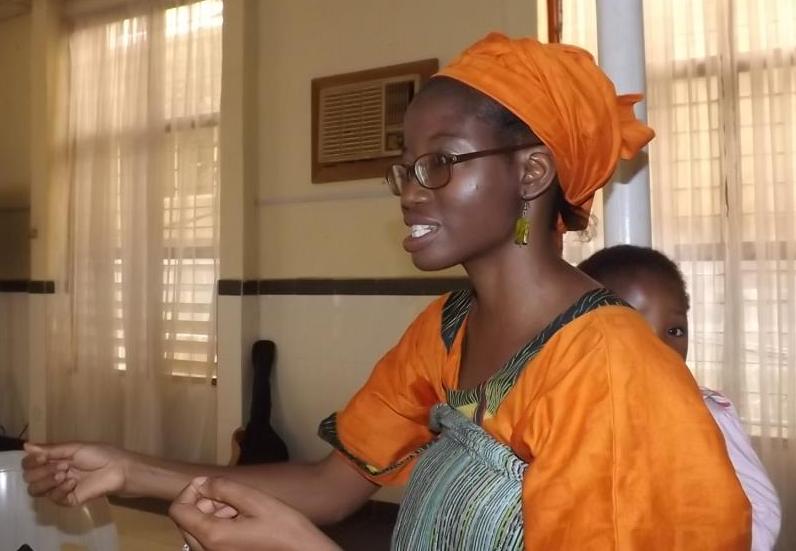
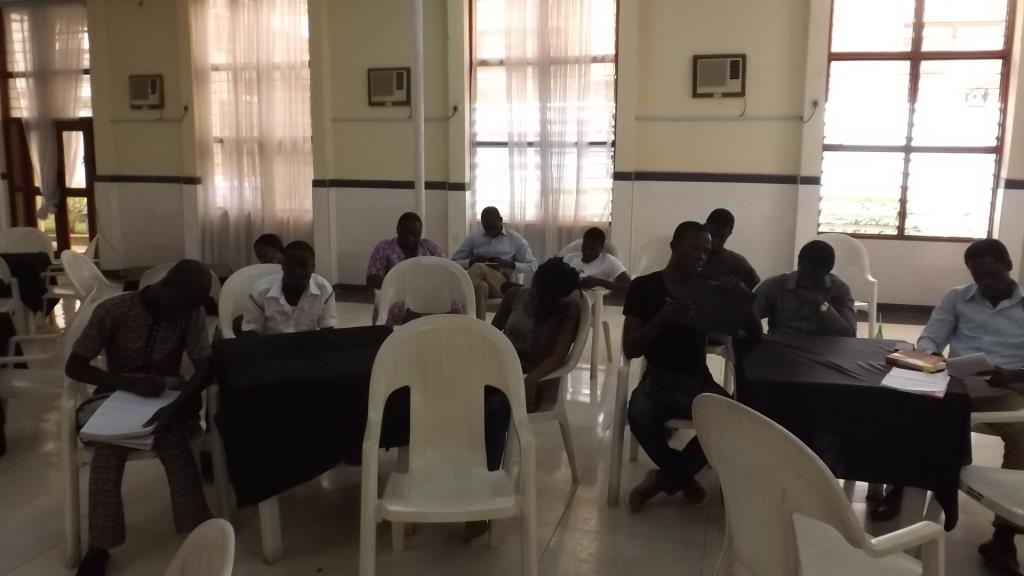
I wrote more about it on the Indiegogo campaign page. Please donate and help make it happen. (UPDATE: I hear that the previous link wasn’t working. I’ve fixed it now. Thanks @hardcorekancil on twitter)

It’s been ten days so far, and we have already been featured at Tech Cabal, WeRunThings and The Cable, and in countless retweets and words of mouth. We thank them! We have also raised about 30% of our target, which is incredible considering the period (after a major spending holiday). We have 50 days to go, so there is still time to chip in no matter how little.

Many of you readers have already heard about the project, and many of you have donated. Thank you. If anyone of you are interested in joining in the campaign in any way (or supporting it in any other non-financial way), please drop me a line at kt at ktravula dot com.

So, what have you guys been up to?

Jumoke Verissimo Shares Her Views on Writing

Jumoke VerrisimoFor a lot of young writers and aspiring writers, it was a platform to learn one or two tricks in the writing craft. The reknowned poet, Jumoke Verissimo with support from WriteHouse Collective and PEN Nigeria had opened a creative workshop for poetry last month. The second edition of the workshop which held on Saturday, 20th of September delved into the idea of experience as a vehicle for poetry and the use of metaphors.

Participants were given a class work to write out what ‘experience’ means to them in few words, these lines were analysed by Verissimo.  She said during her teaching ‘Deep into yourself, narrate or express experience based on your own personal life’. Referring to the lines of one of the participants, she said ‘now he has dug into his own life, perhaps there are things he wished he could achieve, so those six words analyses his own life’.

DSCF3872Jumoke asserted that there is absolutely nothing like a ‘writer’s block’. She said that if one could generate a first line based on personal experience, a second line would ‘flow from the bones’ and a third line will be accomplished easily. Other participants were actively involved as they contributed to the analysis of each other’s work.

Verrisimo said poetry is not far-fetched, it is borne out of the things that are available to our consciousness and experience.  She said ‘usually what comes to mind when you want to write poetry is to look for that which is not readily available’ instead of looking at things that are part of us.  She read from the works of African poets like Kofi Awoonor, Jared Angira and Wole Soyinka from the book, Poems of Black Africa, also poems of Caribbean poet, Derek Walcot.

DSCF3872Verissimo delved into metaphors as a form of experience, ‘you need to make a metaphor of your life, you place two things that are different and try to make a connection between them.  As a poet you have created that metaphor, and then we will begin to see our lives, through that metaphor.  Verissimo said. She also recalled her stint with Farafina ‘I remember working for Farafina, and the day we were working on the magazine and we were trying to contact Mr (Igoni) Barrett to send us a story then and he said that ‘he wrote poetry first before he began to write stories’. She said ‘poetry helps you as a writer of prose, metaphors helps your imagery and interpret an experience’.  Participants were also encouraged to create metaphors spontaneously in order to sharpen their creative prowess.

‘You have to express the experience you gather in a way that the reader touches the experience’.  In the poem building process that the workshop participants were involved in, Jumoke interjects ‘the poem becomes an experience for the reader and the reader becomes an experience for the poem-People want to interpret their lives but they are lost on how to do it, poetry assists them to do so’