Browsing the archives for the Review category.

Aké Diary (VI): The Transgender Discussion

by Fọpẹ́ Òjó

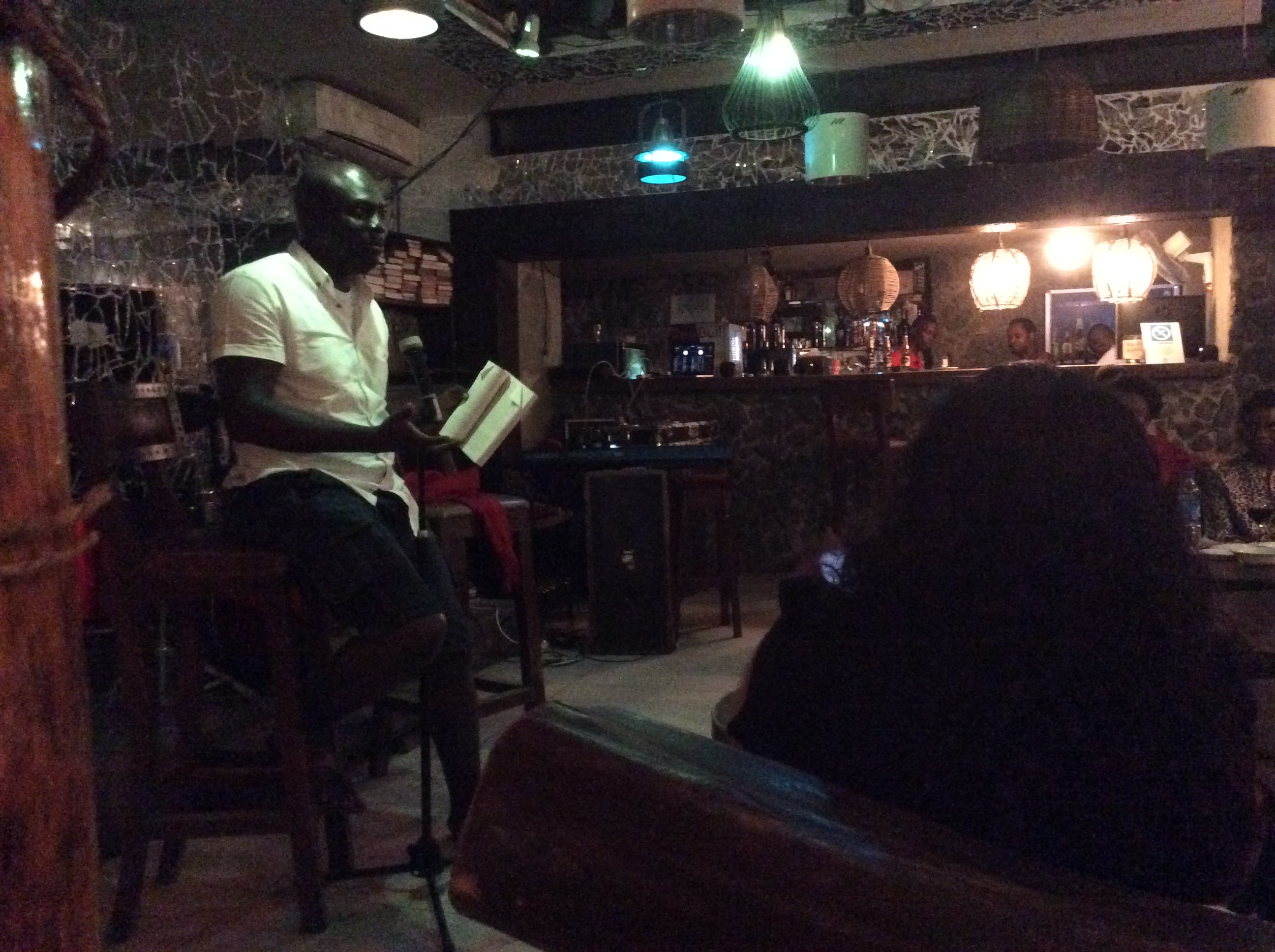
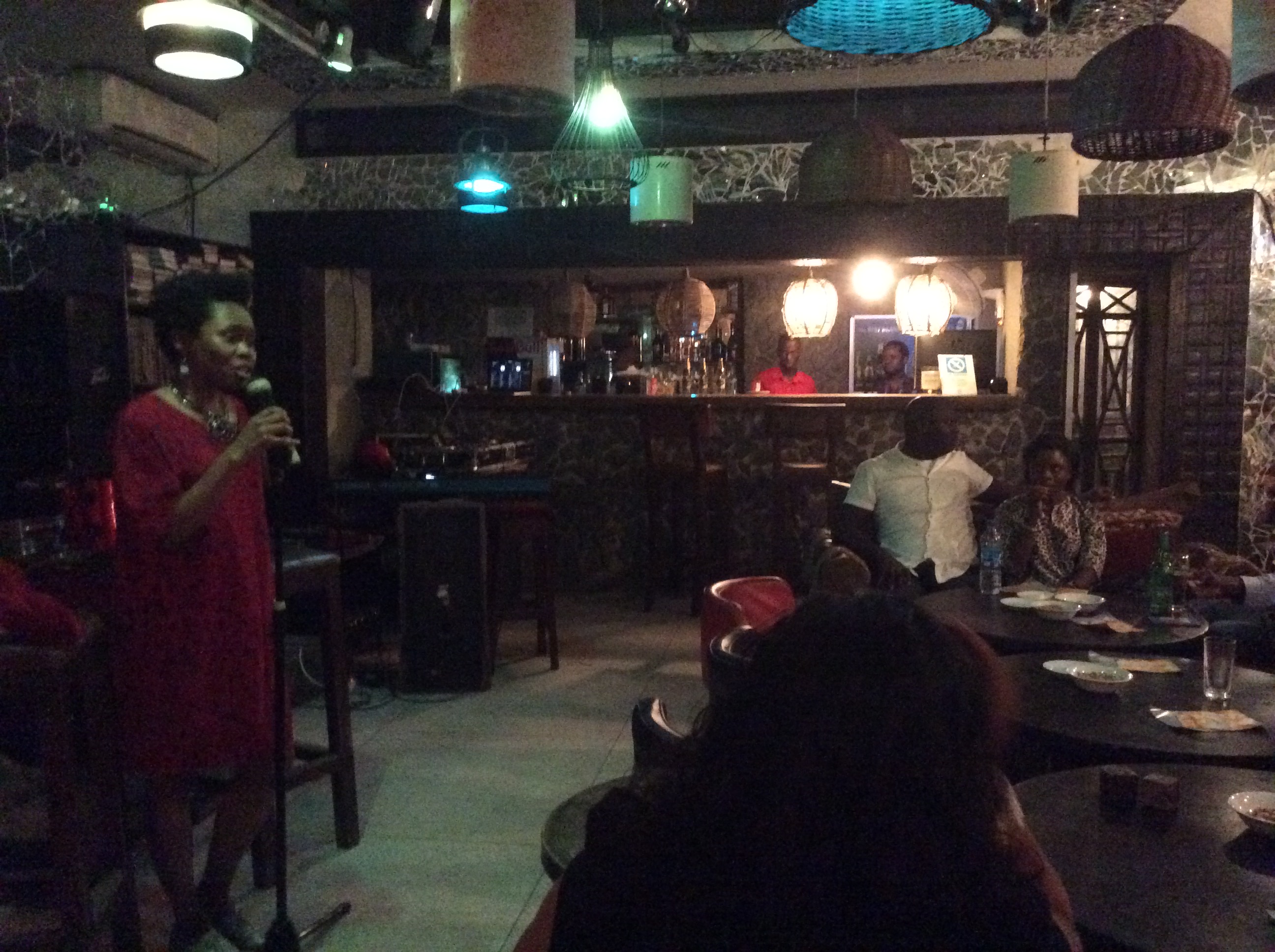
LS introduces the discussion and talks about how she believes that Nigerians jet themselves by totally shutting themselves off from necessary conversation and dialogue that help us learn about the struggles of other people, the type of conversations that show what these people are going through and help us understand them and develop empathy for them.

Oláòkun Sóyínká is the moderator of this session with Ima Da Silva, an Angolan transgender woman.

“I’m really happy that we have our own Caitlyn Jenner.” Dr. Sóyínká says.

“Who is Imani Da Silva?” he asks.

“I am first a human being and yes, I am a transgender. And I’ve always felt like I was a girl since forever since I was five. When I was five I had my first crush.”

Imani Da Silva is a pretty woman. Her face is oblong and she is light-skinned. She ties an ankara scarf on her head and it suits her. She has lovely glowing skin. And slender legs and is dressed in an ankara skirt and a blouse. She wears light makeup and light red lipstick.

When she talks about happiness she says “We often forget that life is not a rehearsal, it’s today. I decided to be the change that I wanted to see.”

About the people who have influenced her and helped her through her journey, she says “I was always lucky to meet people who saw me for who I am personally and professionally. It’s so unfair to say that I got to where I am on my own.”

She talks about her mother. How her mother was a strong woman who never judged her or her brother or her sister. She later says that the kind of woman that she is has been majorly influenced by the kind of women that she grew up with.

Dr. Sóyínká asks her about the surgeries.

“This wasn’t a choice. You knew you were gay.” Dr. Sóyínká says.

“I had the sex reassignment surgery four years ago and it was the best decision I ever made.” She answers.

She also talks about growing up and religion.

“When I was a teenager I was so religious. So I had this fight inside me about what was right what was wrong what I had been told and what I felt.”

There are many questions from the crowd. This Aké audience is a particularly quiet one. It is as though a very fragile bubble is being passed around from person to person and the audience is being careful so that it does not burst.

About religion, Imani says  “I realise that I don’t need a religion to identify myself as a person. What matters is how you treat the people around you for me the biggest sin is to hurt another human being.”

Another person asks about how female people expect her to be for being transgender and how she deals with the pressure.

She answers and explains that some transgender people have pressure to be as female as they can so that they can convince other people that they’re really women. They end up doing too much makeup and trying to live up to the standards of what society defines a woman as for acceptance.

She says that she doesn’t need to have wide hips or a huge backside to be woman.

About privileges on being born male and lightskin she says “I really believe that it is such a big privilege to be woman in Angola because women are so empowered. Women are strong and are made to believe that they can do anything. Girls are told to study their books.”

She is asked why she had to go as far as the transition, why she didn’t just remain a gay man instead of going through the whole process of changing.

She says that what we first have to do is check the many effeminate men and ask them if they are happy with being effeminate. Or if they want to change to women. She talks about some of her gay friends who are happy with being gay men. She says they’re gay and happy to remain men.

On how she relates with the trans community, Imani says she is the spokesperson of a community that works with such rights. She was approached by such community to be their spokesperson and she took it up.

“When there’s phobia. It’s because people are scared of what they don’t know.”

She goes further to say that respect is the most important thing. Teach gays and transgenders to love and respect themselves, to love and respect others. Then they will get the love and respect because in life, you give what you get.

She also speaks about the difference between gender identity and sexual orientation.

“Gender identity is one thing. Sexual orientation is one thing. How I feel about my gender is different from who I have feelings for.”

She explains that you can be a transgender man or woman and still be attracted women or men.

“I didn’t wake up one day and say I want to be barbie. Nobody told me to wear lipstick. And nobody told me to wear a dress. This is how I felt.”

On the surgical process of changing genders. She talks about how impatient transgenders can get with the process.

“You have to be patient through the process of changing. You have to be patient and know that you will get there.”

Someone asks her about her sexual relation with men, if her transition is complete yet and if she has wild orgasms with the men that she gets sexual with.

“I feel like I was born this way. And I thank my doctors everyday ” she answers simply. And the crowd laughs.

When she talks about motherhood, she says “I believe in marriage. It was never part of my dreams to have a child. I don’t feel like I need a child to be complete. Some people tell me that would change when I meet the right person. But I just don’t feel like I need children to complete.”

A man asks about how long it takes for her to tell the men that she goes on dates with about her history.

She says that it depends on how serious things have gotten. But that respect is always the most important thing in her dealings.

It is a very enlightening session and Dr. Sóyínká and LS thank her for her time and LS jokes about how this Aké audience is probably the most quiet and gentle one that she has ever witnessed.

Imani Da Silva is courteous and lovely as she exits the stage.
What We’re Getting Right in African Literature

I have read only a few chapters in Elnathan John’s new book Born on a Tuesday, and I already formed a few opinions not just about the author and the publishers, but about the direction of literature on the continent. They are good opinions, by the way, and they were a long time coming too. See the following excerpt from the book’s first paragraph:

“Gobedanisa and I had gone into a lambu to steal sweet potatoes but the farmer had surprised us while we were there. As he chased us, swearing to kill us if he caught us, he fell into a bush trap for antelopes. Gobedanisa did not touch him. We just stood by and watched…”

BOAT_largeNotice anything? You have just read half a paragraph in English in which a non-English word was treated like every other word, and not made self-conscious through italicisation or gloss. This is a marvellous and remarkable thing! A smart reader might figure that “lambu” means either “farm” or “garden”. Or not. (The answer, according to a friend, is “irrigation farm”, but I didn’t know that until I asked, which is the whole point. If you live in the Nigeria and you can’t find anyone around you who speaks Hausa, then you need new friends. And what kind of Nigerian are you anyway? If you live anywhere in the world and Google can’t help you with the meaning of a word, or someone who can, you need a new computer and new friends).

Thankfully, the book is filled with many instances like this, like a chapter titled “Dogon Icce” (tall tree), and a number of other Hausa and Arabic-based expressions that the author leaves the reader to research on their own in order to enjoy a more fulfilling reading experience. And why not? What is an almajiri, and why is knowing what it means and who an almajiri is important to enjoying the story? What is a dan daudu, and why should the author spend his time translating it to you when he has a story to tell? What is santi? And if the English language is incompetent to render it to your monolingual mind, why should the author feel compelled to do anything else about it but let you figure it out for yourself?

Let’s hear it from Ikhide Ikheloa who has — in fairness — kept this issue at the forefront of African literary discussion for a number of years:

“African writers should perhaps learn to be more insular, I mean who italicizes akara and explains it as “bean cake” in the 21st century? If the reader is too lazy to use Google, tough luck. But then, to be fair, after all these years of railing at African writers, I now realize that African writers who choose to publish in the West are not negotiating from a position of strength; the editor is Western, the publishing company is Western and the audience is Western. It makes marketing sense. It doesn’t make it any less maddening. Imagine if Tolstoy in War and Peace had taken the time to italicize and explain every word foreign to the African reader. That book would have been way more than 50,000 pages. But then to be fair Nigeria has precious few indigenous publishing houses, what is a writer to do? You want to be published? Take the crap from the Western paymasters.” – From A review of E.C. Osondu’s This House is Not for Sale

All you need to do to see how tenacious Mr. Ikheloa has been on the matter is merely to type “italicize” into the search box on his blog. I did it, and the result was enormous. But he has a point, which is that in order to placate an industry whose nonchalance for our stories — in spite of its lip service to it — is unshy and pernicious, many authors have sold out by consciously dumbing down their literary capability for a token of “wider comprehension” (whatever that means). Literary facility has been exchanged for global acceptability which has, in turn, produced works of highly inarticulate form — not for a lack of viable content, but for the timidity of language and style. So, to have Elnathan’s book give a giant finger to old habits is a brilliant and satisfying triumph, but it’s only the beginning. For one, it is a surrender to the primacy of English as our most efficient literary vehicle albeit now an encompassing one. Having him write completely in Hausa, today, would still have been seen as extreme, which need not be the case.

But while we’re celebrating this interlanguage compromise, there are a few more doors that need to be knocked down. One of them is the habit of publishing Yorùbá (or other tonal African) names without the appropriate tone marks! It was understandable when the publishing gatekeepers were old British men to whom those names were nothing but arranged letters. We bought into it when Nigerian publishing executives followed suit, reinforcing the idea that tone marks were only for indigenous language texts. Now that we know better — and now that we have accepted the role of English in expressing our most genuine cultural and human experiences — there is no excuse not to make it as robust, capable, and representative, as possible.

So, here is a salute to Cassava Republic, and Elnathan John, for a bold (but ultimately merely sane) decision. Here’s to more writers following. And here’s to doing more, because we’re not there yet.


_____

(Photo credit: Cassava Republic)

At Elnathan John’s Book Party

2015-11-13 20.34.19Tonight, I attended the book party for Elnathan John’s new book Born on a Tuesday (Cassava Republic, 2015). The event held at Bogobiri House in Ikoyi and was well attended by friends, writers, and other well-wishers who came to listen to the author talk about and read from his debut novel. The novel was written as an extension of a short story “Bayan Layi” which was shortlisted for the Caine Prize in 2013. (I reviewed it here and here). The author has been shortlisted for the prize one more time, in 2015.

Elnathan had a chance to talk about the process of writing the book, which came from his obsession with understanding Sufi and Salafi movement – branches of Sunni Islam, and with telling the untold stories from Northern Nigeria to an audience that either didn’t care enough for it, or just isn’t sufficiently exposed. This personal curiosity, the author said, had burdened him for a while until he finally got the chance to address it in form of a short story and later to expand it into a novel form after encouragement by the reading public and by Cassava Republic Press who will also be publishing the book in the UK earlier next year.

2015-11-13 20.28.21He then read excerpts from the work, including a part where Dantala, the main character of the novel, spent considerable time considering whether or not to continue to kill lizards because of a religious encounter with the Sheik even while he had no such scruples about killing human beings. (There was also a mild detour to get his publisher, Bibi Bakàrè-Yusuf, to pronounce “Dantala” like a Hausa speaker would). He also read a part about “santi”, an expression relating to delight and longing for food which Elnathan admitted cannot successfully be translated into English. The conversation also eventually addressed what it means to be literate — especially if one already speaks (and can write) other local languages, but not English. The audience then got to ask questions, and eventually get their books signed.

2015-11-13 20.27.34The event which was memorable to me because of its celebration of a work that paid attention to understanding the beginning, costs, and complexities of violence in religion, has now taken a new dimension now that I am home, and learning of an ongoing terrorist attack in Paris, France. It all feels like an unreal web of weirdly-timed coincidences, and the heart sinks again into despair. On the one hand is a night where literature attempts to do what politics (and guns) perhaps had failed to do, and on the other is a reemergence of force as a wailing voice of the unheard and the resentful, taking innocent lives with it. Perhaps literature will suffice to enlighten and create a better future. Or, perhaps, that is just futile resignation and avoidance of more direction action. But we have this piece of literature now, and reading it just got a tad more imperative.

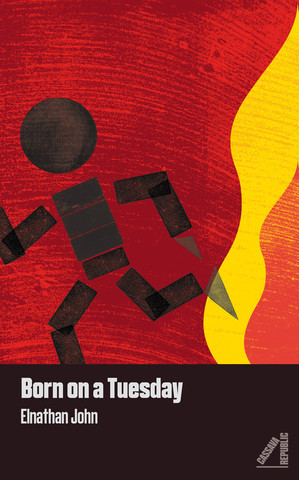
The book costs 2,000 naira and is 264 pages long, including acknowledgements. The cover is designed simply as a fiery flame from which a shadowy figure of a young man is seen to be fleeing. Blurbs on the back were written by Táíyé Selasi (Ghana Must Go), Petinah Gappah (The Book of Memory), Elliot Ackerman (Green on Blue) and Molara Wood (Indigo). “Narrated in Dantala’s raw yet inquisitive voice,” the summary reads on the book flap, “this astonishing debut novel explores brotherhood, religious fundamentalism and loss, and the effects of extremist politics on everyday life in contemporary Northern Nigeria.” It promises to be an engaging read.

Meanwhile, let’s spare a thought for Paris tonight.

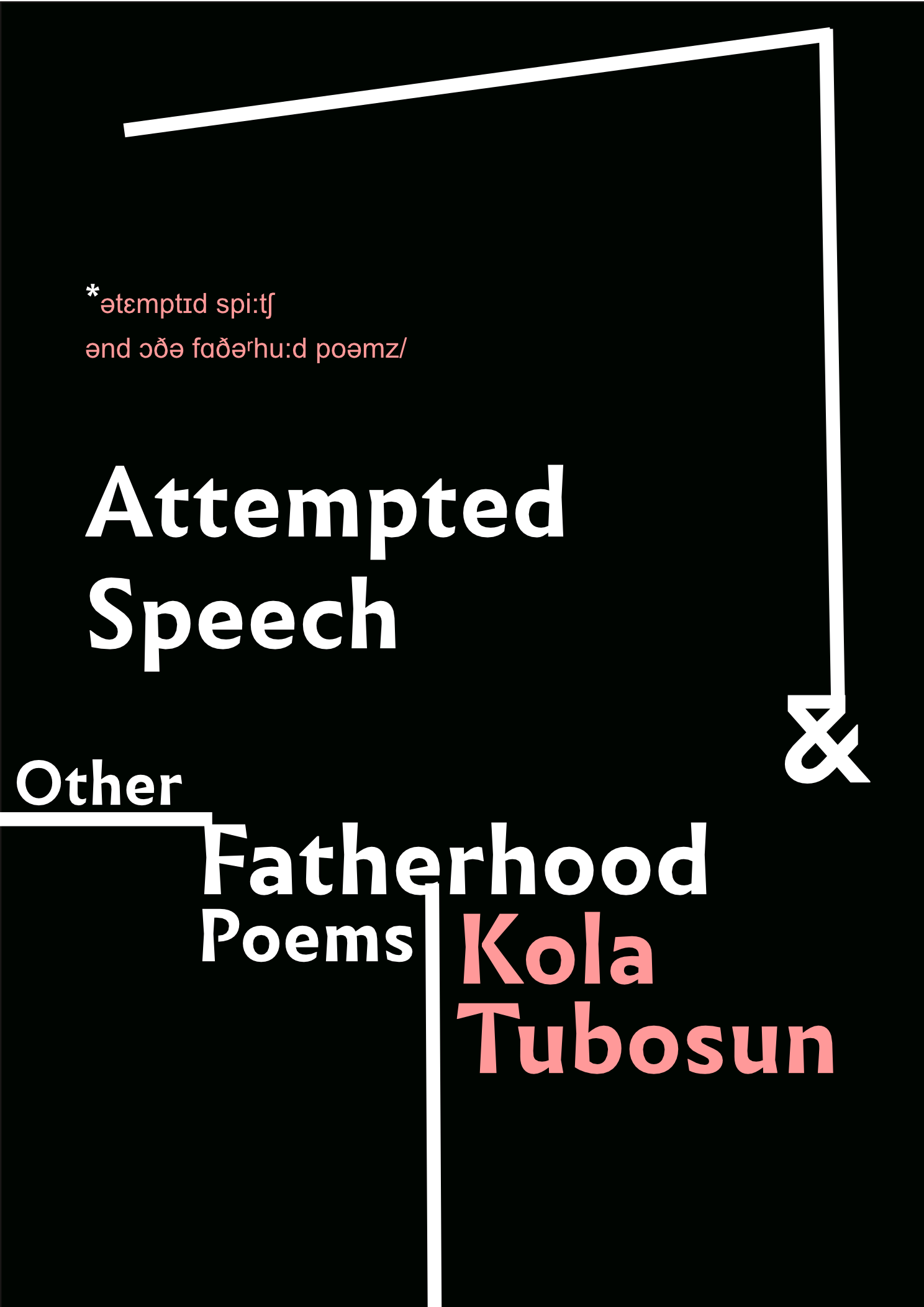
Oyin Oludipe Reviews “Attempted Speech”

Attempted-Speech_Kola-Tubosun-page001-2One of the questions we asked guests coming to the Aké Arts and Books Festival in Abẹ́òkuta this November was whether they read reviews about their work. The responses were intriguing, from “No, never!” to “Well, only if it’s good” to “Oh, why not?” I’m paraphrasing. You’ll need to get your hands on the Aké Review 2015 to get a better idea!

In any case, my response to the question would not be published in the Review, since I’m one of its editors. If that were not the case, you’d have read something like “Well, why not, as long as it’s thorough — and thoroughly fawning, ha ha!” Or something.

Yesterday, I came across the first review of my recently released chapbook of poems which I’ve talked about here once before. It wasn’t fawning, but it was thorough. It was published in the Luxembourg Review which I was also discovering for the first time. At times I had to go check the collection itself again to be sure that the lines being referenced were indeed mine. It’s true what they say that when you’re writing, you’re often possessed by something more than yourself.

A quote?

“One prominent quality of Kola’s poetry, as it is with Lola Shoneyin’s, Jumoke Verissimo’s and others, is that it is structured within a fluid framework which very effectively navigates the core of the sentiments of human consciousness. What ensues is a powerful inter-fusion of muse, thought and story.”

Now, you’ll have to go read the rest for yourself!