Browsing the archives for the Review category.

Mokalik: Pọ́nmilé’s Day Out

By Tolúlọpẹ́ Ọdẹ́bùnmi

In Mokalik Kúnlé Afọláyan invites his audience into the world of mechanics through the eyes of a 12-year-old who is struggling academically in school. The young boy, Pọ́nmilé, is brought to the village by his father, Mr Ògìdán, to have the apprenticeship experience which the latter thinks may scare Pọ́nmilé to become more serious in school (on the assumption that Pọ́nmilé’s poor performance in school is due to inadequate efforts) since the life of an apprentice is supposed to be full of hardships and lacking in dignity.

By the end of Pọ́nmilé’s day at the mechanic workshop, he decides to continue schooling but also says he will occasionally come back to the village to learn, having realised that such technical know-how can be complementary to his school education. This decision shocks Mr. Ògìdán but he is happy his son’s horizon has been expanded by his experiences in the mechanic village. When Chairman, who serves as Pọ́nmilé’s guardian in the village, reports that the child is exceptional at learning, indeed a fast learner, Mr Ògìdán looks surprised, almost confused as if Chairman was talking about someone else. 

Mr. Afọ́láyan’s movie explores a couple of themes often neglected in Nigerian society. First, the misconception about education, the myopic view that education is possible only in the format of a walled school with duly certificated teachers; a general misunderstanding that education is undertaken only in the context of classrooms, prescribed textbooks, regulated syllabi, written exams, etc. In short, the delimitation of education to literacy and instruction in English acquired through formal schoolwork. Another subtle theme in Mokalik is the dignity of labour and the importance of “catching them young”, or encouraging young kids to acquire vocational skills or trades like, in this case, mastery of motor vehicle repair.

One of the thrills of Mokalik lies in the fact that the main character is Pọ́nmilé—someone on the threshold of becoming a teenager. There are only a handful of Nollywood movies that feature a teenager in such a role. In short, the movie is Pọ́nmilé’s interpretation of how the unfamiliar world he finds himself in works. His family resides on the Island (most likely Victoria Island, although that is not specified in the film). During Pọ́nmilé’s one-day internship at different workshops within the village—from the motor engineer’s to the panel beater’s to the electrician’s, etc.—he makes connections between the world he is from and the one he suddenly finds himself inserted in; the similarities between the two worlds are key in shaping his ability to learn and integrate in the mechanic village.

Punishment

Pọ́nmilé ends up in the mechanic yard as a “punishment” for not being book-smart. He is considered to be a “dull” student, not good enough for school but could be good as a mechanic apprentice. It is, however, the rare upper-class parent that would want to steer a child along such a path in Nigerian society—yanked from the classroom and thrust into a trade workshop—given the realities of the criteria for class reproduction and upward mobility here. What actually happens in the film is that Ponmile suffers demotion so that he may become determined and thus concentrate on his studies. After witnessing the suffering in the hell of the Nigerian blue-collar world, he would rededicate himself to getting into the heaven that certificates are supposed to open up for the “educated”.

Would Pọ́nmilé’s father have abandoned him to his choice had he opted to become a full-time apprentice in a mechanic workshop? That scenario would seem far-fetched within the Nigerian reality, but films are not meant to be photographic snapshots of life. In a more general sense, though, wrong parental judgment in relation to a child’s career choice is often the cause of untold anguish and self-doubt, not to mention self-rejection, to the latter. If you get good grades or are exceptional in junior high school, for instance, you are expected to get into “science class”; and average students get pushed to “arts” and “commercial” classes. Such divisions may seem sensible for matching kids to their scholastic capabilities, but the problems that may arise from this arrangement become starker when, say, a high-scoring student opts for “commercial class”, or expresses a desire to become a hairdresser. This is a serious issue but not the focus of the present write-up.

Pọ́nmilé discovers that the world of the apprentice mechanic is like the world of the student. Extending the period of learning for badly behaved apprentices is just like the punishment given to students who repeat classes due to poor performance. Just as there are slow-learning students, so also are there slow-learning apprentice mechanics, and all slow-learners are punished. Pọ́nmilé also discovers a whole world of apprentice misdemeanors in the village, things surely far more colourful and earthy than student misdemeanors in the world he is coming from. Having experienced this intriguing world, Pọ́nmilé wouldn’t want to be totally extricated from it. Thus the “punishment” works, even though the consequences are largely unexpected; yet Chairman, that enigmatic chaperon,  seems to have always had inner insight that things would turn out very well for everyone, almost like he wrote the script.

Education and job prospect

It is taken for granted in the film that being educated creates the possibility for entry into certain kinds of jobs.  Is it really unusual or unheard-of to find the so-called educated working in a mechanic workshop? The Nigerian social space once buzzed with noise over some “revelation” that a couple of PhD holders applied for the position of truck driver with the Dangote Group. Pọ́nmilé informs Kàmọ́rù that people study Mechanical Engineering in school, of course referring to post-secondary-school education. Kàmọ́rù scoffs at this, responding that such graduates end up working in positions not related to their fields of study, which is quite an accurate description of how things often play out in Nigeria and elsewhere too.

However, Kàmọ́rù is saying more than this. He is also arguing that if you studied Engineering in university and you do not work in a technical field, you’ve probably wasted your time in school. He goes further to mock some of the clients who come to the workshop, implying that some of them who are supposedly educated have no clue about how a car functions even though that status symbol is an essential part of their sense of self-worth. The mechanic is thus the sustainer of their status and self-worth. Indeed, the Nigerian middle-class experience is replete with tales of woe at the hands of “sharp” mechanics who keep finding ways of making sure that their clients come back to have this or that part of their vehicles repaired, tinkering with the vehicles, planting hidden faults that will manifest later, in order to ensure constant custom.

Assumptions and points of view

In the film, there are issues of class and the perspectival baggage that comes with it. The whole idea of bringing Pọ́nmilé to the mechanic village has its class overtones, as already hinted at above. The assumption, of course, has to do with how kids from well-to-do families spend their free time. For instance, there are well-founded assumptions, on the part of the denizens of the village, as to what kids from well-to-do families do with their free time, i.e. playing video games, watching TV, or acquiring other “sophisticated” skills like playing a musical instrument. Simi, the daughter of a food seller, expresses this notion when she asks “Báwo ni ọmọ olówó ṣe wá ń kọ́ mẹkáník?” Pọ́nmilé responds: “Wọ́n ni mi ò kí ń ṣe dáadáa ní school.” 

Another question relating to labour, and specifically child labour in the case of Pọ́nmilé, can be raised here. No doubt, learning does take place in the mechanic workshop, but the workshop is not just a learning centre but a business venture also—one can argue that it is indeed primarily a business. The apprentice makes a direct contribution to income-earning activities in the workshop. The modalities may be different from workshop to workshop, but apprentices often earn a living from what they do in the workshop and may save up money towards the day of their “freedom”. Of course, such income-earning chances improve as the apprentice becomes more experienced and expert in the trade, earning the trust of the master to even run the workshop. 

A child like Ponmile would make a great apprentice, from what we see in the film, and as confirmed by Chairman when his father comes to fetch him home. But would he not have been an exploited child in that context if he made contributions to his master’s income, and without receiving due remuneration? Maybe we should dispense with such a prism in this case? But considering what we know of what sometimes goes on in such places in real life—the corporal punishment that may come with the territory, especially for young apprentices, the risk of exposure to alcohol and drugs, etc.—the film may be charged with some degree of feel-good narrowness in its vision. Be that as it may, the film highlights an aspect of education that cannot be overstressed, namely, the fact that it is a learning process for both the “teacher” and the “learner”, rather than the view of the teacher as all-knowing and not capable of making mistakes. Part of the story in Mokalik relates to debunking the myth that knowledge comes with age, yet the story does not downplay elderly wisdom. These aspects play out several times between Pọ́nmilé and his teachers in the various workshops he visits in the village. It takes humility for a teacher to accept that they do not know everything as regards their trade; it takes humility and does not suggest incompetence. 

Pọ́nmilé appears to have found himself in the perfect world. We see a child with heightened curiosity, eager to learn. He asks questions. Many questions. And he gets answers. But he is a privileged kid in that setting. Pọ́nmilé is treated with such care that may not be accorded to another young boy from the underclasses. His curiosity is entertained even on those occasions when it causes some annoyance or perplexity. He seems also to be protected by his naivety in that, though not rude by nature, he asks direct questions and offers criticism without quite observing the cultural form of deference to age. This naivety works well for him in the scene where he critiques Taofeek (the painter). Taofeek reluctantly accepts Pọ́nmilé as the necessary critical eye of the outsider.

But in the end, the world we see in the film is not Pọ́nmilé’s world. It is the rich world of the mechanics and other denizens of the mechanic village. Their lives open up before us; we see the simplicity and complications of their intertwined existence in that space, a world-within-a-world, for there is more to them than what they do and experience in that space. There is in the village the genius who is able to identify an airline by the sound of the engine of the plane flying overhead; there is that knowledgeable and yet dubious citizen of the world who calls himself Obama. The mechanic village itself is a shapeshifter. It can suddenly become a wrestling arena, only for it to transform into a wedding party the next moment.  And the people there embody that thing we find hard to define, the dignity of labour.

______

Tolúlọpẹ́ Ọdẹ́bùnmi is a critical discourse analyst, a trained linguist, and a PhD candidate at Michigan Technological University, USA. Her interests include politics, globalization issues, gender politics and popular culture. She was a Fulbright Foreign Language Teaching Assistant at Michigan State University, USA. She is currently a visiting scholar at Jean Jaurès University, Toulouse, France where she teaches English communication.

On Memory, Identity, and Home: On Tope Folarin’s “A Particular Kind of Black Man”

Tọ́pẹ́ Fọlárìn’s debut novel A Particular Kind of Black Man, previously titled The Proximity of Distance, was very easy to read. Crisp sentences and accessible language. The novel, which is a kind of meditation on identity, memory, and the definition of home, continues the conversation started with his two previous short stories Miracle (2013) and Genesis (2016), both nominated for the prestigious Caine Prize for African Writing (the former winning the top prize in 2013). The writer is fascinated with this subject — many would say because he has lived it — telling me in an interview after his first short story was shortlisted that “I’d love to inaugurate—or at least continue—a conversation about identity, and how we all share an essential desire to ‘place’ people.”

This is a fair place to begin, and — as he stubbornly, inexplicably, continues to insist — the best point from which to interrogate this book. This context was not always welcomed in the past.

The novel begins, like Genesis did, with “the elderly white woman with frizzled gray hair” who looked at a young black boy in Utah and dangled to him what she thought was hope: the chance to serve her in heaven. This, as the boy, Túndé Akíntọ́lá, realized later, was taken from Mormon teachings that reserved a place in heaven “if you’re a good boy here on earth” for black children only as servants to the white ones. From there, it takes the reader deeper into the life of the child, his family, and the mental health issues that affected his mother, endangered his father’s life, traumatized his childhood innocence as the firstborn son, and eventually broke his parents’ marriage.

Those who have read Genesis are already familiar with this part of the character’s story. What follows, what is new, and what moves the novel forward is an exploration of the character’s own journey, maturity, and memory. And of his father, and mother, and the sacrifices made to give children a good and decent life in a new environment. Túndé’s father had a thick accent which he attributes to the many setbacks he had at work. At some point, he bought an ice cream truck with which to make ends meet. Túndé saw the truck instead as his chance to become popular within an all-white neighbourhood, a dream that also faced eventual setback.

The novel journeys through these moments and others, with affection and honesty, loss and longing. It also examines how we judge what is real and what is merely imagined, while leading us sometimes to experience it ourselves. The character, for instance, began at some point to experience something he called “double memory” where he started becoming unsure of his own sense of recall. How much can we rely on our own memories, and even things we have seen and touched, if it continues to change? In the book, this explains why the character began to set things down, for his own sanity, so he can tell the truth apart from what his mind is making up. But it also becomes the author’s literary trick to carry us along on this narrative unreliability, cleverly deployed in a show-than-tell style. When Túndé tells us earlier in the book about his younger brother, Táyọ̀’s, easy break from the family, from their stern but loving father, when he insisted on staying back in a city while the rest of the family moved on to another vicinity, and we find out later that it may not have been totally true, we discover that we may have become victim to this same deficit, or trick, of recollection that bedeviled the character — deployed to keep us on our toes, keep us from pretending to know more than is shown to us.

But by bringing the novel back into the conversation around the Caine Prize and the alleged controversy around the Fọlárìn’s heritage when he was first shortlisted for the Prize (for the record, I was attentive to that particular process, and any insinuation — if at all — that the author wasn’t “African enough” was not by any notable critic as was alleged in this review at the LA Review of Books. Maybe internet trolls, at best), Fọlárìn wants us to look at him anew and give him his due as just an authentic African as any. It is not necessary; no work of art will do that anyway. He is African in every way one can possibly be an African — and in every way the Caine Prize describes it for the purpose of their prize. It was never in doubt, and we did not need the novel to realize it.

What the work does — if he had allowed us to enjoy it on its own merit — is show us one person’s story, and journey, through an immigrant experience he did not choose nor have much of a say in, to a place of peace and satisfaction — or some closure. The question of the extent of fiction in the work has been rendered moot by his tacit embrace of the label, if only as a point of departure. (Sana Goyal’s aforementioned review calls it “an autobiographical coming-of-age, immigrant novel”), perhaps in the traditions set by Angelou and Ṣóyínká and other memoirists. The category does not diminish the work, but it doesn’t totally capture it either.

There’s a way in which parts of the book remind me of Bassey Ikpi’s recent book which nods to a similar idea of the unreliable narrator challenged by bipolar or schizophrenic disorder. Even Ikpi’s title I’m Telling the Truth But I’m Lying makes an explicit case for a wary consumer. Where Fọlárìn’s work differs — more than just the label (one is called a “novel” while the other is called “essays”) — is that the exploration of mental illness in the latter exists as a running thread under layers of other family issues than a most dominant narrative. This is arguable of course. Both are different explorations of life as a Nigerian in an all-white environment, and in America — not always the same thing.

A Particular Kind of Black Man is an immigrant story. It is a coming of age autobiography. It is a story of love and forgiveness and a search for home. It is both a public testament to survival and discovery as a personal record of the journey that took him there. It is also a well-written book, raw at times, and moving. Its tender and thoughtful meditation on displacement, loss, memory, and belonging is universal, as is its exposure of the pain of finding home in a new place. For many people — and it was for me as well — the novel is also a kind of tragedy. Not just for Túndé and his brother this time, but for their parents. This review will not do enough in capturing the pain and vulnerability of how lives get irrevocably changed by migrating to a new place; the effect on marriage, on personal growth, on the sense of self. In that way, the most memorable character, in the end, was his mom — in what she struggled through, and survived — if only barely — with the scars and losses that came with it.

The angle of the quest for personal faith, brilliantly recounted in Miracle, was notably absent in this book — and it was never quite promised — but it might be just as well. In the place of this or other examples of Túndé’s wandering towards what is true, we have family — his distant grandmother’s voice on the phone — and a romantic encounter, both adding a tender element to the journey that took him from Utah through Texas to Lagos, and through his own mind and doubts, to a place where home finds him, or — we’d rather believe — he finds himself.

___

A Particular Kind of Black Man was published in August 2019 by Simon & Schuster. Get it on Amazon.

Thoughts on “Freshwater”

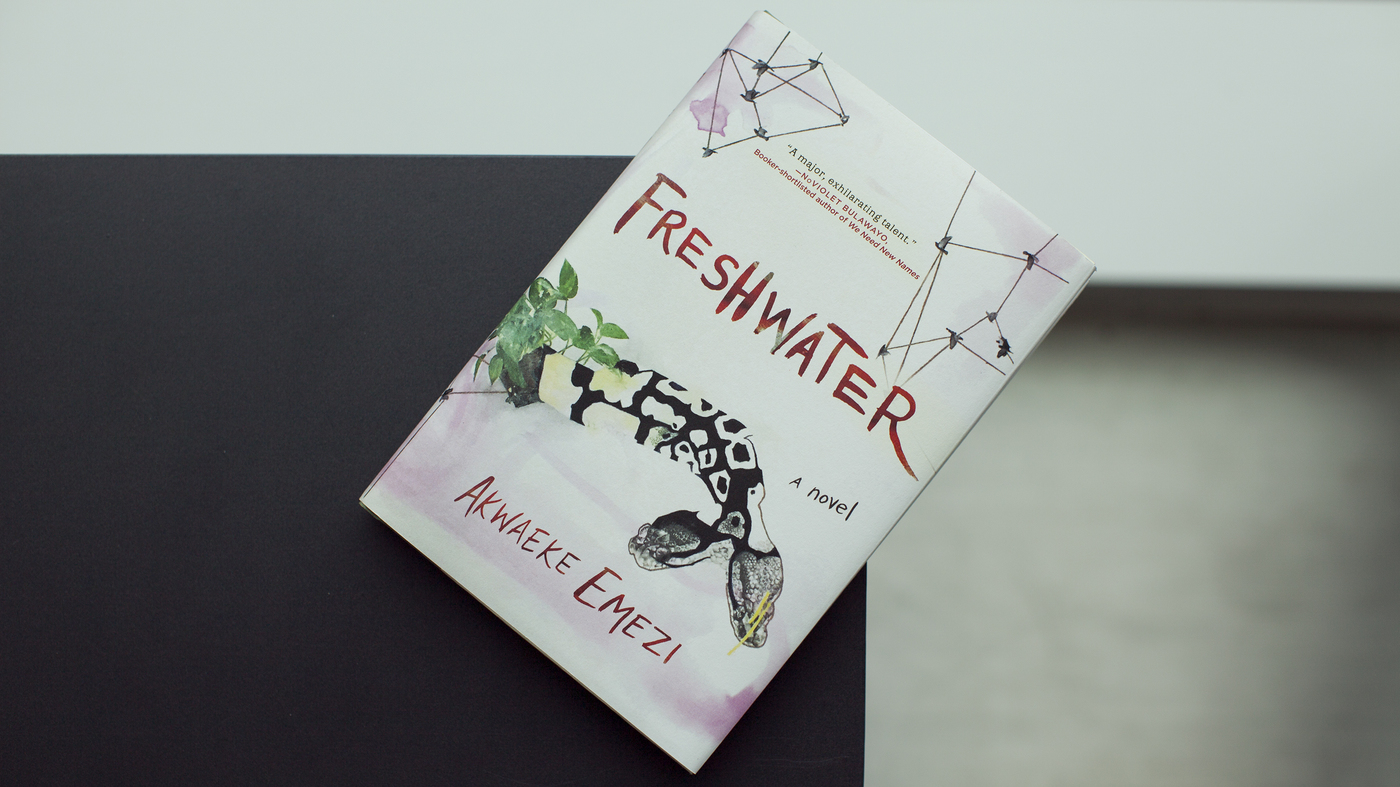
I have just finished reading Akwaeke Emezi’s powerful debut, Freshwater. Its premise – a novel-length story of an ọgbanje child and its/her/their* experience of the human and spirit world – was one we had needed for a long time since Chinua Achebe gave us the character Ezinma in Things Fall Apart, described as ọgbanje because she was the first of ten children that did not die at birth. In Yorùbá, they are called àbíkú children, and have been subjects of many works of poetry and fiction. Having such a contemporary story based on the real-life story of someone we know makes it doubly intriguing for a novel, with potentials and pitfalls.

Freshwater by Akwaeke Emezi.

This novel, which takes place this time in the modern era of emails, tennis courts, airplanes, condoms, and surgeries, tells the story of an ọgbanje child called the egg of the python: akwa-eke (also ‘the Ada’ – first girl child; also ‘the child of Ala’), whose life begins to get interesting after a night of trauma releases to her reality many spirits she had carried with her since birth. “Interesting” is a curious word to use to describe what happens, but only because the writing successfully immerses the reader in the trauma of her circumstances while simultaneously offering some measure of distance through a multiplicity of voices, all belonging to different entities through which the spirits that control her body chose to express their personalities. Their primary aim is to destroy the body and pull her spirit back to where they came from, but failing that, settling to ‘protect’ her through a series of attack and defense mechanisms that turn the life of such a carrier into one of wild and tumultuous adventure.

“When we were first placed inside her, with these humans, the odds were that the Ada would survive. It was, in retrospect, a very low bar to set. She did not die, yes, but she was not guarded, she was violated, so far as we were concerned, they failed. This is why we have never regretted stepping in, whether as ourself or the beastself. Show us someone, anyone, who could have saved her better.” (Kindle LOC 2411)

I have never read any other book like it. Not in the way the author introduces us to the many characters that live within one person. Not in the way she carries us along with her on a rollercoaster of spiritual and physical experiences that would have been hard to describe in any other way. Not many novels exist in which there are so many characters, but few people. It is a testament to the author’s gift and talent that we are never confused at each turn.

What makes the book important, however, is not just the fact of its existence, its impressive narrative style which combines Nigerian pidgin lingo, Igbo, and standard English, and the intimate exploration of what being an ọgbanje means in a modern time. A month before the book was released, the author penned a complementary essay in The Cut in which she describes her transition across realities, from woman to “a spirit customizing its vessel to reflect its nature.” She was not just becoming non-woman by removing the body part that reminded her every month of the nature of which body it inhabited, she was also freeing herself from the prison of categorization: a transition that isn’t from one gender to the other, but from body to spirit. Serving as complementary features the way that Binyavanga Wainaina’s essay I am a Homosexual, Mom complements his memoir One Day I Will Write About This Place like a lost final chapter,  Emezi’s essay fits the novel like a necessary coda, bringing an important conversation to the fore about how transitioning and attendant medical procedures aren’t really such an ‘unAfrican’ phenomenon after all, but had only been spoken of in that light because we had suppressed the voices that could otherwise explain to us the things we knew all along.

“The first madness was that we were born, that they stuffed a god into a bag of skin.” Kindle LOC 278

Akwaeke Emezi.
(Photo from http://1888.center)

The novel works on many levels: as a memoir, a coming of age story, a journey to self of a young girl of Igbo and Tamil descent trying to find her way in the world; as a fictional exploration of trauma, mental illness, family issues, and sexual/gender identity; and as an inevitably anthropological material on the study of the ọgbanje phenomenon and its many manifestations, with an intimate portrayal of challenges, heartbreaks, and opportunities. All the earlier works we had read about the phenomenon had treated the issue in a distant mythical way, removed from relatable experiences. While I was in Korea in January, a student of African literature asked whether the ọgbanje/àbíkú experience was ‘real’ and something that still happened. He had read about it from Chinua Achebe. I was glad to refer him to Emezi’s personal essay, and novel, on the subject. With Freshwater, the phenomenon became flesh.

Besides the subject matter, I was also very heartened to read a Nigerian novel in which the Nigerian language words (in this case, Igbo words) are written with appropriate diacritics. Ọgbanje wasn’t written as ogbanje, or with italics, as Chinua Achebe did in 1948. Other Igbo words and expressions like Asụghara, Lẹshi, Nzọpụta, Ịlaghachị, among others, were written with adequate respect for the writing conventions (I have discussed my thought on this pervasive deficiency in contemporary African writing in past essays (see 1, 2, 3), but particularly in this recent talk given in Korea about the subject). If we care enough to put diacritics on French, German, Swedish (etc) names in our English prose, there’s no need why we shouldn’t do them for African languages as well.

“When you name something, it comes into existence – did you know that?” Kindle LOC 816

Emezi has written an important book that is also a delight to read, in spite of (if not also because of) the trauma and challenges that make the writing necessary in the first place. Highly recommended.

__

* Note on Pronouns. As those already familiar with Emezi’s work will note, she insists that she’s not a woman, though she answers to both ‘she’/’her’ (as is seen on her web bio), and ‘they’ (as will be seen throughout the novel, and as she’d once mentioned online as a preference). Her bio, for a long time, quotes her as living ‘in liminal spaces’. I believe that she has also not entered the book for any women’s prize for this purpose, which makes sense in light of how she represents herself in public and how she has experienced the world as an ọgbanje. One of the things that intrigued me greatly in the book is how each voice comes across as an authentic self of the character, even when they all live within the same body. So here, using ‘they’ makes enormous sense, and not confusing in a way that it has been when other trans people (especially in the United States) have used it. This is said not to disparage other trans people and the way they represent themselves but to credit this particular work with illuminating the issue in a way that makes it a little more relatable.


More than Ashẹ́wó: Kalakuta Queens Remembered

by Ọpẹ́ Adédèjì


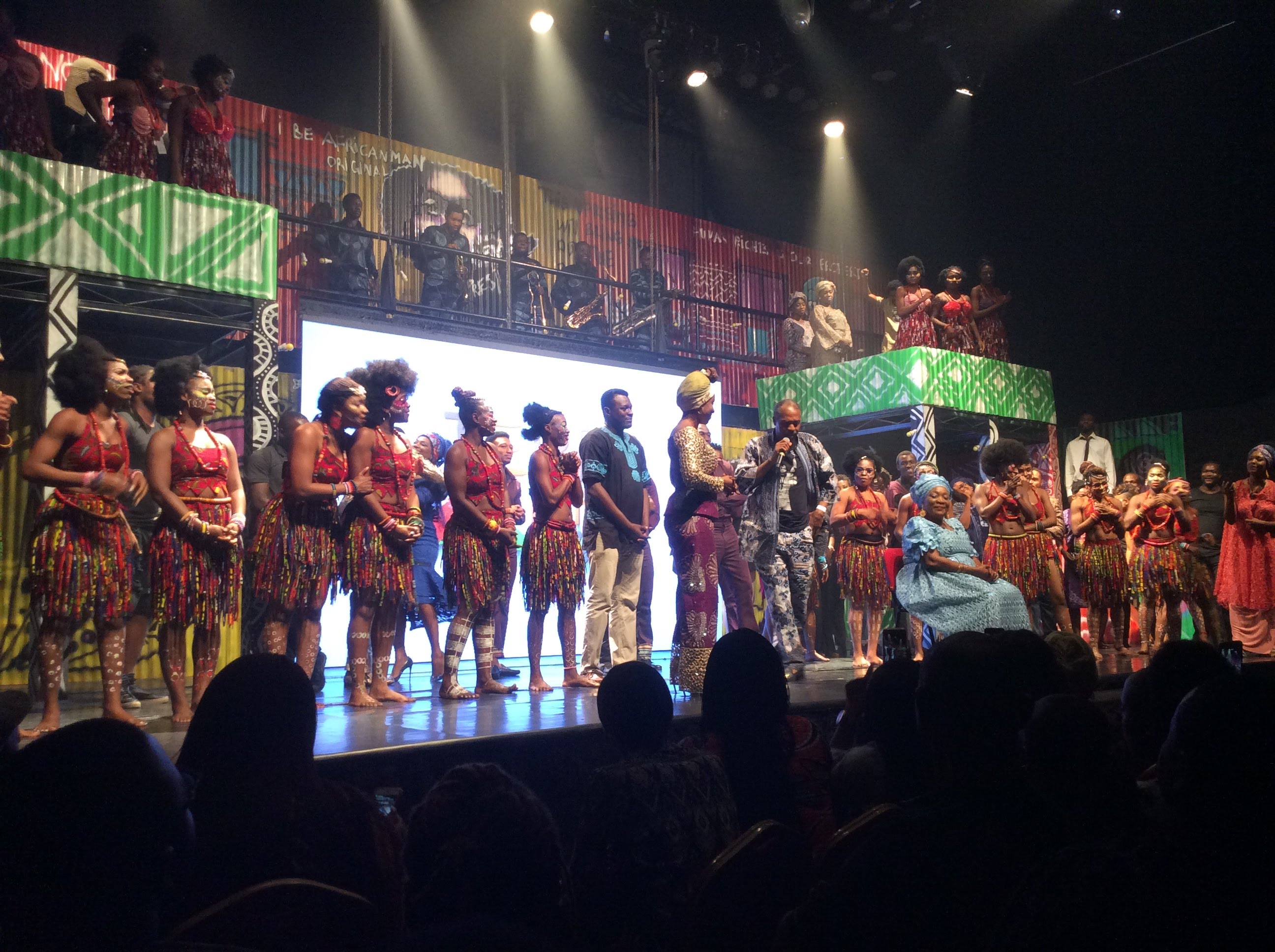
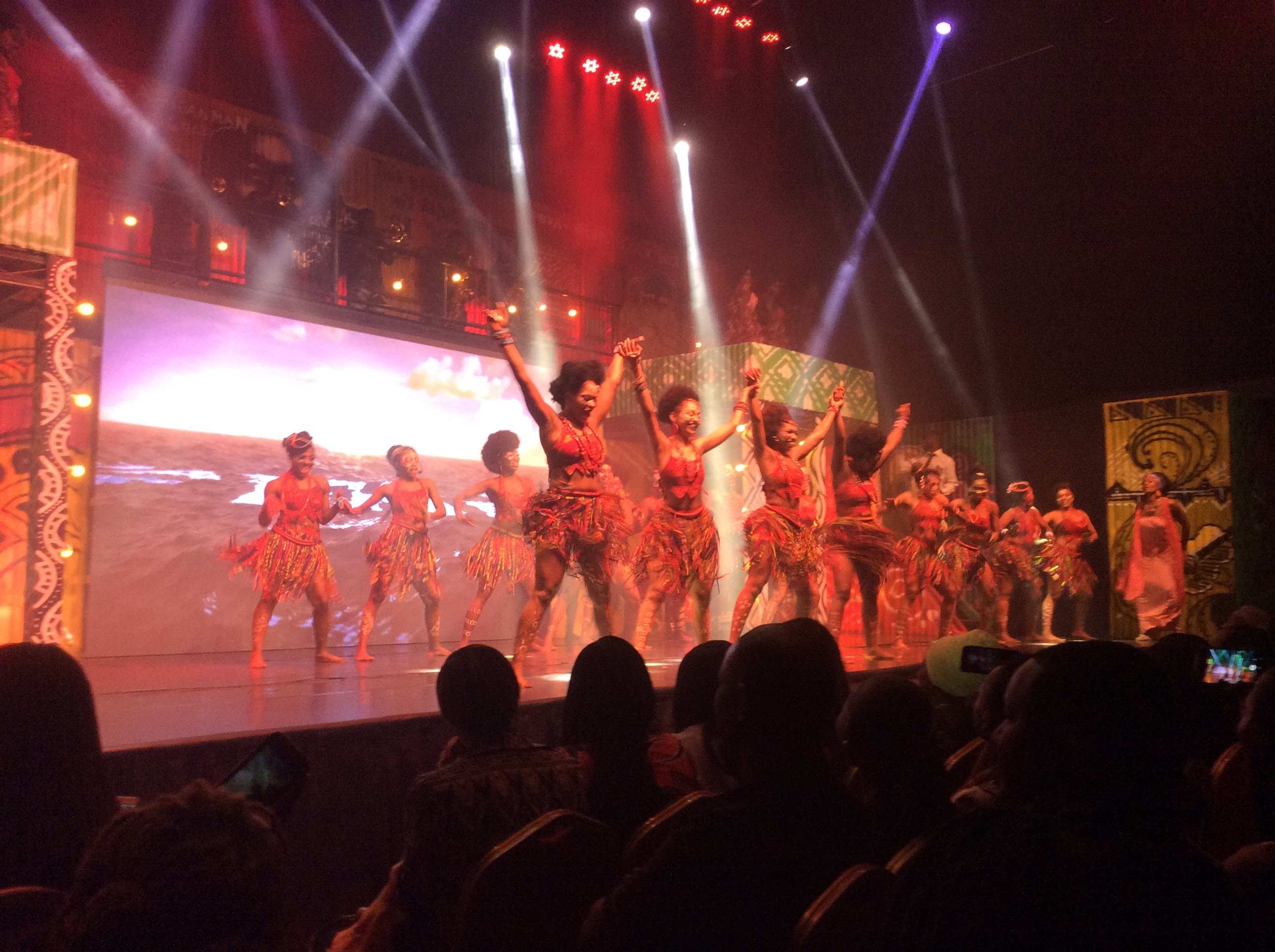
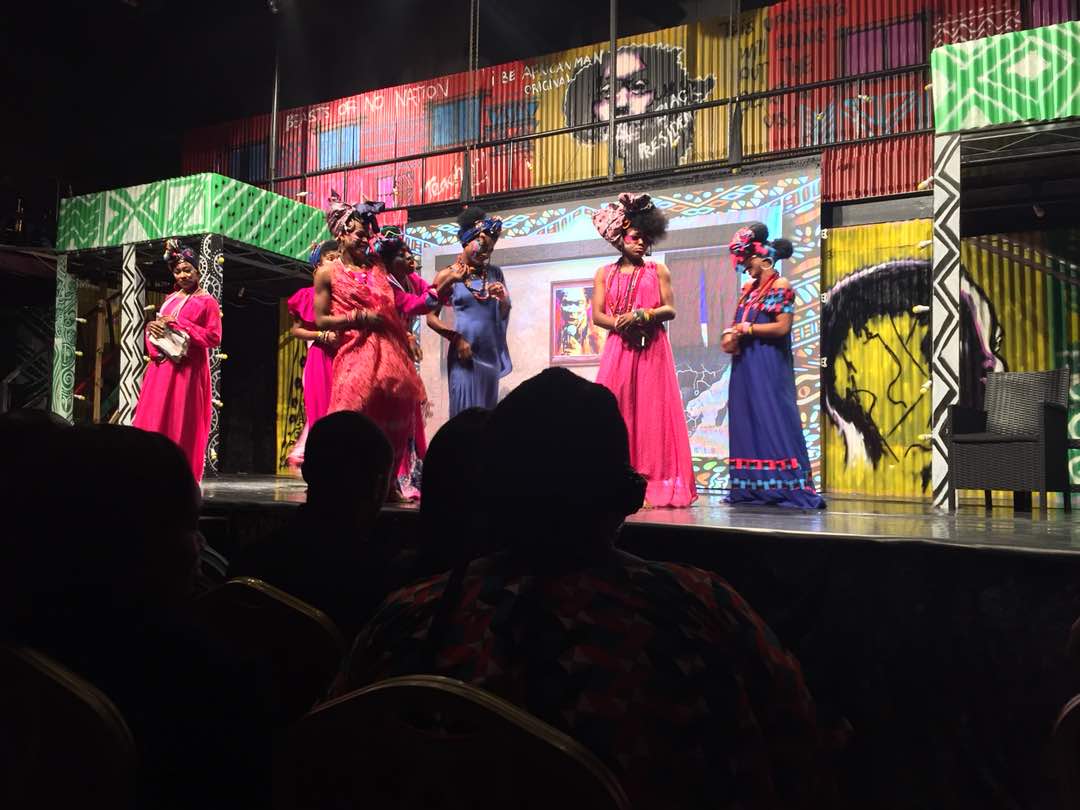
One of the living Kalakuta queens, Ọláídé is on stage with Fẹ́mi Kútì and Yẹni Kútì, two of Fẹlá’s children. They are passing the microphone around reminiscing about a time when Fẹlá was alive. They speak fondly of him, as if he stepped out of the room and would be back any minute. They are smiling. It feels like we know Fẹlá personally, beyond the music and stories we have read of him. Bọ́lánlé Austen-Peters looks tired. She stands by the trio who keep praising her genius and creativity. She has just explained to the audience that intense rehearsals had been on since October and that the show started airing in December. They have one last show before they come back in April during the Easter break. Behind them, the complete cast and crew of Fẹlá and the Kalakuta Queens stand, still in their beautiful costumes, smiling at the audience. In a bit, we are allowed to climb up the stage to take pictures with the cast.

Ọláídé, one of the surviving Queens from Kalakuta Republic, seated to the far right in blue, while Fẹ́mi Kútì speaks and Yẹni with Bọ́lánlé Austen-Peters look on.

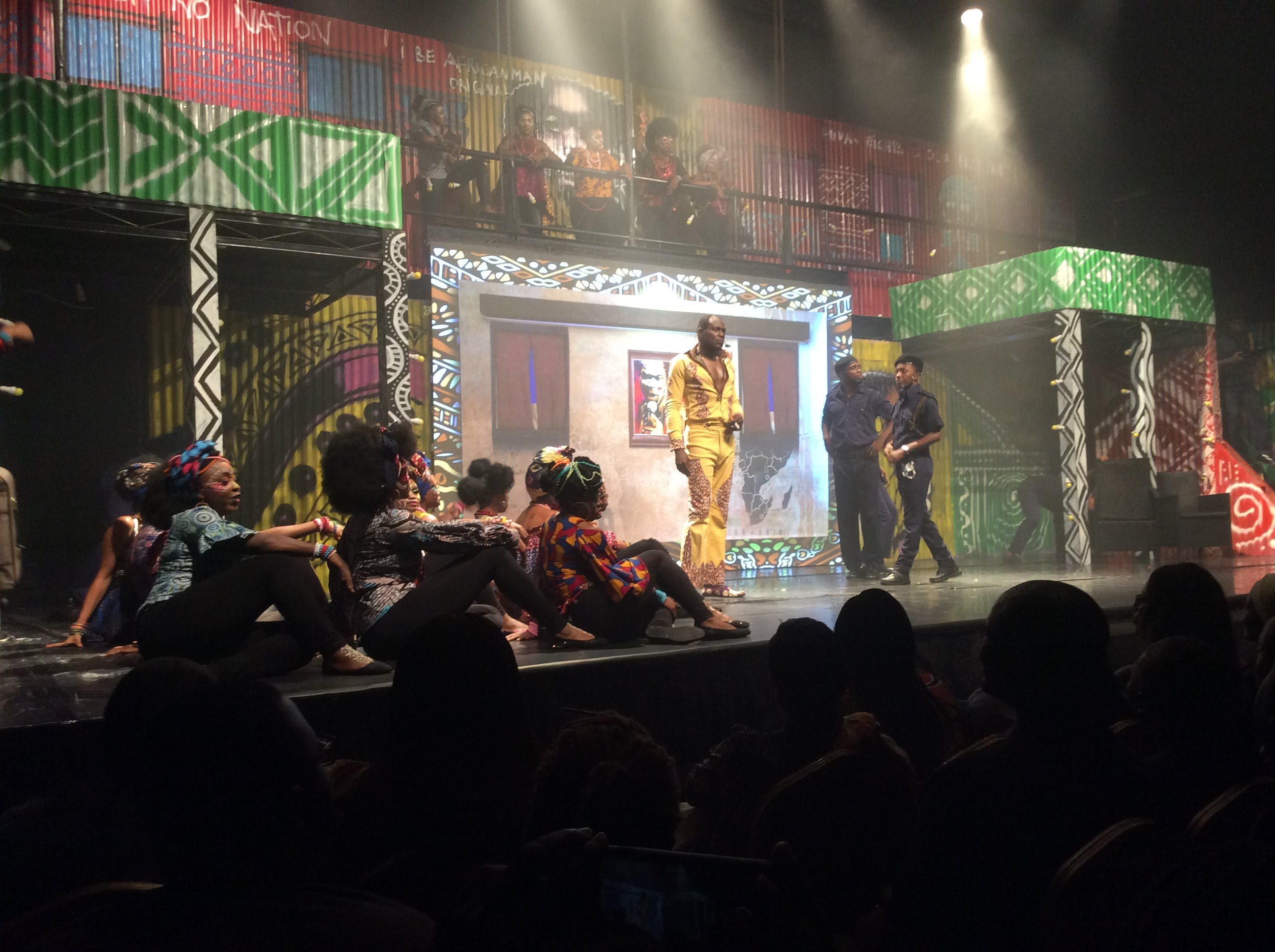
I particularly find the man who played Fẹlá – Ọláìtán Adéníji – intriguing. Apart from the fact that he did a great job with producing a close imitation of Fẹlá’s voice, mannerism, and movements, it is commendable that he has had no history or career in acting. He is an afro-jazz vocalist and saxophonist and prior to this time, definitely not an actor. The audience is awed when Bọ́lánlé says that his role as Fẹlá is his first acting role. Fẹlá, or rather Ọláìtán, smiles a modest smile. I take a picture of him. He is darker than the real Fẹlá but the resemblance is there.

On Terra Kulture’s website, they describe the event as a thrill of a lifetime. While I agree with this, I wish they had used a more adequate description. Fẹlá and the Kalakuta Queens was a thrill of a lifetime and more. It was a spiritual experience. I feel that this is the only way to capture its essence in a few words and evoke a true emotion.

In the wake of the #MeToo movement, the unveiling of several sexual harassment conducts against well-known members of the public and celebrities, especially in Hollywood, and the conversations around consent and feminism on social media, Fẹlá and the Kalakuta Queens is a timely production. It seems almost like Bọ́lánlé saw what 2017 had in store for women when she started preparing and doing research for the show a year ago. I can only imagine what extensive research and investigation she must have put into it because of Láídé and Fẹ́mi’s remark that the play is exactly what happened in real life. There is an emphasis on the ‘real life’. This leaves me short of words.

Bọ́lánlé explains that, while Fẹlá is continuously being praised for his incredibly unique music that has outlived him and promises to outlive us, no one ever talks about the women who stood by him. After his death, they sort of became relegated to the background, and their roles ignored. It was almost as if they had never existed in the first place. Every year in October, Felabration is celebrated widely in Lagos, and perhaps other parts of Nigeria, with musical performances, art exhibitions, stage plays, film shows and several other acts. But none of these acts recognize the 27 women who became his wives, who were an entourage of his band and more than anything, the inspiration behind some of his music. Bọ́lánlé’s introduction of this narrative to Fẹlá’s living story is brilliant.

The play details the scorn these women faced from being with Fẹlá. Láídé says this. She tells us some of the adventures she had with Fẹlá and the other queens. She narrates the story the way a grandmother would tell stories to her grandchildren. This is not to say Láídé is in any way an aged lady. She is merely in her 60s but looks at least a decade younger. It is almost impossible to imagine her as the troublemaker Fẹ́mi calls her. (In return, she calls him “Ọmọ-ọmọ Ìyá Àjẹ́” – a nickname that continues the moniker that used to be attached to Fẹlá himself: Ọmọ Ìyá Àjẹ, meaning “the son of the witch-godmother”. The witch-godmother was Fúnmiláyọ̀ Ransome-Kútì. Ọmọ-ọmọ means “grandson”). She tells us of the numerous times the police arrested her and the queens, of how the queens beat the Ghanaian police officers who had arrested them, and how they were eventually deported to Nigeria. She says this amidst our laughter. Many times during the play, the women were referred to as prostitutes – ‘ashẹ́wó’ the policemen often screamed into their faces. Láídé who has probably heard this one too many times in her life, reminds us blatantly and continuously that the queens were not prostitutes. ‘We were not prostitutes,’ she says. But the relevant question here is not ‘who were these women?’ The question is, ‘why were they so keen on supporting Fẹlá? They supported him to the extent that they were raped and beaten by police officers. Why were they so ready to give it all up, in order to stand with this rebellious musician? And why did Fẹlá marry all 27 of them?

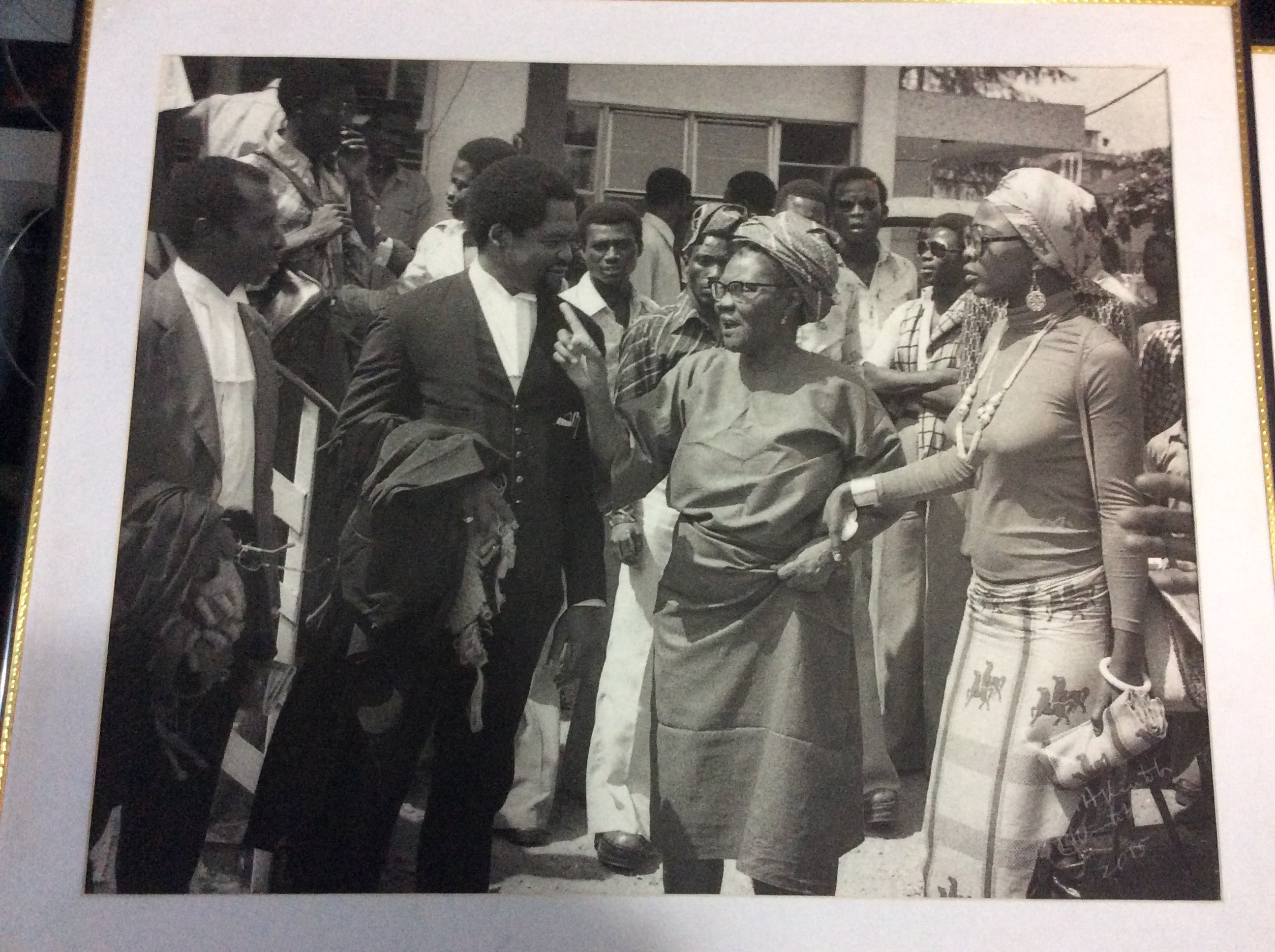
“Sister Ọláídé”(right), as many people in Kalakuta Republic knew her, was a close confidant of Fẹlá’s mother, Mrs. Fúnmiláyọ̀ Ransome-Kútì (middle). Both of them are pictured here with Fẹlá’s lawyer (left) during one of Fẹlá’s court appearances. <b>Photo credit:</b> Kalakuta Museum, Lagos.

Fẹlá Kútì was absolutely nothing without his queens. Ọládọ̀tun Babátọ́pẹ́ Ayọ̀bádé writes in the dissertation the ‘Women that danced the fire dance: Fẹlá Kuti’s Afrobeat Queens, Performance and the Dialectics of Postcolonial identity’ that the women were indispensable actors in the making of Afrobeat music as well Fela’s rise to prominence as a musician and activist. The author adds however that their collaboration with Fẹlá’s anti-government ideologies as well as their often-eroticized stage performances made them special targets of state-organized violence and earned them contempt from the Nigerian society. In this play we see state actors vis-à-vis Nigerian police officers continuously demeaning and harassing them. On why they have been ignored by history despite their critical role in elevating Afrobeat music to a global level, the author writes: ‘they have been imagined as indecent underclass women undeserving of Afrobeat’s collective memorializing or as collateral damage of Fẹlá’s political and personal excesses.’

The play ran for nearly three hours. Starting around past three, music from a live band serenaded us while the lights were still on and people networked, or caught up with old friends. The music gave off Yorùbá party vibes that I felt were just right. This set the stage for the play. But the Fẹlá vibes did not start here. At the entrance, there is graffiti and the words “Afrika Shrine” inscribed. In the ticketing area and beyond, you are welcomed by photographs of the Kalakuta Queens, of Fẹlá and some of his more famous quotes like “water e no get enemy.” This gives you goosebumps even before Fẹlá’s incarnate walks on stage. When it is time for the play to begin, the lights dim. A eulogy of Fẹlá opens up the show, intensifying the mystery and its spirituality.

There is a tendency to criticize Nigerian stage plays – at least the popular ones, as being too musical in nature. Critics ascribe the stunted growth of Nigerian theatre to this, poor plots and terrible acting.  Theatre critics also attribute the lack of growth to lack of theatres and other like spaces. While these concerns are valid, Bọ́lánlé Austen-Peters has carved out a niche in musical stage plays that continues to thrive. The construction of the new Terra Arena where Fẹlá and the Kalakuta Queens holds, further reduces the dilemma. Previous BAP productions: Saro and Wakaa the Musical held at the Muson Centre. Muson is a great space, but it is not necessarily homely. I find that what the less than spacious Terra Arena theatre does is to make things somewhat informal and yet attractive. Brymo’s concert in December attests to this. And this, I feel, is one of the reasons Kalakuta Queens was such a hit. Characters from the play sometimes walk from amidst the audience unto the stage. The audience itself is more often than not a part of the play in the way we raise our hands up in salutation to Fẹlá, sing along, and cheer with every performance.

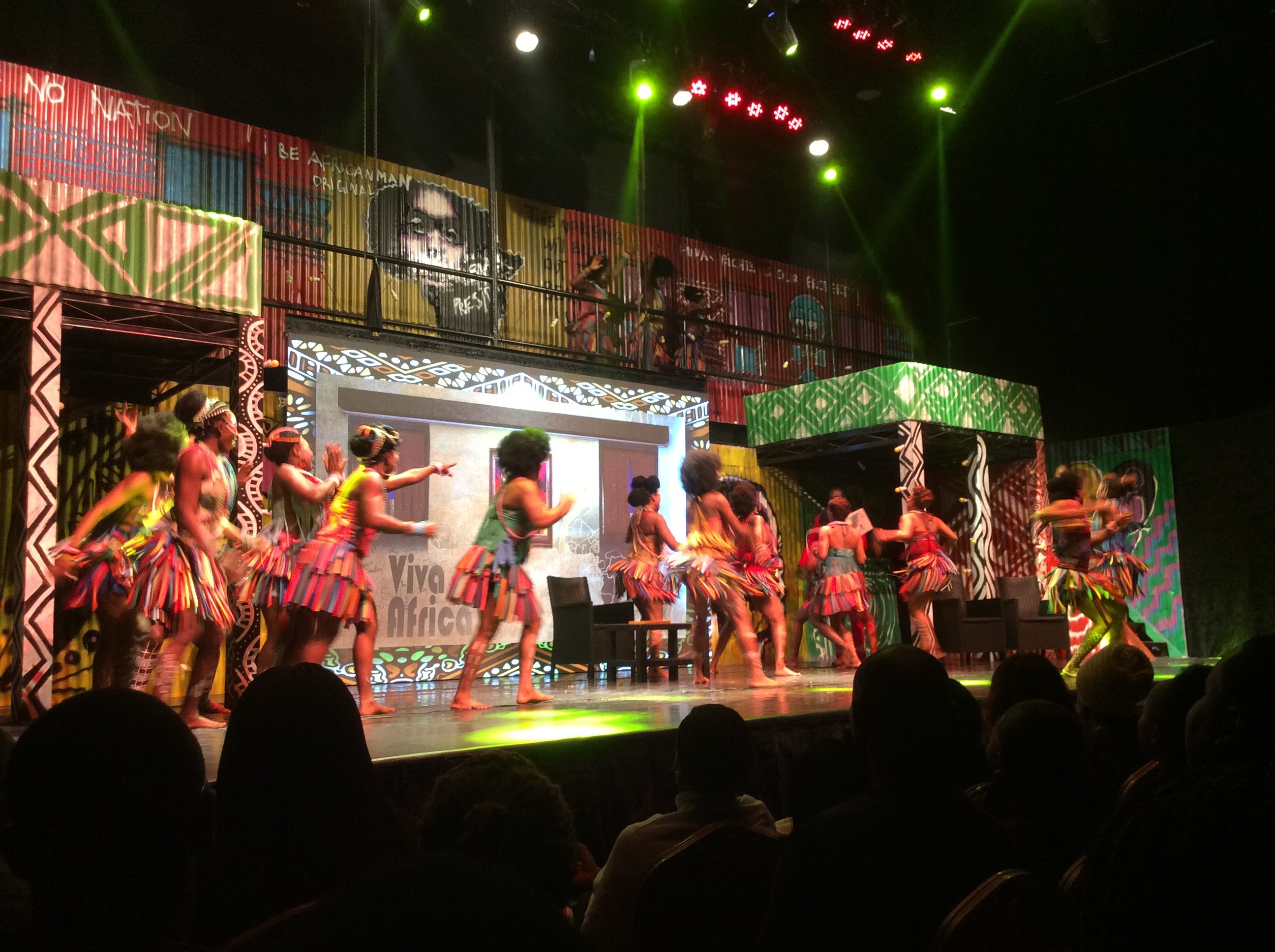
When they perform for the first time, they are dressed in white costumes their faces painted in different colors, shapes and lines. They dance in red light and other times in blue, green and yellow lights. Their entire look, from their natural hair wigs to colourful costumes and bead ornaments made the play authentic. It was increasingly important for me that the originality of the entire play went beyond Ọláìtán’s close resemblance to Fẹlá. I wanted to feel this same sense of originality with the other characters. BAP did not disappoint. In 1983, Bernard Matussière took some beautiful shots of the Fẹlá queens. In the main, their portrayal by the actors in this show hews as close enough as possible to a true approximation of their appearance, skills, and dance dexterity. Around the world today, several stylists and fashion icons have drawn inspiration from the bold makeup and hairstyles of Fẹlá’s wives.

The beauty in their choreographies and dancing cannot be overemphasized. Their moves certainly mesmerized the audience. Through the show, I imagined their motions being trapped into an art frame and exhibited like photographs. Though Fẹlá’s 10 to 20 minutes songs have a life of their own, the dance these women brought to accompany them gave a deeper meaning to what it means for a song to be alive. It is without a doubt that the dancing of the Kalakuta queens made Fẹlá’s songs a complete package back then, as they did on stage during the play. It was a whole new level of energetic, sensual and majestic.

The play is hilarious. Think of the way in which Lọlá Shónẹ́yìn’s Secret Lives of Baba Segi’s Wives is hilarious, the way in which it showcases a Nigerian polygamous home and is still poignant but not crude in the messages it passes. It is in this same way that Fẹlá and the Kalakuta Queens is hilarious and serious at once. The women struggle and compete for Fẹlá’s attention. They plot against and fight with one another, often using music and dance to pass on their messages. They find a common rival in the beautiful Malaika, the woman from London who says she has come to study Fẹlá and the queens, particularly the queens. They become agitated when they notice that Fẹlá has fallen for her, and that she has gained monopoly over the Kalakondo. As with when they stand with Fẹlá, they unite as one in order to throw her out of the Kalakuta Republic. It is interesting though, that while the women stand with Fẹlá when he is arrested, Malaika does not, further establishing her traitor-hood.

A particularly interesting scene is the court scene. After Fẹlá is arrested the first time, he is taken to court and charged with the abduction of the girls and possession of marijuana. He pleads not guilty and the judge asks the lawyers to present their case. The court clerk is a side-splitting character who seemed to overdo his role but still got the audience laughing. The claimant’s counsel presented witnesses who were emotionally inept at giving a clear and concise testimony. The first witness, Láídé’s mother, cries all through her testimony at the witness stand. The second witness is an aunt to one of the queens, Lará. Though she does not cry, she still presents a poor testimony in poor English. The two women stare at Fẹlá accusingly. While they can prove no clear case against the musician, there is another perspective when Lará’s aunt reveals that her niece is underage. On this count and on the count of being in possession of marijuana Fẹlá is convicted and sentenced.

The women call Fẹlá ‘king’, ‘Black President’ and ‘Abàmì Ẹ̀dá.’ He calls them his queens. He says, “I love all my queens. They are unpretentious and are ready to battle with me. Without them, I am nobody”.  When Fẹlá decides to marry the women, he does not do it for selfish reasons. He learns that his queens are unhappy because despite standing by him, despite being dancers, singers and activists in their own right because they are women, they would never do right by society. People would continue to mock them and refer to them as ‘ashẹ́wó’. So he felt the right thing to do would be to marry them. At first, people – his lawyer, Tunji Braithwaite inclusive – try to dissuade him from marrying the twenty-seven at once. He is told that he would be prosecuted for bigamy. But this does not move him. The women are delighted to hear he is going to marry them. In an article on She Leads Africa, Halima Bakenne writes, “Marriage offers some form of validation for women in Nigeria and maybe even other parts of Africa. It is believed that irrespective of what a woman achieves, she is nothing without a man.” This succinctly describes the motive behind Fẹlá’s marriage to the queens. A priest conducts the marriage ceremony. This is followed by a brief performance after which the show ends.

One of my favorite scenes in the play is Ihase’s performance. After the police destroyed their house and abused them, they were taken to the hospital. At the hospital, Ihase broke into soul-wrenching music. Her powerful voice reverberated across the quiet, still hall. In this same scene, Fẹlá is being treated on a gurney and behind him, in the projector, his spirit is depicted as coming out of his body – death and later on, as the music intensified, returning. Fẹlá Kútì later confirms that his father had mentioned that he once died and returned. This scene is also painful to watch. It reminds me of war-torn countries and daily domestic and street violations of women in Nigeria. It reminds me that sexual assault and domestic abuse are still endemic in our society, just as they were in the 80s. It reminds me that while most of the world has joined in on the #MeToo movement, Nigeria is still lagging behind.

There are so many take-homes from this stage play, like most stage plays and generally from Fẹlá’s life. Despite his many flaws and the seeming patriarchal nature of his relationship with the queens, he never disrespected them. He treated them equally. Their place in history has been reintroduced and there’ll hopefully be more public recognition and appreciation for their role in his life story as time goes on. When I climb the stage to take a picture with Láídé after curtain call, I smile at her and kneel beside her. I say to her: ‘thank you for sharing your story with us.’

___

The play/musical Fẹlá and the Kalakuta Queens ran from mid-December 2017 to January 14, 2018 at Terra Kulture Arena. It is billed to return in April 2018. Photo credit: KTravula.com, Tobe, and Kalakuta Museum.

___

Ọpẹ́ Adédèjì dreams about a lot of things but most especially about bridging the gender equality gap and working with the United Nations. If you do not find her writing, you would find her reading a novel. She is the co-founder of Arts & Africa.

Finding Home in Writers’ Words

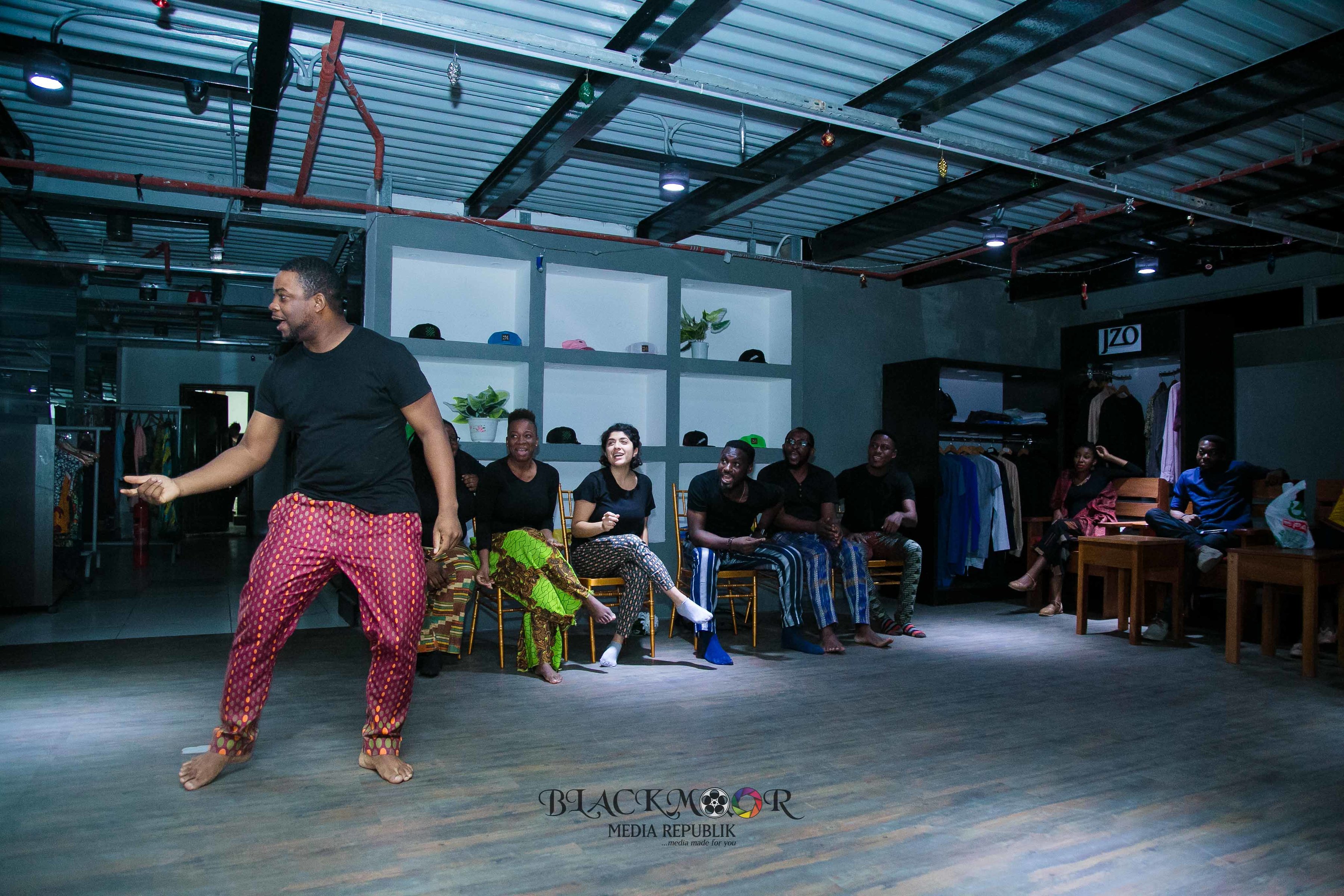
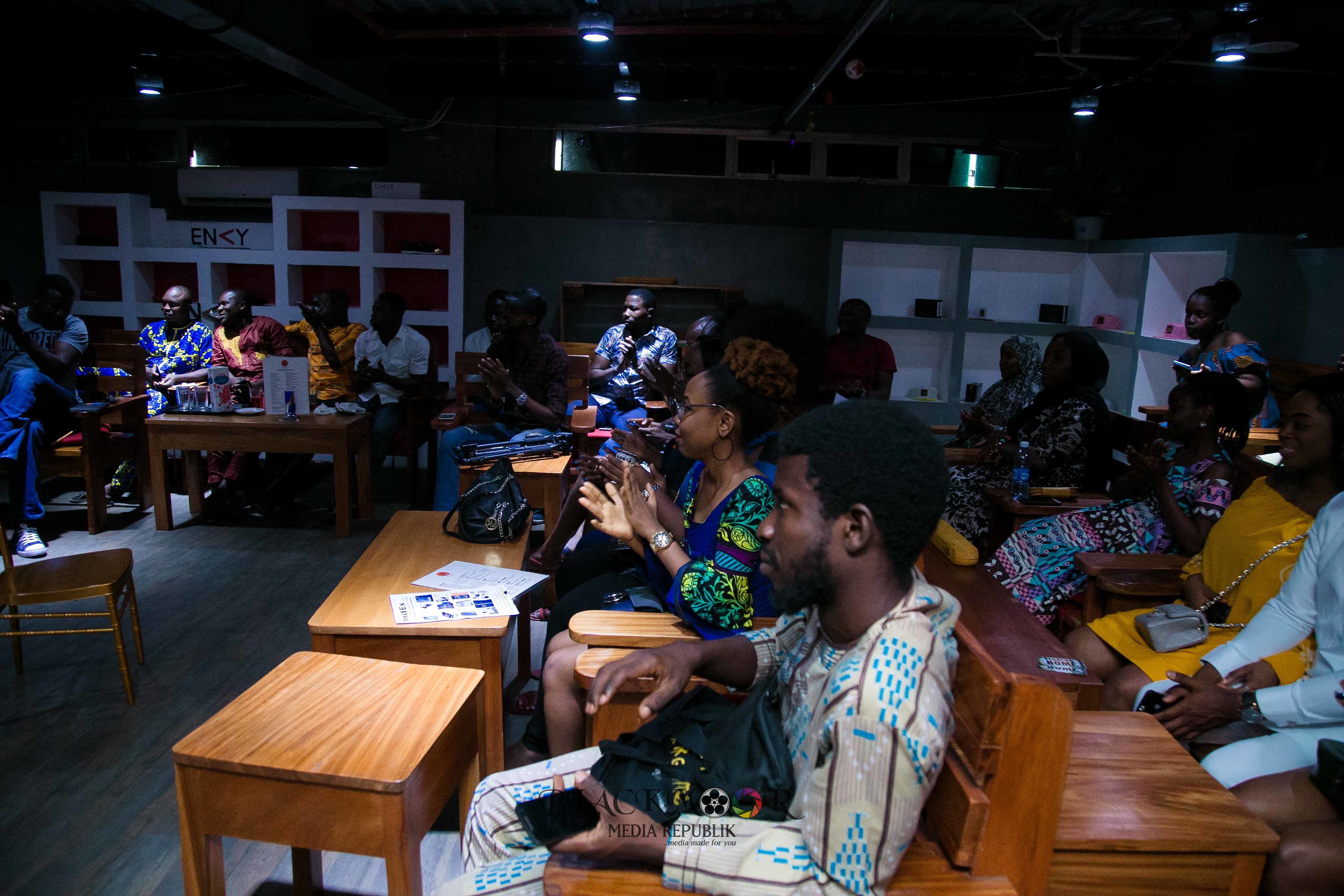
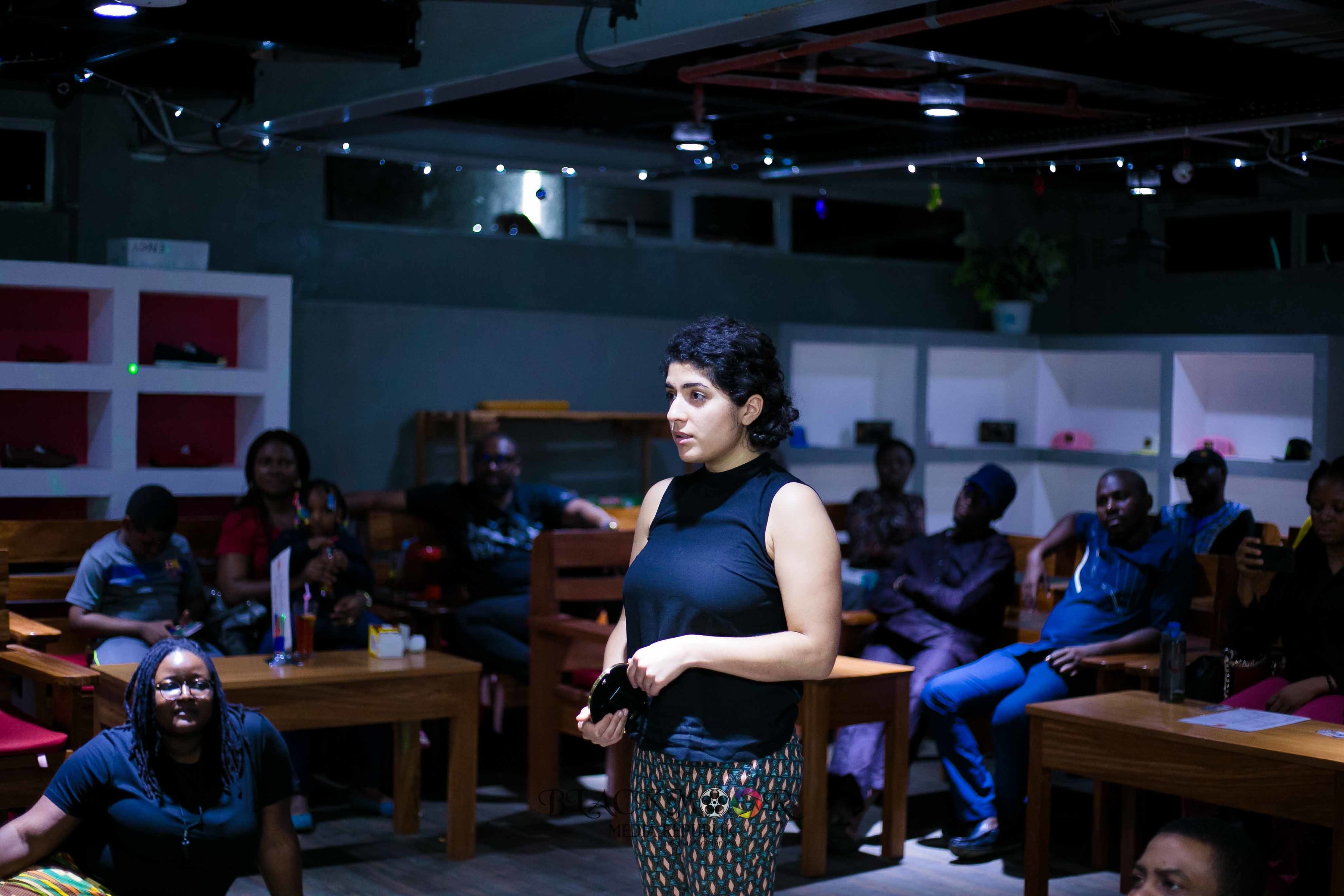
I watched the Lagos performance of Efe Paul’s Finding Home earlier in December. It held at an underground bunker in Ìlúpéjú and featured an array of bold and exciting voices, including some of Nigeria’s best spoken word acts.

The concept of the show always fascinated me since I first came across it in November 2014. Then it featured a different cast, including Sheila Ojei, and Bassey Ikpi (who has now relocated to the United States), among others. But the format was the same: a show designed around migration and movement, and built from the ground up with the words and stories of the individual poets and performers who make up the cast, and who are at liberty to create characters to advance the theme.

I found that not only fascinating but innovative. But I wasn’t able to see it.

Spoken word performance is a relatively young genre in Nigeria, but you won’t know by watching its biggest headliners perform, be it at art events in Abẹ́òkuta or opening events at Freedom Park, be it reciting inaugural poetry for the Nigerian president or harnessing the power of metaphors to sell the services of a commercial bank. The words move, and excite, and provoke, and instruct. From Wana Udobang’s emotive and playful dexterity to Chika Jones’ soft cadences that packed a punch; from Efe Paul’s baritone and theatrical evocations of truths to Títílọpẹ́ Ṣónúgà’s vulnerable but assertive tenderness; from Sage Hassan’s intense rebelliousness to Dike Chukwumerije’s eclectic experimentations, those who have braved the wilderness of this new and fascinating stage have brought with them a range of creative expressions before only seen in drama. So, when a play was constructed from these kinds of creative manifestations and fashioned around a contemporary theme, the result is always interesting to see.

Finding Home is, thus, not about one thing. It’s about many: a young man who takes all his savings in order to move to a new world in search of the golden fleece, a young woman who marries for visa, an immigrant who was ratted out for deportation by someone of their skin colour, or refugees who found themselves in the bottom of the ocean rather than the promised land. These kinds of stories are what the show is about, told mostly in the first person, with sound effects, mimesis, and playacting, in ways that carried the audience along with the ups and downs of each tragedy or triumph.

We leave because we have learned that staying still will kill you faster than moving.
So when home becomes a mad song from a broken guitar,
And it feels like the entire universe is playing you,
Let your fading footsteps become drum beats of victory and let them say: He was a good man, but when home becomes the stench from a rotting carcass, even the best men, leave.

– Chika Jones

There were other innovations. The show was performed in a semi-circle, for instance, with the actors facing different parts of the “stage” at different times. This gave it a sense of familiarity and intimacy, but also a kind of limitation. It will be interesting to see how it is realized on a flat conventional stage.

There was also an innovative but sometimes frustrating foreign language element.

One of the actors, Tanasgol Sabbagh, performed only in German – a brilliant invention that both illustrated the international dimension of the theme and the fact that the play had recently been shown in Germany, courtesy of the Goethe Institut. But in Lagos on this cool Sunday night, surrounded by bilingual speakers of only English and another Nigerian language, her part felt almost alien. And yet in that alienation is another realization of an important dimension of home or homelessness. How many immigrants, like those portrayed in many tragic instances in the play and in real life, get the chance to be fully understood before being sold off to slavery, or strapped to airplane seats and deported (in the best case scenario), or killed in cold blood in the back alleys of drug and gang-controlled slums of Europe and America?

The play, then, was both a communal contemplation of loss and survival as it was an examination of conditions that continue, all around the world today (accentuated, of course, by the prevailing news at the time, of the sale of Nigerians in Libya as modern-day slaves) to dehumanize immigrants, their stories, their bodies, and their condition. It was also an important twist on the character of spoken word as being just a one-man craft. Under the creative director of Fẹ́mi Elúfowójù, the cast showed what can be done when creativity and cooperation are harnessed to economy. There wasn’t much costume change, and much of the show played out in the plain site of the audience without any negative impact on the plot movement or overall message.

Is Finding Home a drama or a poetry production? Don’t ask. I’ll certainly see it again. I just hope there’s more music next time, by the characters, even if they are sad ones.

___

Cast members: Efe Paul Azino, Chika Jones, Títílọpẹ́ Ṣónúgà, Ndukwe Onuoha. Obi Ifejika. Adeṣọlá Fakile. Tanasgol Sabbagh and Fẹ́mi Lẹ́yẹ.