Browsing the archives for the Prose category.

NLNG Releases a Shortlist of 11 for 2016

According to the Advisory Board for The Nigeria Prize for Literature, led by Emeritus Professor Ayo Banjo, 11 Nigerian authors have been shortlisted for this year’s Literature Prize for Prose Fiction, worth $100,000. This initial shortlist was drawn from 173 books.

Here are the authors (resident in the country and outside) and their work in the shortlist:

  • Chika Unigwe (winner of the prize in 2012): Night Dancer (2014).
  • Ogochukwu Promise (author of over fifteen novels): Sorrow’s Joy
  • Yejide Kilanko (a writer of poetry and fiction): Daughters Who Walk This Path.
  • Ifeoma Okoye (a writer and author of children’s literature): The Fourth World
  • Sefi Atta (author of Everything Good Will Come): A Bit of Difference
  • Abubakar Adam Ibrahim (writer and journalist): Season of Crimson Blossoms
  • Ifeoluwa Adeniyi (radio broadcaster): On the Bank of the River
  • Elnathan John (lawyer and writer): Born On A Tuesday
  • Aramide Segun (winner of an ANA Prose Prize): Eniitan Daughter of Destiny
  • Maryam Awaisu (radio presenter): Burning Bright
  • Mansim Chumah Okafor (author of two previous books of fiction): The Parable of the Lost Shepherds

The list was presented by the chairman, panel of judges for this year’s prize, Prof. Dan Izevbaye, well-respected literary critic and a professor of English Language at Bowen University, Iwo. Other members of the panel of judges include Professor Asabe Usman Kabir, Professor of Oral and African Literatures at Usmanu Danfodiyo University Sokoto and Professor Isidore Diala, a professor of African Literature at Imo State University, Owerri and first winner of The Nigeria Prize for Literary Criticism.

“The Nigeria Prize for Literature has, since 2004, rewarded eminent writers such as Gabriel Okara (co-winner, 2004, poetry), Professor Ezenwa Ohaeto (co-winner, 2004, poetry) for The Dreamer, His Vision; Ahmed Yerima (2005, drama) for his play, Hard Ground; Mabel Segun (co-winner, 2007, children’s literature) for her collection of short plays Reader’s Theatre; Professor Akachi Adimora-Ezeigbo (co-winner, 2007, children’s literature) for her book, My Cousin Sammy; Kaine Agary (2008, prose) for her book Yellow Yellow; Esiaba Irobi (2010, drama) who clinched the prize posthumously with his book Cemetery Road; Adeleke Adeyemi (2011, children’s literature) with his book The Missing Clock; Chika Unigwe (2012, prose), with her novel, On Black Sisters Street; Tade Ipadeola (2013, poetry) with his collection of poems, The Sahara Testaments and Professor Sam Ukala (2014, drama) with his play, Iredi War.”

A Chapter in Literary Wonderlands

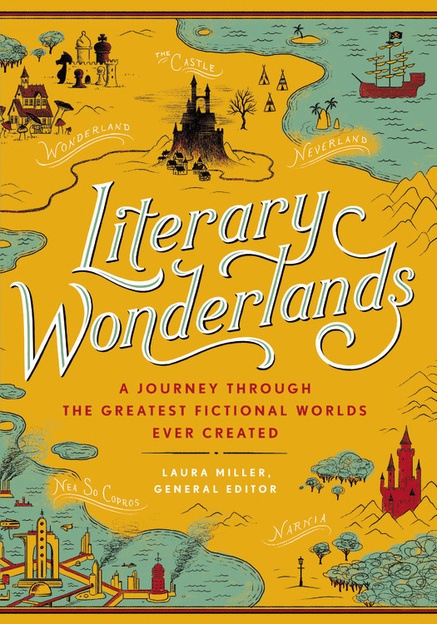
literary wonderlandsI’m thrilled to announce that I am contributing a chapter to the book “Literary Wonderlands”, a book that “seeks to bring together the greatest ‘created’ worlds of literature in one beautifully designed and illustrated single volume.” More about the project here

The book is being edited by Laura Miller (co-founder of Salon.com), and contributors include Adam Roberts, Julia Eccleshare, Lev Grossman and Lisa Tuttle. It will be published by Elwin Street Productions by November 1. You can pre-order it here.

My chapter is on Nnedi Okorafor’s “Lagoon“, the only African novel in the list of 100. The novel examines a post-apocalyptic Lagos during and after an alien invasion. Here’s a summary from Amazon:

“After word gets out on the Internet that aliens have landed in the waters outside of the world’s fifth most populous city, chaos ensues. Soon the military, religious leaders, thieves, and crackpots are trying to control the message on YouTube and on the streets. Meanwhile, the earth’s political superpowers are considering a preemptive nuclear launch to eradicate the intruders. All that stands between seventeen million anarchic residents and death is an alien ambassador, a biologist, a rapper, a soldier, and a myth that may be the size of a giant spider, or a god revealed.”

 I interviewed the author about it a while ago for The Guardian here.

A Three-Book Review

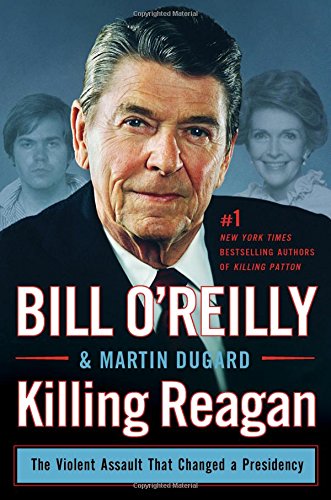
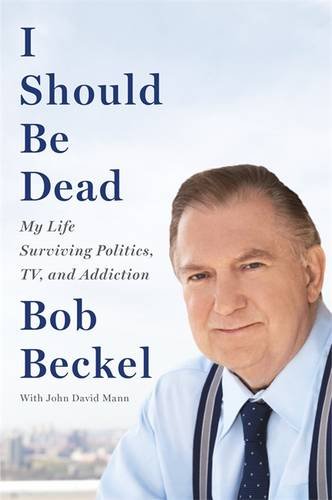
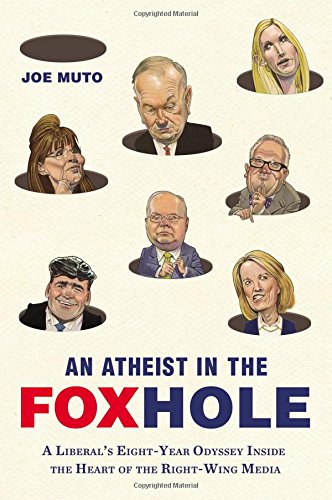
ReaganBeckel MutoI’ve just finished reading Joe Muto’s An Atheist in the Foxhole: A Liberal’s Eight-Year Odyssey Inside the Heart of the Right-Wing Media. It is the third of non-fiction books that I read over the last two weeks. And for some reason, they all happen to revolve around a certain preoccupation: politics, especially in the right-wing quarters of the United States. The other two are Bob Beckel’s I Should Be Dead: My Life Servicing Politics, TV, and Addiction and Bill O’Reilly’s Killing Reagan: The Violent Assault That Changed a Presidency. They also happen to have notable dissimilarities.

What they all have in common, though, other than aforementioned similarities and that they are all non-fiction – which always gets my attention every time, is that they were all written by people who either are current (O’Reilly) or past (Muto, Beckel) employees of the Fox News Channel, America’s enigmatic but highly successful conservative television channel; a business enterprise of Rupert Murdoch, an Australian billionaire.

Muto’s book details his train-wreck adventure as a liberal-minded employee through an eight-year career in America’s most right-wing media company, a career that ended in ruins when he turned into a mole for the website Gawker in April 2012. More than giving a rare insight, with notable anecdotes, into the working of the media house, its politics and successes, it also portrays a sympathetic image of the employee himself. Like many others in the company, and in perhaps many other such organisations around the country, the writer didn’t start out being conservative or in any way supportive of the employer’s political and business viewpoints. He only wanted a job in a tough economy, and a chance to build a life with his girlfriend whom he had brought into New York from a small town. And through a series of justifiable (and sometimes hilariously contrived) compromises meant to keep him in the good graces of his employers, he worked his way from a Production Assistant to an Associate Producer for the channel’s most highly-rated programme. Then blew it. Publicly. What was to be learnt from reading the book other than how to throw away an eight-year career in the most ignoble manner? Not much, but it was nonetheless a good account that read like a fast-paced thriller. The writer may not be glad about the way his career ended, but he was sure glad to have left as we are of his decision to write the book. He had a keen eye for details, and his observations, especially of his former colleagues, seemed fair and measured.

In Bob Beckel’s book, one lives through the civil rights era of 60s America through the unlikely journey of a child from an abusive alcoholic home who, in a few short years, became the Deputy Assistant Secretary of State in the Jimmy Carter White House and later the campaign manager of a presidential candidate (who lost 49 out of 50 states, no less). The book details not just the notable events of these times and the author’s personal successes, but also his failings and struggles with drugs and alcoholism, and his eventual redemption. I first knew Bob through The Five, a roundtable political news conversation show at 5pm on Fox where he was the resident liberal against four conservative hosts. His geniality, unconventionality, and resilience as he held his own successfully against the usual misinformation and sometimes just merely surly temperament of his co-hosts was stuff of legends. It was easy to root for him: a lone sane voice in the wilderness. He, of course, notably got just as surly himself, ending up as a butt of brutal jokes when he advocated for the ban on muslims coming into the US, a suggestion apparently not risible enough for Donald Trump, the Republican frontrunner to eventually picked it up many years later. Bob’s attempt with this book however is one of honesty and courage in telling a story that is at once self-reflective as it is self-incriminating. The subject is both its conquering hero as its remorseful villain. The reader leaves its pages understanding the causes, cost, and cure for alcoholism and addiction. And, more importantly, gaining sufficient empathy for its victims around us. It is certainly a book to recommend, and I do so, strongly.

The third, a biography of sorts, was Bill O’Reilly’s Killing Reagan which revisits the assassination attempt on the president’s life in March 1981, just two months after he was sworn in. The book details not just the former Hollywood actor’s rise to fame and mythology from a humble mid-western (and liberal) background, but also the effect of the assassination attempt (and his Alzheimer’s disease which was said to have started a little bit afterwards) on his presidency and legacy. Fascinating, also, was his relationship with his wife Nancy (whom he married after the failure of his first marriage to a fellow Hollywood star, Jane Wyman) and who turned out to be his rock-solid companion and shield (and, as some insinuated, manipulator). Not only did she endure the loneliness of his last years when he lost the ability to recognise her or anyone, she also had to live twelve more years alone without the man she had loved for most of her life. It was a well-written story, which introduced the former president to anyone curious about his life and legacy. The book wasn’t without its critics, however: some Reagan loyalists and other reviewers thought that O’Reilly exaggerated the effect of the disease on the president’s performance in office, among other untruths. Bill, for some reason, continues to dominate not just cable news with his O’Reilly Factor but also the Bestseller lists with his Killing series. Like Killing KennedyKilling LincolnKilling Patton, and Killing Jesus, before it, Killing Reagan continues the trend of entertaining (and informing, I must admit) readers through the non-fiction medium, sometimes through dubious or exaggerated reportage, but always with a single-mindedness of purpose.

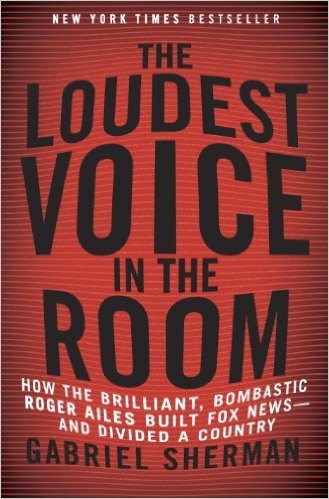
loudestA figure that stood out of these three books, like a brooding shadow, was that of Roger Ailes, Fox News’ boss. It was he who is reputed to have built the cable channel out of nothing, discovered and made its on-air talents into national figures, and continues to drive liberals crazy around the country with his enigmatic and unapologetic successful conservative persona. But in the three books, Dr. Ailes is a number of different people. Joe Muto’s Mole dedicated a notable space to describing how his micromanaging style, and politics, ensured that all those who worked at Fox took care to either tow the party line as true believers, or fake their way into promotion and prominence by appearing to be as conservative as desired: an image of a paranoid invisible puppeteer. In O’Reilly’s Killing, he was a genius who kept Richard Nixon’s administration television-friendly, thus minimising the damage it would otherwise have got earlier on. He, it was, during the re-election campaign of Ronald Reagan, who (as a hired political consultant) came up with the killer response that damaged the Mondale Campaign (and, by extension, Bob Beckel’s campaign career) in 1984. More than that episode, for Beckel, Roger Ailes was also the man who – after decades of failure and impending ruin – offered a lifeline by giving him a job on Fox News as a contributor, and eventually as a co-host on The Five: a smart but benevolent operator who holds no grudges against former opponents. The portrayal of his genius (or deviousness as the case may be) has now driven me to buy this promising biography of his, written without his support or approval.

These three books were a delightful, and surprisingly easy, read, as most non-fiction works tend to be in my experience. They were worth each cent, and gave me a deeper peek into the workings of the US media, politics, and journalism in general. It certainly delighted the part of my brain that has always wanted to write a memoir or someone else’s biography in the future, though not necessarily the part in search of a clever turn of phrase or some delightful serving of English prose in its literary glory. Still, not a wasted time in the company of lived history.

Beneath the Black Ass is a Continent

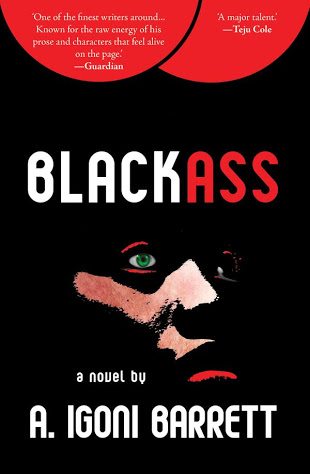
6P8uiwq6IP7VBztiTzkidMbNB0_EVBxL0iSszg5nhTafmucMvgpHWMuD-A1XcJm9qL_sKRR1u20ZeoWuZvFJX48dSZ-p6R0PmwMFujehUrVA4eXnBKsYdewIFZ8UstUsrZlbVTu00cxf4fdeafVgmjE4=w310-h474-ncTitle of the Novel : BlackAss

Author: A. Igoni Barrett

Nos of Pages: 302

Publisher: Kachifo Limited. 2015 (Under its Farafina imprint)

Review by Femi Morgan                                                                                                                                                                                                                                                                                                                                                                                                                                             ___                                              

Furo Wariboko wakes up and begins to come to terms with his new identity. He was a black man yesterday and he is a white man today. Furo is born again without confessing away his blackness totally, his black ass is the constant reminder of the disappeared melanin. This Kafkaesque novel is about the metamorphosis of not only Furo but also Furo’s people in a postcolonial state.

Furo lives in a cosmopolitan landscape which despite its aspiration to compete with its western counterpart fails in the infrastructural, socioeconomic decimals of true metropolis. The author splendidly subdivides Lagos using the perspective of exotic prediclection towards white people. The people who live in Ẹgbẹ́dá, where Furo lives, are not conversant with a white man walking on the streets and hustling up and down.  Furo, therefore must find a way to escape the eyes of people. Areas like Victoria Island and Lekki have white people jogging in the early hours of the morning. White people live within these scapes as expatriates, government personnel and as facilitators of linking the values of the west in the globalisation project of Africa. Igoni Barret captures the nuances of Lagos most accurately. He spares no time in explaining the rich as well as the struggling transits of the city. His exposition on Lagos is successful because it is a subtle brush on the landscaping of the exciting narration.

Furo begins to receive an umbrage of responses to his new personality. A white man is shown exceptional favour at the detriment of a fellow black man, a white man conveys the aspiration of so many poor Africans and therefore taxi men and transporters hope to get a piece of the dollar-pie by jerking up the price. Many people hold conversations with him, asking him about the places he has never been, the places in Europe and America.

Furo is a white man with a black soul. He is expected to negotiate this displacement of identity with a certain ingenuity that may make or mar him. These postcolonial reactions of reverence, of hate, of anger and of fear stem from a deep postcolonial malaise that has been enhanced by stories of the great west as against the low global north. Thus the author satires Africa, it is a continent that kneels in the presence of its western personas.

The thirty-three year old Furo earns a job that he had sought for 10 years. He is given the benefit of doubt when he bungles a crucial question at an interview and he is placed in a rather uppity position in Haba! a failing enterprise, because of his white status. Arinze, the CEO of Haba! says in an interview with Furo, ‘I will be frank with you, we need a man like you in the team’.  Meanwhile, despite the change of skin and hair, Furo is a typical Nigerian. He hardly reads for leisure or for self-education, he is an educated ‘good for nothing’, a half-literate whose chances in life has improved not because he is intelligent but because he is now white. Yet, his Nigerianness haunts him, he is an African who is unable to reach the fullest of his potential, he is an educated rag who is fighting a ‘postcolonial war’ that has long been lost.

I do sympathise with Furo because I realise that the older one gets, the more he realises that he has shed those dreams and gifts of his childhood. A jobless 33-year-old will often be misunderstood because he has not crossed the essential threshold set by society. In Nigeria, a child is like a cheque that must never bounce, he must make the parents proud and must become the symbol of ancestral progress. 

Furo understands that no family member will understand his metamorphosis and this leads to his departure from home. He struggles with his new identity, the necessity for departure and the nostalgia of motherly love. Mothers subtly own their children by sheer investment, so much that they become the essential mention in the cannon of one’s personal narrative. Furo’s father is typical. A man overwhelmed by failures, losing his pride as he tries to be faithful to his family. The novel explains that despite his dehumanisation by circumstances beyond his control, his staying will be vindicated in the memories of the hereafter. Furo’s father lives by a certain mechanical routine of hopelessness, a television addiction and a dictatorship that stems from his inability to provide for his family. These postcolonial times calls manhood to question, the manhood is shrivelled because it often times has failed to be successful and has failed to meet the expectations of family and friends.

Now a white man wants to eat fufu at a buka for disoriented black people. It reminds me of Bright Chimezie’s song about the musician eating Akpu in the streets of London. The Europeans invited the police to rescue Chimezie from committing Suicide. Furo is a victim of the eczema of modernisation, yet he is watched as a circus, while he expertly swallows lumps of fufu. He is favoured against his fellow black man with an extra meat for his exotic performance.

Igoni is a splendid storyteller whose sense of observation leads his story to those existential paradigms that we often fail to acknowledge. He is not preachy, not assertive, he tells a story that pulls you in. Igoni’s work is a classic, a story that stays in your subconscious and becomes part of your memory. You walk the streets with Furo, you experience the sun shining on his face, you make love to Sycreeta, you become his alter ego. You ask yourself, is it better to live an interesting, conspiratorial life than to live a life of a cockroach?

Igoni brings to fore a new prism of narrative for contemporary writing, it is close to reality because the conversations transit between the cadences of English, popular lingo, tweet-speak and introspective expressionism. Igoni’s prose gives the reader an impression that storytelling is an easy craft, but a second look at how he wields the story and how he brings himself into the story, you realise that Igoni has painted a monumental Chiaroscuro with words. He tells a story of a failed cosmopolitan ideal as he creates parallels and binary oppositions that make the work come alive. Sycreeta and Tósìn are women who want different things from Furo, Arinze and Yuguda, Lagos and Abuja, Furo and Frank Whyte, black and white. Igoni is not the storyteller in the book, ‘he’ is in the novel, changing to a ‘she’ with a dick between her legs. Nevertheless, I come to glean the authorial intrusion of the writer whenever he postulates about existential ideas in the novel. This however is a trademark of the many classic novels that predicates on explaining the workings of modernity and life, like James Joyce’s A Portrait of An Artist As A Young Man and Franz Kafka’s Metamorphosis.

There is a realistic sense in which many of the characters are trying to transition from a certain physchological in-betwenness to a full knowledge of their persona or an attempt at accomplishing their dreams . The reader becomes aware of the way of the world from the novel. The things we shy away from using the veneer of religiosity are challenged by the comprehensible raison d’etre of the characters. There is Sycreeta who understands the prize of a white man’s worth and plays a game to win, there is Yuguda, Arinze and others who realise the impressions that a white man can bring to their firms, their NGOs and Ad Agency.  So the jobless 33 year old becomes the most sought after. There is Victor Ikhide and Ehikhamenor in the novel, a resonance of reality meeting fiction. Ehikhamenor retains the high status of being an artist while Victor Ikhide is a talkative, loud-mouthed driver. Yuguda is clearly the Dangote of the novel.

Furo’s changes is in continuum, he becomes more opportunistic and begins to negotiate his identity and to create the money spinning perception that lands him a better deal. Furo tries to be complete in his whiteness but it is left to Igoni to let him achieve his new ambitions as a white man.     

_______

Femi Morgan is the co-curator of Artmosphere, a leading Arts and Culture event in Nigeria and a co-publisher at WriteHouse Collective. He is a co-recipient of the 234Next Fashion Copy Prize and was longlisted for the BN Poetry Prize in 2015.  

Home Is a Slippery Word: Interview with Namwali Serpell

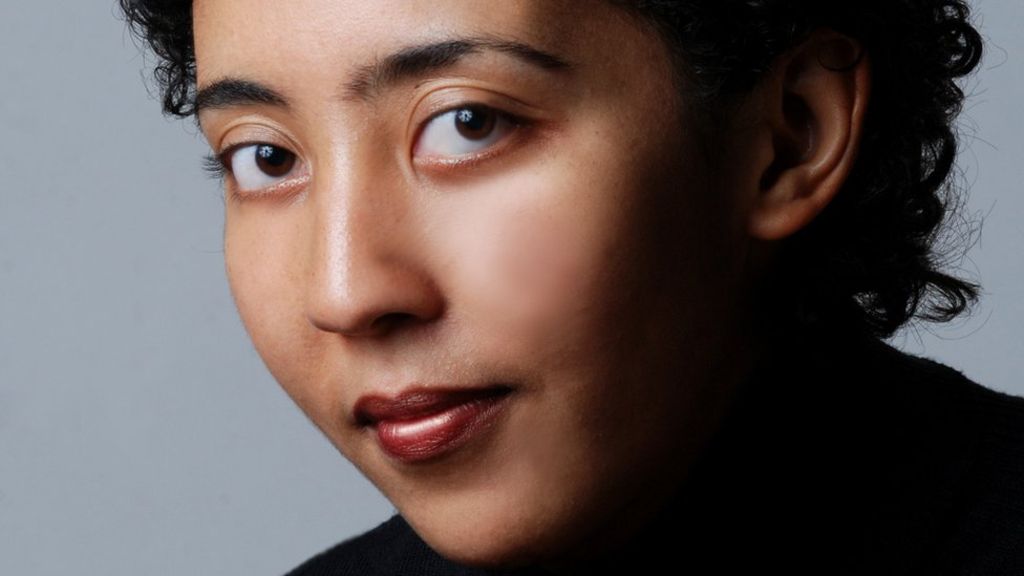
Namwali Serpell. Photo credit: The BBC

Writer and professor Namwali Serpell of Zambia and of the University of California, Berkeley, was declared the 2015 winner of The Caine Prize, the most prestigious prize for the short story by an African writer. Her story, first published in Africa39 was titled The Sack. It was a story which she herself described as “a story so strange”. It was a story that I found quite fascinating in its unraveling. In this interview, she speaks to me about the story, her work, background, and influences.

__________

Hi there and congratulations for your win. Were you expecting it?

Thank you. No.

Im sorry to say that I hadnt discovered your work up until this moment. I have a copy of Africa 39 but managed to read only a couple of the stories there. Not many people know also that you have been shortlisted for the Caine once before (in 2010) for a story called Mzungu. Femi Terry won that year. What have you been up to within that five intervening years?

Since 2010, I have been teaching at the University of California, Berkeley, where the English department just granted me tenure. As part of that process, I wrote and published a book of literary criticism called Seven Modes of Uncertainty (Harvard U Press, 2014), and a handful of short stories and essays.

I know you were born in Zambia, and left the country in 1989. Did the politics of that country play any role in that migration, and what has been your most interesting experience living far away from home?

No, my family moved to the United States for work when I was eight years old. My father was working as a professor in the psychology department at the University of Maryland Baltimore County; my mother was working for the United Nations and then left her job to pursue a PhD.

I enjoyed your recent interaction on The Guardian where you had a lot of snarky remarks to a few ignorant questions of commenters. Does being a college professor prepare you enough for dealing with online trolls?

Insofar as I have witnessed the power of the Socratic method in my classroom, yes.

I caught this from one of the comments in the Guardian interaction: “I appreciate that in any stable society, literature can and sometimes should steer clear of other issues. However the group called Wall Street, Dylan Roof, and police departments across the United States are between them encroaching ever more on America with the intention of destroying art, literature, and learning.I found that refreshing, and indicative of how you see the writer in the society. Have you always held this attitude, and did growing up in Zambia have anything to do with it?

I was mirroring a Guardian comment about the relationship between politics and literature in African countries. Being an immigrant allows one to maintain an outsider’s perspective on the politics of other countries.

I also read the The Guardian is My Heroblog post you wrote to call attention to The Guardian snipping your thoughts in half for a reason I couldnt understand at the time. Friend of mine, and critic, Aaron Bady said it was patronising shittiness, which I think captures it. Or did you see it any differently?

I believe, for understandable reasons, that they cut the part of my answer that critiqued the premise of their question. I did not feel censored; I felt condescended to. The Guardian has since corrected their error.

I dont know if youre aware of the annual controversyabout role of the Caine Prize in determining the direction of the African short story. Chimamanda and Binyavanga have had snarky things to say. How did you come to discover the Caine Prize and what expectations have you had over the years of its role in promoting and preserving African literature in English?

I discovered the Caine Prize when I was nominated for it in 2010. I do not run the prize, so I do not have expectations for it, I have hopes for it. I hope it will continue to support and spread the word about literature from African countries and the diaspora. And I hope that it will be restructured in such a way that it promotes mutual encouragement rather than competition between writers.

What was it like between the period of the shortlist and the final prize announcement? Did it bring any notable (and welcome) visibility to your work? 

Yes. The events—panels and readings—in London showcase the shortlisted writers and offer opportunities to meet with editors and publishers who might not otherwise notice our work.

Which of the other shortlisted stories did you think would have won if yours hadnt?

Having expressed my ambivalence about framing writing as a competition, I decline to serve as an erstwhile judge!

Ive been going through your blog and reading a couple of reviews youve done of other peoples work, etc. I loved the one you did on VS Naipaul’s The Masque of Africa and on Toni Morrison’s latest novel. Are these two some of your favourite writers? The disappointment with Naipaul, in any case, was quite evident in your review. Youre not alone in that.

I admire Toni Morrison’s work immensely and have written about her not only as a reviewer, but also as a literary critic in my book, Seven Modes of Uncertainty.

What other writers have influenced you over the years, first while you were on the continent, and since?

Too many to name. “The Sack” alone was influenced by Audition, a Japanese horror movie by Takashi Miike; Tales of Zambia, a set of nonfiction essays by Dick Hobson; No Company for Old Men, a novel by the American writer Cormac McCarthy; and “Meeting with Enrique Lihn,” a story by the Chilean-born writer Roberto Bolaño.

Other than fiction, and non-fiction, what other writing forms have attracted you? I havent seen any poems out there with the Namwali Serpell on it.

I don’t write poetry. I may write a film some day.

What kinds of film do you typically enjoy?

Again, too many to name. n+1 published my review of two science fiction films starring Scarlett Johansson, Spike Jonze’s Her and Jonathan Glazer’s Under the Skin. I enjoyed both, differently.

If you cannot write in English, which other language would you have loved to write in? What other languages did you learn as a child. Do you still speak them now?

My father is a white Zambian man who was born in London; my mother is a black Zambian woman who was born in Mbala. My parents speak different Zambian languages so we always spoke English as a family. I do know fragments of Mambwe, Bemba, and Nyanja, which I incorporate into my writing. I learned French in school, and Spanish in graduate school; I am far from fluent in either. English is my home language, but as an immigrant, “home” is always a slippery word. Junot Díaz’s epigraph to Drown quotes the Cuban poet Gustavo Pérez Firmat: “The fact that I am writing to you in English already falsifies what I wanted to tell you.” Luckily, falsification is a key part of a writer’s job.

You once wrote an article explaining/defending Zambianspopular acceptance of president Guy Scott, a white man, as Americans would accept Obama, for instance. Your first shortlisted story for the Caine was also called Mzungu, a word for white man.Has the implications of being a biracial African always been prominent in your mind? And what particular instances can you remember helping you deal with it?

The title of the story is “Muzungu”; it means foreign person, usually a white person. Its likely etymology is from a word meaning a person who wanders around in circles and ends up dizzy. The implications of being a biracial African are inescapable; there is no “dealing” with it; I live it.

Where do you stand on the drive to increase the output of more indigenous language literature on the continent? Mukoma wa Ngugi just recently launched the Mabati-Cornell Prize to reward fiction in Swahili.

I stand with it.

You currently live in San Francisco, a so-called Sanctuary Cityby the standards of American immigration debates. As an immigrant yourself, what peculiar characteristics of that city – or of the immigration debates – has fascinated you the most.

I only recently came to San Francisco; my family and I immigrated from Lusaka to Baltimore. I am very taken with the particular atmosphere of the Bay Area, which comprises Oakland, Berkeley, and San Francisco.

And, as a follow-up, should we expect work from you in the future (following examples of Czeslaw Miloszs Visions from San Francisco Bay) detailing the writers consternation/interaction with a new environment with its peculiar and eccentric character? (Im very interested in reading more from African writers in the West about their interaction with America as much as about their nostalgia for and interaction with the African space they left behind, if this makes sense).

My interest as a writer lies in the cultural products—noir, hip hop, murals—that emerge from their distinctive histories of ethnic and racial intermingling. I do have another novel in progress set here but it is about mixed race African-Americans rather than African immigrants.

I hear you say that you will actually go through with sharing the 10,000 pounds Caine Prize money with your fellow shortlisted writers. Since they already get 500 pounds each, that means that theyd go home each with 2500 while you will go home with 2000. Why are you such a socialist? 🙂

We all already received our 500 pounds for being on the shortlist, so we all go home with the same amount of money. Zambia has a long tradition of socialism—our founding president, Kenneth Kaunda, developed a largely socialist philosophy he called Zambian Humanism—as does my family. It seems only fair, so to speak, that I would continue both traditions.

______

This interview was first published in Aké Review 2015.