Browsing the archives for the Poetry category.

Reviewing the 2017 Nigerian Literature Prize Trio

I have just finished reading the third of the books on the 2017 Nigerian Prize for Literature shortlist, and I’m overwhelmed by the range, depth, and quality of their offerings. It is such an impressive collection.
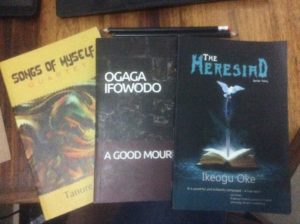
When I started, last week, with one of the books, I was sure that I had found the winning work. But after having read the three, I’m no longer that certain. Each book brings to the table an array of class, style, content, beauty, and a lot of pedigree. Contrary to social media jabber, I can say that this is an impressive shortlist, each writer deserving of their place on it.

In the next couple of days, perhaps one per day, I hope to post my thoughts on each these books as I see them.

Needless to say, reviews and criticism of works selected for public fêting are essential to the growth of a literary industry. From Facebook to Twitter, we have seen no shortage of individual opinions on the Nigerian Prize, its shortcomings, and other matters. What we haven’t found are sustained conversations about each of the works shortlisted. Aside from book readings organized by Cora and sometimes by NLNG itself, there haven’t been many avenues to engage with the work and the writers themselves. Not even in our newspapers, except for scattered profiles and op-eds on the nature of prizes. And that is a shame.

One of the reasons the Caine Prize (and other prizes smaller than it) have earned such a reputation as important relevant prize institutions is the level of engagement that each of their annual prize seasons brings to literature and to the writers themselves. We can complain all we want about what NLNG is or isn’t doing, but as an industry of writers, much of the fault lay with us and our inability to engage in a constructive, intellectually satisfying way when it comes to book shortlists. It is not the size of the prize pot that brings prestige to a prize. It is the type of value that the conversations around the prize add to the standard of subsequent entrants which then hopefully spirals forward into an improved culture and tradition of writing across the country. Without critical attention on a sustained basis, we are equally as complicit in whatever downward spiral attends our inactivity.

Tomorrow on Lagos Island, I will be engaging the three writers in a televised interview. I intend to post the full videos here when they are ready. I also intend to talk with the prize administrators, as well as a member of the prize advisory on a number of issues that have been raised over the years about the prize and its role in shaping the writing culture around Nigeria.

But before then, watch out for my review of each of the three books on the 2017 shortlist.

___

UPDATE (September 25, 2017)

  • The first review is of Ogaga Ifowodo’s A Good Mourning. Read it here.
 

At Titilope’s “Open”

When I lived in Ibadan, there was these jazz sessions at Premier Hotel which took place every weekend (can’t remember now if it was Friday or Sunday nights). It held in a ballroom on the ground floor of the hotel and featured an ensemble that played non-stop for about four hours, late into the night. The music swayed from highlife to jazz, and sometimes to juju, but always within a range of danceability. Guests who sat around the stage in different arrangements often got up from their tables to dance, alone or with their guests. There was always food and drinks.

Sponsored message: Before you plan your trip, check out Hotels.com voucher codes to find out what deals enables you to save on your reservations. It is always good to have prior reservations done to avoid sky-scraping prices later.

I attended a couple of those sessions while I was a student, with friends and colleagues from the university. It always provided a kind of relaxing end to the week. We had nice stimulating conversations, got our fill of good music and food, and exercised the stress away. The location, on top of the hill at Mọ́kọ́lá, also provided not just a beautiful overview of Ìbàdàn at night, but also a very relaxing access to cool breeze. By morning, one felt refreshed and ready to take on the next week.

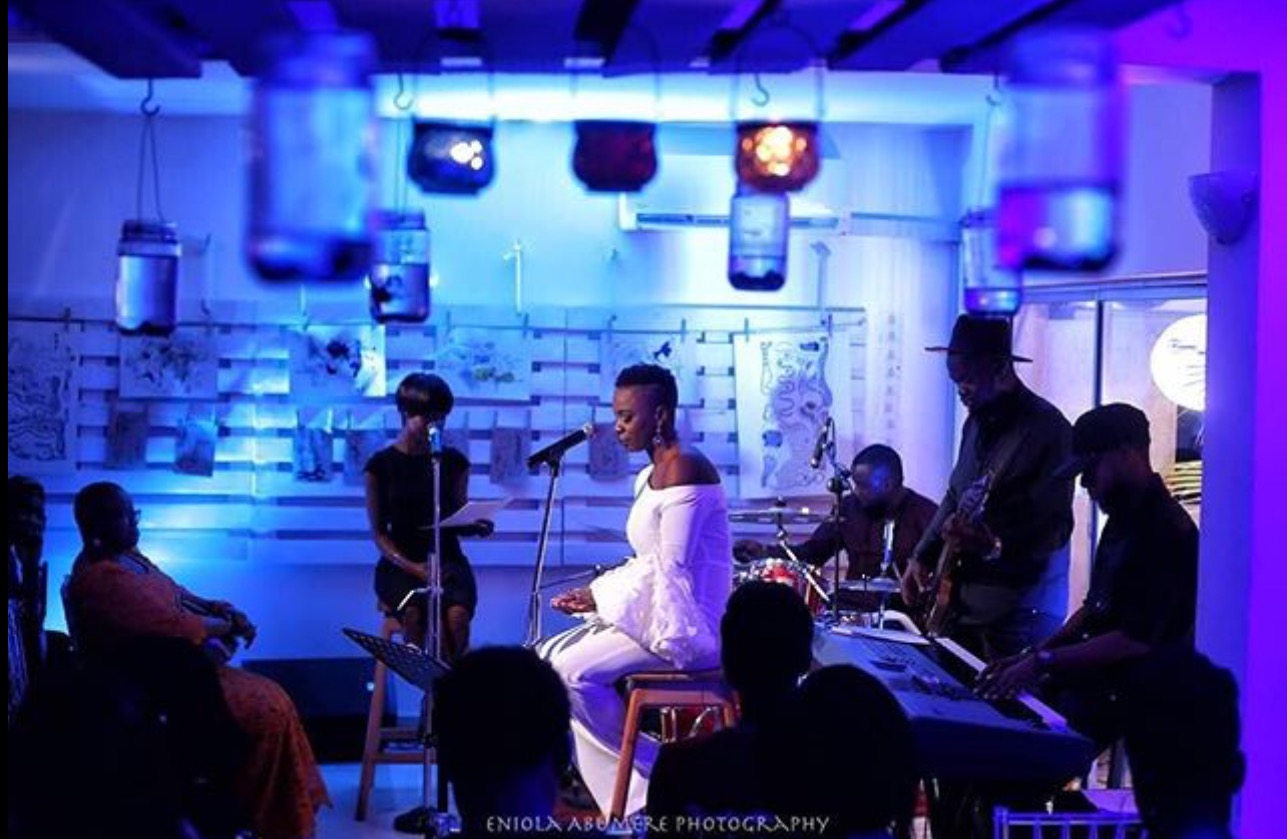
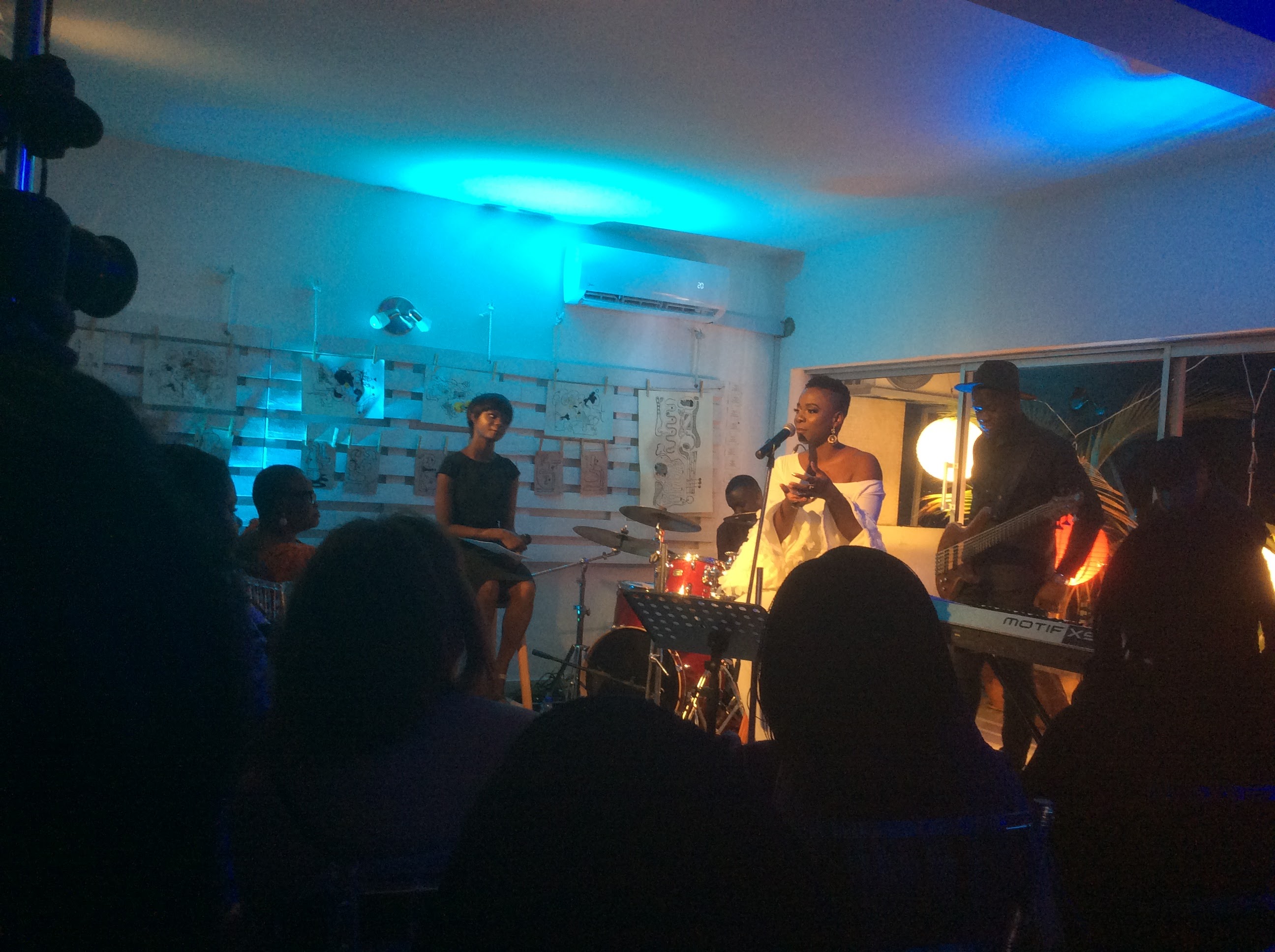
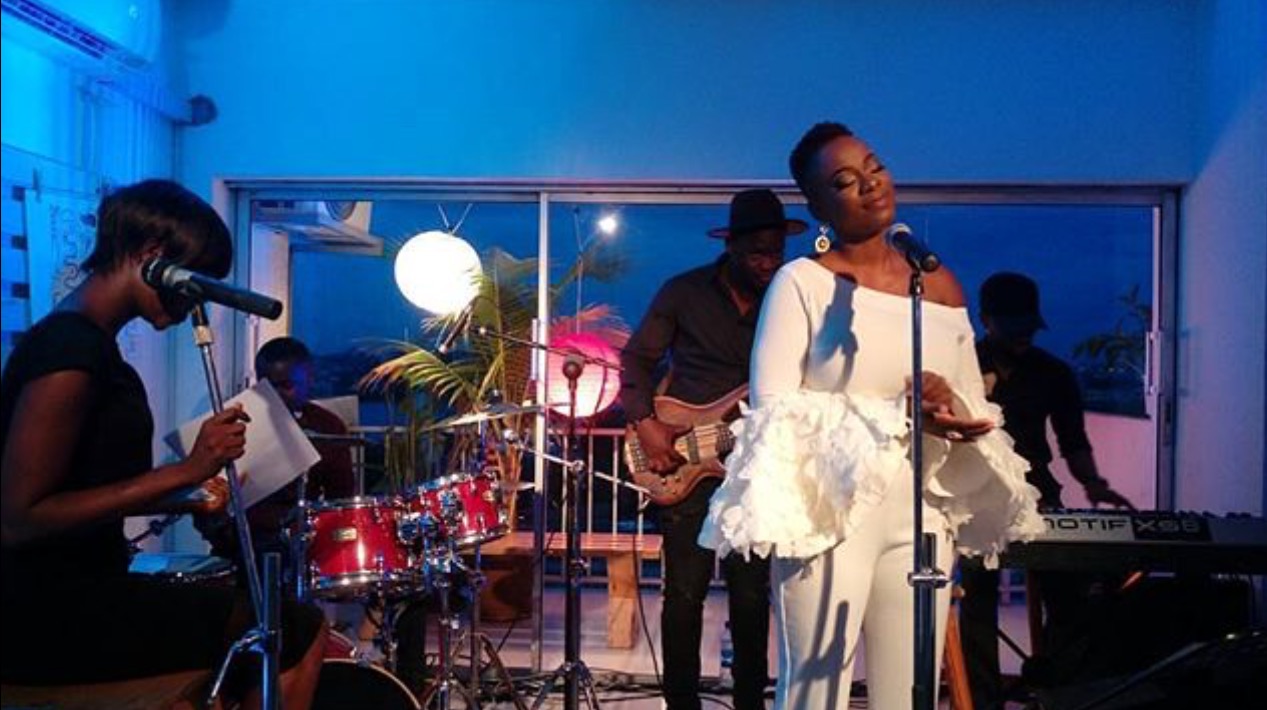
Yesterday, I had an experience very close to that, which brought the memories back. It was at 16 Kòfó Àbáyọ̀mí Street, Lagos, on the eighth floor of a building I never knew existed there, with a relaxing view of the Lagos Lagoon, and a high-up-enough location to soothe a most exhausted traveller. The event was Títílọpẹ́ Ṣónúgà’s poetry concert event titled “Open”. Gate fee: 5000 naira. It is the first of a three-part performance show slated around venues in Lagos.

I don’t know if “concert” is the right word, because the poet approached it like a soulful conversation between an artist and her audience. But the word still closely captures some of the show’s best aspiration. In a space that felt intimate because of its size, the lighting, and the mood, an artist performed to an audience, and the result was delightful.

I haven’t been to many spoken word concerts. My contacts have been limited to more public spaces like the halls of the June 12 Cultural Center in Abẹ́òkuta where poets from all around the world have performed to a much larger audience during the annual Aké Festival, and to YouTube channels and TED Talk videos, where poets with verve, rhyme, and sass have dazzled with inspirational and stimulating turns of phrase and soulful rendition of their work. There are a few other avenues that have popped up over the years though. I know, at least of Taruwa, which (I believe) featured open mic events for amateur and established spoken word artists to come impress an audience. But this one felt different, perhaps because it also included an element of music necessary to move even the most inexorable skeptic of the beauty or relevance of poetry in performance.

Accompanying Ms. Ṣónúgà last night was a bass guitarist, a pianist, and a man on the drums, along with a certain Naomi Mac whose voice carried the soulfulness demanded of the intimate occasion with ease and grace. With their accompaniment, the show was fully realized not just as a celebration of the power of the word or Ms. Ṣónúga’s poetic capabilities but as a ritual of mass catharsis; an artistic triumph.

The poems performed came from some of Títílọpẹ́’s recent works, a few of which I’d read on other platforms or heard in other places. Perhaps it was deliberate, a way to get the works performed again in a perfect setting of her choice, recorded along with the audience reactions. Some I was hearing for the first time. What united them was the theme of the evening: an openness to possibilities, in love, in life, and in public engagements. Navigating the tale of personal heartbreak, the process of finding love, coming of age, political instability, societal dysfunction, naivete, lust, love, and consent, the poet details her personal artistic response in a voice and style that is as open as it is reserved. (In a notable poem about a seeming first sexual encounter, for instance, the poem ends “he knows the punchline to this joke, and I’ll never tell“).

In the end, it was as much a beautiful intimate gathering as it was a much needed artistic intervention in a city space much in need of a lot more events of this character. We need plenty more.

_____

More about the last two performances here. Títílọpẹ’s earlier work “Becoming” was reviewed here. Photos 1 and 2 from Titilope Sonuga’s Instagram page.

Reasons Why We Write

by Afọlábí Bólúwatifẹ́

IX

Because forgetting

is unforgivable,

irredeemable even

and we must not go too far

from redemption

beyond reach-

of  Abram’s water drops.

VIII

Because pain must be kept-

safe

to be felt

again

and again.

VII

Because we must never stop trying

to define beauty

even when our inks embrace emptiness

and pens fall into pits-

of clichés

and stereotypes.

VI

Because fragnance is transient

and a sunrise

is never complete

without words-

radiant,

magical,

warm.

V

Because time is infinite

and life is measured in spaces-

between seconds

between laughters

between tears.

IV

Because they said-

feelings are just biochemical reactions

in the blood and brain’

neurotransmitters bumping against receptors-

exciting

inhibiting

exciting.

But we had to prove Loewi wrong.

III

Because words don’t die

and immortality has not lost the gaiety

that bewitched Galahad

so we still attempt

to bury parts,

organs-

in alphabets

and phrases

and paragraphs.

II

Because of voices

between sulci and gyri

that won’t stop whispering-

puns,

quips,

poetry.

That have grown resistant to Haloperidol.

I

Because,

Because one thousand  poems are not enough.

Because there is always space for one more-

I am lost without youboluwatife

I can’t live without you

I am empty without you.’ 

__________

Afọlábí Bólúwatifẹ́ is a 4th Year Clinical student at the University College Hospital(UCH), Ibadan. He is passionate to a fault about poetry and is currently working on publishing his first collection of poetry. His poems have been published on Kalahari Review, Kollectiv, several online blogs and some editorial boards at the University.

He tweets via @oluafolabi.

Three Poems by Yemi Adesanya

musings

Slayed by a Muse

Once upon a heart beating oxygen rich lines

Valves of words and arteries of rhymes

A muse hit the source, it beat too fast

Flooded veins in shock

They got no weather forecast!

Once upon a girl dancing to a broken song

Steps of yawns, her moves all wrong

A trip to Musedale was too much fun

Drank the whole pub

See how far gone she is!

Gushing streams of crimson lyrical richness

Fight to be unleashed in clots of definite dizziness

Sudden letting turns to pooling bytes

All valves are broken;

What an eloquent way to die!

___

Jack and Jill

Jack and Jill went off the grid

To pet a rampant boner

Jack came first and spilled his spunk

Then Jill came, trembling after.

___

Special Characters

Awaken from a Comma,

As someone shouted: “His Colon is on fire!”

Saved by a timely Exclamation!

Now he’s gotta live with a Semicolon;

Punched by Punctuation Mark

Who thought he could win an Apostrophe for the move

‘Twas pretty stupid, Period.

The hypocrisy of a Hyphen

Joining two unmarried words

In pseudo-matrimony; don’t Quote me

But I’d say, “There’s a big Question Mark there.”  Wouldn’t you?

What a bunch of Special Characters!

________

12916850_10154140811573410_4598977437559999249_o

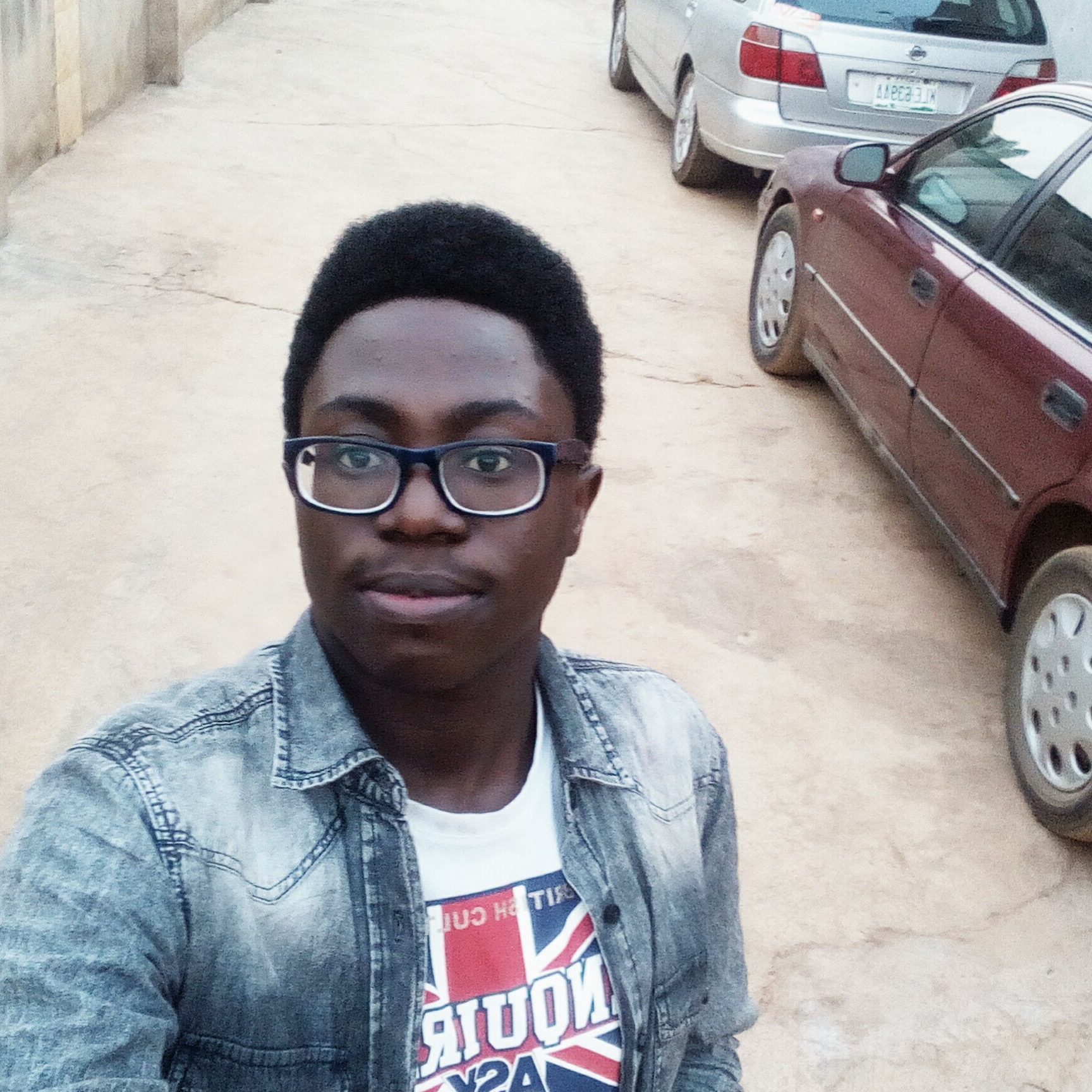
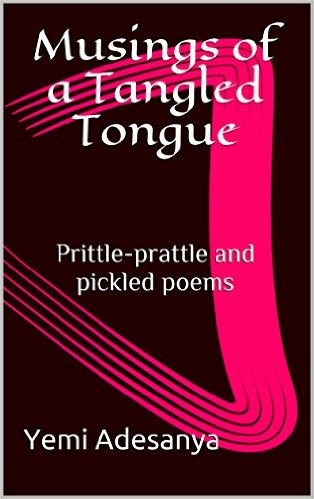
Yemi Adesanya is the author of Musings of a Tangled Tongue, now available on Amazon (Kindle and Paperback), Lulu, and Okada Books. In her other life, she disguises as an accountant and risk manager, in Lagos, Nigeria, where she lives with her husband and children. These poems were taken from the book, with the permission of the author. More of her poems can be found here.

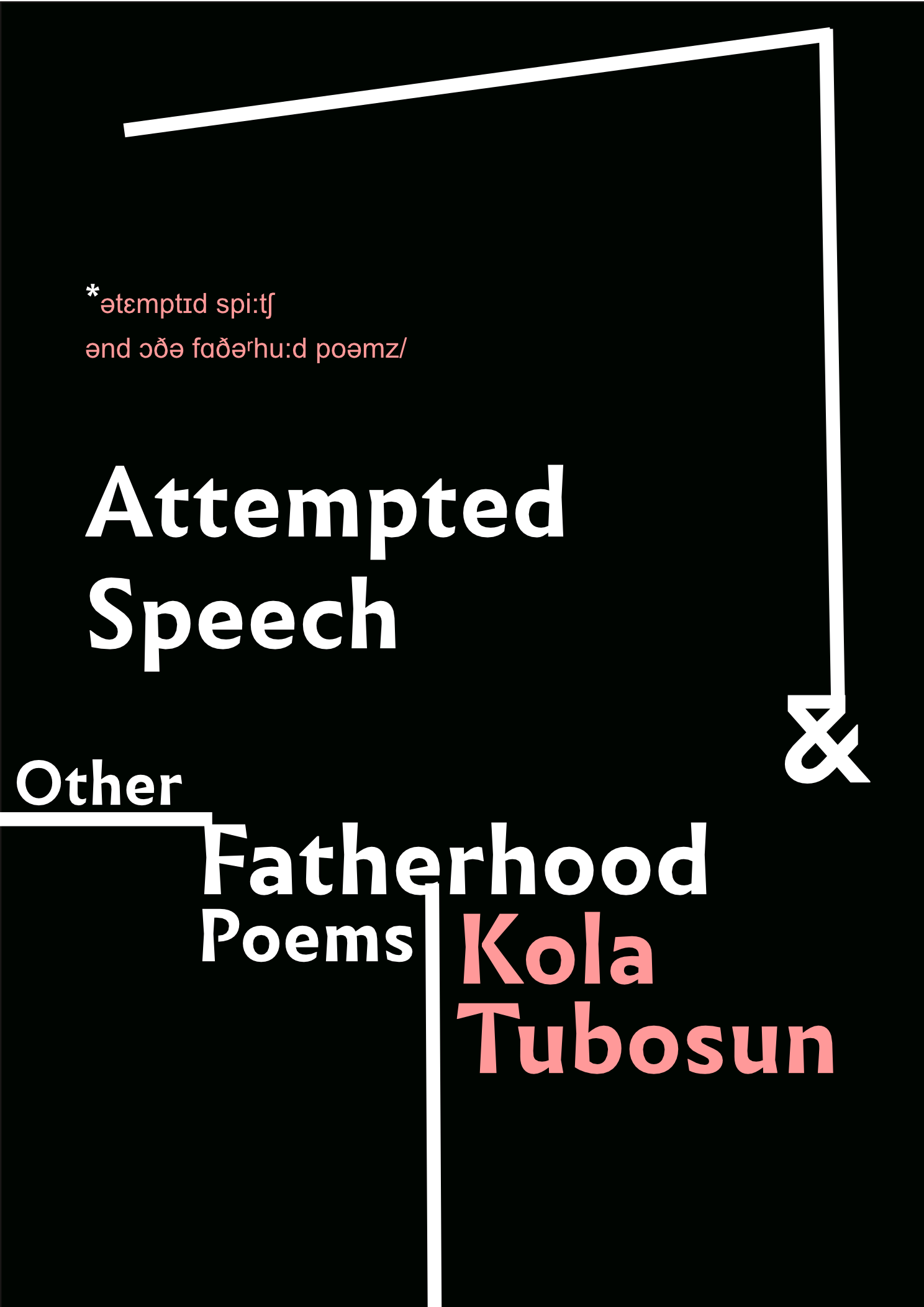
Oyin Oludipe Reviews “Attempted Speech”

Attempted-Speech_Kola-Tubosun-page001-2One of the questions we asked guests coming to the Aké Arts and Books Festival in Abẹ́òkuta this November was whether they read reviews about their work. The responses were intriguing, from “No, never!” to “Well, only if it’s good” to “Oh, why not?” I’m paraphrasing. You’ll need to get your hands on the Aké Review 2015 to get a better idea!

In any case, my response to the question would not be published in the Review, since I’m one of its editors. If that were not the case, you’d have read something like “Well, why not, as long as it’s thorough — and thoroughly fawning, ha ha!” Or something.

Yesterday, I came across the first review of my recently released chapbook of poems which I’ve talked about here once before. It wasn’t fawning, but it was thorough. It was published in the Luxembourg Review which I was also discovering for the first time. At times I had to go check the collection itself again to be sure that the lines being referenced were indeed mine. It’s true what they say that when you’re writing, you’re often possessed by something more than yourself.

A quote?

“One prominent quality of Kola’s poetry, as it is with Lola Shoneyin’s, Jumoke Verissimo’s and others, is that it is structured within a fluid framework which very effectively navigates the core of the sentiments of human consciousness. What ensues is a powerful inter-fusion of muse, thought and story.”

Now, you’ll have to go read the rest for yourself!