Browsing the archives for the Literature category.

Reviewing the 2017 Nigerian Literature Prize Trio

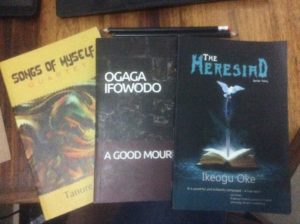
I have just finished reading the third of the books on the 2017 Nigerian Prize for Literature shortlist, and I’m overwhelmed by the range, depth, and quality of their offerings. It is such an impressive collection.

When I started, last week, with one of the books, I was sure that I had found the winning work. But after having read the three, I’m no longer that certain. Each book brings to the table an array of class, style, content, beauty, and a lot of pedigree. Contrary to social media jabber, I can say that this is an impressive shortlist, each writer deserving of their place on it.

In the next couple of days, perhaps one per day, I hope to post my thoughts on each these books as I see them.

Needless to say, reviews and criticism of works selected for public fêting are essential to the growth of a literary industry. From Facebook to Twitter, we have seen no shortage of individual opinions on the Nigerian Prize, its shortcomings, and other matters. What we haven’t found are sustained conversations about each of the works shortlisted. Aside from book readings organized by Cora and sometimes by NLNG itself, there haven’t been many avenues to engage with the work and the writers themselves. Not even in our newspapers, except for scattered profiles and op-eds on the nature of prizes. And that is a shame.

One of the reasons the Caine Prize (and other prizes smaller than it) have earned such a reputation as important relevant prize institutions is the level of engagement that each of their annual prize seasons brings to literature and to the writers themselves. We can complain all we want about what NLNG is or isn’t doing, but as an industry of writers, much of the fault lay with us and our inability to engage in a constructive, intellectually satisfying way when it comes to book shortlists. It is not the size of the prize pot that brings prestige to a prize. It is the type of value that the conversations around the prize add to the standard of subsequent entrants which then hopefully spirals forward into an improved culture and tradition of writing across the country. Without critical attention on a sustained basis, we are equally as complicit in whatever downward spiral attends our inactivity.

Tomorrow on Lagos Island, I will be engaging the three writers in a televised interview. I intend to post the full videos here when they are ready. I also intend to talk with the prize administrators, as well as a member of the prize advisory on a number of issues that have been raised over the years about the prize and its role in shaping the writing culture around Nigeria.

But before then, watch out for my review of each of the three books on the 2017 shortlist.

___

UPDATE (September 25, 2017)

  • The first review is of Ogaga Ifowodo’s A Good Mourning. Read it here.


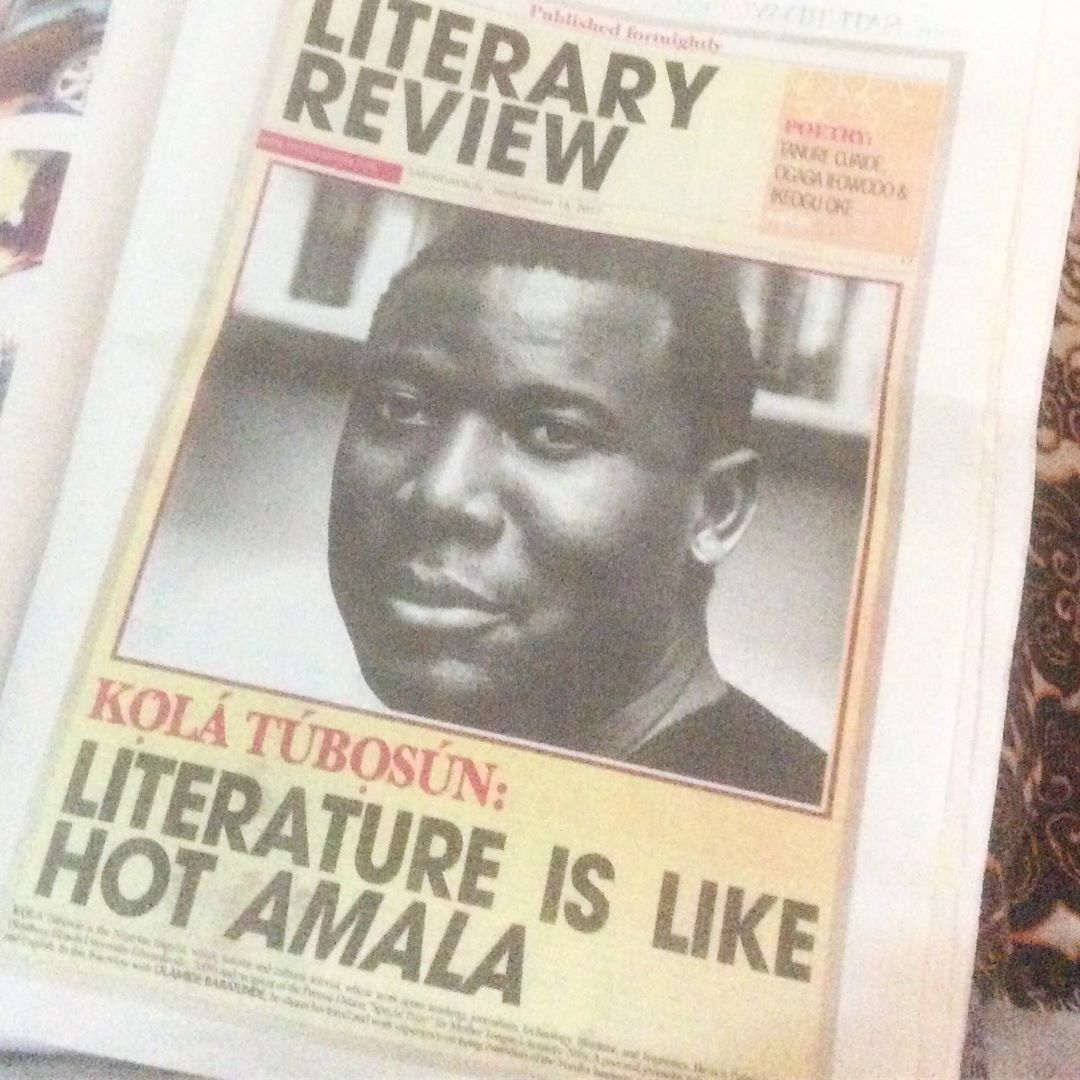
“Literature is Like Hot Amala” | Interview with the Saturday Sun

I spoke with Ọlámìdé Babátúndé of The Sun over the weekend about my work. Here is the interview, first published here.

___

It seems you have done more prose than poetry, is that deliberate or it’s just your forte?

I have actually written a lot of poems, mostly in English and some in Yorùbá. I just haven’t put them together in a book collection. I had a chapbook out in 2005 as soon as I left the university. I called it Headfirst into the Meddle. The second one, published in 2015 by Saraba Magazine, was called Attempted Speech & Other Fatherhood Poems. I’m currently completing work on a full collection for print, focused on the memory of my time in Edwardsville, Illinois.

But yes, these days, I’ve spent a lot of my time writing reviews of books I like (and hate), and writing essays on issues (especially about language) that I feel strongly about.

What are you working on next?

When I’m not racking my brain on the TTS-Yorùbá research, I am compiling a book of interviews with writers I’ve spoken to over the years. I think interviews are a forgotten art and it will be nice to have the voice of our artists showcased in other formats than just in their creative work. I am also working on a memoir of my time as a Fulbright scholar, which was an enchanting time with lots of interesting and important memories. I’ve put that off for so long. And then there a few other book and essay projects that I can’t talk about until they’re ready.

How imperative are reviews to a text for you as a reviewer because an author once said he did not care about whatever anyone had to say about his book and what should a good review be about?

I can’t prescribe what a “good” review should be about, but I can say what kinds of reviews I’ve enjoyed reading. And they include ones that give me appropriate context about the work and about the author. I’ve heard people say that they don’t care much about the author, that they just want to read about the work he/she has created. I don’t always feel that way. I am a social animal and I want to know as much about a creative endeavour as about the mind that created it. That’s also probably why I like the interview as an equally important means of engaging the writer’s mind.

What is the way forward to making literature and other forms of art more appealing to people particularly Nigerians?

Literature, like any other form of art, is like fine wine, or hot amala at a rare roadside buka. Those who want it will seek it out no matter the obstacles.

I bet one way is to ensure there are translations of works into local languages, how is that future looking in Nigeria?

I think one paragraph will not be enough to do justice to my thoughts on the gaping hole we have today in the production and consumption of literature in the mother tongue, particularly in Southern Nigeria. Translation is just one way. Actually writing, publishing, and distributing literature in Nigerian languages will be most ideal. And we can help that by no longer having our educational syllabi insist on “Literature-in-English” as a high school subject when we can simply have “Literature(s)”, which includes texts in as many relevant languages as the students can understand or tutors can teach. It’s to our shame that we have 500 languages and most of the texts that students read in our schools are in a foreign language, and by foreign authors.

In the nearest future where do you see Nigerian literature, what opportunities lie ahead regarding using cultural tools to effect positive changes in all facets of the Nigerian Economy?

As I said above, I’d like to see a more robust approach to literature in our schools. D.O Fágúnwà’s books are not only meant for the Yorùbá children’s minds. They should be taught both in the original text and in translation. Same for selected Hausa and Igbo literatures, etc. It is interesting to see a resurgence in the interest to read more indigenous Nigerian literature by foreigners and tourists than Nigerian citizens themselves. This shows that there is some economic potential in giving them attention. Some bold publisher has to start first. Or some rich philanthropist has to put money out in support of such an endeavour, at least at the early stages.

I’ve also, in the past, suggested that Nigerian Customs insist that products coming into the country that don’t have their instruction manuals written in at least one or two Nigerian languages should not be let in. Imagine what would happen if you export a Nigerian product to the US or China and write the literature in Yorùbá. They won’t let you in. So why do we allow that for us? A policy like that will create new job opportunities for Nigerian translators in the local language and signal that we take ourselves seriously.

Name some young and new generation of writers whose work you enjoy

I recently discovered Chika Jones’s spoken word poetry and I’m sold. He has a bright future ahead of him.

What does it feel like to be a poet Father and husband?

For what it’s like to be a father, I’ll refer you back to that chapbook of my poems I spoke of earlier. It’s called Attempted Speech & Other Fatherhood Poems and you can find it on the Saraba Magazine website. I wrote a lot of my first thoughts about the experience there. As a husband, my role is to support and protect my family, which usually has nothing to do with poetry.

I read how irked you got for the misspelling of your name when you first created an email account. Could this have led to your mission to intervene in the saving of Yoruba Language globally?

I’ve since realized that the peculiarity of my name will always get me into these types mess. The email incident was the least benign. But when I returned to the University of Ibadan after my Youth Service in 2006 to pick up my certificate, I found out that they had written “Olatunbosun” on it, instead of “Olatubosun” which is how it is written in full. This is a running problem I get into most often with Yorùbá people. Non-Yorùbá people tend to stick with what they see on the page and don’t feel the need to add the extra “n”.

To your question, no. My work in language and linguistics wasn’t motivated by that one incident. There are many, some of which happened when I was very young. I blame my parents for all of it, for their insistent that we speak Yorùbá at home, which in hindsight was a very important gift. My most pressing motivation, I think, is the reality that the advances in technology will contribute as much to the endangerment of our languages if we don’t make those languages compliant with them as whether our children are made to speak them comfortably at home and outside of the home.

Your Initiative Tweet Yoruba, to what extent has it saved the third most popular Yoruba language from becoming extinct as predicted by the Linguistic Association of Nigeria? And how did you kick off the YorubaName.com?

The #TweetYoruba and the YorubaName project are two sides of one coin. The former was started as a way to call Twitter out in 2012 for not putting any African language on the list of languages for which the platform was being translated. It was an advocacy to make a case for Yorùbá which largely succeeded. I say largely because even though the promise has been made to launch Twitter Yorùbá, it hasn’t yet seen the light of day.

YorubaName.com was started as a way to expand on my university undergraduate project through which I compiled about a thousand names into a compact disc along with audio and other metalinguistic elements. By making it globally accessible online, with a crowdsourced element through which people can submit their own names and improve the meaning of the ones in there, I figured that we could gather even more names and better provide a sort of an online platform for education and cultural reinforcement. It ties back to that intention to make sure that anything that we value in the culture, any intangible cultural heritage, can also be accessible on the internet, and is compliant with information technology.

Not just for Yorùbá but for Igbo, Hausa, Edo, etc. If we want a language to survive into the next century, not only must we speak them to our children and use them in various public domains, we must also make sure that modern technologies can read, write, and function in them.

This brought on the Yoruba text-to-speech initiative, TTS Yoruba. Please enlighten us on how this is to benefit the 30 million who speak the language?

The TTS-Yoruba project is a result of my own personal research curiosity. For a while, I’ve been bothered by the fact that Siri – that automated voice on the iPad – was available in languages with as small as 5 million people. Yorùbá is spoken by over 30 million people, yet the combination of people speaking Swedish, Norwegian and Danish is just 15 million in total. Yet Siri exists in each of these three languages. The question I’ve always asked is whether it just isn’t possible to create a computer-generated Yorùbá voice or people just haven’t tried. I know that people have been trying, so I wanted to see what I could bring, as skill, into the research question. And if we succeed, there are very many significant benefits and possibilities. Imagine, for instance, being able to use an ATM in your local language. Many old women in the villages would no longer have a reason to distrust banks. We could also be able to use to create automated talking systems that can, for instance, be used by disabled people to use their voices to activate their phones in their own language. You can get your texts read to you, etc. There are also economic opportunities. I imagine that mobile phone creators will want to pay for a technology that allows more people to use their devices because of the new language elements.

Winning the prestigious  Premio Ostana International Award for Scriptures in the Mother Tongue in 2016 is a big one, what other doors did this open for your career?

The Premio Ostana was a welcome recognition of the work we are doing to shine attention on the issues in mother tongue use in education, literature, and technology, etc. The Italian organisation which awarded the prize (Chambra D’Oc) has spent its time and effort seeking out and recognizing people and organisations across the world who work to promote a small, endangered, or minority language. They have done this as an extension of their own intention to celebrate their own minority language in Italy and France called “Occitan”. So, of course, I am proud to be affiliated with them and their goals.

As per open doors, I’ll say that I have kept my focus on doing the work at hand, and that’s more important as a tool for open doors.

In April , you took part in the Culture Summit in Abu Dhabi with other participants from 80 countries around the world to discuss how cultural tools can fit into global challenges and capture existing opportunities, tell us of your experience.

The programme was organised by Foreign Policy magazine as a way to engage cultural arbiters and practitioners across the world, to figure out what opportunities exist for the celebration and advancement of (sometimes marginalized) cultures through art and creativity. I was glad to be there.

One of the things I took away from the event is that there are people doing great things, sometimes with little financial incentive, all across the world. One of the things I hope I left the participants and organisers with is that the language question is an important one in opening doors to development. As long as we keep thinking that the universality of English has freed us from the responsibility to support and encourage the survival of minority tongues from all over the world, we are still doing a lot wrong.

Your favourite world destination so far is where?

It is mostly Ibadan, where I was born and raised, and where both my parents still live. I have also made a sort of home among friends and adopted families in Edwardsville and Minnesota in the United States. I visited Verona in Italy last year and I had a whale of a time as well. Being able to find particular things relatable and enjoyable everywhere I go is a gift I greatly cherish.

What’s your worst travel experience?

Any one in which I get a small legroom seat on the plane. My legs are very long and don’t do well in cramped spaces.

Thank you for your time and for doing Nigeria proud, staying the course to preserve our languages.

Ẹ ṣé. My pleasure.

____

First published in the Saturday Sun of September 16th, 2017

Reading JP’s America

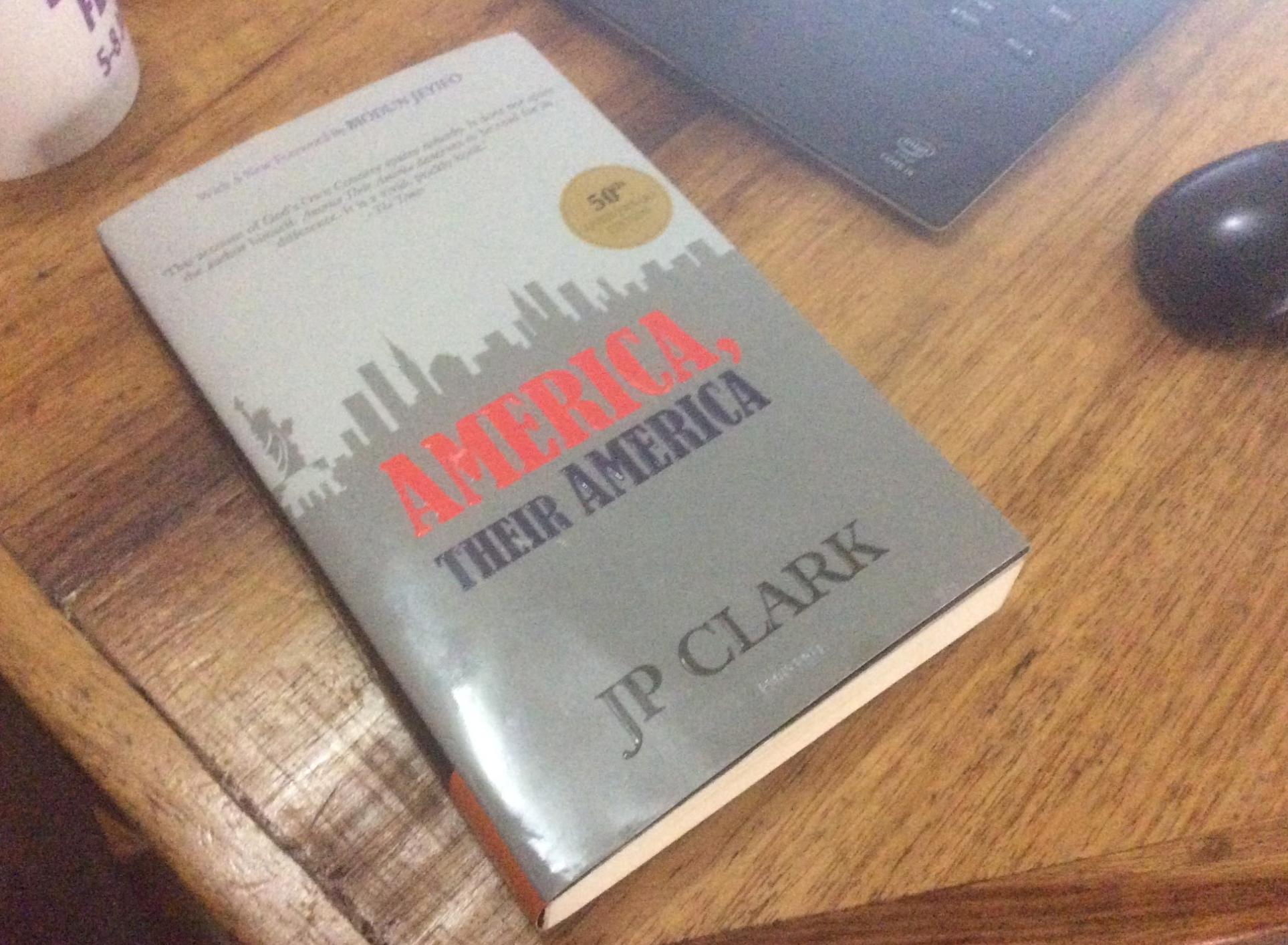
It’s amazing to think that an African writer/journalist had the kind of access that Nigerian writer JP Clark had to the corridors of US power in 1962 during the Medicare debates, and some of the most high-stakes political period of the country’s history. The writer, then a playwright and journalist working in Nigeria, had won a Parvin Fellowship which, at the time, had been set up to bring young African professionals to the US for one year in order to interact, socialize, learn a bit about the American political system, and gain some skills to take back to their young countries. The result of that experience, and the subsequent fallout from his abrupt ejection from the country, was his 1964 book America Their America now re-published in a 50th anniversary edition by Bookcraft, Ìbàdàn (2015).

At that time in the 60s, all of the countries on this continent had either just gained independence or were in the process of doing so. The coup d’etat hadn’t started rolling in (as they did in Ghana and Nigeria in 1966). The CIA hadn’t started getting too involved in the political process of new states that turned away from the western-type ideals enough to start helping to assassinate them. Names like Wọlé Ṣóyínká had not become household names yet, and Chinua Achebe himself was still in the United States on a different study programme. In short, it was the golden years of statehood of many African countries on the world stage, and this benefited students from the continent who took adequate advantage of America’s attempt at a global outreach through soft diplomacy. It was also during this time that Barack Obama Sr had found himself in Hawaii as a father of a new American son, Barack.

And there was JP Clark, a young and boisterous playwright and journalist from Nigeria with, not unlike what has been described of Obama Sr, an acerbic voice, a confident gait, and a snarky outlook at the elaborately choreographed introduction to the American experience, which the Parvin Program had packaged for him. Even in his own accounting of the times, he was a rude, and unfiltered guest, willing to poke where the society he found himself had decided needed to be left alone: religion, politics, and race. He spent most of his time pursuing his own creative and personal haunts than spending time participating in the rituals required of the scholarship that had brought him to the United States, and he did these all while throwing his weight and sometimes solicited opinion around, often to devastating personal consequences. In the end, his host had had enough, so they kicked him out rather unceremoniously.

The country had, until then, seemed never had such a caustic guest. It certainly had not expected it from this African, half expected to be grateful and obsequious for the privilege that the opportunity had brought, and certainly expected to take the opportunity as one that may never come again. They, apparently, hadn’t met Mr. Clark, the saucy poet, who traipsed around America among some of the most influential members of that country’s society, in culture, academia, literature, and government not quite like he owned it, but like his critical opinion should matter as much as any man, intellectual, and journalist of his competence. And why not? Was he less of a journalist because he carried a green passport or a black African skin? Is America, a country founded ostensibly on the freedom of speech, not naturally best suited for, and welcoming to critical engagement by all that live in it towards “a more perfect union”? At the time, it certainly didn’t seem that any negative or uncomfortably frank perception or opinion was expected of this stranger, and he was informed of this, subtly and directly. He didn’t care. And, today, it is in that quality of brutal honesty and self-indictment that the book America Their America earns its stripe as a cultural landmark – a work of both political, journalistic, cultural, and literary value, packing an unapologetic look at the American political and cultural landscape with an attentive recollection of one man’s travels and travails through its corridors at a crucial time.

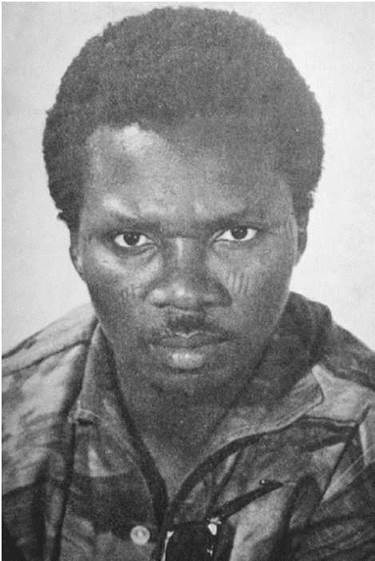
JP Clark (Author’s photo from the 60s)

I had moments of deja vu, while reading America Their America, not just because of the eerie similarity of those times and the depicted political realities and the current one, but also because of the similarity and dissimilarity of the visiting experience of Mr. Clark and myself. He had been invited into the country as a Parvin Fellow (a fellowship that was discontinued a few years later, perhaps no thanks to his fiery and bold-faced ungratefulness for much of the fellowship except for parts of it that allowed him the freedom to travel and experience America on his own terms) and I had made my first contact with America as a Fulbright Scholar in 2009 on similar terms. Except in the location of my fellowship and the teaching responsibilities expected of Fulbright fellows, we seemed to have been invited to experience the country in much the same way, through its generosity and openness to exchange of new ideas, and packaged through a rote of American perception of itself as exceptional.

Reading America again through his eyes brought moments of intense recollection, sometimes of nostalgia, but mostly of envy for the kind of access the Parvin Fellowship offered the writer and other fellow scholars. I certainly never got a chance to visit the Capitol building in order to watch legislative deliberations or have 0ne-on-one conversations with congress people. I did walk in front of it, but only because of my own restlessness. Neither, except for my own equally deliberate and constant rebellion against the constraints of a regimented school session, did I experience a year of such intense and colourful freedom. But it is the literary and historical value of the book that packs the most punch for an interested reader as myself committed as much to its contribution to understanding the 60s and early black scholars in and out of the West and the trajectory of the early African writers’ literary voice. Mr. Clark delights both as an astute storyteller of a tale in which he’s both the hero and the villain, and a travel writer experiencing reality through a fiery literary lens.

He complements the narrative with occasional poems written at moments of distress or contemplation. This one was written while thinking of James Meredith (the first African American to attend the University of Mississippi) and composing a letter to his brother in India:

Last night, times out of dream,

I woke

to the sight of a snake

Slitering in the field, livid

Where the grass is

Patched, merged up where it runs

All shades of green – and suddenly!

My brother in India, up, stick

In hand, poised to strike –

But ah, hiimself is struck

By this serpent, so swift,

So silent, with more reaction

Than a nuclear charge…

And now this morning with eyes still

To the door, in thought of a neck

Straining under the sill,

I wake

To the touch of a hand as

Mortal and fair, asking

To be kissed, and a return

To bed, my brothers

In the wild of America!

(page 56)

Of Washington DC, he wrote, a terse indictment:

A morgue,

a museum –

Whose keepers

play at kings.

(page 184)

In each poetic offering on the state of his mind at different moments, one glimpsed doses of frustration, mirth, mischief, inspiration, and more. It was a peek into the creative potential of the – at the time – 29 year-old author. The style, in which poetry and prose were effectively deployed to serve the purpose of memorizing, would also be deployed equally as effectively in Wọlé Ṣóyínká’s The Man Died (1971).

Politically, what impressed and fascinated me, even more, is the relevance of the debates that JP Clark diligently documented of the Senate debates surrounding the passage of the Medicare Act of 1965, and how little seemed to have changed. As I write this, the US Senate has just given up on their latest attempt to repeal the healthcare law signed into effect in 2009, a law that takes care of the most vulnerable in the society just like Medicare did in 1965. And watching the US media debates surrounding healthcare as I had when I lived in Illinois in 2009-2012, the following passage seemed very familiar:

“How are you sure he wants to follow in his father’s footsteps?” I asked.

“He darned well will want to,” the man said. “Why, he’ll all be provided for. I have built this business up for what it is today so no member of my family will lack for anything.” And here he brought out another photograph, this time of the entire family, even with the old parents included. Radiant in the centre with a strapping son and two daughters on her either side was his wife. 

“Now, they’re pretty well taken care of, for now and the future as far as human hand can provide.” He congratulated himself and the American system of which he was a shining ‘success’ example. 

“Don’t you think by all this provision and security, you deny them their great American privilege of paying their own way through life?” I asked. 

“How is that? he showed genuine surprise and disbelief.

“Well, I can appreciate the point of your doctors when they say they want no medicare for the old,” I began. 

“Go on,” he prompted me, calling out for more drinks for us both in the bar where we sat. 

“As I see it, the doctors seem to be insisting that every American citizen should have provided for himself fully by retirement age. So why ask government now to pay their full medical bills?”

“That’s right, boy, you’ve been following pretty close our American debate,” he cheered me on. Until I added: 

“Well, it seems to me you’re denying exactly that sacred principle the doctors are insisting on by wanting to lay on everything for members of your family.”

“Young man, are you calling all my life’s effort vain? No, no, don’t withdraw or make any apologies for beliefs you honestly hold to. But tell me, as a writer, of what I don’t know, don’t you want to make money?”

(page 182-183) 

As a Parvin Fellow, Mr. Clark was based in Princeton, but the traveller’s gene in the poet carried him around the country, from New York to Boston, and to DC. As a Fulbright fellow, I resided in Southern Illinois, with aspects of my work taking me to Rhode Island and Washington DC. But much of my emotional connection to Mr. Clark’s delightfully addictive rant against his uncomfortable participation in American life comes also from my hitherto lack of sufficient time and discipline to put my one-year experience into the words and images, with diligent markings of its most notable moments, as the writer has brilliantly done. America Their America was published about a year after the writer had returned unceremoniously after being kicked out of the fellowship for failing to show up in class. The closeness of that recollection to the space and time of the event’s happenstance probably helped its acerbity. But its ability to endure, even till today, as one of the most honest accounts of an African writer’s sojourn in America is tribute to the writer’s impressive talent, creative fire, and artistic integrity.

Another part of the book caught my eye:

Americans, very true to their candidatural role, like being liked a lot by foreigners. The picture they cut is of a big shaggy dog charging up to the chance caller in mixed feelings of welcome and defiance, and romping one moment up your front with its great weight, all in a plea to be fondled, and in the next breaking off the embrace to canter about you, head chasing after tail, and snout in the air, offering furious barks and bites. “Where are you from?” they breathe hot over the stranger to their shores. And before you have had time to reply, they are pumping and priming you more: “How do you like the US? Do you plan to go back to that country? Don’t you find it most free here? In Russia the individual is not free, you know, he cannot even worship God as he likes and make all the money he should.” And from this torrential downpour of self-praise the American never allows the overwhelmed visitor any cover, actually expecting in return more praise and a complete instant endorsement. God save the brash impolitic stranger who does not!

Little wonder why his visit ended with such infamy!

But such a shame that the fallout from the perception of his “ungratefulness” for writing the book had coloured the author’s subsequent negative perception among Western gatekeepers of African literature from which he never recovered. Heck, it had coloured perception on the continent itself, allowing publishers (many of which had ownership in the West anyway) to distance themselves from it. The book, for all of fifty years, remained invisible on bookshelves, earning its reputation only by word-of-mouth while other memoirs that came after it (The Man Died; 1971, Second Class Citizen; 1974) had enjoyed multiple print runs. Hard to think of any other book of such fame/infamy not having a second reprint for fifty years.

“Out of Print-Limited Availability” on Amazon today.

Yet even if we ignore the much more fruitful contribution of the author to the African literary space, the service that the presence of a book of this nature offers continues to be relevant, not just for African writers, many of whom have found less assertive ways of navigating the American immigrant experience either through soft engagement (see: Americanah, Open City, Never Look an American In the Eye), or through silence (see: Ngugi, Achebe, Soyinka), but for writers in general and for people interested in the enduring power of documentation with honesty and verve. JP Clark won’t be with us forever, but many of the issues raised by the book continue to be a relevant mirror to the American society, just as valid as those by its own active citizens, from James Baldwin to Ta-Nehisi Coates.

To call it merely an “African” classic is to do it too much disservice. It’s a classic nevertheless.

—-

(Rating 5/5)

At Titilope’s “Open”

When I lived in Ibadan, there was these jazz sessions at Premier Hotel which took place every weekend (can’t remember now if it was Friday or Sunday nights). It held in a ballroom on the ground floor of the hotel and featured an ensemble that played non-stop for about four hours, late into the night. The music swayed from highlife to jazz, and sometimes to juju, but always within a range of danceability. Guests who sat around the stage in different arrangements often got up from their tables to dance, alone or with their guests. There was always food and drinks.

Sponsored message: Before you plan your trip, check out Hotels.com voucher codes to find out what deals enables you to save on your reservations. It is always good to have prior reservations done to avoid sky-scraping prices later.

I attended a couple of those sessions while I was a student, with friends and colleagues from the university. It always provided a kind of relaxing end to the week. We had nice stimulating conversations, got our fill of good music and food, and exercised the stress away. The location, on top of the hill at Mọ́kọ́lá, also provided not just a beautiful overview of Ìbàdàn at night, but also a very relaxing access to cool breeze. By morning, one felt refreshed and ready to take on the next week.

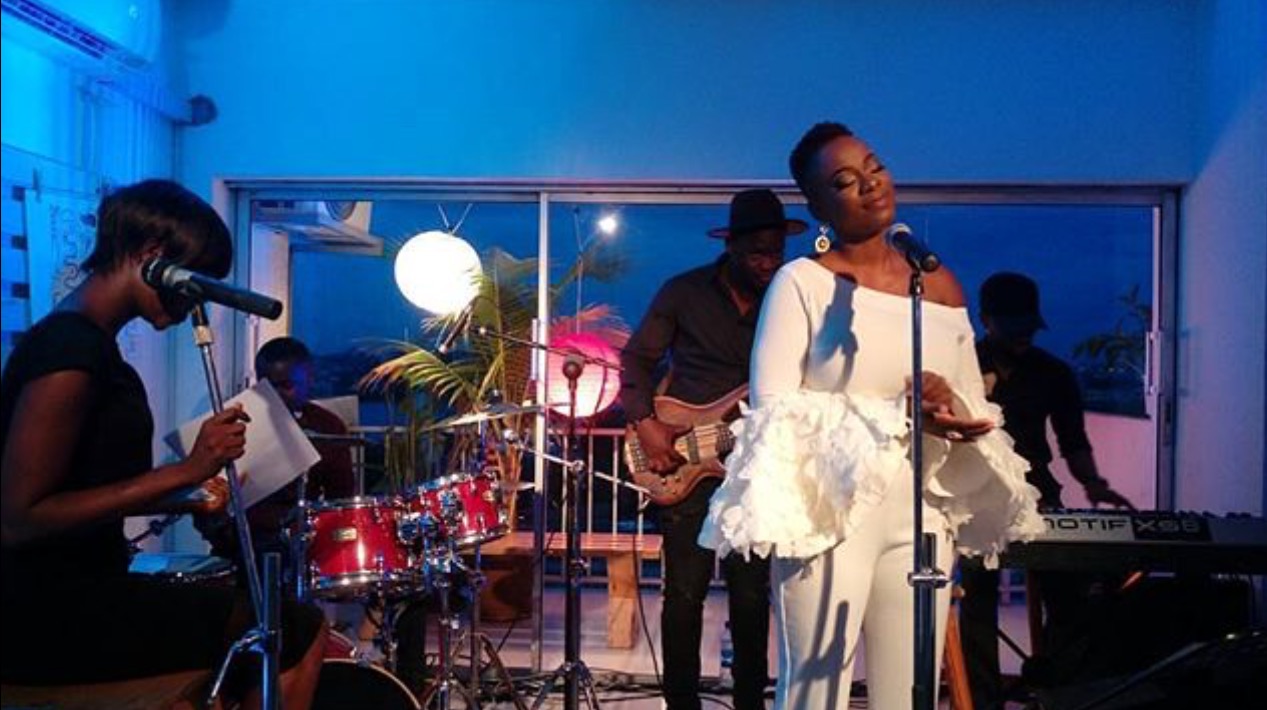
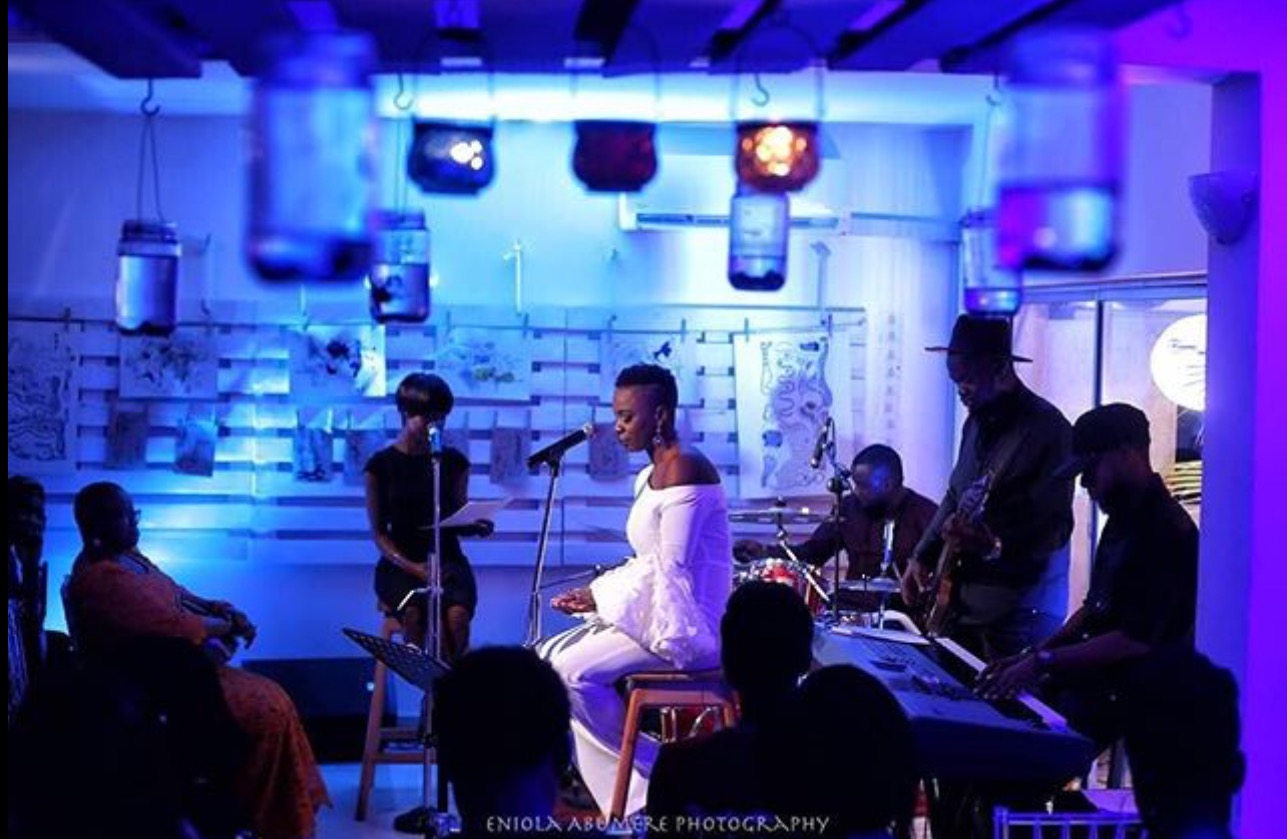
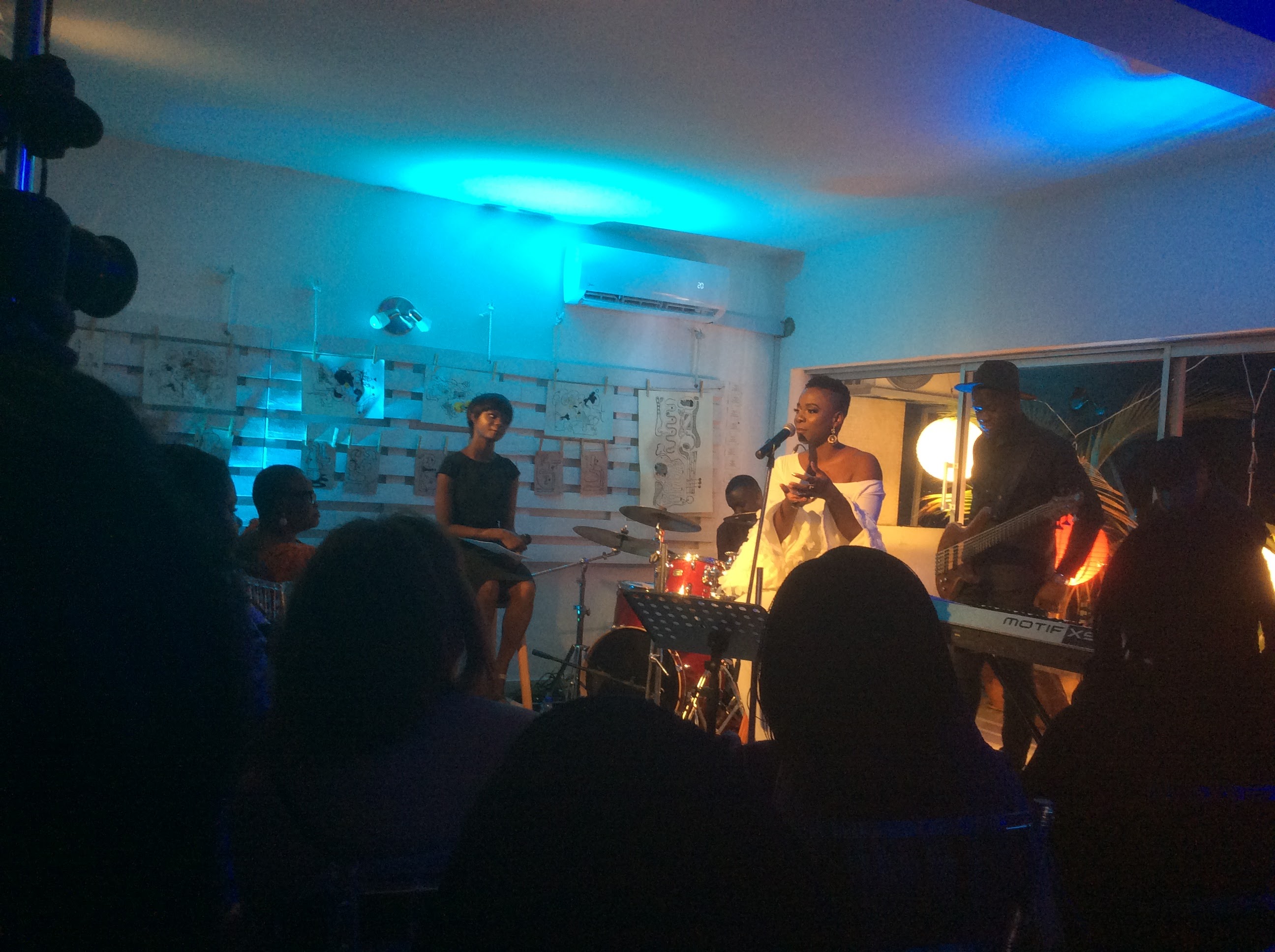
Yesterday, I had an experience very close to that, which brought the memories back. It was at 16 Kòfó Àbáyọ̀mí Street, Lagos, on the eighth floor of a building I never knew existed there, with a relaxing view of the Lagos Lagoon, and a high-up-enough location to soothe a most exhausted traveller. The event was Títílọpẹ́ Ṣónúgà’s poetry concert event titled “Open”. Gate fee: 5000 naira. It is the first of a three-part performance show slated around venues in Lagos.

I don’t know if “concert” is the right word, because the poet approached it like a soulful conversation between an artist and her audience. But the word still closely captures some of the show’s best aspiration. In a space that felt intimate because of its size, the lighting, and the mood, an artist performed to an audience, and the result was delightful.

I haven’t been to many spoken word concerts. My contacts have been limited to more public spaces like the halls of the June 12 Cultural Center in Abẹ́òkuta where poets from all around the world have performed to a much larger audience during the annual Aké Festival, and to YouTube channels and TED Talk videos, where poets with verve, rhyme, and sass have dazzled with inspirational and stimulating turns of phrase and soulful rendition of their work. There are a few other avenues that have popped up over the years though. I know, at least of Taruwa, which (I believe) featured open mic events for amateur and established spoken word artists to come impress an audience. But this one felt different, perhaps because it also included an element of music necessary to move even the most inexorable skeptic of the beauty or relevance of poetry in performance.

Accompanying Ms. Ṣónúgà last night was a bass guitarist, a pianist, and a man on the drums, along with a certain Naomi Mac whose voice carried the soulfulness demanded of the intimate occasion with ease and grace. With their accompaniment, the show was fully realized not just as a celebration of the power of the word or Ms. Ṣónúga’s poetic capabilities but as a ritual of mass catharsis; an artistic triumph.

The poems performed came from some of Títílọpẹ́’s recent works, a few of which I’d read on other platforms or heard in other places. Perhaps it was deliberate, a way to get the works performed again in a perfect setting of her choice, recorded along with the audience reactions. Some I was hearing for the first time. What united them was the theme of the evening: an openness to possibilities, in love, in life, and in public engagements. Navigating the tale of personal heartbreak, the process of finding love, coming of age, political instability, societal dysfunction, naivete, lust, love, and consent, the poet details her personal artistic response in a voice and style that is as open as it is reserved. (In a notable poem about a seeming first sexual encounter, for instance, the poem ends “he knows the punchline to this joke, and I’ll never tell“).

In the end, it was as much a beautiful intimate gathering as it was a much needed artistic intervention in a city space much in need of a lot more events of this character. We need plenty more.

_____

More about the last two performances here. Títílọpẹ’s earlier work “Becoming” was reviewed here. Photos 1 and 2 from Titilope Sonuga’s Instagram page.

Wetin Dey? Nigerian Pidgin and Its Many Pikin

‘Better soup na money kill am’ | Good things don’t come easy

‘E don tey wey nyash dey for back’ | There is nothing new under the sun

‘Cunny man die, cunny man bury am’ | It takes a thief to catch a thief

‘Na condition make crayfish bend’ | Hard times encourage adaptation

Over 500 languages are spoken in Nigeria today, according to most accounts, although many of them are dying, endangered, or extinct. Three major languages spoken more widely than others are Hausa in the north (with about 70 million speakers), Igbo in the east (with about 24 million), and Yorùbá in the west (with about 40 million speakers). Other languages include Edo, Fulfude, Berom, Efik, Ibibio, Isoko, etc. Because of the multiplicity of languages in the country and the need to communicate among different ethnic groups, English, or Nigerian English, has served as a connecting tissue, but only in formal circles: schools, government, courts, etc. In the informal sector, however, where most Nigerians function every day, in the markets, on the streets, at restaurants, Nigerian Pidgin (NP) has emerged as a crucial and important feature.

Nigerian Pidgin doesn’t have its roots in English, but in Portuguese. In about 1456, when the first Portuguese ship reached Senegal via the Gambia river, to Sierra Leone about four years later, and other parts of the region in due time, they made contacts with famous kingdoms like Benin, Ghana, Mali, Songhai, etc. Benin at the time, now in present day Nigeria, was said to be one of the oldest and most highly developed states in the coastal hinterland.

To trade with these kingdoms and establish a cordial relationship beneficial to both parties, a mutually intelligible language had to be employed. It is unclear what kind of Portuguese these sailors spoke, but it is possible (and even likely) that they spoke a crooked and unrefined one, also befitting of that societal class of illiterate seamen. The contact of that pirate-type ship-lingo Portuguese with the language of the coastal Africans resulted in what eventually became Pidgin, and later Nigerian Pidgin.

At the time, however, it was a mere contact language, retaining elements of both cultures, enough to facilitate communication along with hand gestures and other universal signs. But it got the job done and helped cement the relationship between the seafaring Portuguese and the West African kingdoms. So that when the British showed up hundreds of years later, they found it easier to communicate with the indigenes, through a later variation of this language which, likely, had undergone sufficient evolution. This later contact with the British, via the slave trade, missionary invasion and colonialism further improved the intelligibility of the language, with English words added to supplement the earlier Portuguese ones.

The use of the word ‘pidgin’ in identifying the language as it exists in Nigeria today has added some confusion to understanding its current state. To linguists, a language is a pidgin only in the initial state of its creation, when it serves as the lubricating vessel of communication between two strange peoples (in this case, between the early Europeans and Africans). After a generation of contact, the language begins to evolve, with words and phrases from either language and others, introduced to flesh out the skeletons and give the language a unique character. At this stage it stops being just a ‘contact language’ and becomes a living one. We call this stage ‘creolisation’.

The creolisation of Nigerian Pidgin happened gradually, with the adoption of the language not just as a contact lingo with Europeans but as a native language of contact and of trade with other ethnic groups in Nigeria. This is the characteristics of the language that helped it become the most used language in the country by the time it got independence from the British in 1960. By then, coastal communities, though with other native languages of their own, had adopted NP as a full native language and spoken it among themselves and to their children.

The syntax of Nigerian Pidgin is similar to the local West African languages than the European ones. That probably explains why it used to be called ‘Broken English’, or ‘Broken’ for short, when it was perceived to be a language of the unschooled, unsophisticated people, a language spoken by those unable to grasp the complexity of English. To say ‘I am leaving’ in NP, one would say ‘I dey go’, which is a lean and simple rendering of that basic action. ‘I will be right back’ is rendered as ‘I dey come’. This simple syntax, covered with the fleshing of English, makes it easy to use by Nigerians who eventually adopted it as a local language.

However, Portguese still has some influence. Words like sabi and pikin, which came from Portuguese ‘saber/sabir’ and ‘pequeno/pequenino’, words for ‘know’ and ‘little child’ respectively, have remained in NP, to mark the true origin of the language. So, for example, ‘You sabi dat pikin?’ means ‘Do you know that child?’ As you’ll notice, the pronunciation has also evolved as well, so that a ‘th’ is pronounced instead as a ‘d’.

There are also many different dialects of Nigerian Pidgin today, depending on where it is spoken. Because words are borrowed from each of the languages that have influenced NP – words like àbí (a question marker) and ṣé are more common in the west, while words like nna and unu come from Igbo in the east. The Niger Delta has the highest concentration of NP speakers and here the version spoken is widely regarded as the most authentic form, sometimes as a first language. Places like Sapele and Benin are regarded as norm-producing communities, where the language has the most root and influence.

And of course, because of the diasporic migration of Nigerians to other parts of the world, there are more refined NPs spoken today across the world, from Peckham to Chicago, Houston to Baltimore. They are not markedly different from the Nigerian versions, except in accent, influenced by their new environments and company.

It is estimated that NP is the most spoken language across the Nigeria today, spoken as a first language by over 30 million people, and as a second language by the rest of the country (about 140 million). However, the language has never enjoyed the respect of the country’s elites. It currently has no official status and is neither used in education, or governance. But in the early 60s, through the efforts of early Nigerian writers in English like Wọlé Ṣóyínká, Chinua Achebe, JP Clark, Ken Saro Wiwa, and Cyprian Ekwensi, fully formed Pidgin-speaking characters were introduced to Nigerian literature. This helped elevate the language a bit more into the mainstream.

In Nigeria today, NP functions in informal capacity, lubricating contact and communication between people of all classes, gender, ethnic groups, and educational status. It is the language of the streets, and of uneducated market women in cosmopolitan cities. The flavour infused in each expression from the speaker’s original ethnic background continues to enrich the character of each individual output.

Where NP has dominated, however, is in the informal sphere of television and radio entertainment, in Nollywood and the Nigerian music industry, which reaches not just all Nigerians, but also most Africans. Fẹlá Kútì, the inventor of Afrobeat, played no small role in mainstreaming Nigerian Pidgin through many of his hits like Follow Follow, Trouble Sleep Yanga Go Wake Am, Teacher Don’t Teach Me Nonsense, etc. On the streets of Nairobi, Johannesburg or Accra today, one is likely to hear ‘Wetin dey?’, ‘Wetin dey happen?’ or ‘How far?’, or any one of NP’s common greetings (meaning: ‘What’s up?’, ‘What’s going on?’, ‘How’re you doing?’) even in the mouths of non-Nigerians. This has happened through the influence of Nigeria’s entertainment industry.

In 2009, a ‘Conference on Nigerian Pidgin’ at the University of Ìbàdàn proposed to drop the name ‘pidgin’ altogether, and call the language ‘Naija’, a nickname once reserved for referring to the country in an endearing way. This has not caught on beyond those academic circles, and it likely never will because of the tension between what the academic intervention represents (stiffness) and what NP truly is (dynamism). It is the jolly playfulness, accessibility and musicality of NP that continues to help convey the convivial spirit of Africa’s most populous country, along with colours and sound, to the rest of the continent.

________

First published by the National Theatre, London, as companion to the play Barber Shop Chronicles by Innua Ellams, showing from May 30, 2017. The reference to Ken Saro-Wiwa and Fẹlá Kútì, added later, regretfully did not make it into the original text.

________

References