Birdsong by Chimamanda Adichie.
In Memory by Emmanuel Iduma.
Enjoy
Browsing the archives for the Literature category.
The evolution from picture books to text-only materials was gradual, but memorable. There seemed to have been an unwritten disdain for picture books that manifested after each birthday, each disposed oversized pyjamas and each replaced tooth. It wasn’t self-wrought however, but acquired, either from older peers with fancier stories of intimate relations with the written word resulting in inspiring encounters, or jealousy of even fancier ones with fantastic tales of their reading prowess. Something gave, however, for sure, little by little, and the young reader emerged, ready to take on the reading world without accompanying images.
 The most memorable of such recollection could be the singular, but eventually impossible task of reading the first chapter of The Tiger by the Tail during a bus ride from home to school. It didn’t matter to him in the least that he couldn’t make any sense of it yet, never having even applied himself to more than just a few words on each page he flipped. It matter though that people saw him with a book that was bigger than a storybook, had no pictures in it, and moved from page to page as if passing through the patient and critical eyes of an avid reader. “Hey, nice book. How’re you finding it?” Someone would ask sometimes during the day, and he would respond: “Oh, very nice. Chase is such an exquisite writer”, and move on before the probing went far beyond the familiar. Oh the days.
The blog, now splattered with colours and images, flesh and blood, of ordinary and extraordinary people of various places, beliefs and convictions, could only remind of such trivialties; of days when colour meant ordinariness, and a lack of sophistication needed for the rites of adulthood. Now only a smile remains, and a longing for such a not so distant past of innocence and silliness.
Welcome September, and the year of birth.
Those interested in new Nigerian writing will do well to check out the latest issue of Sentinel Nigeria magazine. It has a poem of mine among several refreshing works of Nigerians of different age and convictions. There are also some two poems from Peter Akinlabi whom I’d interviewed for the particular issue. All comments welcome. Enjoy.
Find it here.
 I had a mojito today, for the very first time, like many other things I report on this blog. Thanks to the prodding and generous encouragement by a colleague in the department, I am discovering not just a new palatal delight, but a new lesson in (literary) history. Olga says it’s invented by Ernest Hemingway. Wikiepdia says it’s only Hemingway’s favourite drink. The indisputable fact however is that the man Ernest Hemingway liked his mojito very well that he went to a bar called La Bodeguita del medio and wrote “My mojito in La Bodeguita, My daiquiri in El Floridita” on the wall there. It can still be seen today in his own handwriting.
A few more things about the bloody author. He was born in Oak Park, Illinois, he wrote Old Man and the Sea, A Farewell to Arms, among many other books. He liked his alcohol, and he won the Nobel Prize for Literature in 1954. He was in Africa where he was injured and almost killed in a plane crash, and he committed suicide, the bloody guy, in 1961. He also “invented” the mojito.
The drink is made of : white rum, sugar (traditionally sugar cane juice), lime, sparkling water and mint. As opposed to KT Martini made only of Sherry wine and soda, the mojito is limy and less intoxicating. I guess that makes the mojito more family oriented, or so? Or maybe not. We need to find an independent assessor. In any case, I’m glad to find in Ernest a kindred spirit of the muse, the wine and the restless feet. Let’s take out the suicide and we may have something close to a match. Now I need to find someone to send me any of his books for free whether electronically or physically. \
Do you need my address?
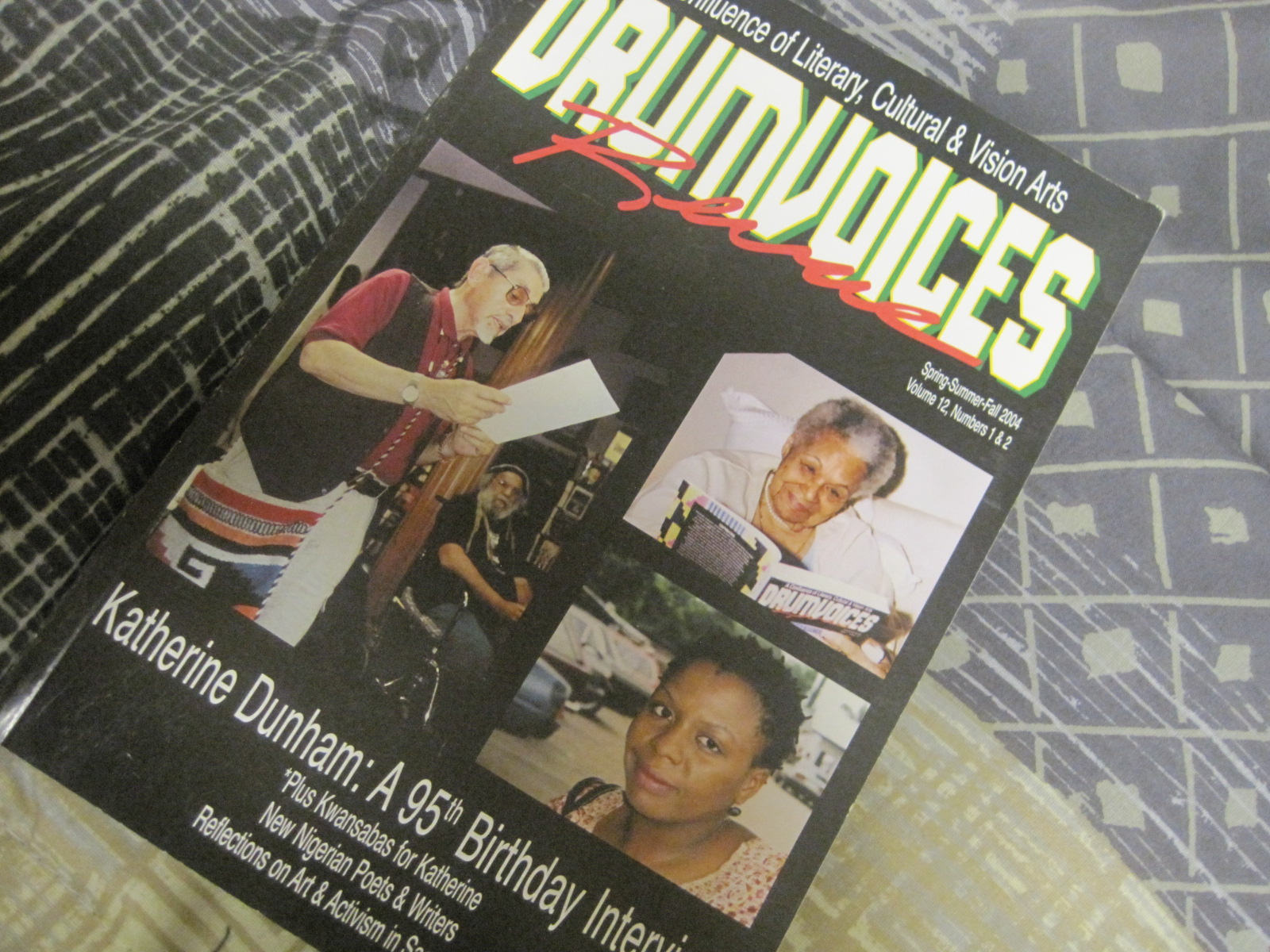 I came across this in the shelves of my professor’s library a few hours ago. It is a special edition of Drumvoices Revue (Spring-Summer-Fall 2004) that featured a set of Nigeria’s Third Generation writers. Introduced by Nigerian poet Remi Raji who was then in the United States, the section in the publication was a result of earlier collaboration between this University and the one in Ibadan. Even the cover said as much, with Lola Shoneyin taking a choice spot in the corner. Other writers featured in it were Toni Kan, Tade Ipadeola, Francis Egbokhare, Toyin Adewale-Gabriel, Unoma Azuah, Obi Nwakanma and Angela Nwosu.
Drumvoices Revue is a publication of the Eugene Redmond Writer’s Club and edited by Eugene B. Redmond itself. I’m going to find out if they still publish works. Those were good times when Eugene came to Ibadan seeking new voices around Nigeria, and seeing the book brought back good memories.
One word: nostalgia.