by Chukwuemeka Ofoegbu
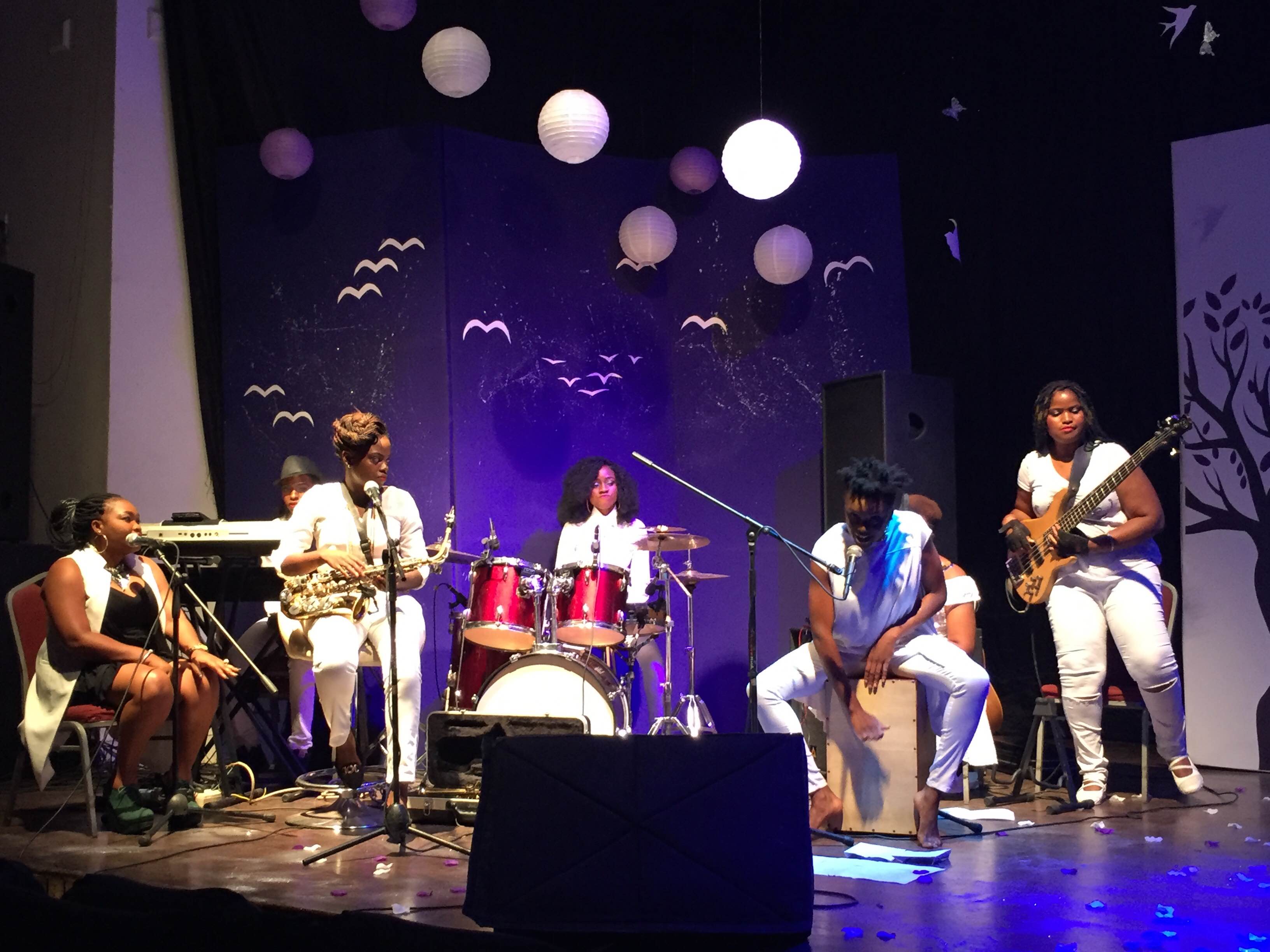
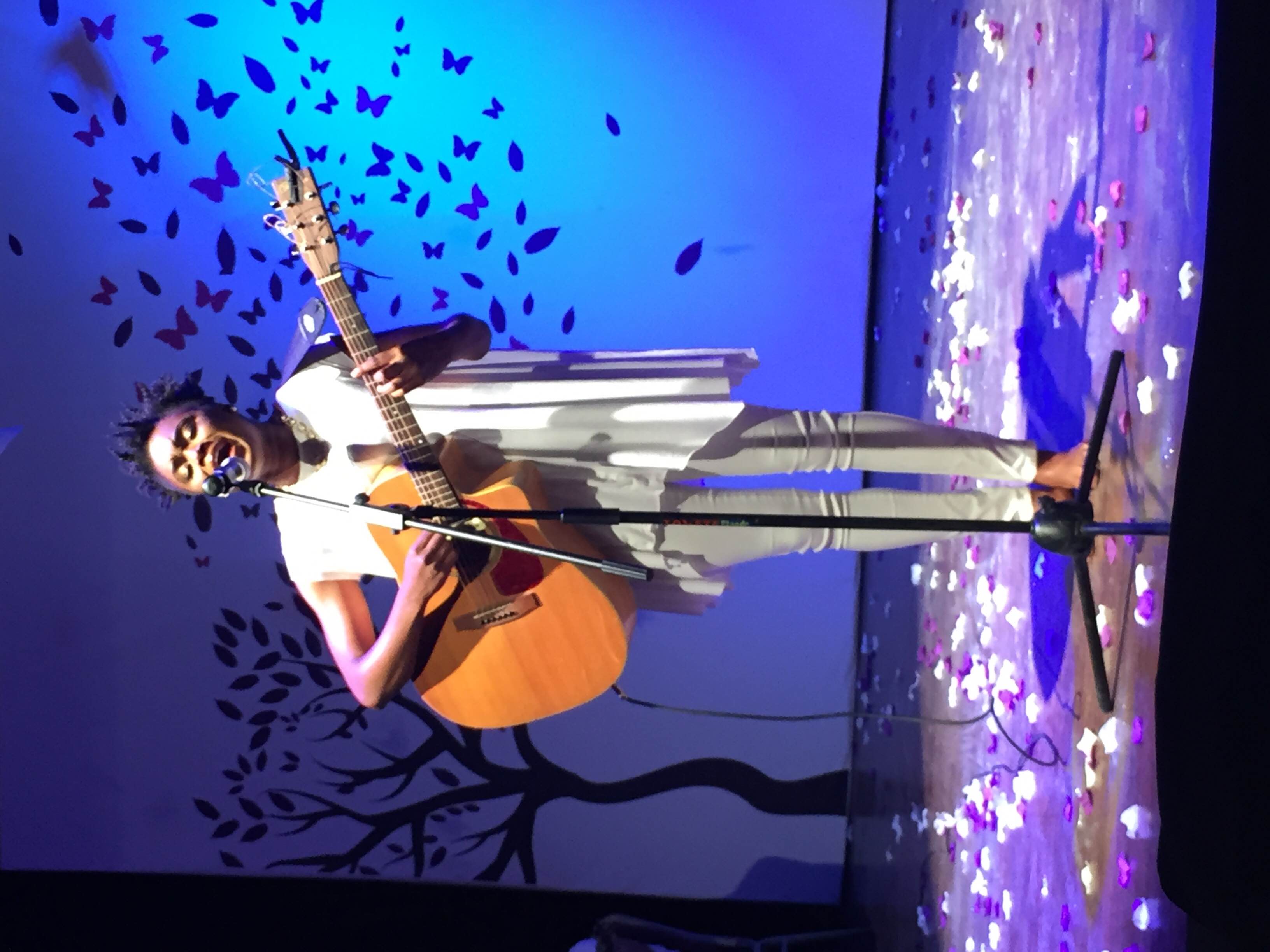
 Like a pilgrim at the start of a pilgrimage, I sit in silent reverence, taking in the beautiful stage decor, the all female band fully clad in white and the crowd of excited people chatting as they fill the seats. We are at MUSON Centre’s Agip Recital Hall where the one-time performance of Títílọpẹ́ Ṣónúgà’s Becoming is about to begin. I can tell we all had individual expectations for the night yet somehow we share a communal belief that it will be far from the ordinary.
A few minutes pass before Títílọpẹ́, resplendent in white, walks onto the stage to our warm applause. Teary-eyed she talks a little about her childhood and some of the events that led to this night. The single stage light dims placing us in the right mood for what is to follow. She opens with a piece which questions a history that seems to have shaped society’s expectations of the female child. This is the first in a series of thirteen pieces of a whole poem. Títílọpẹ́ urges us to imagine a world where the girl child isn’t told how to behave. A world where she is adored just as she is the day she’s born, “…and the world is still hers”.
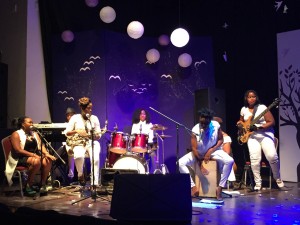 “…(H)eartbreak was just a tongue twisting word”. Her next piece talks about the innocent defiance with which the coming of age girl takes on life, a time before the girl child knows the meaning of a heartbreak, a time she is still bursting with optimism.
In her next piece we listen to events that might occur in the girl child’s life that would mar her. She explores how, growing up, we are taught to be conscious of our sexuality too early as a tool to safeguard us from the evil of strangers. Then she asks what happens when the evil is perpetrated by “…someone we smile that smile only reserved for those we call family, those we love”? What then? It is only when she walks off the stage at this point that I realise she has in the subtlest of manners talked about rape. We are all still in pensive silence when Ọmọlará takes to the stage to sing Asa’s Moving On.
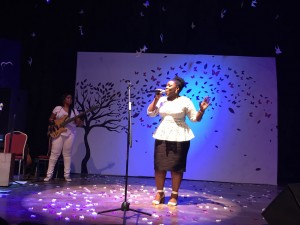 Títílọpẹ́ talks about healing in her fourth piece, advising us against covering up the wounds till they fester and rot but to rather open them up. “Speaking is an act of survival”, she encourages talking about such harrowing experiences as a way of getting past them. She then closes saying once we’re done opening up, we should leave it be and walk away from it. Falana then takes the stage for another powerful musical interlude.
Musical siren Ruby Gyang takes the stage during one of the musical interludes. Ruby tells us how to handle breakups singing her popular song Okay. We sing along, some of us caught in fits of laughter as she brings the comedy while passing across the heavy message of stacking the bullshit and tossing it out the window cause it doesn’t matter.
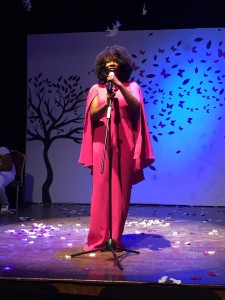 By the time Títílọpẹ́ delivers the next piece the white outfit has transformed into a stunning pink variation which seems to mark the end of innocence and the birth of passion, strength, love and insight. Now she bears a message for us the men. With rapt attention I listen as Títílọpẹ́ tells us the men “the woman is working and if she finds you working too she just might let you love her”. The message of appreciation for the woman resonates loudly and we nod in agreement, all the while applauding.
Títílọpẹ́’s next few pieces inspire us to new beginnings reminding us that “…even nowhere is a place” and “rock bottom is a perfect location for rebuilding”. Right now I feel she’s speaking directly to me.
She speaks about the issue of following our dreams but having a safety net in place first. How our parents would say, “be anything you want to be but don’t ask me for money”. Títílọpẹ́ identifies with the fear and doubt that hold us back from our dreams and natural inclinations. She also teaches us how to identify the right kind of love saying, “love is kind”.
Fálànà returns before the final piece, this time, however, without her guitar. Backed by the talented all female band she sings a powerful musical number. When she is through I can’t help but notice she’s been completely bare-footed the entire time.
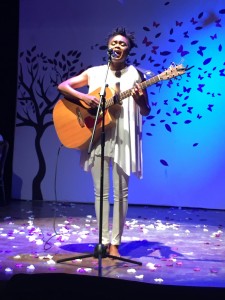 The final piece arrives teaching us to be great, overcoming the seemingly impossible odds we face and being greater than we ever think we will be. With these words, Títílọpẹ́ brings her poem to an end and I’m one of the first to fly out of my seat, applauding like a lunatic.
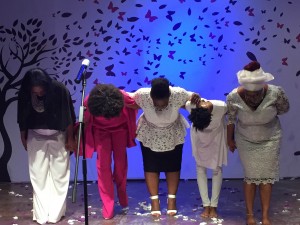
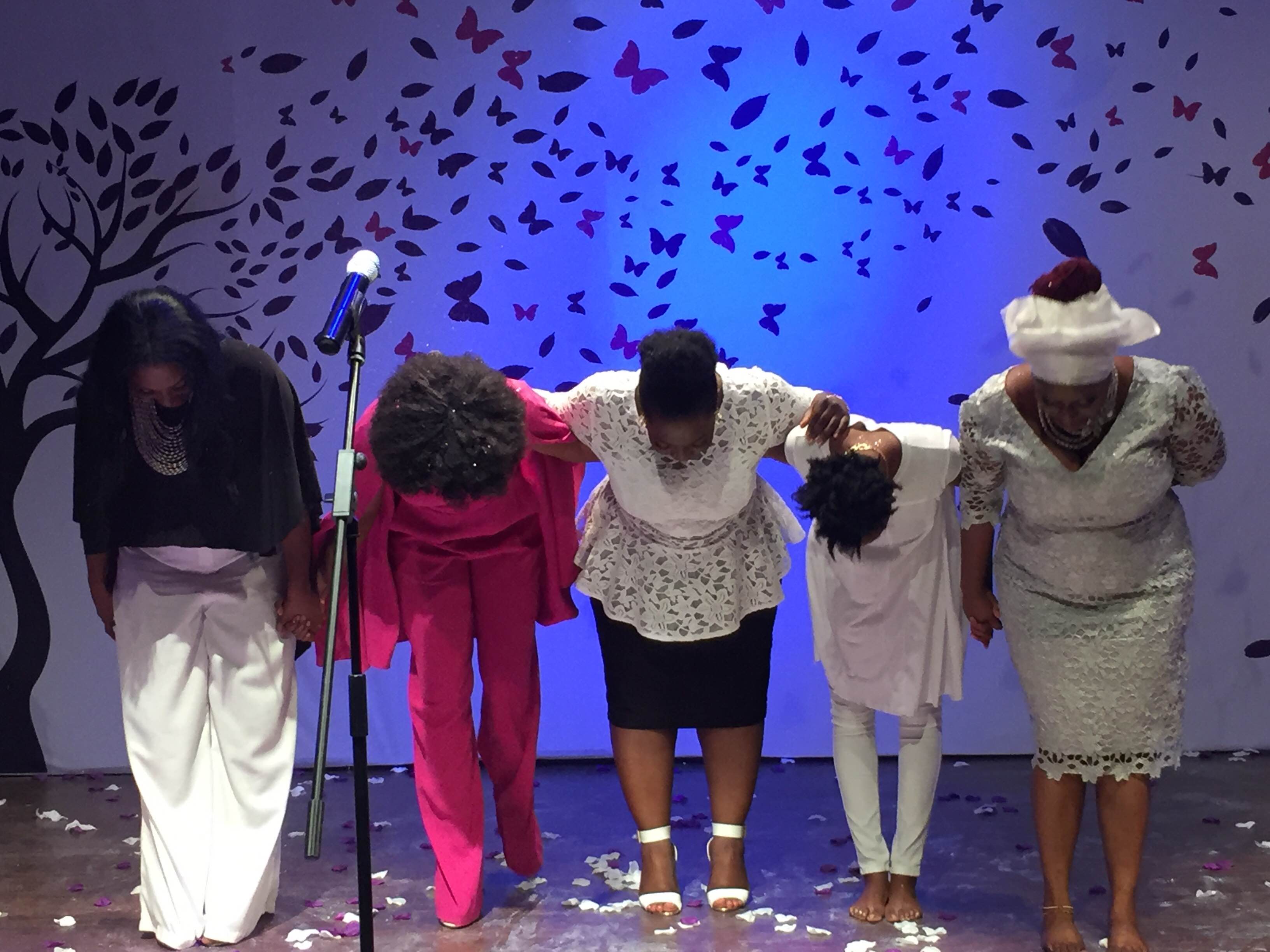
As the night comes to a musical close, the five-woman cast sing onto the stage the words “I am becoming” one by one, while the ladies of the all female band each play their musical instruments to their names for one of the most heart warming vote of thanks I have experienced.
However, it is truly the icing on the cake when, after loud cheers and a gentle nudge from her cast mates, Títílọpẹ́ takes the microphone one last time to, herself, sing the words “I am becoming” much to my excitement and a standing ovation from the audience.
Society’s expectations of a woman, rape, innocent defiance, healing, strength, breakup, closure and rebirth are many. Títílọpẹ́ employs skill and wit to address these in the many pieces of her whole poem, leaving me with a lot to ruminate over, with musical accompaniment ranging from double bass to piano, guitar and vocals. Her words take flight like magic in the night.
 I would be remiss if I fail to mention the importance of the musical interludes which followed each poem. The soulful Ọmọlará, the entertaining Deborah Ohiri, the uniquely talented Fálànà and the siren, comedic, Ruby Gyang, each of them bearing messages in their music reiterating those in Títílọpẹ́’s pieces.
Títílọpẹ́’s Becoming reminds me why she is easily considered a master of her craft. And although the cast of the show might have taken a bow tonight, their words will linger in my heart and mind for many days to come. It truly was a magical experience, and, from this writer, congratulations are in order. Thank you Títílọpẹ́ Ṣónúgà for a night I will not forget in a long while.
__ _______
Emeka is a retiring bibliophile and a blue-moon writer. His hobbies include reading books as research material on how to write and daydreaming about actually writing. He enjoys good music and poetry. He also studies medicine.
 One of the questions we asked guests coming to the Aké Arts and Books Festival in Abẹ́òkuta this November was whether they read reviews about their work. The responses were intriguing, from “No, never!” to “Well, only if it’s good” to “Oh, why not?” I’m paraphrasing. You’ll need to get your hands on the Aké Review 2015 to get a better idea!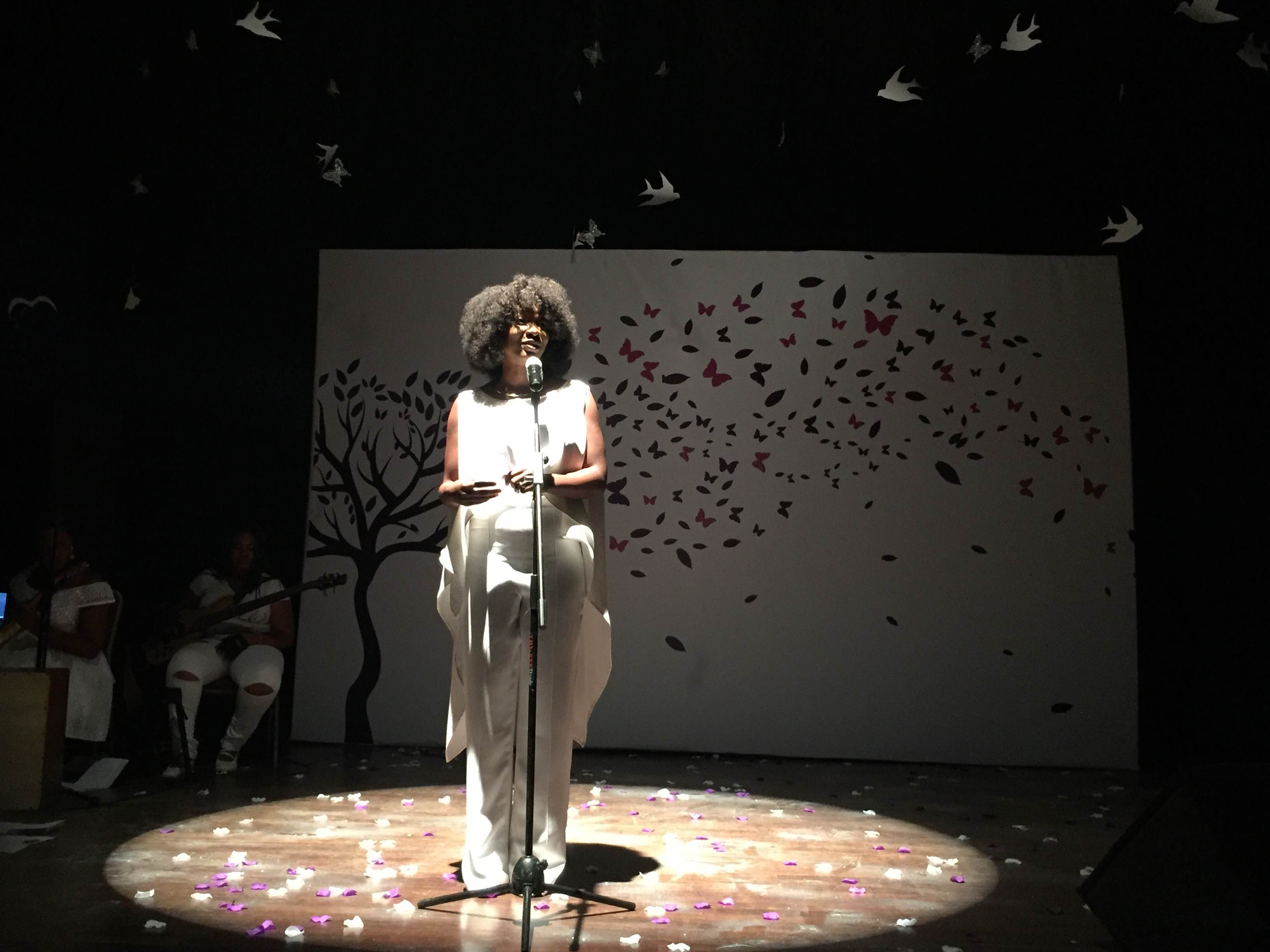



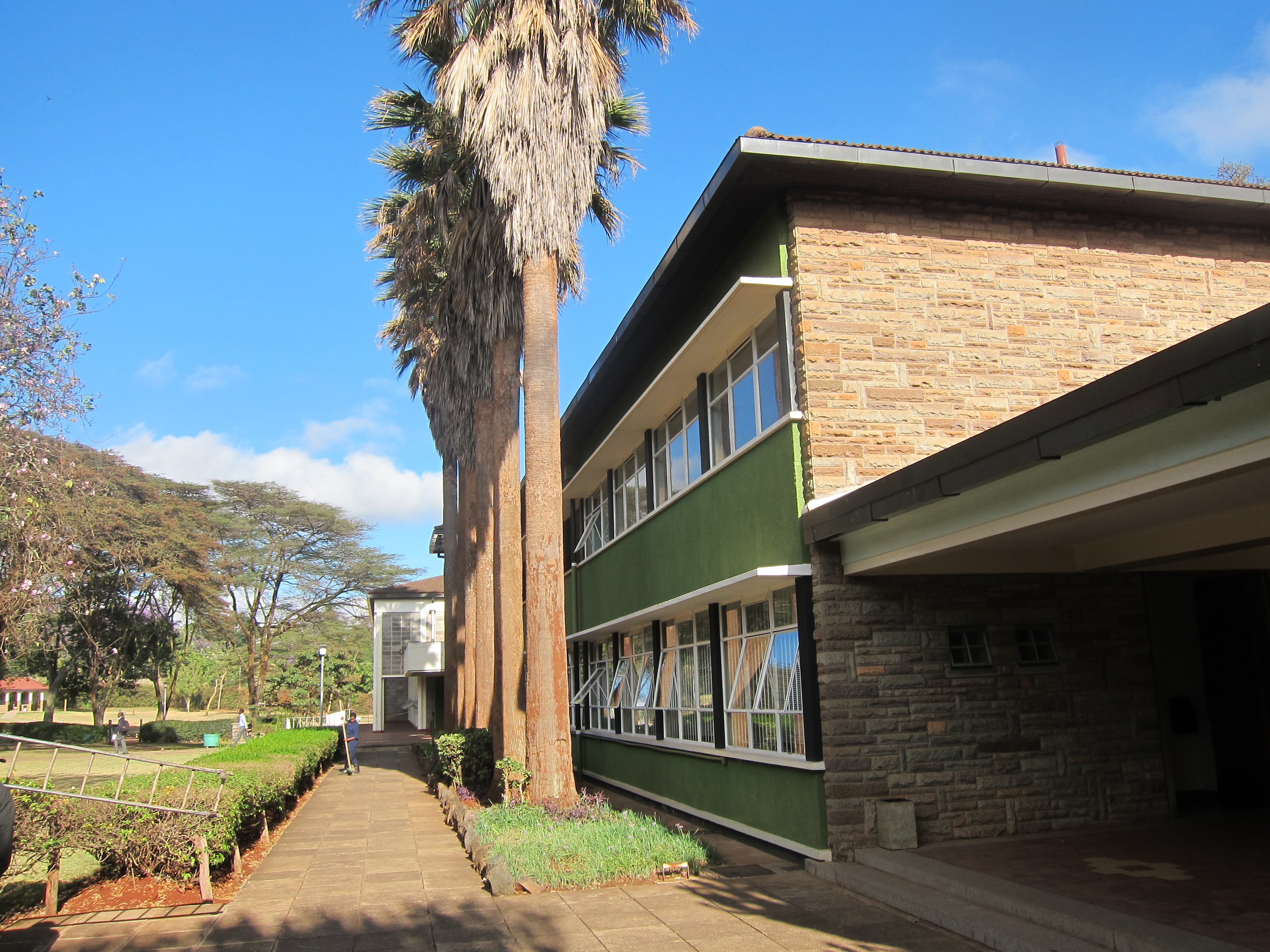
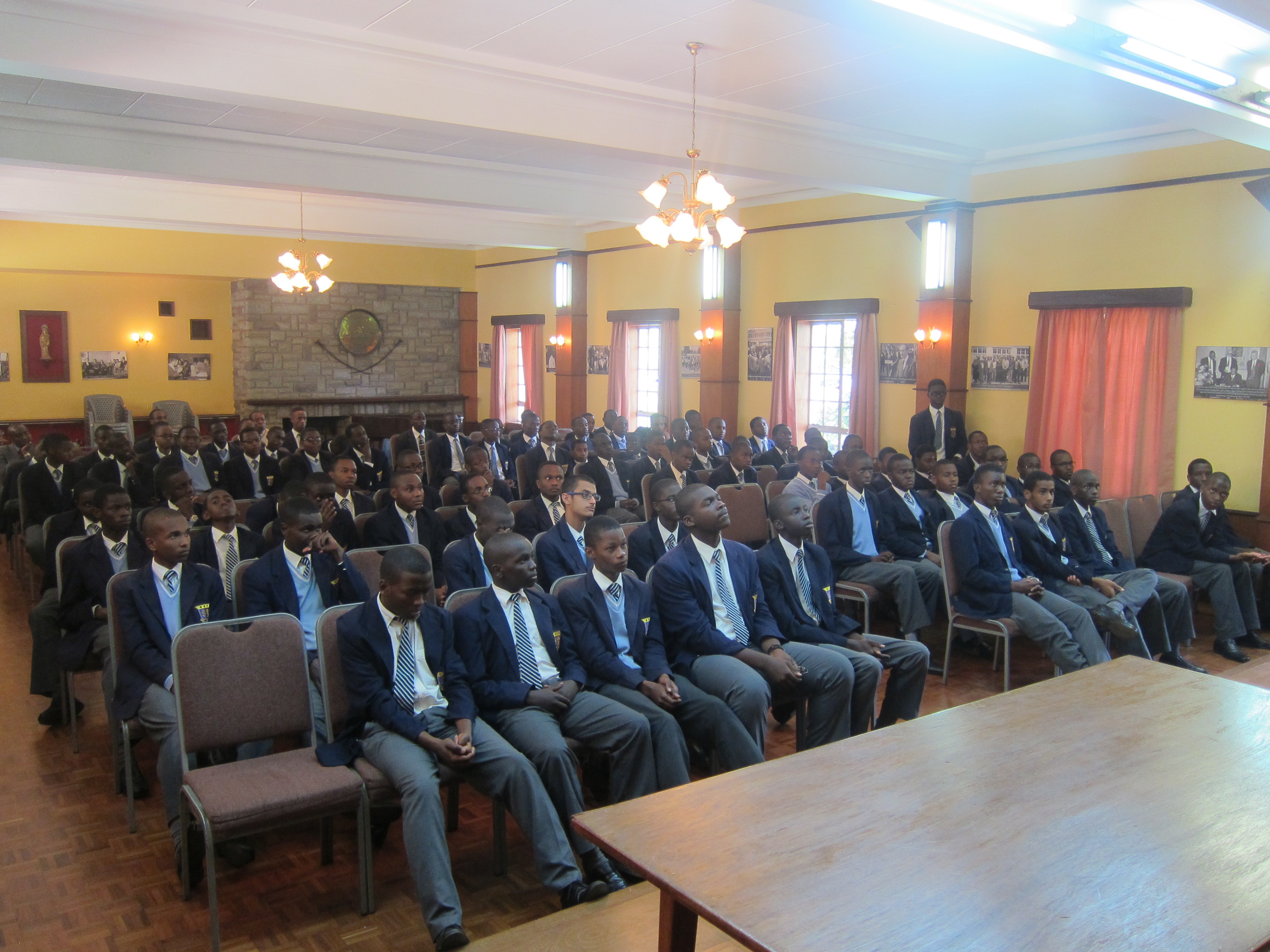
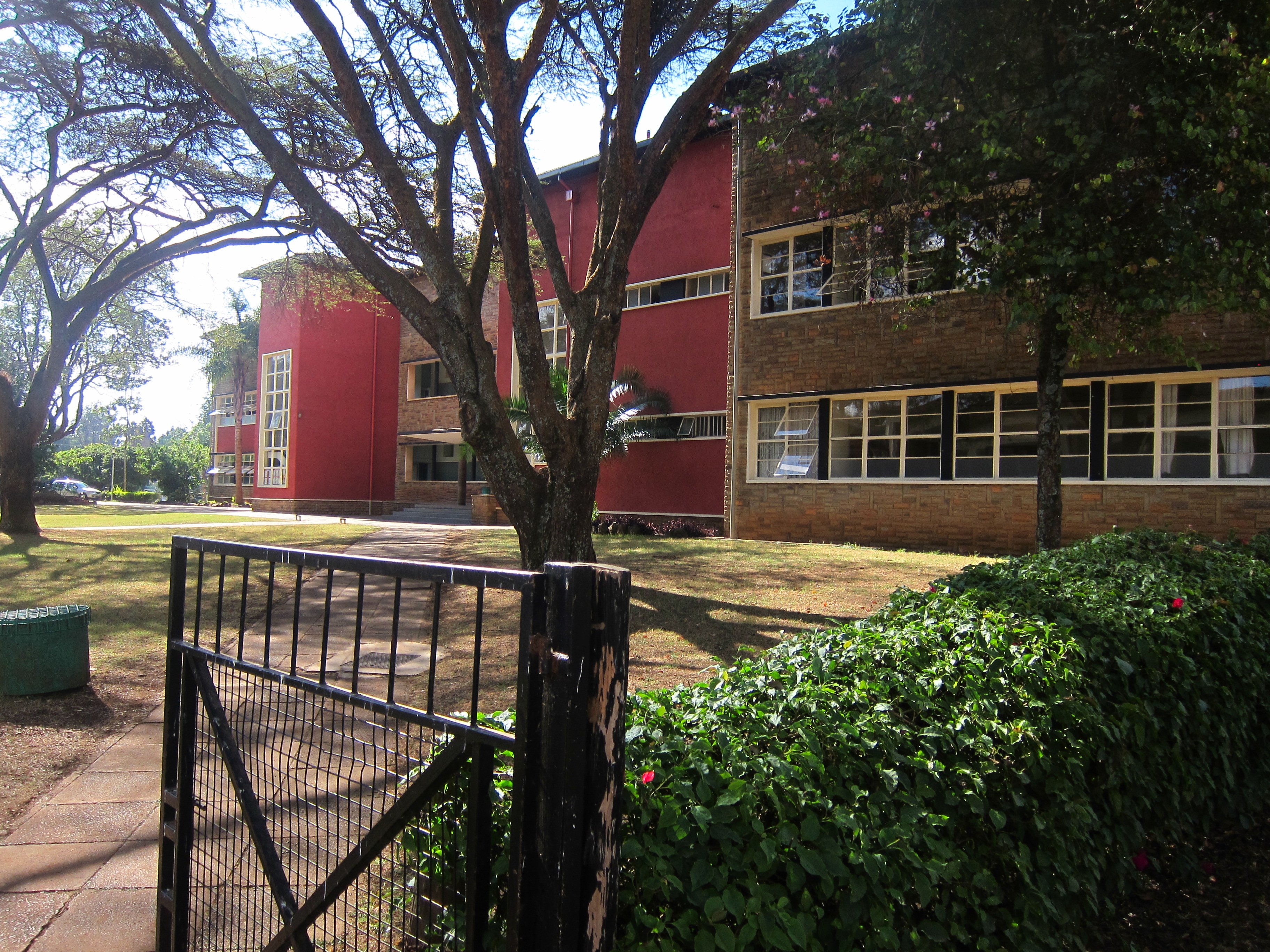
 My visit to the school was engineered by my employers in Lagos as a way to share ideas between the two schools, giving me a chance to compare the students and school environment in the two cities, and finally to provide a chance to interact with the students especially on issues of career, talent, and passion. After all, I was visiting Kenya as a blogger finalist of a prestigious journalism award. Wouldn’t it be nice to give a talk to the students about how I got to where I am, how I’ve navigated my own life and vocations, and how they can also develop their talents and passions towards the future? I had looked forward to it all through my stay in Kenya, so finding myself on the campus a day before my departure was quite appropriately gratifying. It would have been equally nice, had there been enough time, to visit the Strathmore University which I’d also heard great things about. But it was located at a different part of town and time wasn’t sufficient.