Browsing the archives for the Literature category.

Memory Lane with Tọlá Adénlé

by Tèmítáyọ̀ Ọlọ́finlúà

Mango, Christmas and avocado trees; old houses, some refurbished, others abandoned; line the street that slopes downwards.

“Tayo, please wait for me at the gate with 4A,” she had said on the phone, her English laced with a tinge of Ondo/Ekiti accent and spiced with some Yoruba words. Tola Adénlé—or Mama Tọ́lá Adénlé, as her name is saved on my phone—came to me first in an online article that filled me with the desire to meet her. After some Facebook messages and phone calls, I am waiting to meet her.SANYANhybrid sitting
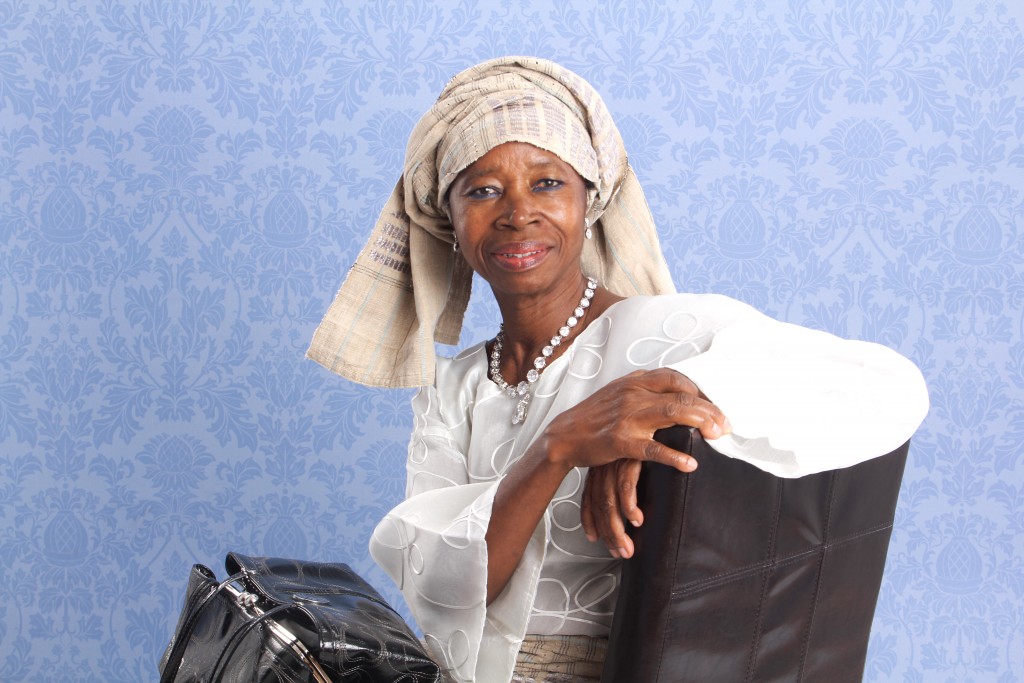
At the gate, my mind wandered: what will she look like? Will she bounce around like her cheery voice jumped on the phone? When she opened the gate, she had a warm smile, a green top and a pair of cream pants on. I knew she was the one. She needed no introduction—the face matched the pictures. The texture of her real voice similar to the texture of her “phone” voice. She welcomed me into the house.

“Feel free to look around.” And there was a lot to see. Almost every corner of the room was lined with pictures—largely family; hers, her husband, her children, her children and their husbands, and their own children. She calls them the Adénlé clan.  

“Life is about memories. Keeping memories, that is all life is about,” she says.

I get a tray with tea and snacks; then, we settle outside on two chairs. “That’s Dr. Adénl遒s chair,” she says, referring to her husband—hydrogeologist, Dr. Adénlé. It is a good view: trees and houses, in competition. The house on the other side of the fence used to be theirs.

“Either it got too big for us or we got too small for it,” she says.

Then, we settled into the chat, not an interview. She had insisted that it should be as informal as possible. She would email me pictures, so no need for a photographer. I was reluctant to record. It would be just nice to drink from her deep wells of knowledge.

“This will not just be about you asking me questions. I would also ask you questions,” I agreed. She wanted to know why I chose the freelancing route; how I survive; my background. I told her.

It was my turn to know more about her. But not so fast.

“I should give you an autographed copy of Emotan Magazine,” she said “In fact, let me do it right now.” She gets up immediately and returns with the copy. Emotan was the third woman’s magazine published in Nigeria. This edition was published in September, 1977. So, yes, it is a collector’s item.

When she returns, I ask about her urge to get things done “right away”. Is it out of fear that she may leave it undone or that she may forget—a result of old age?

“It is not fear. It is just that I hate to be reminded to do something that I promised to do,” she says. Neither is it a fear of age, as age is a fact of life.

Dr. Adénlé soon arrives, but before he left us, she does introductions. Tells me a little bit about them—how they like things small, even though they are both from large families. He is the son of a late Ata-oja of Osogbo; she is a daughter of a prominent family in Iju, Ondo state, the Adámọlẹ́kuns. Their wedding had under 30 people in attendance at a Cathedral Church in January 1970. Other things, I find out myself: a soft whistle is one of them calling the other; that she is particular about everything—the chair she sits on; the plate she eats from; her daily carbs intake; the number of steps she takes daily; the turquoise of her earrings matches the nail paint on her toes. He does not care much about such particularities. That when she tries to remember something, he assists—like the name of her Editor at Daily Sketch: Sola Oyègbèmí. The Adénlé couple cannot stand chaotic Lagos—they both resigned from jobs there at different times before they met in the 60s. They fit well into each other, ball and socket.  

We talk about other things: writing, publishing and Nigeria. Writing is her gift that she must continue giving. She did not know this initially. She had written a letter to the editor of West Africa Weekly, an old magazine from Florida in 1971. She quotes some lines from the letter. Writer, Kọ́lé Ọmọtọ́sọ́, a PhD student back then at the University of Edinburgh, read the letter and told her that she seemed to have the gift of writing.

“But you will need to read a lot,” she said he had told her.

And that was how she kept honing the skills—from a letter to a magazine; she served at Daily Sketch, Ibadan as a corper; then, she became the Woman Editor at Daily Sketch. She reels off names of her colleagues at the Daily Sketch. She shared a table with Tunde Thompson, who would face Buhari/Ìdíàgbọn’s harsh military rule judgement with the infamous Decree 4. It is interesting that Thompson supported Buhari for president in the last election. It was after the Sketch experience that she started Emotan as a Woman’s Bimonthly. The magazine which was published out of Bodija, Ibadan, had a readership of about 15, 000. It soon became a monthly. It attracted writers, readers and adverts from every part of the country, even from West African countries. Its articles remain relevant even decades after. One subscription page of the magazine reads: when you miss a copy of Emotan, you miss good company. True then, true now. In 1985, after several editions, it was time to rest Emotan.

For someone who moved to Ibadan for the first time in 1966, and has lived there on and off, since then, I ask her what she thinks of the city now.

“Like Nigeria, Ibadan is chaotic. And it is not because the people are not skilled enough to transform the city. S’e b’oye kilu ma improve ni?” She asks rhetorically.  She says that this “lack of progress” is connected with the maniac rush for wealth rather than ideas that can transform the society.  “It is only here that you ask people what they want to become and they say: millionaire, as if it is an aspiration. Many have fallen into the default mode of most Nigerians—not caring about what they leave behind, only rushing after money.” She laments that this is the reason many do not create things that will transform the nation. Warts and all, Ibadan remains her favourite city.

She does not understand the Nigerian craze to keep acquiring things they will never use. Neither does she understand the reason why parties seem like drugs for people to get excited; take a fix today and wait for the next one to feel high again.

“True happiness should come from within. From doing things that make you happy. Not from organising big parties for people—half of whom you do not know. “Every wedding is now a society wedding; every burial is a state burial,” she quotes an older Nigerian industrialist’s words from a 1985 speech to the Ibadan Chamber of Commerce. She speaks of her long-held belief in Buhari as the one who can sanitise Nigeria of corruption, a belief that accelerated the birth of her blog, in 2011 as stated in the early posts.

In 1988 during Babangida’s presidency, her family joined Nigeria’s [then] mythical “Andrew” and moved back to the States. Since then, it has been between the United States and Nigeria. She also maintained a column with The Comet on Sunday, and later, The Nation on Sunday until 2011 when she started her blog.

Her love for aso-oke, the traditional Yoruba textile which she fell in love with after wearing it for the first time as a bridesmaid in 1965, led to her developing some categories of the textile on her blog. The different categories became so popular that a book, AṢỌ ÒKÈ YORUBA: A Tapestry of Love & Color, A Journey of Personal Discovery, was published in January, 2016. It chronicles her journey of discovery of Aso-Oke, the textile’s history, Yoruba’s sericulture past, occasions that call for aso oke, modern uses of the textiles and many interesting details of this contribution by the Yorubas to world’s textile technology. The book is laced with several pictures, many of them taken by her husband. It takes one on a journey into the past of the textile and whets one’s appetite about its future. The book will be available on amazon.com, through her website, and on her 70th birthday on April 2.

Having spent seven decades on earth, written two biographies, mothered four amazing daughters, held down a magazine for almost a decade, written a collection of short stories, Adénlé still has expectations for the future.

“One must always have expectations. Or else one dies. May not be physical. There is always a mountain to climb.” One thing is certain, Adénlé will be busy giving her gift of writing to her world.  

There is no slowing down for Tọ́lá Adénlé. She might have been born in the age of the dinosaur, to quote her words, but she uses today’s tools. She whips out her tablet and begins to type. “Let me do it right away.” She had promised to send me an invitation card for her 70th birthday and her picture that accompanies this piece. I wonder about this woman who is from the past yet grounded in the realities and intricacies of today—how many 70-year-olds maintain websites where they curate their work? You can read Adénlé’s work on hers.

She autographs my copy of the first edition of Emotan. I will keep it and show my children. I will tell them the story of a woman who dreamed up a world for other women; of how she came to me in an online article and how her story inspires me to run my own race.

“Do what you like, that is how you make progress. Follow your passion, that’s where your success will be.” Her words will not leave me even as I now advance upwards on a street lined with mango, Christmas and avocado trees; old houses, some refurbished, some abandoned.  

_____
TemitayoTèmítáyọ̀ Ọlọ́finlúà is an award-winning essayist who has completed writing and communications assignments for various organisations such as Global Press Institute, Mania Magazine, Saraba Mag and Facebook, to mention a few. Her work featured in various publications, online and in print.

Some of her writing awards include Finalist, African Story Challenge, Technology and Business Cycle (2014);  Second Prize, Peter Drucker Challenge (Manager’s Category), 2014; First Prize Winner, NEPAD Essay Contest, 2013, among others.

She currently curates content for lifestyle website, www.liveinibadan.com that focuses on the city of Ibadan. You can read some of her works here, here, here and here
For Túndé Kèláni at 68!

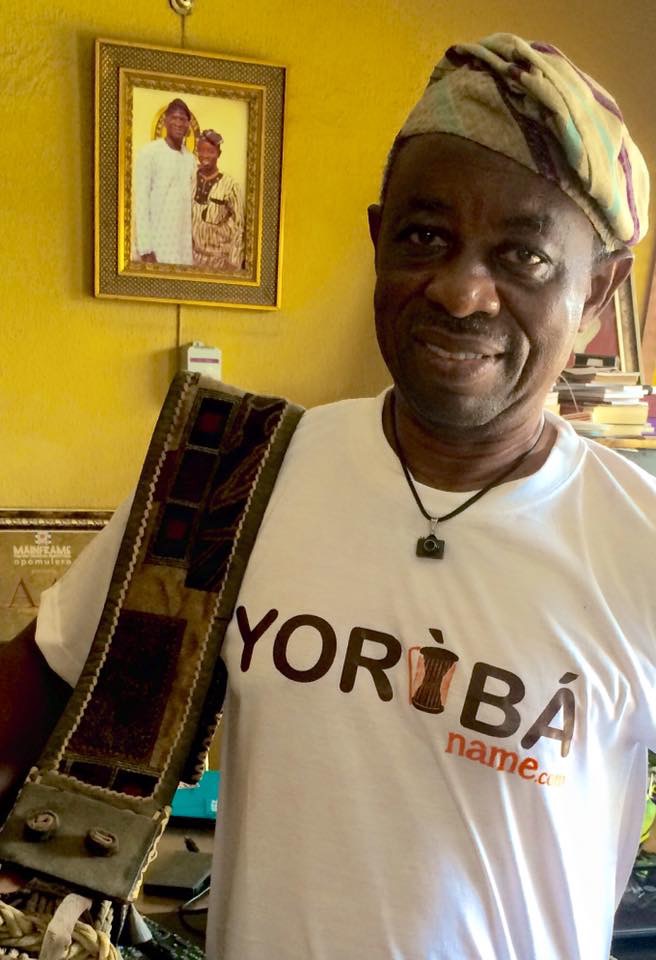
IMG_1871There’s probably nothing I can say about him today that hasn’t been said better by others, or that I haven’t said before on this blog. His work over many decades represent a significant guiding light to the little work I (and many others) do in defence of African languages and culture. Through filmmaking, he has helped place African culture on the global map, but more importantly, given us an alternative and authentic portrayal of ourselves (to ourselves and to the world). He is restless, dedicated, hardworking, meticulous, thorough, and he knows what he is doing.

The journey for me with his work started with Ó Le Kú (the film portrayal of the novel by Akínwùmí Ìṣọ̀lá which renewed my interest in the University of Ìbàdàn as a place of study), then Kòṣeégbé, and then Thunderbolt/Mágùn which premiered while I was an undergraduate at UI: a beautiful film of a cultural contact, trust, and repercussions. And then there was Ṣaworoidẹ, which embodied a nation’s pain and provided needed catharsis for a turbulent political time. There have been many more, like Yellow Card, and Agogo Èèwọ̀ and Campus Queen. Through his Mainframe Òpómúléró film house, he has challenged us, and led us, and surprised us, and guided us.

In those movies and more, TK as he is fondly called continues to define and redefine what it means to be an African filmmaker. More than the quality of his cinematography, dialogue, setting, and plot is his painstaking attention to casting. Through his work, we discovered the talents of actors like Lárìndé Akinlẹ̀yẹ (of blessed memory), Kúnlé Afọláyan, Kafilat Káfidípẹ̀, Lala Akindójú, among many others, placing them in roles where their artistic talents were best utilised in the furtherance of the story. His latest movie is an adaptation of a novel by Ọláyínká Egbokhare, dealing with an issue that can’t be discussed enough: sickle cell. He has also worked in drama (Lànkẹ́ Ọ̀mu, Yèèpà, among others).

IMG_1827
He turns 68 today, Babátúndé Kèlání, a veteran movie director and producer, Ìkòyí ẹ̀ṣọ́ abì pelemọ l’ójú ogun. I wish him a happy birthday, and many more years in pursuit of African excellence in filmmaking.

Soundbender: Music, Mathematics, and Poetry Fused

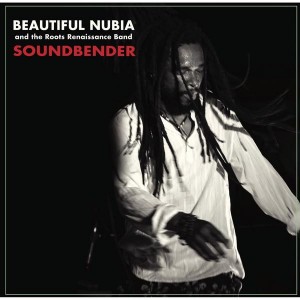
Soundbender Cover

Artiste: Beautiful Nubia
Album: Soundbender
Record label: ẸniỌbańkẹ́ Music and Publishing
Number of tracks: 15
Year of release: 2015
Category: Contemporary Folk Music


For a performer who has consistently released albums—and not just studio works— for over two decades, no one would be surprised by the plus ultra of the rhythmic and lyric refinement on Beautiful Nubia’s latest album.

Beautiful Nubia, Nigeria’s foremost contemporary folk artiste (he is erroneously described on an MTV Artistes’ profile page as a reggae artiste just as Salif Keita is too), is the doctor of sounds performing auscultatory diagnosis of the communal ailments and revealing the socio-political infirmities of the continent on his 11th studio album titled Soundbender.

Beautiful Nubia draws the strength of his music from the Yorùbá copious corpus of folktales, folksongs and proverbs. This musical evangelist presents the wisdom, the impeccable understanding, and the wonderment of Yorùbá culture to the world, preserving the rich legacy of the Yorùbá inheritance so that the world benefits and appreciates it. Another artiste worthy of mention for performing similar service to the world is the Fuji music icon, Saheed Òṣùpá.

The understanding of Gottfried Wilhelm Leibniz, the philosopher, on music and mathematics when he said, ‘The pleasure we obtain from music comes from counting, but counting unconsciously. Music is nothing but unconscious arithmetic’ is apparent in the album. On the album, the poetry of musical mathematics is palpable to the listener. Beautiful Nubia bearing his musical calculations in mind imbued the album with terpsichorean notations calculable to the listeners as they respond to the tune. Certainly, mathematics is mankind’s first language, and mathematical aesthetics can be discerned on the album. The algorithm coded in traditional percussions and classy instrumentals in rhapsodic cadences, deeply mellisonant, corroborates that.

The artiste has again affirmed that there is just a thin line between music and poetry – and that thin line is performance. In the track, “Lights of Spain” for example, a listener may easily want to tag it a poem because of the figurative expressions on the lyric. And in a way, it is. You can count the stanzas, the feet and meter on the lyrics. His poetic lyrics are simple yet rich and set him aside from the noise-making artistes who shout empty words at listeners. And the steadfast accompaniment of the Roots Renaissance Band enhances the album.

As with the traditional king’s messenger bearing message and armed with his instrument for attracting attention, the album is more than a message delivered on an errand for a king. It sums up the different shades of understanding, the contemporary hopes, difficulties, and aspirations of the people, using rich Yorùbá folkloric and language to preach continental messages.

The 15-track album opens with ‘Àrà. The track is a call to dance and pays homage to his fans. ‘Outsider’, ‘Akáwọ́gbékùn’ and ‘One Good Soul’ ring out the pain of an alien in a foreign land and also exhort good people to be steadfast in their convictions. ‘Dreaming (On a Breezy Night)’ is laid in dialogic metaphor, in trance-like manner the Yorùbá water deities, Olókun and Yemoja, are invoked in the song for sustenance to the wearied hearted. ‘Ìrètí-ògo’ is almost a gospel. It prophetically awakens hope and enjoins the virtuous never to yield to doubt. ‘Yọ’wọ’ is a warning to the malevolent ones who bask in evil to desist from evil ways. The soft tune and vocal solemnity of the song is enough a warning. ‘Lights of Spain’ travels through the Sahara and Mediterranean with migrants that seek hope on the other shores. Like in Jùmọ̀kẹ́ Verissimo’s poem, “Sighs of the Mediterranean Sea” in Migrations edited by Wọlé Sóyínká, this track accounts the hardships and horrors that this type of migrants’ experience on their sojourn of fleeing and becoming.

Other songs on the album include ‘Ten Lashes’, which condemns the pseudo-activists who promote their selfish interests while pretending to be fighting the oppressed causes. ‘Abukéọshin’ and ‘Songs of the Trickster’ are free adaptions from the many Yorùbá folktales about the notorious trickster, Ìjàpá. The two tracks say much about the political tricksters of today, too. ‘Anyone, Everyone’ is a track that engulfs the soul in anguish. ‘Lékeléke’ has featured on one of Beautiful Nubia’s albums before, but the perfection he seeks has led to it featuring anew on this album. Anyone who has been to any of his concerts will know that the song is very dear to him. Partly spiritual, partly metaphorical, the sacred bird that lends its name to the song title flutters helplessly in the face of man’s wickedness. ‘Paean to Sorrow’ is a satire condemning wars and glorification of the so-called super powers. It reminds us of the place of ordinary folks who get entangled in such wars. The displaced refugees of Sudan and Syria readily comes to mind. ‘Àkọ́jáde’ completes the album with a reminder that none shall outlive the earth.

Soundbender is a message against the tyranny of the wicked and confronts many evils in the land, speaking the complaints of the oppressed. It has a relevant social analysis of the configuration of the world-society. It challenges and urges us to work out collective solutions to the inequities of the current configuration. It is an album that is local in thematic preoccupation, yet global. Beautiful Nubia’s use of deep Yorùbá words that are fast going out of usage and various Yorùbá dialects proves him to be a cultural revivalist.

The ẸniỌbańkẹ́ cult must be given credit for the album. The tri-musical-angle that is made up of Beautiful Nubia and his Roots Renaissance Band, deserve accolades for their consistency, for their masterly compositions and renditions, and of course, the ever-growing cult of fans around the world. The fans complete the triangle and should be appreciated for sustenance and receptivity to the positive messages of Beautiful Nubia’s music. It’s like what Brian Eno described as “scenius” when he said genius is individual while scenius is communal. The communality of his music endears him to his audience and fans because of the collective emphasis of the album. So, in a way, it can be safely said that ẸniỌbańkẹ́ is scenius.

However, the artiste’s Yorùbá words are without ‘akiset’, to use the English of Àlàbá, a character in Wo̩lé óyinká’s Alápatà Àpáta. The tonal marks that help to distinguish meanings are not used in the album’s liner notes. And it is not the first time Beautiful Nubia is guilty of this. His official website, where there are Yorùbá words, and his previous albums, which have Yorùbá titles, lack tonal marks. Readers who do not have a deep understanding of the Yorùbá words are likely to confuse or misunderstand the words. The marks are a feature of Yorùbá language. And to write without tonal marks is to disrespect the language. You won’t find Spanish, French or Dutch without their distinctive accent markers. It should be emphasised that Yorùbá is not inferior to these languages. In fact, Yorùbá is richer than some of these languages in clarity of expression.

Beautiful Nubia does not feature other artistes on his albums. This is deliberate and perhaps, needs re-evaluation. Although his music is somewhat personal, there is the need to feature, maybe, emerging artistes to encourage them into his musical genre and to contribute more to the music industry. Also collaborations across Africa with the likes of maybe Angelique Kidjo, Youssou N’Dour, or even Salif Keita is now necessary. Such collaborations would reach out to more of his francophone fans.

And, on a last note, one sincerely hopes that music videos of the songs on Soundbender will be made and will enjoy as much airplay as his other songs, which have been enjoying steady airplay in Ottawa, New York, (even China) and other cities of the world, on MTV and other top international music channels.

________

BIO

The Favourite Son of Africa is the pseudonym of Tope Salaudeen-Adegoke. He is an editor, literary critic and poet from Ibadan, Nigeria. A member of WriteHouse Collective, Tope assesses manuscripts for publication and is one of the organisers of Artmosphere, a leading monthly literary event in Ibadan. Also, he is the administrator of the Kofi Awoonor Memorial Library in Ibadan and is a book reviewer at Wawa Review of Books, Abuja, Nigeria. He enjoys travelling and cooking.

Beneath the Black Ass is a Continent

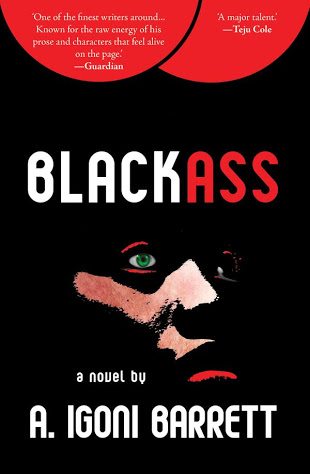
6P8uiwq6IP7VBztiTzkidMbNB0_EVBxL0iSszg5nhTafmucMvgpHWMuD-A1XcJm9qL_sKRR1u20ZeoWuZvFJX48dSZ-p6R0PmwMFujehUrVA4eXnBKsYdewIFZ8UstUsrZlbVTu00cxf4fdeafVgmjE4=w310-h474-ncTitle of the Novel : BlackAss

Author: A. Igoni Barrett

Nos of Pages: 302

Publisher: Kachifo Limited. 2015 (Under its Farafina imprint)

Review by Femi Morgan                                                                                                                                                                                                                                                                                                                                                                                                                                             ___                                              

Furo Wariboko wakes up and begins to come to terms with his new identity. He was a black man yesterday and he is a white man today. Furo is born again without confessing away his blackness totally, his black ass is the constant reminder of the disappeared melanin. This Kafkaesque novel is about the metamorphosis of not only Furo but also Furo’s people in a postcolonial state.

Furo lives in a cosmopolitan landscape which despite its aspiration to compete with its western counterpart fails in the infrastructural, socioeconomic decimals of true metropolis. The author splendidly subdivides Lagos using the perspective of exotic prediclection towards white people. The people who live in Ẹgbẹ́dá, where Furo lives, are not conversant with a white man walking on the streets and hustling up and down.  Furo, therefore must find a way to escape the eyes of people. Areas like Victoria Island and Lekki have white people jogging in the early hours of the morning. White people live within these scapes as expatriates, government personnel and as facilitators of linking the values of the west in the globalisation project of Africa. Igoni Barret captures the nuances of Lagos most accurately. He spares no time in explaining the rich as well as the struggling transits of the city. His exposition on Lagos is successful because it is a subtle brush on the landscaping of the exciting narration.

Furo begins to receive an umbrage of responses to his new personality. A white man is shown exceptional favour at the detriment of a fellow black man, a white man conveys the aspiration of so many poor Africans and therefore taxi men and transporters hope to get a piece of the dollar-pie by jerking up the price. Many people hold conversations with him, asking him about the places he has never been, the places in Europe and America.

Furo is a white man with a black soul. He is expected to negotiate this displacement of identity with a certain ingenuity that may make or mar him. These postcolonial reactions of reverence, of hate, of anger and of fear stem from a deep postcolonial malaise that has been enhanced by stories of the great west as against the low global north. Thus the author satires Africa, it is a continent that kneels in the presence of its western personas.

The thirty-three year old Furo earns a job that he had sought for 10 years. He is given the benefit of doubt when he bungles a crucial question at an interview and he is placed in a rather uppity position in Haba! a failing enterprise, because of his white status. Arinze, the CEO of Haba! says in an interview with Furo, ‘I will be frank with you, we need a man like you in the team’.  Meanwhile, despite the change of skin and hair, Furo is a typical Nigerian. He hardly reads for leisure or for self-education, he is an educated ‘good for nothing’, a half-literate whose chances in life has improved not because he is intelligent but because he is now white. Yet, his Nigerianness haunts him, he is an African who is unable to reach the fullest of his potential, he is an educated rag who is fighting a ‘postcolonial war’ that has long been lost.

I do sympathise with Furo because I realise that the older one gets, the more he realises that he has shed those dreams and gifts of his childhood. A jobless 33-year-old will often be misunderstood because he has not crossed the essential threshold set by society. In Nigeria, a child is like a cheque that must never bounce, he must make the parents proud and must become the symbol of ancestral progress. 

Furo understands that no family member will understand his metamorphosis and this leads to his departure from home. He struggles with his new identity, the necessity for departure and the nostalgia of motherly love. Mothers subtly own their children by sheer investment, so much that they become the essential mention in the cannon of one’s personal narrative. Furo’s father is typical. A man overwhelmed by failures, losing his pride as he tries to be faithful to his family. The novel explains that despite his dehumanisation by circumstances beyond his control, his staying will be vindicated in the memories of the hereafter. Furo’s father lives by a certain mechanical routine of hopelessness, a television addiction and a dictatorship that stems from his inability to provide for his family. These postcolonial times calls manhood to question, the manhood is shrivelled because it often times has failed to be successful and has failed to meet the expectations of family and friends.

Now a white man wants to eat fufu at a buka for disoriented black people. It reminds me of Bright Chimezie’s song about the musician eating Akpu in the streets of London. The Europeans invited the police to rescue Chimezie from committing Suicide. Furo is a victim of the eczema of modernisation, yet he is watched as a circus, while he expertly swallows lumps of fufu. He is favoured against his fellow black man with an extra meat for his exotic performance.

Igoni is a splendid storyteller whose sense of observation leads his story to those existential paradigms that we often fail to acknowledge. He is not preachy, not assertive, he tells a story that pulls you in. Igoni’s work is a classic, a story that stays in your subconscious and becomes part of your memory. You walk the streets with Furo, you experience the sun shining on his face, you make love to Sycreeta, you become his alter ego. You ask yourself, is it better to live an interesting, conspiratorial life than to live a life of a cockroach?

Igoni brings to fore a new prism of narrative for contemporary writing, it is close to reality because the conversations transit between the cadences of English, popular lingo, tweet-speak and introspective expressionism. Igoni’s prose gives the reader an impression that storytelling is an easy craft, but a second look at how he wields the story and how he brings himself into the story, you realise that Igoni has painted a monumental Chiaroscuro with words. He tells a story of a failed cosmopolitan ideal as he creates parallels and binary oppositions that make the work come alive. Sycreeta and Tósìn are women who want different things from Furo, Arinze and Yuguda, Lagos and Abuja, Furo and Frank Whyte, black and white. Igoni is not the storyteller in the book, ‘he’ is in the novel, changing to a ‘she’ with a dick between her legs. Nevertheless, I come to glean the authorial intrusion of the writer whenever he postulates about existential ideas in the novel. This however is a trademark of the many classic novels that predicates on explaining the workings of modernity and life, like James Joyce’s A Portrait of An Artist As A Young Man and Franz Kafka’s Metamorphosis.

There is a realistic sense in which many of the characters are trying to transition from a certain physchological in-betwenness to a full knowledge of their persona or an attempt at accomplishing their dreams . The reader becomes aware of the way of the world from the novel. The things we shy away from using the veneer of religiosity are challenged by the comprehensible raison d’etre of the characters. There is Sycreeta who understands the prize of a white man’s worth and plays a game to win, there is Yuguda, Arinze and others who realise the impressions that a white man can bring to their firms, their NGOs and Ad Agency.  So the jobless 33 year old becomes the most sought after. There is Victor Ikhide and Ehikhamenor in the novel, a resonance of reality meeting fiction. Ehikhamenor retains the high status of being an artist while Victor Ikhide is a talkative, loud-mouthed driver. Yuguda is clearly the Dangote of the novel.

Furo’s changes is in continuum, he becomes more opportunistic and begins to negotiate his identity and to create the money spinning perception that lands him a better deal. Furo tries to be complete in his whiteness but it is left to Igoni to let him achieve his new ambitions as a white man.     

_______

Femi Morgan is the co-curator of Artmosphere, a leading Arts and Culture event in Nigeria and a co-publisher at WriteHouse Collective. He is a co-recipient of the 234Next Fashion Copy Prize and was longlisted for the BN Poetry Prize in 2015.  

Aké Diary (IX): The Deadly Laughter

by Emeka Ofoegbu


When the four kings of the satire sit down to have a panel discussion you can only expect brilliance.

12240855_1072254982794106_817242026421824695_o The panelists are Pius Adésanmí, author of Naija No Dey Carry Last, Adéọlá Fáyẹhùn, host of popular online show Keeping It Real, Ayo Sógunró, author of The Wonderful Life of Senator Boniface & Other Sorry Tales and Victor Ehikhamenor, visual artist and author of Excuse Me. The topic is Deadly Laughter: Satire and Public consciousness in Africa. The moderator is Kọ́lá Túbọ̀sún, acclaimed linguist.

The discussion kicks off to Adéọlá admitting she has received countless death threats for the work she does on her show even with the disclaimer. This is something her fellow panelists agree with. Satire is an approach to dealing with major issues that affect our immediate society which is quickly catching on. The satire is meant to be as subtle as possible but still heavily packed with intent and often met with disapproval and hostility. One thing the panelists agree on is that as a writer of satire you must develop a readiness for vicious backlash. The art of subtle reproach is often too much for people to handle and for those who understand what is implied they cannot stand to be portrayed in that light so they strike back or speak out against it.

12291120_1072255166127421_2596372418372204354_oVictor lets us know that amidst the vicious attacks on satirists, the satire is meant to deflect violence being a way to say what you want to say without being direct. On whether people effectively understand the satire, Ayọ̀ says there are some people who “even if it is clearly marked and sent, some people still don’t get it”. Pius talks about his work saying that the satire respects no one. It brings out the people perpetrating wrongdoings and ridicules them. Often times the case is that they don’t like how they are portrayed so they prefer a direct attack.

Although the satire is meant to be daring, Ayọ̀ tells us there are certain things he cannot write about. He believes feminism is one of these things. He says this simply because he personally cannot handle the onslaught when it does come. To this Victor drops one of his many wise sayings “because you have sharp scissors doesn’t mean you’re going to be cutting everybody in the village’s head off”. It is explained that the moment as a satirist you threaten yourself by attacking matters that are unnecessarily dangerous you’ve crossed satire into sensationalism.

12247737_1072255476127390_4458254252724755255_oWhen the question of who censors the satirist came up, Adéọlá was quick to say “everyone.” She gave us examples of how she was hounded for speaking about a particular issue and again hounded by the same set of people when she decided to remain silent on the same issue. She explained her style of approaching the satire and how it has worked for her this far. According to her she lays the fertile ground before doing the dirty work of planting. She says complimenting before hitting the nail on the head is a style she has developed in her career as a satirist.

Questions were taken from the audience with Professor Niyi Ọ̀súndáre saying the steps to being a good satirist include: “dig your grave” “buy a good coffin” and “write your will”. When asked what it takes to be a satirist, Victor says to portray serious issues in a humorous yet objective way requires a level of humour to avoid it coming across as forced. After all, according to him “it helps for the snake to have venom before it bites”.


______

Photo credit: Ake Festival