Browsing the archives for the Linguistics category.

Crossing Borders: A Spotlight on Literary Translation

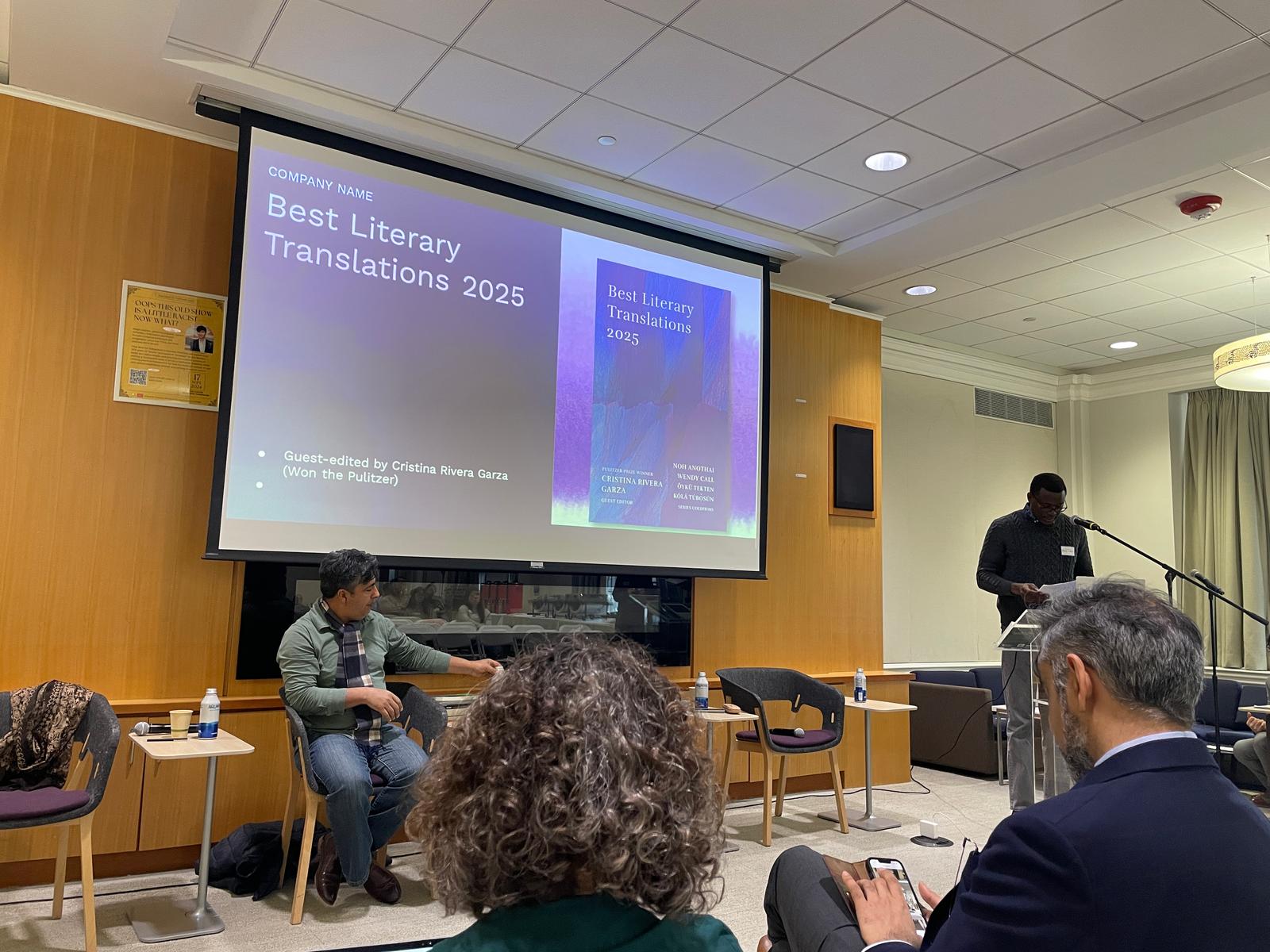
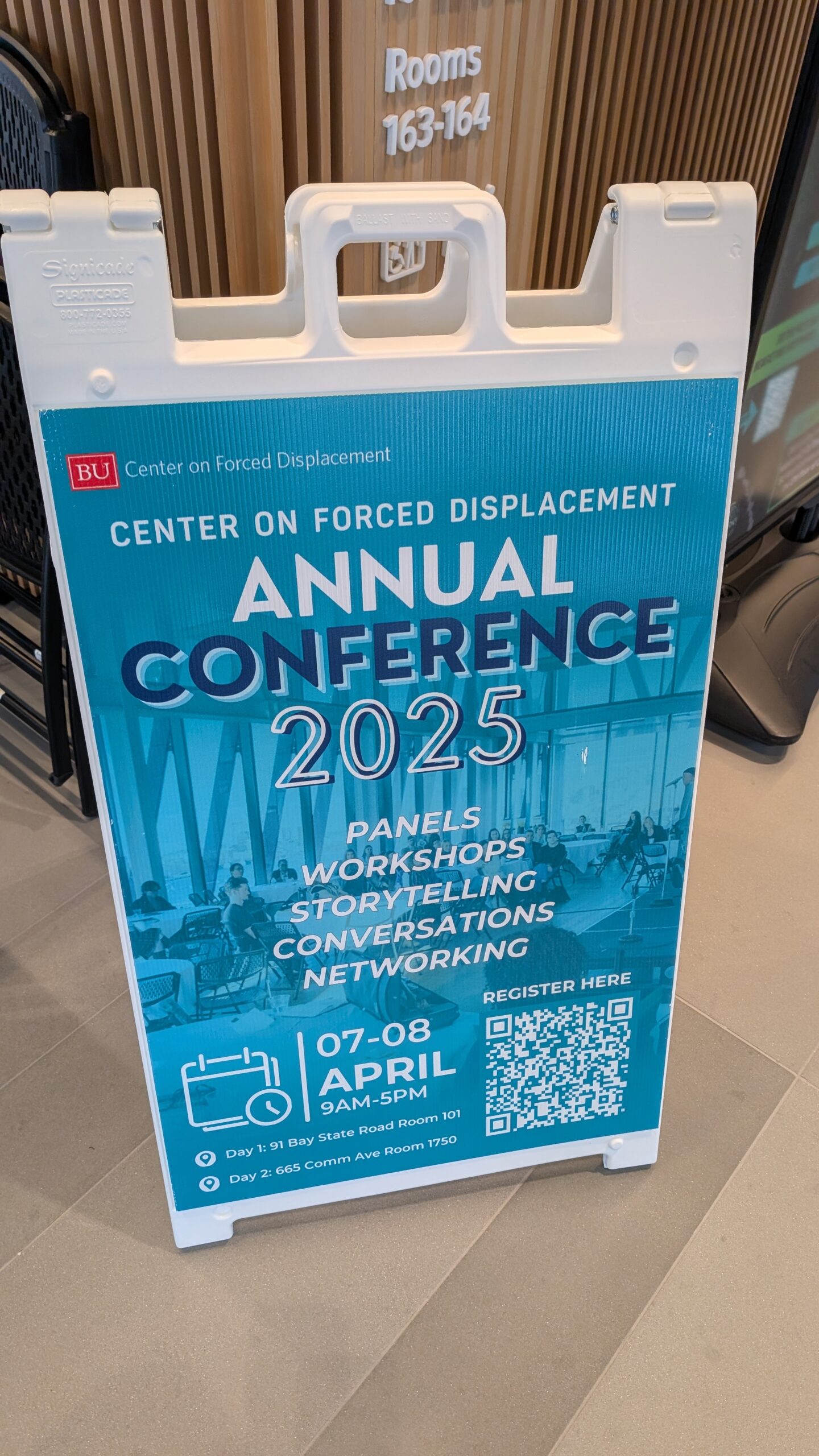
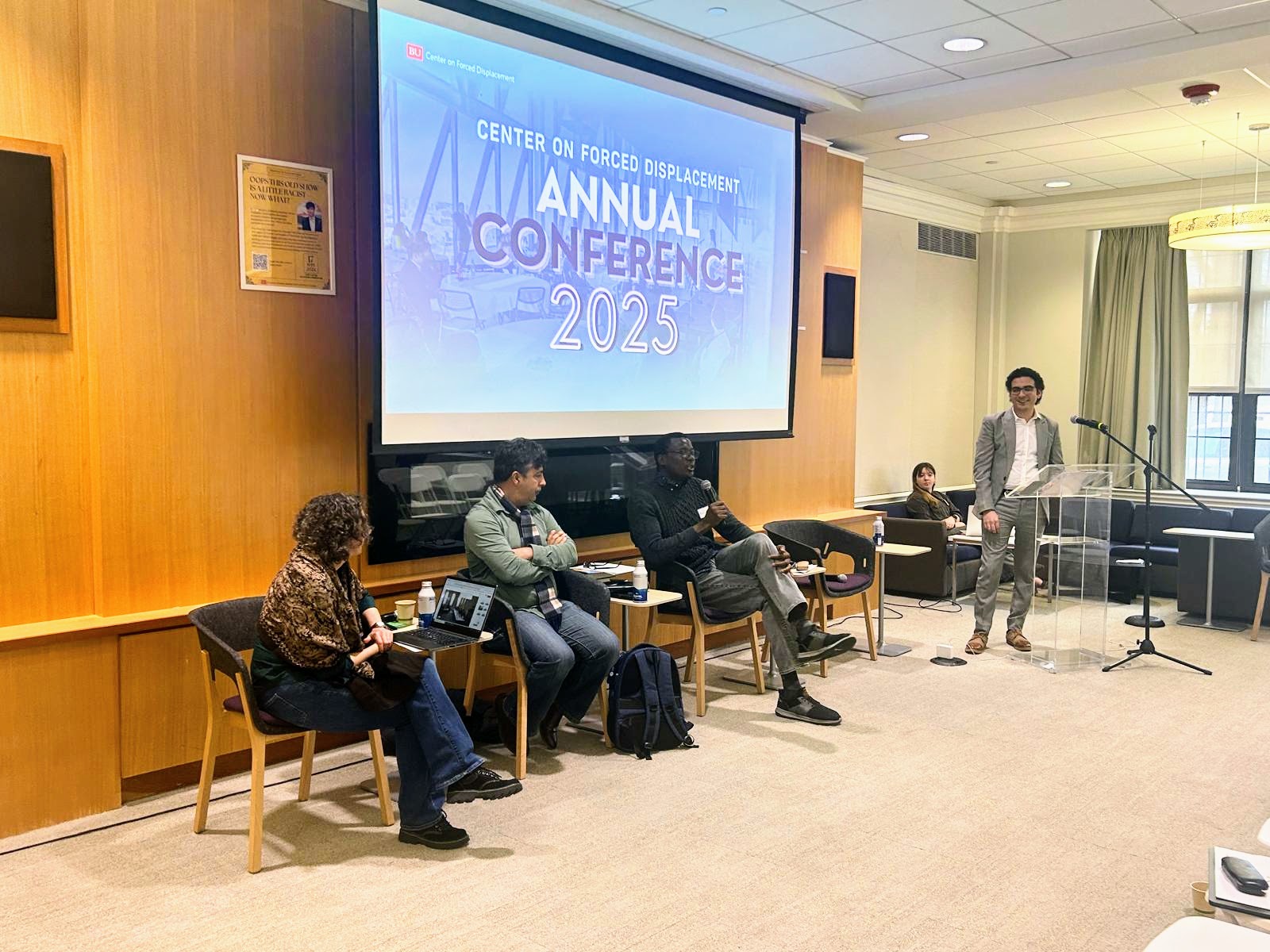
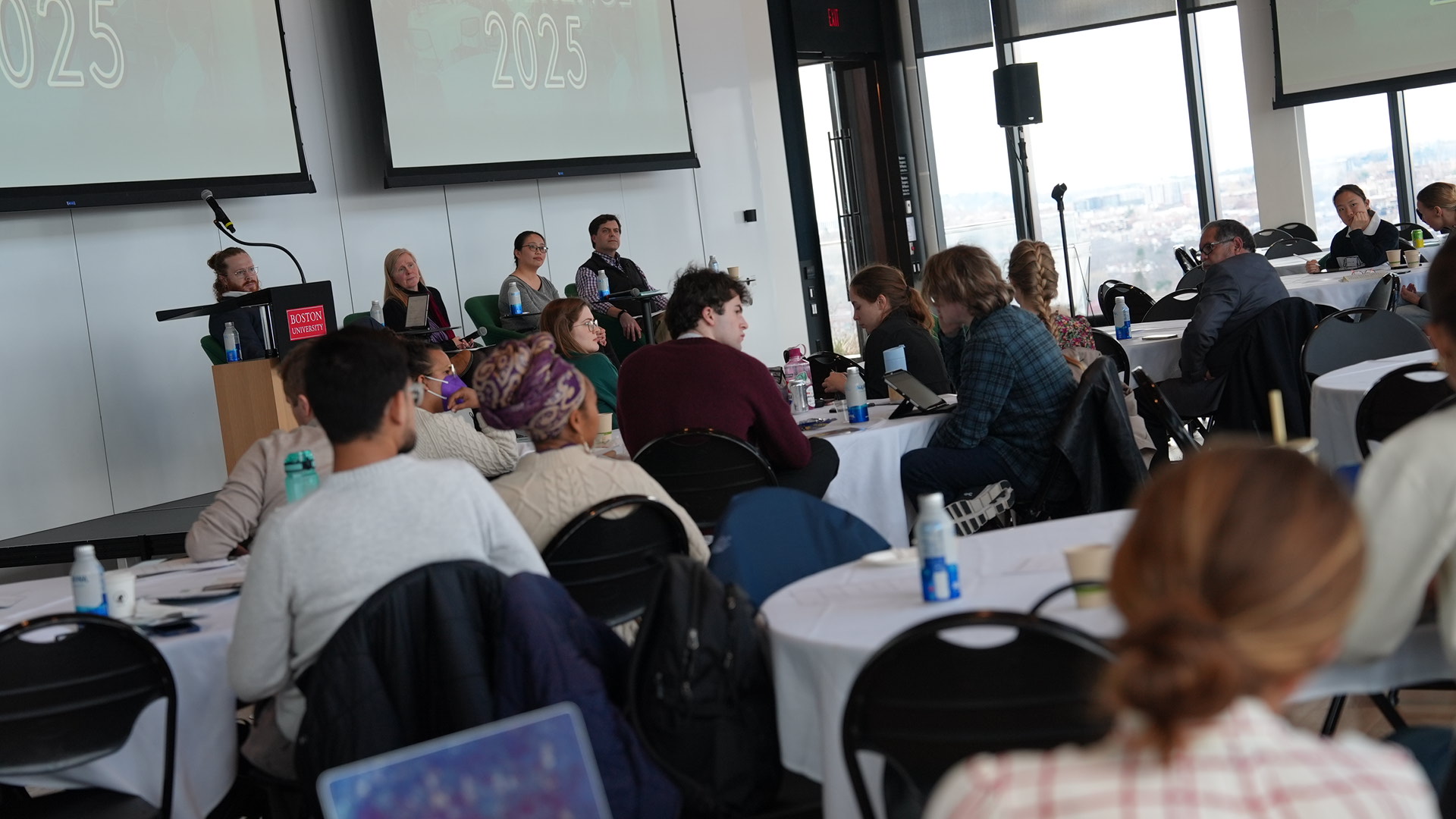
Talk given at Boston University’s annual conference on Forced Displacement. April 7, 2025

____
Good afternoon everyone. 

Like you, I’ve been watching the news. 

And when I got the invitation to participate in a conference on forced displacement, I was convinced that someone had planned with some invisible force to get me into government trouble. I went online to search, just to be sure that it was not an elaborate prank. Look and behold, it’s real. It’s a real place, on campus, and the conference does indeed seek input from a writer and linguist about how violent conflicts affect language. Or, at least as I see it, how language adapts or survives in spaces of armed conflict and forced displacement.

So thank you for inviting me.

I’m a writer, the co-editor of Best Literary Translations, now in its third year. There are copies of the book for sale if you’re interested in them. The 2025 edition will be out at the end of this month, guest-edited by Cristina Rivera Garza, but we have copies here. 

I’m also a linguist, by training. In other lives, I’m a language activist in Nigeria with interest in the ways that technology hinders or enhances the use and vitality of languages across the country and across the continent. I’m also a creative writer, usually poetry. So, you see language is very important in my trade.

At Columbia University a few weeks ago, I spoke about a professor mentor of mine, Ron Schaefer who shared with me the language of his childhood in St. Cloud Minnesota. Like most people who grew up in the frontiers, his grandparents had come from Europe and brought their languages with them, so the lingua franca at the farm was German. I knew that most families at those times spoke their languages at home, but it was interesting to hear it again. Ron himself, now a professor of linguistics, had achieved success in his career by helping to revitalize and document a language of Nigeria called Emai, and had retired as the Director of International Programmes at Southern Illinois University. 

We were having this conversation online during the time when the government was declaring English as the official language of the US. I used his story in that talk to illustrate a problem of amnesia but also of displacement. Something many of us can relate to in some way, since every immigrant to the US comes from somewhere and carries with them some of that culture and tradition and, of course, language. What do we lose? How do we carry these senses of displacement to each generation through our language competence and lack thereof.

Nigeria, my primary example, offers many more instances. Even when there are no obvious conflicts, a country of about 520 languages hoping to make a nation out of the many will eventually run into a number of issues. Many of these involve technology, which is my primary interest. But many are merely sociological. Some conditioned by politics, globalisation, educational or government policies. The official language of Nigeria too, is English, and this has affected the growth and capability of many Nigerian languages. There are still no schools in the country today where you can learn in any Nigerian language. Literature is still mostly in English. Governance is in English. And many Nigerian languages are dying as a result. Many languages in the country and on the continent are endangered because of this historical and ongoing event. What globalization has done on the African continent and elsewhere is present English as the only viable means of communication while making other languages irrelevant. And with the language loss, we lose different ways of looking at the world. 
And then throw in conflict, conquest, forced and unforced displacement, and you have a different story. We had a Civil War between 1967 and 1970, but some fissures remain. Look around the continent today; heck look around the world: Ukraine, Gaza, Sudan, the Congo, Korea, etc. Each of those conflict spaces present not just the tragedy of human displacement, but also of language. 

During my grad school, I worked part-time at the International Institute of St. Louis. It was an institution set up to help displaced people from all around the world fit into the American society. We taught them not just English language but American culture. Many of them came from places where they had spoken no other language but their mother tongue. Due to war and displacement, they were now here in a place where English language was the only means of communication. Working with adults who had never heard the song “A for Apple, B for Ball” was a moment in humility. It was easy to imagine, in my own bubble in Nigeria where English dominated most of the public interactions that it was a language that everyone spoke or had some experience with.

This is where translation comes in, or multilingualism. 

By providing a chance for cultures to travel from one language to another, we bring people into comfort with their surroundings. While we may not always be able to get into their heads and understand the depth of their predicaments, we can help them get a comfort with their new environment enough to give their lives a second chance.

My experience at the International Institute always filled me with that sense of profound awe  at what it must take for someone to leave their old lives for a chance to start again, trusting that all they know and have left behind will be enough to get them through the new and challenging experience.

Where communication happens, and relevant messages transmit successfully from teacher to student, colleague to colleague, neighbour to neighbour, life goes on as it should, and community is healed. When it is not, or when translation breaks down enough to transmit ambiguity or other unwanted additions to conversations, the purpose is defeated.

I’d like to quote from the talk I gave at Columbia, regarding a YouTube video I saw earlier in the year, this time about an ongoing global conflict.

I had seen an interview, a few weeks ago, between President Zelensky and Lex Friedman which had — in the space of an hour or so that the interview lasted — the two speakers speaking English, Russian, and Ukrainian. But due to the help of technology, speech synthesis, voice cloning, translation, and artificial intelligence, I could watch the whole interview in English, without even knowing when the switch happened between languages. Someone else could view the same interview in Russian or Ukranian and have the same experience. Technology has been trained to understand which language is spoken, and adjust it to the listener as necessary. This wasn’t possible for any language in 2005 when I left the university, but now it’s almost commonplace. And yet, it still isn’t possible today in Yorùbá, a language that I speak, or any African language I know. If I had my way, it would. One day, our experience of the internet will be tailored to our language competence. But to make African languages like Yorùbá participate, we need a lot of clean Yorùbá data, and resources to train models that can make it happen. The continent of Africa has about 2000 languages. Where do we begin?
Technology has been helpful, in many ways, in helping us cross language barriers, even in times of war. But, as I said in that talk, some languages have been luckier than others. Because of a combination of factors: political, social, economic, some of the languages most efficient to use in technology, in translation, and now in AI are some of the same languages that have advanced features in the earlier internet age, and in the earlier print age. Some of those obstacles to the smaller languages have followed them into this new generation. 

Imagine a situation in which someone being evacuated from Gaza or Sudan or Ukraine into the United States can just communicate immediately through the use of technology, with instantaneous translations? 

Literature is one great way to bridge the gulf. The larger the corpora in the language, created by literature or just regular language use in technology, the more likely the language is to be aided by technology in the future, to be useful in modern speech tech. But like I also mentioned, literature has followed the rest of the hegemonic institutions in favouring only big languages with powerful tools and powerful cultures. A lot of systemic issues have mitigated against the production of literature publication in underserved languages. So English, Mandarin, German, Korean, French etc continue to lead in the tech age as they do in the artificial intelligence age. 

Literature in a small African language doesn’t always stand a good chance to be read anywhere but in the village where the language is spoken, if it’s written at all. And when it’s written, the chance to publish is small. When it’s published, it might not get widely distributed. With the internet, the audience can grow a bit. So a speaker of that language who lives in a corner of Germany or Japan or Indiana can read that story in his language published on a widely read literary platform. This was the thinking behind our project at OlongoAfrica, where we got a select number of stories by African writers translated into ten different African languages, and then get native speakers to read and record them. We put these on a website for people to read and listen to and share. 

What Best Literary Translations does is provide a place for many of the translations from these languages can gather and travel together across the world in English, in a book form. As editors, we collect, read, edit, and present some of the best translation entries we receive which have been translated into the English language. We thus engage readers in English who may not otherwise have access to these works, or these writers. 

What we can do is to hope that the availability of these opportunities for creative exchange does something to mitigate the pain and suffering that necessitate translation in the first place, though we know innately that it can never be fully sufficient. The world is a complex place, with a variety of unpredictable events moving us to the other.
I’m a speaker of Yorùbá, a language I know that I speak with full native competence, but which I haven’t had to speak over the last couple of years as I’d have loved, because I’m surrounded by people who speak different languages. When I am in Lagos, Nigeria, where I lived for ten years, I’m surrounded by other Nigerians who speak Igbo, Hausa, Ibibio, Efik, Berom, etc. To communicate with each other in a modern metropolis, we speak English, or Pidgin. And as a result of this though important contingency, we put our own native languages to the back, and it recedes by itself over the years into places from where we sometimes need sharp tools and hours of labour to rescue them.

In 2021, I published my Yorùbá translation of a collection of English poems, written by a professor from the University of Pennsylvania. In retrieving words from my native language to render from English the creative endeavour of another person, I ran into a wall, many times, and I’m reminded of the saying that the best way to lose one gift is to refuse to use it. Words I once took for granted took many hours of thinking and trying to retrieve. It was no different when, in 2022, I translated a short story by Haruki Murakami into Yorùbá. Very exciting process in both cases, but no less tasking in reaching words I used to never have to look for, in my own language.

So perhaps, this is one of the benefits of translation: giving us a chance to reach into parts of ourselves that we may have forgotten exists, to find the part of ourselves that was always there, and in a language we speak in the depth of our soul. The difference is that in my own case, it is voluntary. The many people who have to go into exile, who are forcibly displaced from their homes, who have to live in places where their native languages do not serve them in any capacity, do not have the choice as to whether to forget. The new societies often force that condition on them, sometimes suddenly, sometimes gradually, but always eventually. 

Translations, technology, and literature can only mitigate what is a fundamental alienation.

During the work for our 2024 edition of Best Literary Translation, we ran into a dilemma. Some of the Ukrainian translators selected for the edition wrote to us to request that they not be published beside Russian ones, because of the ongoing conflict. Not being able to resolve the conflict in a way that does not disenfranchise the work of translators we had diligently selected, the writer elected to withdraw her poem, highlighting some of the issues that translation in itself can’t always solve.
At a language conference at Brown University’s Translation Across Disciplines last year, I was on a panel on Translation and social justice. One of the speakers spoke about her work at Guantanamo Bay in Cuba where US has a base, which holds hundreds of detainees considered too dangerous to put on the mainland or sent back to their countries. Some of the translators at the base come from Cuba — the base provides regular job for them — while some actually live on the base. One of the things I was so curious about, and I asked the speaker, was what did she notice was the change in the Spanish of those who are condemned to live on the Island not because they’re detainees, but because they are employees of the government. They can’t go back to Cuba, they work for the US government, and they don’t have a chance to interact daily with people who come from the US mainland. But their language is Spanish. I was really curious whether the Spanish they spoke evolved over the years to a point where it is so different from that on the mainland. I don’t remember what the answer is now, but I find things like this quite curious — the ways in which our language competence evolves over the years, either because of our deliberate actions, or because of forces beyond our control.

I’m rounding off now. Let me quote from the introduction to our first issue BLT2024:

Best Literary Translations strives to be a curative to parochial thinking. We present voices from around the world, paying special attention to lesser-known literatures and languages. The guiding vision of Best Literary Translations is to offer a counterpoint to the xenophobia and racism that have marked the last decade— and, truly, the entire history — of this country.”
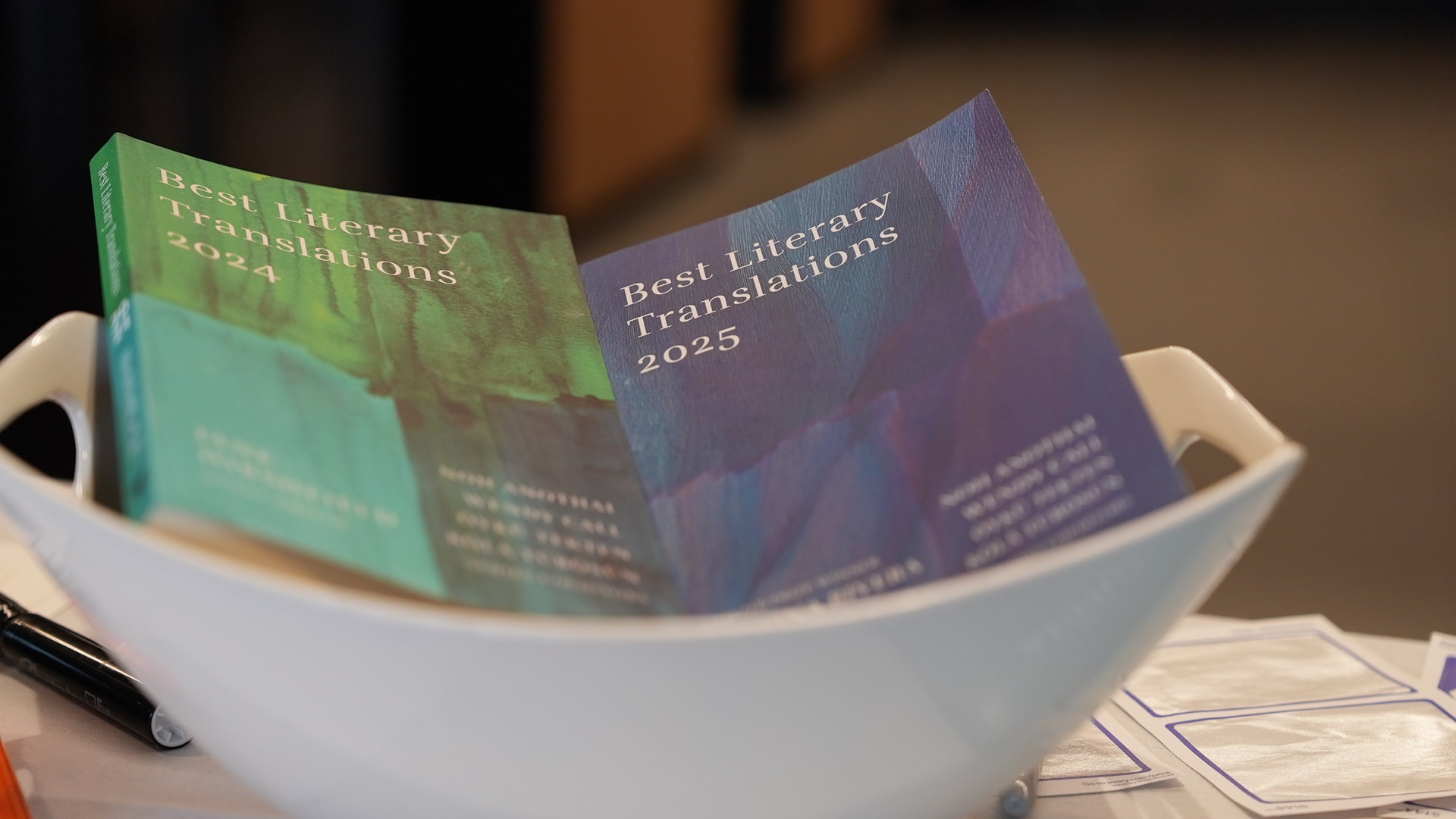
And from BLT 2025, rightly dedicated to Refaat Alareer (a Palestinian writer, poet, and victim of the Israeli bombing of the Gaza Strip in December 2023) and Jerome Rothenberg, an American poet, translator and anthropologist, we have the following:

“Despite the many difficulties that can hinder their translation, twenty-three languages are represented here in Best Literary Translations 2025. Featured in these pages are not only works from languages that have been underrepresented in U.S. publishing, but some that have been actively persecuted, such as the Uyghur of Adil Tunaz (translated by Munawwar Abdulla), the Faroese of Kim Simonsen and Lív Maria Róadóttir Jæger (translated by Randi Ward and Bradley Harmon), the Tu’un Savi of Florentino Solano (translated from Spanish by Arthur Malcolm Dixon), and the Ukrainian of three different authors, among others. That some of these works made it to publication at all—much less into our nominations and eventually into the pages of this anthology is a testament to steadfastness of the authors continuing to write in those languages, the dedication of the translators working urgently to amplify their voices, and the solidarity of the editors who published this work. Best Literary Translations celebrates their successes and honors their ongoing struggles.”

In conclusion, language loss can be as much a marker of displacement as incarceration or loss of land. But I’m a linguist so my work is about the language, and not the politics. Occasionally, they intersect, sometimes so personally. And occasionally, literature is there to provide some succor in those liminal spaces. 

Thank you for listening
The Orthographies of Our Discontent

 One of the things that was always hard to ignore, while I was growing up, was that some teachers wrote my last name with an extra “n”. And while the parents had insisted that it was “Túbọ̀sún” and not “Túnbọ̀sún” we often had to correct the befuddled outsider that their version was incorrect and needed to be changed. Sometimes militantly, as the ‘misspellings’ began to appear as deliberate attempts by strangers to modify our identity, even when the offending user harboured no such intentions.

It took many years for me to accept that other versions of my name even deserved to exist. And then one day I met someone who shared an equal but opposite conviction about retaining the second ‘n’ in the spelling of his name, and after a few back-and-forths that veered between militancy and levity, we resolved to agree to disagree.

Of course, none of us were ‘righter’ than the other. The word “túbọ̀” or “túnbọ̀” mean exactly the same thing: “continue to”, depending on your dialect of Yorùbá, with the former more common among the Ọ̀yọ́/Ìbàdàn while the latter is more Ìjẹ̀ṣà/Èkìtì. What began to surprise me was my own father’s non-challance when we lived in Àkúrẹ́ and people who wrote about him as “Ọlátúnbọ̀sún” did not get immediate censure. 

Perhaps all of these various childhood memories contributed to why I found myself later in linguistics, where the nuances, use, and mechanics of language define the trade, and where I found confidence, one day on Twitter, to challenge an Igbo speaker who had insisted that the name “Anwuli” should ONLY be written as “Añuli”. I’d encountered many of these kinds of conversations before (sometimes with the spelling of Chidinma/Chidimma, nyash/yansh, jaiyé/jayé, Sọlá/Shọlá, Akpata/Apáta, among many others that occupied that cerebral section of social media. In most cases, it has remained a conversation about language, orthography, tone, and phonology. But on this day, the response my interlocutor gave was not just that I was wrong, but that I was Yorùbá, therefore unworthy of the conversation at all. Nothing I mentioned about my work as a linguist, my interest in Nigerian languages, and my experience with language technology projects at various levels made any difference. It quickly became an ethnic-based conversation, and all hope was lost.

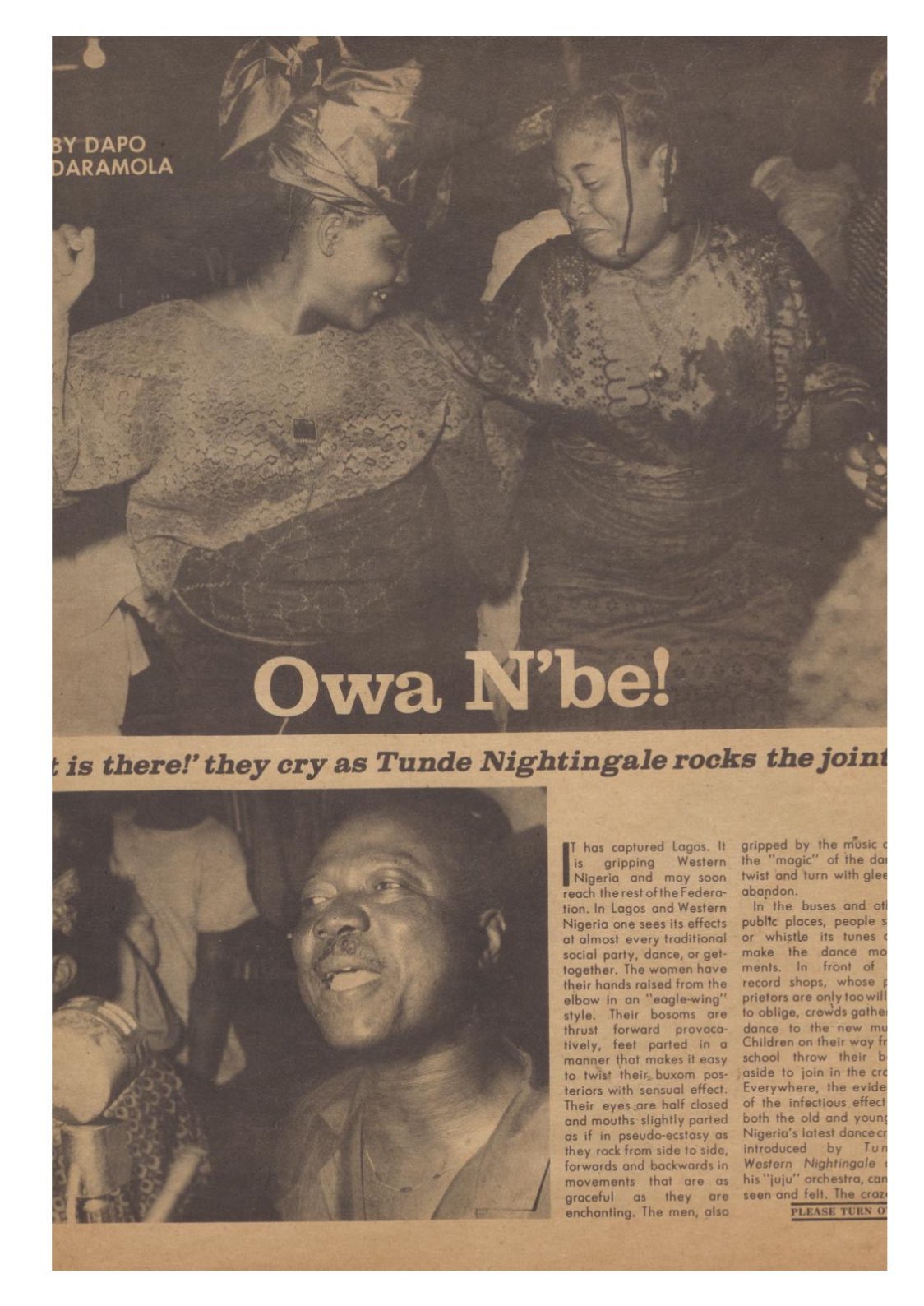
I’ve paid some attention, since then, to many language-related conversations in Nigeria and watched them similarly devolve into dark corners. And when, a few weeks ago, someone tagged me to weigh in on the “correct” spelling of the “Ówàḿbẹ̀”, a now popularized term for loud colourful parties in Lagos and elsewhere, I did my usual analysis of both the origin of the word, the morphological breakdown, and different acceptable ways of writing it around the country. Yes, the original components were “Ó wà ní ibẹ̀” (“It’s there” or “It’s happening there”), but it is acceptable to write it as “Ówàńbẹ̀” as it was originally written, and “Ówàḿbẹ̀” as is now very commonly spelt. 

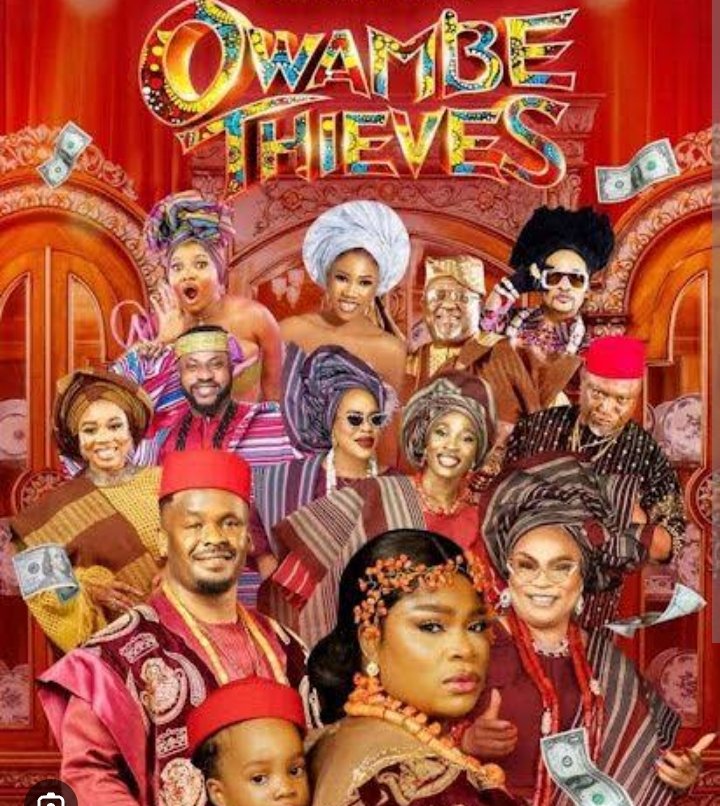
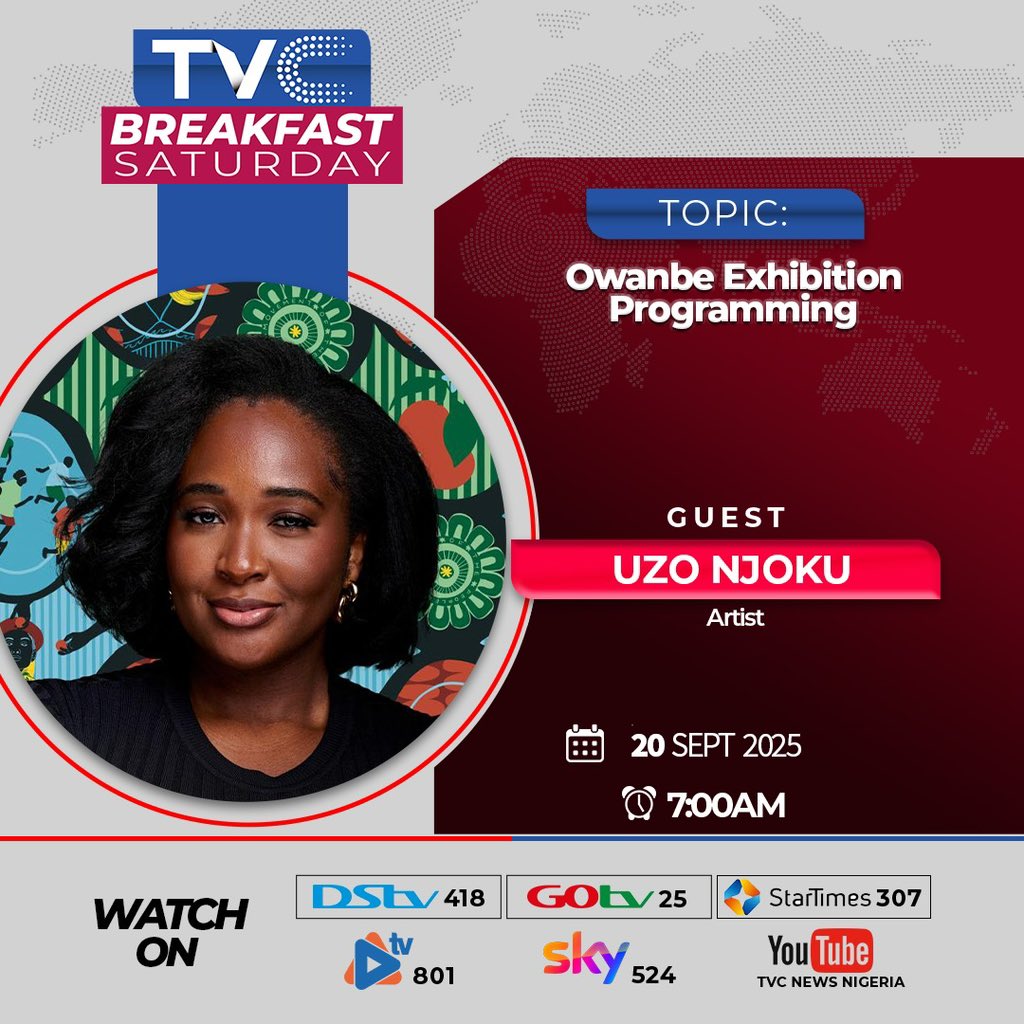
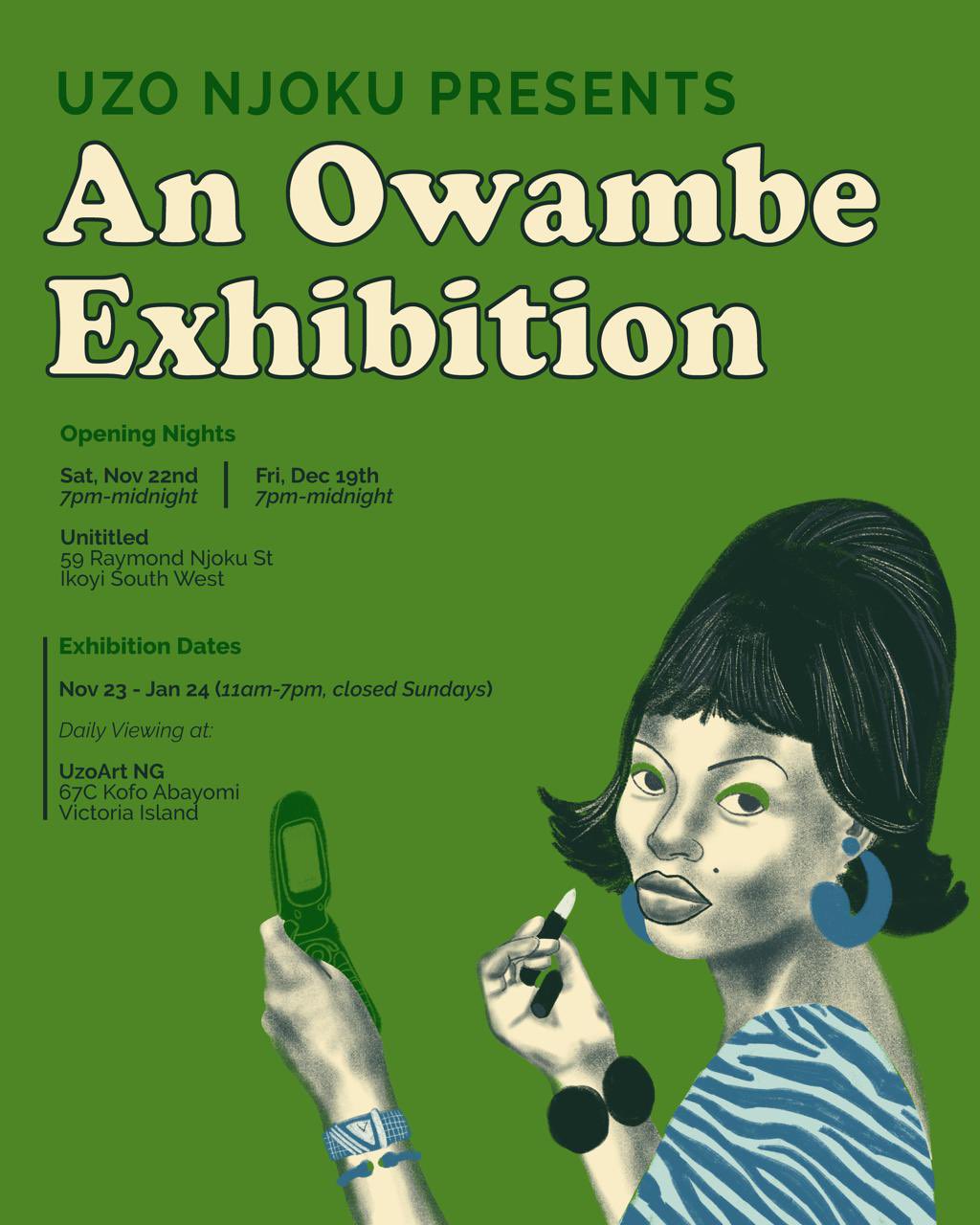
I thought nothing more of it until I started seeing more of related responses on the timeline, usually in increasingly militant tones. Eventually, I found the source of the melée. A young Nigerian-American artist Uzo Njoku had conceptualized an art show which used the “m” spelling of the word, and had not only rebuffed all public insistence by those who said that it had to be an “n”, but had stood by her right to use whatever word she wanted for an exhibition that tried to incorporate different elements of city life, not particular to one ethnic group.

And I watched as the conversation grew wings, sometimes into ridiculous directions. A group calling itself the “Yorùbá Youths Council” subsequently filed a petition to the Lagos State Ministry of Tourism, Arts and Culture to prevent Njoku’s exhibition from taking place. As at today, words continue to fly in both directions, with the group threatening to disrupt the event until the artist either changes the name to suit the “accepted” spelling, and apologise for what is said to be an affront on Yorùbá culture. “In promotional materials, the artist repeatedly mispronounces the word, stripping it of its cultural weight.” the petition said, among other claims.

A quick google search will show that the word has existed in both spellings over the years, with only mild eyerolls by Yorùbá language speakers observing the homorganic nasalization turning the /n/ to /m/ because of the presence of the /b/ nearby. It’s a feature not peculiar to this word either — as I pointed out with “Ọlúwaḿbẹ” and “Olúwańbẹ”, which are two varying spellings of the name with the same meaning “God exists”. It’s not peculiar to Yorùbá language either — the homorganic nasal rule has every amorphous nasal sounds taking on the shape of their nearest consonant. So when you pronounce “input”, it sounds like “imput”, and when the word “impossible”, which combines an amorphous negative morpheme “in” with “possible”, the resulting pronunciation adopts the shape of the “p”, as it adopts the shape of a ‘k’ in “incorrect”. It is why “Bá mi délé” is pronounced as /Bándélé/ rather than /Bámdélé/, which is harder to pronounce. For linguists, these are merely fun observations that provide stimulation for our quiet times. Not national crises-points that need police petitions, twitter fights, and civil wars.

And yet, this is what the Ówàḿbẹ̀ crisis seems to have caused.

The last I checked, the Wikipedia page for “Ówàḿbẹ̀”, first created in October 2023, had suddenly turned into a hive of frantic mass-editing, countereditings, and reversals that has, as at today, erased all acknowledgments of the popular spelling at all. And when the artist was invited to a television interview, suddenly the old, long-dispensed spelling, appeared, as if it had always been there. The police guardians of Yorùbá language and culture will give no quarter to anyone intent on giving validation to natural phonological processes.

And yet, as I asked myself when I look back at all I know about language and the faux outrage of prescriptivists everywhere, none of these has done anything to address some of the biggest issues in language endangerment: funding for language courses in high schools, investment in orthography and script development, support for language-medium schools and other relevant research, translations, and other forms of mass adaptation. The last I checked, Nigeria just added Mandarin to its school curriculum.

The dark underbelly of an uncompromising nativism that rejects not only language evolution and variations in orthography, but also cultural mix and adaptation, is hard to ignore here. But the facts remain: Yorùbá and Igbo belong to the Kwa Group under the Niger Congo language family. They share a number of word cognates from ẹnu/ọnu (mouth), eku/oke (rodent), etí/nti (ear), imú/imi (nose), omi/miri (water) and countless others. Not only through language but through trade, migration, intermarriage, etc., the two cultures are irrevocably intertwined, a part of one another: the idea of Nigeria as a nation in development thrives on the vision of a future that accepts and encourages that intermixture and indissoluble connection.

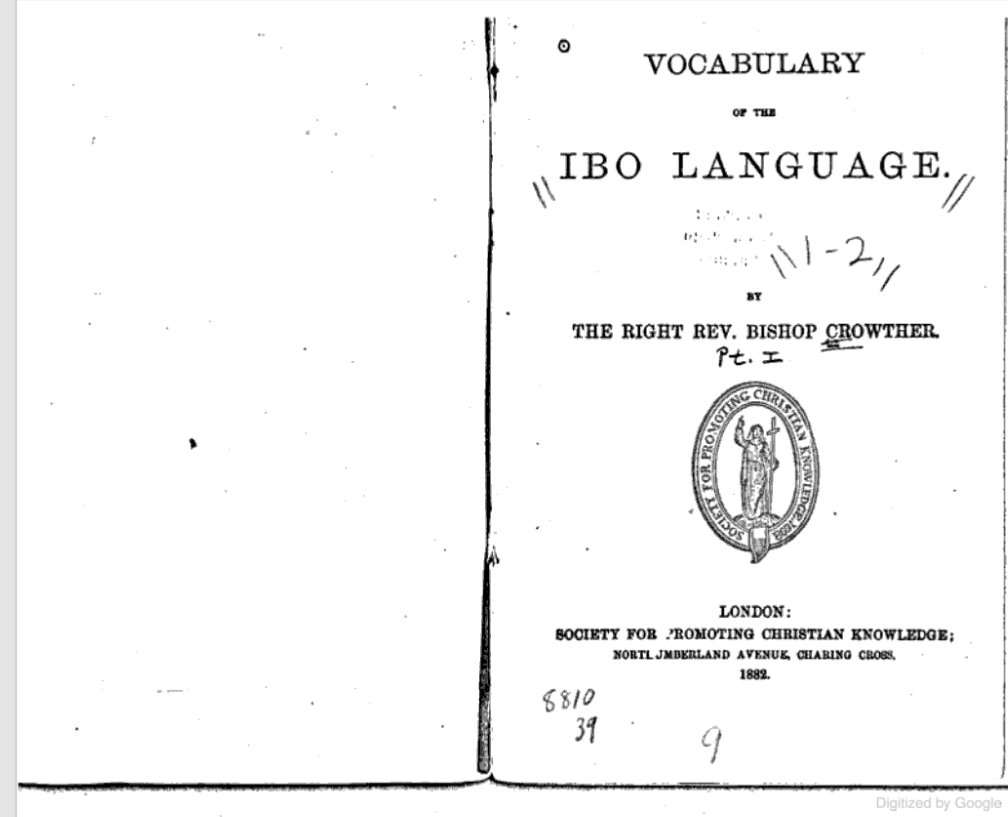
Before Ajayi Crowther published the first dictionary of Yorùbá in 1843 (and his dictionary of Igbo in 1882), all our words were sounds alone. Crazier to think that this was how Crowther first wrote the Yorùbá word for “back” (Ehhin), “tooth” (Ehin/Eyin), “you” plural (Ehnyi) and “egg” (Ehyin) in 1843. While the pronunciations of these words haven’t changed since then, the spellings and the writing systems have, and no earthquakes have happened as a result. 

To think that this new technology of writing has become a cause of strife rather than help is ridiculous to contemplate.

Without Latin-based orthography, which had, for about 140 years, defined how we wrote these languages, you could almost not be able to tell the difference when some of these words are pronounced. Writing, as I’ve always insisted, is a secondary technology. Perhaps a new orthography designed with tonal African languages in mind would better accommodate these variations, I argued in 2020. But someone saying “Ówàńbẹ̀” and another saying “Ówàḿbẹ̀” can’t tell apart any perceptible difference. The difference is only in the writing. 

It’s worth remembering that language is a living, growing thing, and prescriptivists will never therefore get the final word. I recall a number of years ago, when Reuben Abati — then the spokesperson for Nigeria’s president — took umbrage with young people’s use of “Naija” to refer to the country. With AI and speech technologies, word spellings will become even less and less relevant as we gradually revert to sound.

An Igbo colleague once told me that the Yorùbá word “agbèrò”, which was invented to describe the old Lagos bus conductor, is pronounced “agboro” in the Igbo areas of the country, likely by people who don’t know its origin. As a lexicographer, this only delights me in the mutability of language. Fufu, a Nigerian delicacy, is spelt “foufou” in Francophone areas of West Africa. Nigeria Pidgin, the most contemporary laboratory of such experiments, has moved a word like “biko” from Igbo into every part of Nigeria, “ọ̀gá” from Yorùbá into the depths of the Delta, and words like “chikena” from the North into popular usage. This, along with its creolization, has created a new and resilient language capable of carrying our music and entertainment industries across the world. No one seems to mind that.

Many words in Yorùbá today were originally Arabic, from àdúrà to àlùbọ́sà, arriving in Yorùbá through our contact with the Hausa in the north. Many words from Yorùbá today exists in Igbo and other Nigerian languages, words like ẹ̀gúsí, moin-moin or aṣọ ẹbí, even if they’re not always spelt or pronounced the same way. This is part of the evolution of not just language but nationhood. But even at the very minimum, even in the absence of any altruistic aspirations to unity, the inevitability of language change, evolution, and growth through varying uses across the boundaries beyond our reach should teach us something profound. 

None of this, to be clear, is to say that standards don’t exist. As a lexicographer, I am interested in providing language learning materials to support users as well as support opportunities to track the changes in word usage over the years. The reason you’ll find both “Délànọ̀” and “Délànà” at YorubaName.com is because people exist today who use either spelling, and my preference for the latter should not necessarily prevent those searching for the former from seeing it. Same for Shadé/Ṣadé, Olúwańbẹ/Olúwaḿbẹ, Adéshínà/Olúṣínà, etc. Good dictionaries of English will make space for both “specialize” and “specialise”, while noting which is typically used where, and other notes about the spelling evolution.

It is to say that in spite of any human intervention (see the Academie Francaise), language evolves; it’s an organic force as powerful and unstoppable as the tides. 

It’s also to say that how native speakers speak or write their language should not necessarily bind everyone else who finds association with it helpful or useful to their own creative ends, especially outside of the classroom. The reason why Nigerian English, American English, Indian English, Nigerian Pidgin, Jamaican Patois etc exist is the permission taken by users which eventually redounds to the strength and resilience of the original language. (Tiger; trigritude?) Part of the growth of the English language across the world today comes from accepting these many variations, arrived at from language borrowing, adaptation, and creativity. Without it, what would hip-hop sound like? If we can accept new words entering the Oxford Dictionaries every year from Nigerian words, celebrating it across national headlines, then we can perhaps abide slight variations that come from popular acceptance and language dynamism. 

___

A version of this was first published on FlamingHydra on September 26, 2025

Decolonizing Innovation | Speech at Sussex

By Kola Tubosun

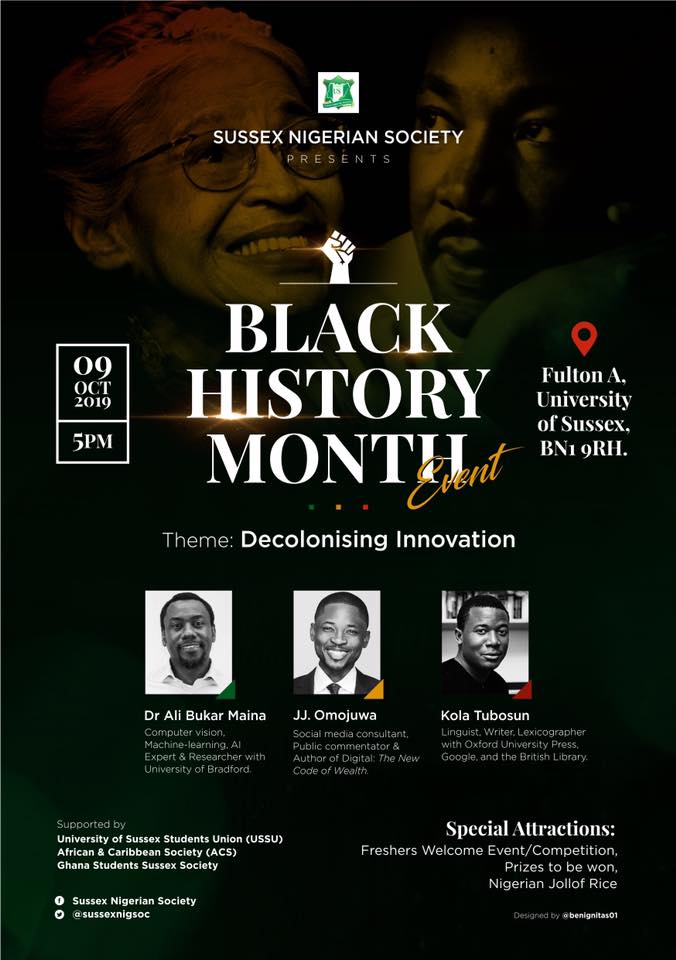
 Being the text of a talk delivered at the Black History Month event at the University of Sussex on Wednesday, October 10, 2019

One of the things I remember while growing up in Ìbàdàn was that almost every technological item in the house was made in China. I knew this because it was written there: “Made in China.” It was hard to avoid. You just needed to look a bit under the item, or around it, and the sign was there: “Made in China.” I know this hasn’t changed as much today because a couple of weeks ago, my son, who is now almost six, asked me, “Is everything made in China?” He must have been observing too.

But it was not just electronic items that I associated with a particular place. I remember the razor blades we used — probably the same ones we still use in Nigeria — were made in Czechoslovakia. Well now, the country no longer exists, so it will now likely be written as “Made in Czech Republic”, but the association persisted long enough in my mind that I could not associate razor blades with any other place than Czechoslovakia, a country I could not place on the map, nor even properly spell if not for the razor blade.

Later as an adult, I would know of other places where technological or mechanical tools were manufactured. We learnt of Japan, and later Korea. Actually, today, many tools and items have become synonymous with those countries where they’re made. My mechanic would often say “This is Original! It’s not China. It’s Korea!” and I would automatically know what he means to say. When I visited Seoul in January of 2018, I discovered for the first time that Kia and Hyundai were made by the same company. I learnt that Honda and Hyundai were made in different countries (Japan and Korea respectively), and that Daewoo and Samsung were Korean companies, and not Japanese. Yes, I’m not very versatile in automotive news, but it was gratifying to find out that — after all — not everything was made in China.

When personal computers came to use in the late nineties and early 2000s, for some reason, the perception around their provenance was not Asian. Yes, intellectually, we could understand that the hardware was likely made in Asian spaces, but the idea of personal computers, made prominent by their software — this time Windows — was American. We associated it with Bill Gates and his company, Microsoft. And so another level of association took place and spread as the use of PCs themselves spread around the place. This phenomenon also conditioned how we reacted to the capabilities of these devices: they were American tools, and so they provided the user with an access one would expect for an American user. It made sense.

This was why when I got my first Personal Computer, in my second year of university, around 2002, I understood — or let me say surrendered to — the idea that it could only type in English. Whenever any word was used that was not in English, or that the computer did not recognize, it underlined it with a red wriggly line. It was easy to excuse as ‘normal’ and expected. The PC was an American invention and so there was nothing to complain about. After all, it could do other things like play Prince of Persia, a game about castles, Mullahs, and princesses. It could also play Fifa 98, a simulated soccer game that got our endorphins rushing whenever we had free time to indulge in it. It could play Chess, a game invented in India at around the 6th Century AD and perfected in Europe. In short, it did the ‘expected’ things.

But I was not satisfied, though there was nothing I could do about it. When I started working on my final year project, which was called The Multilingual Dictionary of Yorùbá Names, I complained but ultimately accepted that the computer couldn’t properly tonemark the names I was compiling in the proper way. When my professor gave us homework to translate technical terms in electrical engineering or mechanical engineering into our local languages, I turned mine in with the Yorùbá terms written in the Latin script without the tone markings that properly disambiguates the words. He probably didn’t notice, nor care — again, we used the same computers, so he was familiar with the obstacles — but it distured me. I was not satisfied.

It was the same dissatisfaction I would feel when Twitter, in 2011, announced that they were opening the platform for translation into many world languages but excluded any African languages from the list. It was the same way I would feel realizing that Siri, that automated computer voice on the iPhone and iPad existed in Swedish (~10.5 million speakers), Norweigian (~4.32 million speakers), and Danish languages (~5.5 million speakers) but not in Yorùbá (with over 40 million speakers). It is the same disappointment I would feel reading Nigerian writers write in English with proper attention to the diacritics of foreign words like French or German or Swedish, but total disregard for words in their own language in the same text. 

In all, there seemed to be a perception that things were only meant to be in English, meant to be in a European language to be proper. When I used to teach English in a high school in Nigeria, a colleague of mine — ironically also a graduate of linguistics — said it was ‘unprofessional’ to speak Yorùbá, or any Nigerian language among members of staff while in school. I asked him if he’d feel the same way if the language being spoken among the staff was French or Spanish. He said ‘No, that is different.’ I couldn’t see the difference at all. In Kenya, students and teachers are allowed to speak any Kenyan language, along with English, while in school, and there is nothing wrong with it. In Wales, schools now exist where Welsh is used as a medium of instruction. Why, after fifty nine years of so-called independence from Britain do we still need our educational system to reflect British ideas of propriety, British sensibilities, or British manner of speaking?

When the Nigerian English accent on Google was launched in July, the responses were mixed, as is usual for most things in Nigeria. But some of the negative comments were curious because they were not based on whether the voice mispronounced things or any other objective disagreement. They hated it because it was a “Nigerian” voice. Someone tweeted something to the effect of “Why do I have to listen to a ‘local’ voice for Christ’s sake?” And there were others who said something like “Why do I want to hear a voice that sounds like mine?” So, in all, there seems to exist, even if not in the majority, a part of our society that resists anything that actually empowers us to be ourselves, or to see ourselves reflected in technology. I have seen journalists speak with taxi and Uber drivers, who actually use the voice every day, and are grateful that they have a computer voice that can correctly pronounce “Lekki-Epe Expressway” or “Ajọ́sẹ̀ Adéògún Street” or “Okokomaiko”. These are incremental ways in which we are decolonizing technology.

But innovation itself, as today’s topic suggests, is what needs decolonizing, which is a more fundamental dimension. Why, for instance, are students denied access to universities because of a lack of a ‘credit’ grade in English? Yes, the answer is because English is the primary means of teaching in our universities. But why is this so? Why is this one of the things we have accepted without question? Could it be that we can never pass down knowledge of complex ideas in education unless it is in English? This cannot be the case. Imagine Albert Einstein, who spoke German as a first language, and who may not have left Germany had Hitler not taken over, being denied access to a university education because of his lack of English competence! Education and knowledge, for some reason, have been conflated with English language competence, which it should not be. Kia, Hyundai, Samsung, Sony, etc, and even the makers of the razor blade we still continue to import in Nigeria are proof that it is not the language you speak that determines your future, but the knowledge with which you deploy the language, and the use to which that knowledge is put.

So, today, there is a Nigerian English accent on Google Assistant and Maps. Other Nigerian languages might follow. Twitter tried to create a Yorùbá language platform. At YorubaName.com, we created a free tonemarking software which can be used to properly write/type the language on your computer and on the internet. And at TTSYoruba.com, in 2016, we created the first text-to-speech application for Yorùbá. These are very few in the resources that would be needed to empower the African to use technology. I mean, you still can’t use an ATM in Nigeria today in any Nigerian language, so there’s still a long way to go. 

But using technology that has been brought to use from the outside — even in our own language — is not enough. Not by far. We need to be able to think —using our own native knowledge — to create tools that can not only empower us and solve our problems, but also solve the world’s problems. Someone sat down and invented a car. Someone invented companies that make more fuel-efficient cars, and electric cars, and the radio, and computers. They come from different language and cultural backgrounds, but the common thing with all of them is the spirit of innovation, and the absence of a limit placed on them just because of their first language. It doesn’t matter that the creator of Kia or Honda do not speak English nor does it matter that the person buying the car does not speak Korean or Japanese. How do we get to this stage with our own ideas? One way, of course, is to stop limiting ourselves and our imagination. 

When we no longer create needless obstacles for ourselves, either in the form of language discrimination in education or politics, then the change can truly begin. My obsession only happens to be language and technology and literature, and ways to decolonize them as much as possible, providing opportunities for our inner selves to thrive. There are still so many other ways in which we can achieve freedom from the constraints we put on ourselves, using other skills and competencies. I am glad to be able to do mine with the skills I have. And, sometimes, that’s all one can ask for.

I thank you for your time.

Another Kind of Poverty Gap: The Erosion of Language Diversity

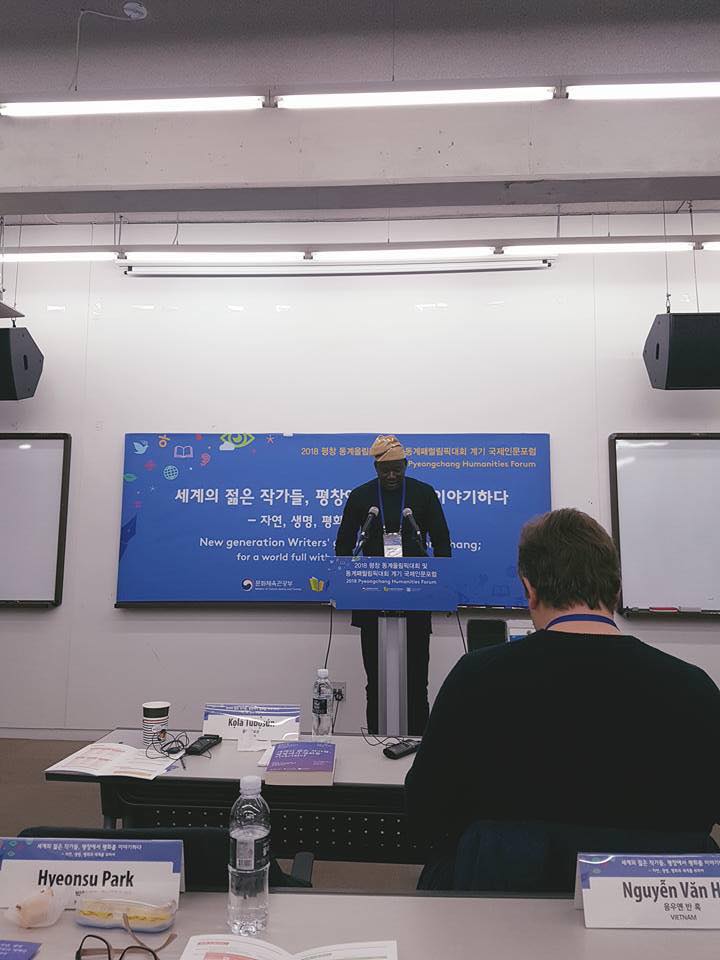
(Being a paper delivered at the PyeonChang Humanities Forum at the Seoul National University Seoul, South Korea, on January 20, 2018 by Kọ́lá Túbọ̀ṣún. The audio recording of the talk can be found here)


Ẹ káàrọ̀ o. Good morning. Annyeonghaseyo.

First of all, let me express my profound appreciation to the organisers of this event for choosing me out of many to be here, among all these important people from around the world, to give you my own perspective on an important discussion. These are precarious times. And to be here in this place at this time to give a talk on a topic that is dear to my heart, is an honour. So, thank you. As we say in my language, adúpẹ́. I bring you greetings from West Africa.

I am here to speak about poverty. But before you assume that I am going in a predictable direction you have been familiar with from watching cable news from your different parts of the world about Africa, let me advise that you set a different expectation. My talk is about a different kind of poverty, one caused by exclusion, and one relating to one particular type of exclusion: language.

I come from Nigeria, a country of about 170 million people with over five hundred different languages and cultures. It is a place that offers as diverse a landscape in terms of both viewpoint and attitude to life. On the one hand, binaries can be found: The north is mostly conservative while the south is mostly liberal. The north is mostly arid and desert while the south is mostly rainforest and humid. On the other, we have an assemblage of cultures and languages which range from mildly intelligible dialects to distinct languages with no discernable cognate, even when they live around each other. This has made my country, Nigeria, a country created from a British colonial experiment, a very interesting place. From what I have read, this is not the same as what obtains here on the Korean peninsula, where Korean is generally described as a “language isolate”, with no discernable genetic or genealogical link with any neighbouring tongues.

Human migration and mandatory inter-mingling of tribes ensured that we are all exposed, in some way or the other, to characteristics of each other’s culture. Through warfare, conquests, and other forms of domination, a number of us have also become subservient, linguistically, to some larger languages around the country, such that, before the British came to colonize the whole swathe that makes up the country Nigeria, a certain linguistic mosaic had emerged. A mosaic, because it was not just one language which every others must speak, but several big languages, and several small ones, each occupying a particular space in the society, fulfilling particular roles in facilitating contact.

I bring up the linguistic character of my hometown to create an image in your minds of both diversity and richness. Even many decades after the colonial processes that were set in place to create a homogenous society out of colourful and diverse peoples, the mosaic is still evident, though not in as bold a colour as was many years ago. The changes started with colonialism, and the prevailing mindsets of the invading strangers from Europe and newly “educated” Africans that our languages could be discarded without consequences. It was a gradual change, reinforced with every government policy, every textbook recommendation, every change in the educational syllabus, and every recommended dress code in government offices. Today, we are a people whose worldview is being conditioned and defined by competence in a new language, English, to the exclusion of our own.

Let me address an important irony: that which concerns the fact that I am presenting this talk in English and not in my own language. I have, after all, advocated that Nigeria’s president use his own language (Hausa/Fulfde) whenever he is out of the country. If I were the president of Nigeria in this instance, Yorùbá nìkan ni mo máa sọ. Aá fi sílẹ̀ fún àwọn ògbifọ̀ láti ṣàlàyé (I’ll be speaking only in Yorùbá, leaving it to the translators to explain). This is a suggestion borne out of my belief that the head of state represents the country and its multilingualism. His or her decision to speak the nation’s language outside shows a pride in the language and provides jobs for translators living in that foreign country while portraying a complexity of that country’s cultural landscape.

The irony comes because the purpose of my talk here is to advocate for a return to the local language use and support, and to explain why I believe that the poverty of imagination is equally as tragic as a poverty of the stomach. You, my hosts in Korea, don’t seem to have this dilemma. Your language is one (unless we discuss the widening gap that is happening between the version spoken here in the South, and that one spoken in the North). You don’t have too many dialects of the language, and citizens of this country do not have hundreds more competing for attention. But you are also lucky in another way. Even though English is spoken here as a second language, Korean still holds an important place as a vessel for the culture of the people. You can think in the language. You can conduct all your daily activities in it. It has a distinct writing style, and children are taught how to use it. And big technological giants care enough about it, and your buying power, that they carry it along with every new tool they create.

This is not the same for the languages in my country.

The problem, like I mentioned earlier originated in the over-simplistic tools we chose for dealing with diversity, and in colonialism. But it has also been carried along by an attitude of the population that rather than assert individual identity or spend valuable time developing each language through use in literature and other means of transmission, we might as well surrender and adopt English as the only “uniting” language. Don’t ask me how successful that drive for unity is. But the result is a gradual attrition of local languages. As at the last count, about twenty-seven languages in the country are either vulnerable, critically endangered, or severely endangered. It doesn’t look like the situation will improve anytime soon because unlike what obtained in the country a couple of decades ago, we no longer teach local languages in schools. The new students we produce from schools each year will only claim English as their first language. This doesn’t mean that they will be accepted abroad as first language speakers since the term “native speaker” is imbued with more than mere language competence, but with both political and cultural characteristics. I’ve spoken about this in other forums. This leaves us, Nigerians, and many other post-colonial outposts around the continent, at a terrible psychological, social, economic, and even political disadvantage.

A more noticeable example of this kind of poverty comes with technology, which is my current focus as a writer and linguist. In some ways, it will be proper to look at the progress of today’s modern inventions through the lens of colonialism, carried into every part of the world on the back of convenience. From my part of the world, where we consume technology much more than we create it, a pattern has emerged. The new technological tools created to make life better for us are monolingual in nature. For an environment where thousands of languages are spoken, this is grossly deficient. And there’s no poverty as great as one that prevents a person from interrogating life in the language with which they are intimately familiar.

When I was in the university between 2000 and 2005, I used to wonder why Microsoft Word underlined my name with a red wriggly line whenever I typed it. But the answer was simple: Microsoft simply didn’t recognize a Yorùbá name. As long as the name wasn’t an English name, the red wriggly line showed you that something was wrong. So when I wrote my long essay, I did it on a project called a Multimedia Dictionary of Yorùbá Names. It was my way of introducing Yorùbá names to technology. Ten years later, I expanded the project to a fully functional and crowdsourced multimedia dictionary to which people can add new names, and improve current ones. And I did this not just for Yorùbá this time, but under the umbrella of what we called the African Language Project, we want to document all African languages and other intangible cultural materials like names, customs, norms, and words. As at this moment, there is no multimedia dictionary of Yorùbá on the internet. None that Africans can access on their phones at a moment’s notice. We are trying to create one. If more Africans who do not speak English at all, or as a first language, cannot interact with technology in their own language, then they are being left behind in the progress of technology. And that’s a powerful kind of poverty.

Around Nigeria today, there is barely any ATM machines that one can use in a local language. This means that people who only speak a local language will not put their money in banks, since the process of getting it out is onerous. Because of this, they are excluded from the big economy and thus remain poor. In a part of Northern Nigeria, poor farmers who need to work with modern implements have to first learn English before they can understand how to read the manuals. I know a couple of my friends who are working on artificial intelligence applications that can help these farmers communicate in Hausa and get access to all they need in a language they speak. But these efforts are far in-between. There’s a lot of work to be done, not just with widening the access that technology provides, but also in reading and producing literature, in engaging with participating in and discerning the details of our politics, and engaging with our everyday life. Like we say in Yorùbá, ọwọ́ ara ẹni la fi ń tún ìwà ara ẹni ṣe (“we have to use our own hands to fix our own issues”).

There are different kinds of poverty, all of them damaging to the dignity of man. A deprivation of language is one that is more pernicious than the rest because it deprives not just the body, but also the mind. The world is a colourful and delightful place to be in because of the multiplicity of languages and culture. I do not want to live in a world where only ONE language is spoken. That is a world that has lost its storehouses of wealth. We are all richer by the experiences we share from participating in each other’s cultures, language, worldview, and way of life. By working hard, and fighting hard in my own part of the world, to make sure that the movement of technology does not leave us behind in our own languages, we attack poverty, and build a new and exciting future that better reflects the mosaic; the colours, and the realities of the African – and our global – existence.

Thank you for listening. Kamsa hamida.

Interview With Professor Ben Elugbe (video)

Professor Ben Elugbe is on the Advisory Board of the NLNG-sponsored Nigeria Prize for Literature and has been for many years.

He is a Professor of Linguistics and a former Head of Department of the Department of Linguistics and African Languages, University of Ìbàdàn where I was once a student. He taught me phonology. He is one of the most important authorities in African linguistics. (I co-edited a book of language essays on his honour in 2011). He is also a former President of the Nigerian Academy of Letters, and President of the West-African Linguistic Society (2004-2013).

In this interview, I interrogate him about the Nigeria Prize, his role as a member of the advisory board, his opinion on the prize itself and the entries this year. I also ask him about the controversy surrounding this year’s longlist and shortlist, particularly of the accusation that one of the judges ran a publishing house in which one of the longlisted books was published. He had some interesting responses.

Watch his response and the full interview below.


___

This is the continuation of a series of interviews about the 2017 Nigeria Prize for Literature. Read more about it here, and read a review of each of the books on the shortlist (as well as the schedule of the release of future interviews) here. The prizewinner will be announced on October 9, 2017.