Browsing the archives for the Guest Post category.

Guest Post: My Clicker

by Adaeze Ezenwa


I’d like to get a camera, not one of those high-tech contraptions with dials and buttons intended to confuse and confound. I’d want one that is just a simple shutter and lens operation but will make me some stunning pictures. I would not take pictures of people, they do not interest me. I might take pictures of babies though, just because they haven’t learned to be self-conscious before the camera. Their essence would shine through because they aren’t concerned with making a fine picture or in my capturing their most flattering side.

Animals are more appealing to me, goats especially. I’d take pictures of goats, cows and monkeys, no cats or dogs because I do not like either. Then I’d take pictures of houses, interesting houses. I’d find the most fascinating houses, no house built within the last twenty-five years would qualify. In Sapele I found the most beautiful colonial houses, I’m glad that they haven’t been torn down for space to make the monstrosities that are the stamp of the nouvelle rich. I’d travel from town to town and find houses worthy of my clicker, I’d print them in the widest photo paper and hang them everywhere.

 Nigeria is an art treasure trove and my camera would bring a huge portion to life. From the wood carvers of Epe who make the most exquisite carvings of canoes and Ẹ̀yọ̀ masquerades to the Bronze castings of Benin and Ifẹ̀ and the beautiful, beautiful patterns that our weavers produce on clothes that are almost too beautiful to wear. I’d show you the street painters of Lagos who put the Picassos and Monets of this world to shame and the extravagant poetry and glass works of Bida craftsmen. Have you seen the wall art that decorates most Northern palaces? Fret not, my camera will show you all that and more.

I’d go round the country looking for rocks and hills and jaw dropping landscapes. Finding the most beautiful plants and flowers would be my delight, my pleasure and perhaps my salvation. From the tiny sunflowers that line the road to my grandfather’s house but strangely do not grow around the house, to the pale pink hibiscus that makes me wonder if it’s a mutation or a deficiency that bleached the flowers from the variety that produced the bright red blooms that I used to wear in my hair and that has drawn my eyes in every part of Nigeria that I have visited. Not forgetting the Ixora from which my brothers and I sucked the nectar even though we didn’t really like it. We did it because we didn’t want to seem like we were snobbish Lagos children in our hometown, we didn’t know that we would never belong even if we sucked all the Ixora in the world. Ixora might have nectar but they do not hold a candle to the fresh flowers of the Hibiscus that deliver a burst of tangy and sweet when you chew them. The dried flowers make the drink you know as zobo, that red liquid that will stain your tongue and clothes, the same one that southerners are prone to make with ginger. Please stop that nasty habit.

  And the rocks? I’d travel from Ọ̀rẹ̀ to Okpella to Jos and Kaduna in search of hills clothed with the most diverse vegetation you could think of. I’d bring images of majestic rock sides polished by thousands of years of rainfall and of depressions in the earth that makes the houses look like match boxes and the people like ants. Wouldn’t you like to see the green that decorates the rain forest? All the shades of green and a dusting of light brown will give you a peace that words cannot describe and the plenty snails and other bush creatures that make Bendel the home of bushmeat.

Then I’d take pictures of the soil, the light brown sand of the Savannah that drinks up any liquid with a speed that will startle, the rich loamy soil of my hometown that pulses with life and brings only one word to mind- fertile. Then I’d go to Enugu and show the world the baby rocks and monstrous pebbles that the people there call soil. From Benin we’ll see images of that rich red clay that coats everything with a reddish patina before coming to Lagos the city I was born where I’d show the aptly named potopoto. That clingy blackish mass that SUVs like to spray on hapless pedestrians, it’s not surprising that the first thing a Lagosian wants is wheels and metal roof with four windows and a windscreen.

I’d love to take pictures of the sky, of the blue sky dotted with pretty white clouds that remind of Mary’s little lamb. Or the days when the clouds are a duller shade of white and seem heavy without promise of fruit. People of the earth would describe such weather as cloudy, I wouldn’t use such a mundane term. If I could, I’d capture the play of colour that makes the evening sky its canvas. Most of all, I’d like to take a picture of the sky just before a storm- the kind of storm that you’d instinctively know that your umbrella is hopeless against. I’d show you the papers and nylon bags whipped by the frenzy of the wind, show you the sky black with surging rage and the bands of lightning that provide the most amazing contrast you’ve ever seen. Then when the first drops of rain come down, I’d take pictures of the thick fat drops as they hit the earth. Thick and fat like the ones dotting the windscreen of the bus I’m currently sitting in. I am in Benin-city and it always rains here, if I had a camera I’d show you the patterns formed by the raindrops.

I want a camera, will you buy me one?


___________

Adaeze is a writer who recently started referring to herself as one. In another life, she studied pharmacy at the University of Benin and had high hopes of becoming the next Dora. Now she sits in front of her laptop and writes about the everyday trials and joys of a single sistah in Lagos. She still lives with her parents and brothers and she’s married to Jesus.
Overland From Ibadan to Makurdi

by Tope Salaudeen-Adegoke


“Travel is a vanishing act, a solitary trip down a pinched line of geography to oblivion.”

– Paul Theroux


overlandThe excitement won’t let you sleep, I mean, when you want to travel a long distance you’ve never travelled before. So I woke up very early, unusual of me—I am a late sleeper, that morning, to link up with Servio at Benue Links’ Park, opposite the University of Ibadan’s main gate. Could it even be called a park? It’s right beside the Mobil filling station. Their office is a tiny cubicle behind a warehouse that is also used as a workshop by a roadside vulcaniser. This vulcaniser also doubles as an agent of some sort for the transport company. He helps in unloading luggage.
The two Toyota Hiace buses, commonly known as the Hummer Bus in Nigeria, are painted white with two dark green horizontal stripes at the middle of the vehicles. At the base of the lines, “Benue Links” is painted. They were parked in front of the place. A conductor called our tickets. I was with number four and Servio number five. He directed us to the bus in the front. I had hoped we would be called into the second bus because it was neater and had an automatic gear. I would later understand the reason why the first bus was rough and dirty.

When it comes to efficiency in transport services in Nigeria, just forget it. And never be in a hurry. They could be a pain behind the wheels at times, which is the very reason we had planned to travel earlier so that we could arrive at Makurdi a day before the commencement of the programme we were going for.  After their usual delay, sorting passengers’ luggage under the seats, on the back seats haphazardly, in the trunk—it was a little space because another passenger seat had been wedged onto the little space— spilling to the seat next to it which irked some passengers as they were shoved and made uncomfortable even before we set on the journey, some other passengers entered. It was a reckless combination of people and luggage.

A woman came to the entrance window praying for journey mercies. I was responding “amen” under my breath when squabbling erupted from the back. A passenger and the conductor were arguing over mishandling of her luggage. The praying woman intervened and a compromise was reached. The driver hopped in. He was a rather dirty looking man. He wore a dirty shirt and three-quarter pants. The only thing that impressed me about him was his neatly shaped hair and moustache. His hair, sprinkled with brilliant greyness is the only neat feature belonging to his seemingly nonchalant dress mode. The remaining passengers filed in and took their seats on the three rows behind us. She continued the prayer and by that time I had already lost interest. At the end of the prayer, she was tipped by some passengers. She received it with “God bless you” and the recipients variously salted it with “amen”.

The driver turned on the ignition and pulled up on the road. We zig-zagged out of the city to the expressway of Ọ̀jọ́ọ̀, then to Iwo Road; the time was probably a few minutes to eight.

“Won’t you sleep for a minute?” Servio asked. The question was directed at my red eyes rather than me.

“No. Curiosity won’t let me”. I smiled back.

He feigned a smile and curdled his face on his lap to take a nap. We were speeding along the highway when a man, seated beside the driver, called the attention of the driver to the door of the vehicle; it seemed broken on its hinge and did not close firmly. He parked to examine that and confirmed it was only a kind of rubber missing. He closed the door and joined the road again. Because the landscape was familiar to me, I decided to read a little. I had with me a Kindle from the Kofi Awonoor Memorial Library. I switched it on to return to the books I had been reading. I tried Daniel Dafoe’s The History of the Devil/ As Well Ancient as Modern in Two Parts. It was no good. I tried Satan’s Diary by Leonid Andreyev’s—same thing. The Confessions of St. Augustine Bishop of Hippo—I was not receptive at all; I was torn between the pages. I kept repeating sentences and peregrinating paragraphs. So I put it aside— I did not pick it up again throughout the journey. I returned to looking at the landscape wheezing past us: people, houses, filling stations, etc.

Travelling is a leisurely activity in the Global North with a considerable bit of risk, if at all. It is a daunting, and risky business in Africa. In fact, travelling for fun in some regions in Africa is suicidal. You have many factors to consider— the roads for example. Some have wondered and enquired about the way to hell. In simple truth, it is those potholes on Nigerian highways, which have led many away to their death. Oil tankers ferrying petrol to different parts of the country are noteworthy contributors, too. Carcass of cars like wrinkled cast away rags by the roadside are one of the things that will likely catch your attention if you are travelling on a Nigerian highway. I wonder if it’s supposed to be a reminder of death to travellers or some memento mori to reckless drivers. I can safely count these carcasses I have seen so far on this trip. It’s depressing. At times I imagine the ghost of accident victims perpetually present in the remains of the wreckage wriggling through the windows or driving the cars on the spot.

We had been in Ọ̀sun state, zipping through towns designated with local government signposts. The boundary between Ọ̀sun and Oyo States is a short drive from Iwó road of about 15 minutes. Ibadan is spreading more than ever. People are now building homes along various outskirts of the city. It was a short drive through Ọ̀sun. We took a left turn when we reached Odùduwà University facing the road connects Ifẹ̀ to Ondo State.

Ondo is a strange beast. In one nostril she is sniffing dust, in the other tobacco. Large billboards at various newly completed buildings scream the achievements of the Governor: ultra-modern hospital, modern primary school, newly tarred roads, blah blah. I felt like I was sneaking through the backyard of my neighbours to play with a friend on the next street. The comfort and sense of security that I was still in a Yorùbá speaking place betrayed my wanderlust. I felt like I was rooted on a spot.  Modernity is seeping through the veins of the city of Àkúré. But the rusticity of their Yorùbá is still present in their tongues. The dialect is both fascinating and laughable, just like the core Ibadan accent, that I happen to speak, or old Ọ̀yọ́ accent. If you don’t put down your ears, you may not understand them when speaking.

There are lots of mountains in Ondo state. And for a moment, it seemed our bus flying on the road was like a futile effort of trying to cup water in a palm hoping not a single drop will escape. The driver’s devil-may-care speed was useless. It was as if he was trying to run away from that place. That gave me time to examine the mountains. The sun was already high so it made them clearer from a distance. I was looking at them and the word “black ass” kept tugging at my mind. They were black and hairy with arboreal growth. The thick blackness of the sedimentary rock was puzzling to me. I mentioned my fascination to Servio. He’s very good at providing details. He shared his NYSC experience, he served in Niger state, that there is a particular tribe that lives up mountain in the North, suffusing me with much more I anticipated for. It was almost useless, actually.

There’s a popular restaurant in Àkúrẹ́ that serves as stop over for inter-state buses. We had a stop-over there. Everybody was glad for the few minutes’ break to stretch their legs and empty their bladder. I walked down a road to take a leak. Servio had disappeared into the restaurant looking for a toilet to do his business. He bought a bunch of bananas and a bottle of Eva table water which he later regretted— more than half of the bunch turned out spoilt. Some of the other passengers bought refreshments as well. I love plantain chips, most especially when it’s sparsely salted. I had bought two packs from one of the roadside hawkers on the outskirts of Ọ̀sun, intending to give Servio one.

We slipped through Edo, rather briefly. We passed Akoko-Edo, Magongo, and small towns before we entered Kogi. The mountains there are very hairy. They are like hairy old men. Unlike the youthful blackness of the ones in Ondo, they are like fathers to children in their fifties.

I saw for the first time the Àjàokuta steel company. Labouring through a region where there were only huts— and the huts were poor, no more than mud shelter with grass roofs— and an occasional herd of cattle followed by young boys, we entered Benue. We came upon the bridge overriding the vastness of the Niger.

“A tributary!” Servio beamed. It was a pointer to the Niger River.

“In stagnancy!” I enthused.

I was responding to the wit in his remark. It was about a verse in his poetry collection, A Tributary in Servitude. That was when I decided to write this travelogue. And immediately I told him that, the conversations died down. He was careful of how he would be presented. Servio can be clumsily clammy at times. And his informed paranoia makes him extremely cautious with everything. I wouldn’t care though.

Dusk was approaching now, and I was excited that finally we are in Benue state. Two women alighted on the outskirts of the town. I was pretty disappointed with the dusty town of Otukpo, where the former Senate President hails from. It was rather too primitive except for the big Catholic churches.

It was already dark, around 10pm by the time we arrived Makurdi. Having endured a hideous trip of about 10 hours covering about 613 kilometres in a cramped seat, it’s a wonderful feeling when we arrived at the Benue Links Bus Station. (In fact, it had the ambience of an airport because of the taxi drivers parked outside park soliciting to be hired). I was tired and bus lagged and I couldn’t be happier to get out of the bus. Our host, Su’eddie, came to welcome us.


_________

The Favourite Son of Africa is the pseudonym of Tọ́pẹ́ Salaudeen-Adégòkè. He is an editor, literary critic and poet from Ibadan, Nigeria. A member of WriteHouse Collective, Tope assesses manuscripts for publication and is one of the organisers of Artmosphere, a leading monthly literary event in Ibadan. He also works as the administrator of the Kofi Awoonor Memorial Library in Ibadan. He enjoys travelling and cooking.

Aké Diary (IX): The Deadly Laughter

by Emeka Ofoegbu


When the four kings of the satire sit down to have a panel discussion you can only expect brilliance.

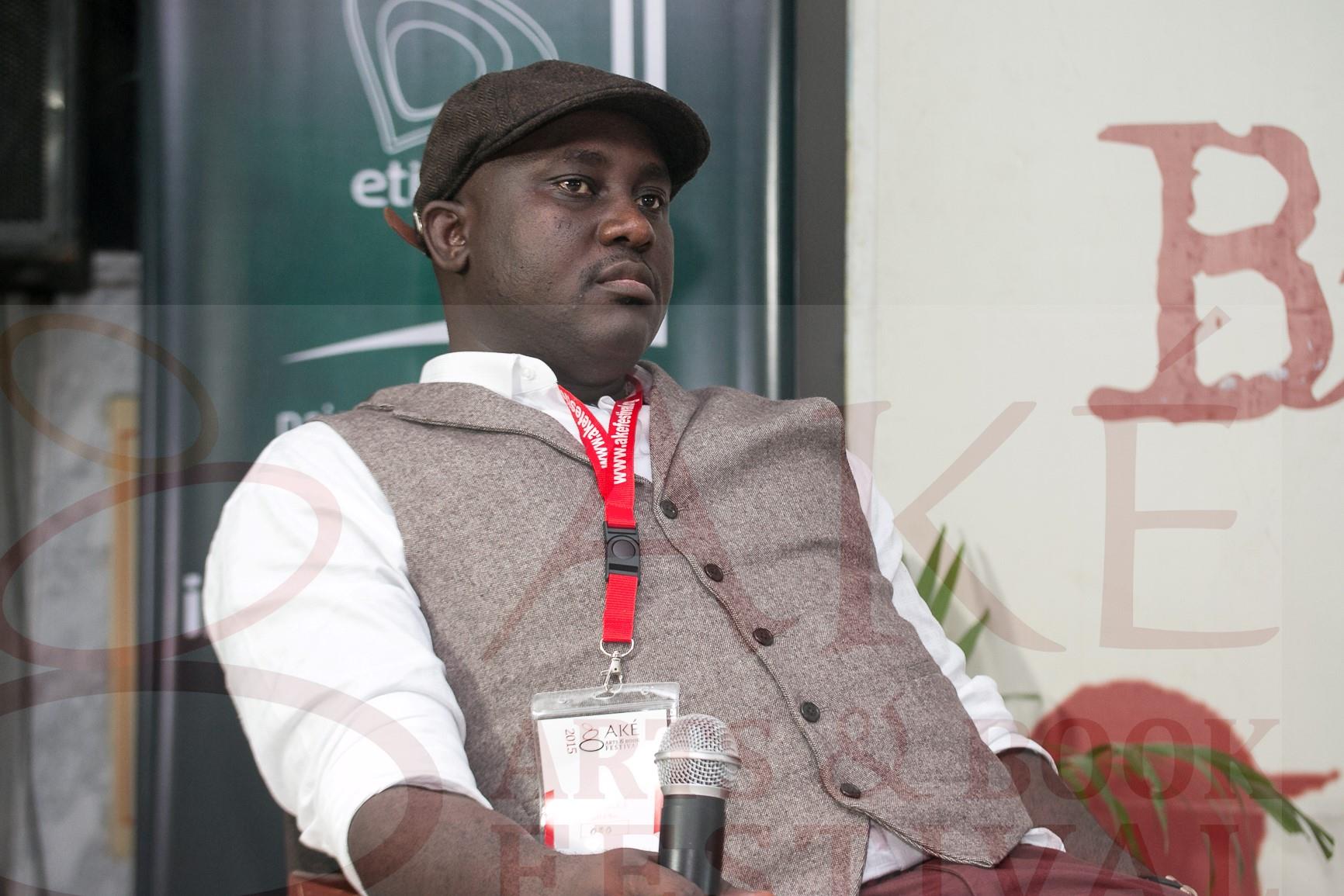
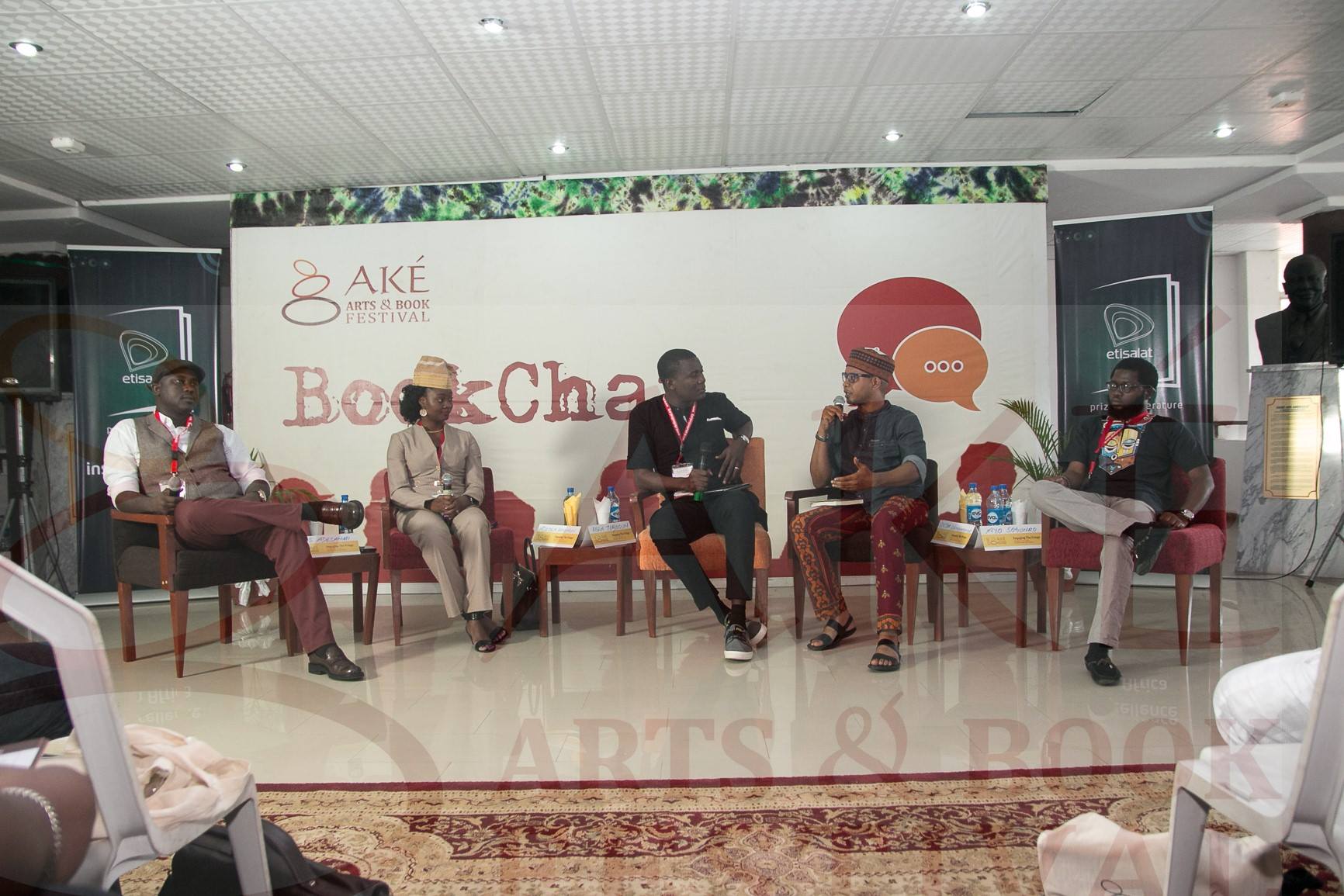
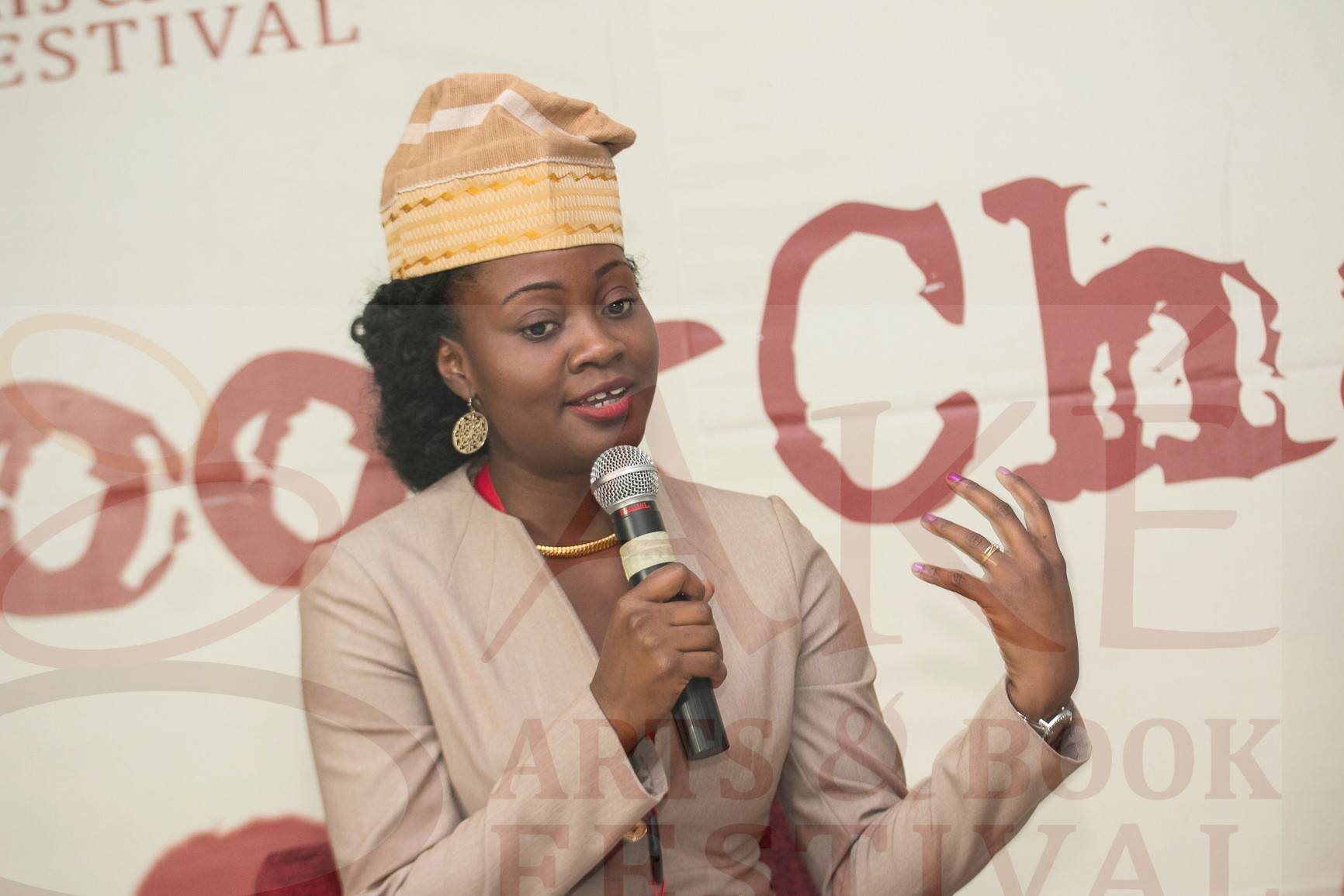
12240855_1072254982794106_817242026421824695_o The panelists are Pius Adésanmí, author of Naija No Dey Carry Last, Adéọlá Fáyẹhùn, host of popular online show Keeping It Real, Ayo Sógunró, author of The Wonderful Life of Senator Boniface & Other Sorry Tales and Victor Ehikhamenor, visual artist and author of Excuse Me. The topic is Deadly Laughter: Satire and Public consciousness in Africa. The moderator is Kọ́lá Túbọ̀sún, acclaimed linguist.

The discussion kicks off to Adéọlá admitting she has received countless death threats for the work she does on her show even with the disclaimer. This is something her fellow panelists agree with. Satire is an approach to dealing with major issues that affect our immediate society which is quickly catching on. The satire is meant to be as subtle as possible but still heavily packed with intent and often met with disapproval and hostility. One thing the panelists agree on is that as a writer of satire you must develop a readiness for vicious backlash. The art of subtle reproach is often too much for people to handle and for those who understand what is implied they cannot stand to be portrayed in that light so they strike back or speak out against it.

12291120_1072255166127421_2596372418372204354_oVictor lets us know that amidst the vicious attacks on satirists, the satire is meant to deflect violence being a way to say what you want to say without being direct. On whether people effectively understand the satire, Ayọ̀ says there are some people who “even if it is clearly marked and sent, some people still don’t get it”. Pius talks about his work saying that the satire respects no one. It brings out the people perpetrating wrongdoings and ridicules them. Often times the case is that they don’t like how they are portrayed so they prefer a direct attack.

Although the satire is meant to be daring, Ayọ̀ tells us there are certain things he cannot write about. He believes feminism is one of these things. He says this simply because he personally cannot handle the onslaught when it does come. To this Victor drops one of his many wise sayings “because you have sharp scissors doesn’t mean you’re going to be cutting everybody in the village’s head off”. It is explained that the moment as a satirist you threaten yourself by attacking matters that are unnecessarily dangerous you’ve crossed satire into sensationalism.

12247737_1072255476127390_4458254252724755255_oWhen the question of who censors the satirist came up, Adéọlá was quick to say “everyone.” She gave us examples of how she was hounded for speaking about a particular issue and again hounded by the same set of people when she decided to remain silent on the same issue. She explained her style of approaching the satire and how it has worked for her this far. According to her she lays the fertile ground before doing the dirty work of planting. She says complimenting before hitting the nail on the head is a style she has developed in her career as a satirist.

Questions were taken from the audience with Professor Niyi Ọ̀súndáre saying the steps to being a good satirist include: “dig your grave” “buy a good coffin” and “write your will”. When asked what it takes to be a satirist, Victor says to portray serious issues in a humorous yet objective way requires a level of humour to avoid it coming across as forced. After all, according to him “it helps for the snake to have venom before it bites”.


______

Photo credit: Ake Festival

Why I Believe Almost All African Languages are Endangered

Guest Post by Luis Morais


Languages as cultural and social institutions of their peoples can either flourish, evolve and thrive or stagnate, degrade and die. There are several causes and factors that contribute to the death of a language, we could simplify things by stating that languages either die by the force of oppression (from man or nature) or by assimilation: when speakers start using a foreign language more than their own, up to the point that the dominant language swallows the regional language.

UNESCO rates how far a language is to extinction by quantifying the number of new young speakers learning and using it actively both inside and outside their homes. It is a straight-to-the-point system but it exclusively evaluates language “health” from the perspective of its spoken use without a deep consideration of how actively the regional language is used as a tool for knowledge creation instead of the dominant foreign language and how motivated regional speakers feel to preserve the knowledge acquired from previous generations.

Most African languages nowadays are safe from violent repression and technically considered alive due to the numbers of their many speakers. Nevertheless, since the world trend is that we will grow more and more dependent on digital technologies, we must consider the growing pervasiveness of the digital and online world in Africa either as:

  1. An opportunity for African languages to gain their space in the online world and thrive in the digital age;
  2. Or, where languages fail to establish an online and digital presence, the speeding up of the assimilation process where the local language is pushed out of yet another environment by the dominant language with the side effect of further eroding local speakers’ opinion of the language as useful and relevant for the digital age.

Knowledge is much wider than gadgets, corporations and factory plants

This article expands the focus of language health and longevity from new speakers learning the language and number of oral speakers to how actively the local language is used to create and preserve knowledge in the digital age. So that we are clear, whilst some view knowledge as exclusively what corporations, academic institutions and factories churn out every year, we base our argument on the fact that knowledge is much wider than that.

Within every language a trove of knowledge is to be found in the form of myths, poetry and literature, gastronomy, spirituality, herbs and natural medicines, philosophy and untranslatable concepts, music and new sounds, art, child upbringing methods, moral concepts, ways to govern and live in society, forms to express feelings and everything else.

In the oral tradition of Africa, it potentially resides a) the basis of the advances we enjoy today, b) the leads to future breakthroughs, c) but most importantly the blueprints of a sustainable way of life in this broken planet. This knowledge, essential and valuable as it is, must be preserved for the sake of the hidden lessons we might still learn from them.

If one thing, and one thing only, Africa should learn from Europe is fostering one’s own local languages

Although Africa is the home of the oral tradition, the historical evidence also shows that Africans from all over the continent have also been writing and recording their knowledge for centuries. Nevertheless, be it in Arabic, Medieval Latin, French or English, Africans from the past and present seem to have produced more physically recorded knowledge in the crusader’s and colonist’s language than in their own local languages.

In Europe, local languages stand a better chance to co-exist (instead of competing) with dominant official languages. Although the pressures of assimilation from other majoritarian European languages are still present, local languages and minority national languages in Europe have possessed a localised digital infrastructure compatible with knowledge creation in the local language for some time now.

The results are clear:

  • Catalonia as an autonomous region in Spain with 7 million Catalan speakers, boasts a book catalogue of 56.000 titles. Despite having suffered government repression in the past, nowadays the Catalan language is digitally accessible and content can be easily found online.
  • As another notable example, Iceland, with a population of a bit more than 300,000 people publishes 1,500 books in Icelandic every year.
  • In the case of Yiddish, one can easily find online book repositories with more than 10.000 free titles.
  • In the UK, there is plenty of literature produced in Welsh (430.000 speakers), Irish (2.5 million speakers) and Gaelic (87.000 speakers).

Regional and linguistic identity has always been a European theme, backed by a lucrative regional cultural industry generating millions of Euros. In the African context, it is difficult to foresee how regional languages expect to thrive in the digital age unless regional speakers find the localised tools and motivation to use their local languages in the digital space.

Why aren’t we producing more digital content in African languages?

We contemplate a future where our descendants will learn more of their identity and culture from digital and online sources. These future generations will likely listen to their oral tradition in YouTube, dance to their drums in iTunes and read about their myths in Wikipedia. These future generations will be more and more engaged in living a digital life and used to accessing and sharing information from digital sources.

In order to create local knowledge for these future “digital & online” generations, we first must allow regional language speakers to use their languages whenever and wherever they want. This is hardly possible in Africa today simply because the basic tools such as local keyboards and local digital language features are hard to find if not nonexistent.

Most African languages have poor access to digital aides such as language glossaries, text-to-speech databases, auto-correction and auto-suggestion features amongst other incredibly simple digital advances such as OCR, the technology that allows words in a picture of a book page to be recognised as words.

In simple terms, one can’t create knowledge in their local language without fully accurate and functional language tools.

As a personal example, being a speaker and writer of Brazilian Portuguese, I battled with keyboards to write in my native language when I came to the UK. Portuguese characters such as “ç” and accented letters such as “ã”, “à”, “ê”, “ó”, “ü” were impossible to type in a UK keyboard and for months I didn’t create much in my own language, reluctant to write it in a way that was orthographically wrong and open for misunderstanding.

In order to write in my own language, I tried several workarounds in the first years. I spent time cutting and pasting the accented characters from Brazilian websites into my writings; I installed intrusive virtual on-screen keyboards; and at a time I imported a European Portuguese keyboard which took a lot of physical space since my family still needed the UK keyboard around.

Just when I started using customised keyboard layouts on my UK keyboards then I was able to write from my coração (heart). Just then, I felt intellectually liberated and started creating knowledge in my own language.

Conclusion

Whilst typing machines epitomised the colonist’s oblivion (if not plain hostility) to local language and culture by locking knowledge production to a keypad in the colonist’s language, soft keyboards, computer keyboard layouts and digital language aides give the local speaker the freedom to produce knowledge in as many languages as they want or need.

The technology is here and has been available for some time, nevertheless in order to give regional African languages a fighting chance in the digital age, more needs to be done in order to create easily accessible regional language tools that allow one to exercise their regional language and culture with full digital language support.

I link the low usage of local languages to produce digital and online knowledge to both technological and social reasons:

  1. There are insufficient localised input tools that allow one to write in their local language correctly.
  2. Attempts to write the language with an incompatible input tool generates imperfect language content without the right characters, accents and tonal marks.
  3. Content created without the right orthography dilutes the language. For not being standard it is harder to find in search engines.
  4. The lack of digital language tools such as glossaries, dictionaries, OCR, auto-correct and auto-suggest features amongst others demotivate less experienced speakers of the local African language.
  5. By seeing their local language under- and misrepresented in the digital and online world, speakers don’t feel their regional language is relevant for the digital age.
  6. By being forced to make more effort to write in their regional language correctly, speakers decide not to use it as often as the dominant language to avoid the extra work.

Once the barriers above are removed and local digital language tools are created, part of the mission to allow African languages to represent themselves in the digital world will start to be accomplished in the form of the unblocked production of regional language content. In other words, make the tools for localised knowledge production accessible and everything else will follow.

________

Luis Morais writes from Brazil. This article was first published on LinkedIn here.

________

Bibliography/Further reading

Google’s Vint Cerf warns of ‘digital Dark Age’
http://www.bbc.co.uk/news/science-environment-31450389

How do I address you? Forms of address in Oko – Uchenna Oyali
http://academicjournals.org/article/article1379410255_Oyali%20pdf.pdf

Is Yorùbá an Endangered Language? – Felix Abidemi Fabunmi & Akeem Segun Salawu
http://www.njas.helsinki.fi/pdf-files/vol14num3/fabunmi.pdf

An Endangered Nigerian Indigenous Language: The Case of Yorùbá Language – Temitope Abiodun Balogun
http://nobleworld.biz/images/6-Balogun_s_Paper.pdf

African Languages in a Digital Age, Challenges and Opportunities for Indigenous Language  Computing. Don Osborn, HSRC Press.


Jumoke Verissimo Shares Her Views on Writing

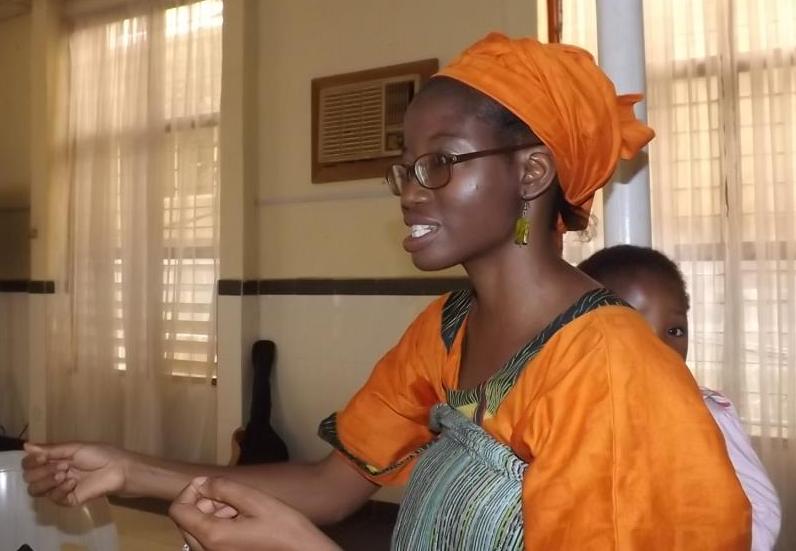
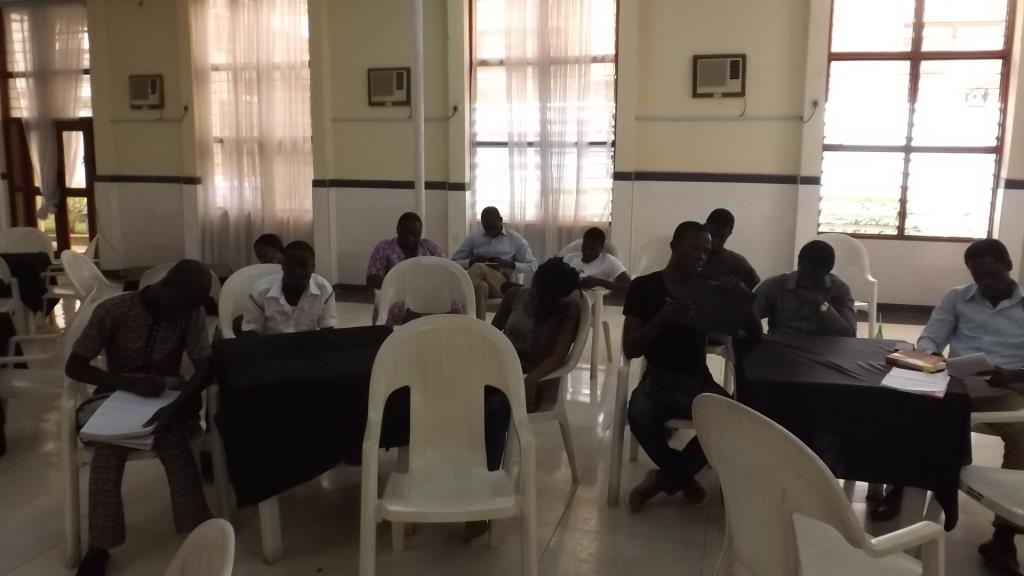
Jumoke VerrisimoFor a lot of young writers and aspiring writers, it was a platform to learn one or two tricks in the writing craft. The reknowned poet, Jumoke Verissimo with support from WriteHouse Collective and PEN Nigeria had opened a creative workshop for poetry last month. The second edition of the workshop which held on Saturday, 20th of September delved into the idea of experience as a vehicle for poetry and the use of metaphors.

Participants were given a class work to write out what ‘experience’ means to them in few words, these lines were analysed by Verissimo.  She said during her teaching ‘Deep into yourself, narrate or express experience based on your own personal life’. Referring to the lines of one of the participants, she said ‘now he has dug into his own life, perhaps there are things he wished he could achieve, so those six words analyses his own life’.

DSCF3872Jumoke asserted that there is absolutely nothing like a ‘writer’s block’. She said that if one could generate a first line based on personal experience, a second line would ‘flow from the bones’ and a third line will be accomplished easily. Other participants were actively involved as they contributed to the analysis of each other’s work.

Verrisimo said poetry is not far-fetched, it is borne out of the things that are available to our consciousness and experience.  She said ‘usually what comes to mind when you want to write poetry is to look for that which is not readily available’ instead of looking at things that are part of us.  She read from the works of African poets like Kofi Awoonor, Jared Angira and Wole Soyinka from the book, Poems of Black Africa, also poems of Caribbean poet, Derek Walcot.

DSCF3872Verissimo delved into metaphors as a form of experience, ‘you need to make a metaphor of your life, you place two things that are different and try to make a connection between them.  As a poet you have created that metaphor, and then we will begin to see our lives, through that metaphor.  Verissimo said. She also recalled her stint with Farafina ‘I remember working for Farafina, and the day we were working on the magazine and we were trying to contact Mr (Igoni) Barrett to send us a story then and he said that ‘he wrote poetry first before he began to write stories’. She said ‘poetry helps you as a writer of prose, metaphors helps your imagery and interpret an experience’.  Participants were also encouraged to create metaphors spontaneously in order to sharpen their creative prowess.

‘You have to express the experience you gather in a way that the reader touches the experience’.  In the poem building process that the workshop participants were involved in, Jumoke interjects ‘the poem becomes an experience for the reader and the reader becomes an experience for the poem-People want to interpret their lives but they are lost on how to do it, poetry assists them to do so’