Browsing the archives for the adventures category.

Touring America

I’m currently on the 14th day of my trip around particular places of interest in the United States, half for fun and leisure with the family, and half a nostalgia tour for a future book of travel experiences around the midwest. The streets are the same, consistent in their smell and memories they invoke.

The Capitol in Des Moines is still as resplendent standing tall in the sun with a golden cap. The plinth for its Lincoln and Tad sculpture seems to have received a small make-over, and that’s it. Minneapolis remains what it is: a beautiful melange of cultures and tongues. The Metrodome which collapsed in 2011 is now almost complete. I have visited the Walker Art Center and the Minneapolis Institute of Arts, both beautiful and stimulating spaces. I’ve visited the St. Mary’s Basilica, equally as impressive as the St. Louis Basilica. Two days ago, I returned to Oklahoma Joe’s, Kansas’ famous barbecue place. It has now been renamed “Joe’s Barbecue”. The food was good, but I’m convinced that the hype around the first time I visited here has now worn off.

I hope to visit the World War I Museum and Memorial again today with the family.

I’ve been told that Edwardsville has changed a lot in three years from a small university town into a booming city. It will be interesting to see, later this week, what that looks like.

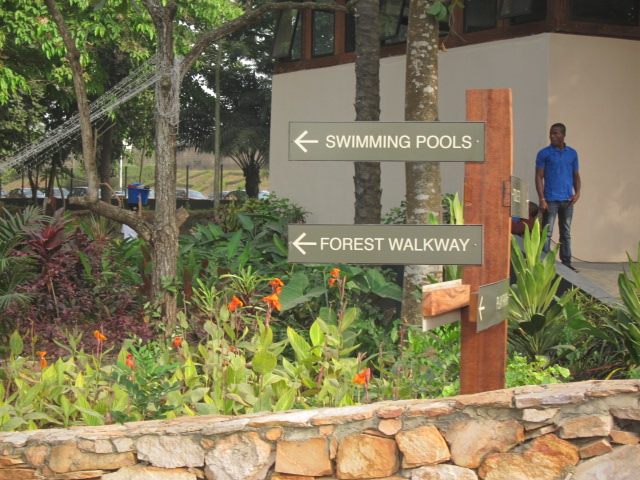
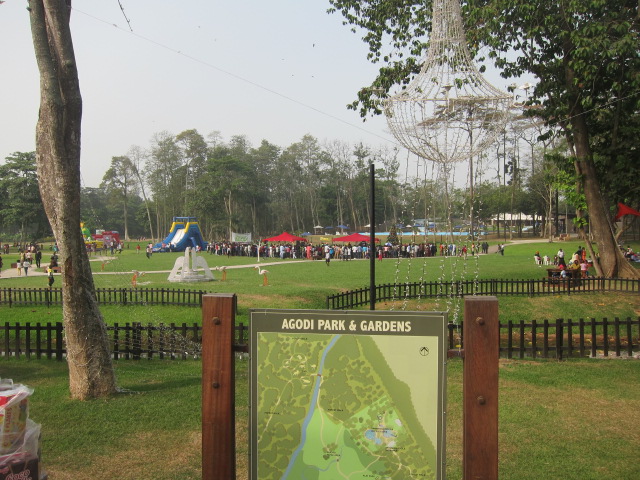
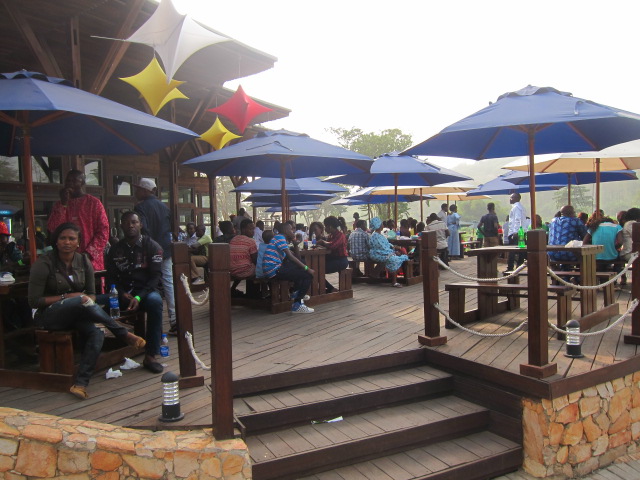
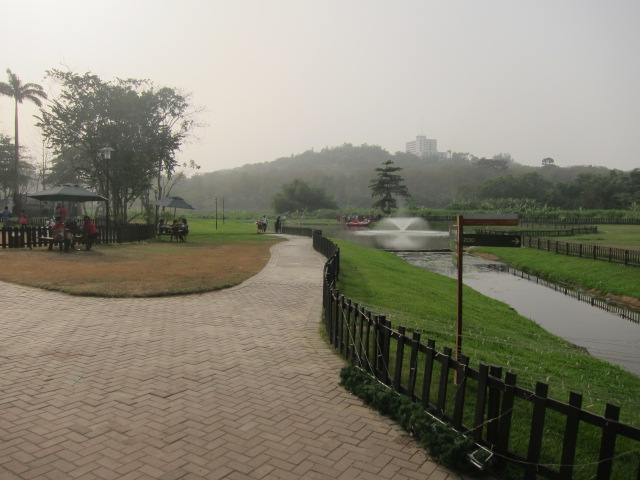
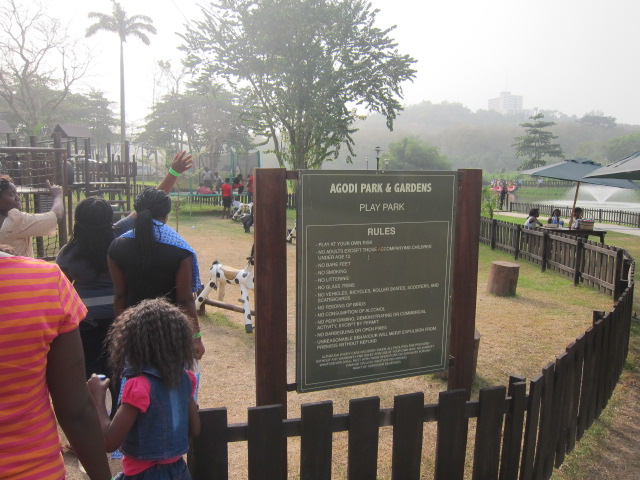
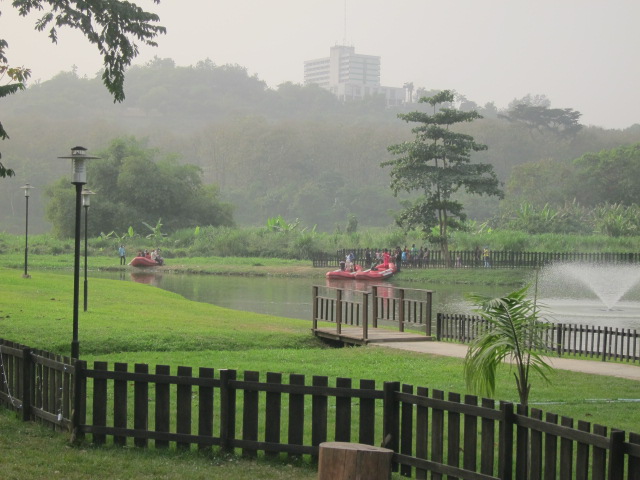
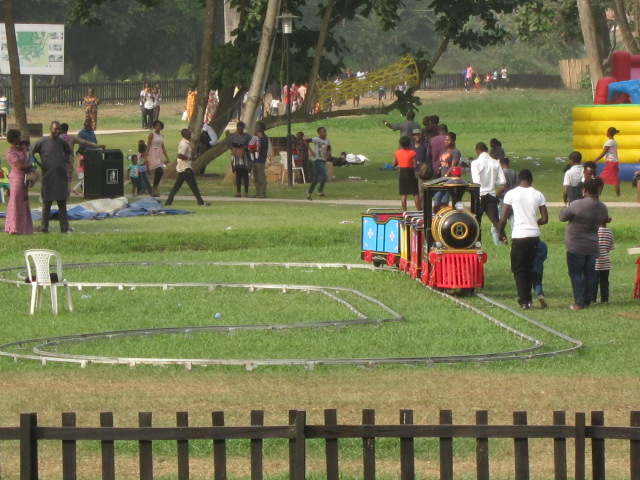
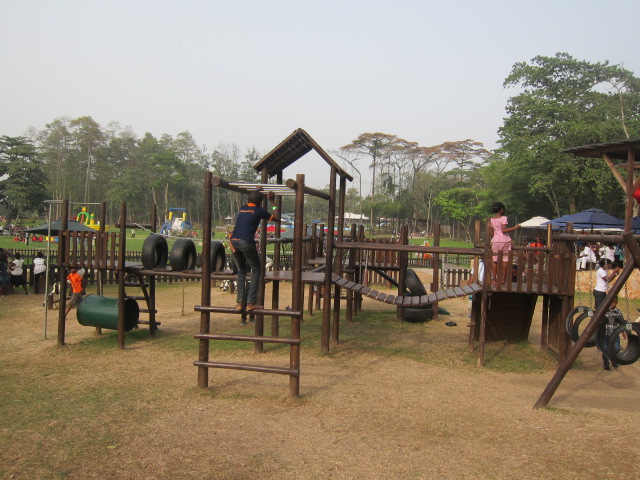
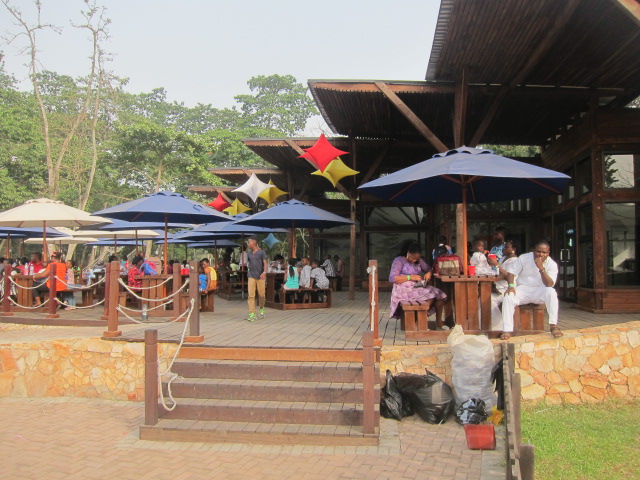
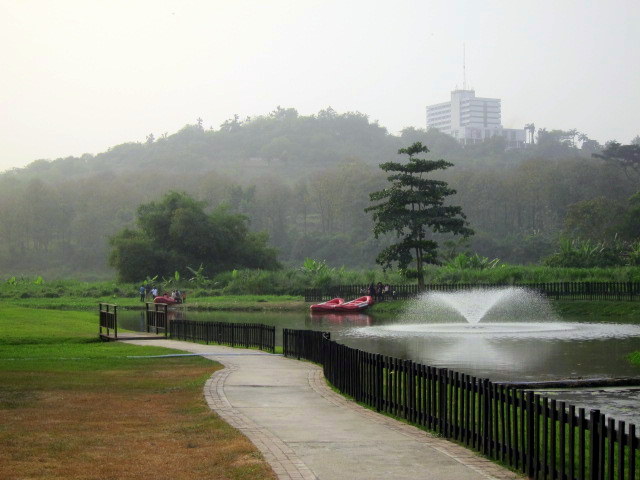
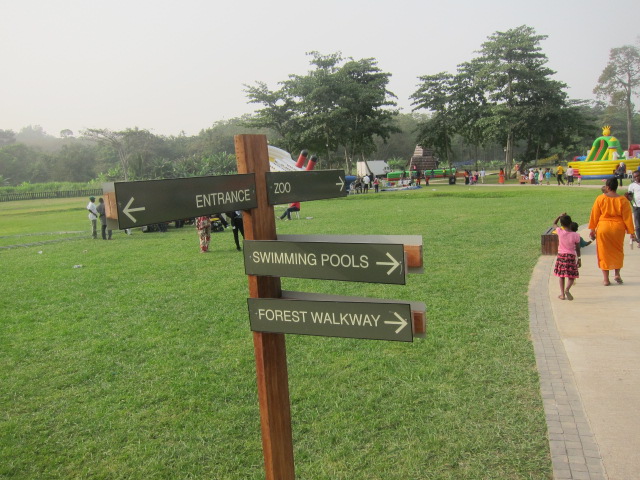
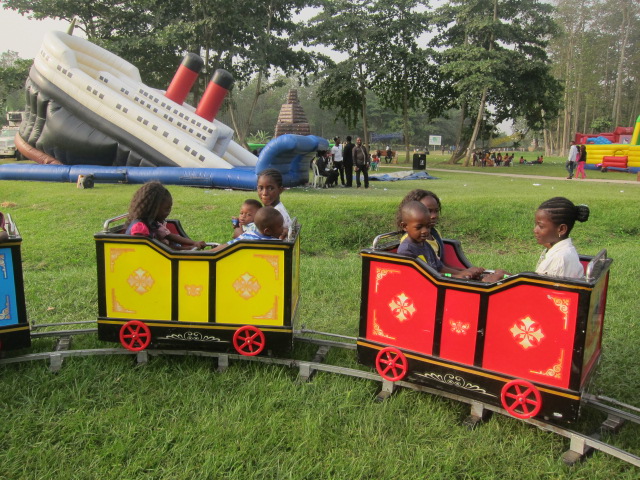
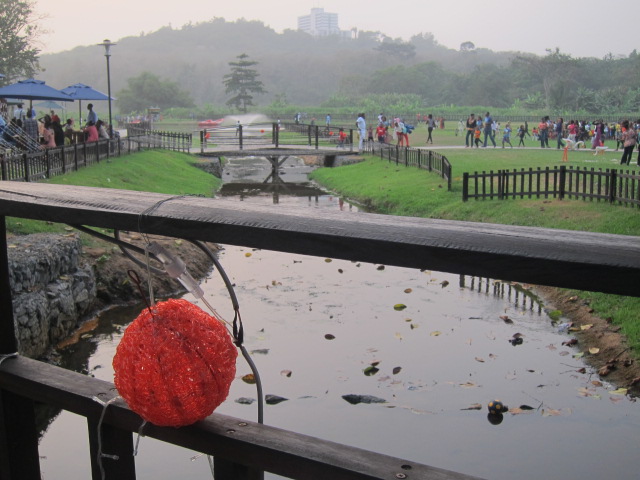
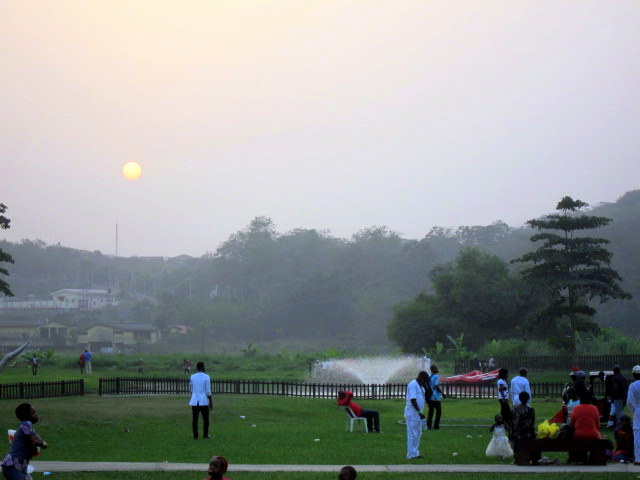
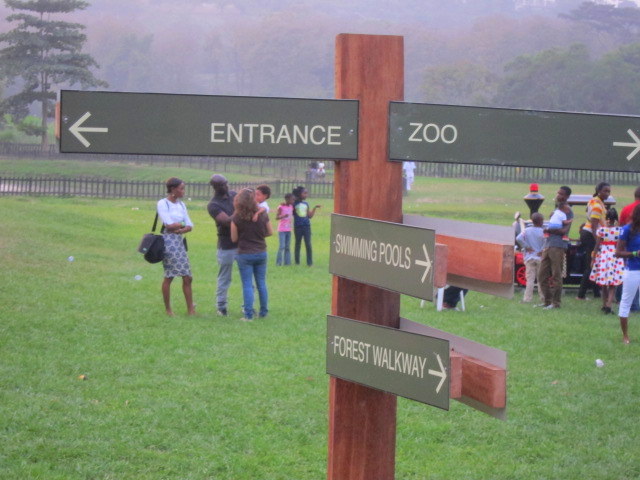
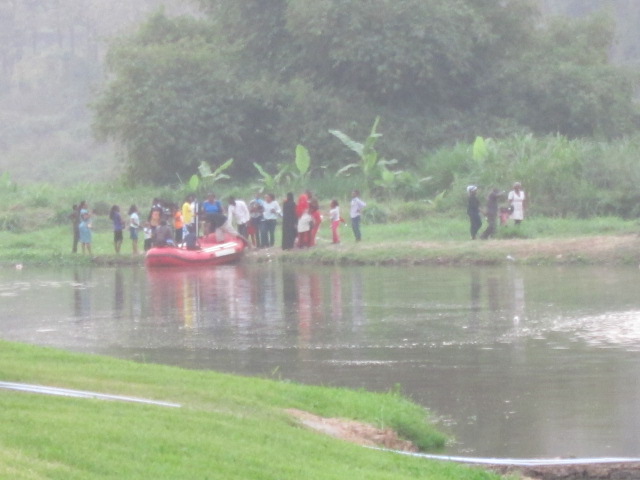
At Agodi Gardens, Ibadan

IMG_5833 IMG_6082IMG_5835 IMG_5836 IMG_5837 IMG_5841 IMG_5863 IMG_5865 IMG_5885 IMG_5887 IMG_5889 IMG_5891 IMG_5896 IMG_5914 IMG_5943 IMG_5988 IMG_5989 IMG_5990 IMG_6032 IMG_6045 IMG_6065 IMG_6072 There’s a reason, I assume, why the midwest United States appeals more to me – of all the regions in the country – than places like the coast, for instance. True, New York City and California are dream destinations for the amount of fun and activities that they pack. What I’ve heard about them, however, in terms of serenity and the freedom to pursue contemplative vocations, aren’t encouraging. I could be wrong, of course.

In any case, living in Edwardsville and Glen Carbon (both in Southern Illinois) accustomed me to a certain standard of serenity that I haven’t found anywhere else. Not in Lagos, anyway, where the drag of motor traffic coupled with the bustle of daily rituals combine with noise, filth, and other minor indignities to distract a questing mind. The nearest open park I’ve been in in Lagos is the Lekki Conservation Plaza which, as good as it is, still leaves much to be desired. Terrible walking planks, poor labelling, and a general poverty of ideas regarding the management and purpose of the establishment. Still, it’s a great respite for the concrete jungle that Lagos is. There are other great places in Lagos, of course, but they are not open, public, parks with affordable access to families and chasers of serenity. (Sure, Tinubu Square is better looking now than it used to be. Bridges and other public places have been fixed up by the APC-led administration in Lagos. But for a city with so many people and such busy and hardworking people, more avenues for relaxation is needed. If you want to relax in Lagos, and you have some money, go to Inagbe Resorts).

Enter Ibadan, a town that has always been equally notorious, equally famous for both its serenity and its capacity for turmoil and mischief. On the mischief side, the republican town has been quoted in almost all the political turmoils of note in Nigeria, from the Wild West 1965 crises to the Adedibu imperial areaboyship of the early 2000s. Notably, the state has never reelected a governor. Ever. (Edit 2015: This changed lately. Ajimobi earlier this year became the first governor to be re-elected). Every election season is a battle, and it always leads to the defeat of the incumbent. For me, more than being my home, Ibadan is also a getaway location for serenity after months in the jungle that is Lagos. Unfortunately, the typical rap that the town gets – especially as relates to its uneducated populace – manages to get more airplay than its reputation as a destination for serenity and intellection. Go to Linda Ikeji’s Blog, Nigeria’s most popular gossip blog, and the most popular post relating to Ibadan is likely to relate to a crowd at the opening of a Mall or a decrepit arrival lounge at it’s local airport. For some reason not far from mischief, it has always been better to laugh at Ibadan for its inadequacies than to celebrate its distinctiveness.

I can say, from other experiences, that I’ve found many more rare books in bookshops in Ibadan than anywhere else around the country.  Today’s steal are “An Overview of the English Language in Nigeria” by Ayo Banjo, and “Iwe Itan Ibadan ati Die Ninu Awon Ilu Agbegbe Re Bi Iwo, Osogbo ati Ikirun” by Oba B. Akinyele (Olubadan of Ibadan from 1955 to 1964). Books are not the only things that make the town a premier in innovation (The University of Ibadan, founded in 1948, is the first university in the country, and the television station, WTNV – later NTA – founded in 1959, is the first on the continent), its spacial peculiarity (it’s the largest city in West Africa) and it’s intellectual pedigree in the Nigerian space (produced Soyinka, Achebe, Clarke, etc) makes it the most natural claimant to the role as a significant watering hole.

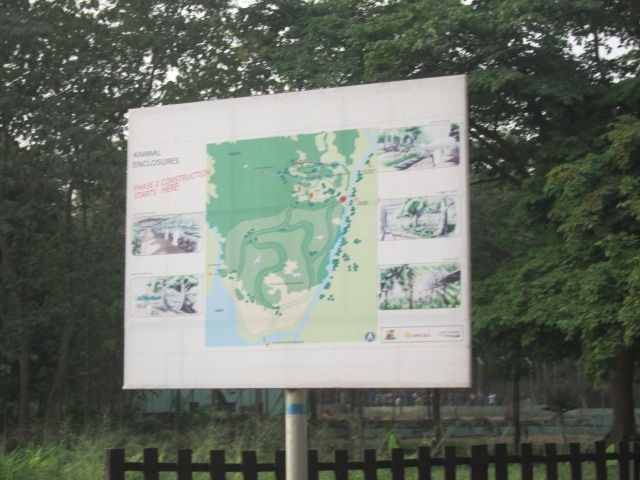
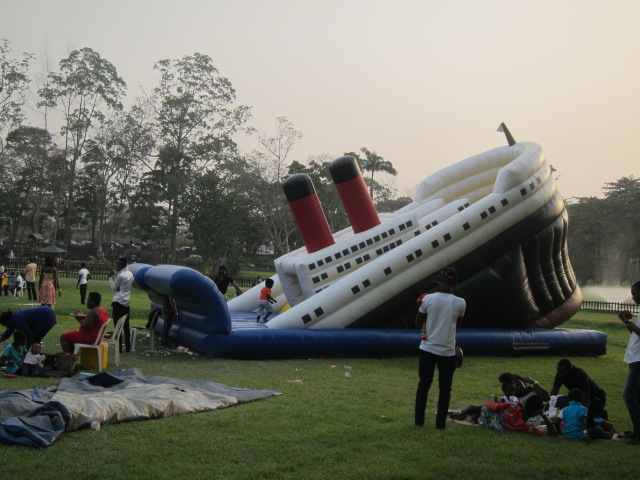
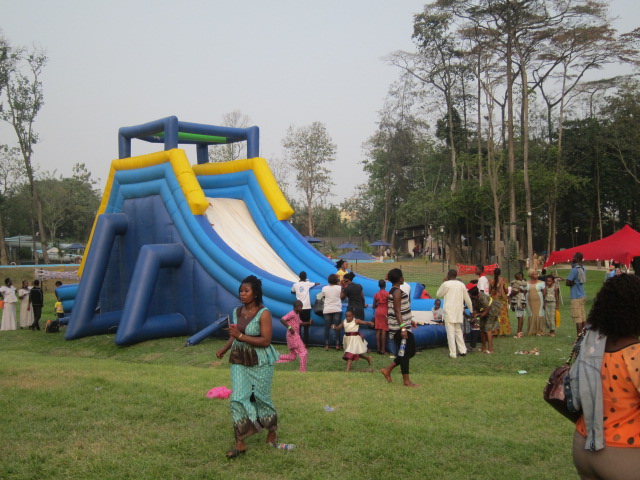
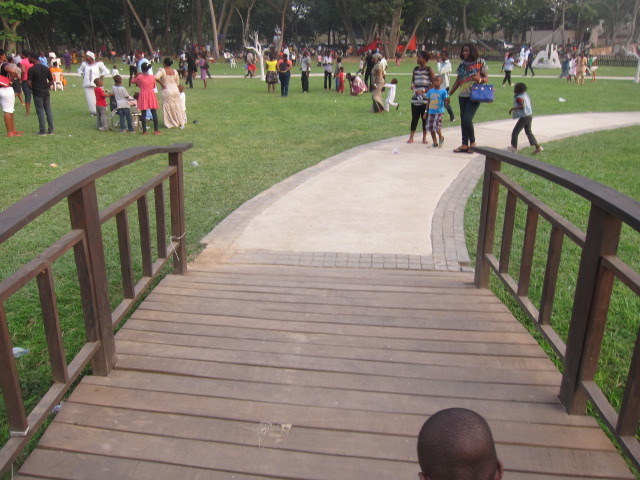
That said, this post, is about a new discovery in Ibadan: the Agodi Gardens. It’s not a new place, of course, but it has now been newly renovated by the current administration and made conducive for visitation and contemplation. It was never always like this. Like the Trans Amusement Park and the University Zoo inside the University of Ibadan, the Gardens used to be an eyesore. But unlike the earlier two, this one has been diligently fixed up to be just as good as any community/city park in anywhere in the world. The following is true: if someone else had taken the following pictures, I could have been confused as to where they were taken: Illinois or Ibadan. That’s quite impressive, but it shouldn’t be. We have the resources. Let’s hope that the administration of the state continues to use public funds for more public good of this kind. And, to temper the enthusiasm a little bit, the zoo ensconced in the Gardens is still terrible looking. Hope that this gets a similarly impressive upgrade to a standard worthy of such an important city.

Memories from Ake (i): Okey and the Students

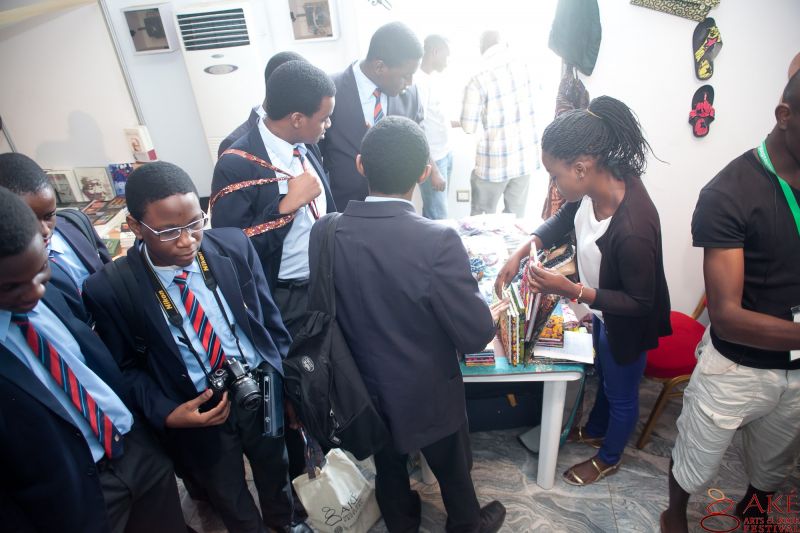
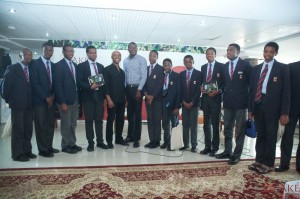
Last week, between November 18 and 22, writers and thinkers converged on Abeokuta for the second edition of the Ake Arts and Book Festival. It was also my second time of participating in the event, but the first as a guest. For some reason, the organisers thought it important this year to involve a linguist with but a finger or two in the literary pie in a festival of poets, writers and other makers of creative ideas. (Fake modesty out of the way, it was a beautiful, engaging, and stimulating event of which I was glad and proud to be a part). On Thursday the 20th, I gathered fourteen students from Whitesands School where I currently teach English, along with a colleague and award-winning journalist Bayo Olupohunda, into the school bus and headed to Abeokuta.

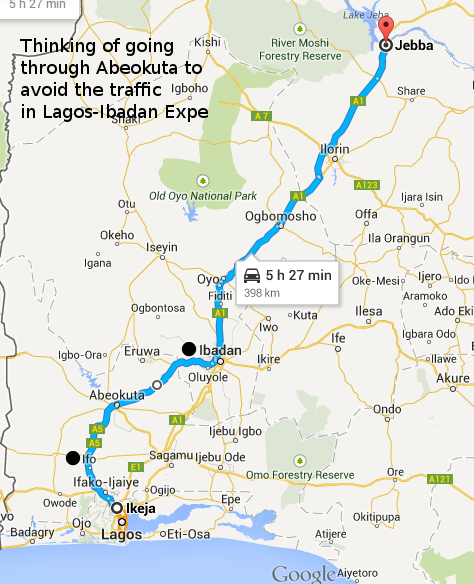
IMG_734910443236_885590758127197_8532045416560099830_oIMG_7317IMG_4475The drive to the quiet rockhill town north-east of Lagos has always been a delight, at least the second leg of the journey that begins on the Abeokuta-Owode Road. The Lagos-Ibadan expressway is still under construction and subject to surprises in the form of potholes, narrowed lanes, broken down vehicles, and diversions. For someone meant to host a Book Chat at 10.30 am on that same day, the choices are limited. One either leaves Lagos as early as possible so as to avoid all traffic-related delays, or sleep in Abeokuta in one of the luxurious hotel rooms already booked for guests at the Festival. If one is a teacher in a high school, traveling with students who have been brought to school by their parents and need to be returned to school on the same day; and particularly if one is a husband of a working wife, with a nine-month old baby who one would terribly miss if one were to take the second choice alone, the choices become hard.

We were supposed to head out of the school by 8.am, but by almost nine o’ clock, we were still stuck in Ikoyi traffic. By even the most conservative calculations, we were starting to be late. I began to worry that I might miss my session. The author I would be chatting with, notable columnist, journalist, professor, and novelist, Okey Ndibe, had just returned from the United States a couple of days earlier. How could someone from the US arrive earlier in Abeokuta than someone who lives in Lagos? How disappointing. Lola Shoneyin (poet and author, organiser of the Festival) would be even more disappointed, I thought, as I urged the driver to speed up as much as he could within sensible limits. By 9.30, Lola started tracking me via text messages. I assured her of my location, and pleaded that if I didn’t show up on time, my panel be swapped for someone else’s. She assured that if the worst happens, we’d postpone it for an hour. A few minutes later, a tweet went out that our book chat would begin at 11.30am. That was a relief.

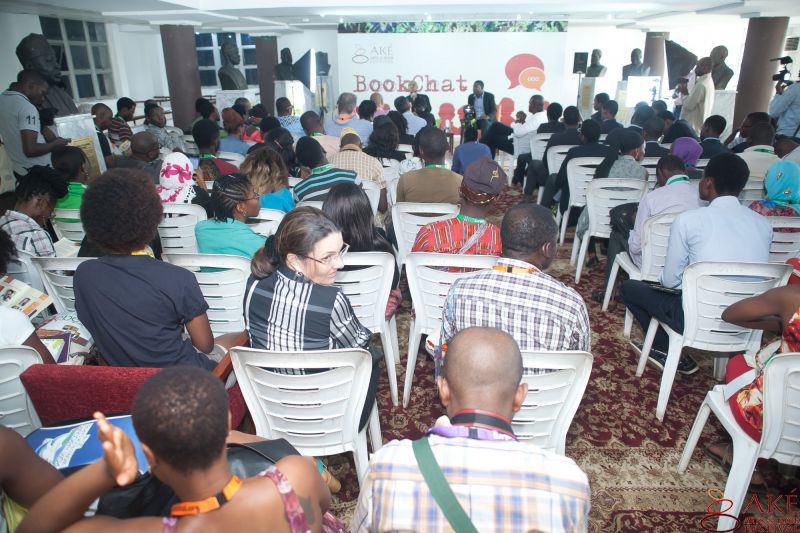
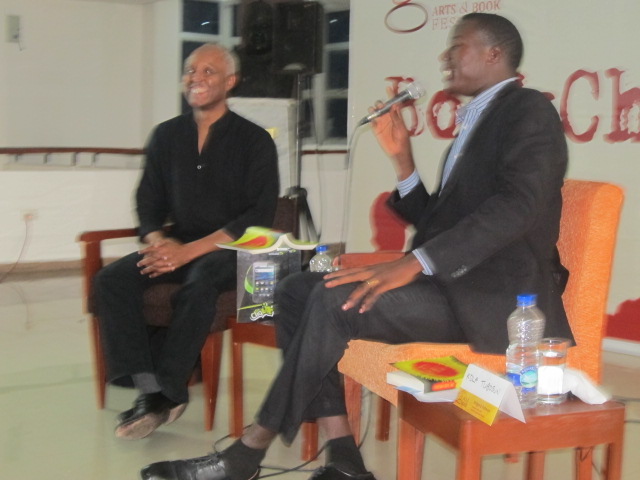
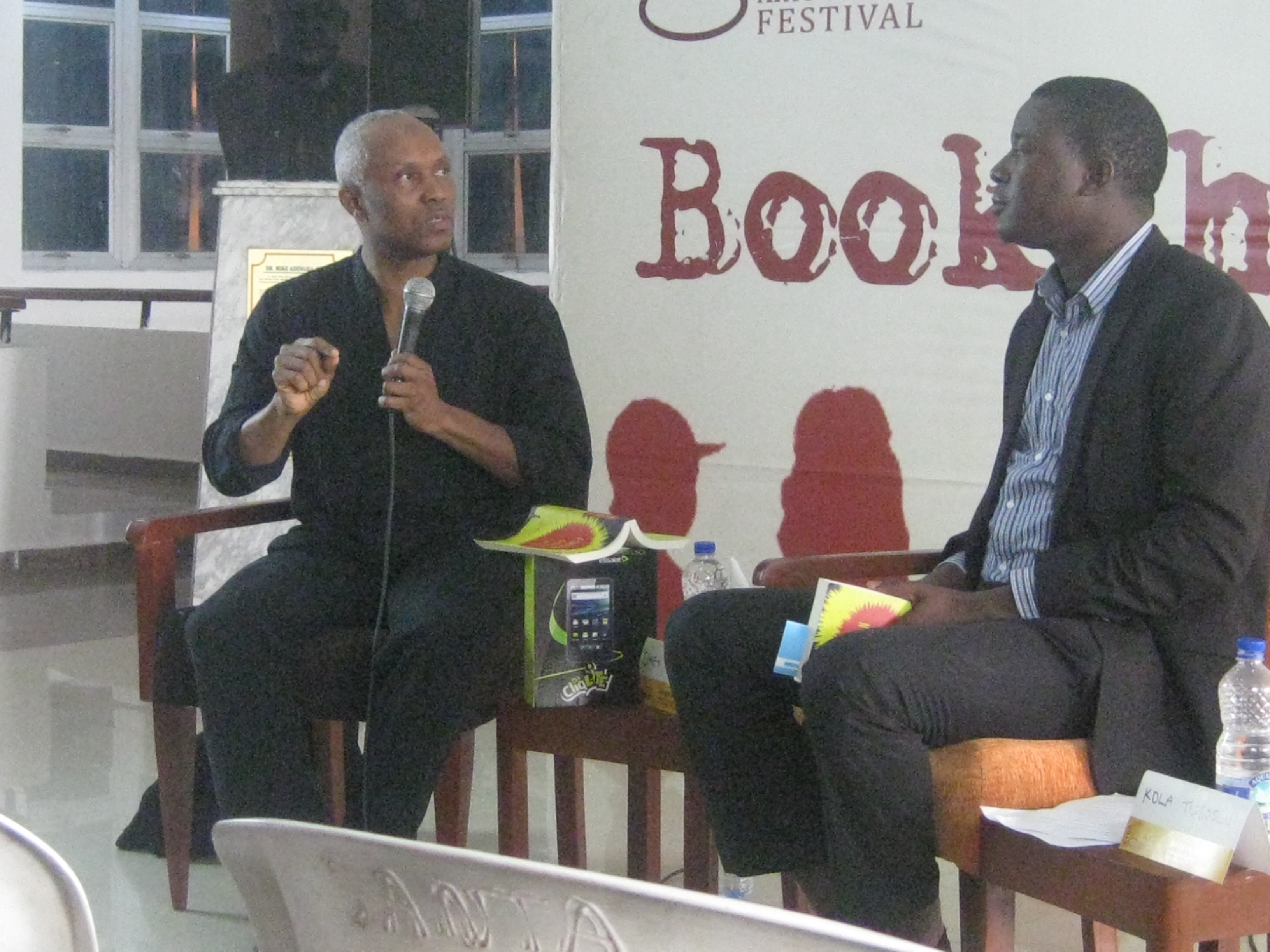
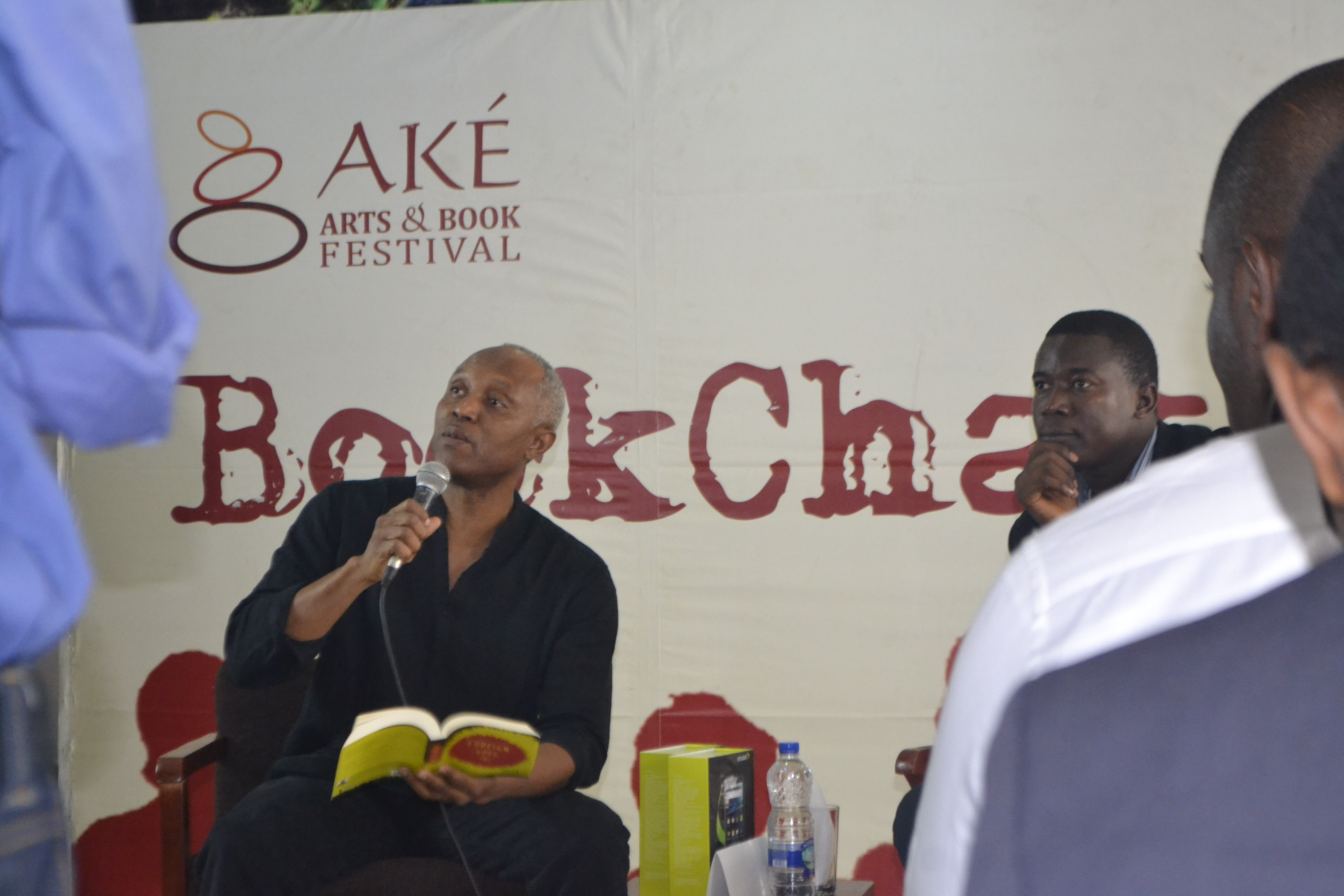
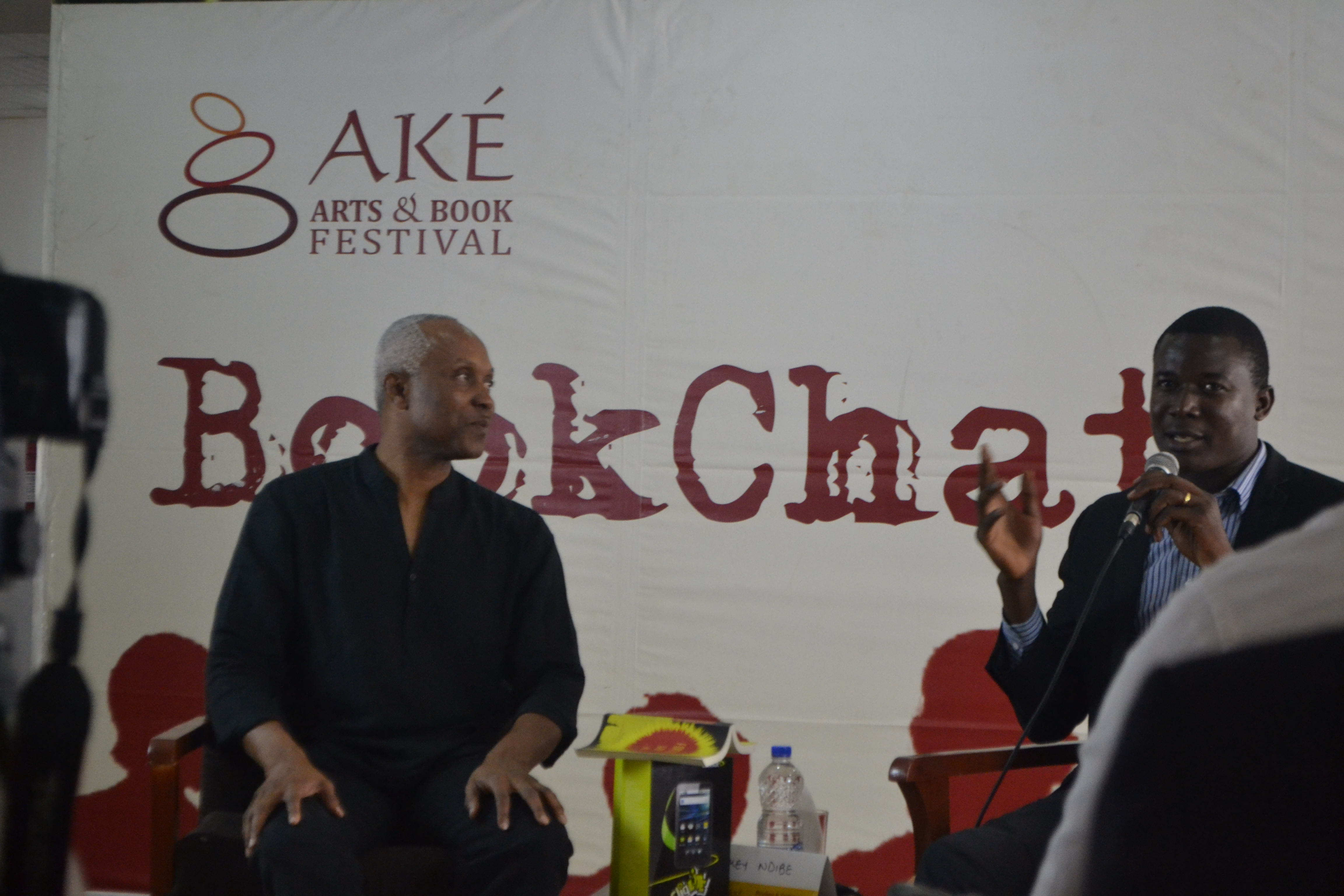
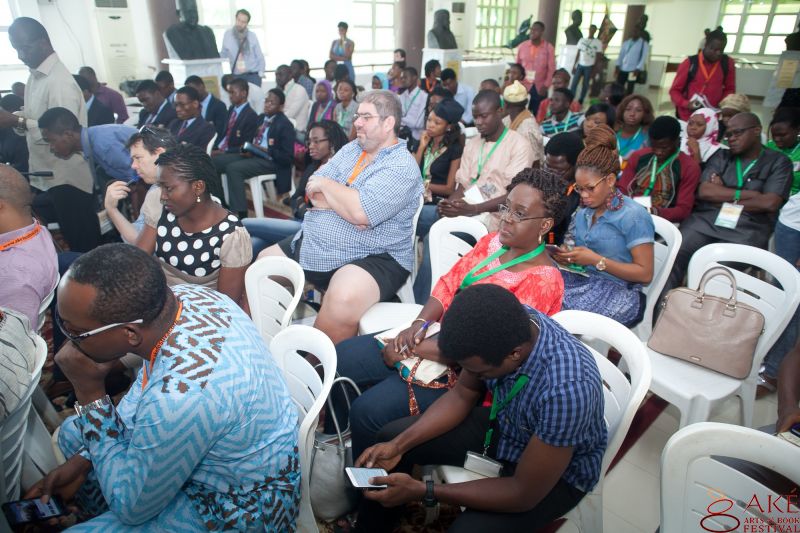
We arrived at the June 12 Cultural Centre, venue of the event, at about a quarter to eleven. Fifteen minutes later, I was in the hall meeting Okey Ndibe for the very first time. Weeks before, I read everything I could find about him on the internet. Some I’d read before, some I was reading for the first time. His life, work, and opinions have made him an interesting person and personality in the Nigerian literary and political space for a very long time. Conversations with other friends and colleagues about him have also guided me into a number of relevant points of inquiry. Our Book Chat was going to be one hour of conversation in front of a room full of writers and festival goers. Okey is a simple but dignified man, as his poise, dressing, and personality immediately showed. While he chatted with a few other folks around the hall, I glanced at a few of the questions I had prepared. His latest book Foreign Gods Inc is a fast-paced thriller of many layers of social and political commentary. I had two copies, one on my kindle, and one hard copy which a couple of my students had developed an attraction for on the way to Abeokuta. On arrival at the venue of the Festival, Lola Shoneyin hinted to the students that two of them would win an electronic tab for thoughtful questions. 

IMG_4527IMG_0774_DSC0131

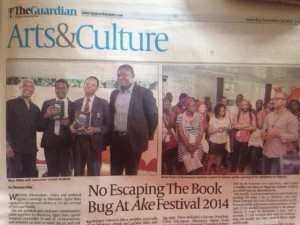
_DSC0121One hour went by like a flash. As I’d been told of him, Okey Ndibe engaged each question with the thoughtfulness and breeziness of a seasoned professor, with humour, friendliness, tact, dynamism and thoughtfulness. Why did he dump on James Hardly Chase so much? What does he mean by Achebe saving him from Chase? How did he meet Chinua Achebe and what was the relationship over the years? What does he mean by Nigeria not having a real national character? What is “an ethnicity of values” anyway? What influenced him to write Foreign Gods Inc.? Any influences from the real life event in Soyinka’s autobiography of having to sneak into Brazil so as to kidnap a supposed stolen god? How would Professor Ndibe like the book read: as an ethnographic material on African people, or as a migrant literature, like Chimamanda Adichie’s Americanah? How has the reception been so far? Would he like to read a part of the novel to the audience? By the time it was over, the seats had been filled, and the applause was genuine. I had a great time, and so did the students. Questions were asked, by the students and by other members of the audience, and we were done. Two students won tablets for their questions (and the rest were mad at me for not calling them when their hands went up. We resolved it on the way back to Lagos).

***

A few other questions went unasked, because of time: What’s the relationship with Christopher Okigbo and his family? He was afterall the keynote speaker at the Ohaneze Ndigbo event in Belgium in honour of that important poet about two years ago. Okey, being a young boy during the Biafran War, remembered a little of it, detailed in his essay My Biafran Eyes, how deep was that experience in shaping his upbringing? What does he think about language use in African literature? As a child of a culture with dying languages all around, how does he think that this can be reversed? Which writer in his generation does he consider an influence? What of older generations? And younger ones? He’s working on “An African Doing Dutch in America” – a memoir. What can he tell us about that? When will it be published? What was his experience as a Fulbright scholar teaching at Unilag? What inspired his first novel Arrows of Rain? He currently teaches fiction and African literature at Trinity College in Hartford, CT. What’s it like there? Has he stopped being harassed by the SSS at the airport?

***

IMG_7331IMG_7271FB_20141129_15_27_57_Saved_PictureThe students split up and attended one more session. In the session involving the president of the Association of Nigerian Authors (ANA) Professor Remi Raji and author Yejide Kilanko, which was well attended, one more student won a tablet for his thoughtful question to the author. He seemed very pleased. Their day being sufficiently made, not only by their winning of electronic tablets but the idea of meeting and chatting with world-famous authors and learning a few things they hadn’t heard about before, they headed to lunch downstairs by the festival bookstore before heading back to Lagos. There a few of the students met with some other writers, chatted them up about stuff, took autographs, bought books, and generally took in the festival air.

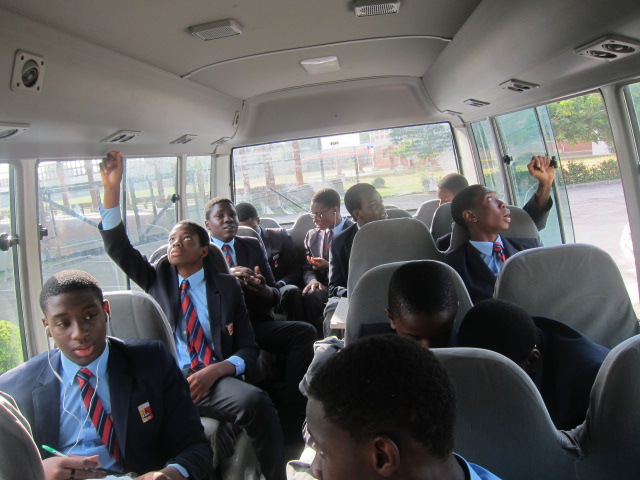
In the bus on the journey back, conversations ranged from the shock of realizing that their English teacher was a relevant enough person to have been invited to take part in a book festival (“You never told us that you were a writer! What book have you written? Aren’t you Mr. Olatubosun? Why does it say Kola Tubosun on the guest list? How did you know Okey Ndibe, Lola Shoneyin, and all these people? Do you know Wole Soyinka too? Where is Wole Soyinka anyway? Why isn’t he ever here when we’re around? among others) to the choice of theme in writing (“I write too, you know, but I never knew that one could be famous by writing African stories”, “Are you serious that people will buy your work if you set it in the Nigerian environment rather than abroad?” “I never knew that. All my characters have English names.” “How do I get published?” “Would you read my work?” “Can I come next year? Alone?” etc).

The most heartwarming comment followed later, halfway into the trip homewards when lethargy and torpor had us all but sprawled around the seats: “If I don’t make it into the final list of students coming here next, or after I leave school a couple of years from now, I’ll try to find my way to the next Ake Festival, or another one in the future.” Seems like a comment that the organisers will thoroughly enjoy. In the end, the decision to bring them along seemed like a great idea.

____________

Photos courtesy of self, Akefestival.org, and Chidera Ezeokeke, and Tamilore Ogunbanjo

Memories of Ake (ii): Of Pathways and Puffery

Were one to ask the organisers of the Ake Festival, and the two  hosts lucky to have handled the book panels involving General Olusegun Obasanjo and later Professor Wole Soyinka, whether there was a collusion to ask these notable guests similar and complementary questions, the answer would certainly have been a “no”. I’m sure of this because I asked.  However, in a series of pleasant yet notable coincidences, the presence of these two giants of Nigerian history not only made immediate news, but also filled a couple of gaps in our knowledge of the country’s history as relates to their individual roles.

A few questions, below, were asked in different ways of the two guests whose appearance came days from each other:

1. What was with that telephone “that never rang” in General Obasanjo’s bedroom in Ibadan? How did Soyinka know about it anyway? And what the detail of the interaction between these two individuals at this time. To Soyinka, it was a meeting to simply relay a memorized message from Victor Banjo. For Obasanjo, it was an attempt by a dramatist to further a military cause, however clandestinely.

2. What do you think personally about Biafra? Any need for apologies on behalf of the Nigerian government, not for the resulting war itself and his role, but for the Northern pogrom that caused it? This question led Wole Soyinka to an anecdote in which he told an interrogator, during his incarceration in the late 60s that “Biafra will not be defeated” while referring to the idea and his captors thinking of the physical, geographical entity. It however led the general to a long and winding history retelling that basically uses the unfortunate ethnic configuration of the officers involved in the first coup in January 1966 to justify the pogrom against the Igbos that began in July of the same year.

3. What do think of the country’s leadership? How do you approach leadership? To Obasanjo, the president performed “below average”. This made news straight away. To the Nobel Laureate, all that matters in public service is sincerity. Not absolutism, necessarily, or “holiness”. But sincerity of purpose, and conscientiousness.

4. What do you think of gay rights in Nigeria? Should gay people be jailed as the new gay law prescribes? The general went on a long spiel about his “conservative” and “Christian” credentials, then told us why we can’t have “that” in Nigeria. There is no polygamy in the West, after all. Why let “them” prescribe what we can proscribe? To the Nobel Laureate, it’s not really black and white. But mostly, “who am I to decide what consenting adults do? It’s frankly not my business, until a certain part of the public performance of that relationship needs a seal of state…”

If it is true that life thrives on binaries (think Jay-Z and Dr. Dre, East Coast or West Coast, Beyonce and Kelly Rowland, Beyonce and Rihanna, Tupac and Biggie, Jesse Jackson or Al Sharpton, Mandela or Mugabe, Wole Soyinka and Chinua Achebe, Wole Soyinka and Ali Mazrui, Wole Soyinka and Olusegun Obasanjo! For some reason of birth (they both have strong familial roots to Abeokuta), public service (both have been strong influences in Nigerian public life since the early sixties),  controversy (Soyinka was arrested after returning from the break-away Biafra in the late 60s, while Obasanjo was said to have been instrumental to that arrest. Obasanjo was also said – by himself, mostly – to have won that war for Nigeria), they have both been some of the two most important figures in Nigerian political and public life, for good or for ill. Certainly, they have also been some of the two most famous Nigerians to have called Abeokuta home and they have also mostly been on opposite sides when they are not working in an unlikely alliance for a common purpose.

In one of such alliances, described in Wole Soyinka’s memoir You Must Set Forth At Dawn, the playwright had solicited for the help of the then head of state General Obasanjo in keeping a diplomat from Brazil in Nigeria for the duration of Wole Soyinka’s own trip to that country in order to retrieve what he thought was an original mould of the a famous Nigerian statue. Things went bad halfway into the trip, and the General reneged on his promise to secure the diplomatic end of the deal for reasons attributed in the book to the man’s unreliable nature. This nature was the oft-quoted characteristic with which Wole Soyinka repeated hit the former president a number of times during a conversation with him on the last day of the Festival. Most times, it was obvious that the word “unreliable” or “crafty” was a code for “dishonest” and “self-serving.”

One big regret for me from the Festival was succumbing to the pressure from the organisers to scuttle a panel I was moderating, a panel discussing language in literature, which had already reached a crescendo-pitch right before the Q&A when word came in that the former President was in the premises, and that his protocol requires that all guests be seated in the Book Chat hall before he comes in. We had a choice: to stay and enjoy our discussion, or to disperse in order not to miss his Book Chat. The latter won, due to a number of circumstances, one of which was that the publisher of the former president’s new memoir My Watch was on that panel, and he had to usher in his author. For a number of us who had never seen him in person, there was also a slight curiosity of listening to whatever new thing the former president had to say. And he did have a lot. The language panel dispersed grudgingly, and fifteen minutes later, we were all seated at rapt attention listening to the man who could be said to have ruled Nigeria three times: twice as a civilian, and once as a soldier.

Road Trip to Juju Rock

 by Adeleke Adesanya


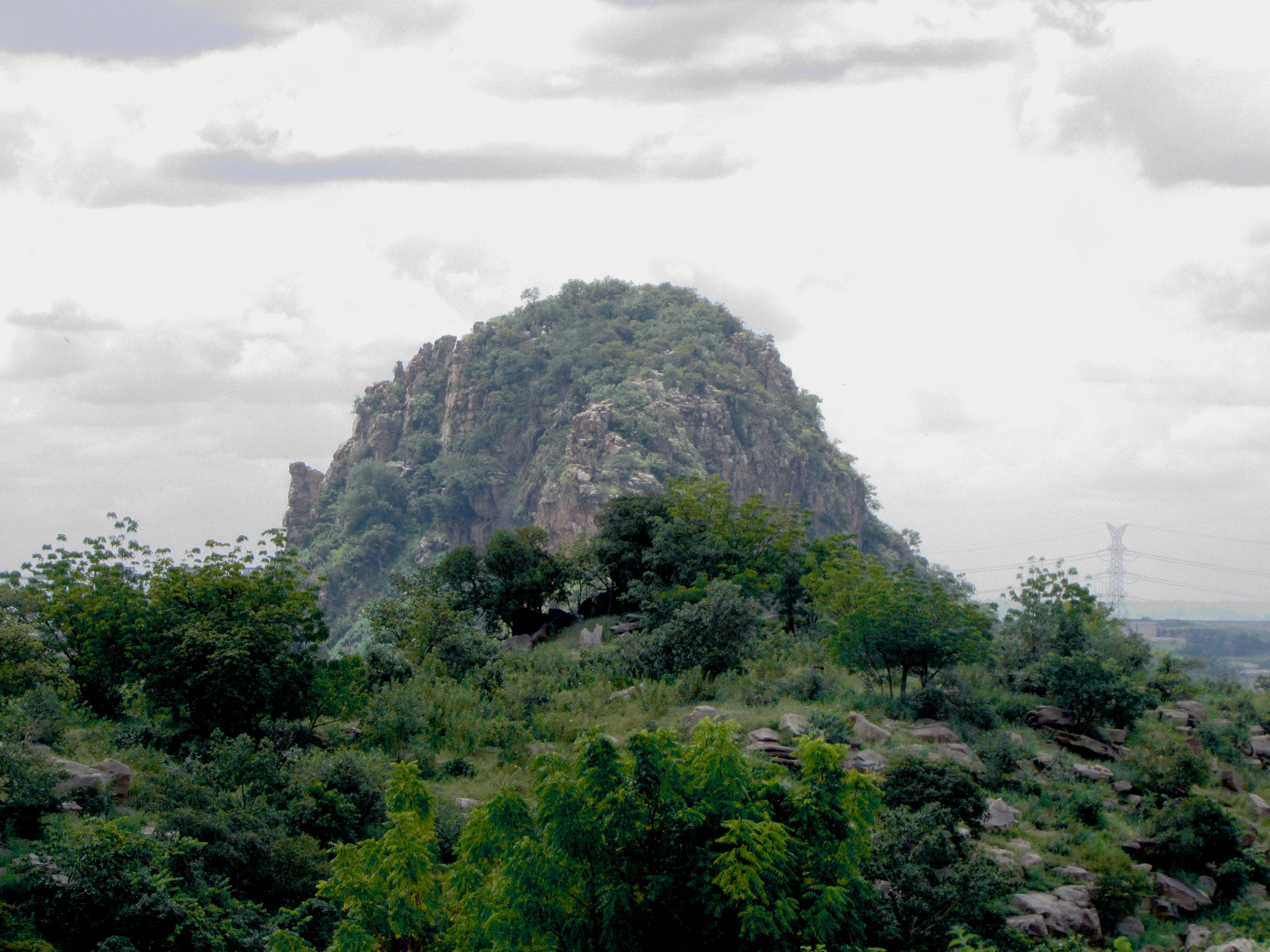
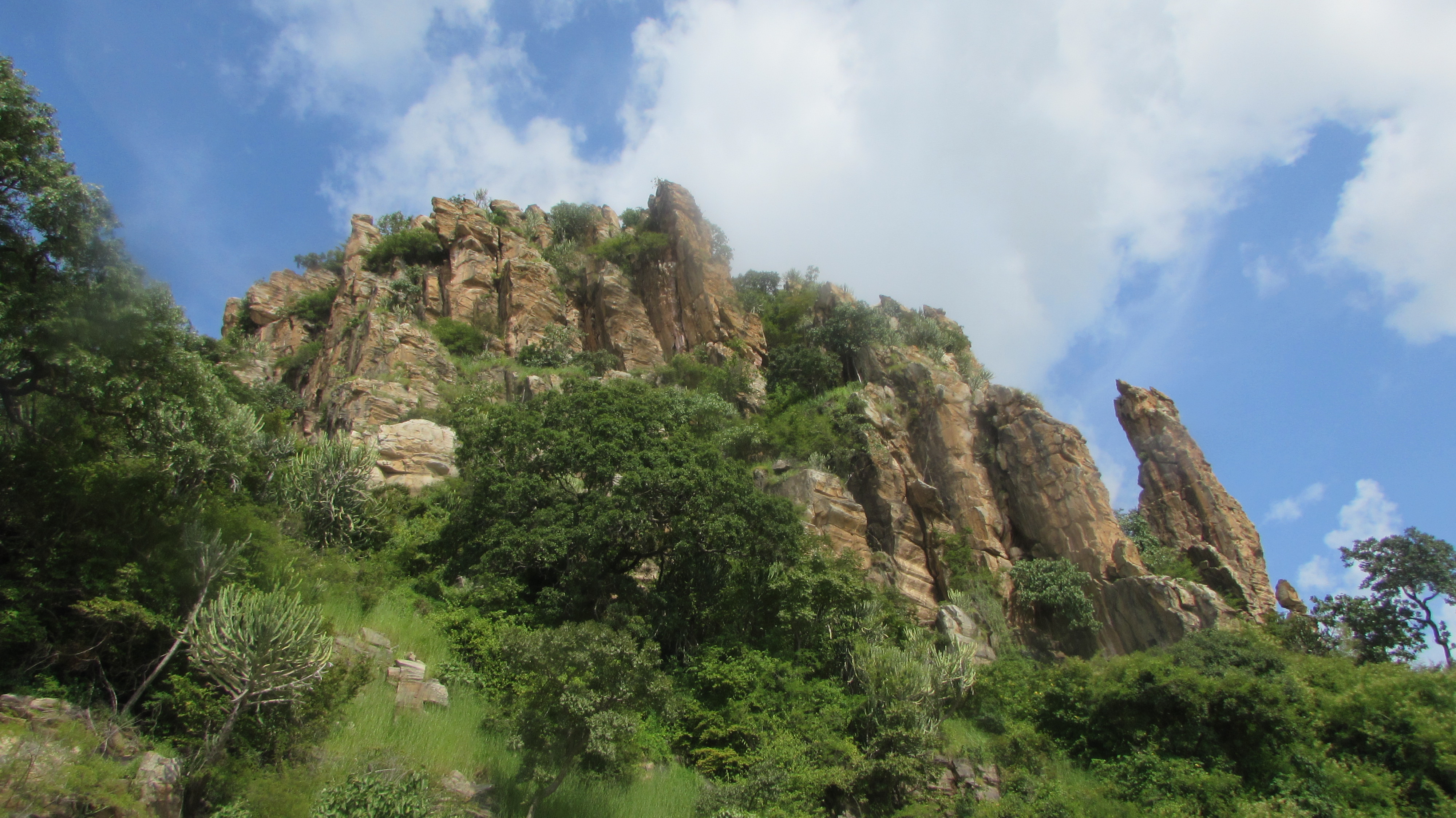
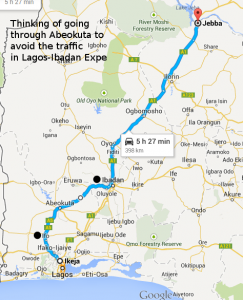
going-via-abeokuta-to ibadanJebba is a little town in Kwara State, on the border with Niger State. It was briefly the first capital of the British protectorate of Northern Nigeria. Juju Rock, my destination, is a island-hill formation in the River Niger, off Jebba. Like many such rocky hills in the middle belt, it is quite massive.  If you have ever paid to see Olumo Rock, you should ask for your money back as it is many times larger and the climb, higher. Plus you have to cross the River Niger on a frail wooden canoe to get there.

My first sight of Juju Rock , was as a teen. I had spent some time holidaying with relatives at Life Camp, Jebba . Life Camp is the residential estate of NEPA. During our time there, we went on an excursion to see the usual sites: the burial site of Mongo Park, the monolith erected to honour him and an extensive tour of the hydro electric power station. It was impressive to my teenage eyes. But just before we left the power station, I sighted from afar, a rocky formation, right in the middle of the river. I said to Dad, “Can we go there?,” pointing at the hill. He did not respond.

Fast forward to couple of years ago. I was on eBay, minding my business when I came across a familiar image. It was a postcard of the same hill. Some white dude travelled to Jebba, took pictures of iconic sites in the town like the market place, the railway station and of course Juju Rock, and made postcards out of them. I googled for more information and realised that tourists have been visiting and picnicking on the hill for years. At that point, I made up my mind to go back for a revisit, intending this time, to land on the hill.
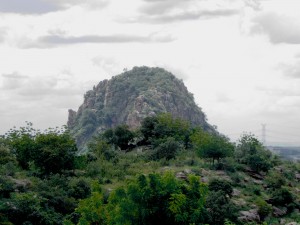
iujuhillDoing the maths was easy. Ilorin was about six hours journey, driving from Lagos. Jebba was a bit more. I have driven to Ilorin twice before. There was a decent Guest House at Life Camp, Jebba, that I remember and I could lodge in. Three days was enough, two days driving to and fro and resting, and one whole day in Jebba. It could not be too hard. The only essentials were good music and a travelling companion, to make the journeys easier to bear. However, I almost gave up , having been turned down by practically every male relative or close friend I had. Unexpectedly, a complete stranger agreed, during a social media chat, to join me on my odyssey. I could never have expected that.

Early on 17th September, I met my co-traveller, for the very first time. We got in the Hyundai Accent and set out on our journey at about 9 am. As we drove on, we got to know each other better. Save for some bad patches on the road and some ongoing maintenance work, the forward journey went smoothly. Though we stopped for breakfast and bought bathroom essentials at Ibadan, we made it to Ilorin before 5 p.m. It seemed we would be in Jebba before six. But we were wrong.

backviewTo get to Jebba, we had the option of using either the old single lane road or the new dual lane one. I am aware that the New Road has been under construction for over five years with little progress. I was advised at Ilorin not to attempt the New Road as it is not motor-able. So we took the Old Road.  It turned out to be a long stretch of mostly earth road, with broken down lorries obstructing the way. I often had to drive on an off-road bush part, just to move ahead. Finally, we arrived at Jebba at around 9 pm. The town was asleep.

I drove across the Jebba Bridge, heavily guarded by the Nigerian Army to Life Camp, where I intended to lodge at the Guest House. It was easy to locate, with the detailed directions of some locals we met along the way. However, on reaching the Guest House, we were informed by the armed security there that it had been closed. The new owners of the privatised Jebba Dam (and Kainji Dam) had decided to stop offering the Guest House to outsiders commercially. Luckily, the same security folks were helpful in giving directions to the other safe place Colony Guest House, that was in the paper mill residential estate. I drove through the night, back to town and to the other camp where we checked into Colony Guest House. It was past 10 pm and we were fatigued but grateful that we had arrived safely.
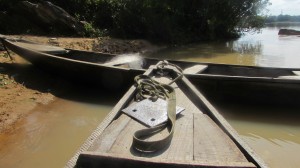
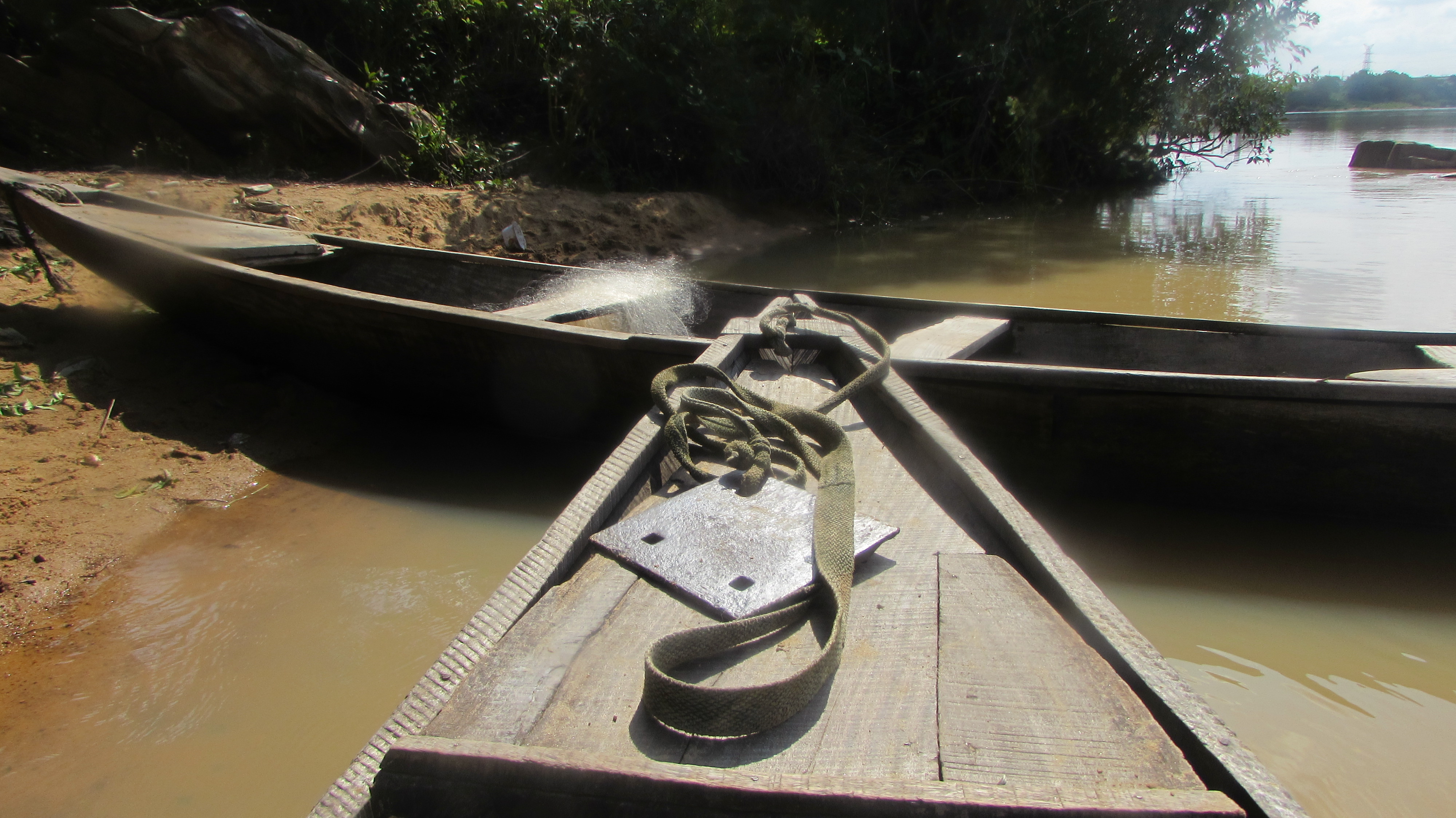
OurCanoeThe next morning, I had the leisure to do a little reconnaissance of the town, in day light. The notable industries in the town were the railway, the power station and the paper mill. With the downturn of the latter two, Jebba was now mainly a transit town for transporters going up north. Bad roads and according to local reports, strife between Niger and Kwara state local government officials was impacting access to its iconic tourism sites. The guest house in which I stayed was a shadow of its past glory. Some light sockets and taps did not work but the staff were hospitable and engaging. I got talking to the housekeeper, who happened to be a former NEPA staff. He agreed to be our adhoc tour guide.
theclimb2We had breakfast at Jebba Dam Power Station staff canteen and met a friendly top personnel at the dam, who enabled our tour of the facility.  Unfortunately, I did not have a memory card in my camera, so no pictures. Plus, my primary interest was Juju Hill. So we left the power station and went back to town, I got new memory cards, then engaged another tour guide, who was a local.

With the local guide, we then visited Mongo Park’s cenopath and park. The park had a wonderful view and I took lots of pictures. I wished to stay longer but it was past eleven and I had yet to reach Juju Hill. So we left and took a wooden canoe ride across the river, to our island destination. At about noon, we finally arrived.
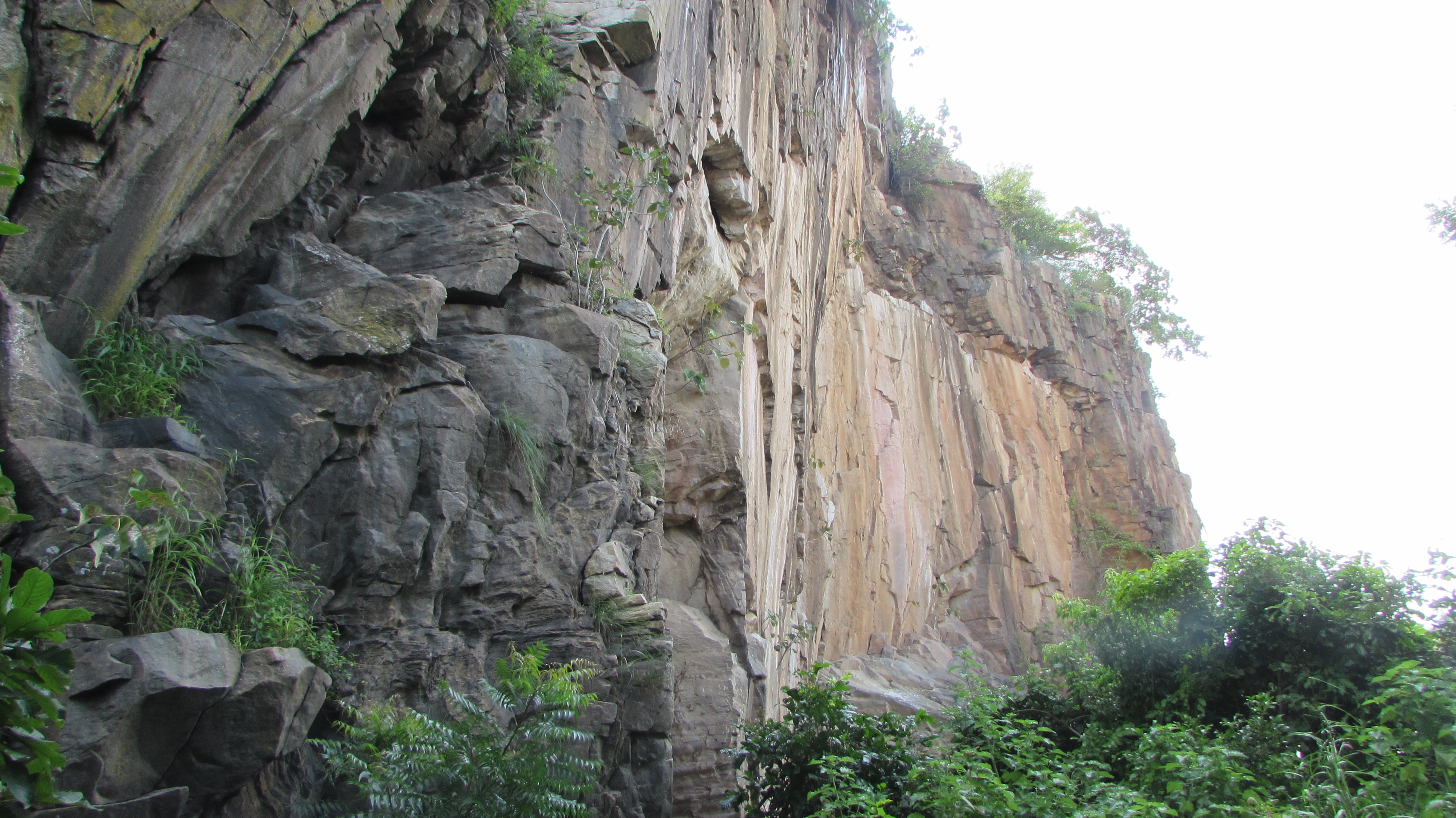
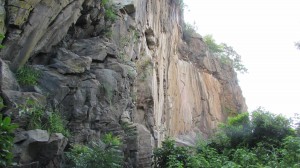
graffitiThe island was uninhabited and much of the rock was untrespassed. My guide said there was a path carved through the rock that leads from a side to the other. I wanted to climb the hill but that was not to be. Much of it was overgrown with shrubs and thorny weeds and you needed a machete to cut a way through. I sighted numerous birds, some monkeys and a few bush rodents. I settled on discovering as much as I could on foot without climbing instruments and taking pictures.

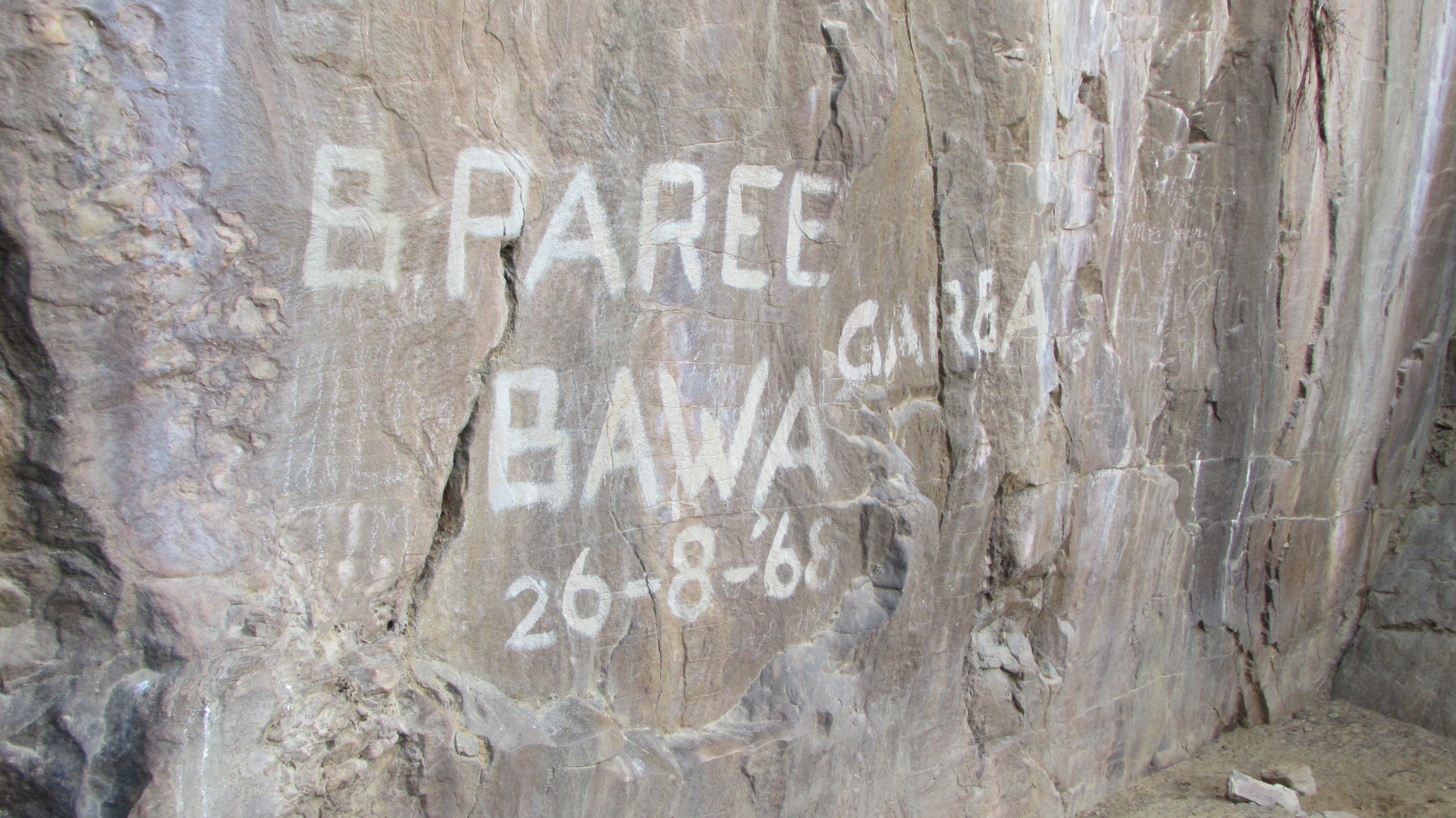
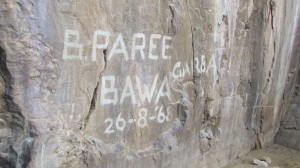
As I wandered around, I noticed that parts of the island was being used for maize and rice farming (under the Fadama project).  There was a solitary bull roaming about and my guide explained that the island was ocassionally used as an abattoir. On a section of the rocks , there was a graffiti written by some guy, B. Paree in 1968. After about four hours on the island, we got back to into our canoe, and sailed clockwise round the hill taking more pictures, and then back to the Jebba mainland to prepare for our homeward journey.

_________________

Adeleke Adesanya lives in Lagos. You can engage him on twitter at @startoffs.