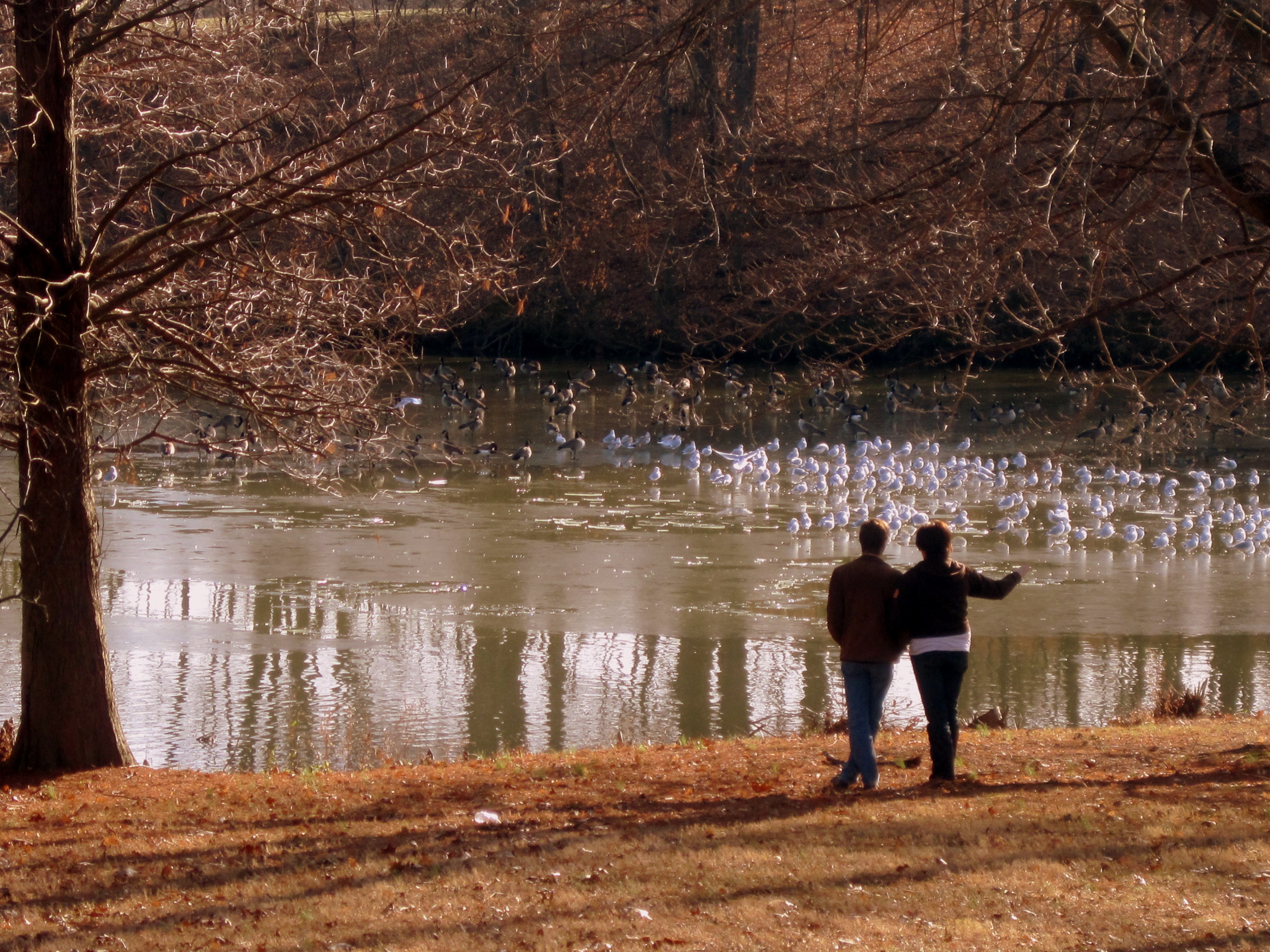
Browsing the archives for the adventures category.

All About Valentine

I’m sure that if I as much as asked around, I’d find that I am not the first or the last young man with embarrassing stories about Valentine’s day or first loves. The first Valentine’s day in my childhood memory occurred while I was in JSS3 or so just as I was just becoming a teenager. I had bought a well-designed card with lovely words and taken it to the extra-mural classes we had during evenings hoping to present it to the object of my attention who attended the same evening class. I however made the mistake of first showing it to a friend, who laughed at me, so I figured that the girl to whom it was addressed would hate it even more. Without reason, I tore it off, and sat the whole day wondering what would have happened it I had given it to her. I liked her very much after all. It was one of those moments that never come back, except in adult reminiscences of childhood playfulness.

An earlier moment of embarrassment in childhood love has however occurred a few years before this time. This was way back in primary school when a cute girl in my class suddenly became an object of my intense interest. The problem was, she shared a class bench and desk with some other guy who was not me. Not a good thing, I reckoned, and began to scheme how to take over the spot that I felt rightly belonged to me. So one day while everyone was on break, I moved my books and bag from my designated sitting space and transferred, without the teacher’s permission, into the spot where Tunde – my love’s authentic class partner – always sat, and waited for him to show up so as to show him his new sitting space far away; and for her to show up to be my new class queen. The succeeding events when class eventually reconvened a few minutes later – I must confess – were matters of great laughter to the class, and to me not just embarrassment but an attack, a conspiracy. For I could never fully understood the teacher’s sense of amazement that I had decided to finally move closer to “the love of my life.” I am convinced that variations of this event would have played out within laughters in my mind of my school mates whenever they thought back on those times of our childhood.

There was another one from childhood which I believe some folks might remember. Or not. A few quasi-risqué-romantic-ish prose poems from an eight year old boy have suddenly been discovered within his school books by his siblings. The boy was me, of course, and the girl was the same object from class. The punishment, according to them, was having to read the said “poems” aloud to a giggling audience of siblings within the house, or risk having them reported to parents. Why that threat of showing them to parents was such a big deal then is still not clear to me, but I will bet that it had roots in self-consciousness. I took the first choice, with all requisite boldness for such endeavour, and read my most private pondering on a desired love in public to a group of jesting folks who most likely just wanted to have fun at my expense. Luckily, it did not end up as the last of such expressions of emotions contemplated in solitude. As an undergrad in the University in 2002, I wrote another one and titled it “My Valentine Fantasy.”

St. Valentine’s day is coming again next week, and since the love fairy has already delivered my gift since a while ago, I don’t think that I have much of a request. It is likely that I spend the weekend at the annual Festival of the Mardi Gras in St. Louis anyway – my first time experience of the uniquely American festival of life, fun, colour and fanfare. For Chris’s sake – my American classmate and co-conspirator to the event, I hope it is more than just a day of staring at flashing boobs of random strangers. You bet I’d let you now what I think. Meanwhile, head over to LaurensOnline for those of you in Lagos who may want to impress friends and lovers with Valentine gifts of shoes and bags. You get up to 20% discount if you show proof of donation of any kind to the Red Cross for Jos Relief. It’s a season of giving, after all.

And yes, please tell me about your own childhood crush experiences. I’d love to listen to them, you know.
A Nice Old Pic

“One day your life will flash before your eyes. Make sure its worth watching.” – Anonymous.

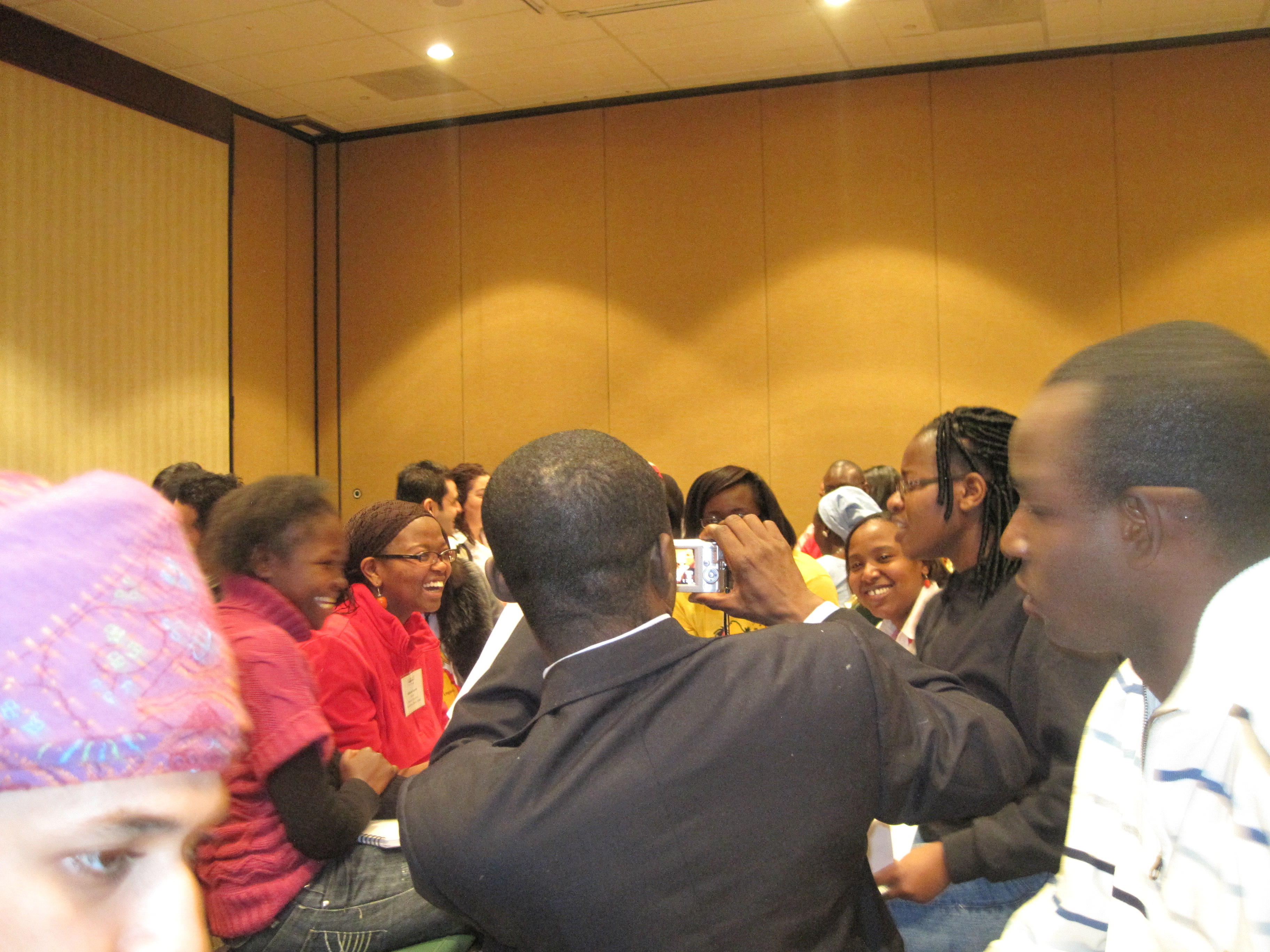
Picture taken during the Fulbright conference at the Hyatt Regency Hotel, Washington DC.

On Chinese Poetry

Professor Tom Lavalle is a great man. He is soft-spoken, he has sparse beards that cover much of his chin, and he smiles a lot. And he speaks Chinese! He is an American Professor in my department and he learnt, speaks and teaches Chinese language and literature. Isn’t that amazing? I met him for the first time on Monday even though we had been communicating a lot through email, and even though his office is just a stone throw from mine. For all I know, we may have gone past or maybe even bumped into each other more than once since August without knowing. For sure, the image of him that I had in my head before meeting him was not of someone of such height and demeanour. Why I had the preconceived image in my head, I have no idea. All I know is that when I met him, I was pleased. He is a pleasant person to talk with.

During the first email exchanges we had before we actually met, he had sent me these few translated poems from Chinese which I loved, so on meeting him, conversation inevitably turned to the subject of Chinese poetry and language and how it had influenced Japanese language and literature as well, especially in the form of writing. I learnt so many new things, about him, about China and about writing, language and culture. Why an American would be interested in Chinese poetry is not a question I would always ask, but I did ask for his own motivations, and I found them rooted in a craving for private space in the solace of words. He is a poet himself, writing in English, and his contact with Chinese writings had sparked a different kind of interest in him that has been sustained up to the present day. And because of him, students of this department now have the chance to learn Chinese language and culture at SIUE, and take field trips to a country of so much intriguing history.

Because of meeting him, one day I hope to start learning Chinese. I don’t know where to start from though, whether on a lesson in good calligraphy or on a lesson in Chinese alphabets which I am very sure is larger than the English one. And unlike many of the students who register for the class, my motive will not really be in anticipation of, and preparation for the new world order where Chinese is spoken as a first language by all world citizens, but to access many of the different forms of expression of thought buried within the texts of old and classical Chinese poetry.

Well, maybe I lie when I say that, but how would you know?

“Drinking Wine” #4 of 4

Tao Qian (365-427)

Autumn chrysanthemums have beautiful color,

With dew on my clothes I pluck their flowers.

I float this thing in wine to forget my sorrow,

To leave far behind my thoughts of the world.

Alone, I pour myself a goblet of wine;

When the cup is empty, the pot pours for itself.

As the sun sets, all activities cease;

Homing birds, they hurry to the woods singing.

Haughtily, I whistle below the eastern balcony –

I’ve found again the meaning of life.

(Translated by Wu Chi-liu)

“Exploring Yoruba through American Eyes”

  • I don’t usually write the word “Programme” as “Program.”

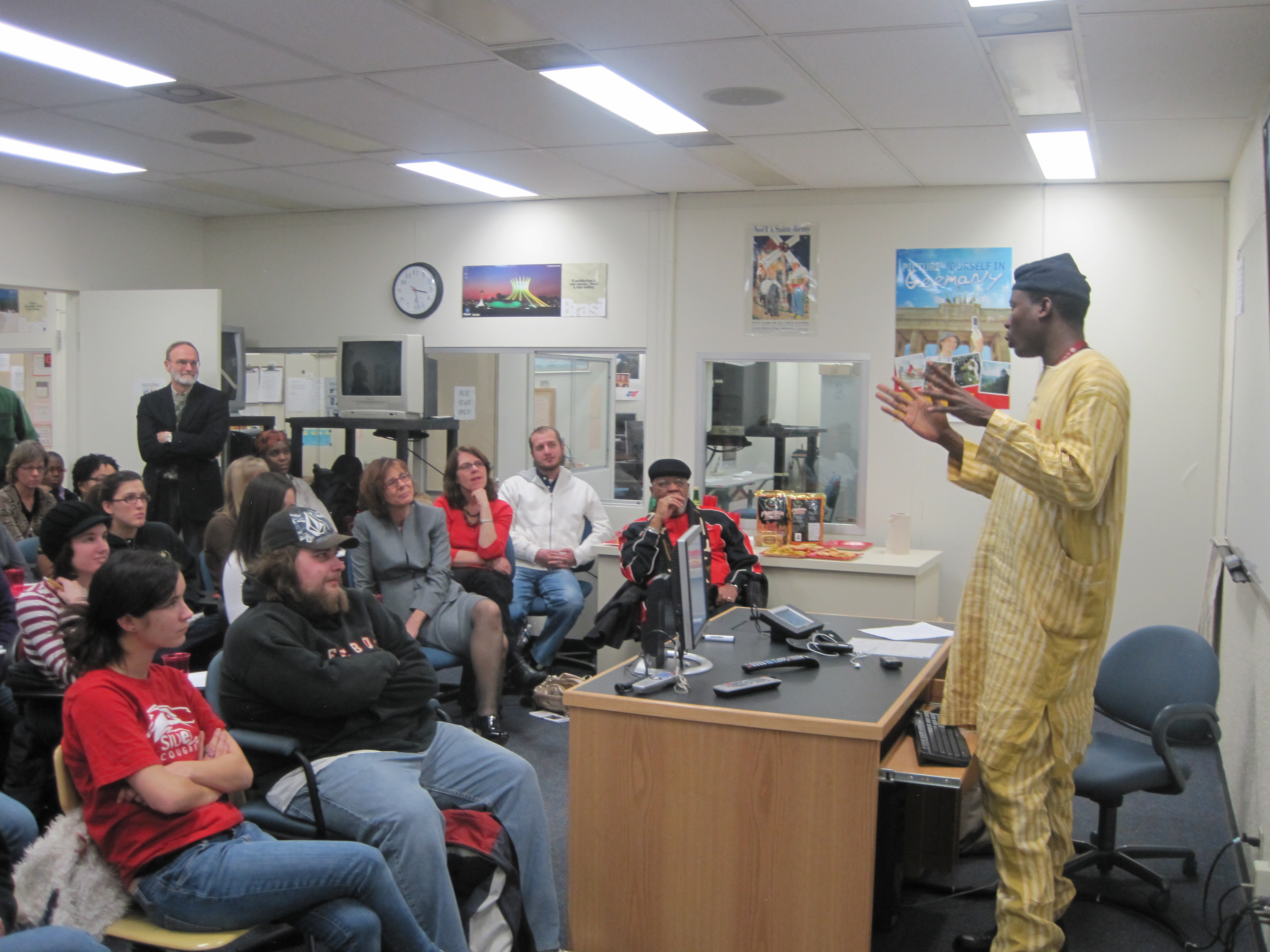
The long process that became today’s presentation began a little over a week ago when Prof Tom Lavalle, a professor of Chinese language and literature sent me a mail asking if I would be willing to kick off the “Discover Languages Month”  with a public presentation. I said yes. He asked me to suggest a title, and I did. He liked it. I didn’t have too much time to plan for it however, which would explain why I had spent a few nights sleepless putting everything in form. For this, I also owe credits to the pictures on my room wall who listened to my mock pre-presentation, and to Deola, Zainab, Tayo and Chris who offered valuable suggestions after previewing the presentation. I also thank Clarissa who sat gently and almost anonymously at the back, smiling at almost everything I said, and blogging 🙂 but whose presence along with that of other colleagues and friends gave me the needed encouragement; and Belinda Carstens, my head of department who barraged me with questions when necessary, thus inevitably pointing me to a few things I seemed to have been taking for granted talking to a people from a different background.

  • My undergraduate project in the University was called “The Multimedia Dictionary of Yoruba Names.”

One of the most intriguing discussion from the talk came during the realization by a few members of the audience that we still had kings in Nigeria, within Yoruba kingdoms. “Are they all monarchies?” Someone asked. “No,” I said, and went into a long explanation about the peculiar (and prehistoric) republican nature of the kingship system in Ibadan in sharp contrast with the rest of Yoruba kingdoms in Oyo, Ife and elsewhere. Even to me, that was a moment of personal reflection and pride in the accomplishment of Ibadan ancestors who broke with tradition long before the British came, and did away with a succession system of government that is based on heredity like is practised in Oyo or Ife for a more meritocratic system based on long-standing and verifiable contribution to the society. Even at the end of the talk, a few more scholars came over to talk to me and ask questions about the kingship system. The kings, we discussed, do not have political powers as such in the country, but do occupy a status of responsibility that makes them indispensable in the proper governance of the country. There was also a question about spirituality. This elicited a response in reaffirmation of the Yoruba worldview: that which has never sought to impose its belief system on any other group of people for any reason. We had fought wars for women, for land, but never ever to spread a system of belief or to proselytize to our own way of life.

  • Do you have Six Flags in “Yorubaland”?

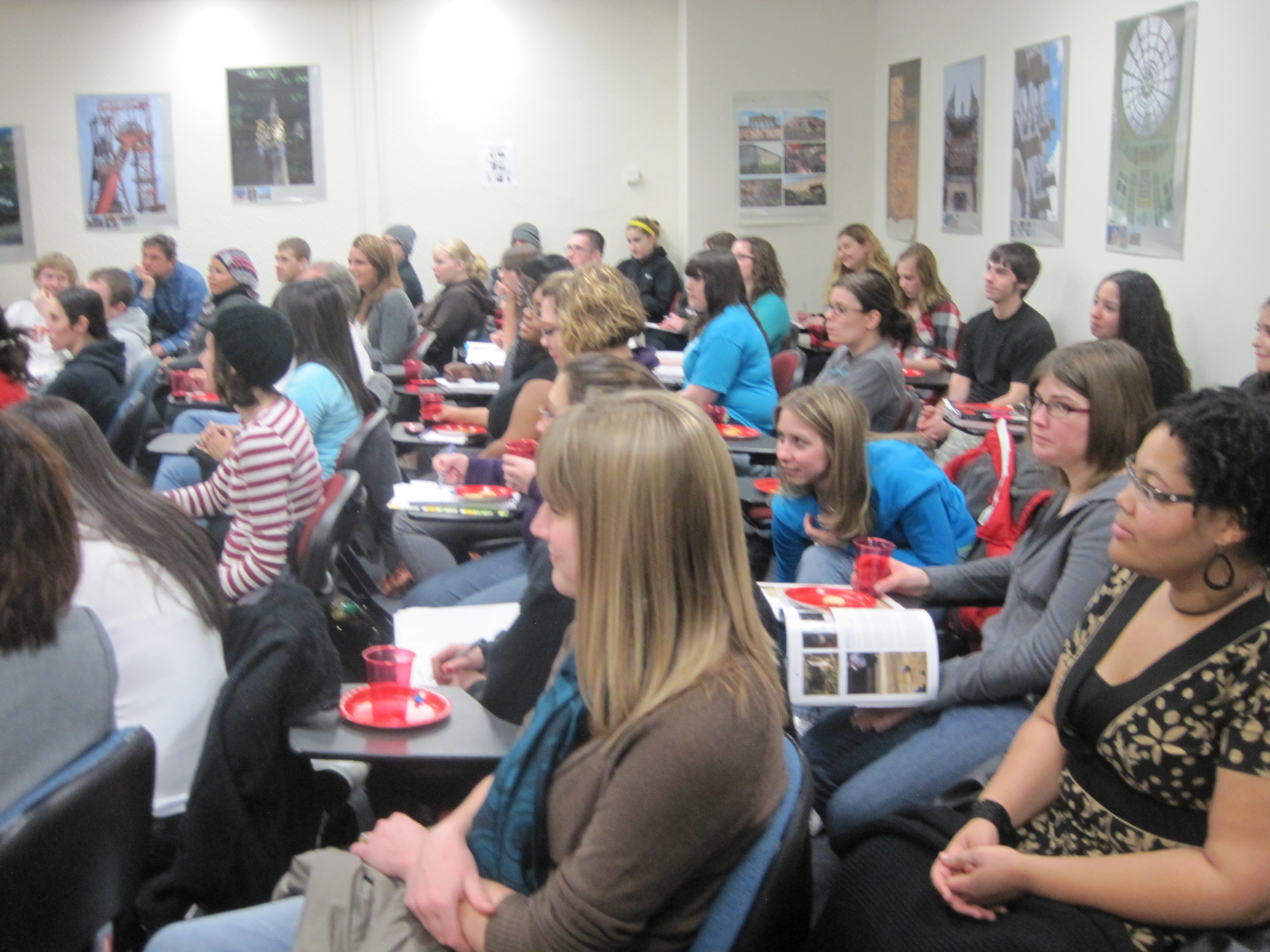
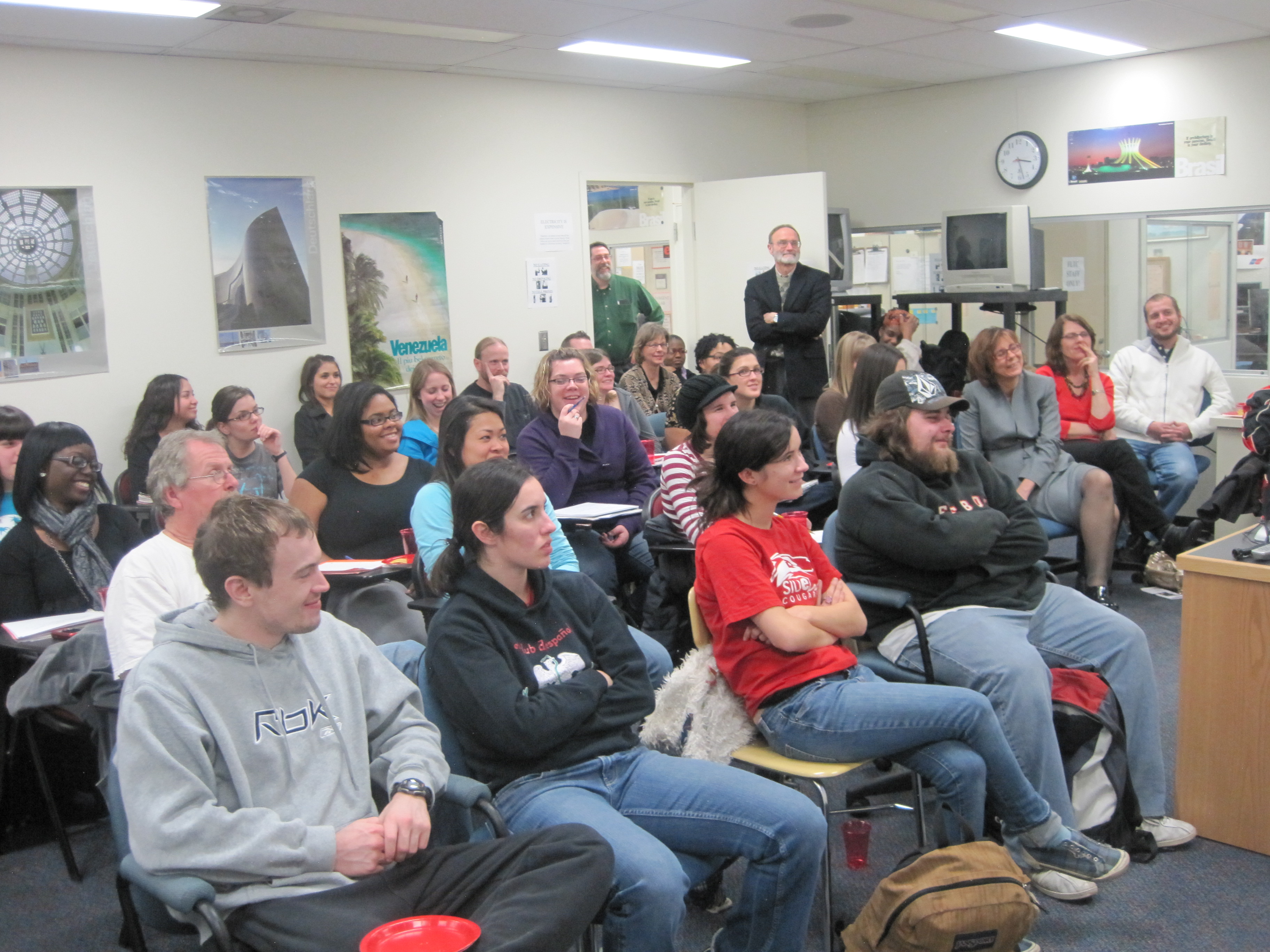
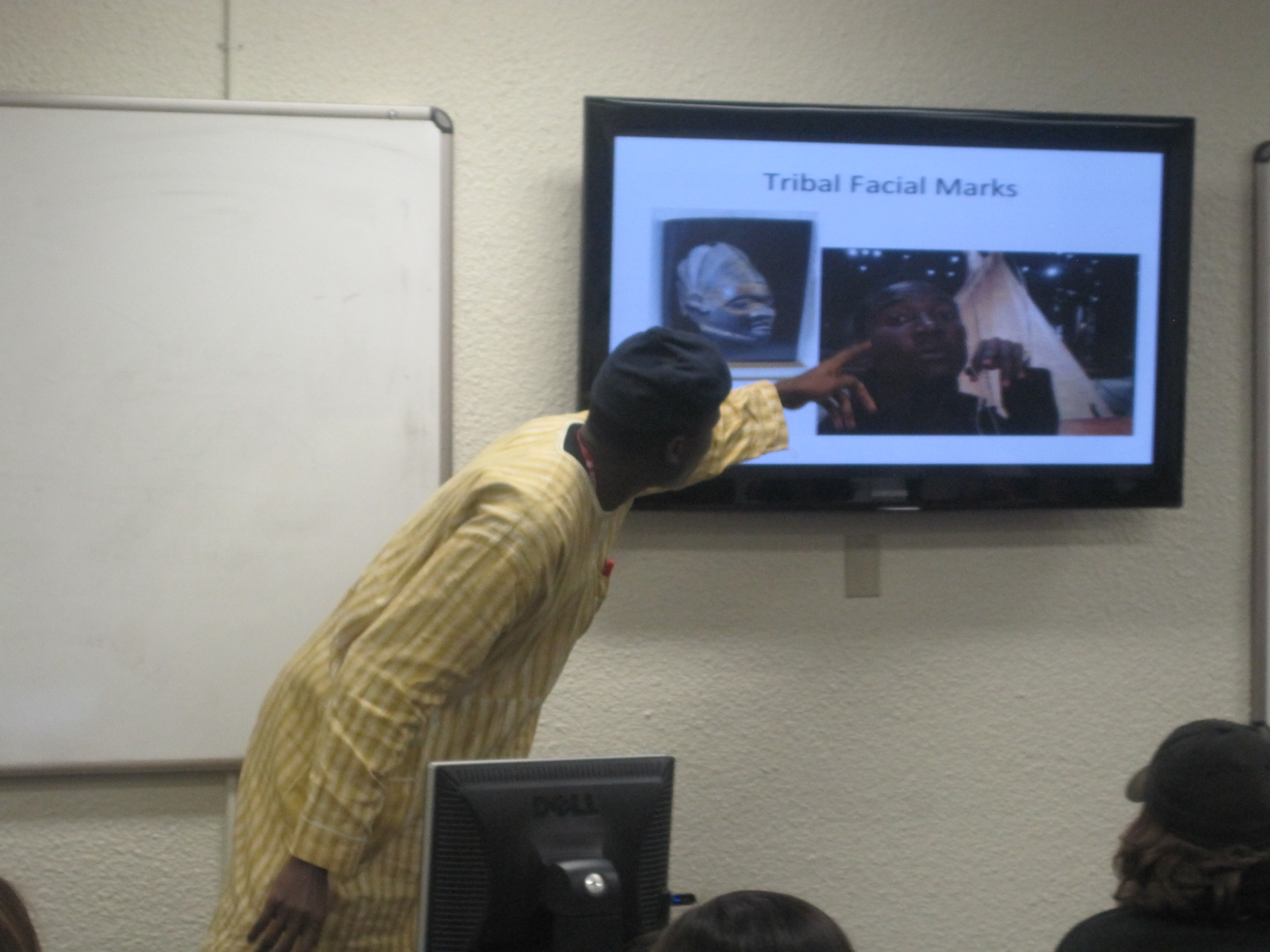
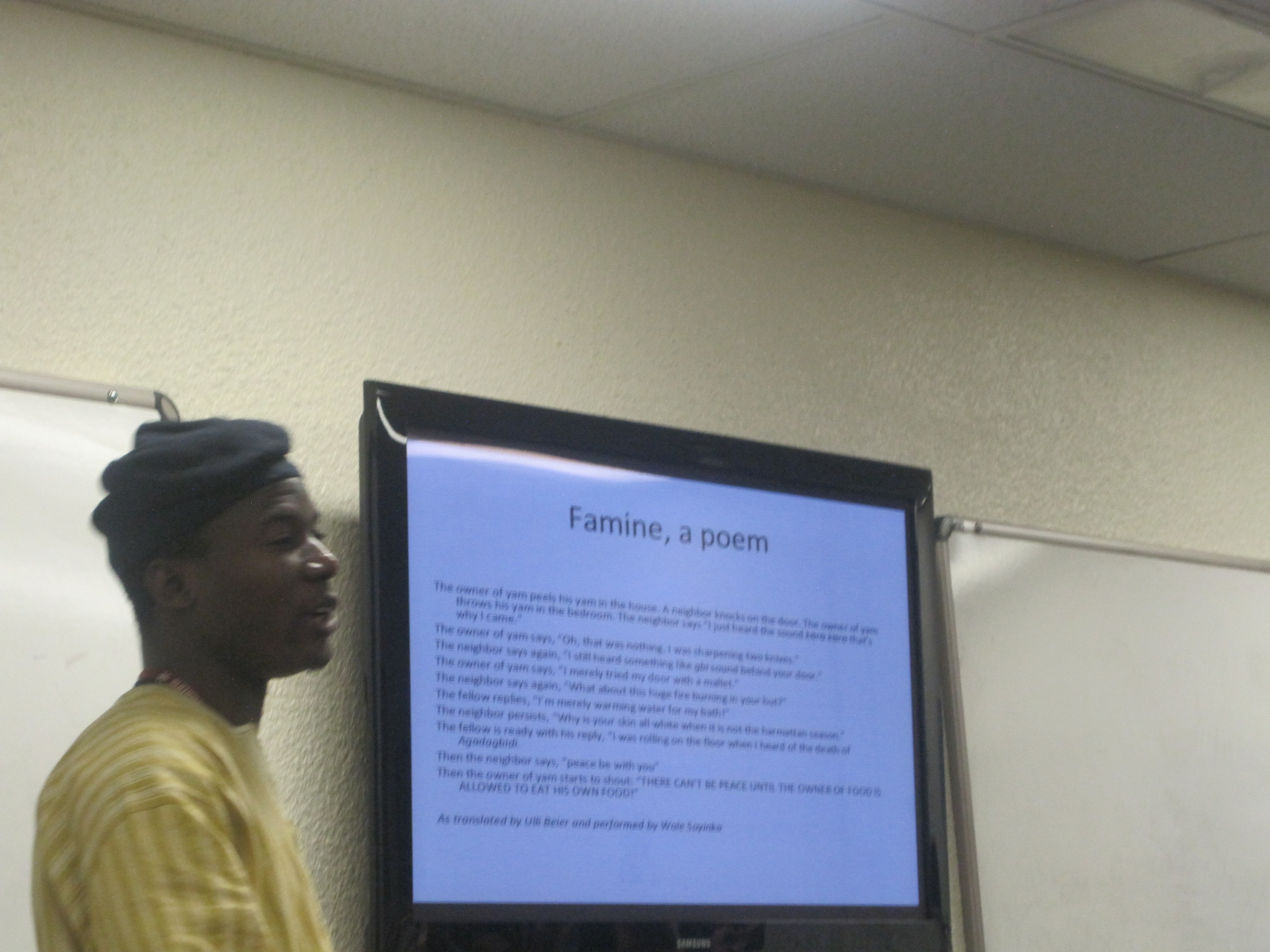
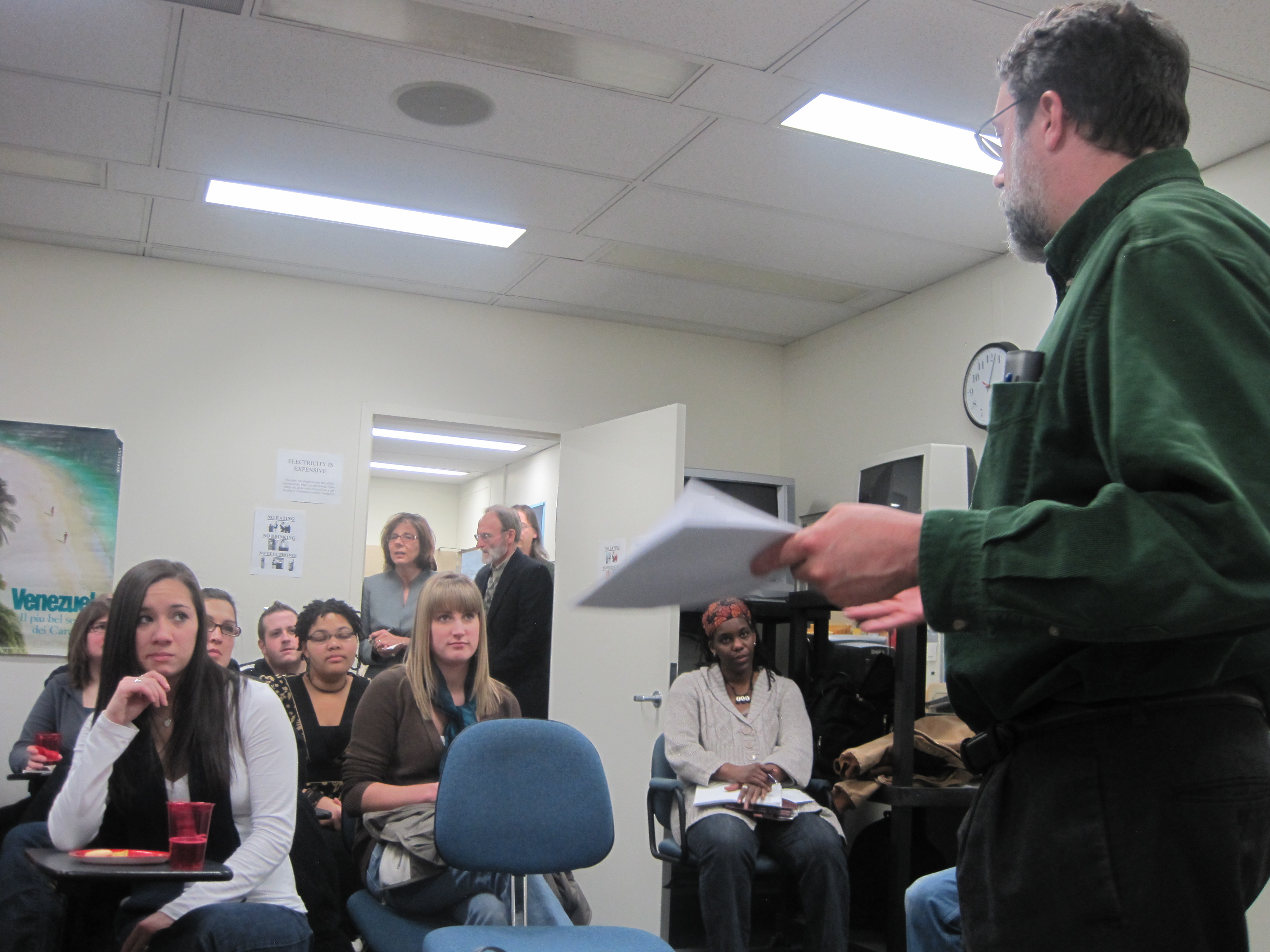
So there was food, plantain chips. There were over forty people in the audience, many of them standing. I saw a few old students in the audience, and a few current ones as well. How the old students knew about the event, I have no idea. Professor (Papa) Rudy showed up as well. It was my first time of seeing him this year. Also present was Prof Schaefer, professor of Linguistics, and SIUE Director of International Programmes who is no stranger to Nigeria himself, having taught at UNIBEN for many years and worked on the Edo language of Emai for a long time. I spoke about the mark on my face. I also spoke about the noted similarities between the Opa Oranmiyan and the Washington Monument; and about why I wear the cap in the United States even though I never did while I was in Nigeria; and about the meaning of names; and about masquerades, Lagbaja and the KKK (a little uncomfortable for me to broach); about Wole Soyinka and the many things he wrote about; among other topics. And then read a translated poem about The Owner of Yam and his Neighbour, which everyone seemed to have loved.

  • Is “Yorubaland” like Disneyland?

It was nice. I had fun. I’m guessing that from the response there will be more students next year registering for the Yoruba if the Fulbright commission decides to send more Yoruba teachers to this institution. I have also been told by professors whose students came to listen that they would be discussing what they learnt from the talk in their subsequent classes, and on Facebook groups created for the discussion of language ideas. I look forward to getting feedbacks from there. I enjoyed the talk. It was a nice but busy day. And oh, I also got the side pocket of my dress badly torn by a loose metal during the first jittery moments of sitting alone in front of the so large audience. Now I’ll need to find a good tailor to mend it, or leave it as a marker of this interesting speech-giving experience.

Well, there’s the report. I am glad to be here at this department of foreign languages at this point in time. You too should have been there.

  • Q: Why learn a new language? Why learn about a new culture?  A: The same reason why we learn anything new… to acquire new ways of interacting with the world around us.

Famine – An Excerpt

Stolen from the text of today’s presentation titled “Exploring Yoruba Culture Through American Eyes”, about to begin.


The realities of life are not to be evaded. Rather, they are celebrated, even the negative or unpleasant. Appeasement? Magic, perhaps? No matter. Challenges are thus acknowledged and countered, often with humour, (and) certainly with resolve.

Famine

The owner of yam peels his yam in the house. A neighbor knocks on the door. The owner of yam throws his yam in the bedroom. The neighbor says “I just heard the sound kr kr that’s why I came.”

The owner of yam says, “Oh, that was nothing. I was sharpening two knives.”

The neighbor says again, “I still heard something like gbi sound behind your door.”

The owner of yam says, “I merely tried my door with a mallet.”

The neighbor says again, “What about this huge fire burning in your hut?”

The fellow replies, “I’m merely warming water for my bath!”

The neighbor persists, “Why is your skin all white when it is not the harmattan season.”

The fellow is ready with his reply, “I was rolling on the floor when I heard of the death of Agadagbidi.

Then the neighbor says, “peace be with you”

Then the owner of yam starts to shout: “THERE CAN’T BE PEACE UNTIL THE OWNER OF FOOD IS ALLOWED TO EAT HIS OWN FOOD!”

As translated by Ulli Beier and performed by Wole Soyinka