Browsing the archives for the Academic category.

Gateway To The West

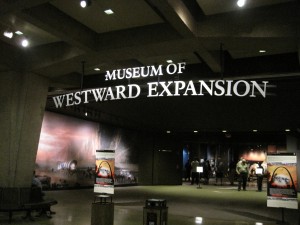
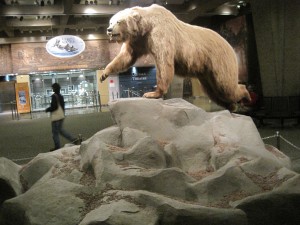
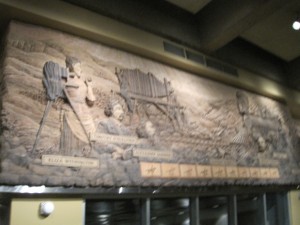
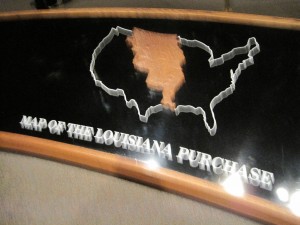
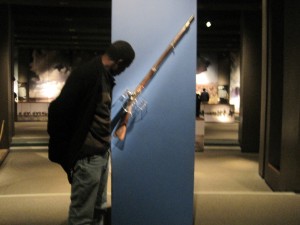
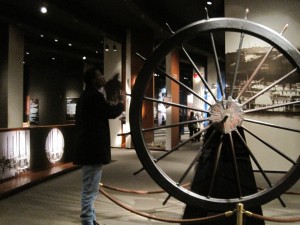
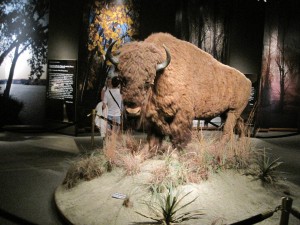
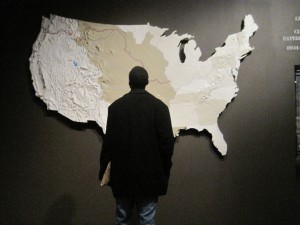
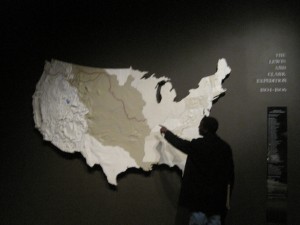
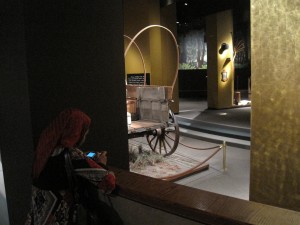
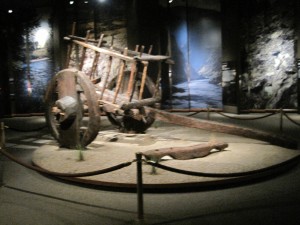
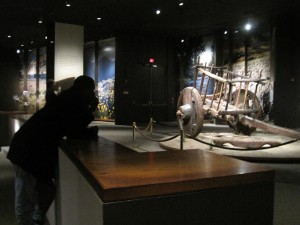
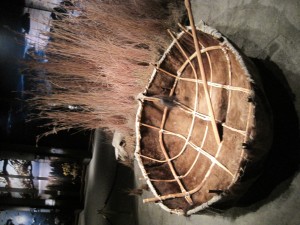
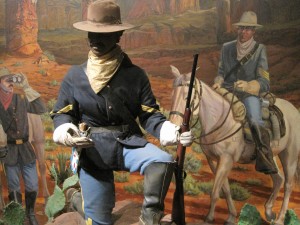
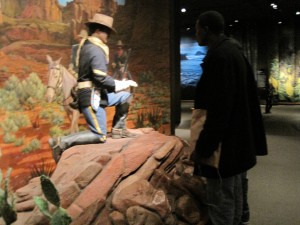
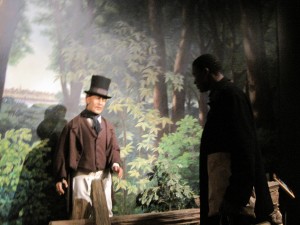
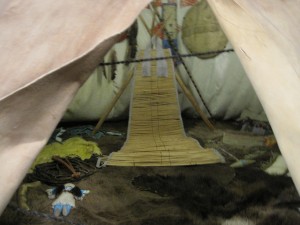
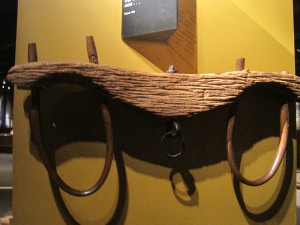
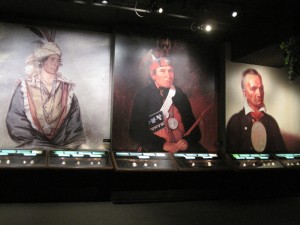
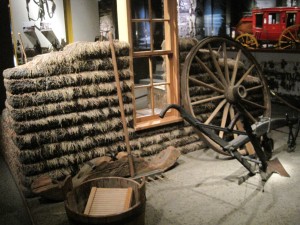
IMG_2653IMG_2652IMG_2655IMG_2656IMG_2657IMG_2659IMG_2660IMG_2663IMG_2664IMG_2665IMG_2666IMG_2690IMG_2692IMG_2693IMG_2696IMG_2699IMG_2704IMG_2707IMG_2709IMG_2715IMG_2716IMG_2718The Jefferson Memorial in St. Louis comprises of more than just the Gateway Arch. Beneath the large steel architectural wonder that is the Arch is the Odyssey Theatre and the Museum of Westward Expansion. It was in the theatre where we saw the movie of the recreated account of the Lewis and Clark expedition. The Museum of Westward Expansion has real-life replicas of things used during the expedition, things obtained from the native Indians, guns, carriages, animals, maps, and animated robots dressed and speaking like the characters they represent.

The way the Indians lost their land to the invading Europeans was a rather curious one – quite similar to the African experience. The white Americans approached them with a prepared text from the President, informing the awed natives that their land now belonged to an entity called the United States of America, and that more white people would soon come to displace them, and settle them in new places. To seal the “treaty”, the natives were given silver and gold coins that were said to represent coming in peace. The truth of the matter however was that the natives didn’t understand what the invaders were saying. All they wanted was to live in peace, so they agreed to everything without making sense of it. They probably thought that their guests were just going to settle among them in peace. Big mistake. By the time they realized it, it was too late. The land belonged to someone else, and they had to go elsewhere hungry, homeless and dispersed from their environment and means of livelihood. How messed up is that?

The African experience was different only in the fact that we were not totally annihilated, and after a while, the land was given back – except of course in places like South Africa, Kenya, Zimbabwe and some parts of southern Africa. The Native American Indians were not so lucky. It must have been the presence of malaria that made Africa such an uninhabitable place for the “visitors”, that after about a hundred years of exploitation, the invaders were as willing to go away as the Africans were willing to have them leave. But here is the similarity: artifacts, mineral resources, labour and artworks belonging to the great kingdoms were – mostly forcibly – taken over and given to the King, the State or the President as the case may be. It ceased to belong to the original owners from the time they however unwittingly agreed to accept the new folks into their midst.

Real, real curious, that word: civilization and enlightenment. If you asked the people of the great old kingdom of Benin, they would gladly give back (European) “civilization” to have back the original casts of their famous artworks now residing in the British Museum in London or the people of Egypt the great bust of their famous kings now resting in German museums. It’s a time like this when this saying rings most true: “As long as the deer family is unable able tell its story, the history of the hunt will always glorify the hunter.” – an old African saying.

.
Oh, K-the-Poet

Once upon a time, before I ever learnt to write a single word in any language, I was just a little son of a published poet. He was not always a poet to me however. He was just a man who embodied several characteristics at different times. Most times, he was just a voice on radio every Saturday. Over a period of time, I was known all around the neighbourhood of my upbringing as the son of so-and-so-the-poet-the-broadcaster. Most of those times, it was an annoying tag to have not just because it didn’t say who I was as a person but a reflection of someone else’s shadow, but also because in calling my name that way, they called unnecessary attention to me that I always sought to escape. There was no way I could enjoy the privacy of a harmless gathering of mates in a public gaming centre without being spotted and called out, like a public property: “Oh, K-the-son-of-the-famous-writer-poet-the-broadcaster. How are you today? What are you doing here? Where did you leave your shoes?” In many ways, those kinds of hide-and-seek from known faces defined my childhood, and I always swore to change my name sooner or later, either removing the connection to the-poet-the-broadcaster as a way of proving myself, or modify it in a way that left me the freedom first to be myself. I am sad to say that the scheme has not worked to total perfection, but I sometimes delight in the conceit of its pseudo-ingenuity.

IMG_0980

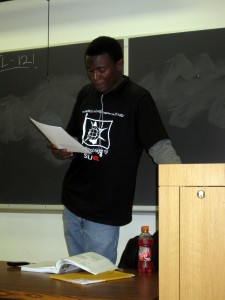
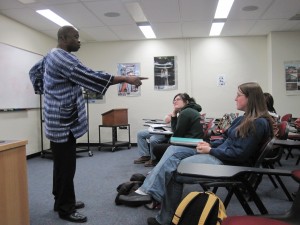
One day then, last year while applying for the Fulbright programme, I included a short anecdote of my father’s bold and brutal intrusion into my private bubble of innocence while I was young and impressionable at about seven years of age, and how that little act of defiance that he exhibited in the presence of us in class that day somewhat defined my attitude to language. What I didn’t know while writing the essay in which I had deliberately refused to mention his name was that it was not just going to be read by the American Fulbright board, but the Professors of Yoruba in the Foreign Languages department of my host institution, whose decision it would be really whether or not they wanted me in their University. Those whose essays were not impressive enough were dropped at that stage of the application. I got wind of this little gist only three weeks ago when I invited Professor A. into my language class to both assess the students, and to share a little of his experience in teaching Americans the language. Big mistake! Along with the knowledge he said he had possessed all along of the content of my Fulbright application essay, he told the whole class of how he was able to decode from what I wrote that I was K-the-son-of-the-famous-writer-poet-the-broadcaster even though he didn’t know me as a person, as well as some other flattering stories of how rich in culture the man’s works are, and how he and many in his (the professor’s) generation had grown up in Nigeria reading my father’s published Yoruba poetry publications, listening to his poetry music albums and reading his books. While the professor spoke, and I listened silently in the corner, the students all looked in awe as if there was a sudden new knowledge being bestowed upon them about the young man who’d been with them all along without having disclosed this crucial part of his person, and once in a while they cast their sights towards where I sat grinning.

IMG_1620From then on of course, they troubled me to come to class with poems both from my father, and some from myself, and I warned them with apologies that if they were to listen to the poetry of this man in original Yoruba, the music would probably be the only thing they’d be able to enjoy, and nothing else. They agreed, and said that I’d been dishonest to have held out on them for so long a time while they told me many things about themselves. I felt guilty, went to my apartment and printed out stuff that I always kept for my own amusement, and we spent the next class listening to me read from some of the poems I had written, some from long ago, and some from recently. I also read for the first time in public, an English translation of my father’s famous love poems which I had done in 2002, and they were thrilled. One person asked if the poems were written for my mother, and I answered in truth that we like to believe so, even though the fact is that they were written long before both of them were supposed to have met. I guess that’s for him to explain.

Today, on the internet – the main reason for this post, my first literary translation effort was rewarded with a publication. I got involved in this project through a tip by friend and poet Uche Peter Umez. Hard and daunting as it looked at first, I had the task of translating a poem, Volta, written in English by Richard Berengarten, into my native Yoruba. I am finding out now that the work was translated simultaneously into seventy-five languages, including Ebira, Pidgin, Igbo, Ibibio and Hausa which, along with Yoruba, are also spoken in Nigeria. I feel quite privileged to have participated in the project because it also offers some encouragement to my reluctant muse about the prospects of literary translation – mostly of thousands of lines of poetry, this time from my native Yoruba tongue into English, for the benefit of a larger world audience. It also gives me the benefit of somehow finally being able to lay claim to being K-the-poet-translator-himself-in-person. But maybe it’s true that a goldfish has no hiding place. Ask me, I’d rather be a hummingbird.

Find the project here.

What I Learnt This Week

All my students agreed, to my utmost discomfiture, that the Nigerian musician Lágbájá reminds them in some way of the Klu Klux Klan, even though his costume is neither white, nor as creepy. I wasn’t aware of this, and I had come to class with his most recent video, and a few others, as pointers to an authentic Nigerian musical art form popularized by this masquerade of a man.

“Does he ever show his face?”

No.

“Do people know who he is?”

Yes.

“Is he ever going to take his mask off?”

I don’t know.

And in actual fact, I didn’t. The brand that is Lágbájá has come to be defined by his invisibility, woven into the Yoruba’s mask as a form of cultural expression, along with the namelessness that Lagbaja represents. Lágbájá is a placeholder in Yoruba that means anyone of “anybody”, “nobody”, “everybody” and “somebody”.

In the end, all that mattered was that the students were exposed in some way to a form of artistic expression that both Yorubas and non-Yorubas are proud of as representative of creativity, and art. But that reference to the KKK, by both White and Black students of the class flipped me, and got me wondering just how much we take for granted because of our distance from the scene of events. It wasn’t so much of a consolation that the concept of Lágbájá is the farthest possible kind to that of hate-mongering, racism and intolerance.

Last Year

Written on November 4th 2008, when I didn’t even know that I was coming to Barack Obama’s home state:


Dear friends,

I cannot resist this urge. And since we are in the mood for rejoicing,
I urge you to kindly do so with me as well. A few hours before Barack Obama
got his own ticket to the White House, I got news of mine to his great
country. Well, not a flight ticket just yet, but a confirmed selection
as a Fulbright Foreign Language Teaching Assistant. It is a one-year
teaching grant to a post-secondary American institution to teach my
language in the 2009/10 session.

As much a great news as well as a great challenge, I am now beginning
a new extensive re-immersion into the culture and ways of my people. I
would not be going there only to eat hamburgers, right?

Greetings on Obama’s victory. It’s a new day.

Thinking back, I cannot almost believe that it’s already one year. What this means, of course, is that a set of new Fullbrighters have already been chosen now as well. By this time next year, I will be back home, or wherever else the wind of life blows me, and this university would have got its replacement scholar just trying to find his/her feet. Two years ago, they had Busola from Ibadan, last year, there was Tola from Lagos, and now Kola from Ibadan. If the trend of names are anything to go by, I won’t be surprised if the next person to come over here is a “Sola”, “Demola” or “Bola”. For one thing, they are easier names for Americans to pronounce.

A Dance

Performed by students of Yoruba at Pasadena City College California. I saw this on Youtube and I loved it.

I’m now thinking of a similar activity as a class project.