Browsing the archives for the Academic category.

Monday at the Institute

Yesterday I returned to the Institute at St. Louis to continue my work as a volunteer in adult literacy teaching. Getting to the place was a little easier this time, and the music from the radio helped. Oh, there was this awesome show on the NPR about how the economy of Brazil was turned around by two young men who introduced a new (first virtual, and later real) currency, the URV, and helped to turn the tide of the country’s spiral inflation.

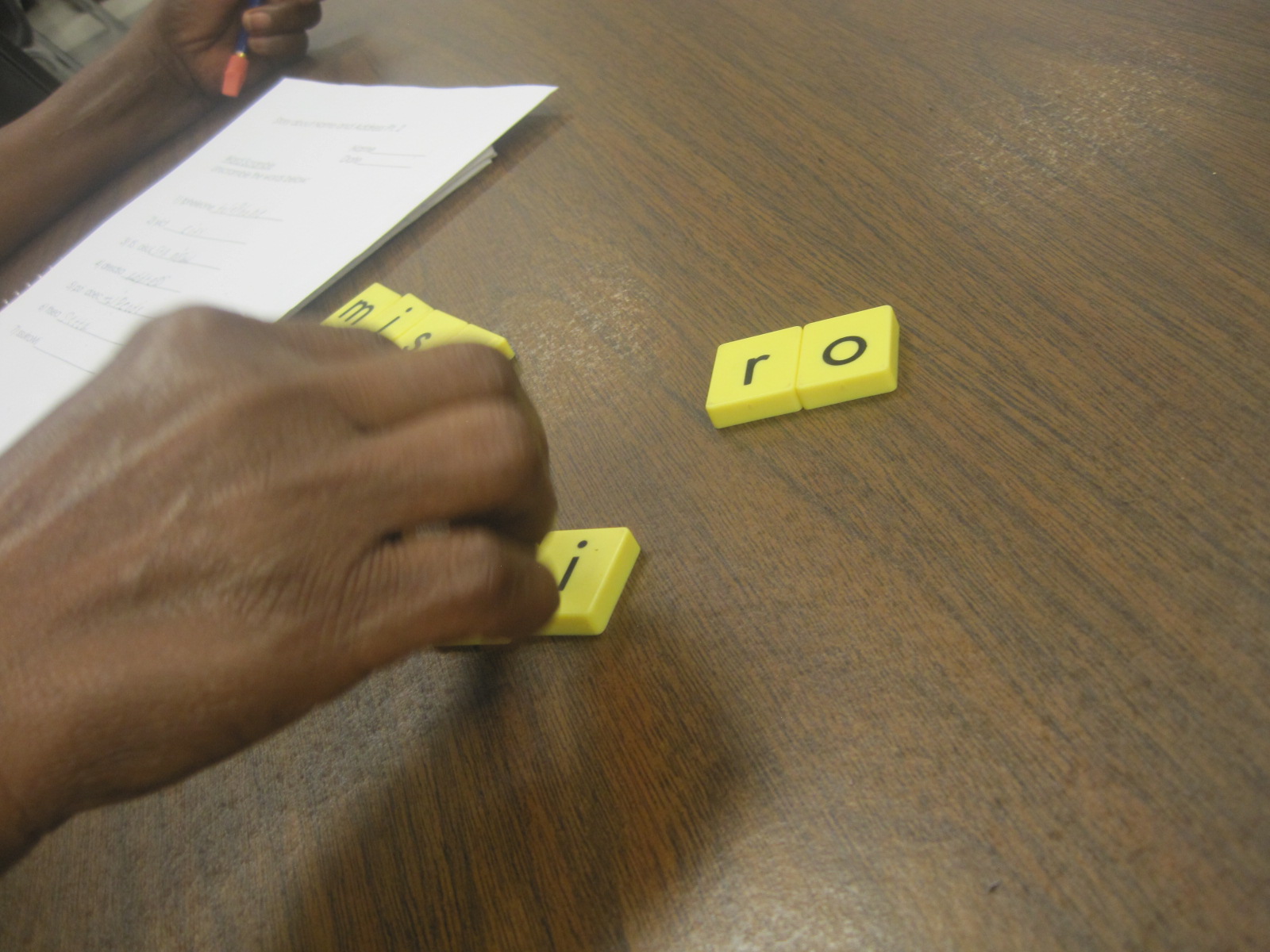
My student on Monday was a man from Bhutan of between sixty and sixty-five years old. He had never learnt to read or write in his life and was just beginning. I don’t know his condition of coming into the United States and I’m not interested in asking (nor am I even allowed/supposed to, I think), but I was impressed by his interest and a physical joy he expresses in his attitude to learning. Much of what we did on Monday were reading through images, repetition and demonstration. Then later we moved to dictation, crossword puzzles and word scrambles. The most interesting thing about each experience is that even when the students are not performing well in class exercises, there is a certain pride that come across in the faces of each tutor because of the efforts students have put in and the excitement on their faces for even having tried.

The students all come to the Institute everyday and will, after a while, learn sufficient literacy to conduct the business of daily living in the language of the society without help. Maybe not enough to read Dante, Shakespeare or Cervantes, but to do what they must to get through every day. If I could go there everyday of the week, I probably would.

Life of a Volunteer

The title of this post is premature, but I’ll leave it as that anyway. Monday was my first time as a volunteer teacher of English at the International Institute so I can’t tell you much about the life of a volunteer. The last time I volunteered for something similar was teaching up north in a Nigerian secondary school a lifetime ago. But that was different not only because it was mandatory but because the subject of that experience were young children who already have some exposure to the English language but only needed to improve on it. This time, I’m dealing with those who had never had any exposure to speaking, reading or writing English but are willing to put themselves through the stress of acquiring it, even at advanced age.

The International Institute in St. Louis is set up to cater for refugees, immigrants and new comers into the United States who do not yet have sufficient knowledge of the English language. Some of them were hearing English being spoken for the first time, many of them never opened a book, and most of them were holding a pencil, and learning to write for the very first time. Volunteers come from different parts of the country and  I had heard last week that the Institute would be closing down its adult literacy program as well as the citizenship classes for lack of funding from the government. Yesterday it was confirmed that Institute has just received new funding to continue the programmes, particularly adult literacy one, and so it would continue though the citizenship classes may not.

The classes have a very elementary syllabus, as would be expected of a class with such level of student proficiency. The students range in age from thirty to sixty-five and they come from different parts of the world. Our job was to help them read and gain sufficient literacy needed to survive in such a country as this. The books had stories that were easy to read and understand. They also came with pictures, as they should be, and each reading experience was one-on-one, with the students reading along and trying to link text with pictures and ideas. It brought smiles to my face to see grown people show that much enthusiasm to reading. We also did some word scrambling and a few phonic exercises.

What delighted me most is the enthusiasm and confidence of the students at learning. Many of them had been displaced by hard circumstances in their country of birth and had now come to acquire new means of communication in order to survive in a place away from home. They come with their own survival instincts and a rich reservoir of life experiences, but they can’t express them to us because we don’t speak Swahili, Dzongkha/Bhutanese, Spanish, French, Ewe, Gen, Kabiye or any of the languages they speak where they come from. Nor do we want to. It promises to be a rich teaching/learning experience.

Another Monday

There’s a law that I can’t yet name, but it says that if you had all the time in the world, you most likely won’t do as much as you would if you were very busy and occupied all through the day. For now, let’s call it the KTravulaw of Time Management. It is the truth in that law that has prevented me from blogging as much as I should this month, and it’s just as well. Studies are kicking into full gear. If symptoms persist, I will blog less and less until I would be able to write only one post in a month. And maybe that will be Nirvana.

Before then, I will be busy finishing the autobiography of William Shatner titled Up Till Now. As expected, it has a lot of funny stories of the man’s life, from the time a female gorilla held his balls and wanted to sleep with him to his very many risks taken in life and in his career. And then I can get over my obsession with Fela! the Musical, and the life of those who populate the story, e.g Sandra Iszadore who was the only woman ever to sing lead on a Fela track. Who was she? How did they meet? What was her relationship with Fela like? Was the relationship consummated? And if so, why/how did they separate?

And then I will try to go to St. Louis all by myself for the first time tomorrow with or without a GPS. Thinking about it now, it sounds like an impossible task. But I have signed up as a volunteer at the International Institute where they teach and resettle immigrants and refugees from parts of the world. I would be teaching (very basic and elementary) English, and I look forward to the experience. More than just a chance to see how volunteering works, or how second language speaking adults learn English for the first time, I also need the experience for my pedagogy class. I was at the Institute for the first time last week with a classmate and I was impressed by what they do with little funding from the Government, but now I will have to go there all by myself. If I get lost, I know whom to call. That is if the road police don’t get me first for being confused on the very confusing interstate highways.

Many more things have happened to me since a while, but I can’t tell you right now. I should either be sleeping or reading for the week’s classes. The weekend went by too fast. Have a nice week.

Discussing Toefl

I’ve had to write this exam called Test of English as a Foreign Language once upon a time, and my continued response to it was a big “WHY”! When Americans come to study in Nigeria, we never make them take UME or WAEC or even a simple test of Nigerian English proficiency, even though we probably should ;). Why then do we need to take a standardized test verifying our ability to speak like Americans? I got one of the highest score of the test, but I still don’t think I would ever learn to speak good enough for America, except for occasional comments of “You speak very well.” Neither do I intend to speak like Americans.

The class discussion on standardized test has brought the issues back to my mind. I doubt that British students get to take TOEFL so I don’t think that students from former British colonies should. I don’t know whether American students get to take German or Spanish proficiency examinations before studying in German or Spanish universities in Europe, but it would be fun to research that.

“Hi, My Name is…

…and I’m an alcoholic!”

That was what the scene of the first class looked like. Sitting in a circle in a way to make visible any member of the class who might be inspired to go to sleep without permission, the students all introduced themselves and what their motivations are. “My name is… and I’ve always been interested in language. I’m interested in what the possibilities are for language teaching and learning and I look forward to being able to teach it somewhere around the world in the nearest future.” Of course that’s convenient. A second way to answer the question could have been “My name is… and I’m bored with staring at the cielings in my house, and traveling, that I decided to come back to school and make something with my grey matter.”

That would at least have been honest, if hilarious, but this student wasn’t thinking that mischievously at the time as he sat quietly along with eleven other folks of different ages and convictions from different parts of the world… Taiwan, Mexico, America, China among others, and being introduced to the course that will make their lives miseerable for the next thirteen weeks. One of the other fun requirements of this course is finding someone learning English for the first time and tutoring him/her for at least once a week for three months of the course, and to describe and respond to their tutoring experiences in a weekly online journal posted on Blackboard. Isn’t that interesting? It’s about time to discover what thrill and frustrations there are in teaching, this time a new language, but one that is still new to the target student.

“Hi, my name is… and I’m looking forward to being able to go to St. Louis at least once a week to mentor one or even more refugee students and understand their attempt to learn English for the first time. Thanks for having me.”