It began as a mild argument about whether one could precede every sentence with “The bible said…” and where I stood was “Not every part of the bible can be quoted as being representative of Christianity, spirituality, or the mind of God”. The person who immediately became my opponent was none other than (Let’s call him X), my fellow Fulbright colleague (also sometimes known, mostly as “pastor”).
His his first response was “You are wrong! You can start EVERY quote from the bible with “The bible said” because ALL the words in the bible are words from God.” Now this argument is very suspect, and never fails to amaze and amuse me because I am familiar with the bible as a collection of texts that include not only historical accounts, prophesies, fables and inspirational writings, but also poetry and personal letters. As a religious book, it is a document that holds the faith of the followers, but as text, it is also a collection of words on which a certain authority has been stamped by the church as representative of the faith. So I said to him, let me show you a part of the Songs of Solomon, I think it was Chapter 4 vs 5:
“The bible says – to use your word – ‘Thy two breasts are like two young roes that are twins, which feed among the lilies.’ Right?”
“Oh no,” he responds, jumping with all visible agitation, “the Songs of Solomon are not as carnal as you have read it. They are a representative of the love of God to the church.”
What?
“You wouldn’t know,” he continued. “you are not a spiritual person. You are only trying to use your knowledge of books to analyse spiritual things. The Songs of Solomon are God’s message to the church.”
I have heard this argument before, and I like the rationalization given to portray the lyrics of Solomon’s love poems are possessing a higher import beyond their face value. But they are just words. They are seductive lines written by a rich and content king to many of his almost uncountable number of wives and mistresses. They definitely are the least representative of the mind of God to man. I could not imagine Jesus being flattered by reference to women’s breasts as representative of his thoughts towards mankind. No no. So, I told my friend that, and he was really furious. He perspired heavily, shouted, and jumped around so much that with a little push, I feared that he could have fallen down right there.
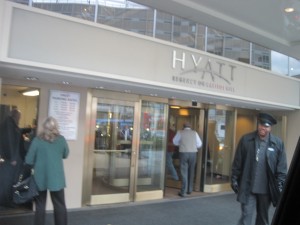
The argument escalated in pitch and intensity, in the open lobby of the Hyatt Hotel where the four of us stood idling away before our proposed excursion around the city. The more everyone intervened with a point that seemed to punch a hole in our friend’s righteous argument, the more livid he became, shouting this time at anyone “How would you all know? You are not born again. I know because I am. It is a spiritual thing…” And then he added “Everything in the bible is the word of God to us, and I believe them all.”
Here, I asked “Everything in the bible? Even the part that says you shouldn’t eat pork, in the old testament?”
Here he hedges a little, unable to find a right answer, and says that “that’s in the Old Testamant. I will not argue with you. You are not born again. You cannot understand the spiritual things of the bible.” He was livid. The argument took turns and angles, until he eventually stormed out of the hotel to get some air, but mostly to avoid more opportunities to explain why he should be trusted as an authority on a subject that is obviously not mainly spiritual, but practical. We were all supposed to be scholars, free of the clutches of dogma, but it was a moment of enlightenment to discover that we were not all. And it was sad. Here was a particular case of the first ill: “I’m right, you’re wrong” quickly escalating (and degenerating, I should add) to the ignorant condescension of “I’m righteous, you’re dumb.” The last and usually brutal stage of such unchecked arrogance is, as Nigerian Nobel Laureatte Wole Soyinka puts it clearly: “I’m right, you’re dead!” If we had given to it, who knows how physical the argument could have become (between us two friends no less) on that floor of the Hyatt Regency.
No, not money, fanaticism is sometimes the root of all evils.
 This is my 200th blog post!
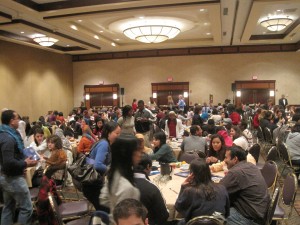 Meanwhile, the conference itself is very warm gathering of 409 Fulbrighters from 49 countries teaching hundreds of languages all over the country. I have met old friends who remember me, and those who don’t. I have also met new ones who had heard about me and those who hadn’t. There will be more conference sessions tomorrow, and more feeding sessions too, until Saturday when the conference officially ends. We have learnt about Social Networking for the Foreign Language Classroom, Writing for Publication in Foreign Language Journals, and Scenarios & Strageties: Addressing Individual Student Concerns. Tomorrow, there will be more… Before this conference ends, we will meet with some representatives from the State Department. No, I don’t think that there is a chance to see the Secretary of State, so that’s that, already crossed out.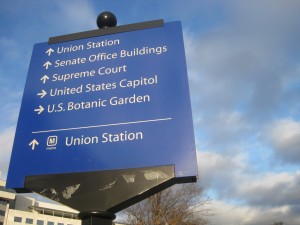
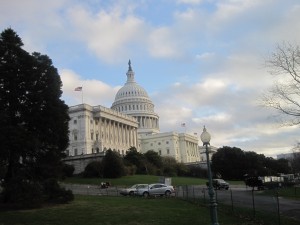
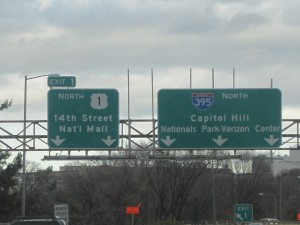
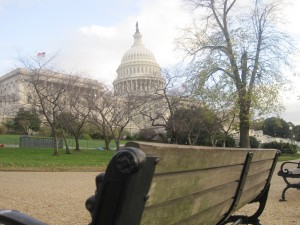
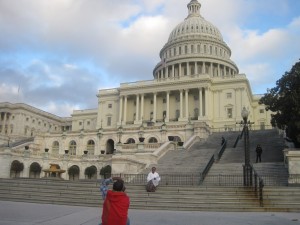
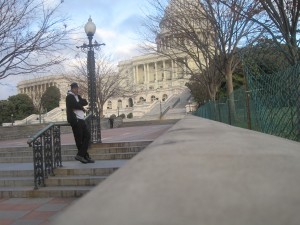
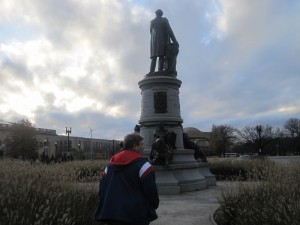
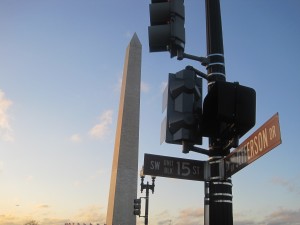
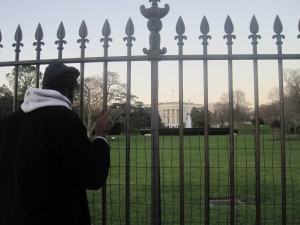
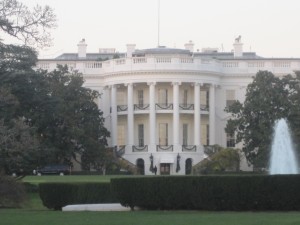
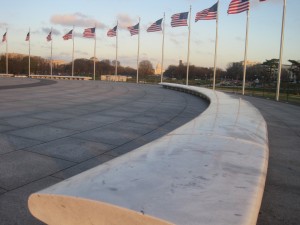
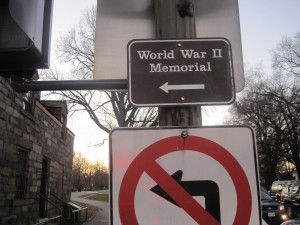
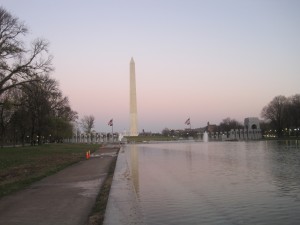

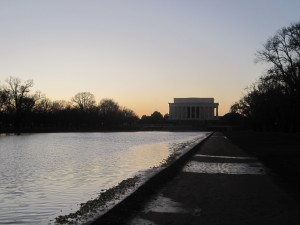
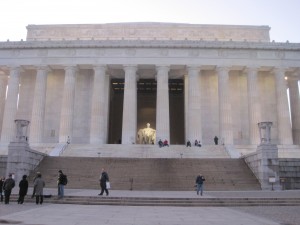
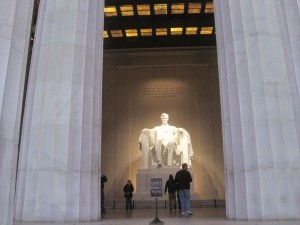
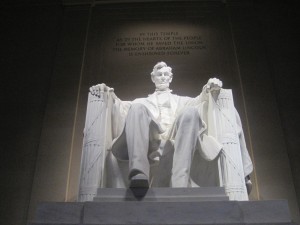
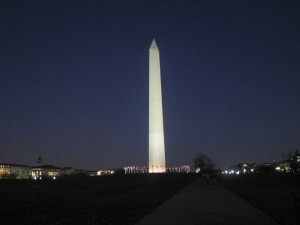
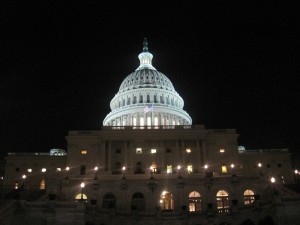
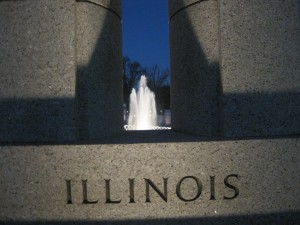
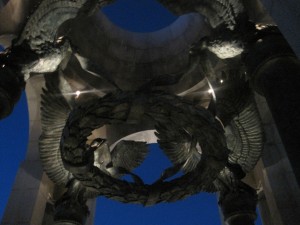
 all taken on my first day in Washington District of Colombia. Those familiar with the famous landmarks in the city would recognize the Capitol (which houses both legislative houses of the country, and in front of which each new president takes his oath of office), the Lincoln Memorial (which houses a larger than life marble structure of President Lincoln, and in front of which Reverend Martin Luther King delivered his I Have A Dream speech), the Washington Monument (which was at one time the tallest structure in the whole world before being overtaken by the Eiffel Tower in France and later the St. Louis Gateway Arch among others. Now, it’s just the tallest structure in DC), and the White House which houses the president.
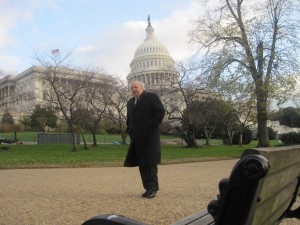 The first thing I did after checking into the Hyatt hotel and finding out that the registration for the conference will take place much later in the evening, and that I had more than three idle hours to burn, was to pick up a map of the capital, and set out to discover it, on foot. Because of the so many American movies I have seen I had a certain confidence that I knew just where everything was located. The Capitol, a magnificent Dome that houses the two houses of the United States Legislature stood just a stone throw from the Hotel, so it was the obvious first choice. The first thing that I noticed was the not so adequate number of traffic lights. The traffic lights were indeed different in design from the ones I’m familiar with at Edwardsville, but they were not enough. Some times, I just had to cross the road the Nigerian style – after looking left, right, left and right again – when there was no light to guide.
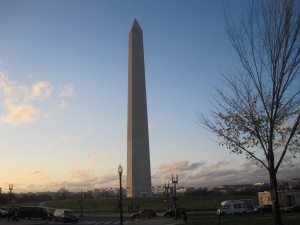 After I left the Capitol, whose interior I could not access only because it had closed to the public just a few minutes earlier, I headed to the Washington Monument. The Washington Monument is a brick obelisk structure built to commemorate the life of the city’s founding father President George Washington. Just like the Capitol, the Washington Monument was closed to the public, or I would have loved to go up to its top if there was such a chance, and look down on the city. According to Wikipedia, it is is both the world’s tallest stone structure and the world’s tallest obelisk, standing 555 feet 5⅛ inches, and representing the dead president’s overlooking eyes over his capital.
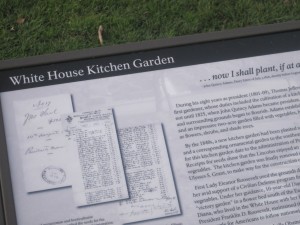
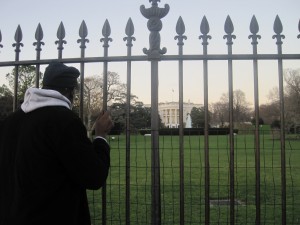 From the Washington Monument, I had two choices: The White House or the Lincoln Memorial, both of them almost equidistant from the Washington Monument. I chose The White House first. The long walk across public parks and winding roads to the White House took almost twenty minutes, only because I walked fast without stopping even for air. It was beginning to get dark. I got there in time, peeped through the black iron gates to look at First Lady Michelle’s garden project pictures displayed within reach inside. I could see the South Lawn fountain at a stone throw in front of me. on the second floor of the side of the building facing where I stood was also the Oval Office, where the president spends most of his office time. I was indeed looking at the magnificent mansion in which most of the world’s most important decisions were reached. I have never seen the State House of Nigeria. I don’t know what it looks like, nor do I know where exactly it is located.
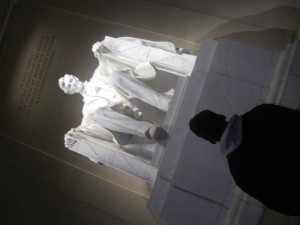 I then went, still on foot, towards the Lincoln Memorial – the site of the now famous “I Have A Dream” speech. It comprises of a small building which houses a larger than life marble sculpture of President Abraham Lincoln staring out towards the Obelisk of the Washington Monument. Actually, between the Washington Monument and the Lincoln Memorial is a long Reflecting Pool around which hundreds of thousands of supporters and civil right activists stood and sat while Reverend Martin Luther King Jnr read his speech. Looking at the sculpture of the late president did not fail to humble and inspire. On the walls to either of his hands were inscriptions from Abraham Lincoln’s famous speeches, and right behind the large marble sculpture are the words: “In this temple, as in the hearts of the people for whom he saved the union, the memory of Abraham Lincoln is enshrined forever.” Those words, along with the ones on the wall, bring a kind of solemnity and awe to the already hallowed feel of the memorial, and I left feeling quite inspired, especially when I think of the fact that on those same steps out of the building was where the words “I have a dream” were first uttered in a way that sowed a seed of hope whose result is now being felt all over the United States.