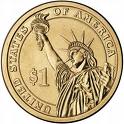
 Yesterday, I discovered the American gold coin called the dollar. No, not the paper dollar bill, but a coin. I’ve been here for over three months and can’t believe that I never encountered the dollar coin in all this while. It is fascinating, especially for someone like me who has liked to pride himself as a relentless numismatist – a collector of coins.
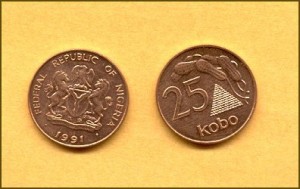 I remember the first coin that ever fascinated me. It was the old 25kobo coin of Nigeria’s late 80s. Along with other coin denominations of 10k, 5k and 50k, the 25k coin had a very interesting significance for me perhaps because of the engraved symbols on it that looked like blisters on a black man’s hand. The coin was brown, made from brass, I think, and different from all the other coins that were made of silver. On it was the embossed image of the Kano groundnut pyramids of the 60s as well as groundnut seeds. On the coins, the pyramids looked just like little cones, but in larger pictures, they showed a concrete symbol of industry and hardwork with strong men moving huge sack produces of their all-year round labour. And although the images never really inspired me to pursue agriculture, there was always something very moving about staring at the image of the mammoth structure built from stacked sacks of annually harvested groundnut (peanut) from the land awaiting exportation to the corners of the globe. Those were the times of our great prosperity, when Nigeria was totally self-sufficient, just before oil was discovered in large quantity and everyone went around to sitting on their asses in government offices, waiting for their piece of the “national cake”. I never did ask exactly how the groundnut pyramids were eventually transported, or how many sacks/bags of groundnut made a pyramid, but looking at more than scores of man-made mammoth mounds of harvested food sitting around the northern deserts stamped in my mind an image that has refused to shake for over twenty years. And the 25kobo coin has always remained my favourite of all the coins made in Nigeria. Of course, today at home, no one spends the coins anymore even though there has never been any official pronunciation declaring them no longer fit for transaction. My University in Ibadan has remained the only place in the country where taxi drivers (and them alone) still collect coins in exchange for services. The twenty-five kobo bronze coins have by now been relegated to the dustbins of our profligate history.
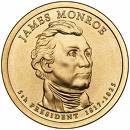 The dollar coin that I saw has the image of James Monroe, the 5th president, on one side, and the statue of Liberty on the other. A quick search through Google has now shown me that there actually have been several issues of the currency bearing several different president’s images. I don’t know why the coin is not is much circulation, but I know for a fact that, unlike in my wasteful country, this coin is actually a legal tender acceptable by everyone and at every vending machine. I know this because when Tola put it in the machine yesterday, it gave me my Mountain Dew and returned the right amount of change. So what exactly is wrong with Nigeria? I mean, besides profligacy!