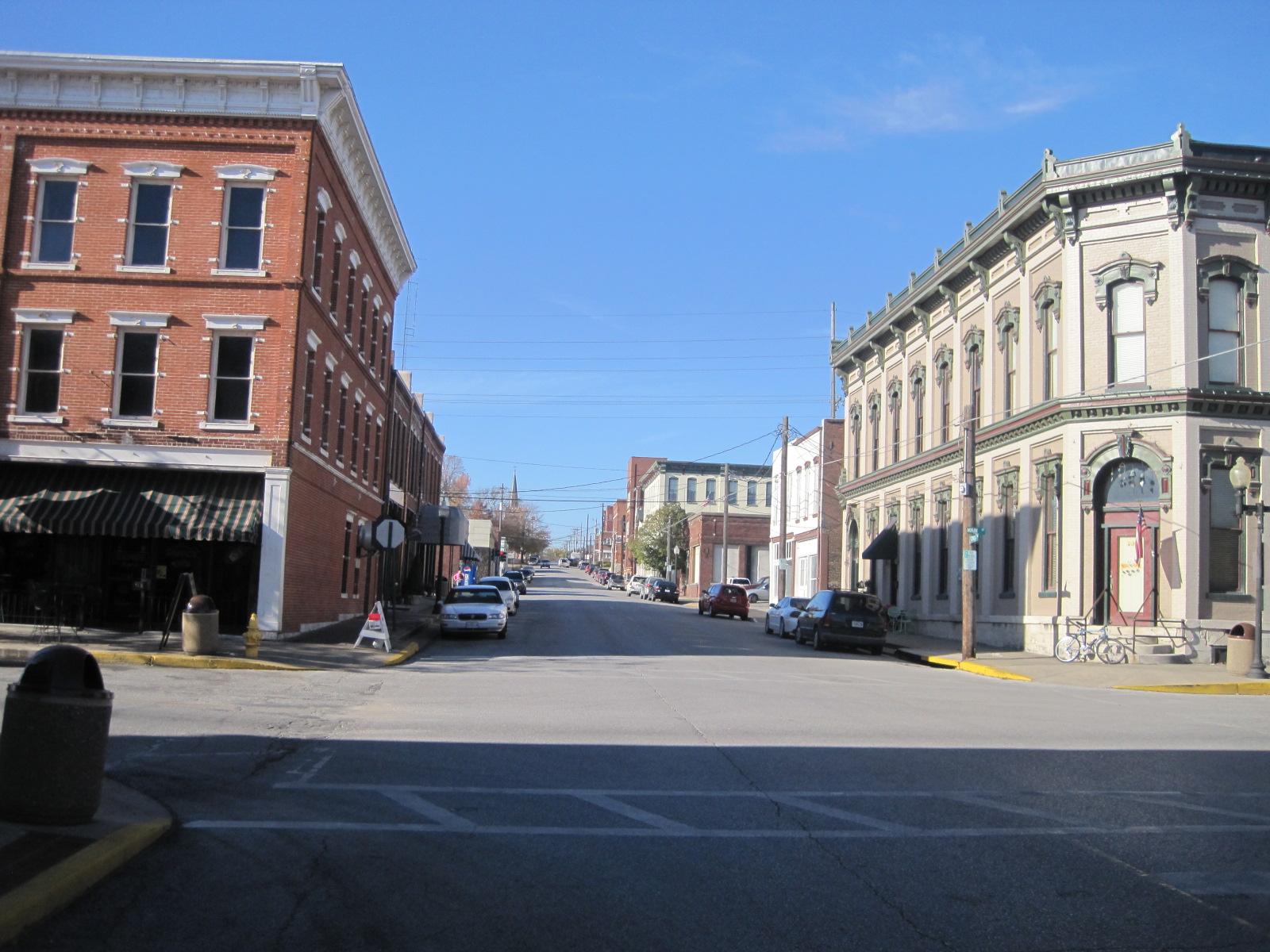
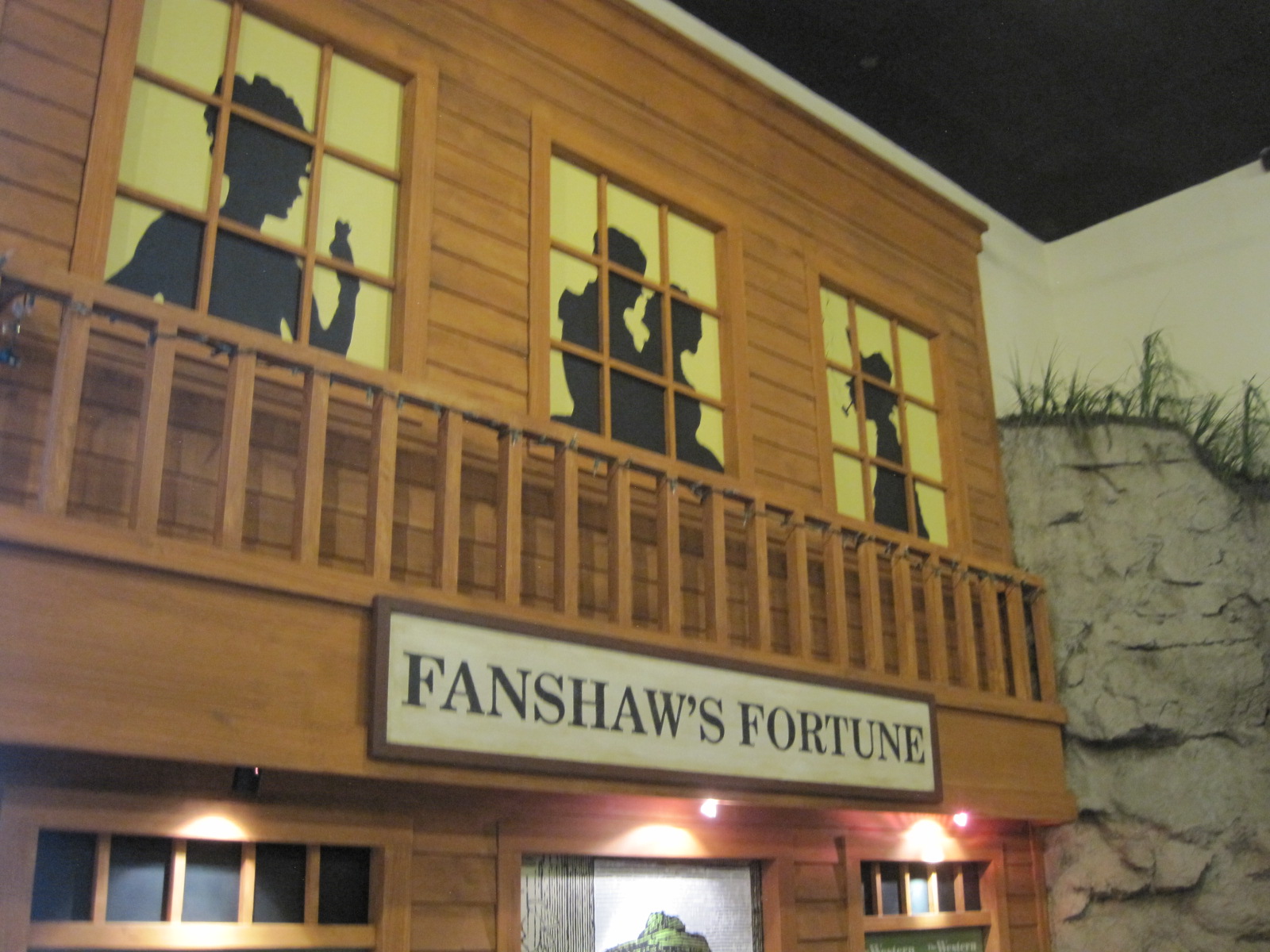
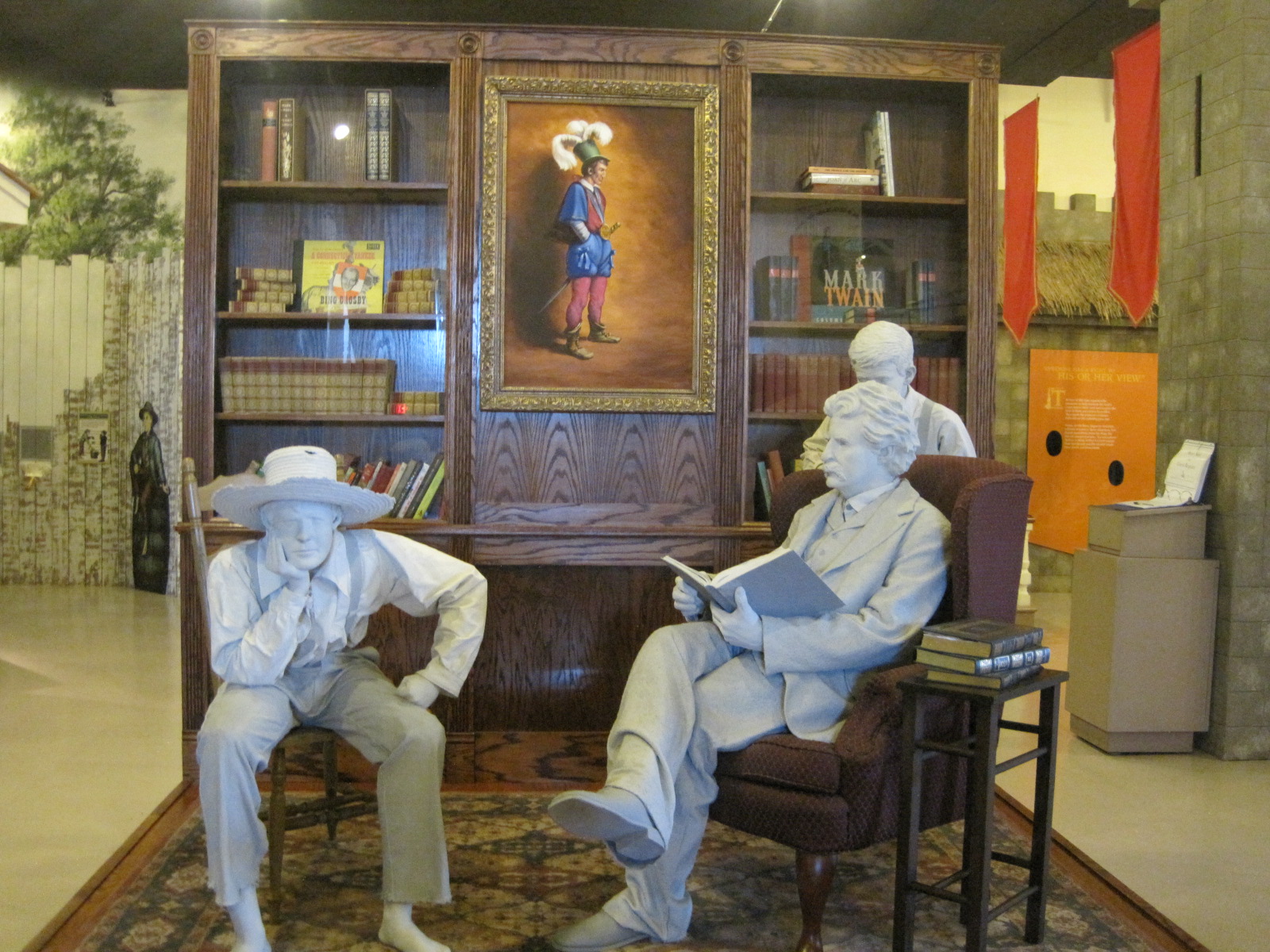
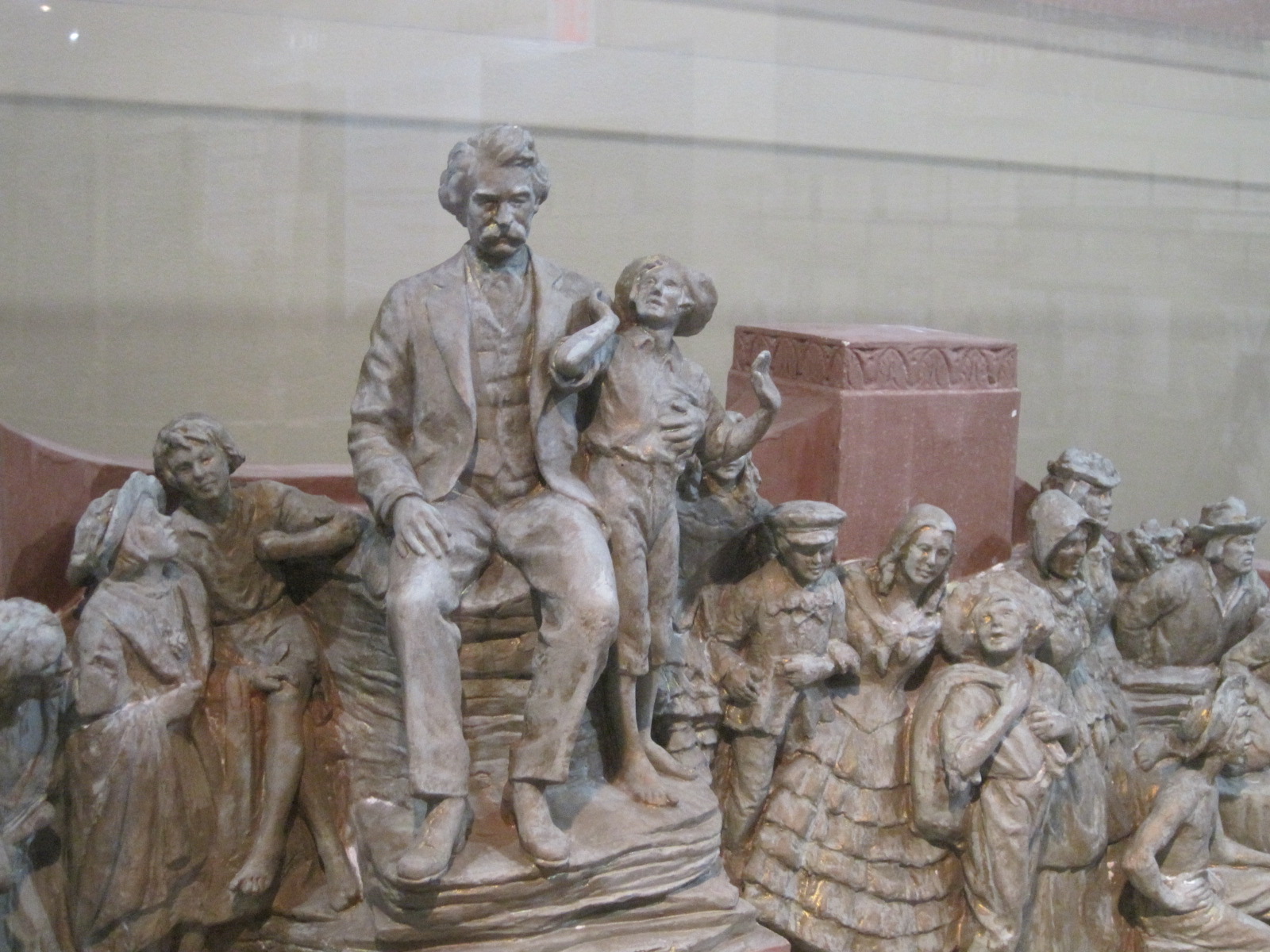
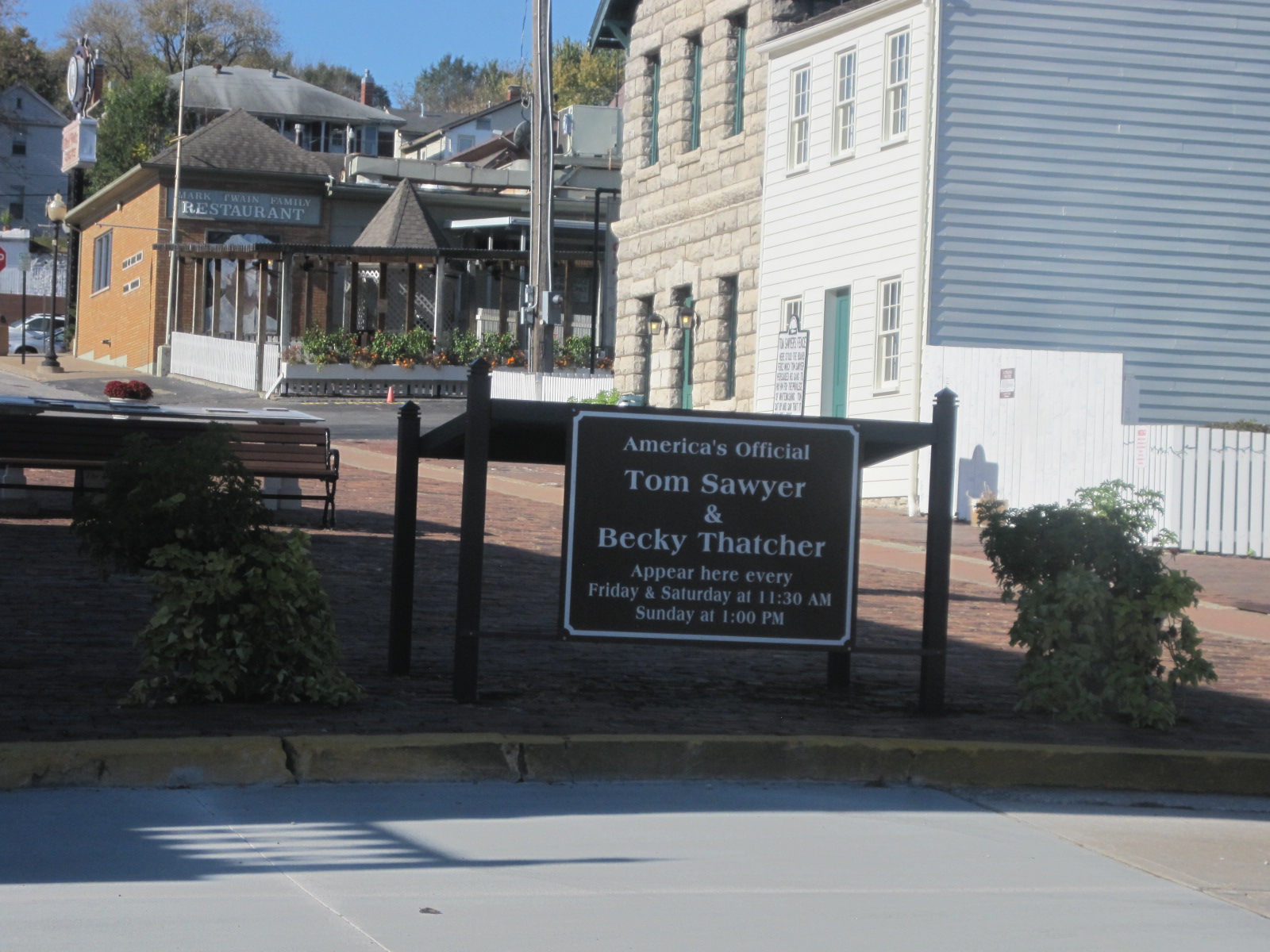
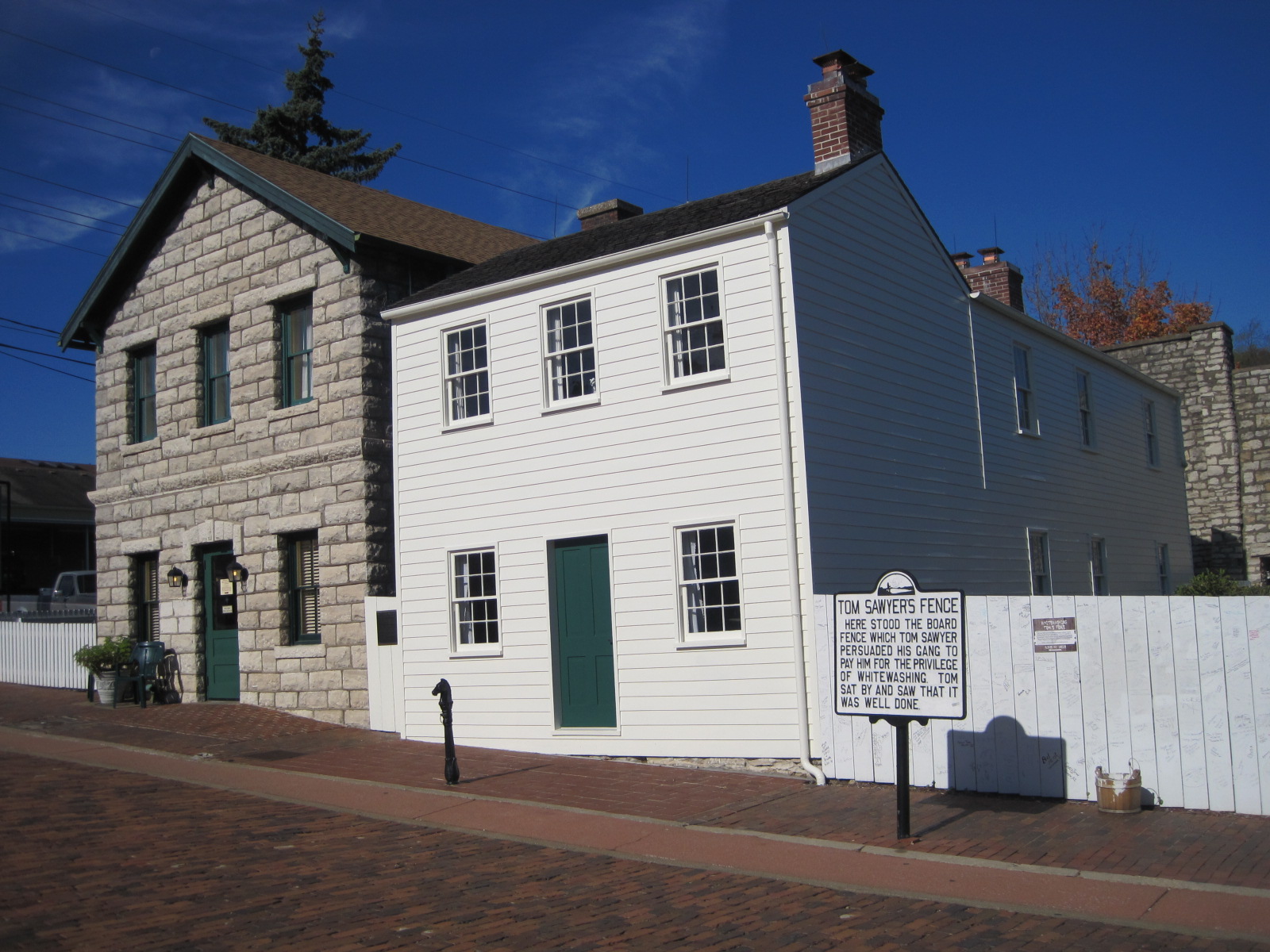
 More pictures from the little town overlooking the river.
Browsing ktravula – a travelogue! blog archives for October, 2010.
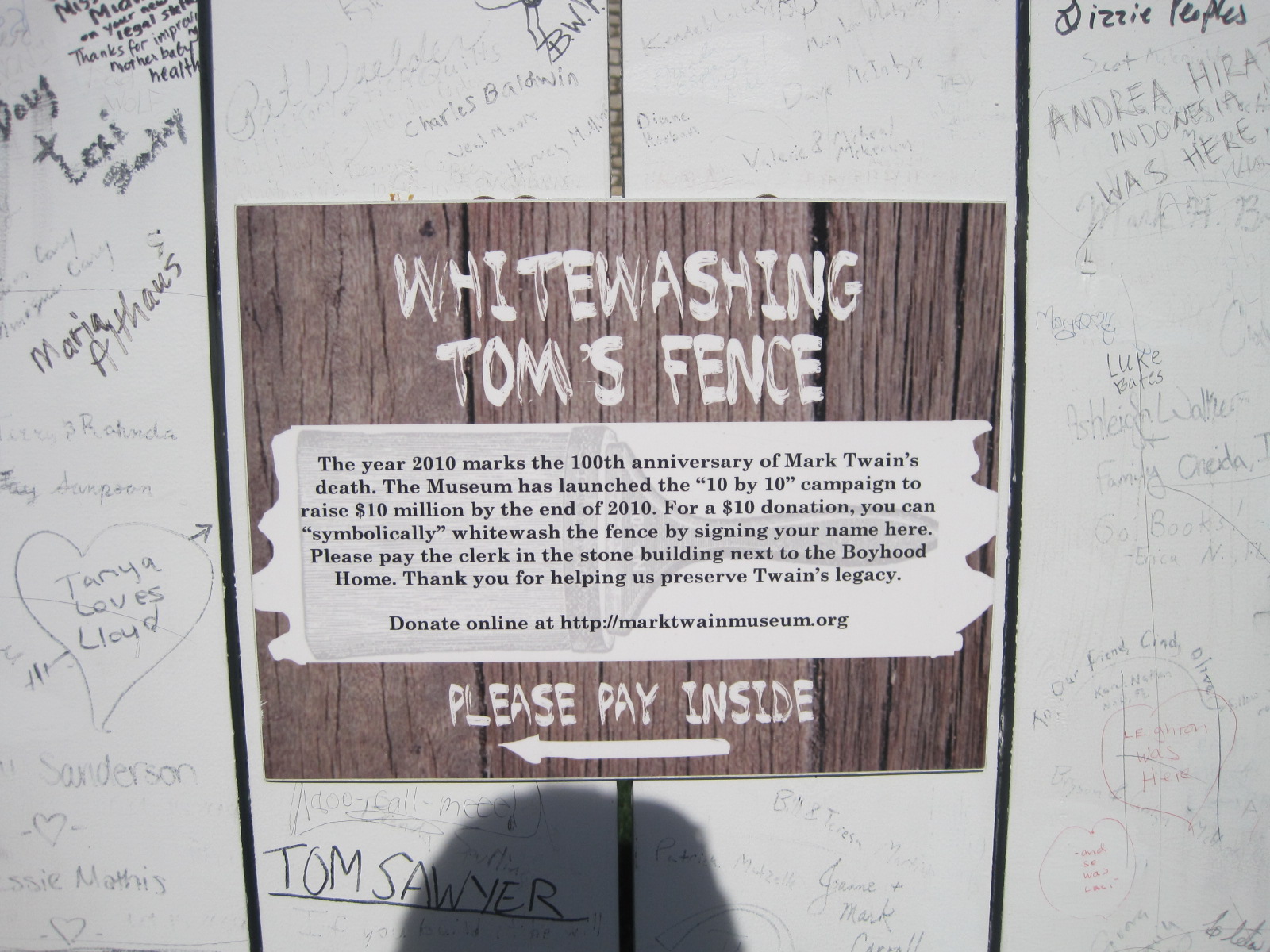
 And so I went to Hannibal, a little town two and a half hours away (131 miles north) from my present location. More than anything, it is famous for being the birthplace of Mark Twain (born Samuel Clemens) and the site of his boyhood home with the famous white-washed fence. There’s so much to say about the journey, from the open land of the highway which reminded me of the trip between Kaduna and Zaria to the coolness of the fresh morning air on the way and back. Then there were the sculptures, the quietness of the town, the beauty of the museum building, and the amazing detail of the house as compared to the descriptions that Twain wrote about them in his books The Adventures of Tom Sawyer and Huckleberry Finn. The famous white-washed fence was there all right, now marked with names of visitors from all over the world.
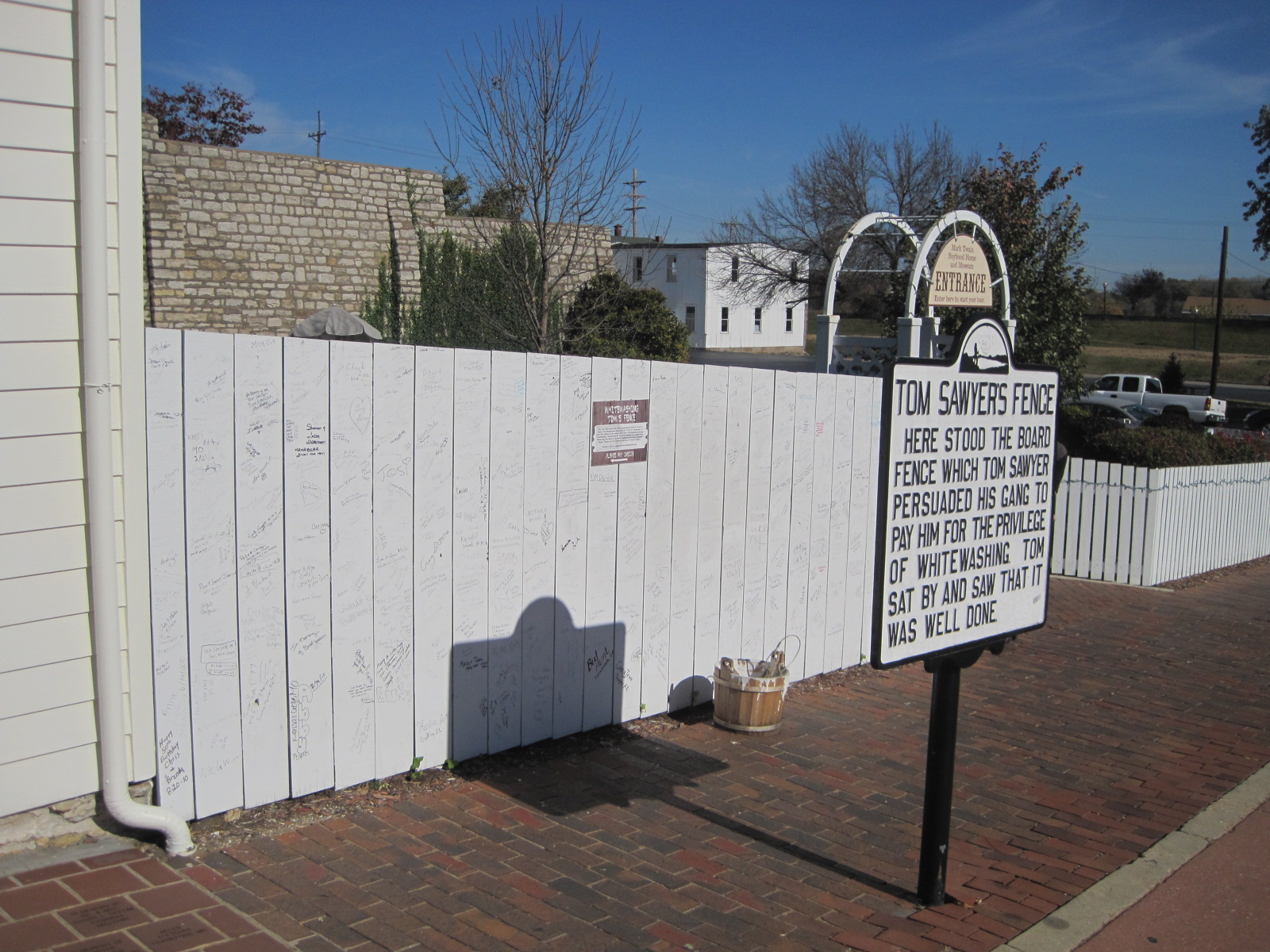 For those not familiar with the story, the young boy Tom had successfully conned his bullying friends into doing his own chore of white-washing his house fence for him. Samuel Clemens grew up in this house in Hannibal, a son of a judge of a father living on a low income. He moved out of it in 1853 to seek his fortune. Twenty years would pass before he started writing The Adventures of Tom Sawyer, and he drew most of his materials from the events of his own childhood on the streets of Hannibal in a house overlooking the Mississippi river. This makes a lot of sense: living through a very hard but colourful childhood and amassing in the process a very large stash of memories, and waiting at least twenty years to set them down to paper, sometimes after returning to visit the place and reliving the memories. Now that’s an idea.
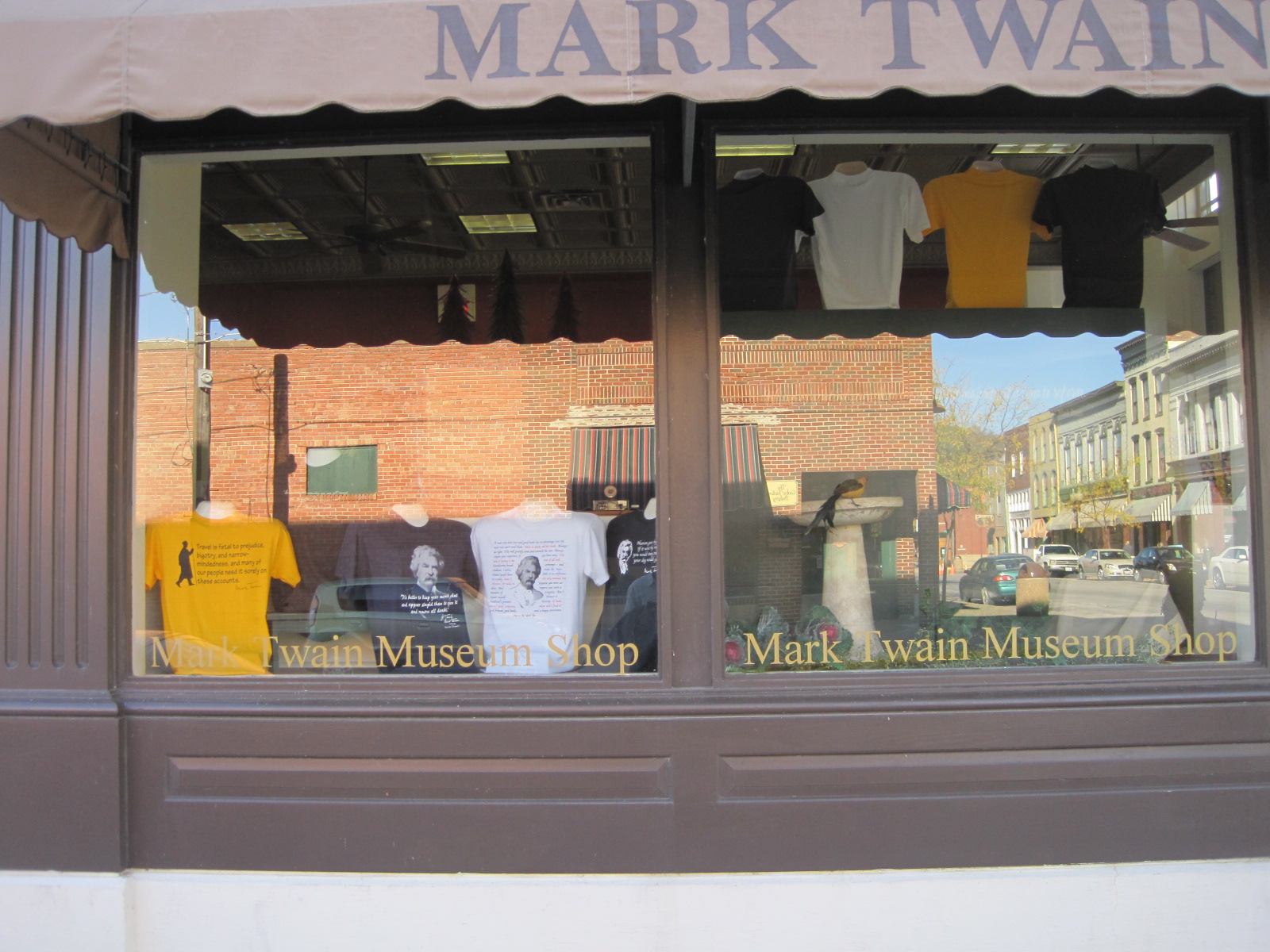
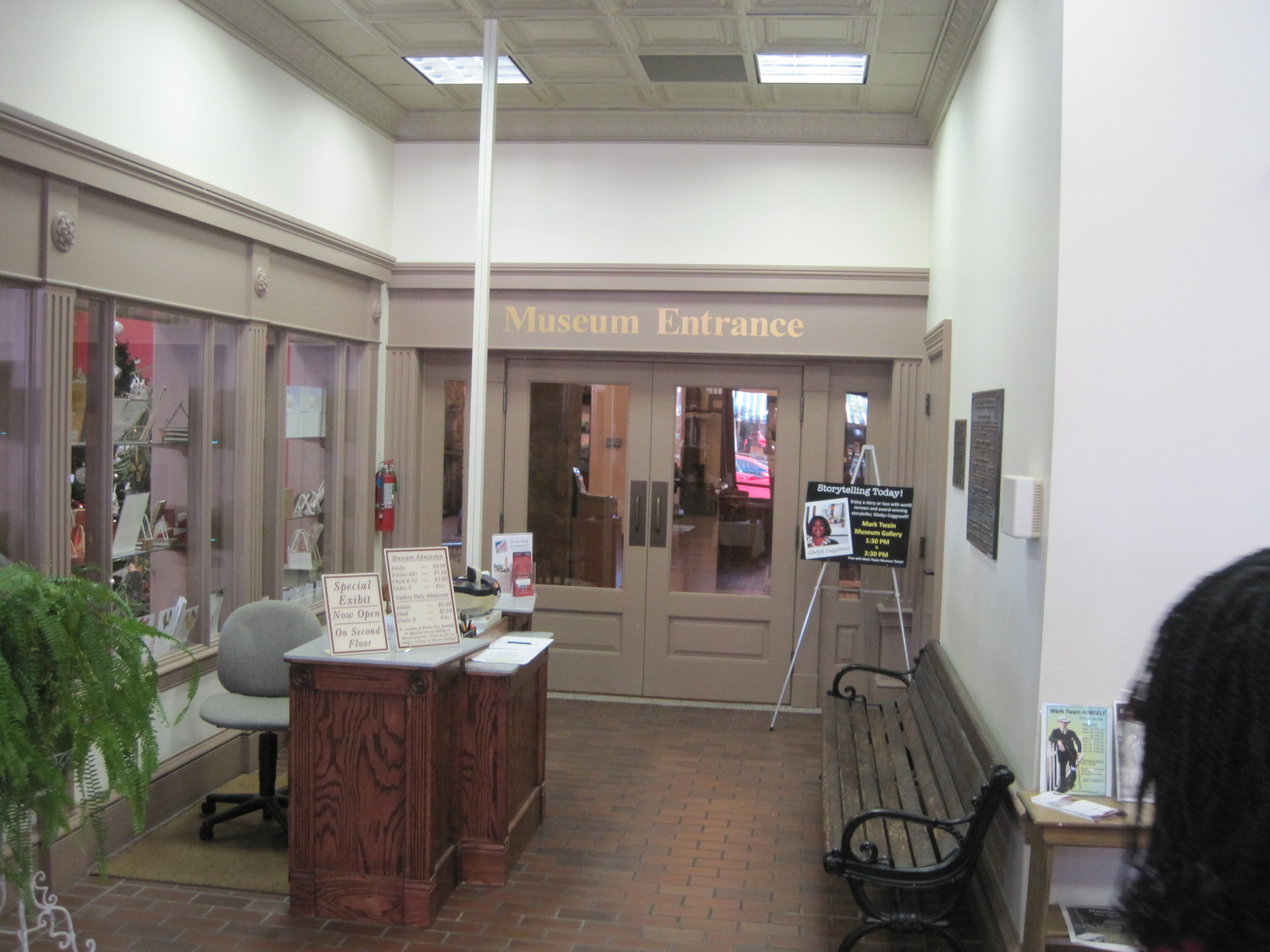
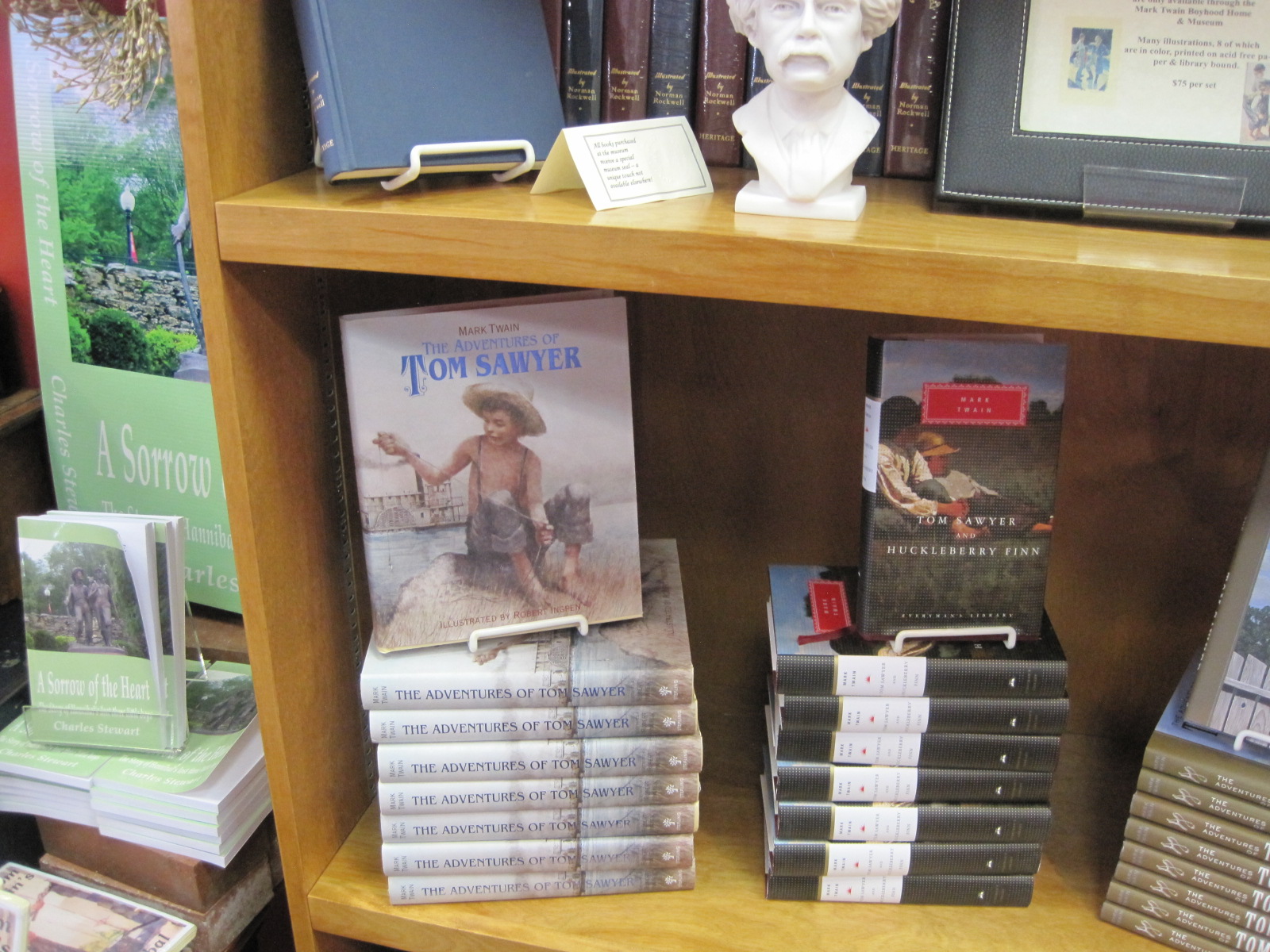
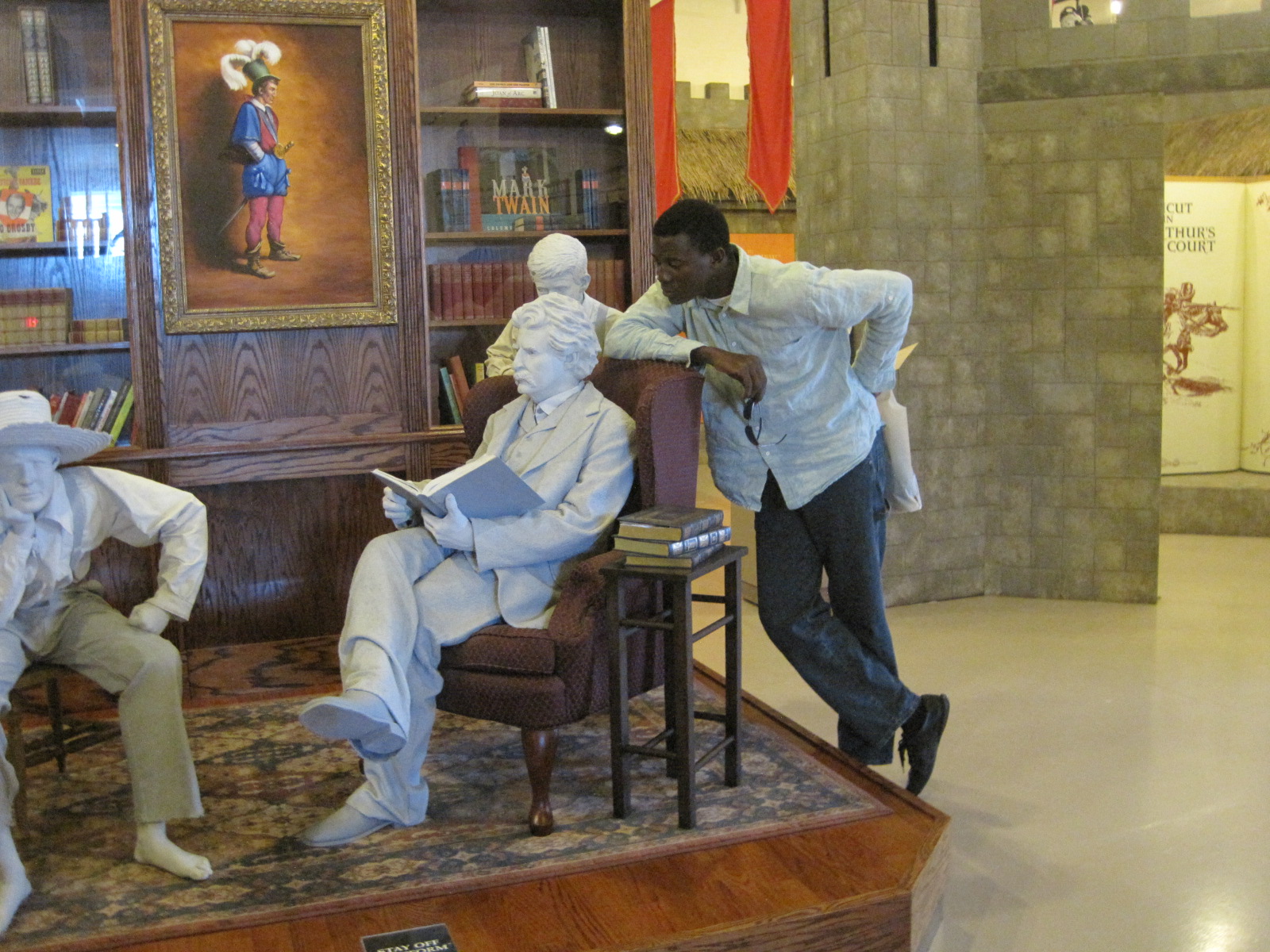 The museum had many fun sights: a marble sculpture of the man reading stories to kids, a boat deck to simulate the view of ship captains (the original inspiration for the name, Mark Twain), a gallery of famous quotes of the man, and a cave built to the type described in his books about his childhood days. It also has a gift shop filled with postcards, t-shirts, and countless books (including his autobiography. He had written it – The Autobiography – by himself and had instructed that it be published a hundred years after his death. It has now been published, and is the current #1 bestseller on Amazon and the #2 on NY Times bestseller list. One of the famous quotes on the t-shirts being sold there reads: “Travel is fatal to prejudice, bigotry, and narrow-mindedness, and many of our people need it sorely on these accounts.” Another one read: “Action speak louder than words but not nearly as often.” And there were many more.
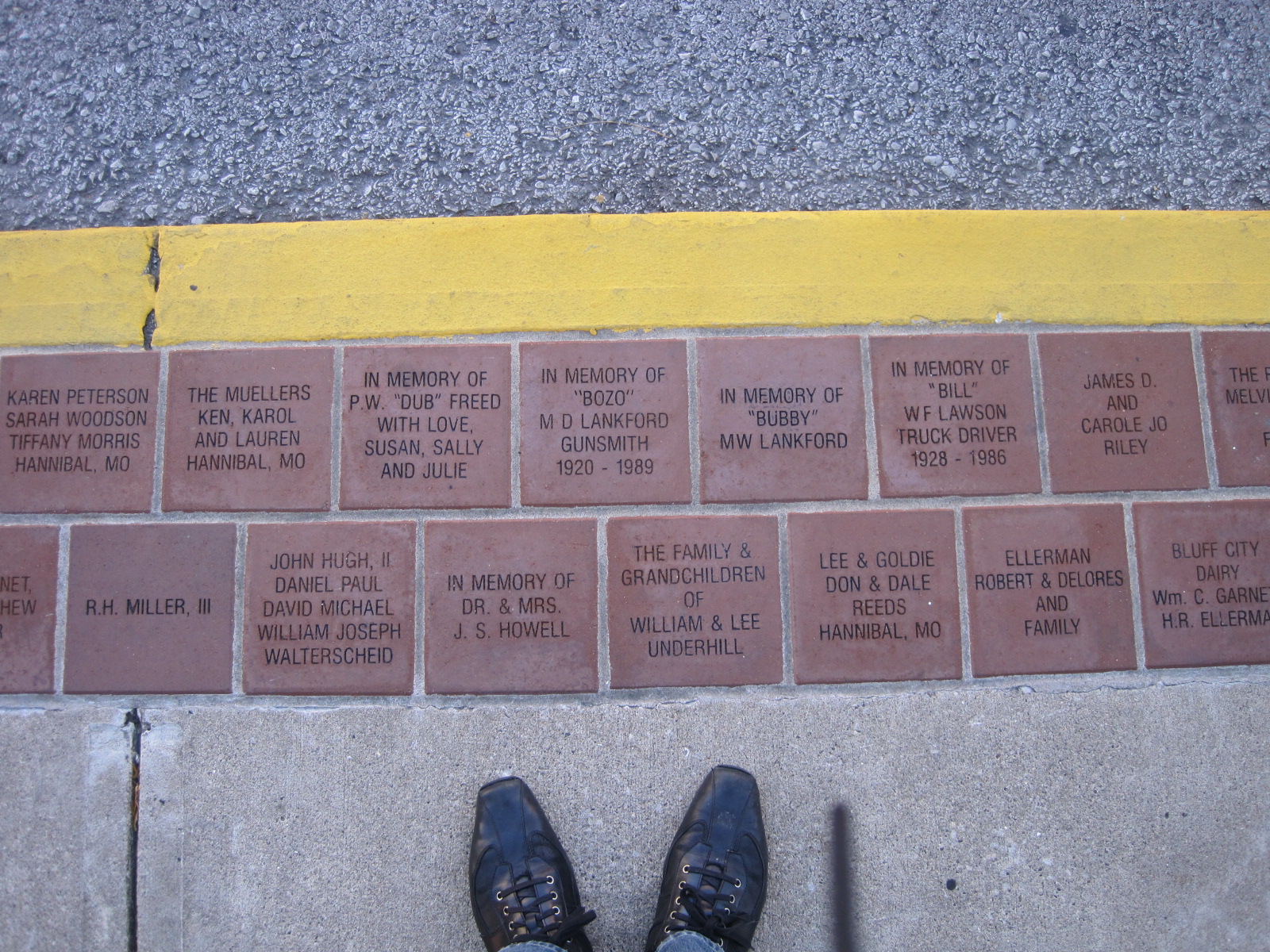 I may not successfully exhaust my report of the visit to a place that holds much significance to me as a consumer of literature and the works of the man as a writer and a chronicler of a certain epoch in American history. His views on slavery, politics, and life in general have been highly documented in many of his books, including this final autobiography. But I can tell you this: that it was a worthwhile visit that I would gladly make again, if only to be able to spend more time in the town and see what else they have besides the very many resources of the Clemens. One more thing before we left (Temie and I) was to sign our names on the white-washed fence. The traveller was here. No, that wasn’t what I wrote. You have to go there to find out for yourself.
Oh, and one more quote now going to remain on my office computer: “To succeed in life, you need two things: ignorance and confidence.” Oh well!
Pictures by Temie Giwa
And so it is, just like it said it would be: the winter season is beginning little by little. The leaves are all almost dead, and the cold has returned, as benign as it always does at the beginning, keeping its biting fangs safe behind the months waiting for the most appropriate moment to strike. This is the time where I begin to wear three shirts at once, covering them with a large jacket. Gloves, not yet, but we’ll get there. On the one hand is a desire to rid of the heat of previous months. On the other is the dread of what comes ahead: short sunlight days and a long season of heatless sunrays. I’m gonna miss you, Nigeria.
A friend in the UK has asked me for a guide to surviving the winter season. I don’t know much about Britain, but if he was in America, here would have been my response:
1. Get a drinking habit. Be it hot water, tea, coffee, ogogoro, gin, vodka or akpeteshie, nothing kills the cold faster than a hot one in your belly. If you live in America, remember to hold your passport handy when going to the store to buy alcohol. If you are like me with very little tufts of hair sparsely across your face, you will definitely be mistaken for a 17 year old and may not even be believed after showing them the right document. Borrow a fake beard and speak in a deep guttural voice. Tell them that the alcohol has been prescribed for you as the best remedy against the onslaught of the season. If she still refuses to sell it to you, call 911, or scream like a baby.
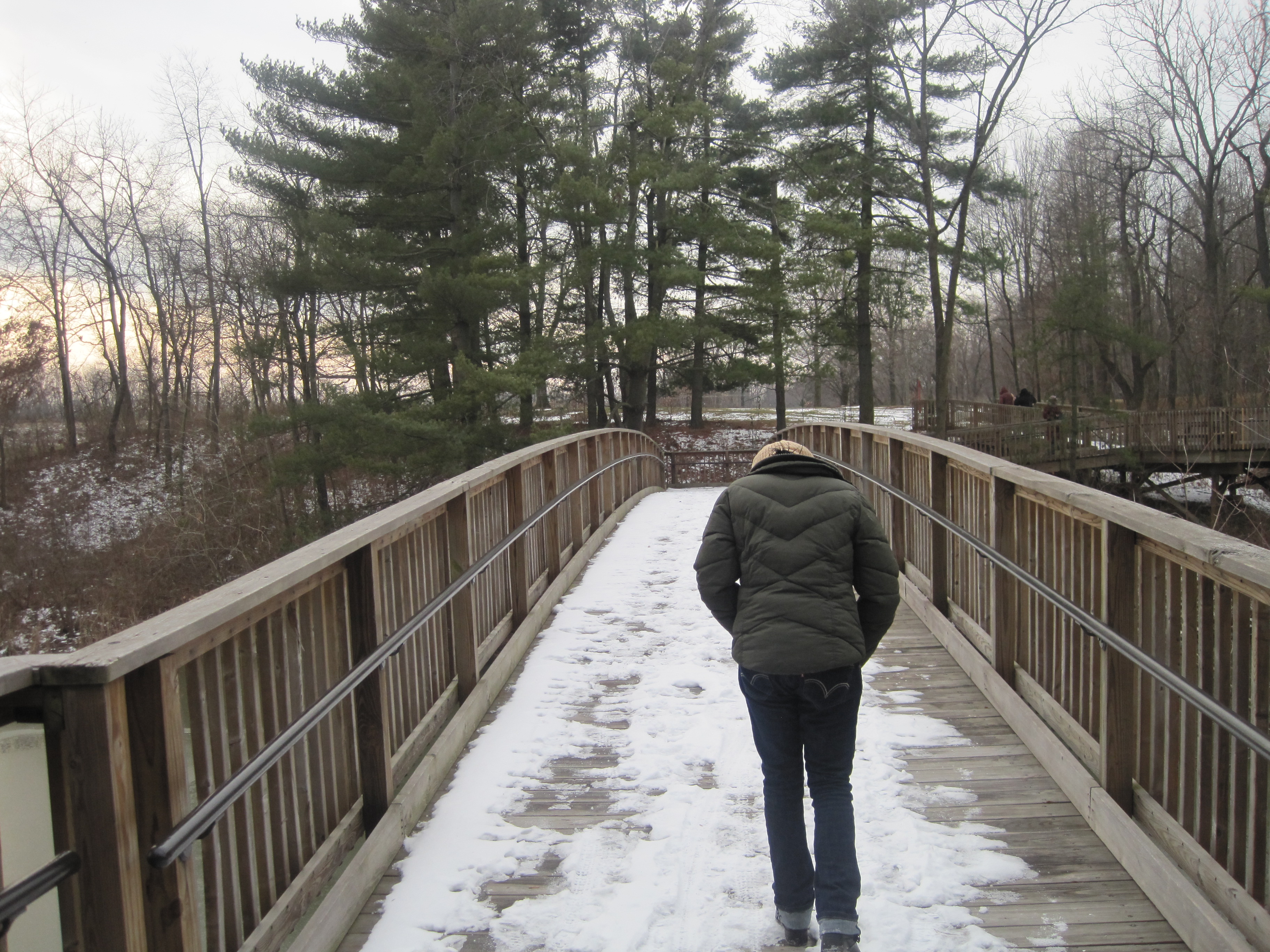 2. Get married, fall in love, or move into your old girlfriend’s apartment. Body heat is a terrible thing to waste. When in doubt, ask married people. According to the KTravula poll of 2010 conducted over the phone to the many married women and men across America, divorce rates slow down to the barest minimum in the winter. Why? Who wan die?. You got it right. Nobody wants to sleep alone in a cold bed on a winter night. Even for the most dysfunctional family, somebody has got to shovel that snow that piles up on cars and at the door of houses. People have learnt to deal with their marriages and stay in them until the weather is conducive enough to be singularly enjoyed. I have warned you. If you want to survive this season, move in with someone. If you’re thinking of splitting with that old one, wait it out. You will always have spring for that.
3. Eat, eat, eat. Last year, it was pizza – a lot of it. This time, for me, it shall be pizza again, and any other fattening food substance I can find. Goat cheese, cheddar, Swiss cheese, American cheese… any kind of cheese you can find, store them up. And whether you make egusi, efo riro, jollof rice, fried rice, pasta or even okra soup, keep putting cheese in them. It’s the American way. And even if you, like me, don’t like cheese that much, you will find that it is a little sacrifice to make for one’s survival. You will thank me later for it. Scientific fact: fat builds a layer of insulation for your body against the onslaught of the weather. I should know. I’ve been a lanky fellow for as long as I can remember. And this reminds me: I should stay more in one place now. Too much body fluid (and fat) is lost by constant cross-country gallivanting.
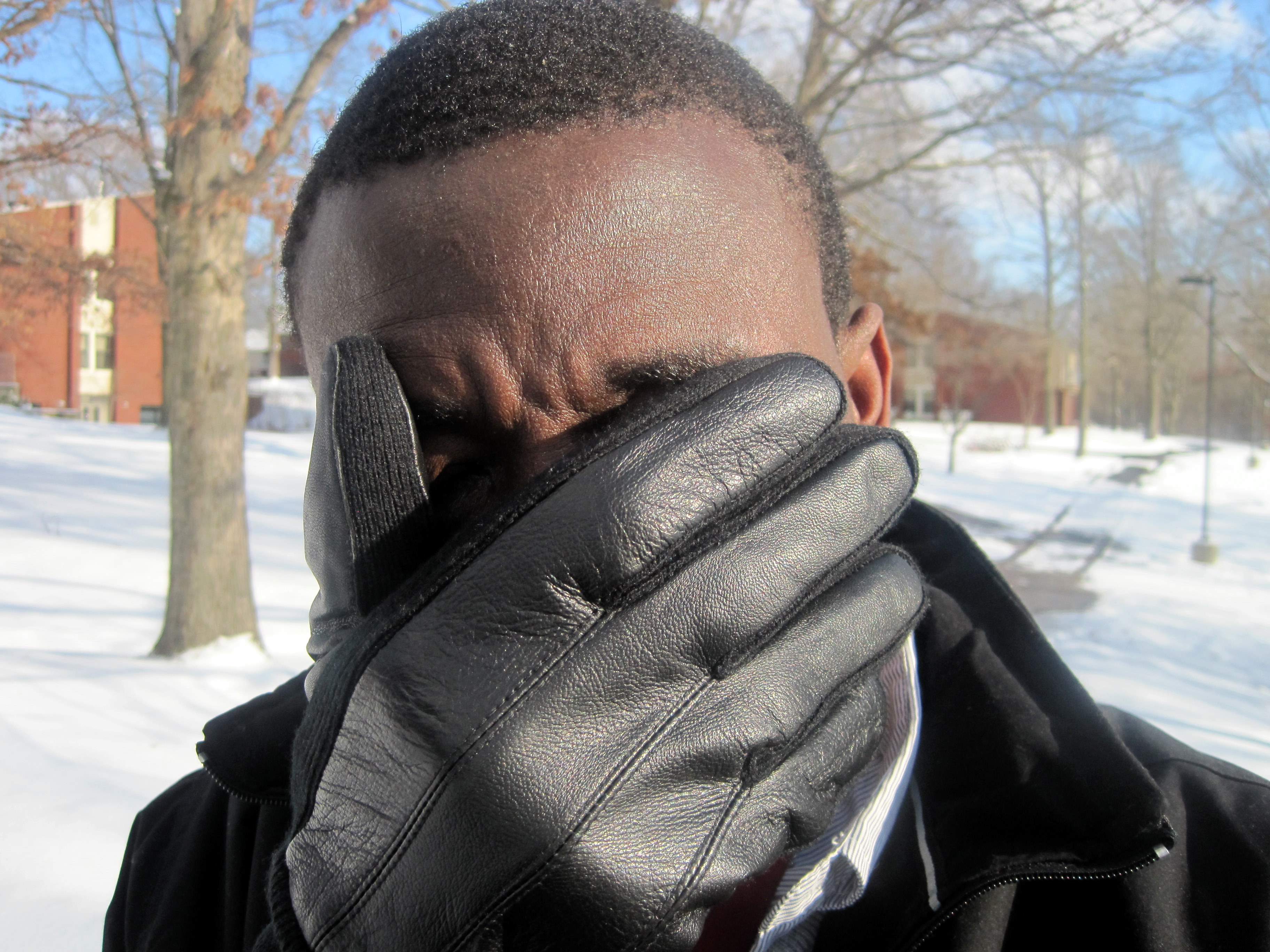 4. Whatever you do, do not shave your head. I don’t care if you play for the Lakers, or the Chicago Bulls, or if Michael Jordan is your biggest idol. A skin-shaven head in the winter is suicide. Much of the body heat lost in the cold goes out through the head. Get a cap and wear it all day long. And never shave. I said that already, right? Yes, I’m saying it again to myself. I tried it last year and suffered dearly for it with moments of free-flowing tears occasioned by an outing with a bald head and no cap. The last time I cut my hair this year was sometime in August. The mistake I made was not cutting it again in September. Now I will leave it on until March. I don’t care if I come out looking like a darker version of Wole Soyinka or a lean skinny version of Don King. And who knows, maybe someone would mistake me for them and offer me a movie role.
5. It gets dark. The first time this happened to me, I thought that the world had ended. At three thirty in the afternoon, everything was already sufficiently dark. What happened? Winter. The sun, for some reason, decides to go to bed much earlier this time than at any other time in the year, and everyone outside is left wondering what on earth happened. If you need to go grocery shopping, go with your car. Hey Mohamed and Ameena if you’re reading this, if you ever find yourself stranded in darkness at three-thirty sometime soon, don’t panic. It’s not the end of the world. It happened to the best of us. And don’t call 911 either. The school shuttle will eventually show up, as long as you’re able to locate its shape in the total darkness.
There are a few more tips but they won’t all fit in one post. Stay away from the American East Coast (except your girlfriend lives there). The winters there are the worst. It shuts down a whole city. Develop endurance or a hobby, or anything to keep you busy when everything shuts down and you’re left alone in a apartment for days. One perk of the winter season, in spite of the many worries that compelled this post, is that school gets to close on random days. That’s quite promising. I can already imagine the menu of the many new dishes to try out in such moments of leisure. And yes, you guessed it right: it’s gonna have cheese in it.
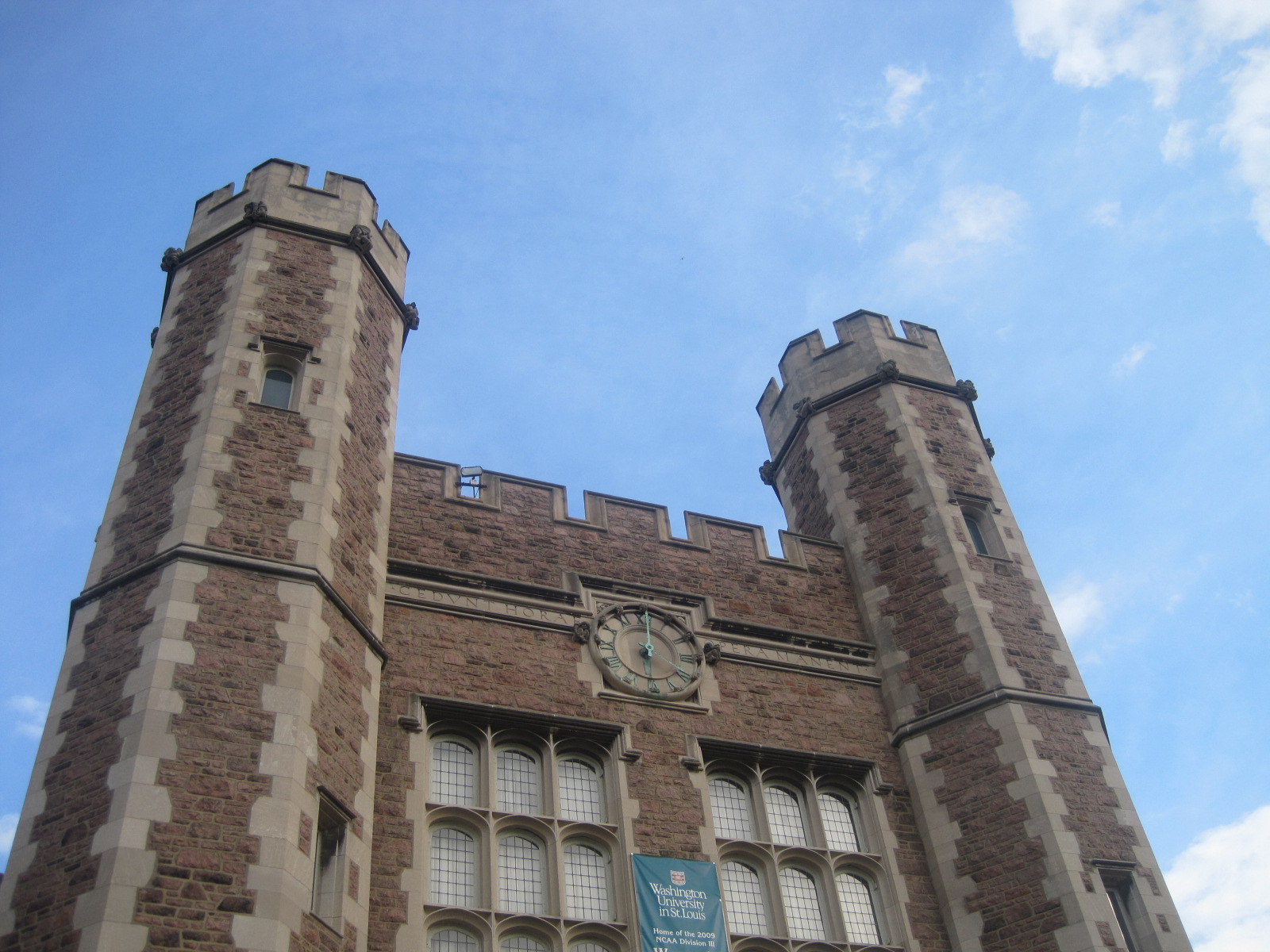 America has its treasures. One of them is a series of campus buildings of picture perfect quality. Actually, for a long while, the only images I had in my head of Universities were those of high rise walls and columns with a facade reminiscent of a prison or a palace. The closest to that I’ve seen so far would be Howard University with its beautiful structures, courtyards and decorated trees. And then, there was Principia College in Alton, overlooking the Mississippi river. The rest were Hollywood supplied: Mona Lisa Smile, Finding Forrester, The Scent of a Woman, and The Dead Poets Society, and a few other movies showing Ivy League campus environments.
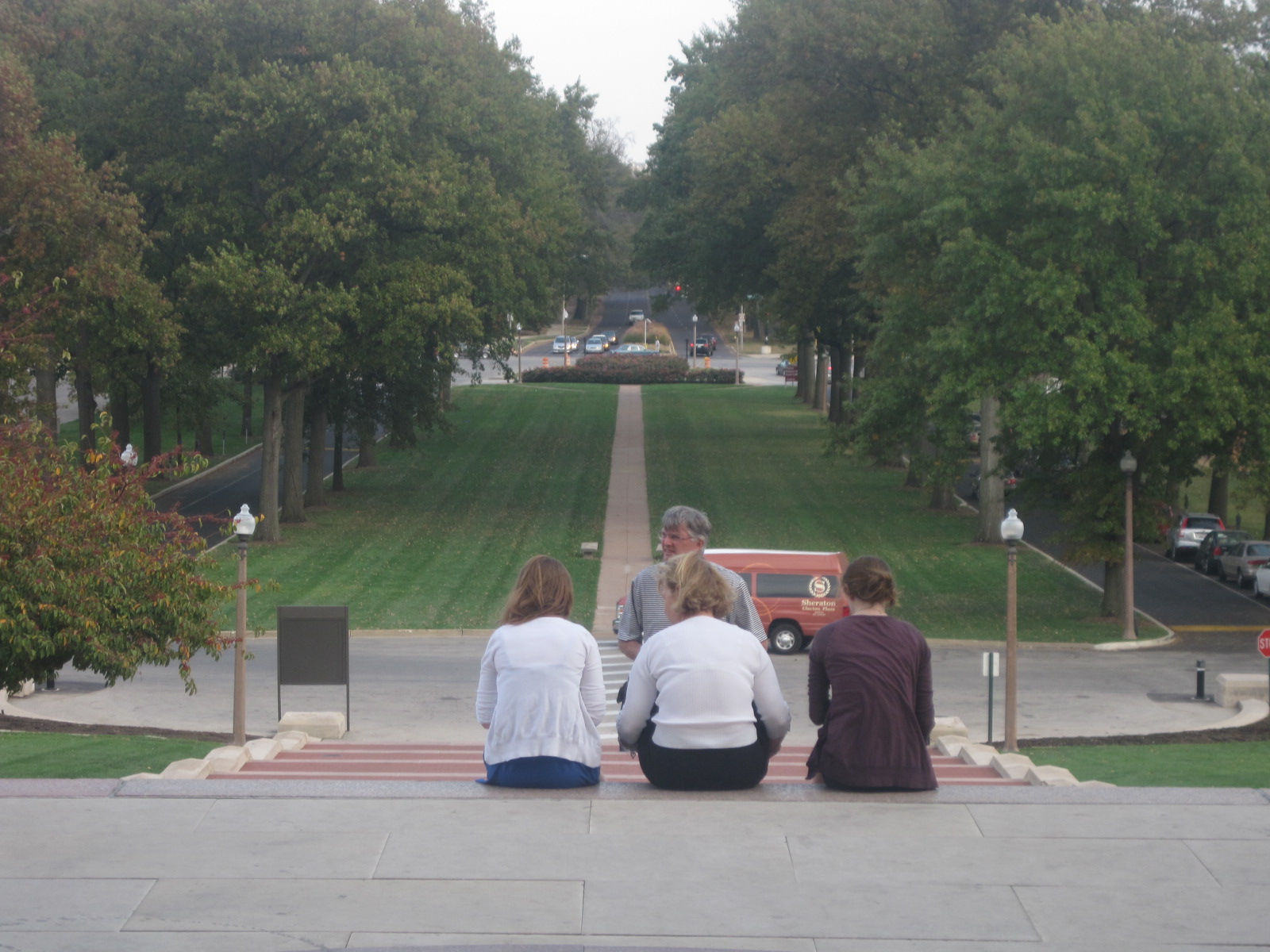 And then I encountered the Washington University in St. Louis*, by chance I must say, during an idle moment of driving through the town. After an hour of walking through its walls and taking in the sights, I began to wonder how people who go there manage to concentrate on classwork in the sight of such beauty and serenity. I would never know, but I would keep wondering whether too much beauty is sometimes an unpardonable evil.
(*Initially mistakenly referred to as St. Louis University, the pictured structure is actually from Washington University in St. Louis. Thanks to Gerry Everding for the correction).
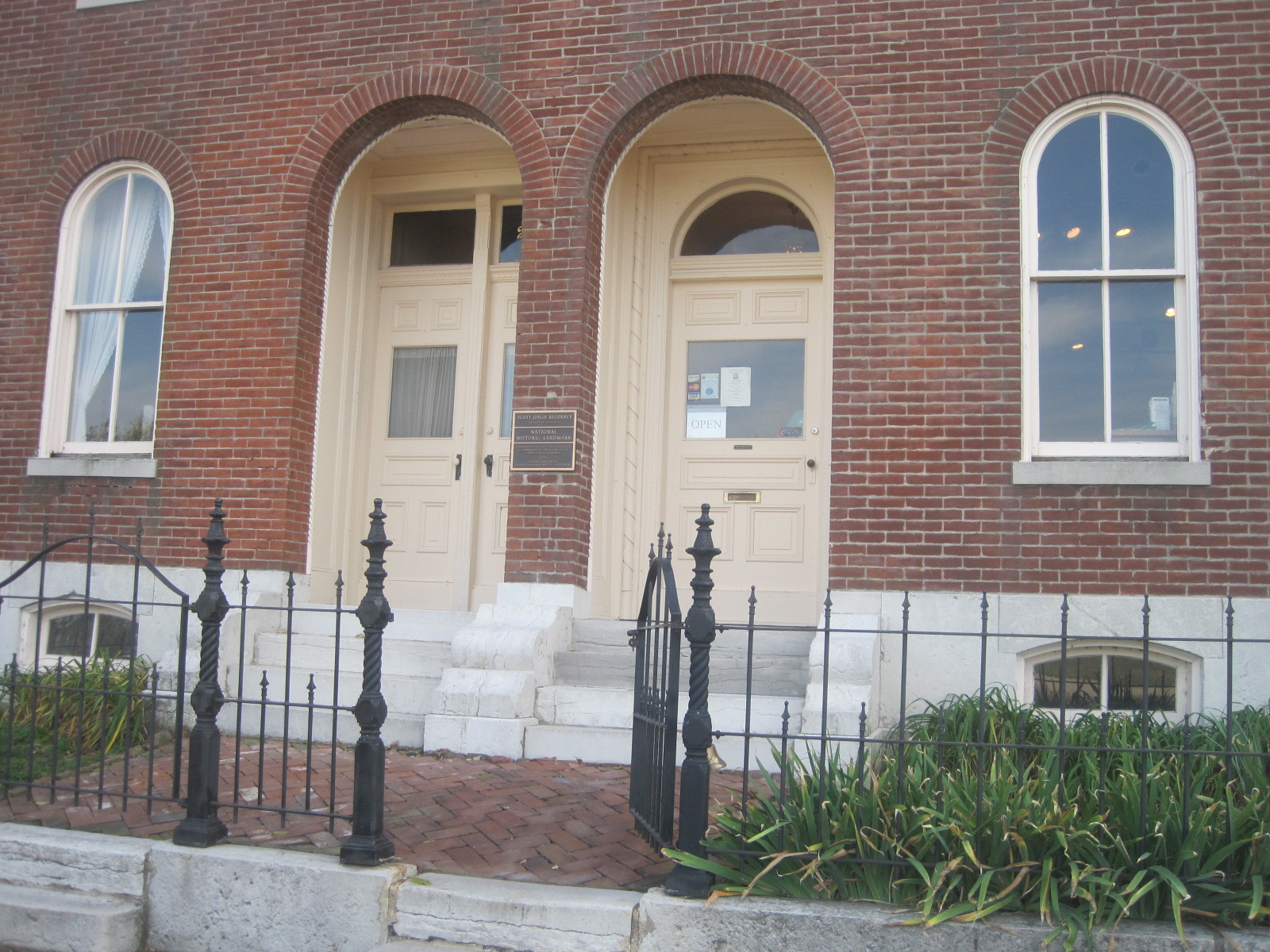
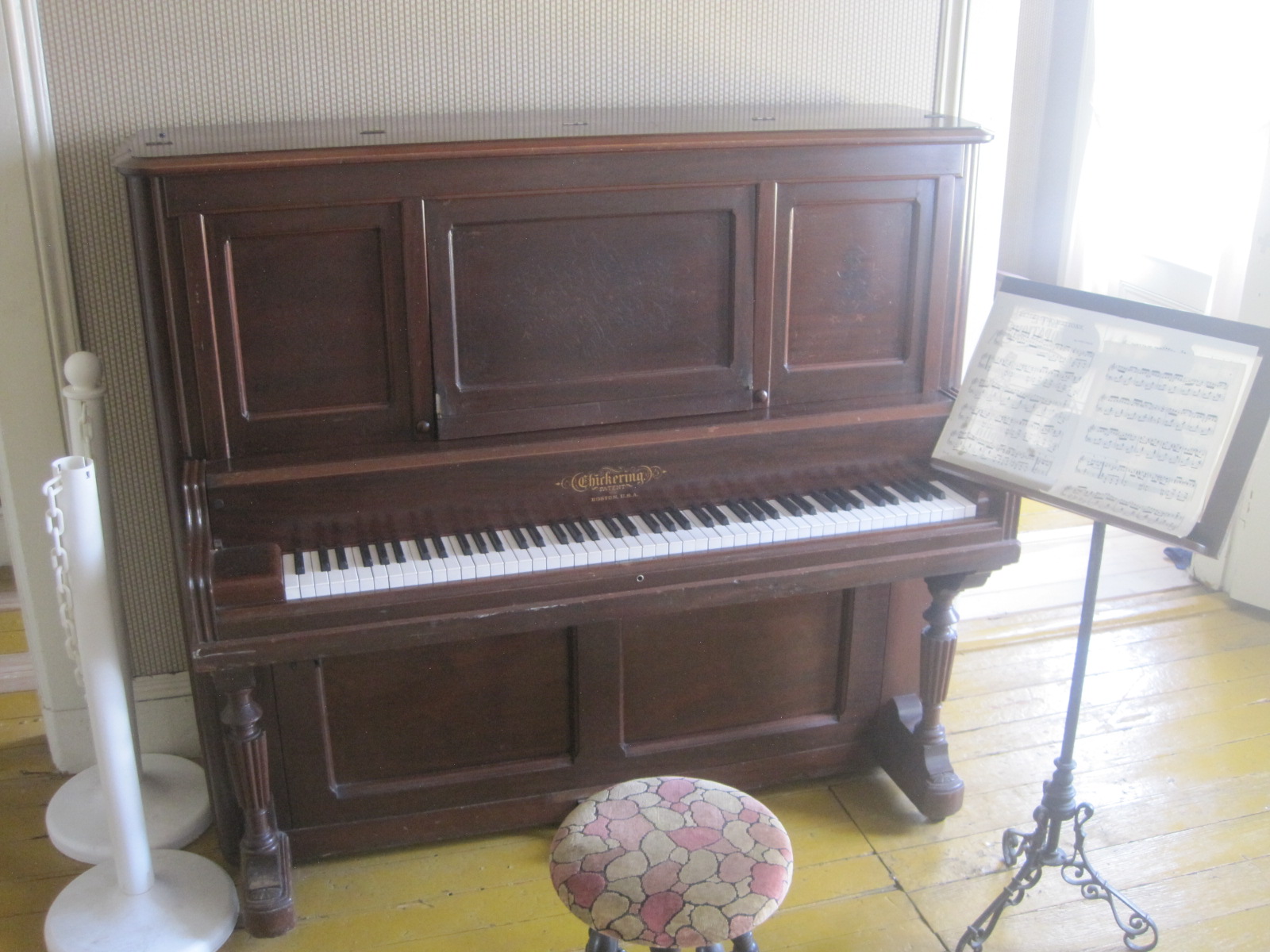
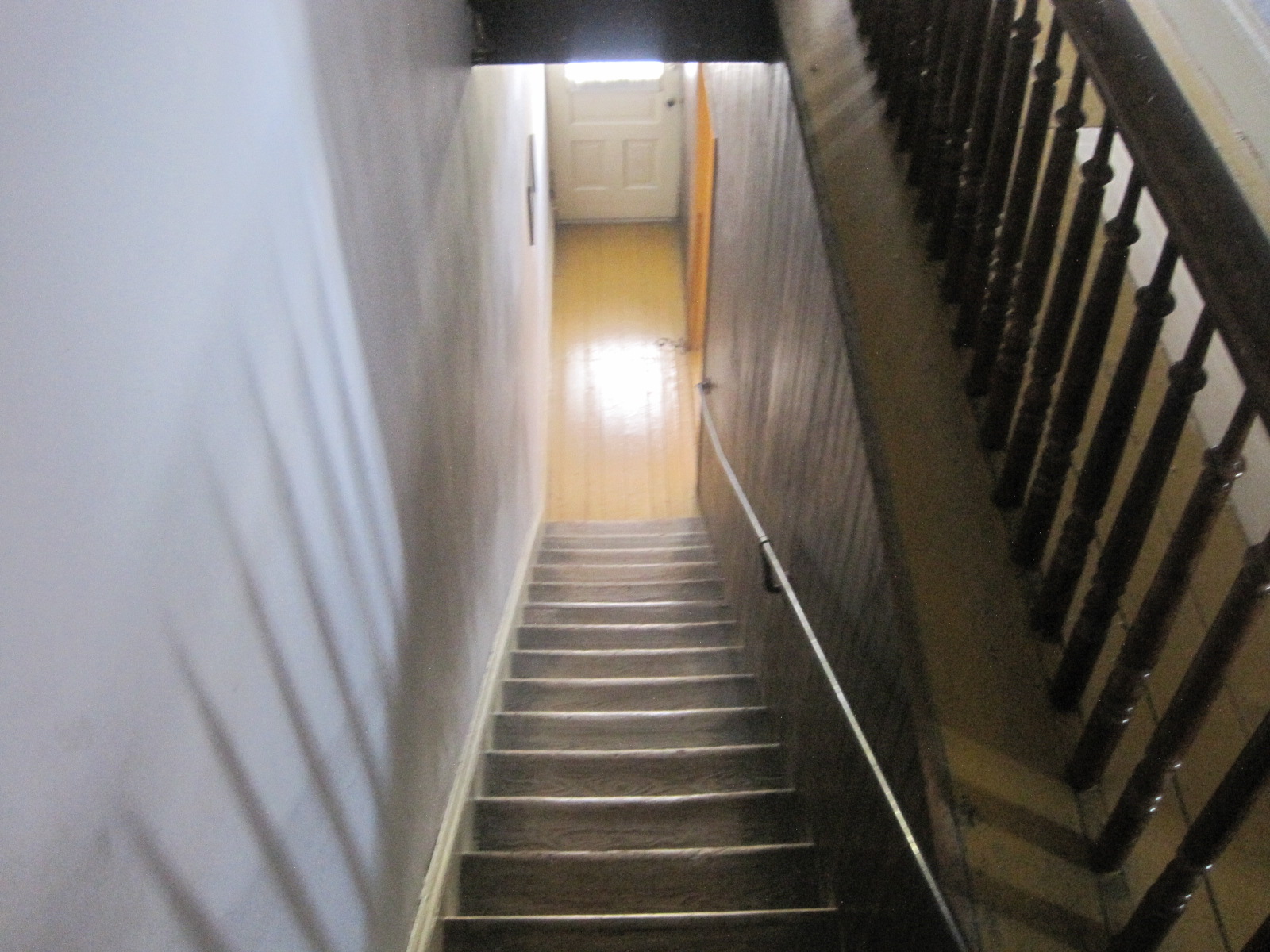
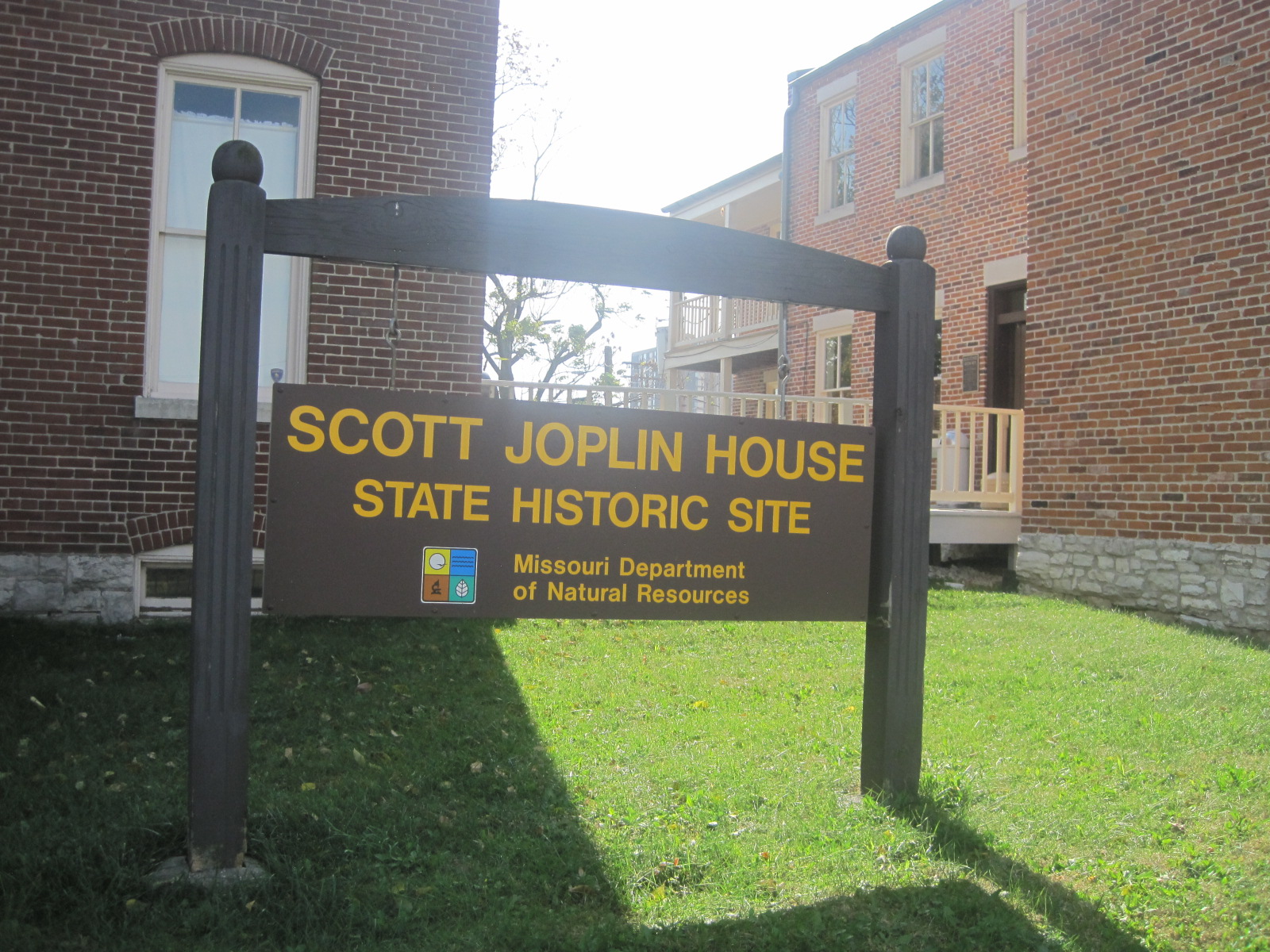
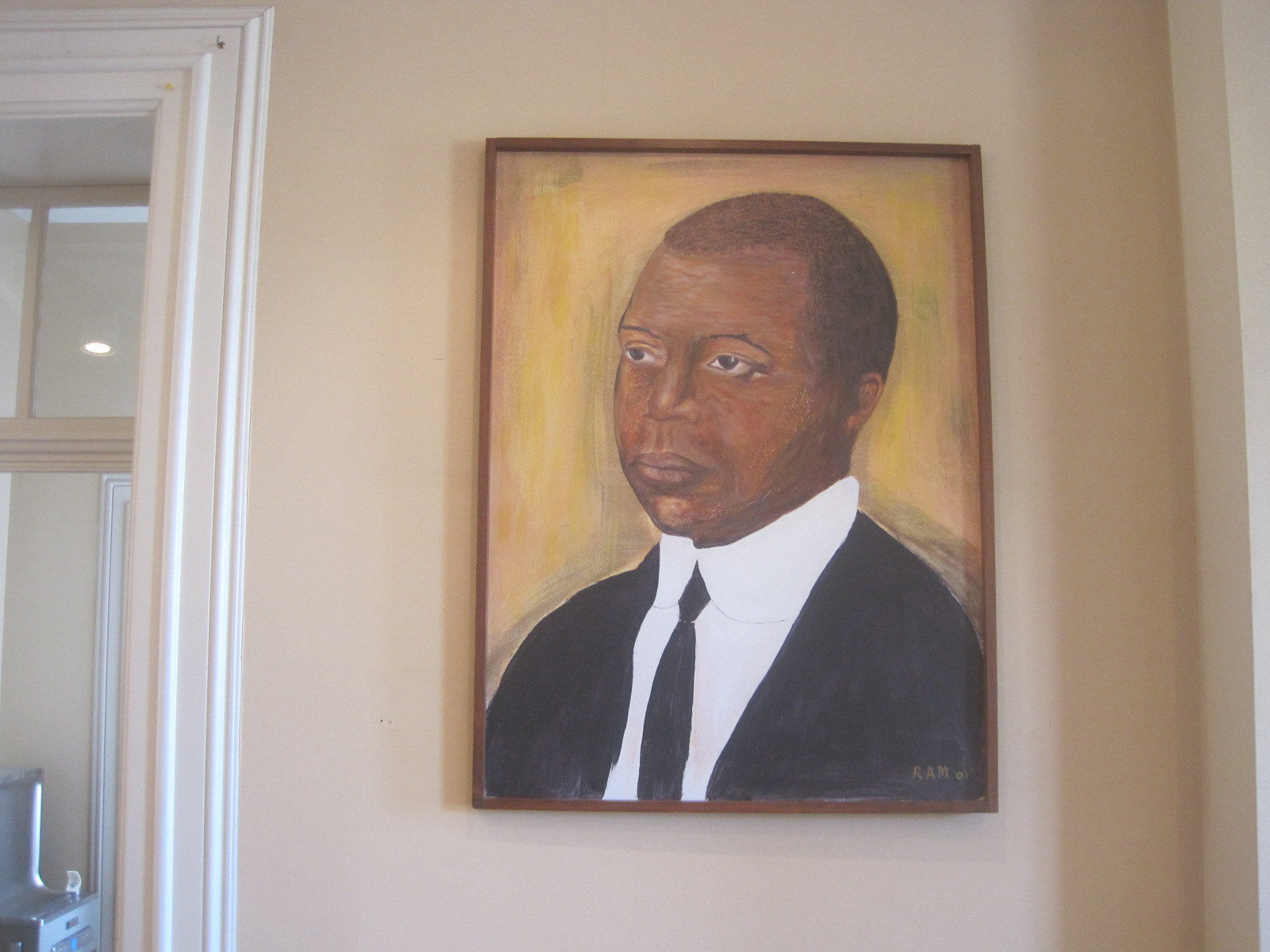
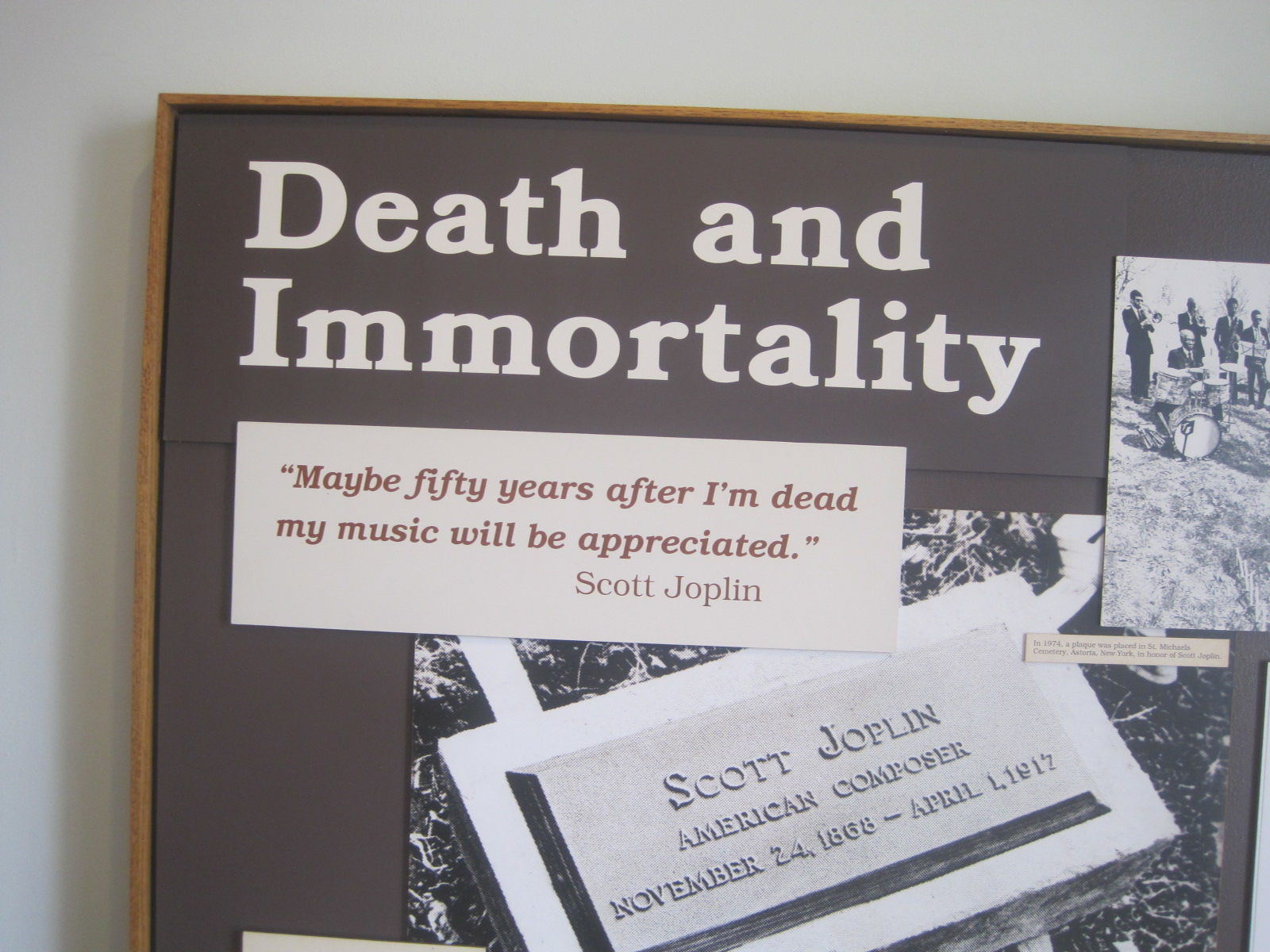
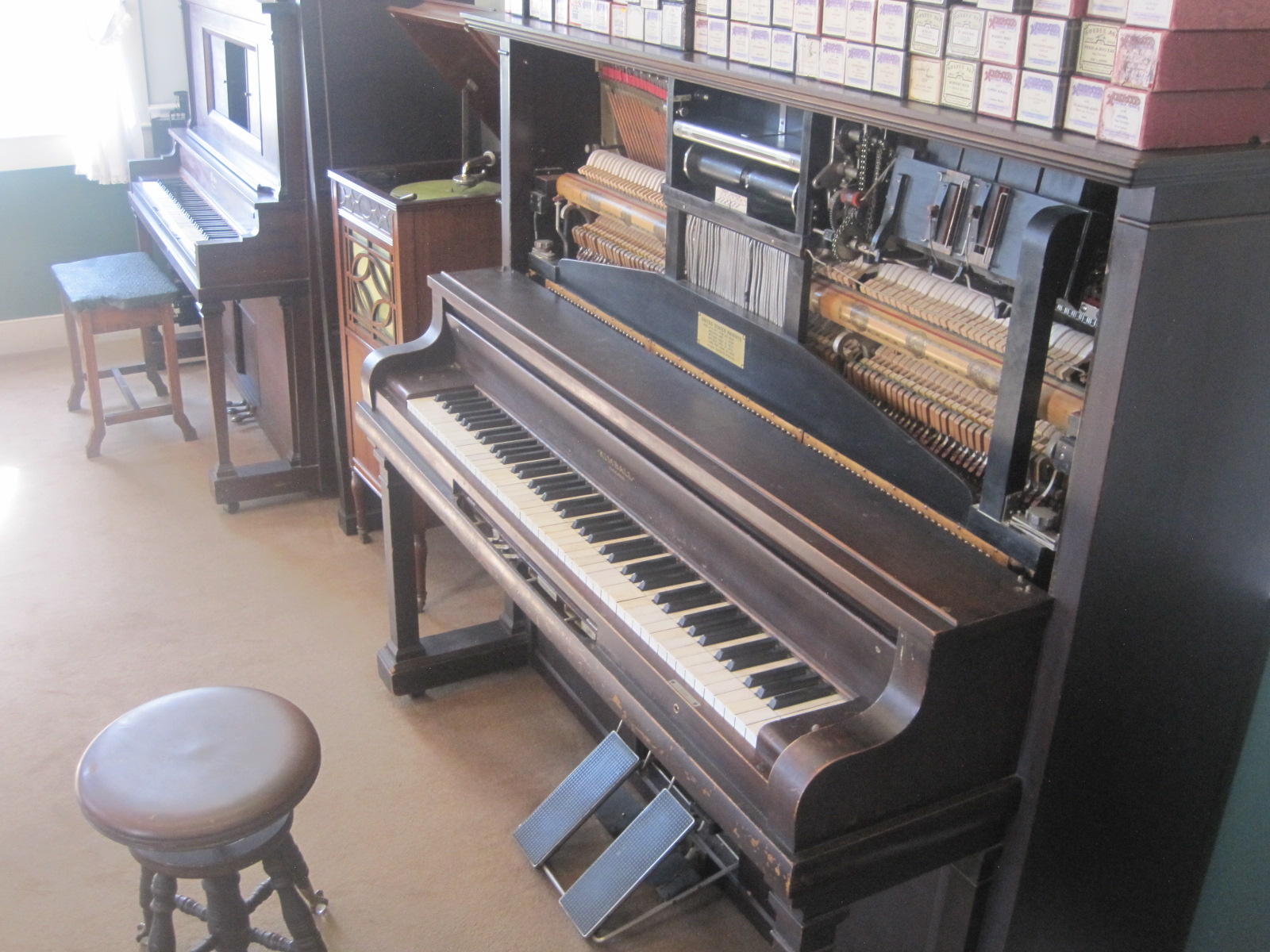
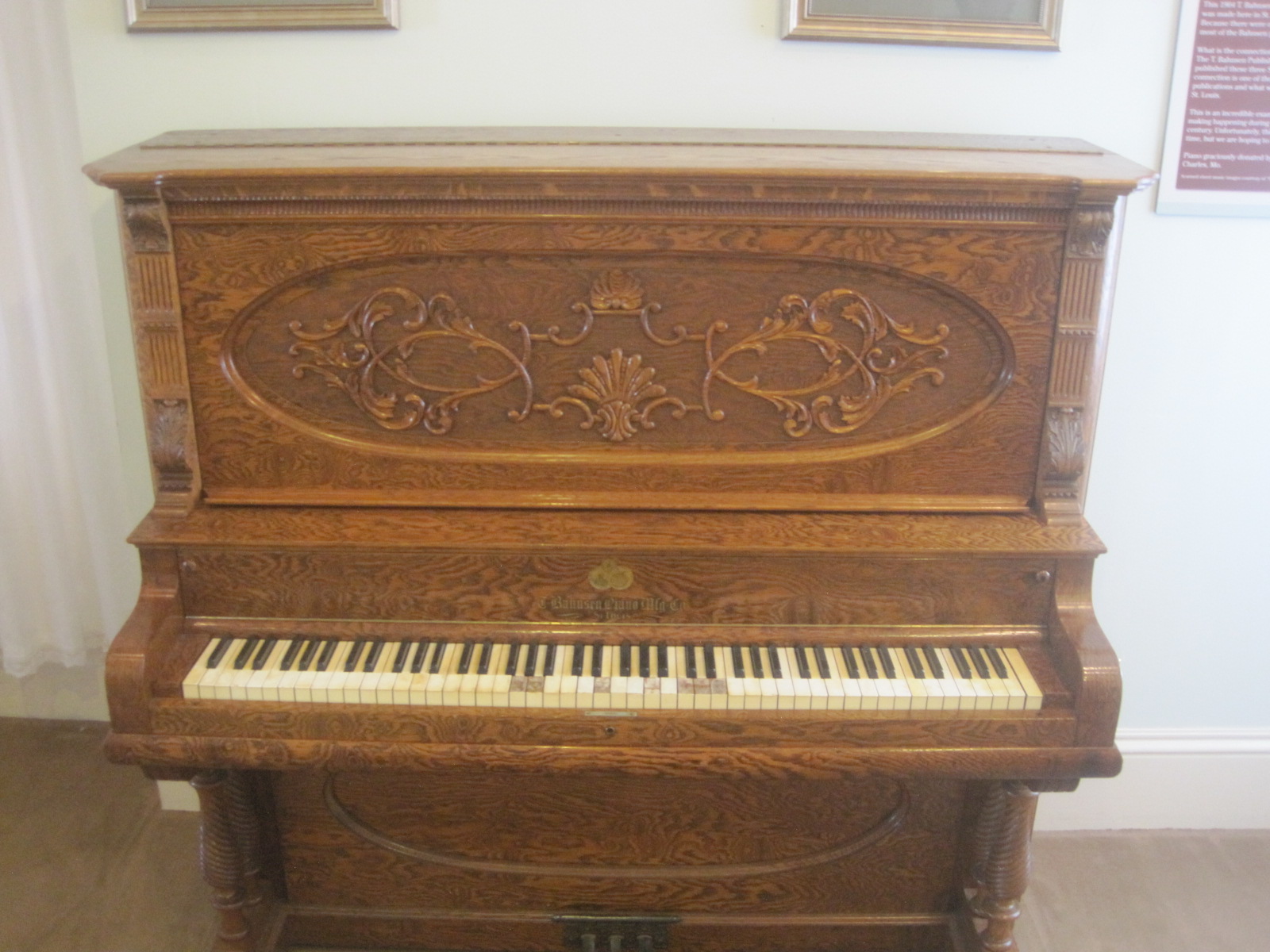
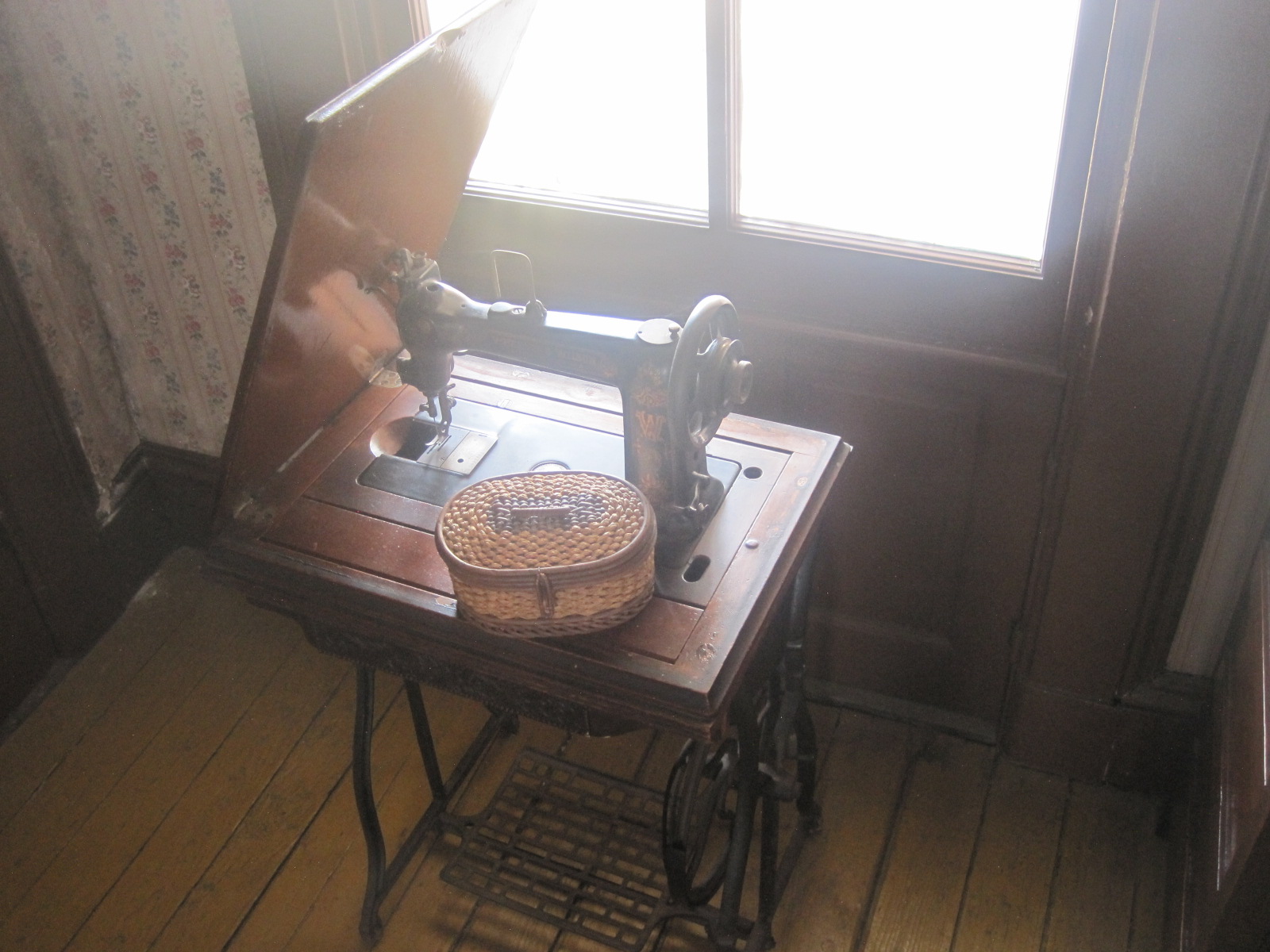
 The house of the African American composer of rag-time music Scott Joplin is at 2658A, Delmar Boulevard in St. Louis.
Now a national historical site, it was renovated a few years ago and refurbished with artifacts from the period when Scott Joplin himself lived there, composing in the process his famous The Entertainer. I did say he was African-American, right?
The other thing to say about his life was that much of what has been written about him were obtained through words of mouth. The man himself wasn’t famous enough in his lifetime to deserve much tabloid ink (even though Wiki said he achieved some fame for his compositions and was dubbed “The king of ragtime”. Much of the details of his life in this house itself are shrouded in mystery. The only agreed fact was that he did live there for two years in the early 1900s, and that he wrote The Entertainer while living here. The tune came back to fashion in the 1970s selling into the millions.
(“Ragtime” was the name of a musical form. I never did figure out why they chose to call it that.)
In 1976 Joplin was posthumously awarded a Pulitzer Prize for his contribution to music.