PRESS RELEASE
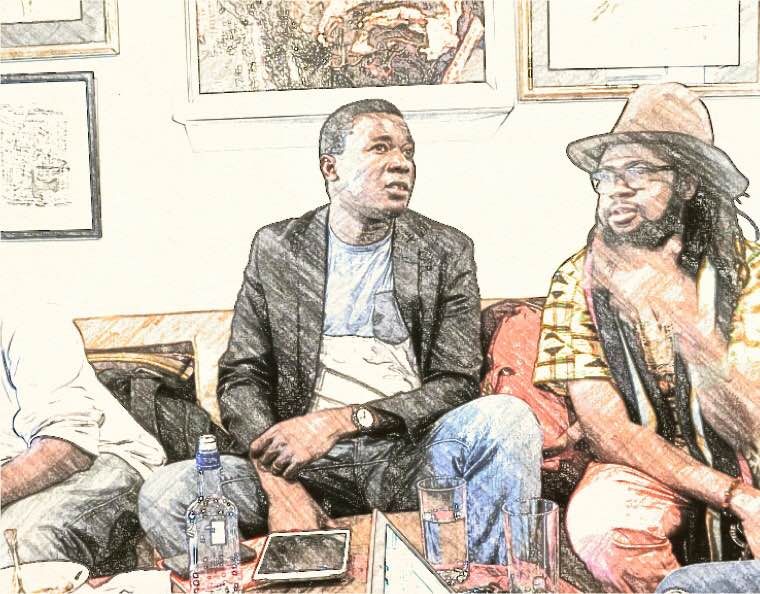
25/02/2015, Lagos, Nigeria—Kola Tubosun: linguist, teacher and writer at Whitesands School, Lagos, Nigeria, will be joining the international humanities Twitter account, We the Humanities, as next week’s guest curator.
@wethehumanities is a rotation-curation account which offers a central platform for discussion and news of the humanities in all its forms. It is open to anyone working in or with the humanities in any form, and hopes to follow the success achieved by the science platform, @realscientists.
 Kola is a linguist and aspiring lexicographer with years of work in language teaching and language documentation under his belt. He will be tweeting about mother tongue use, language endangerment, and particularly a subject that is dear to him: Yoruba language use in Nigeria. He is currently building a multimedia dictionary of Yoruba names at www.yorubaname.com . Kola can be found on twitter at @baroka, and on his blog at KTravula.com
Co-founder Jessica Sage (@academicjess) comments: “The We the Humanities project engages with people from around the world, exposing them to humanities research, experience and ideas they perhaps didn’t know existed. Each week a new academic or practitioner takes over the account, tweeting about their work and provoking conversations about the diversity and importance of the humanities. We really look forward to Kola Tubosun running the account this coming week, and in particular his take on linguistics, second language use, and Yoruba language.”
We the Humanities, which is now in its second year, has attracted tweeters from across six continents, ranging from professors to Masters students and from museum curators to musicians. The discussions engage with more than 2400 followers from across the world, including everyone from lifetime specialists to the mildly curious. The account has developed to include a blog and events listings, housed at http://www.wethehumanities.org.
Kristina West (@krisreadsbooks), co-founder of WtH, adds: “We encourage anyone working within the humanities who might be interested in curating the account to get in touch through the website. We aim to create a vibrant, international community to raise awareness of the diversity, relevance and challenges that encompass what is called the humanities.”
~ends~
Contact details:
Jessica Sage, We the Humanities: tel: +44 (0)7731840380, e-mail: j.sage@reading.ac.uk
Kristina West, We the Humanities: tel: +44 (0) 7525 009744, email: k.j.west@pgr.reading.ac.uk
About We The Humanities:
A rotation-curation Twitter account showcasing the creativity and diversity of the humanities and reiterating the fact that the humanities are more widely important than current public funding suggests.
Like most things on Twitter, it began with a seemingly innocuous tweet. On 5th January 2014 @academicjess asked a few people “Does anyone know of a humanities equivalent to @realscientists & if not would you be interested?” and it snowballed from there.
It is currently just being administrated by Jessica, Kristina and Emma Butcher (@EmmaButcher_).
Disclaimer: The views expressed at the @wethehumanities Twitter account are those of the weekly guest editor and not those of the administrator or previous/subsequent curators. The views expressed on the blog are the views of named posters and not those of the administrators.