Challenges of Translation, et al

Q: Thinking about your main target language, what would you say are your biggest challenges when translating from English into that language?

A: The biggest, classical, problem in English to Yoruba translation is the problem of one-to-one equivalents. There are expressions in English that cannot be rendered with the same number of words in Yoruba (“I’m sorry” is one). There are also tones of those in Yoruba as well, that you can’t express in English without having to write an epistle. (“pẹlẹ” is one such, or “ẹ kú ilé).

It is a “problem” easily surmounted if the target text allows for it. But while translating for mobile communication, or computer/software jobs, it forces one to be creative, since the client usually requires one-to-one translation as much as possible, and there is usually not enough space to elaborate.

The other problem is that of diacritics – the fact that tone and vowel markings in Yoruba need to be present to avoid ambiguity. While most computers can be manipulated to place the tone marks on the translated words, many software may not be able to process them, and some clients don’t have need for them, so the translator is forced to send in products that are unsatisfactory and can cause ambiguity.

Read more of my interview with Translate Africa, on my work in translation, the #tweetYoruba project, language attitudes, among others, here.
 

How are Yoruba speakers using Twitter?

KT: Same as everyone else. Code switching with English or whatever language soothes their need at the moment. This is fine. I think it’s important to mention that our intention at the start of the Tweet Yoruba project was not to turn every Yoruba speaker on twitter to monolingual Yoruba tweeters. No, it was to encourage use and improve the current attitude to indigenous language use anywhere. Yoruba just happens to be the language I’m most familiar with. I am interested in (and always encouraged by) indigenous language use anywhere/everywhere, even along with other international languages, until the attitude that one of them is inferior on the basis of the number of speakers is discredited.

Excerpt from my interview with (Egbunike Nwachukwu 0f) Global Voices. Read it here.

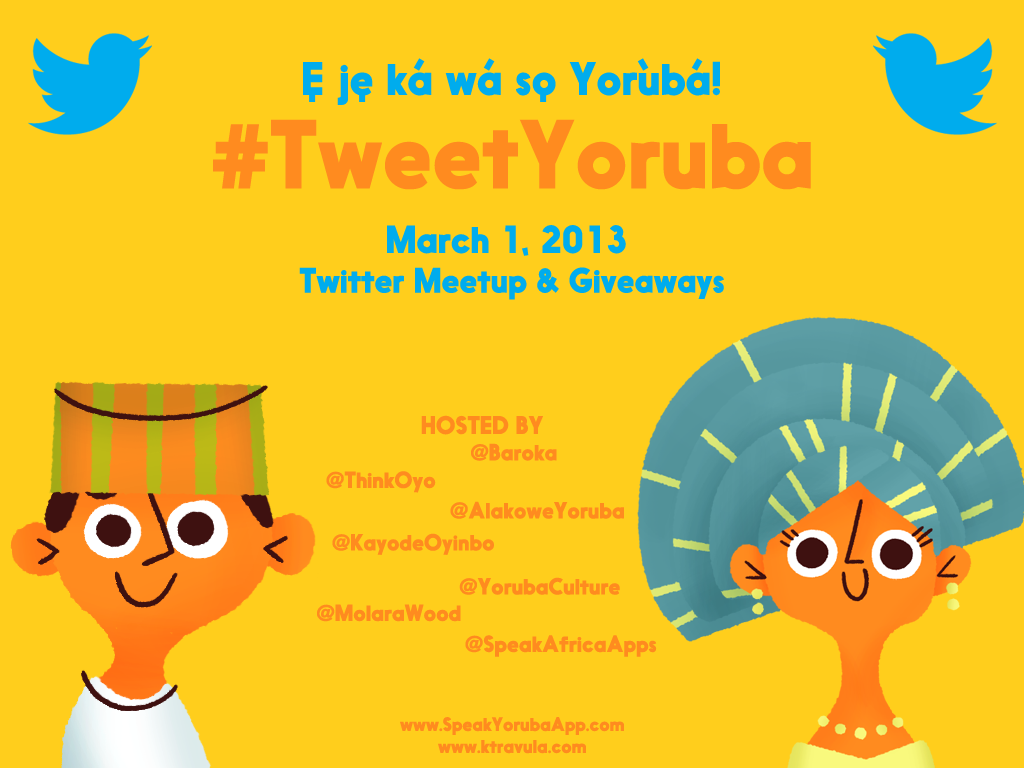
Ojo Siso Yoruba Ni Twitter 2013

Lọjó Kinni, Osù Kẹta (Ẹrẹnà) 2013, àwọn olùlo twitter tó gbọ Yoruba yóò sọọ láti àárọ dálẹ.

A bẹrẹ ètò yìí lódún tó kọjá láti fá Twitter lẹsẹ kí wọn ba le fi ọn ba le fi èdè Yorùbá sí ọkan lára àwọn èdè àgbáyé  tí a ti lè lo gbàgede náà. A se aseyọrí díẹ nígbà tí Twitter dá wa lóhùn padà láti ẹnu òsìsẹ ògbifọ wọn kan tí ó sọ wípé wọn ti gbọ ohùn wa, sùgbọn yó se díẹ kí wọn tó fi ọn tó fi Yorùbá kún-un nítorí àwọn ètò díẹ tí wọn ní láti se kí ó tó le seése.
imagesA tún ti bá wọn sọrọ lẹẹkan síi nígbà tí òsìsẹ Twitter miran @lenazun wá láti bèèrè irú èka Yorùbá tí a máa n lò láti se ògbifọ àti láti kọ ìwé ìjọba ní Yorùbá. (Ìdáhùn rẹ ni Yorùbá Àríwá-Ìwọ Oòrùn, tí a n sọ ní Òyó). Léyìn èyí, nkò gbọ ohun mìràn.

Jọ Sísọ Yorùbá Ní Twitter ní March 1, 2003* jẹ láti tẹsíwájú èyí tí a bẹrẹ lódún tó kọjá, sùgbọn nísìnyí láti fi ẹwà èdè abínibí wa hàn nínú ayé ẹrọ ayélujára tí a n gbé nísìnyí. Ó lè má sẹlẹ rárá wipe ọjọ kan yóò wà tí èdè tí gbogbo aráyé yóò máa sọ lórí ayélujárá yóò jẹ èdè abínibí nìkan, torípé àwọn tó n sọ wón kò pọ púpọ (Yoruba tíẹ sí ní ju ọgbọn million lọ), sùgbọn bí ọnà láti sọ èdè yìí bá ti se wà, bẹẹ náà ni a ó se ní àìmọye ojúlówó ọnà láti fi àsà àti ìse wa hàn fún gbogbo àgbáyé

Bí a se seé lésìí, àwọn hashtags láti lò lọdún yìí ni #tweetYoruba àti #twitterYoruba. Fún àwọn tí wón bá tún fẹ fa Twitter lẹsẹ wípé kí wọn jẹ kí á se ògbifọ gbàgede náà sí Yorùbá,  kí wón sèdà tweeti wọn sí @twitter àti @translator.

________

*February 21 ni Ọjọ Tí a Yà Sọtọ Lágbàáyé Fún Sísọ Nípa Èdè Abínibí

________

Èyí ni atọka ètò náà. Jọwọ fi han gbogbo àwọn ènìyàn rẹ lórí èrọ ayélujára

TweetYorub2013 (1)

________

speakafrica

Àwọn olùlo twitter tí ó bá kọ àwọn oun tó mọgbọn wá jùlọ ní ọjọ yìí yóò gba asọ “Mo Le Sọ Yorùbá” àti báàgì ìfàlọwọ láti ọwọ @SpeakAfricaApps tí ó n se ìgbọwọ ètò yìí, ati kirediti lati owo  Think Oyo (@ThinkOyo). Ètò yìí tún wá pẹlú àjọsepọ àwọn wọnyìí náà: Molara Wood, ònkọwé (@MolaraWood), Alakowe Yorùbá (@AlakoweYoruba), The Yoruba Cultural Insittute (@yorubaculture), àti Kevin “Kayode” Barry (@KayodeOyinbo).

_____________

Read page in English