The only mental picture of Iowa that I had before embarking on a road trip last weekend was that of driving through corn fields. All I had heard about it from politicians speaking to campaign crowds on television always included something about “corn fields” or the “hawkeye”. I never quite figured out what the hawkeye refers to, but what impressed me the most about driving through the state was something just as green: windmills.
Much of the midwest is a flat terrain. The view of the sunset out of my window in Southern Illinois at 6 o’ clock in the evening is one of the best I’ve seen anywhere. Being on the road at anytime from five pm anywhere around these parts is – if only for the view of the sun disappearing gently out of sight – one of the most pleasant. The trip however started earlier in the morning so we had a benefit of the sunrise as well. By the time we got to Iowa, after driving past Hannibal, it was already past noon. We had a stopover at Godfather’s Pizza (Herman Cain’s old job), and had our first encounter of a different kind of Midwestern accent.
Back to windmills. Somehow, for some reason, my idea of states with green priorities and dependence on wind energy never quite fit my image of Midwestern states. I thought of places San Francisco, or San Diego, or other parts of California and other mostly blue states: Hawaii, Rhode Island, etc. So when driving for about four hours through Iowa, everywhere we saw on the horizon had dozens of windmills, there was some disorientation. It eventually made sense with the realization that the flatness of the land makes the tapping of wind energy a sensible investment. (A news story about the disenfranchisement of ex-felons in the state eventually punctured my idea of the state as mostly progressive in politics, but that’s the story for another time).
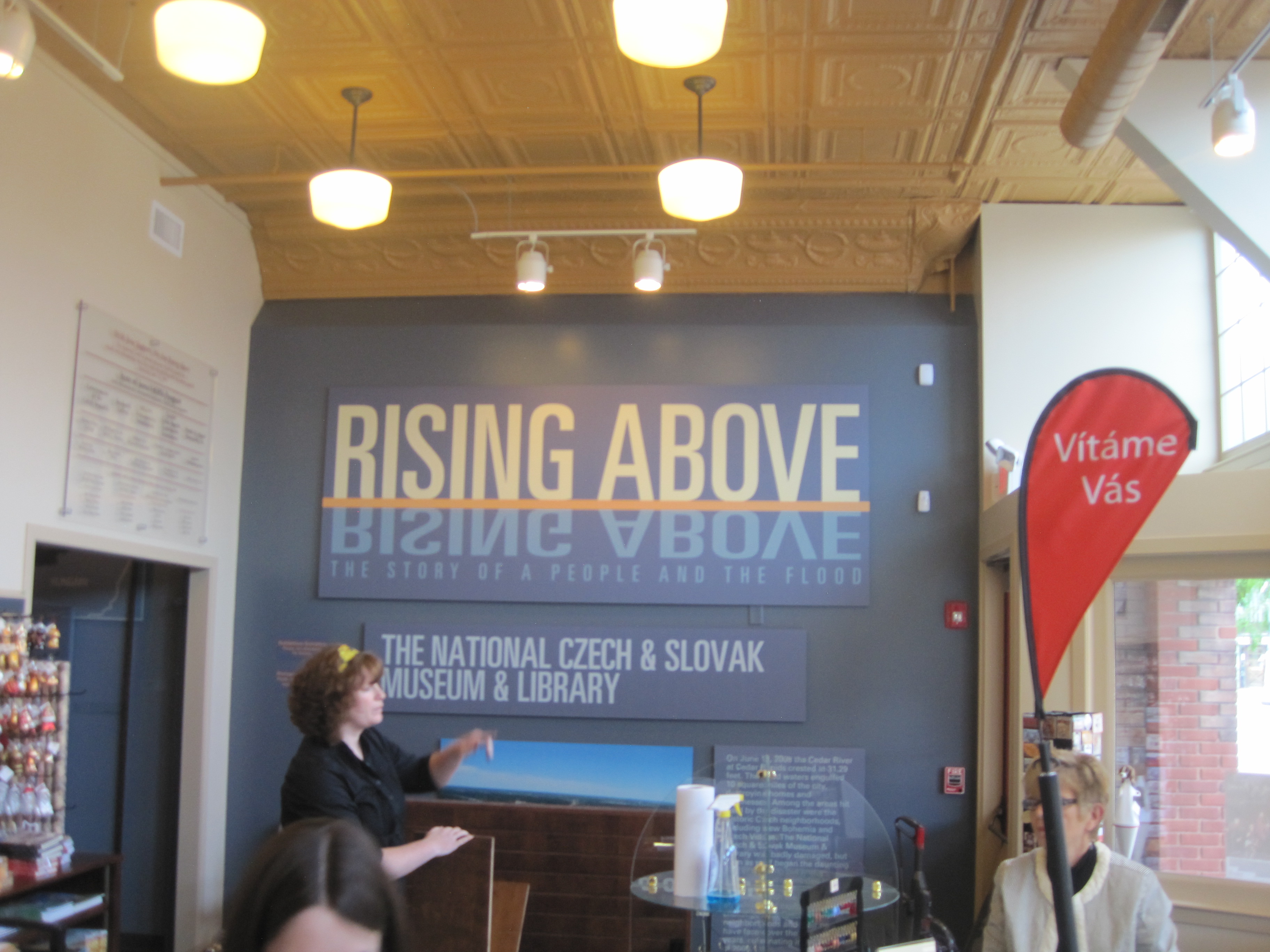 At Cedar Rapids, we stopped by the Czech Village, a small neighbourhood created to celebrate the contribution of Czech and Slovak cultures to the United States. The small art shop which now houses a temporary exhibit of some of its most prized artworks welcomed guests with open arms. In 2008, it became the victim of flooding brought about by rain and the overflowing of the Cedar River. Today, a line runs about seven feet high in the art store showing guests the level of water when the whole neighborhood almost went under. As tall as I am, it took me stretching all my arm to be able to reach the water mark. The National Czech & Slovak Museum and Library itself was just a few blocks away. With contributions from donors from around the country, it has now been rebuilt and refurbished, and would be opened officially on July 14 and 15. (Little trivia: former President Bill Clinton was at the initial opening of the library in 1995, along with the president of Czech Republic and Slovakia.)
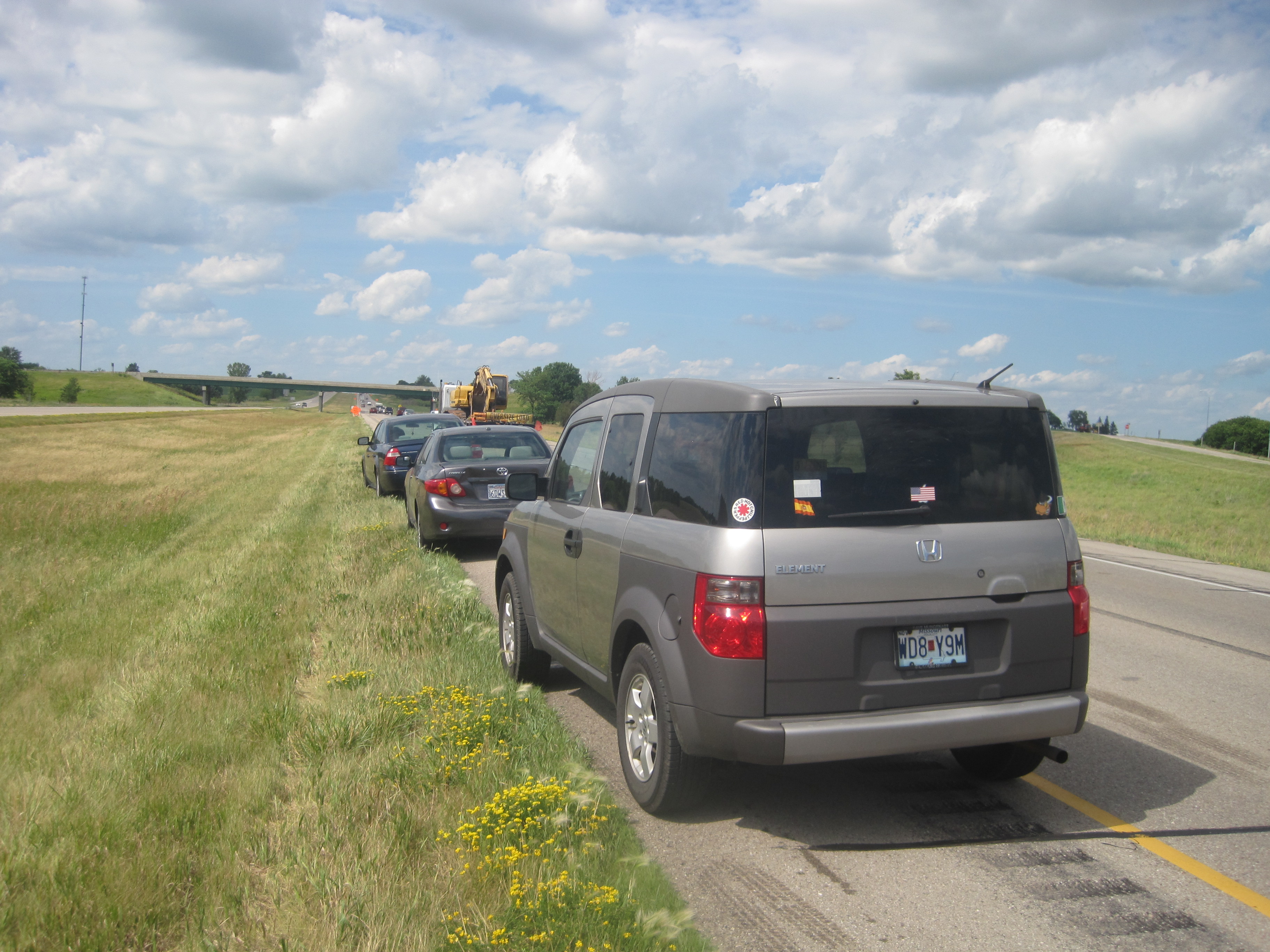 There are a few other memories involving Clear Lake, and Des Moines, two different but equally enchanting cities. Clear Lake it was where the three famous rock and roll musicians died in a plane crash in 1959. No coincidence, it was also where, on encountering a surprise traffic buildup on the highway close to Mason City, our vehicle got into a bumper-to-bumper accident involving two other cars. No one was hurt, except two of the cars. Des Moines is the capital of Iowa, with one of the most fascinating capitol buildings I’ve seen so far. Well, the car is still in Iowa, which means that there’s another trip coming up soon to pick it up. This time, we just might be able to spend a few more hours exploring Iowa City, the state’s second largest city, and maybe at Waterloo – the birthplace of John Wayne.
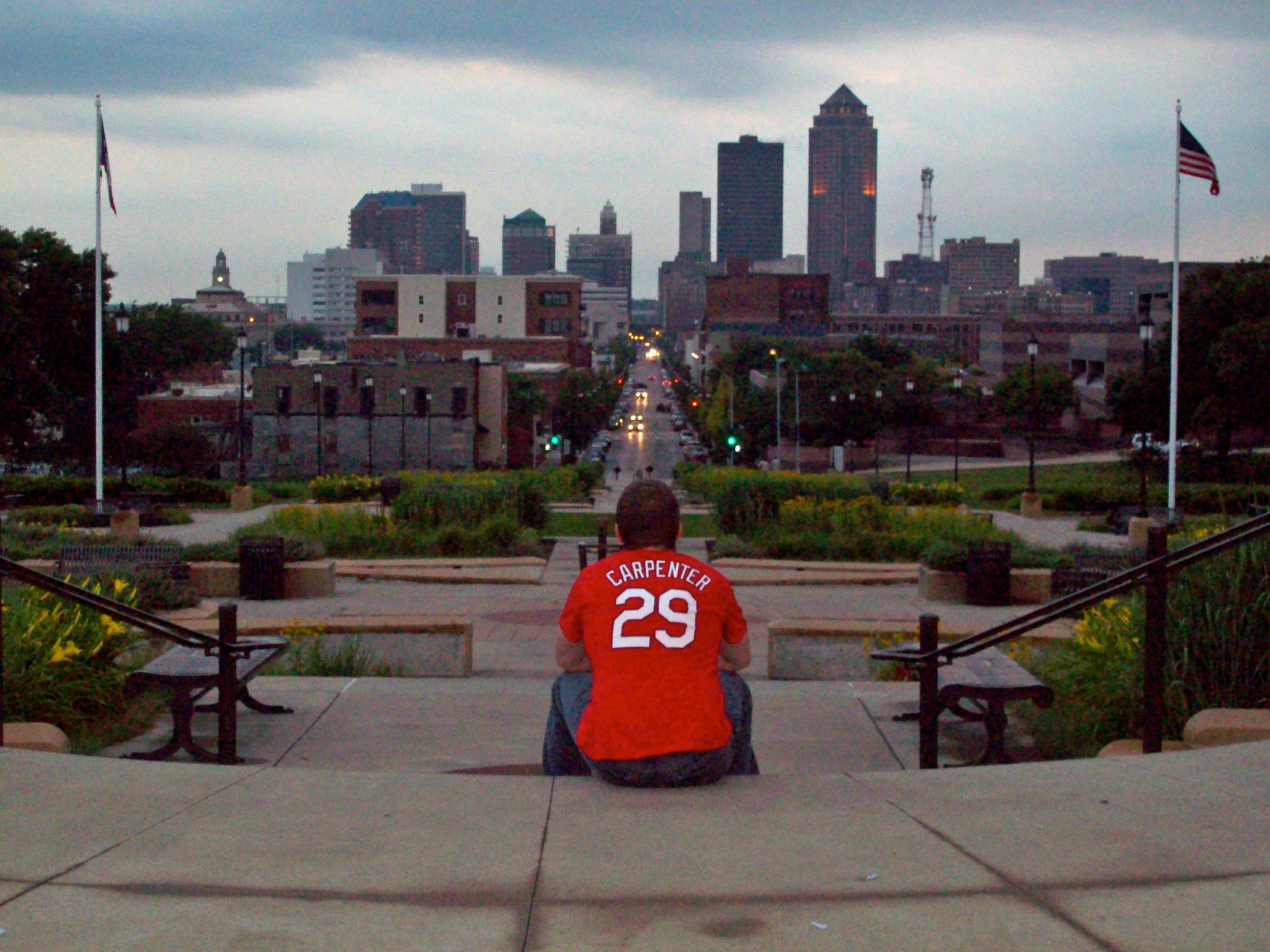 Iowa makes it the fifth Midwestern state I’ve visited so far, after Missouri, Minnesota, Illinois, and Kansas. One day soon, maybe there will be Indiana, Ohio, Wisconsin and Michigan. I sense a book of travel stories coming up. Each of the state capitols around the country present unique delights. And like the huge one in Providence (RI), Iowa’s is a gold-plated dome in Des Moines that sits on a massive building. In front of it is a statue of three figures from the state’s history, all facing westwards. Iowa, we also found, is home to one of the oldest mosques in the United States, also with the first National Muslim Cemetery in North America. The things we learn everyday.
I guess that explains why it has remained a swing state for a while.