The Mardi Gras in the United States and elsewhere in the world is an annual event of extraordinary proportions. It is defined by revelry, colour and excitement. This year’s edition was no exception. It does not take place in just one city in the US, but the biggest of them all holds in New Orleans in the state of Louisiana – an area that marks the beginning of the festival in the late 1600s. The Mardi Gras is so named in French (“Fat Tuesday”) to define the last days of indulgence before the beginning of Lent on Ash Wednesday.
American beauties
I had gone to this year’s event in St. Louis in company of an American friend and classmate. Apparently, one of the biggest attractions of the festival carnival is the now accepted spectacle of women flashing their breasts to all interested for a little fee of colourful beads. Needless to say, before we entered the long street called the Soulard where thousands of human bodies lined up to witness the parade of colourful costumes and dance, we made sure to have purchased a whole lot of colourful beads on strings, just in case we needed them. It turned out that we did; we found beads of different colours, thickness and length – just like ours – on everyone’s necks. Those who didn’t have enough were found jostling to catch any of the many more strings of beads that were flung into the crowd by members of the parade that took place later. As part of the history of the cultural event, it is said that young women gathered in evenings around fireplaces to count their gains of the carnival in the number of beads they obtained. And all they had to do to get the beads is to flash their breasts, which, I should say, also came in different shades and sizes, from what we saw.
The parade this year included: a march-past by uniformed representatives of the American military, marching to an accompanying band. Other highlights were: a costume re-enactment of the French revolution along with a life-size guillotine wheeled across the street following the French flag and a big banner that read not ‘off with her head’ but “Off with her top”; a bike ride; a campus dance band complete with drums and cheerleaders; motor scooter rides of different shapes and colours; and horseback riding. Some of the displays were serious – like the military parade that had the crowd chanting “U-S-A! U-S-A!”. Some were ludicrous – like a parade of colourfully dressed women on a truck with a banner that read “18+ holes with Tiger Woods.” Most were fun, and they took the same form: somebody was throwing beads at the crowd, especially in the direction of women who showed their breasts, and kept them hanging open for long amidst the loud roar of approval from the teeming crowd.
Rice and red beans
The crowd was unimaginable. It is estimated that there were more than 50,000 people at that event on Saturday, February 13; and this is just a conservative estimate based on visual approximation. A few minutes into the Soulard Street, I came across a man in an overcoat and a black hat whose beard and facial structure reminded me so much of the Nigerian Nobel Laureate. But I was standing at a roadside shed eating hot rice and red beans in sauce with mouth full, so that I lost a golden chance to scream “Prof!” behind his back. A few seconds later when such a chance presented itself, the man had disappeared down the street, and the initial hope of finding him – since “it can’t be so hard to locate a man in coat and a black hat down this street” – quickly frittered away. Such was the enormity of the crowd that occupied each labyrinth of the now festive street and its many alleyways, prompting the wonder about just how large the Mardi Gras festival would be in New Orleans, Louisiana this year. I also wondered how much larger the crowd here would have been – or how wild – had the event taken place in the summer.
Beside the indulgence and the number of people at this year’s event that has become part of American festival culture, I’ll remember it most for the colourful costumes, the parades, the beauty of beads around American necks, the roadside food stalls that cost almost double what they did on normal days, the capacity of the human spirit for fun and liveliness even in the face of a harshly cold weather, and the beauty of St. Louis at night. All these, for me, show an optimism that proves once again that life will always go on.
___
As published in 234Next on February 19, 2010.



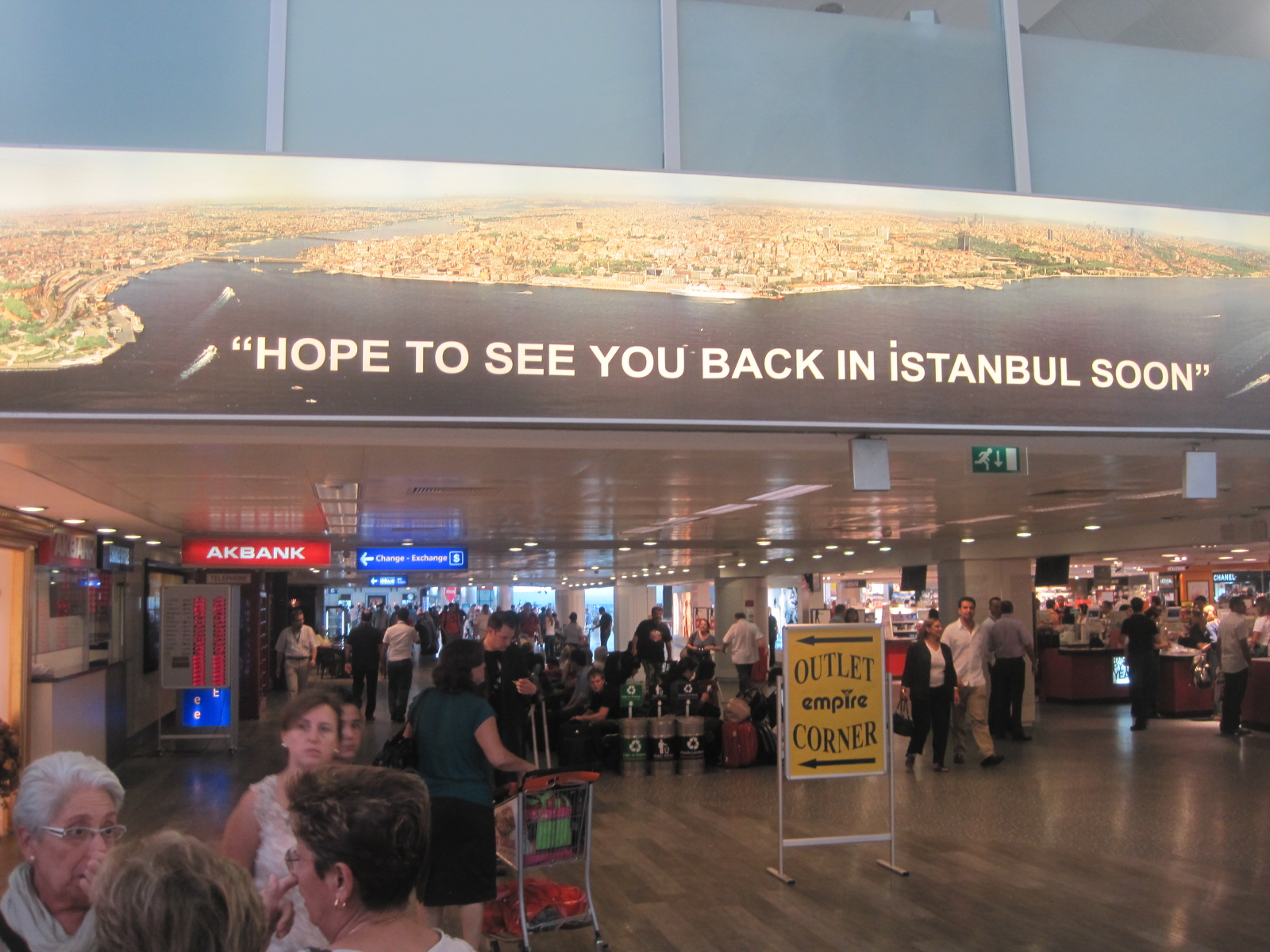



 Hovering all around Europe for the last twenty-four hours, I’ve finally made a complete stop at a familiar place. This time it’s looking a lot more like a place I’ve been away from for a long while. There is some lethargy, no doubt, perhaps conditioned by stress, or by fatigue of flying in the aisle seat for that length of time, or the thought of my luggage in the hand of a random stranger.