 I’m beginning to consider the possibility that I might have been Chinese in my former life. The more I think about it, the more I remember instances in which the Chinese people, or the Chinese language has revolved around me. One of my favourite FLTAs at our orientation in Providence, Rhode Island was Chinese, and she taught me to write my name and my country in Chinese, and I’d given up of ever having such a chance again.
But today, I had another chance or reunion with my adopted spiritual home in the continuation of the events marking the “Discover Languages Month”. Last week was Yoruba. this week is the celebration of the Chinese new year, called The Year of the Tiger, and the student of Chinese had come out to exhibit their skills and knowledge of the language. Supervising the event was none other than Professor Lavalle, the teacher of Chinese language and literature whom I’d blogged about a few days ago. As special attraction, there were marshmallows and chopsticks, and interested competitors can win one of several Chinese toys and artifacts if they could only hold the chopsticks right and move the marshmallows from one bowl into another.
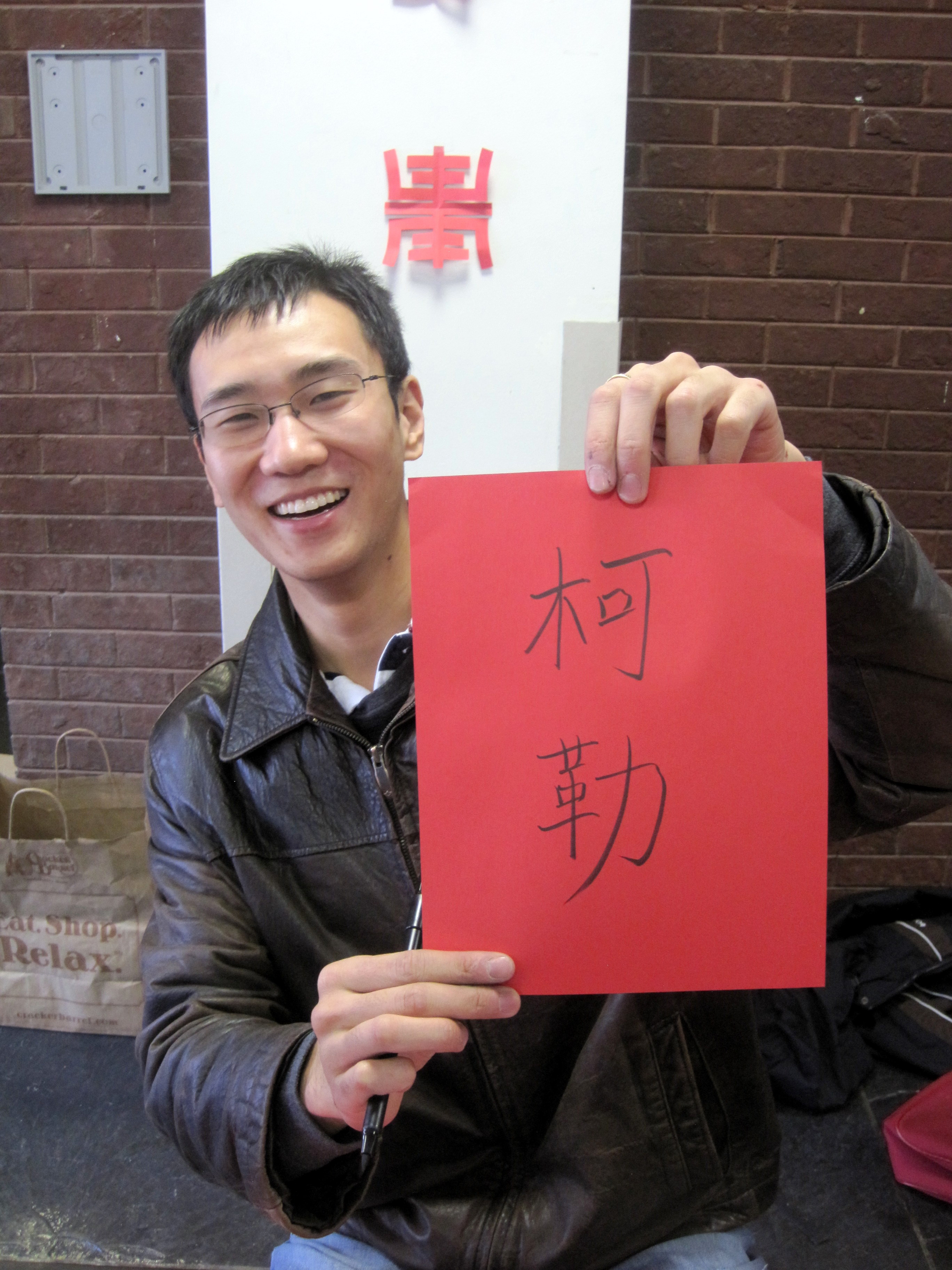
"My name is Chinese Kola"
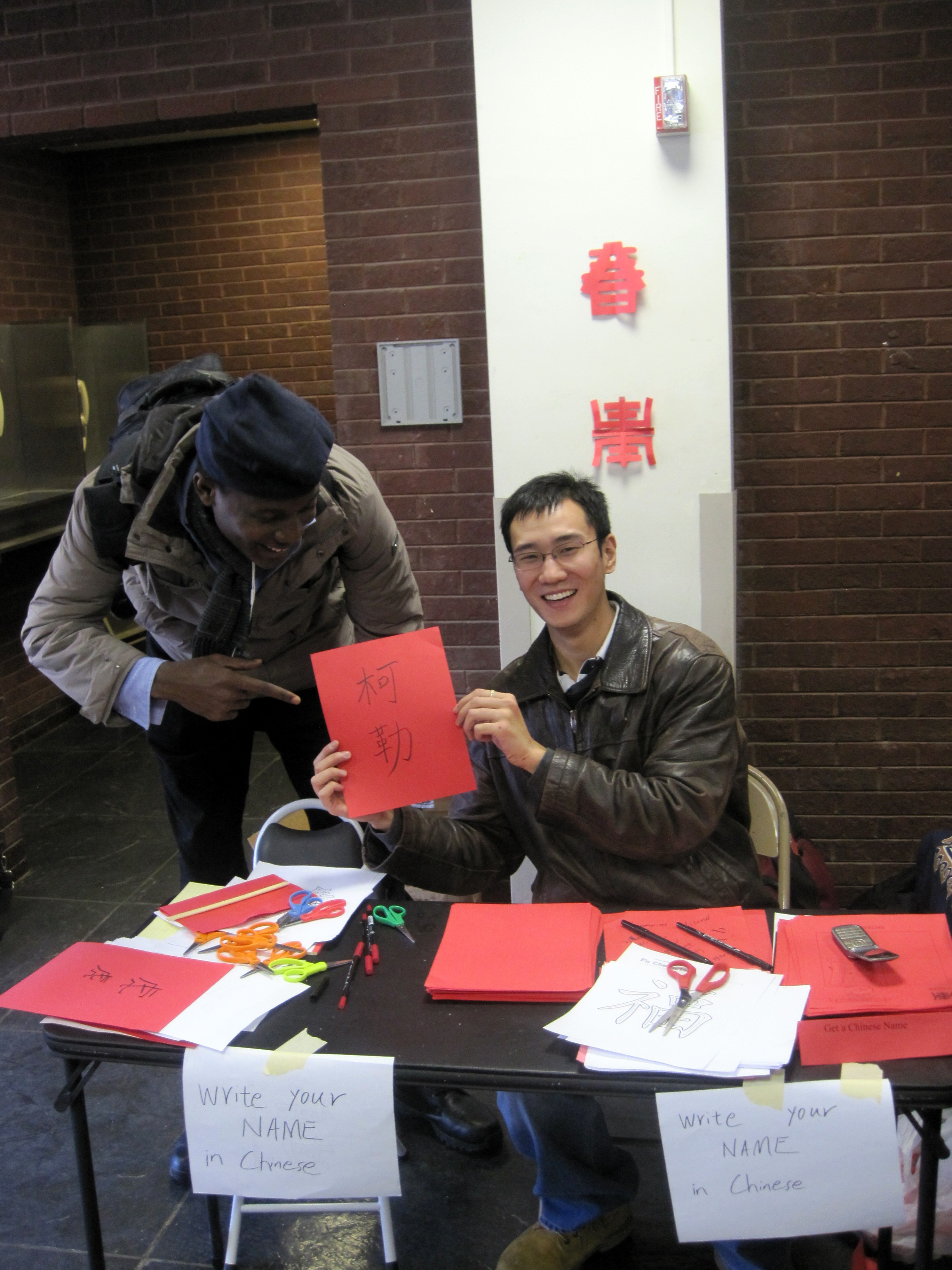
I had never had marshmallows before, so it was nice that I showed up. Afterwards, after devouring them all, with my hands – of course, I began to wonder why it was sooo sweet in the mouth. I also had dates, which were nice, and then a fortune cookie which predicted that I was about to become $8 poorer. Tell me what kind of a “fortune” cookie is that? Later, I walked up to the stand where calligraphy was being exhibited, and I had my name written, again, in Chinese. I can’t read it now, but I believe the Chinese guy who wrote it. And Prof Lavalle was there. I believe that he would have told me if it was wrong. More than that, I also confirmed that I had not forgotten the few words of Chinese that I know: Ni hau for “hello” and Shi-shi for “thank you. When next I get free time, I think I will be making a trip to Beijing.
If it helps, Chinese is a tonal language, just like Yoruba. Professor Lavalle had also told me on our first meeting that what he read of my poems reminded him of Chinese poetry, as opposed to the prosy and “confessive” nature of American poems. It is supposed to make me feel better, I guess, that my peripatetic spirit has now has more links to the Orients than I like to acknowledge?
Maybe this is why I like Jackie Chan so much. Blood is so thicker than water. 🙂