The Judges’ Report of the 2017 Nigeria Prize

A total of 184 poetry collections were received for this year’s competition.

The seriousness with which the NLNG literary prize is received by the teeming population of writers in Nigeria is a sign that the expectations of writers swing beyond the prize itself to that of portraying their creativity. The prestige, associated with the prize saw the 184 entrants of collections of poetry in various sizes and of diverse themes setting out for the stiff competition. At the beginning, the initial weeding was carried out following one of the primary criteria; quality and validity of publication year.   

A total of 101 collections were disqualified at the initial combined sitting of the Advisory Board and the panel of judges for not meeting the basic and fundamental guidelines. 83 closely screened entries were left in the competition and the judges were given a month to come up with the long list of 50 and 25 simultaneously. The next step was to synchronise the shortlist of 11 which the panel carried out in accordance with the set criteria approved by the Advisory Board.

The meeting which saw the emergence of the final list of 3 was long and the scrutiny all encompassing because the panel did not just focus on the quality of production but more on relevance to contemporary Nigerian Literature. The succinct development of Nigerian literature from the classical tradition is something the panel consider an act of brevity and enriching to contemporary Nigerian literature.

At this final phase, we examined the strengths of each of the three books on the final list namely: Ogaga Ifowodo’s A Good Mourning, Tanure Ojaide’s Songs of Myself: Quartet and Ikeogu Oke’s The Heresaid.

Ogaga Ifowodo’s A Good Mourning published by Parresia Books, focusses on the tragedy, ambiguity and contradictions of human experience recreated from poetic vision and language. The work has been likened to “an itinerary that shifts from one notorious platform of human bestiality to another — from the Slave Trade to the Holocaust, the theatres of war in Palestine and the Congo, and the genocide fields of Rwanda and Darfur and so on”.

Songs of Myself: Quartet by Tanure Ojaide published by Kraft Books Limited explores paradoxes in contemporary times presented in discursive lyricism. It reflects the journey to the deepest vicissitudes of the adventurer himself. Ojaide’s volume directs a vigilant gaze toward the artist, society and the world at large. In its breadth and sweep, it undergirds and reiterates the rich linguistic resources available to the artist from indigenous sources.

Ikeogu Oke’s The Heresaid published by Kraft Books Ltd, employs the epic form in questioning power and freedom. It probes metaphorically the inner workings of societies and those who shape them. The volume addresses the question of freedom in all its ramifications.

In assessing and ranking the three works, the judges paid close attention to maturity and depth of vision in the execution of themes, and considered the collections holistically rather than scoring high for one or two poems. After much consideration of these criteria, the competition was narrowed down to between Tanure Ojaide’s Songs of Myself:Quartet and Ikeogu Oke’s The Heresaid.

Oke’s poetry collection reveals a conscious/deliberate manipulation of language and philosophy in the style that reminds us of the writings of great Greek writers of Homeric and Hellenistic periods. Ojaide’s collection refreshes in its day to day experiences of the ordinary man/writer, his travels and other cross-gender exploits. The collection explores paradoxes in contemporary times presented in discursive lyricism. Ikeogu stylistically reaches out to classicism, and Ojaide, to traditional quintessential orature. Both seem to complement each other and collectively reveal and reflect the highest level of poetic craftsmanship in Nigeria. The two authors and their works demonstrate the scope and scale of ambition which The Nigeria Prize for Literature deserves. In their respective ways they push and extend the boundaries of the practice of the art of poetry and of poetry’s engagement with society.

The judges found this seeming complementarity quite appealing and considered recommending both works as a tie for the award

However, the judges went further to apply decisively and scrupulously the Assessment Criteria for the 2017 The Nigeria Prize for Literature competition in their minutest detail thus:

Assessment Criteria for 2017 The Nigeria Prize for Literature competition


  1. Scope  
  • Themes/subjects with regard to relevance to society
  • Time (historical, contemporary and topical)


  1. Maturity and depth of vision
  • Seriousness of content
  • Handling of language


  1. Unity and coherence of content
  2. Thematic engagement
  • Artistic commitment
  • Social commitment
  1. Creative use of language
  • Mechanical correctness of use of language
  • Diction
  • Imagery and other poetic devices
  • Contribution to Nigerian Literature
  • Content
  • Technique


  1. Quality of production
  • Physical
    -Design/presentation
    – Quality of binding

-Print quality, choice and size of font, readability


After diligent considerations and critically objective application of the guidelines and criteria, the judges decided to recommend Ikeogu Oke’s The Heresaid as the 2017 winner of The Nigeria Prize for Literature. This decision is based on its apt topicality, relevance, artistic heft and the pursuit of artistic provenance. In a world of increasingly threatened by encroaching totalitarianism and even bare-faced tyranny and intolerance, the wit, wisdom and message of the The Heresaid are infinitely crucial.

It is our hope and goal that the kind of vibrancy which we have found in the collections of poetry submitted is a vital evidence that NLNG is making unprecedented difference in the intellectual development of Nigeria and Nigerian today.


The 2017 Literary Criticism Competition

The Panel of Judges for the Poetry competition was also charged with the task of assessing the entries for the 2017 Literary Criticism Prize. Compared to the 184 entries received for the Poetry competition, the Literary Criticism entries numbered a paltry five! Of these five, three were disqualified. The guidelines for submission specified that the essays to be submitted must be written not more than three years prior to the year of competition namely nothing published before 2014. The three disqualified essays were published between 2010 and 2012 contrary to the stipulation in the guidelines. The judges considered just two essays abysmally inadequate for a competition of this magnitude. Therefore, no recommendation is made for this award in 2017. The judges wish to further draw the attention of tertiary institutions in Nigeria to the paucity of the responses to this competition as a direct reflection on those tertiary institutions particularly the universities. It is our hope that responses will be a lot better in future from professors and lecturers in our more than one hundred universities in Nigeria. It is a challenge that they should be glad to embrace!


PANEL OF JUDGES

Prof Ernest Emenyonu  (Chairman, Panel of Judges)

Dr Razinatu Mohammed

Tade Ipadeola

Prof Abena Busia (External Consultant)


ADVISORY BOARD

Prof Ayo Banjo (Chairman, Advisory Board)

Prof Ben Elugbe

Prof Jerry Agada


184 Poets Vie for the Nigerian Literature Prize

Today in Ikeja, the entries for this year’s NLNG Nigerian Literature Prize were delivered to the judges at an open ceremony. They contained entries by one hundred and eighty-four (184) Nigerian poets vying for the Literature Prize and five (5) literary critics vying for the Prize for Literary Criticism. The two categories are worth $100,000 and N1 million respectively.

“The hand-over of the entries to the Advisory Board, chaired by Professor Emeritus Ayọ̀ Bánjọ, signifies the beginning of the judging process which culminates in the announcement of the winner in October 2017,” reads the press release put out after the event.

Handing over the entries, Dr. Kudo Eresia-Eke and Professor Ayọ̀ Bánjọ. Photo: SabiNews

Handing over the entries, NLNG’s General Manager, External Relations, Dr. Kudo Eresia-Eke, said the prize has inspired some 1,630 books of which 533, representing 32%, were submitted in the Poetry category since the inception of the prize in 2004.

It continues:

The number of entries for the 2017 edition exceeded the 2016 numbers, showing a six percent rise in the number of entries received…. The entries… will be examined on their merits of excellence in language, creativity and book quality.”

The panel of judges for this year’s awards is led by Professor Ernest Emenyonu who is a professor of Africana Studies at the University of Michigan-Flint. He was Deputy Vice-Chancellor at the University of Calabar between 1988 and 1990, and Provost (Chief Executive) Alvan Ikoku College of Education, Owerri, between 1992 and 1996. He has taught in several Nigerian and American universities.

Other judges are Dr. Razinat Mohammed and Tádé Ìpàdéọlá. Dr. Mohammed is an Associate Professor of Literature at the University of Maiduguri. She teaches African Literature with specialization in Feminist Literary Criticism and Theoretical Approaches. She is an accomplished writer as well. Tádé Ìpàdéọlá won the Nigeria Prize for Literature in 2013 in the Poetry category with his third volume of poetry, The Sahara Testament. A poet and a lawyer, Ìpàdéọlá has won several awards and is a resource person for the Rockefeller Foundation around Africa on building resilience.

Members of the Advisory Board for the Literature Prize, besides Professor Bánjọ, two-time Vice-Chancellor of Nigeria’s premier university, University of Ibadan, are Prof. Jerry Agada, former Minister of State for Education, former President of the Association of Nigerian Authors, and Professor Emeritus Ben Elugbe, former President of the Nigerian Academy of Letters and president of the West-African Linguistic Society (2004-2013).

“The Nigeria Prize for Literature has since 2005 rewarded eminent writers such as Gabriel Okara (co-winner, 2005, poetry), Professor Ezenwa Ohaeto (co-winner, 2005, poetry); Ahmed Yerima (2006, drama) for his classic, Hard Ground;  Mabel Sẹ́gun (co-winner, 2007, children’s literature) for her collection of short plays Reader’s Theatre; Professor Akachi Adimora-Ezeigbo (co-winner, 2007, children’s literature) with her book, My Cousin Sammy; Kaine Agary (2008, prose); Esiaba Irobi (2010, drama) who clinched the prize posthumously with his book Cemetery Road; Adélékè Adéyẹmí (2011, children’s literature) with his book The Missing Clock; Chika Unigwe (2012 – prose), with her novel, On Black Sister’s Street; Tádé Ìpàdéọlá (2013; Poetry) with his collection of poems, Sahara Testaments and Sam Ukala (2014; Drama) with Iredi War,” the press release concluded.

The Nigerian for Literature is Africa’s biggest prize with a cash reward of $100,000, which rotates yearly amongst four literary categories of prose fiction, poetry, drama and children’s literature.

Sailing Young Imagination

When I started teaching in Lagos, in 2012, on return from Edwardsville, one of the things I had in mind was finding a way to combine my passion for literature with my training and vocation as a teacher and linguist. First through a series of “Meet-A-Writer” events where we brought practising writers to meet and interact with the students, and also through excursions to events to fire up students’ artistic sensibilities, I succeeded to a reasonable extent. One of the highlights of the last Ake Arts and Books Festival, for me as a guest and as a guide to the students of mine that I brought along, was the ride home listening to the literary and creative aspirations of the students and their prospects for the future.

Gradually becoming disenchanted with the overall purpose of teaching English language as a compulsory subject (and a medium of instruction) in a post-colonial society, the idea of literature as a flight of fancy and a window into the mind and creativity of young adults became something more interesting, and certainly more rewarding than teaching grammar in a language compelled by law, sustained by an illusion, and limited in the true sense of the capacity to genuinely express the true identity of the continent. There’s an irony here, of course, in the fact that these literatures, for now, are also expressed in this same “limiting” language. But that’s a story for another day.

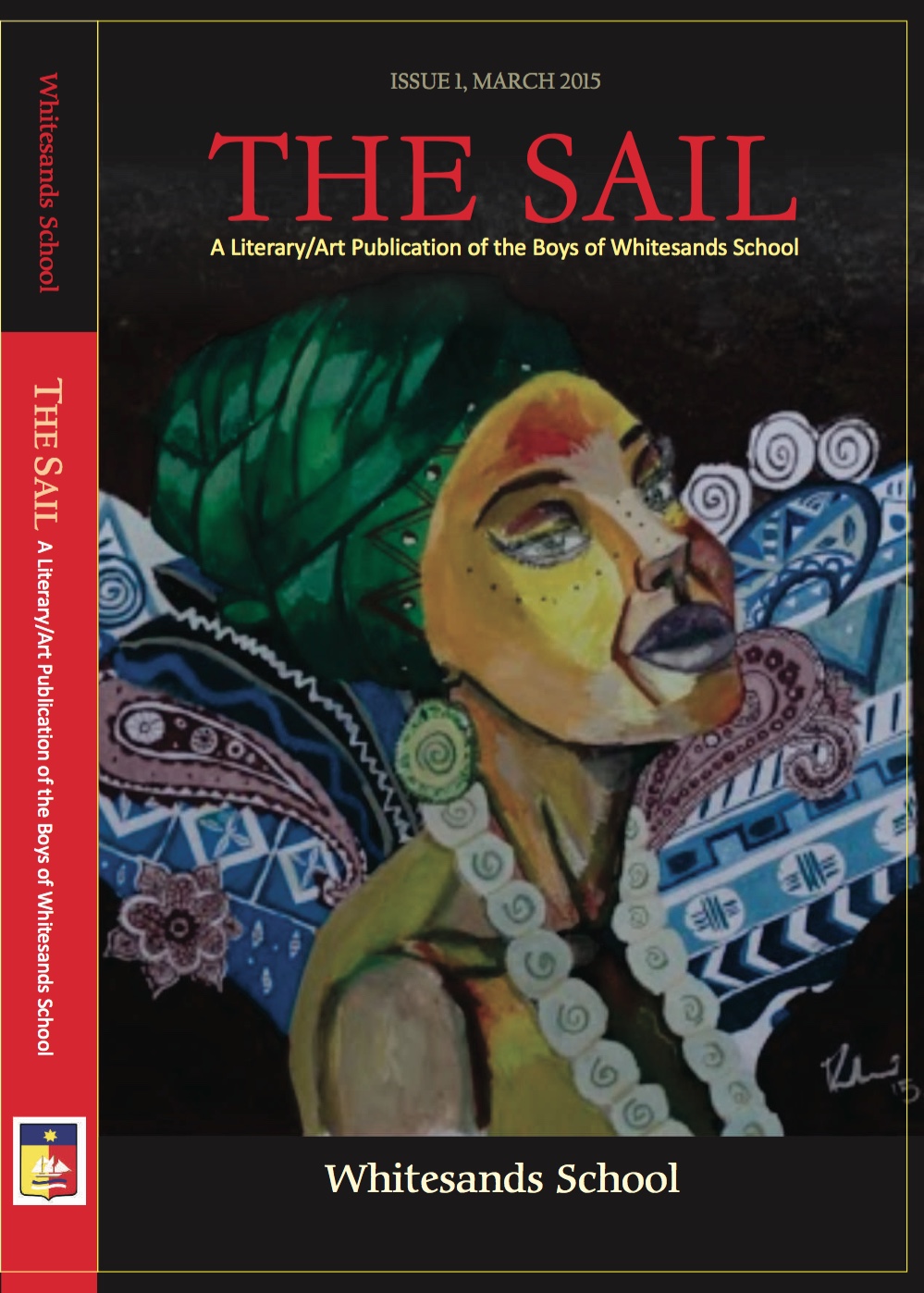
FrontLast year, an idea I’ve had for a while on the possibility of harnessing students’ creative energy in a book form found enthusiastic audience with the school administration. The result is an 86-paged anthology of students’ work in poetry, prose fiction, drama, essay, and visual arts, published by Whitesands School and Feathers & Ink publishing house in Ibadan. Along with the privilege of being in the book, a few of the students are also being rewarded with positions when their work is compared with the others. We were also privileged to have prominent literary practitioners in Nigeria read and judge the prizes beforehand. For this first edition, these judges were Chika Unigwe and Tade Ipadeola, both previous winners of the Nigerian Prize for Literature (worth $100,000). In short, it was a thoroughly emotionally and intellectually stimulating experience for the teachers and the students.

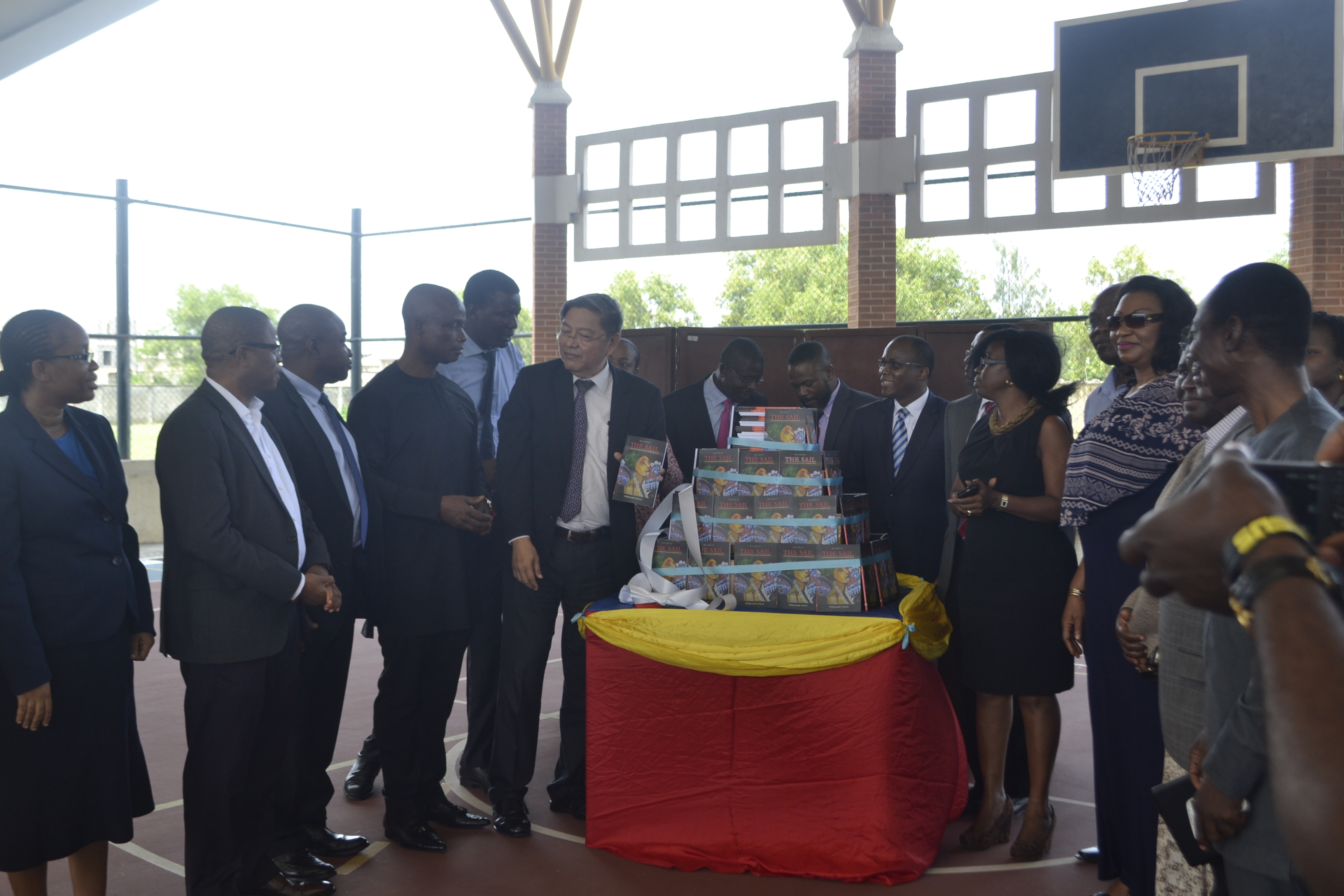
_DSC0871The book was publicly presented on June 25 at the school, with parents of winning students present. The book is also being given to all the over 400 students in the school as an incentive to working hard to be selected for the next edition. From what I’ve heard, it is having precisely that effect. For the students whose work appear in it as well, there’s an obvious air of pride and accomplishment. In the next couple of weeks, the book should also be on Amazon and other internet outlets for free download. From what I’ve heard as positive reviews of the project, even the idea itself is ripe for scaling. Given adequate sponsorship, there’s plenty more dimensions in which this can go. For now, however, the pride of being able to accomplish something this little with substantial impact is unquantifiable. Read Tade Ipadeola’s review.

_DSC0758Here’s one anecdote that almost brought me to tears. Yesterday, the vice-principal of the school called to tell me of the decision of a parent of one of the students to pull out the child. As a dual citizen of the United States and Nigeria, the parents thought it was time for the child to relocate and join his other siblings. Not having told the boy before now, he was devastated, but not for an obvious reason. According to the father, the child expressed regret that having missed a chance to be published in The Sail: Issue 1, he had already started working towards entering as many creative work as possible so as to get a chance for the next issue (due January, 2016). Now, that dream is being taken away from him, without an agency to influence the process.

I have been dejected, and then extraordinarily buoyed, by the sadness of that story for the last 24 hours. It’s almost enough to compensate for everything else wrong with the compulsion in English language learning.