St. Louis to Saint-Louis

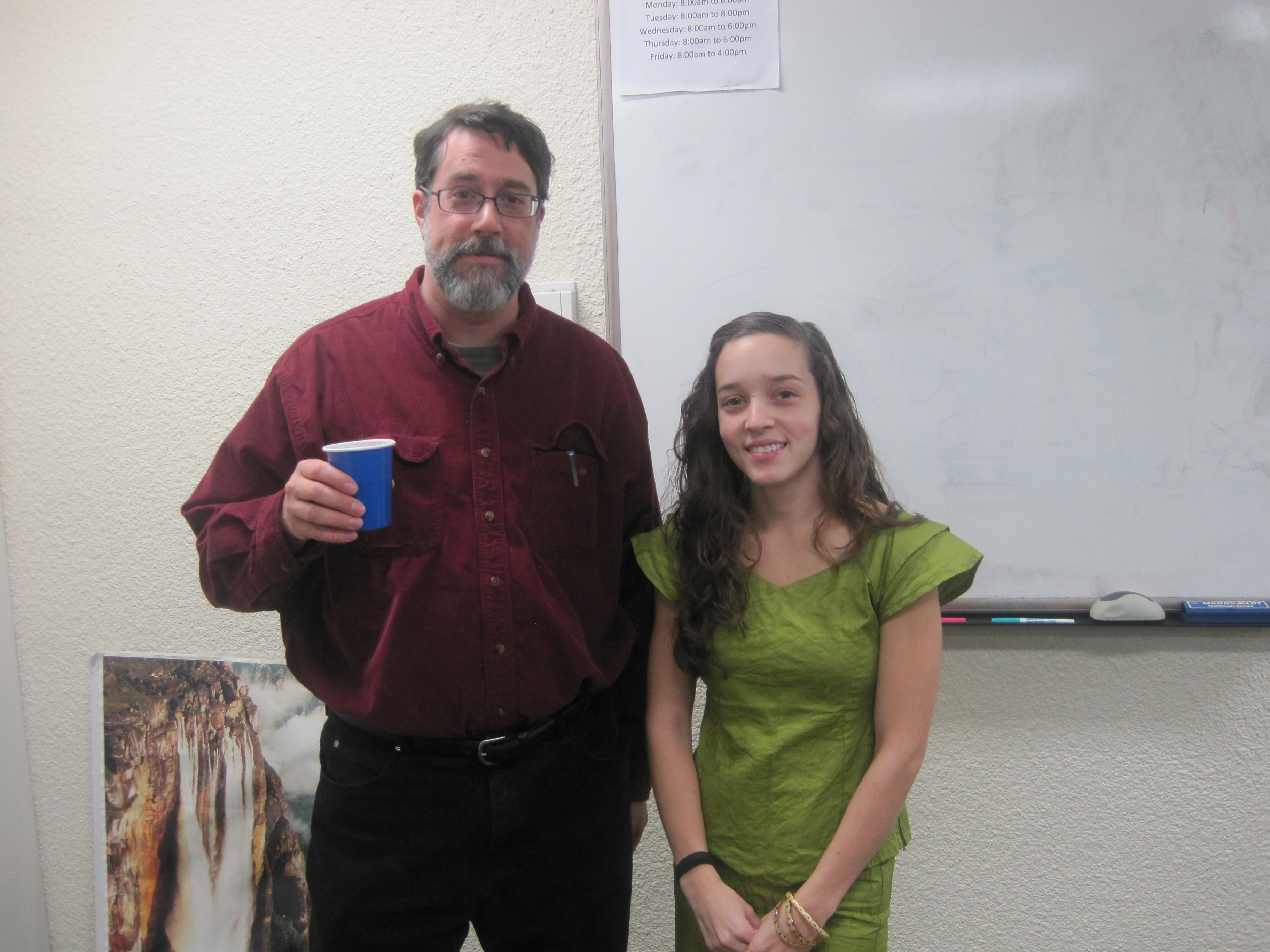
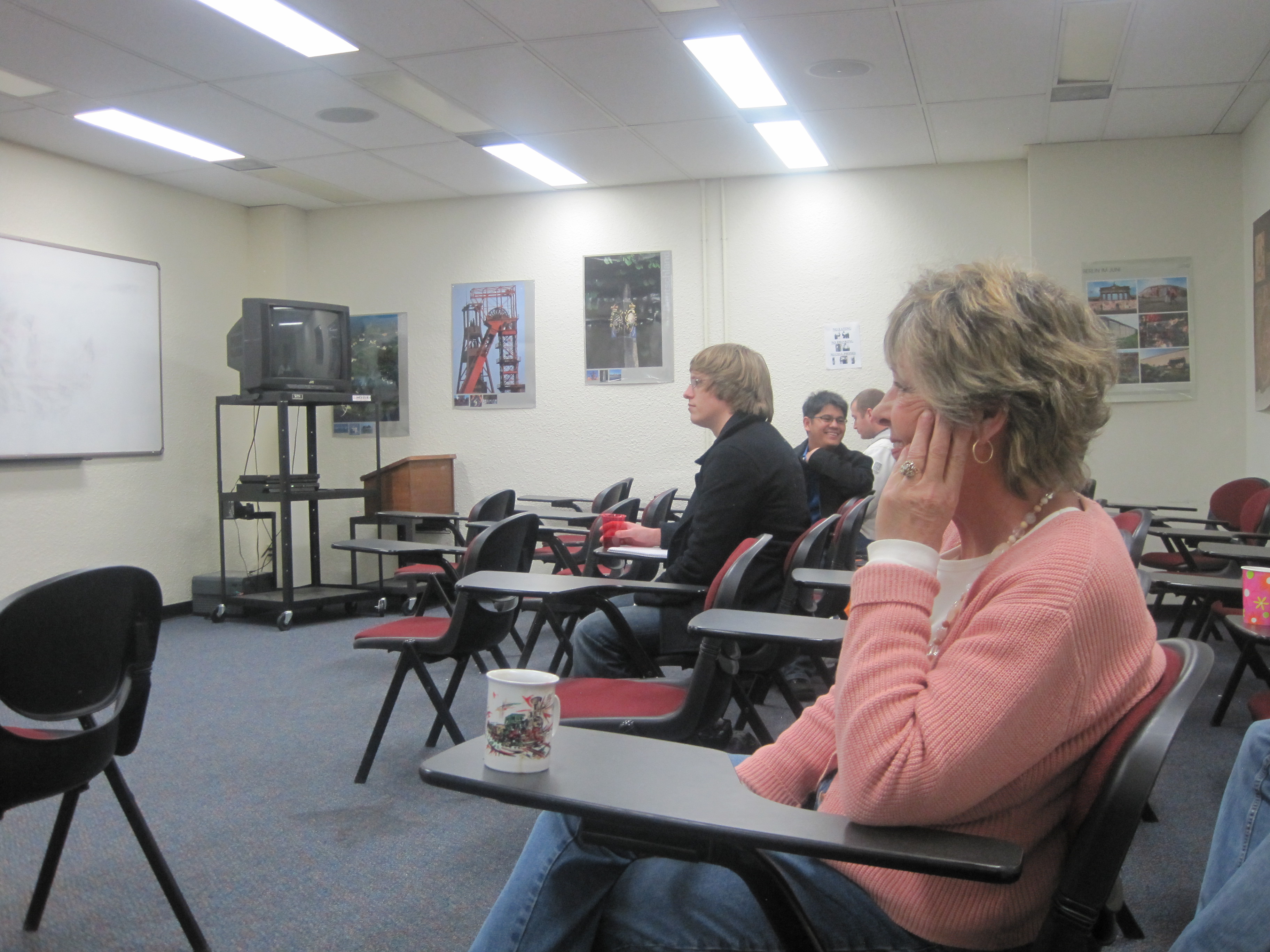
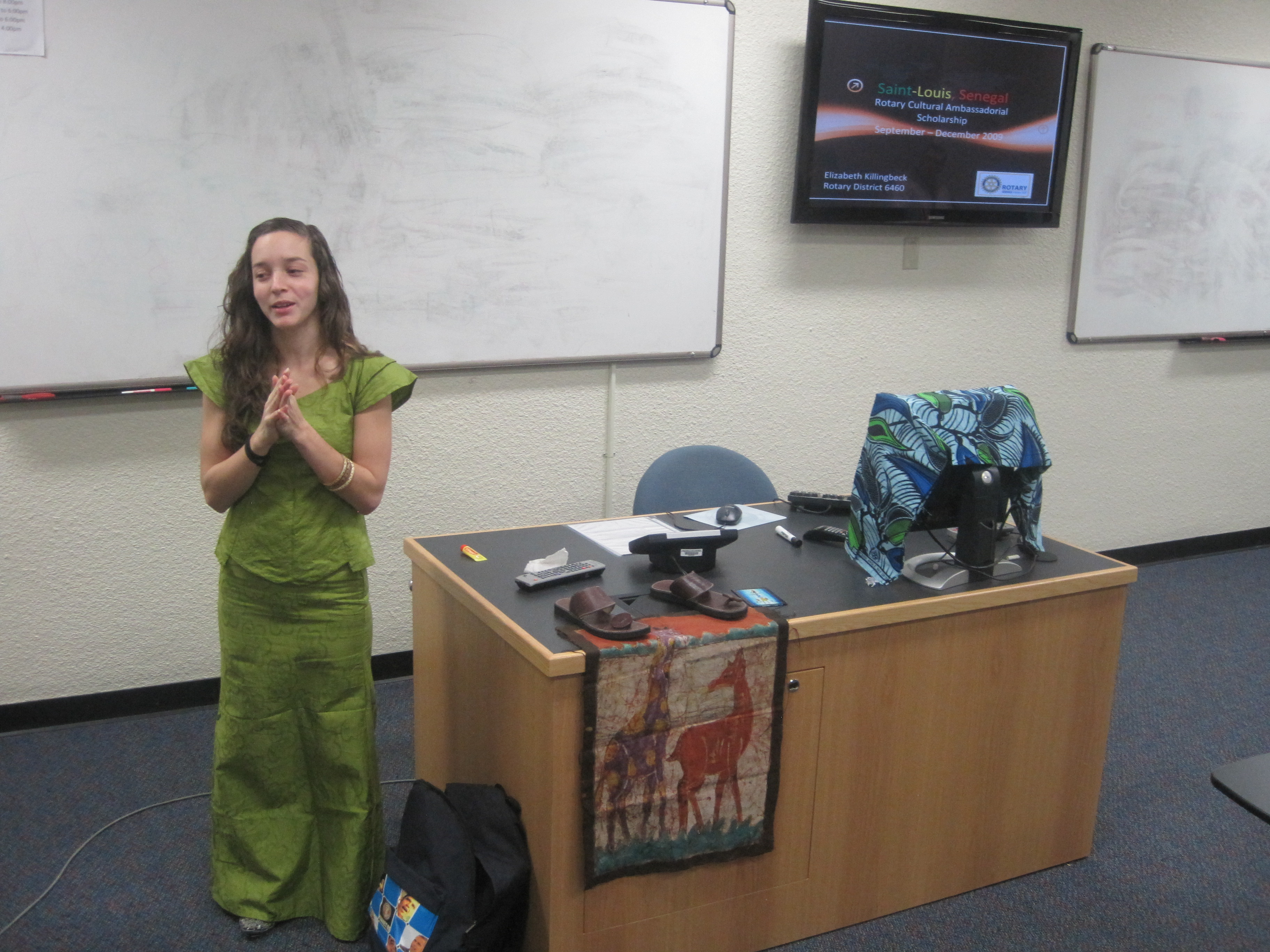
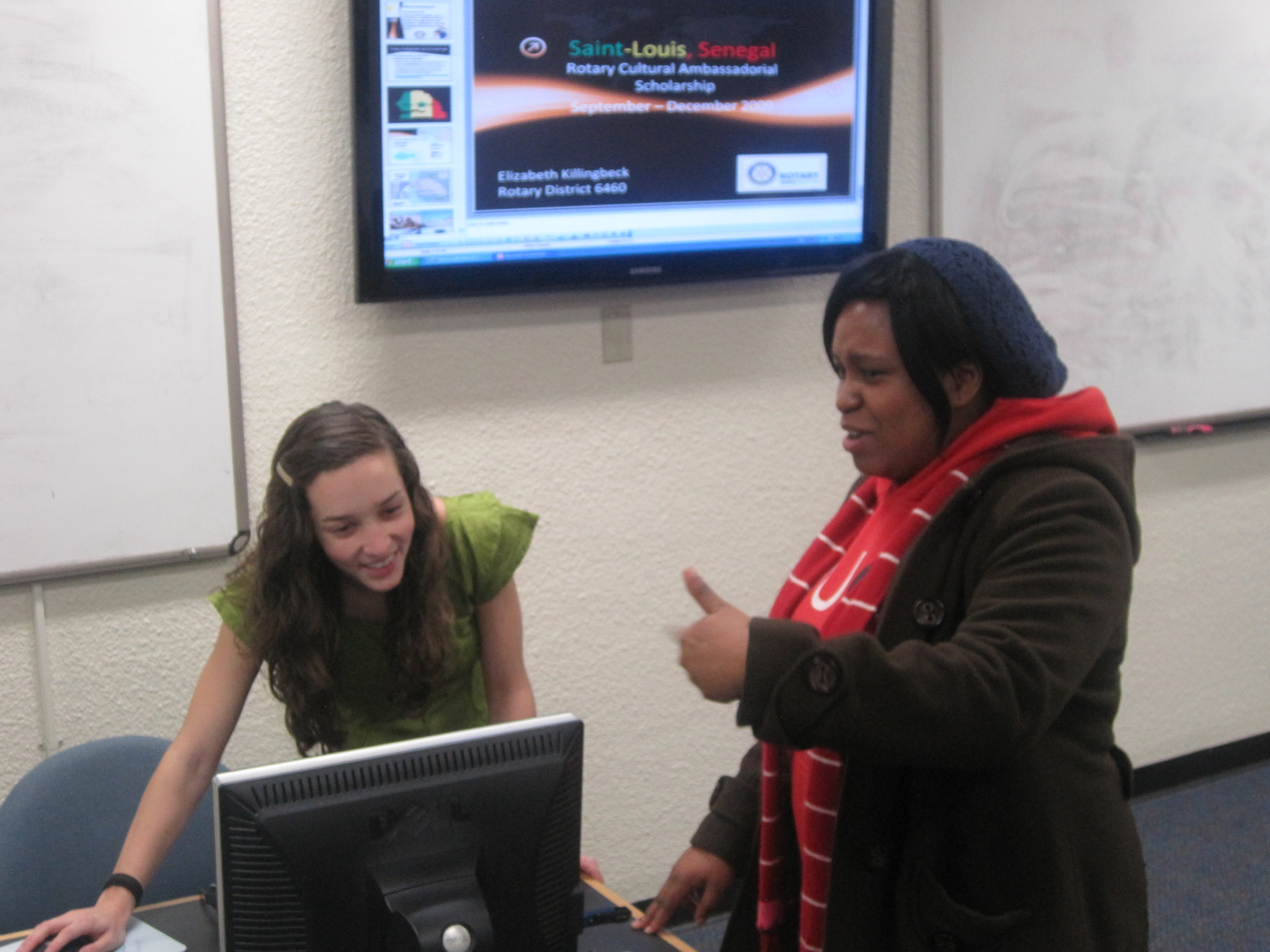
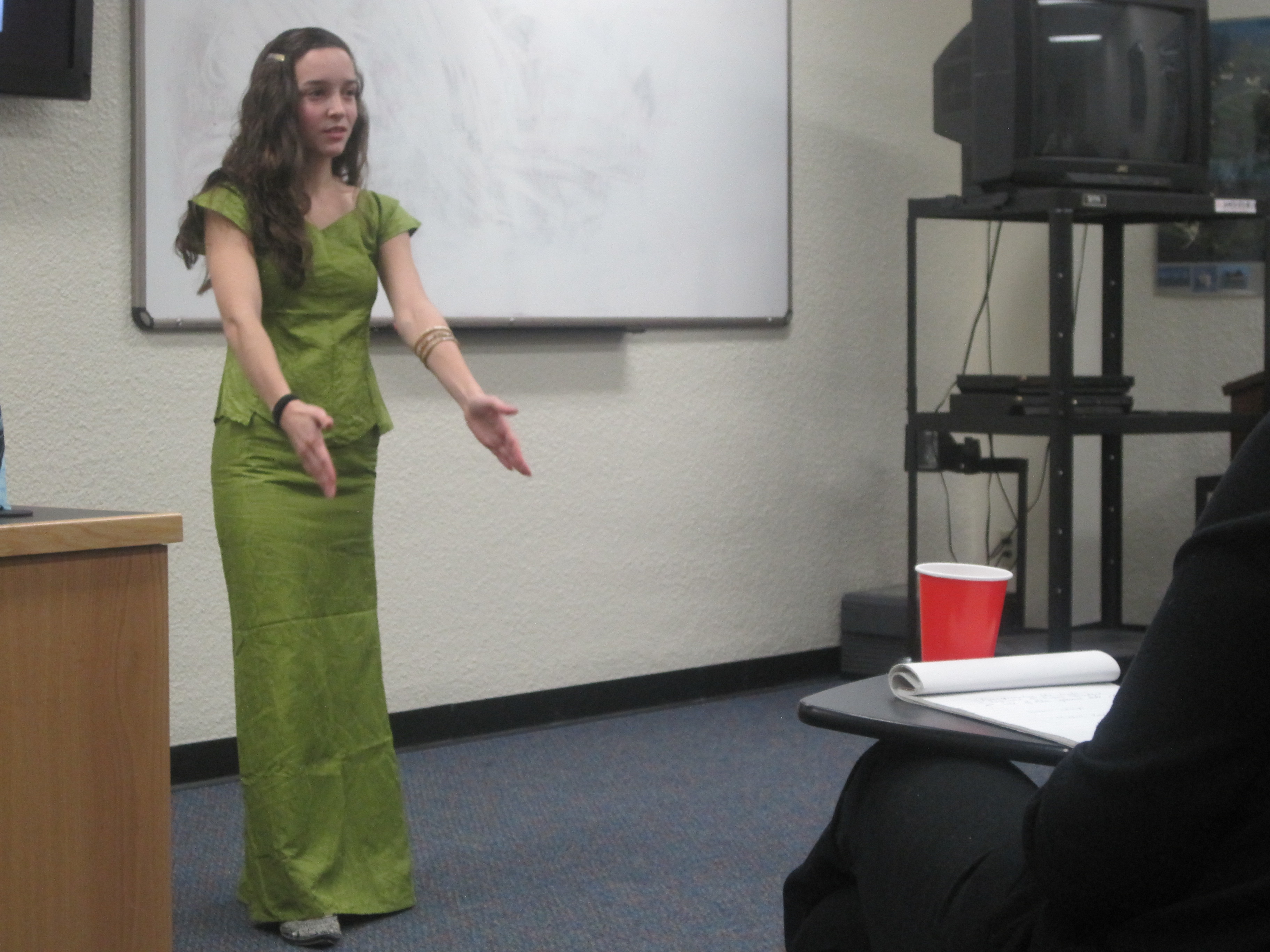
Today’s even in the Discover Languages Month was a talk by Elizabeth Killingbeck, a student of my department who had gone to Saint-Louis in Senegal in West Africa for a three month Rotary community project and a French-abroad experience. Elizabeth had come back with stories of said experience and was at the Plasma Lounge again to share it with members of the department, faculty and students who had come to listen. From a little after three pm when the talk started, and a little after four o clock when it ended, Elizabeth took us on a journey of her experiences, good and bad, in the West African country. It was worth it listening to.
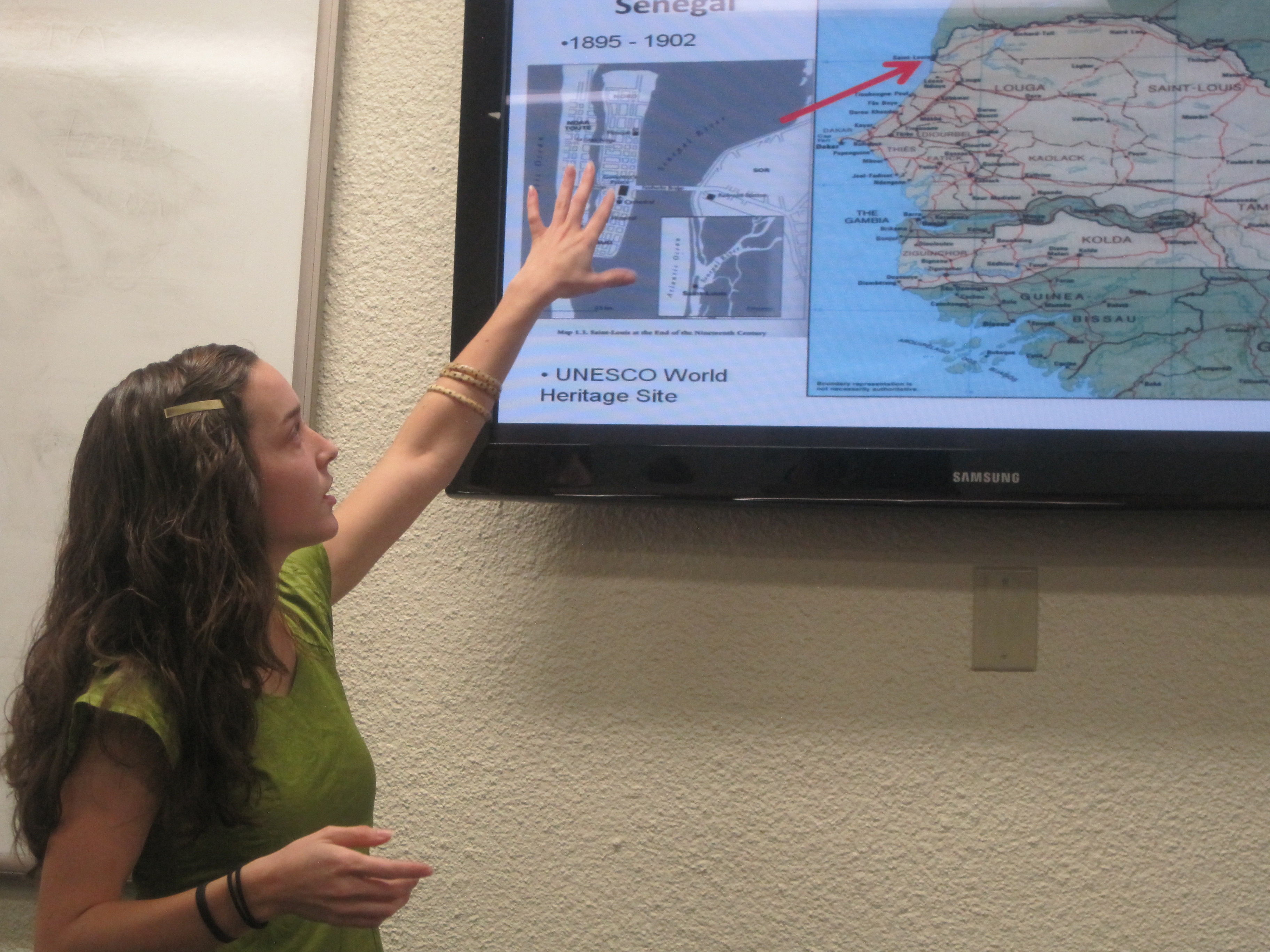
Her trip to Senegal was doubly memorable for her and for us because Elizabeth had never lived within any community of totally French-speaking people, nor has she ever been to Africa (or for that matter lived within a community of mainly moslems). And on top of that, she is someone of not so large a stature that must have gone through so much to survive (even in the US) within a group of bigger framed folks, and here she was in French and Wolof-speaking West Africa in the blazing sun. Now don’t get me wrong, Elizabeth is only soft-spoken, she is neither timid nor shy when speaking about what she finds fascinating.

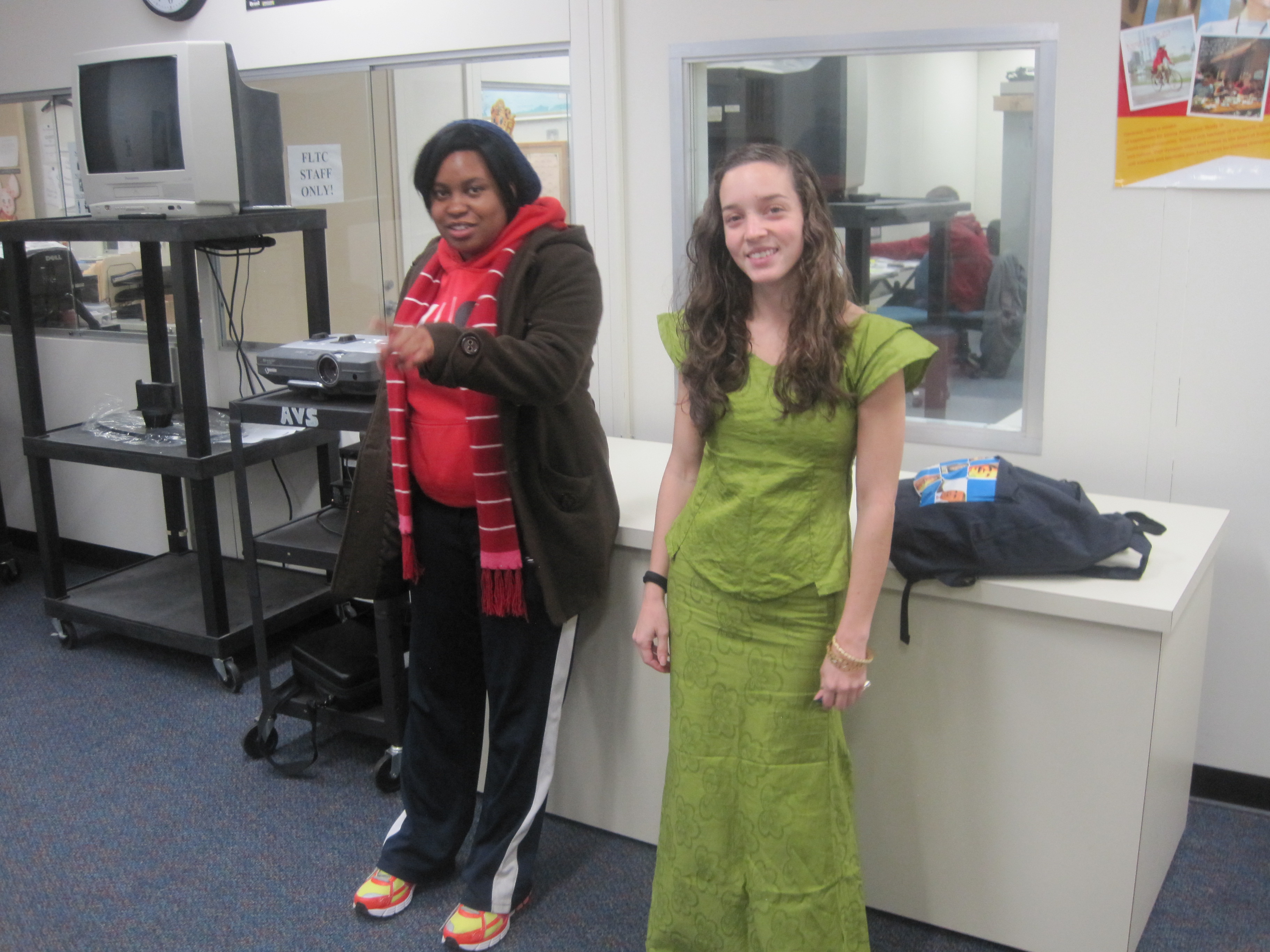
Wearing a green guinea attire that she bought while there in Abdoulaye Wade’s country, she talked about drinking water, flies, art, classrooms, children, vehicle art, street kids, food, family, language, camels, religion, literacy among many others. There were also pictures to show for it. Talking about water supply, Elizabeth talked about the problem of accessing good water where she lived. They drank from the well while she bought and drank bottled water. “Should she have drunk the well water?” Belinda asked me. “Definitely not,” I replied.

Present at the talk were the departmental head Belinda Carstens, the Chinese Professor Tom Lavalle, Prof Doug Simms, Prof Olga Bezhanova, departmental secretary Sherry Venturelli, the lab manager Catherine Xavier and many other members of the department. It was a nice talk over all.

Like in all of the previous talks in the Plasma Lounge, this one also had refreshments and drinks. The snacks was plantain chips – which I welcomed with all my appetite. Then there were marshmallows which Dr. Lavalle had brought just for my sake. See, this is one of the advantages of blogging. Somebody nice might read about your appreciation of the taste of marshmallows so much that he would actually go out of his way to buy you some more. I guess here is the time to express my appreciation for pineapple and chicken topped Papa John’s pizza. Not for everyday though. Just for Wednesdays. 😉

I think this concludes the Discover Languages Month events in the department. It has been a very good month for learning and sharing. I thank the organizers for the initiative.
Mardi Gras in St. Louis

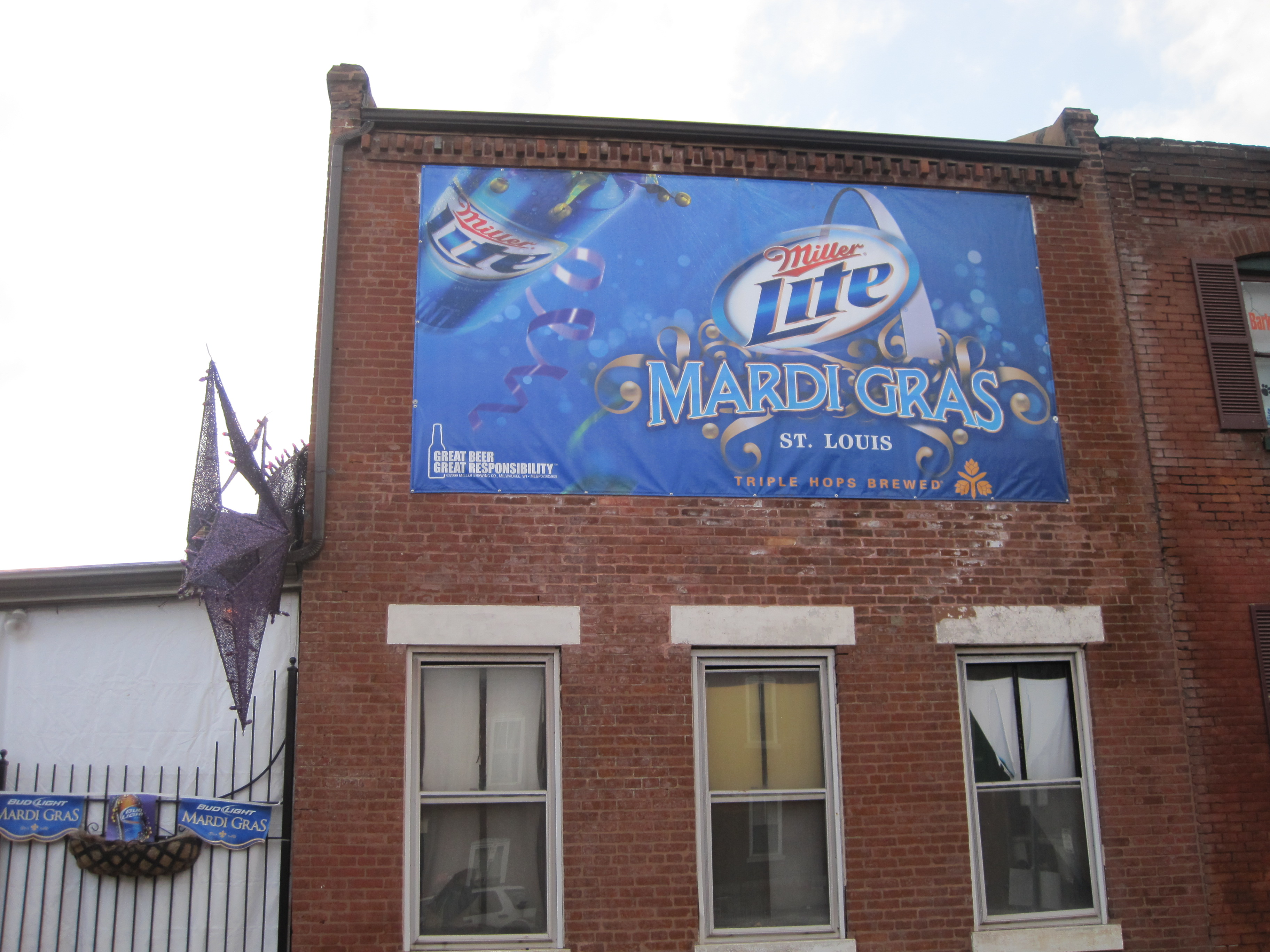
The Mardi Gras in the United States and elsewhere in the world is an annual event of extraordinary proportions. It is defined by revelry, colour and excitement. This year’s edition was no exception. It does not take place in just one city in the US, but the biggest of them all holds in New Orleans in the state of Louisiana – an area that marks the beginning of the festival in the late 1600s. The Mardi Gras is so named in French (“Fat Tuesday”) to define the last days of indulgence before the beginning of Lent on Ash Wednesday.

American beauties

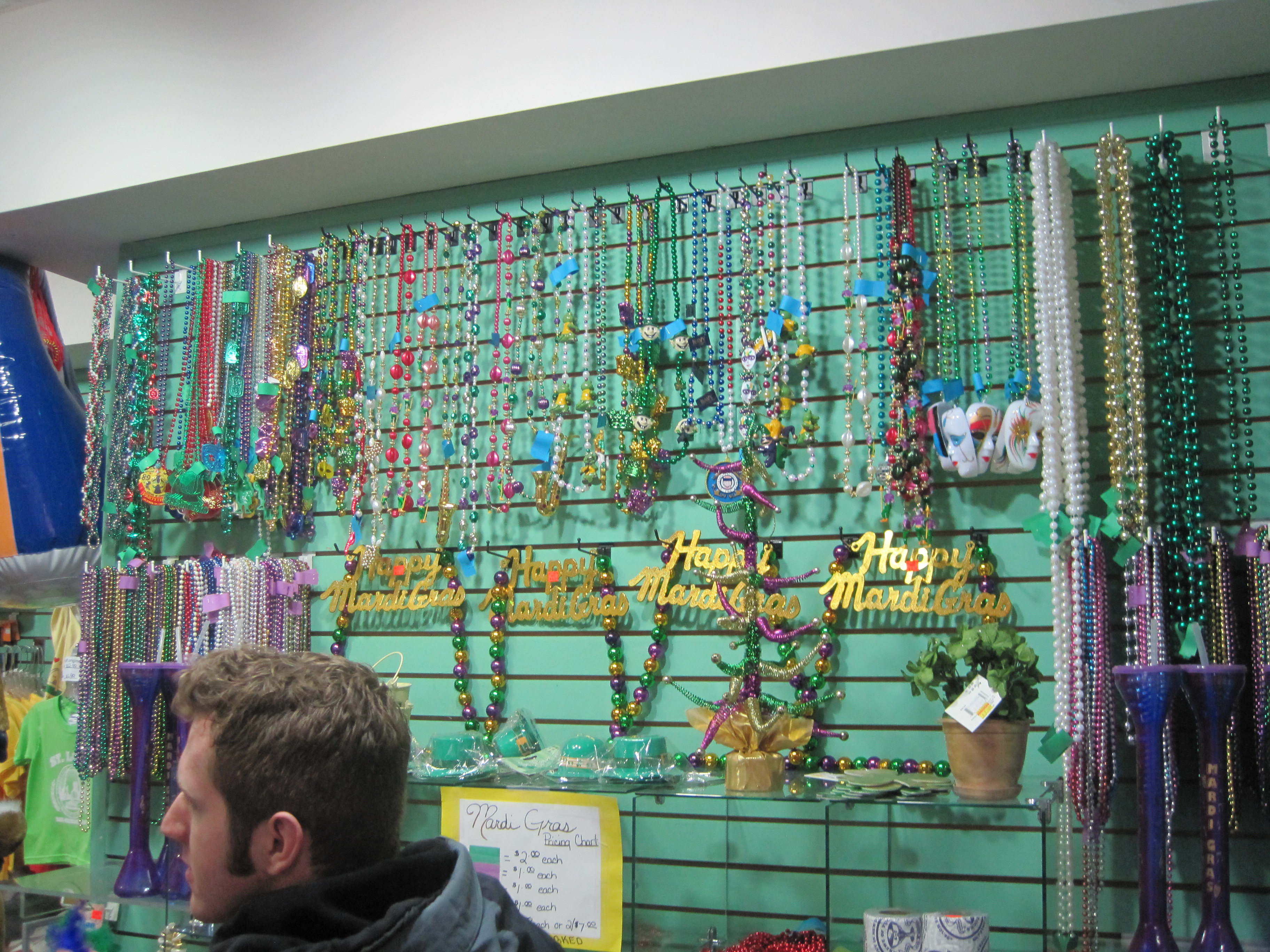
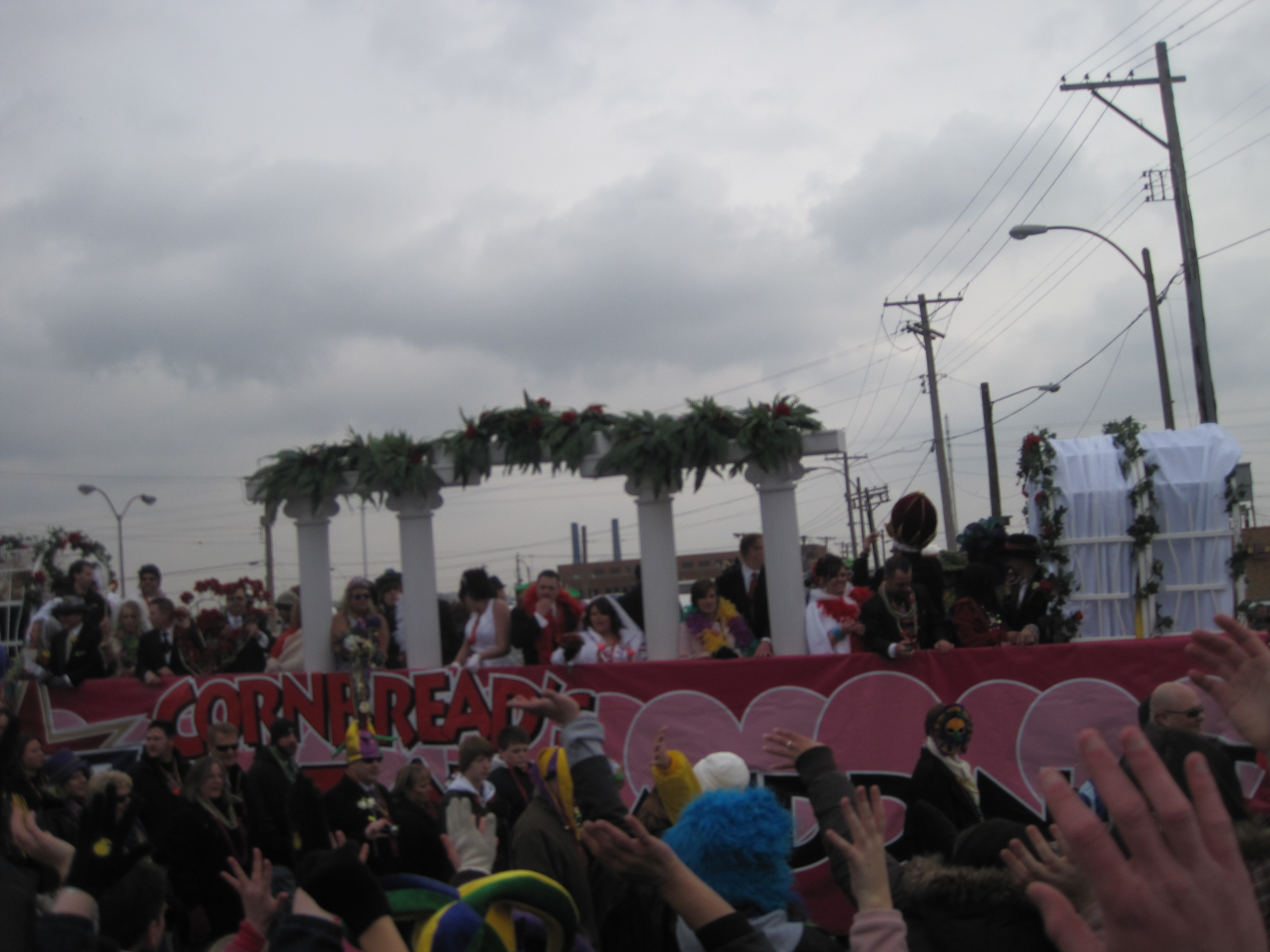
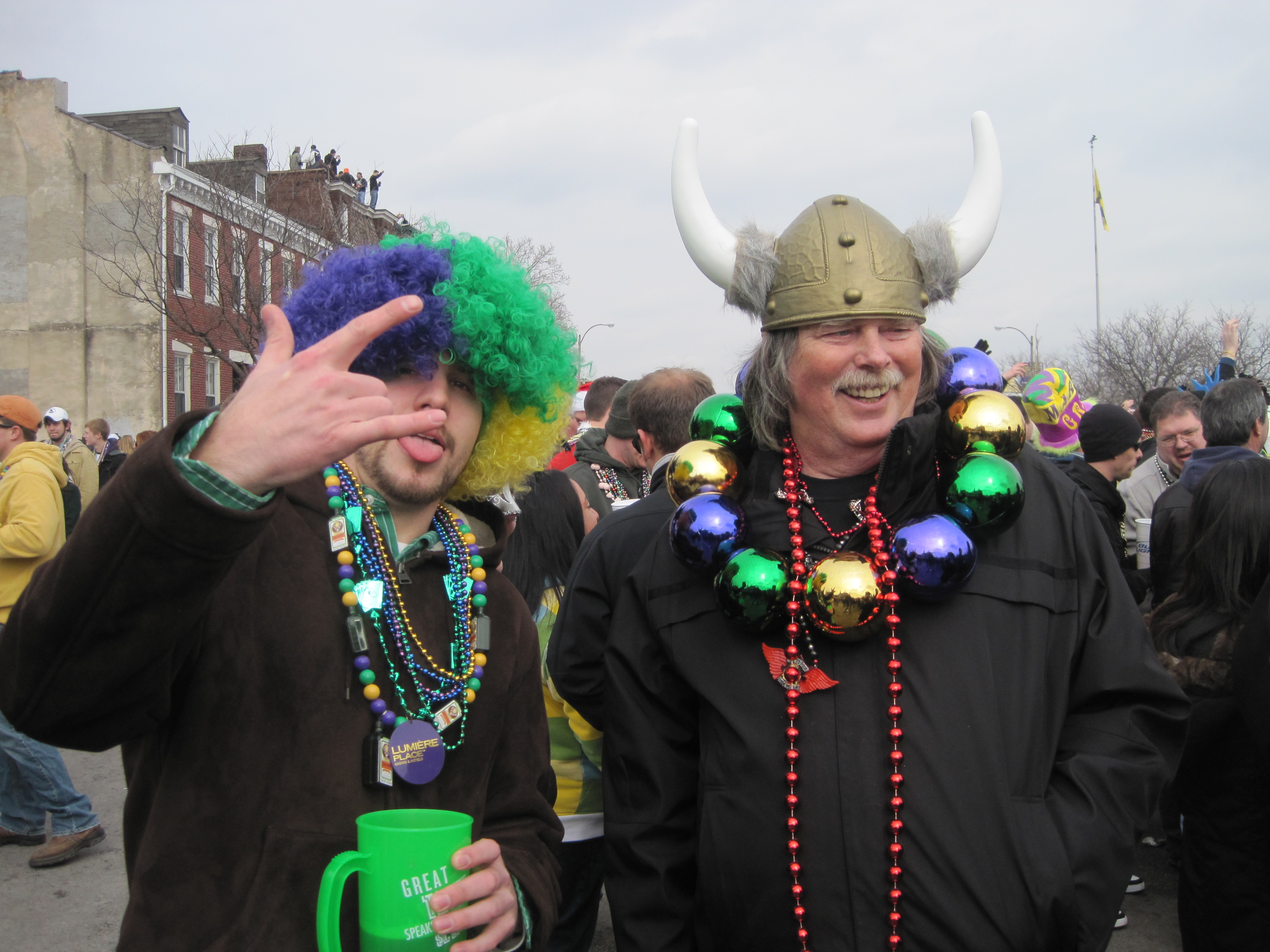
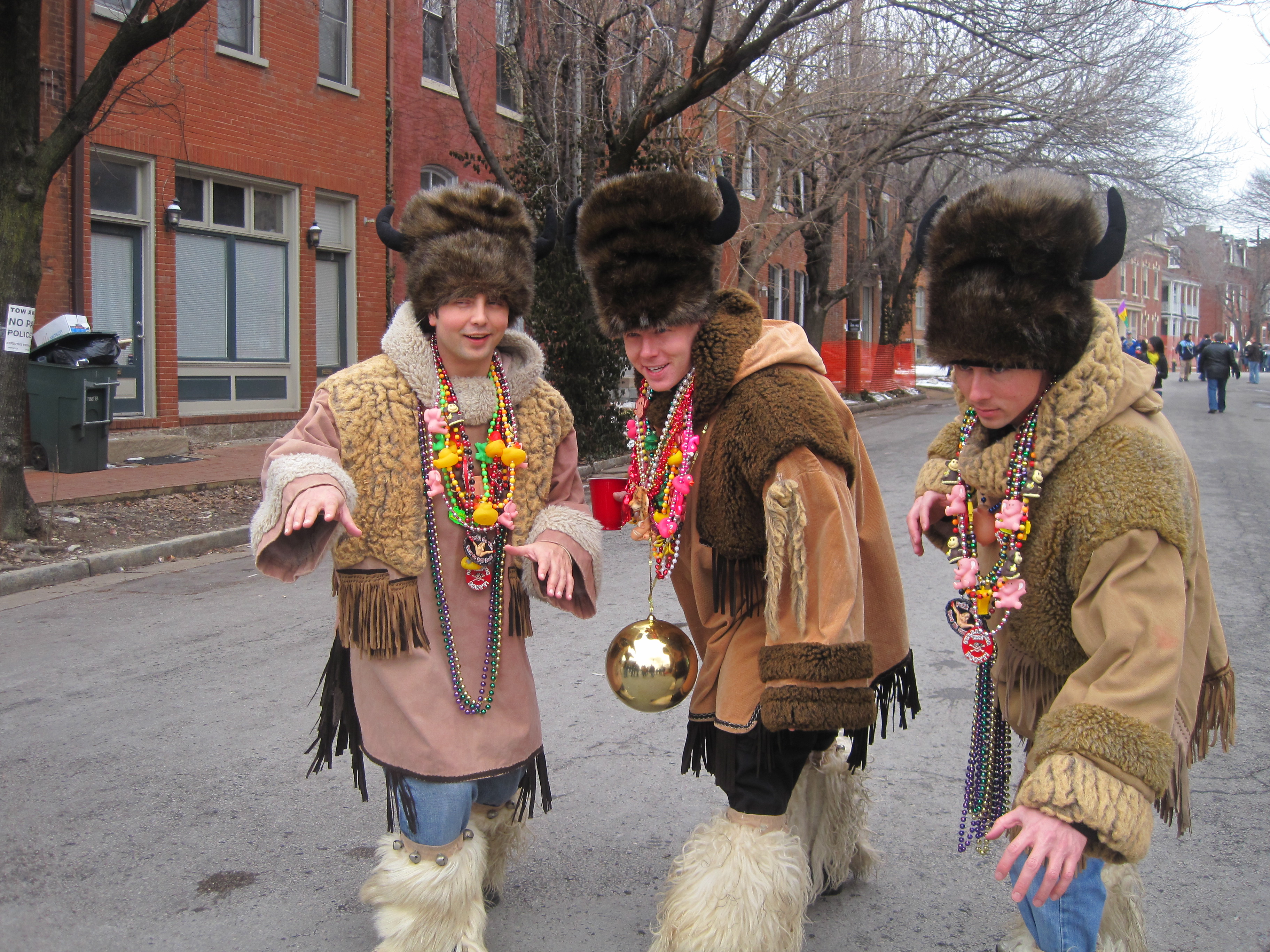
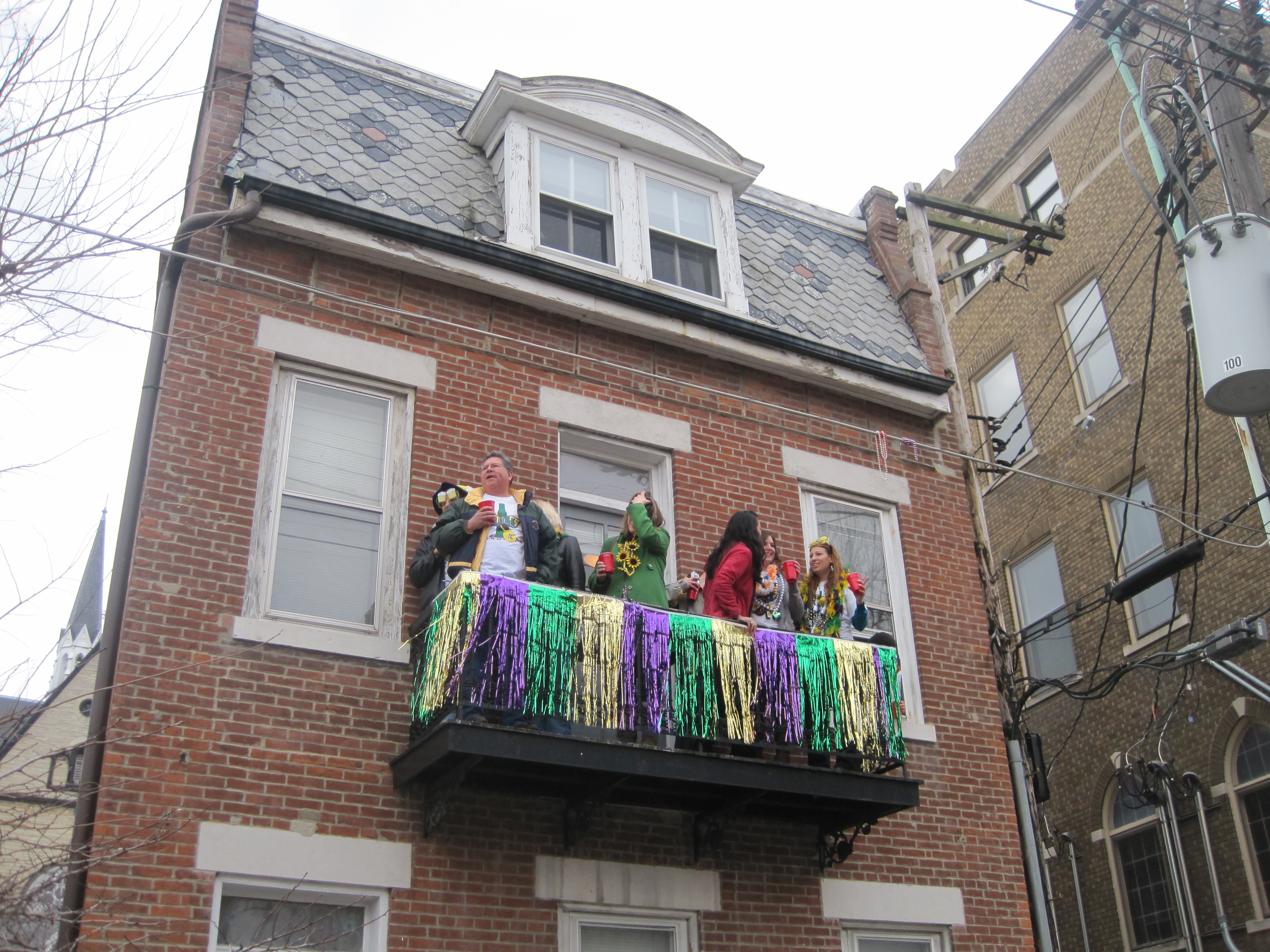
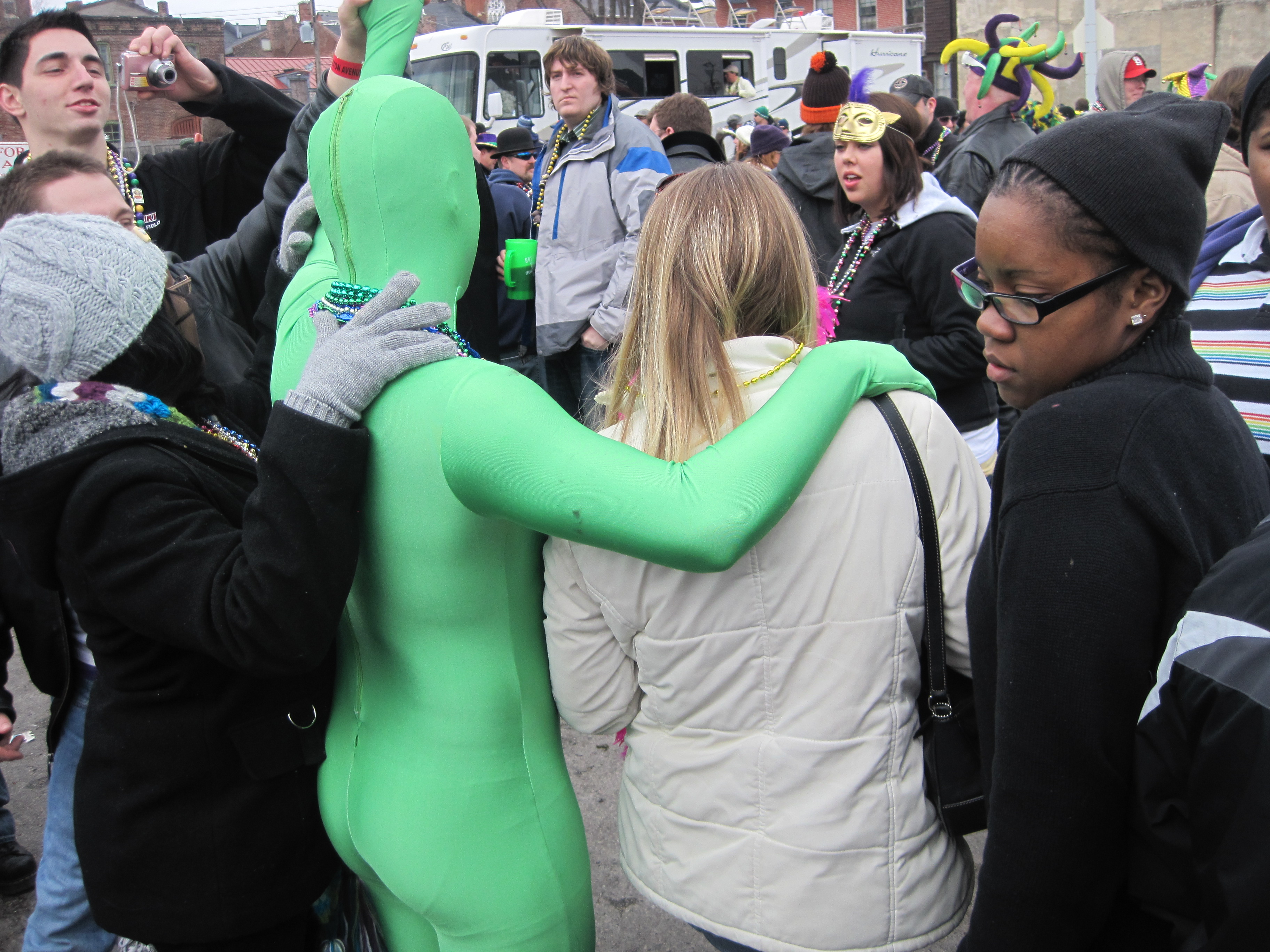
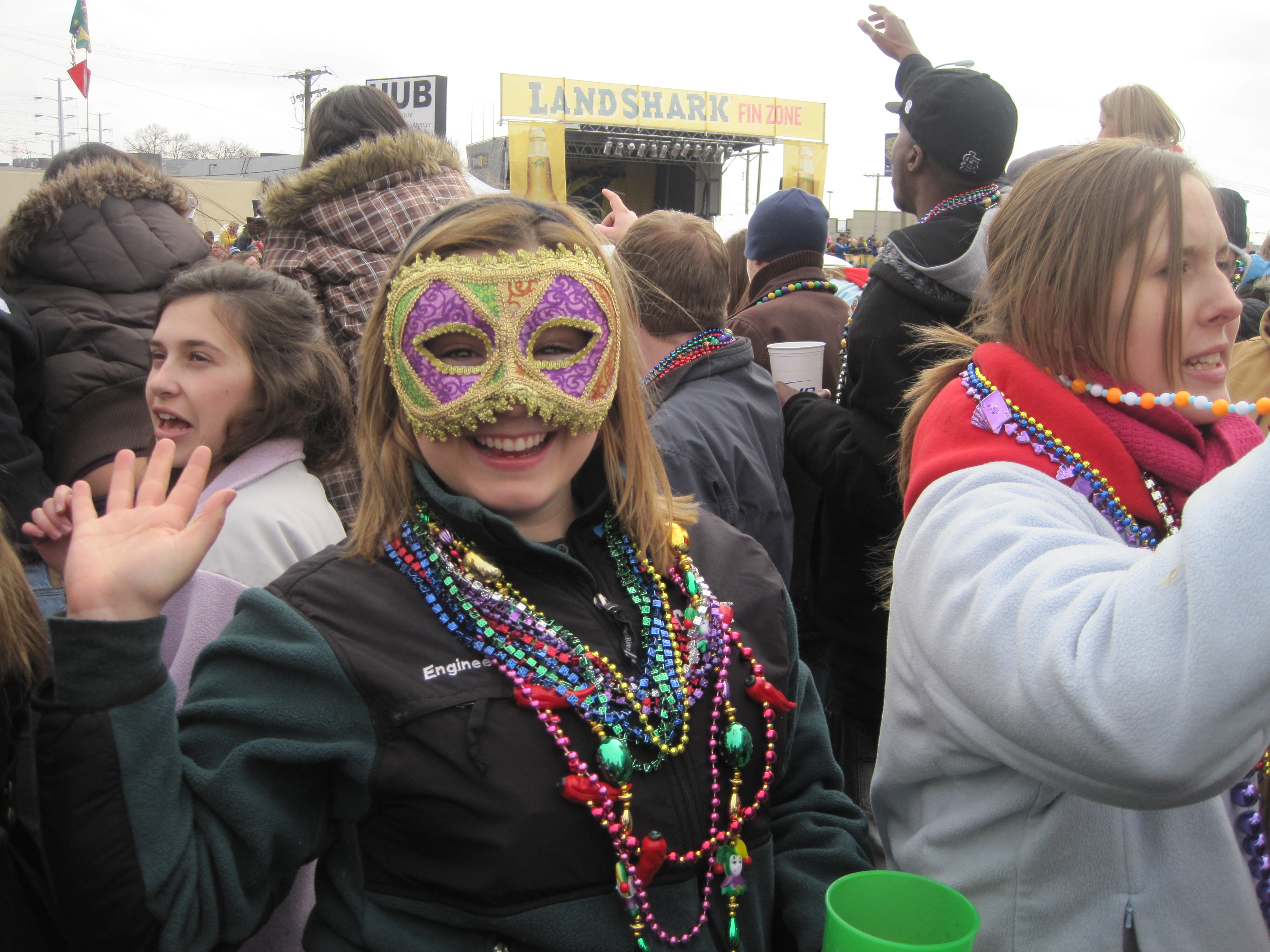
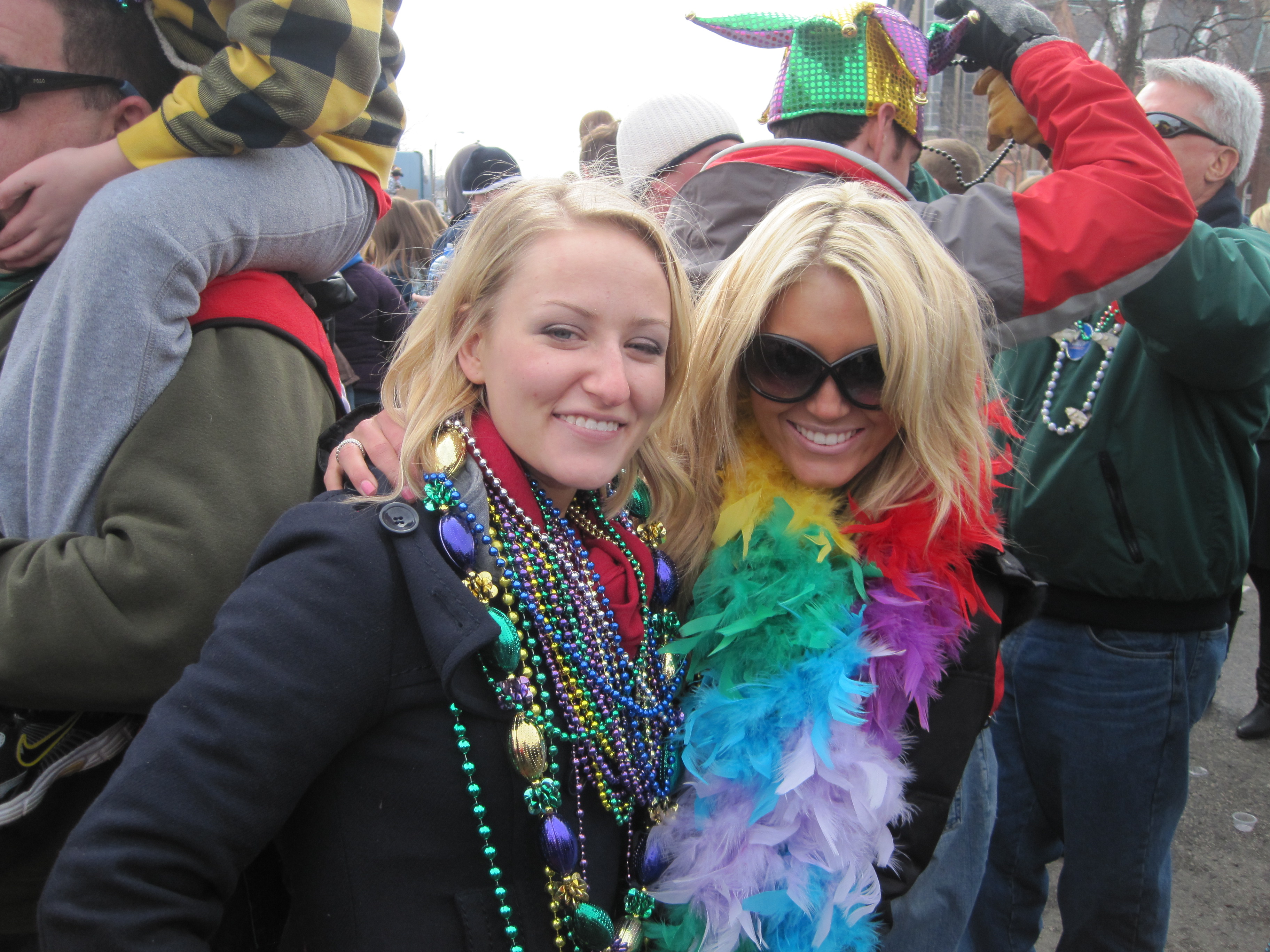
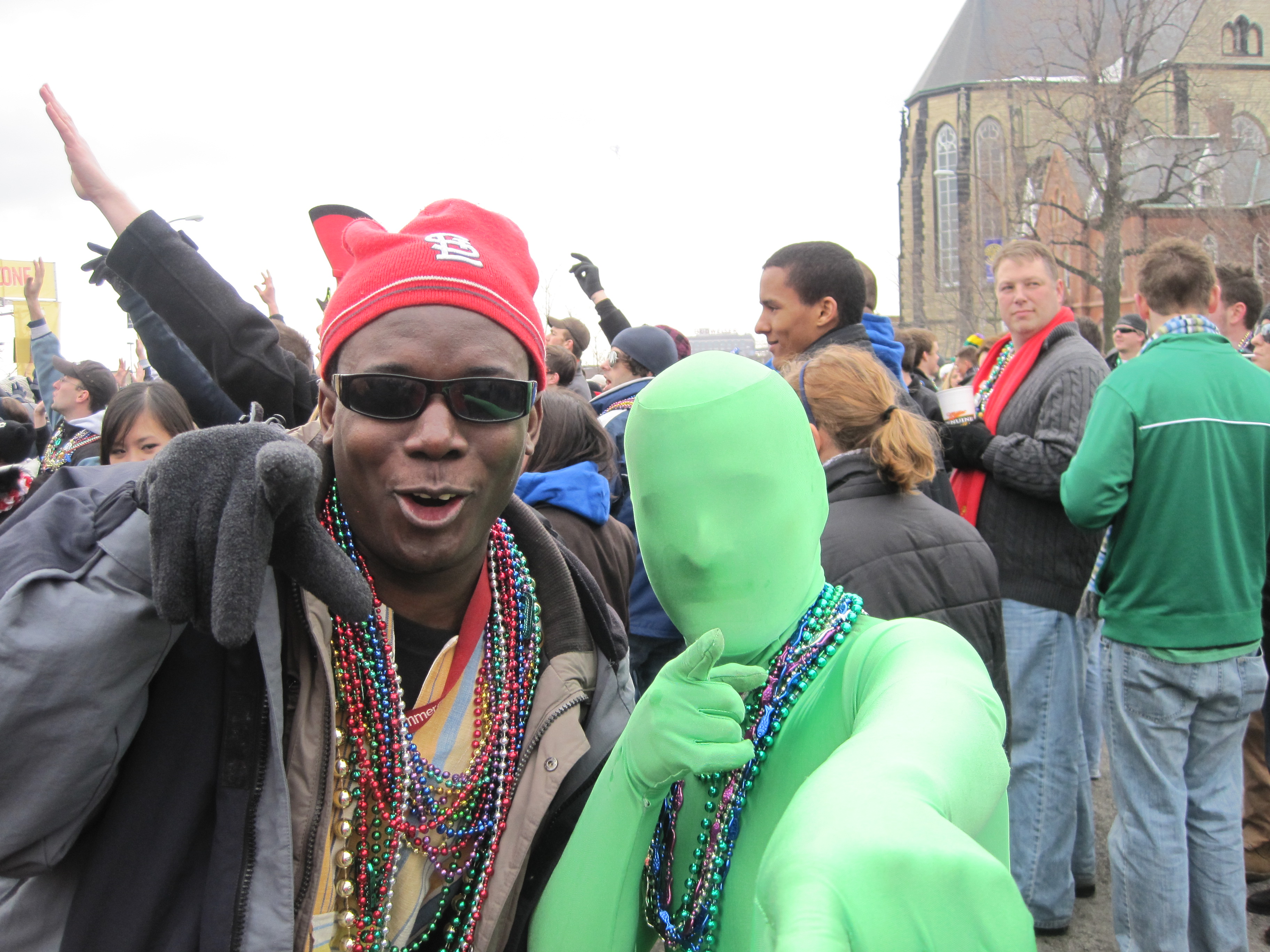
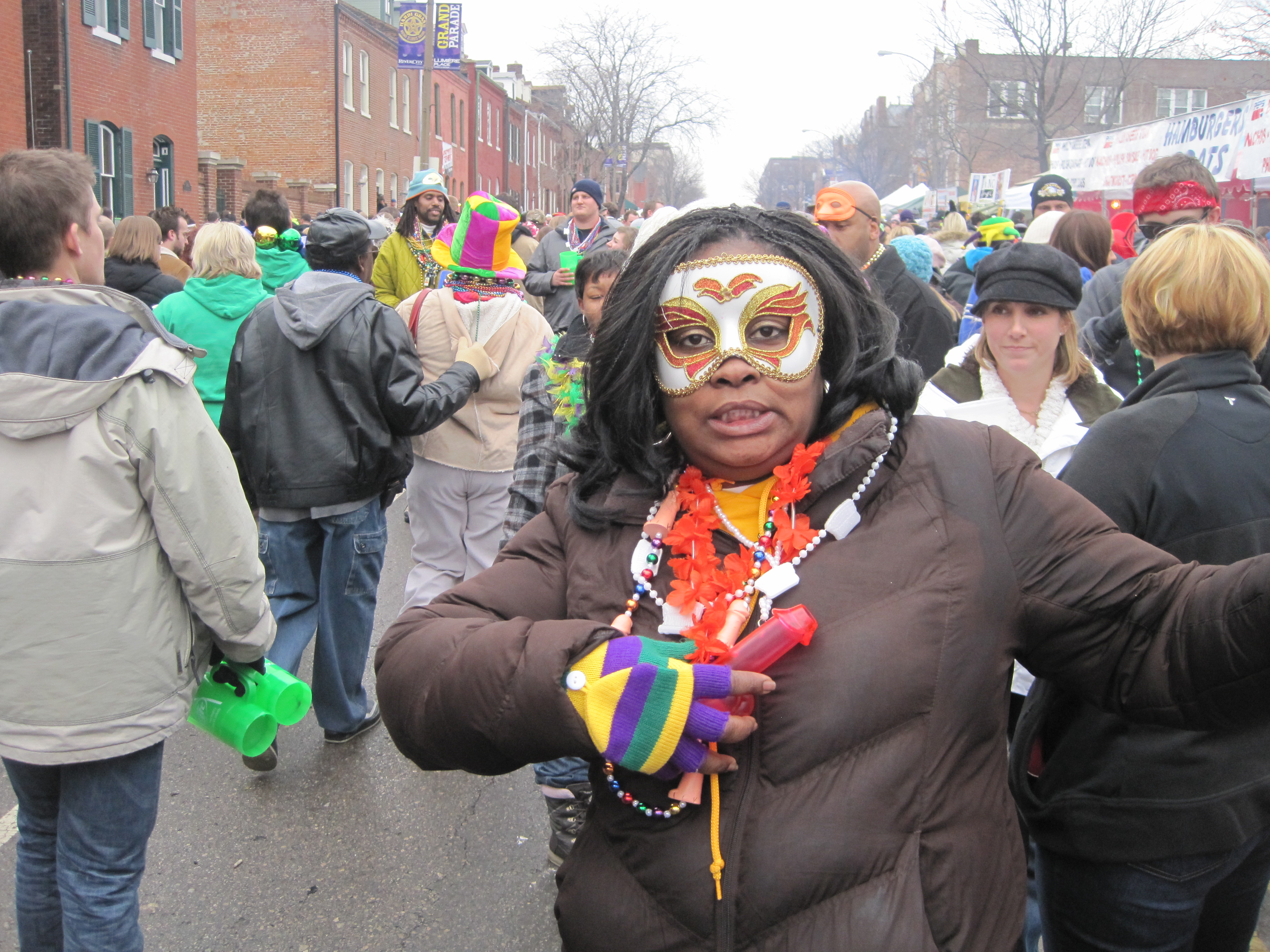
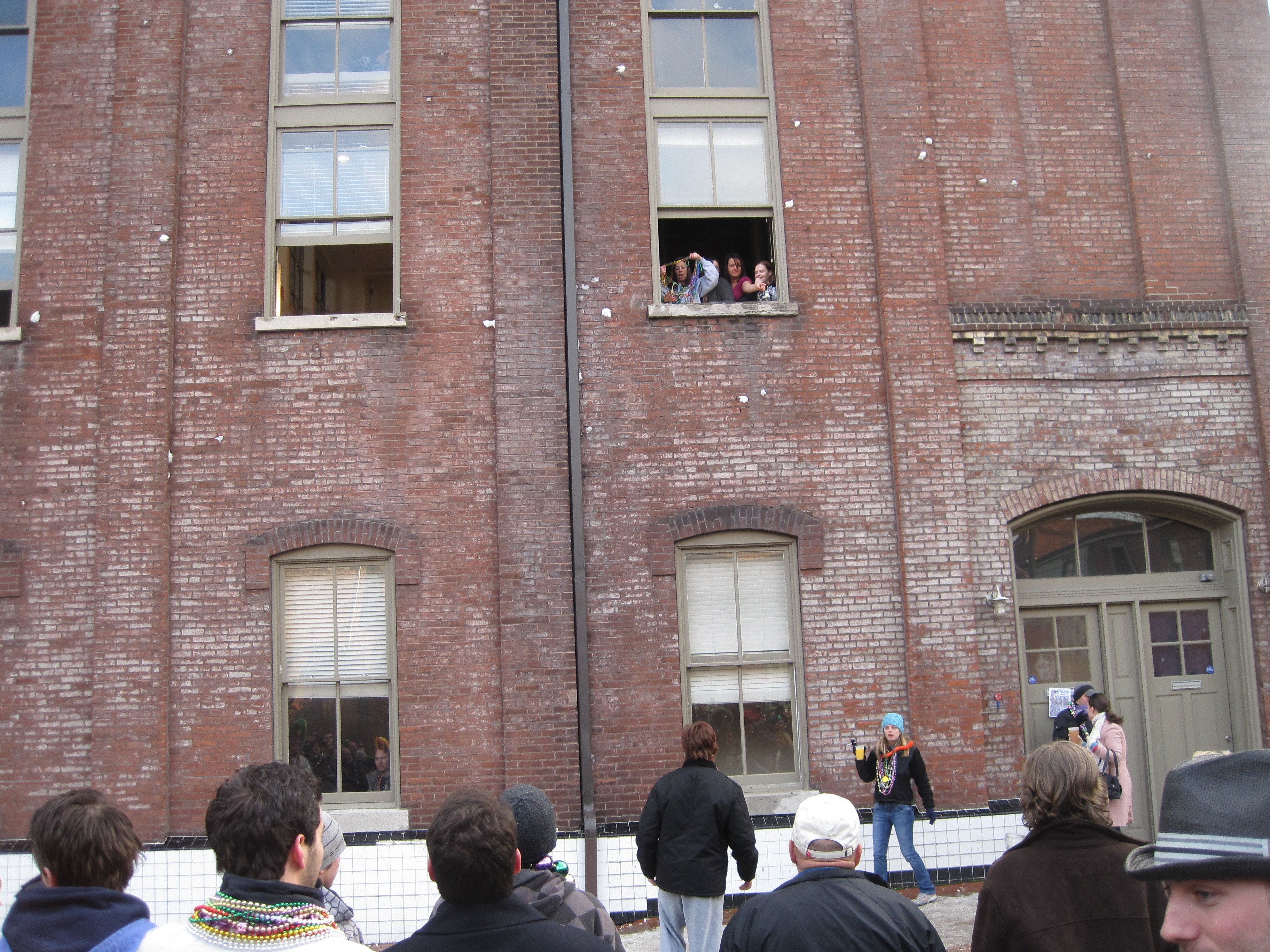
I had gone to this year’s event in St. Louis in company of an American friend and classmate. Apparently, one of the biggest attractions of the festival carnival is the now accepted spectacle of women flashing their breasts to all interested for a little fee of colourful beads. Needless to say, before we entered the long street called the Soulard where thousands of human bodies lined up to witness the parade of colourful costumes and dance, we made sure to have purchased a whole lot of colourful beads on strings, just in case we needed them. It turned out that we did; we found beads of different colours, thickness and length – just like ours – on everyone’s necks. Those who didn’t have enough were found jostling to catch any of the many more strings of beads that were flung into the crowd by members of the parade that took place later. As part of the history of the cultural event, it is said that young women gathered in evenings around fireplaces to count their gains of the carnival in the number of beads they obtained. And all they had to do to get the beads is to flash their breasts, which, I should say, also came in different shades and sizes, from what we saw.
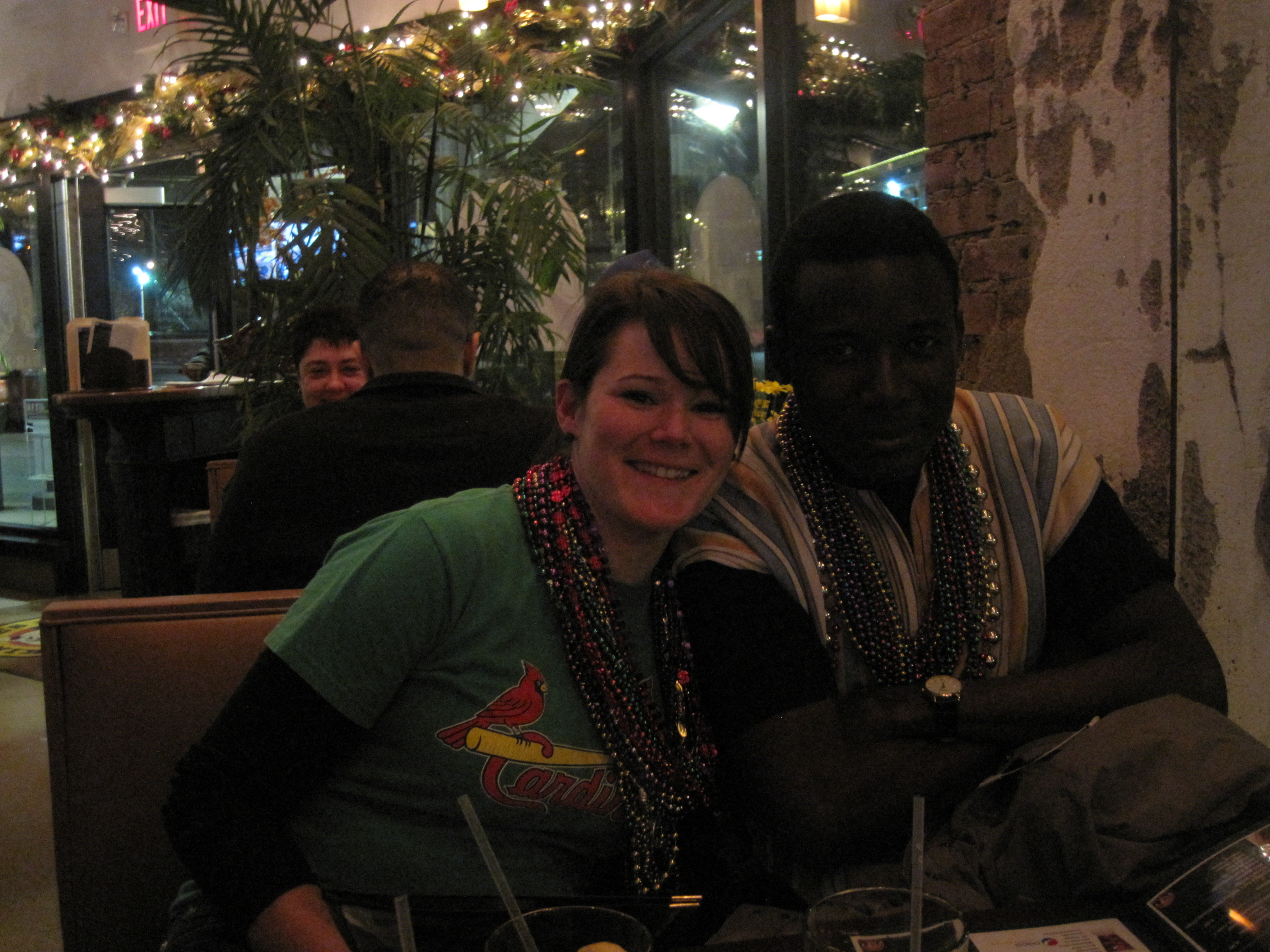
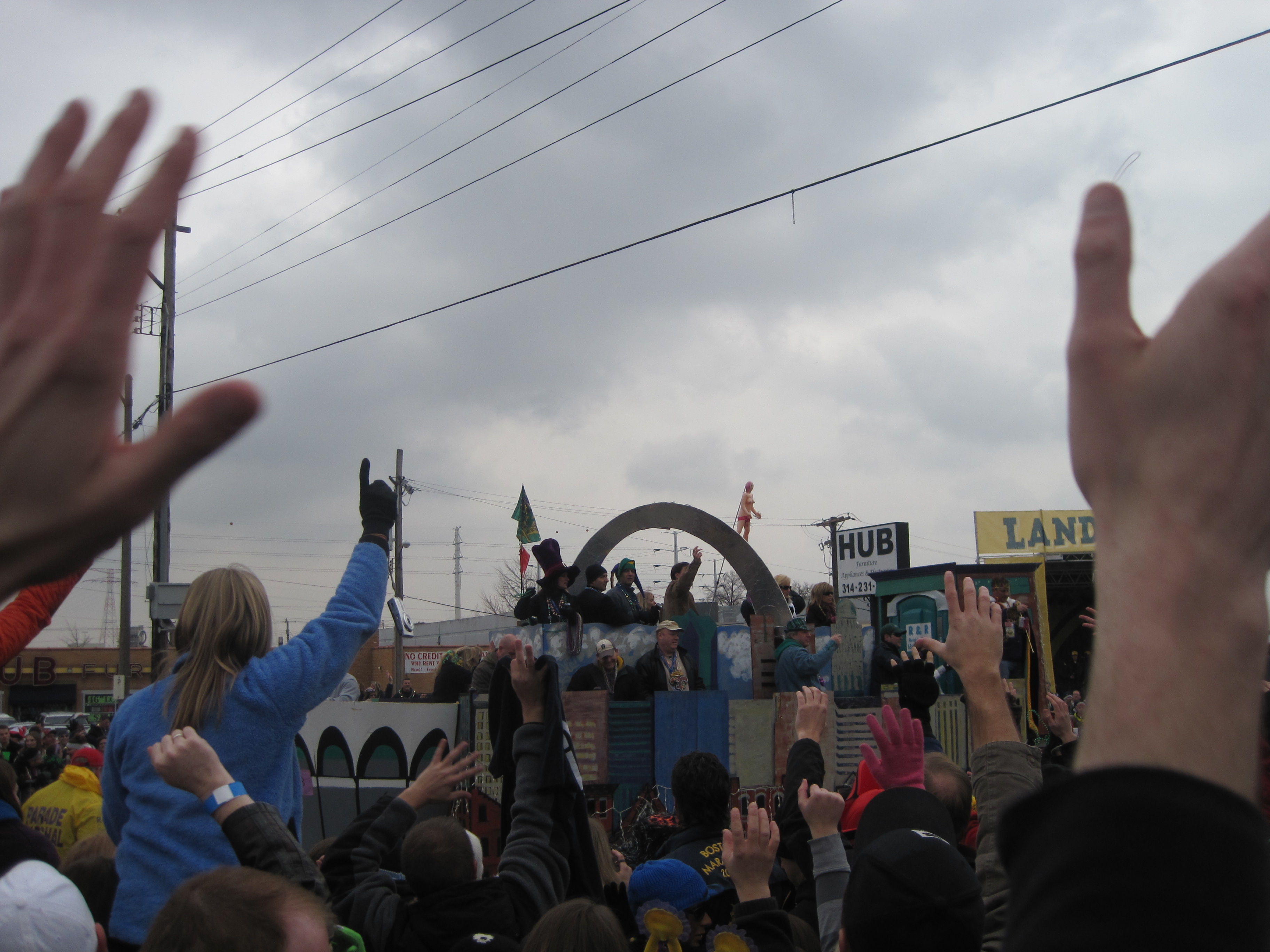
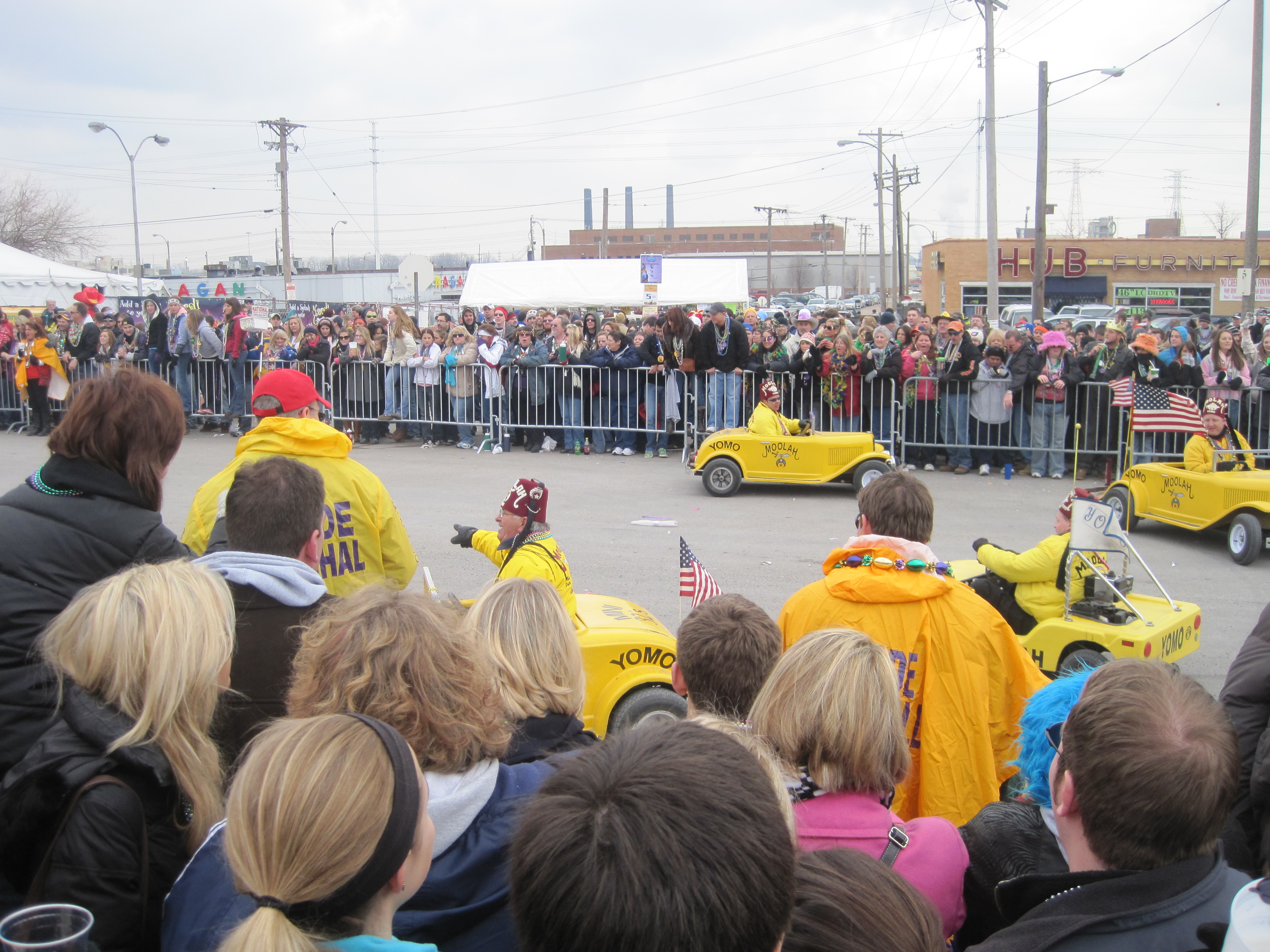
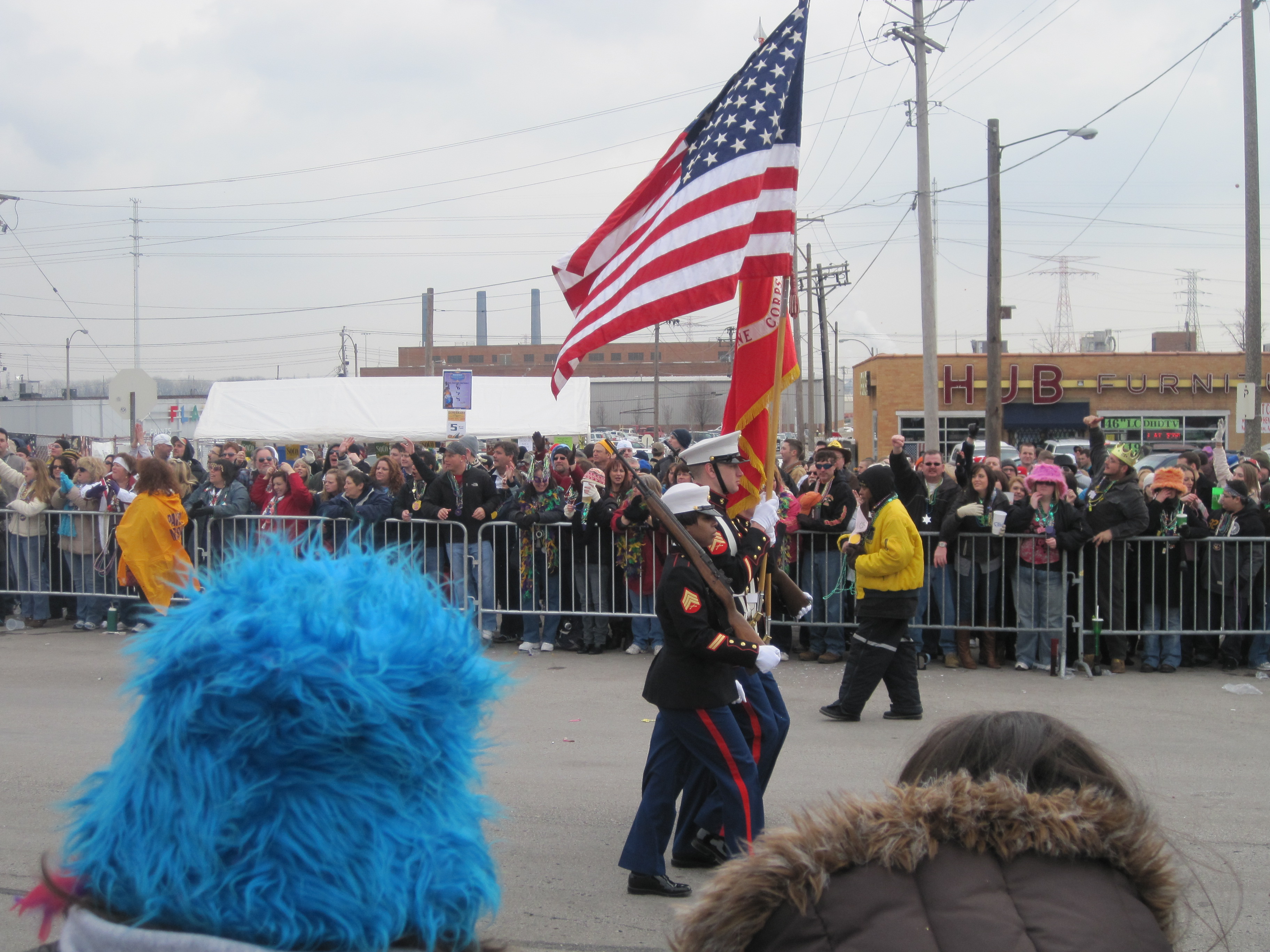
The parade this year included: a march-past by uniformed representatives of the American military, marching to an accompanying band. Other highlights were: a costume re-enactment of the French revolution along with a life-size guillotine wheeled across the street following the French flag and a big banner that read not ‘off with her head’ but “Off with her top”; a bike ride; a campus dance band complete with drums and cheerleaders; motor scooter rides of different shapes and colours; and horseback riding. Some of the displays were serious – like the military parade that had the crowd chanting “U-S-A! U-S-A!”. Some were ludicrous – like a parade of colourfully dressed women on a truck with a banner that read “18+ holes with Tiger Woods.” Most were fun, and they took the same form: somebody was throwing beads at the crowd, especially in the direction of women who showed their breasts, and kept them hanging open for long amidst the loud roar of approval from the teeming crowd.

Rice and red beans

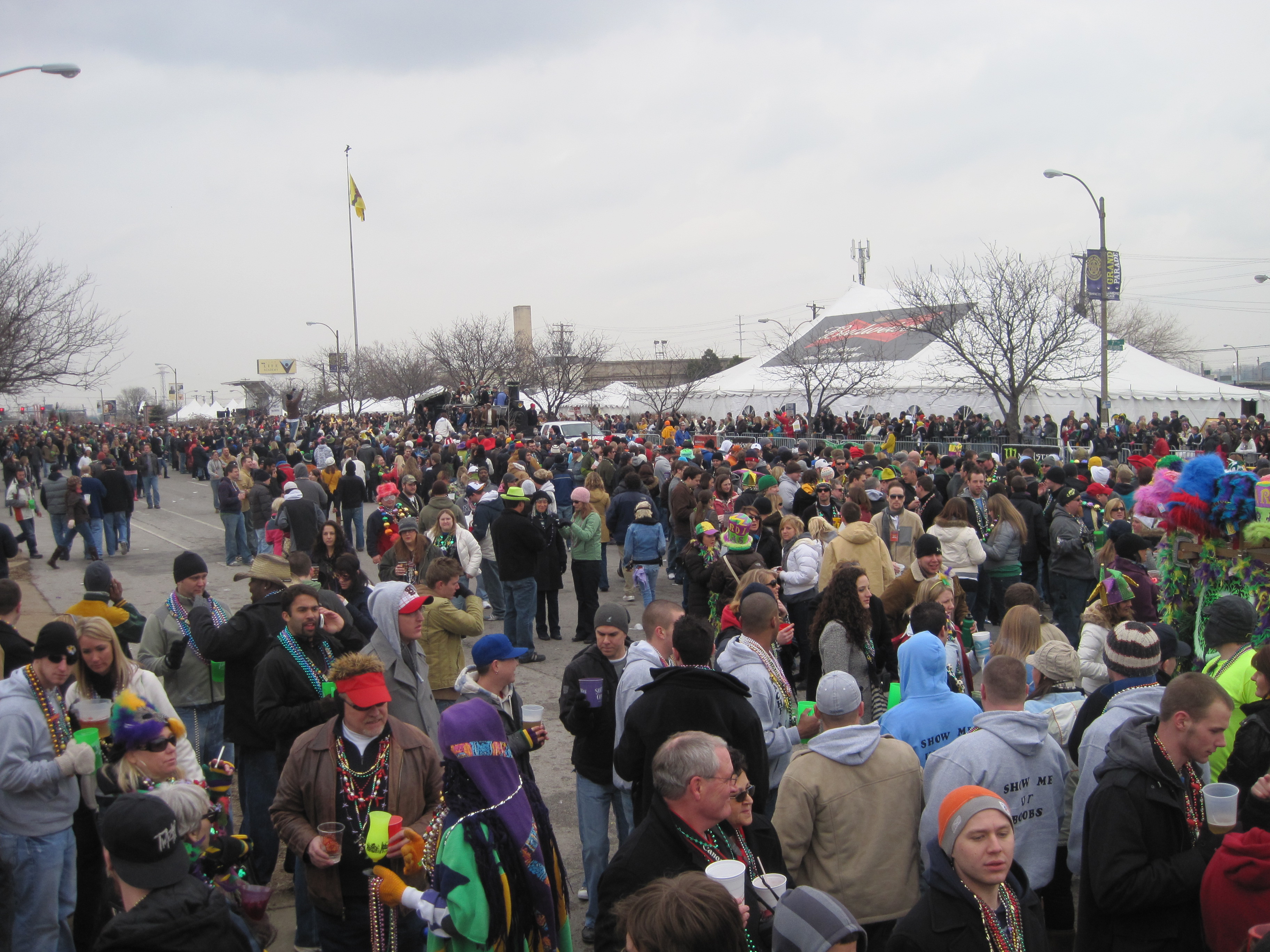
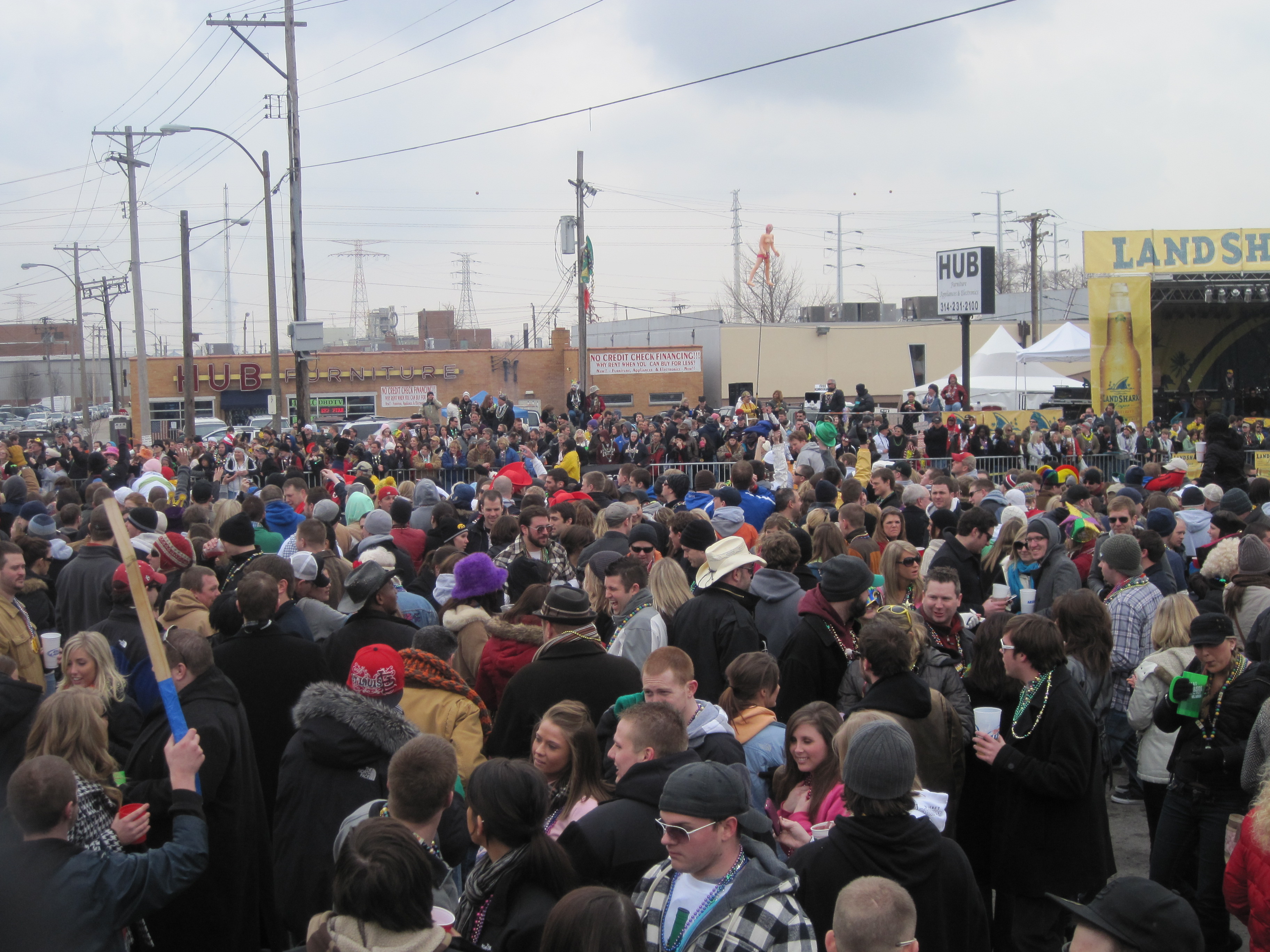
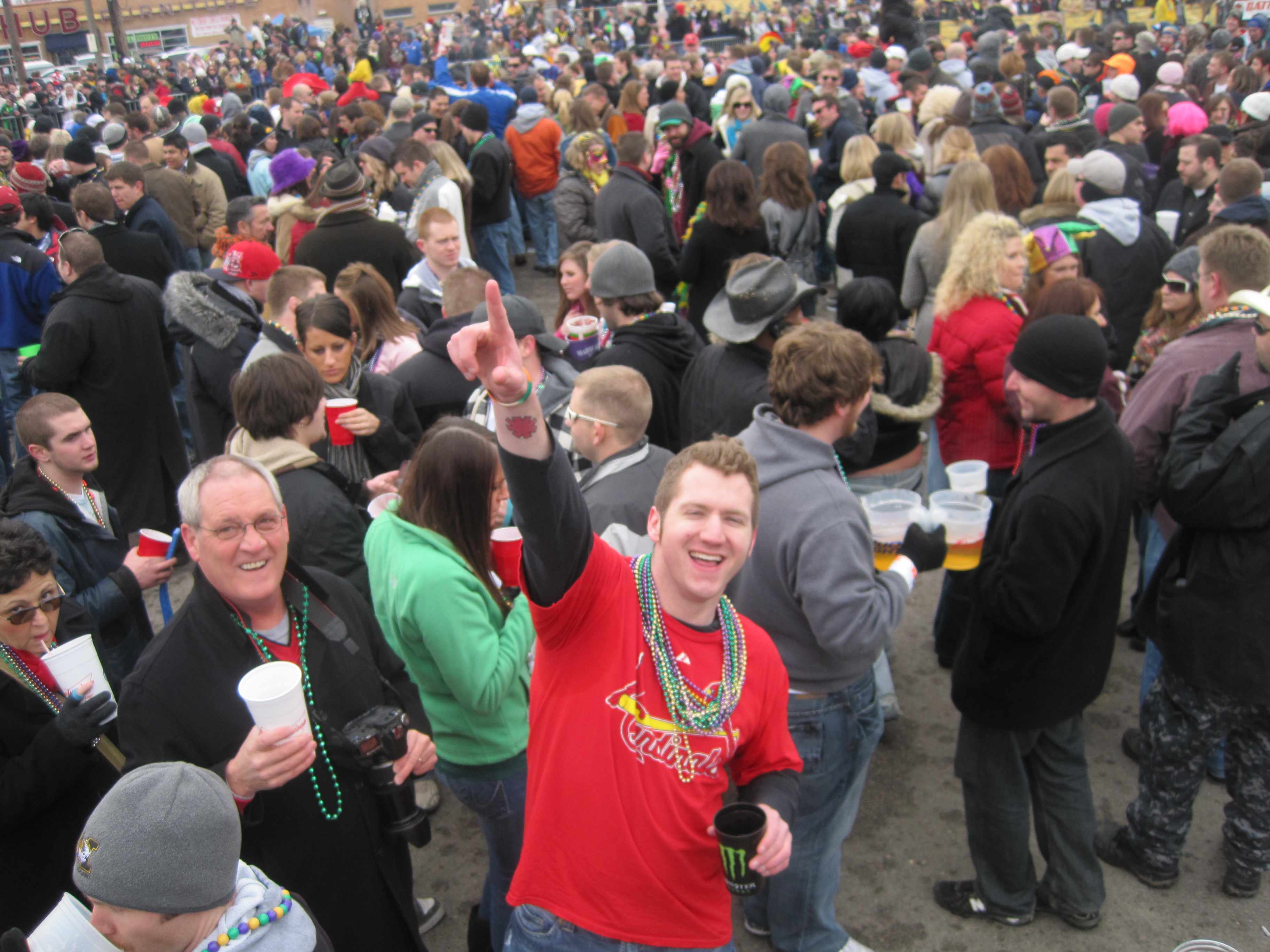
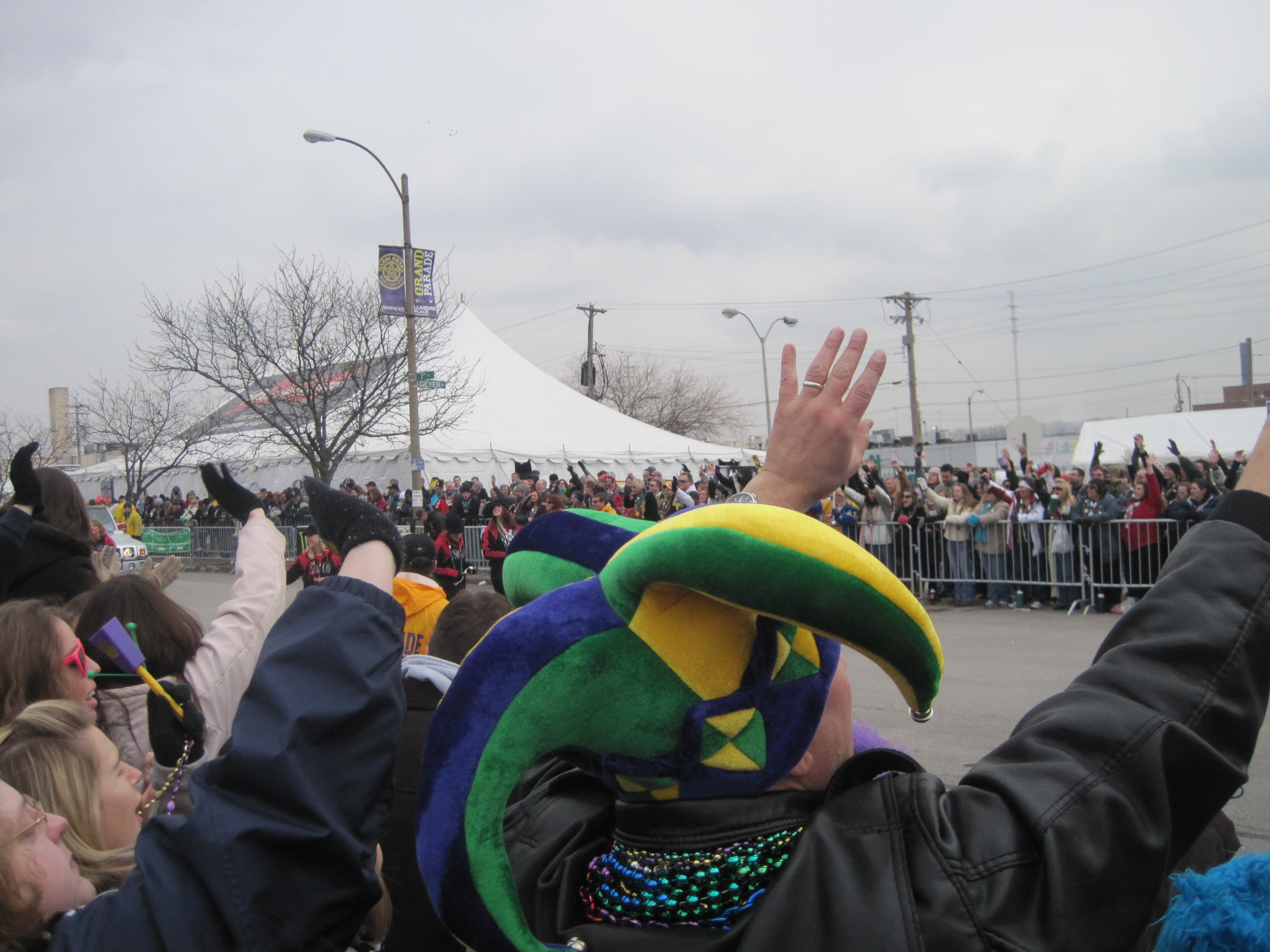
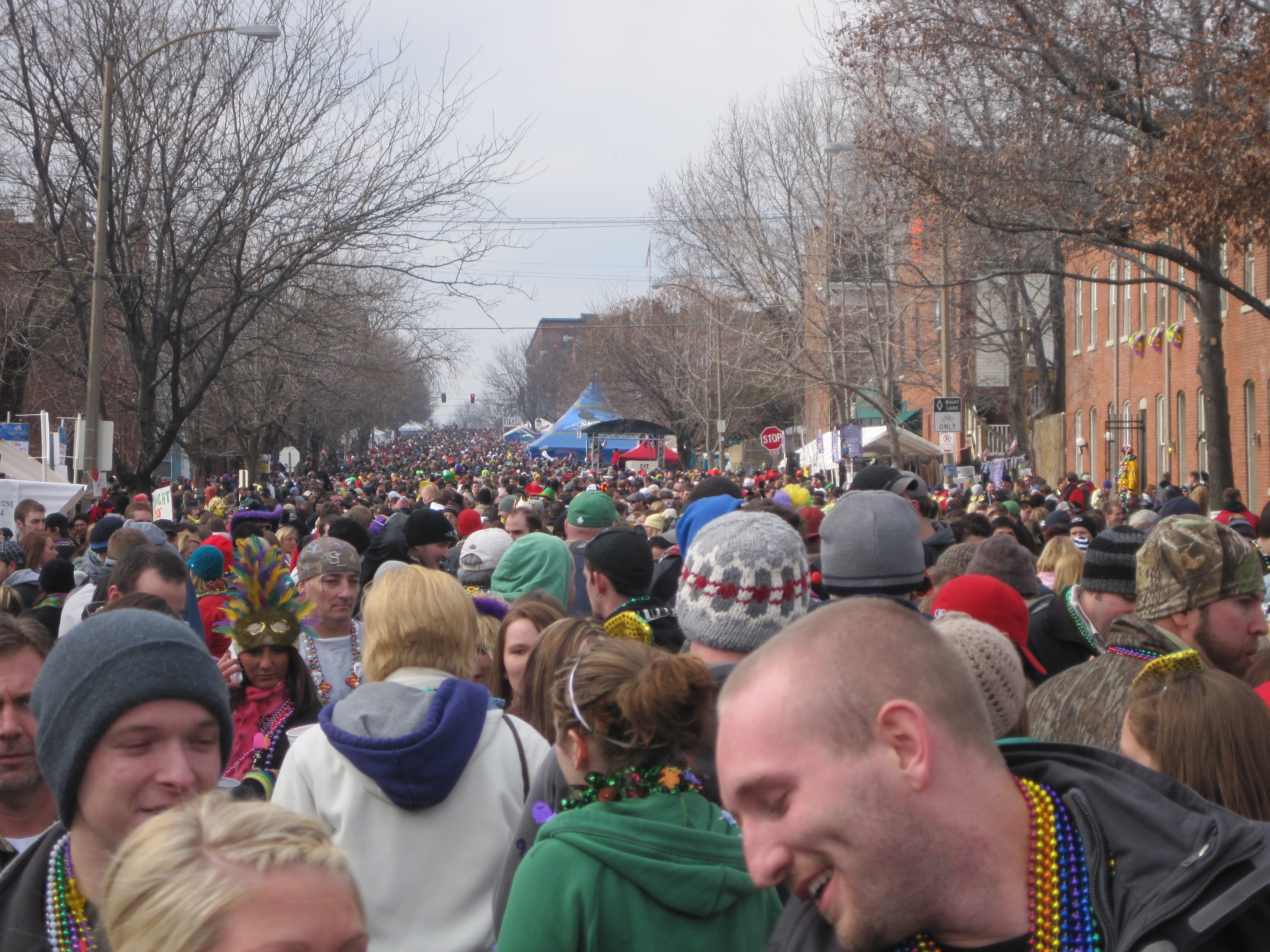
The crowd was unimaginable. It is estimated that there were more than 50,000 people at that event on Saturday, February 13; and this is just a conservative estimate based on visual approximation. A few minutes into the Soulard Street, I came across a man in an overcoat and a black hat whose beard and facial structure reminded me so much of the Nigerian Nobel Laureate. But I was standing at a roadside shed eating hot rice and red beans in sauce with mouth full, so that I lost a golden chance to scream “Prof!” behind his back. A few seconds later when such a chance presented itself, the man had disappeared down the street, and the initial hope of finding him – since “it can’t be so hard to locate a man in coat and a black hat down this street” – quickly frittered away. Such was the enormity of the crowd that occupied each labyrinth of the now festive street and its many alleyways, prompting the wonder about just how large the Mardi Gras festival would be in New Orleans, Louisiana this year. I also wondered how much larger the crowd here would have been – or how wild – had the event taken place in the summer.

Beside the indulgence and the number of people at this year’s event that has become part of American festival culture, I’ll remember it most for the colourful costumes, the parades, the beauty of beads around American necks, the roadside food stalls that cost almost double what they did on normal days, the capacity of the human spirit for fun and liveliness even in the face of a harshly cold weather, and the beauty of St. Louis at night. All these, for me, show an optimism that proves once again that life will always go on.

___

As published in 234Next on February 19, 2010.

More from the Mardi Gras

Here are some more pictures from the Mardi Gras, St. Louis that ended on Tuesday. Here’re are also a few of my observations from the event.

A disorientatingly large crowd.
Unexplainably expensive drinks.
(Eventually) drunk boys and girls from all over the world.
ATM machines that charged $8 on every transaction. Absence of any topless black girls. A heavy police presence, most of who came out of the state of Missouri. One of the cops we spoke to said he had come from Chicago. A confusing labyrinth of alleys at the Soulard Street where the event took place.
Rude, drunk and aggressive boys.
Liberal Brazilian girls with names written on all part of their clothing.
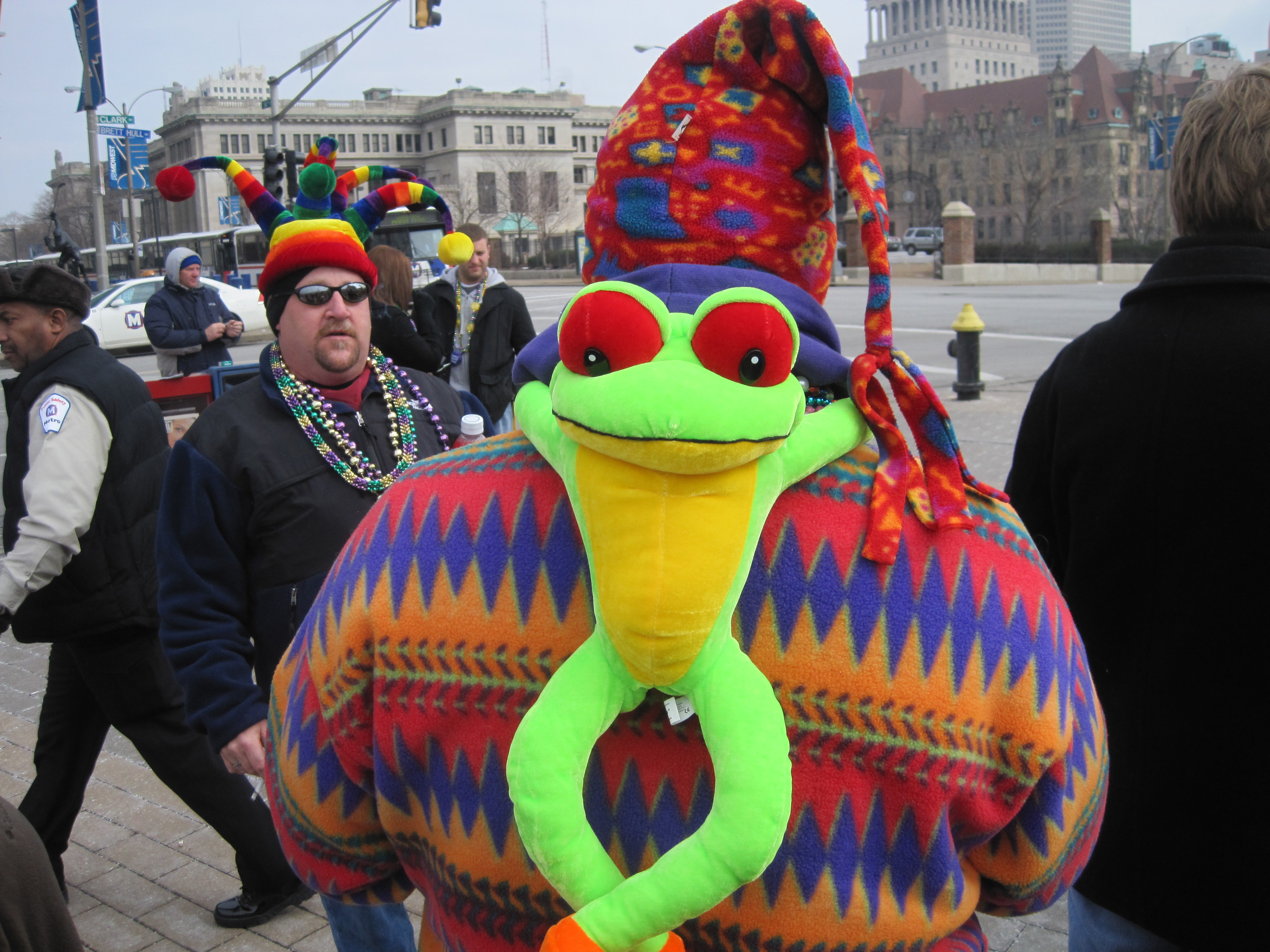
Colourful beautiful  costumes, and beads.
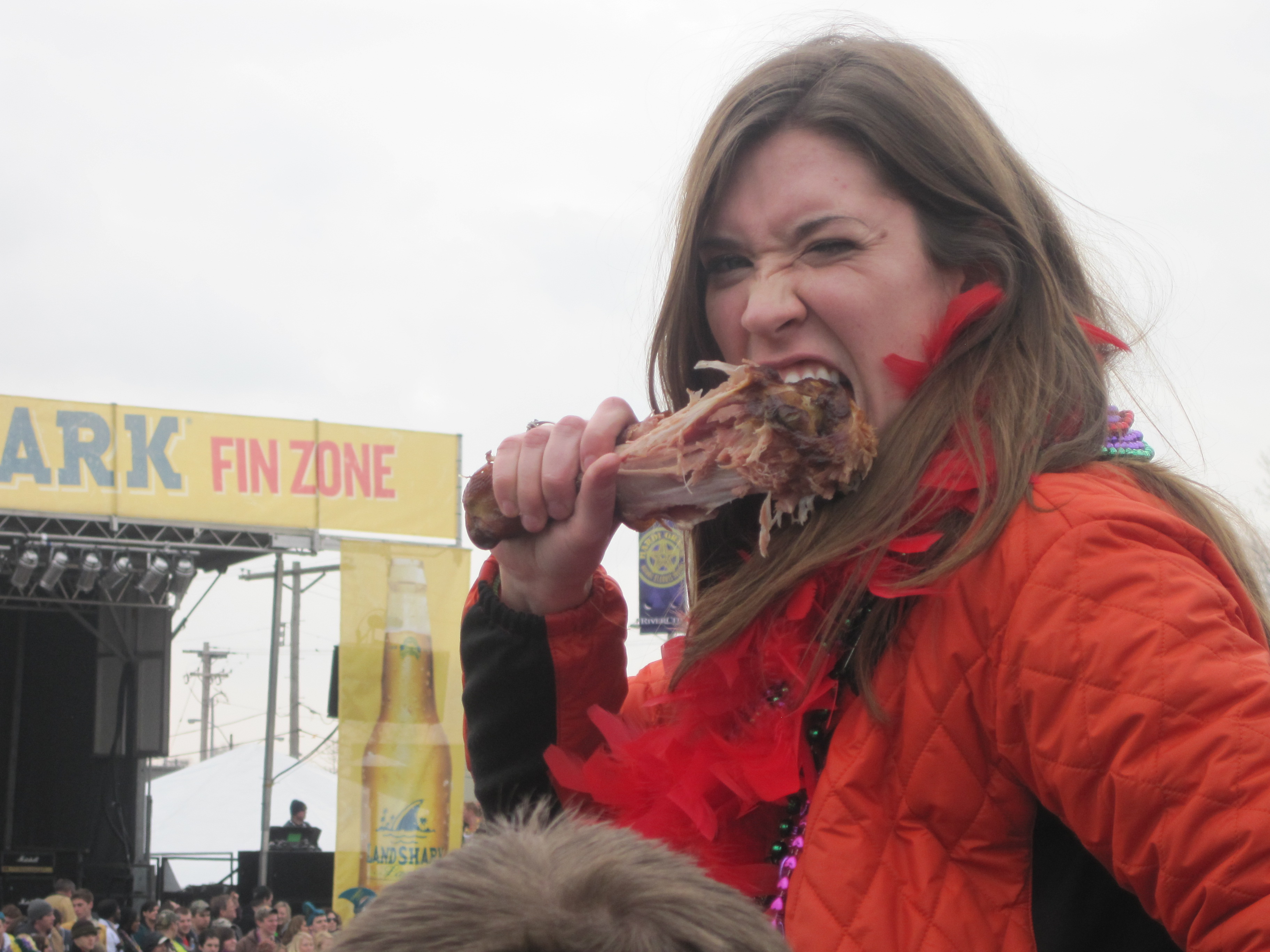
Delicious turkey legs.
Somebody that looked so much like Prof Wole Soyinka.
Loud music. A long unending carnival of different kinds.
ID required for all drinks bought even if said ID belonged to someone else. Patriotism: the crowd yelled “USA. USA!”  when the parade of American military men marched past.
A lively carnival atmosphere. Thousands and thousands of beads thrown into the crowd.

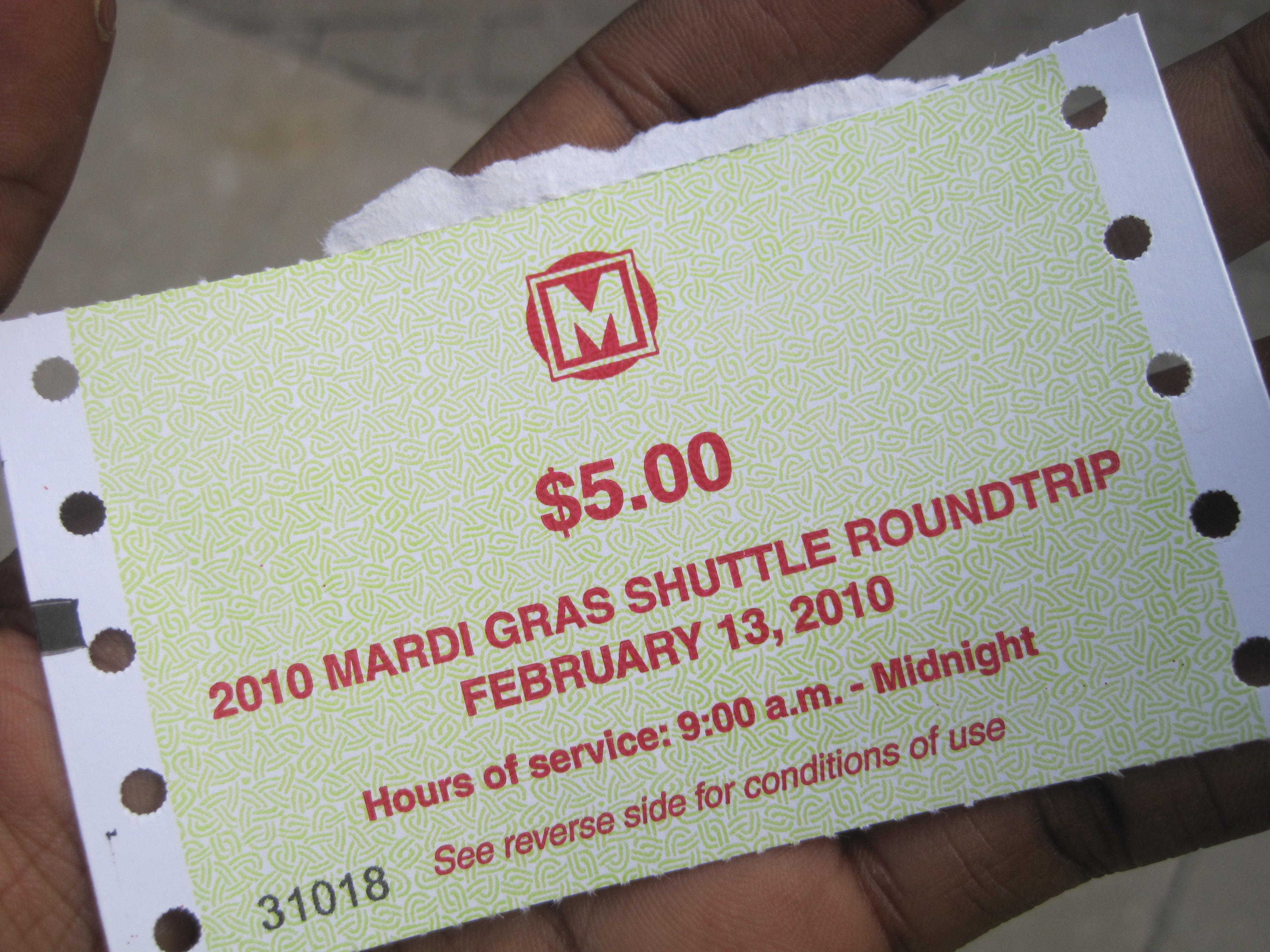
In New Orleans, Louisiana where the celebration has its largest following in the United States, as in St. Louis Missouri where on this day private transportation was suspended for reason of order and ease of movement of scheduled large buses and the numerous visitors,  the Mardi Gras is always a colourful carnival featuring a series of activities during the days preceding the so called Fat Tuesday. Before the fasting of Lent begins on Ash Wednesday, it is the belief that all indulgence are in order, and that believers (since it started as a religious festival) should eat all they could. This explains the amount of drunkenness and liberal behaviour that has defined the event as a cultural identity for the season, and for the cities in which they take place annually in the United States and all over the world.

Update (Friday February 19th 2010): There is an article in today’s  NEXT newspaper about the event. I wonder who wrote it.

Mardi Gras, St. Louis

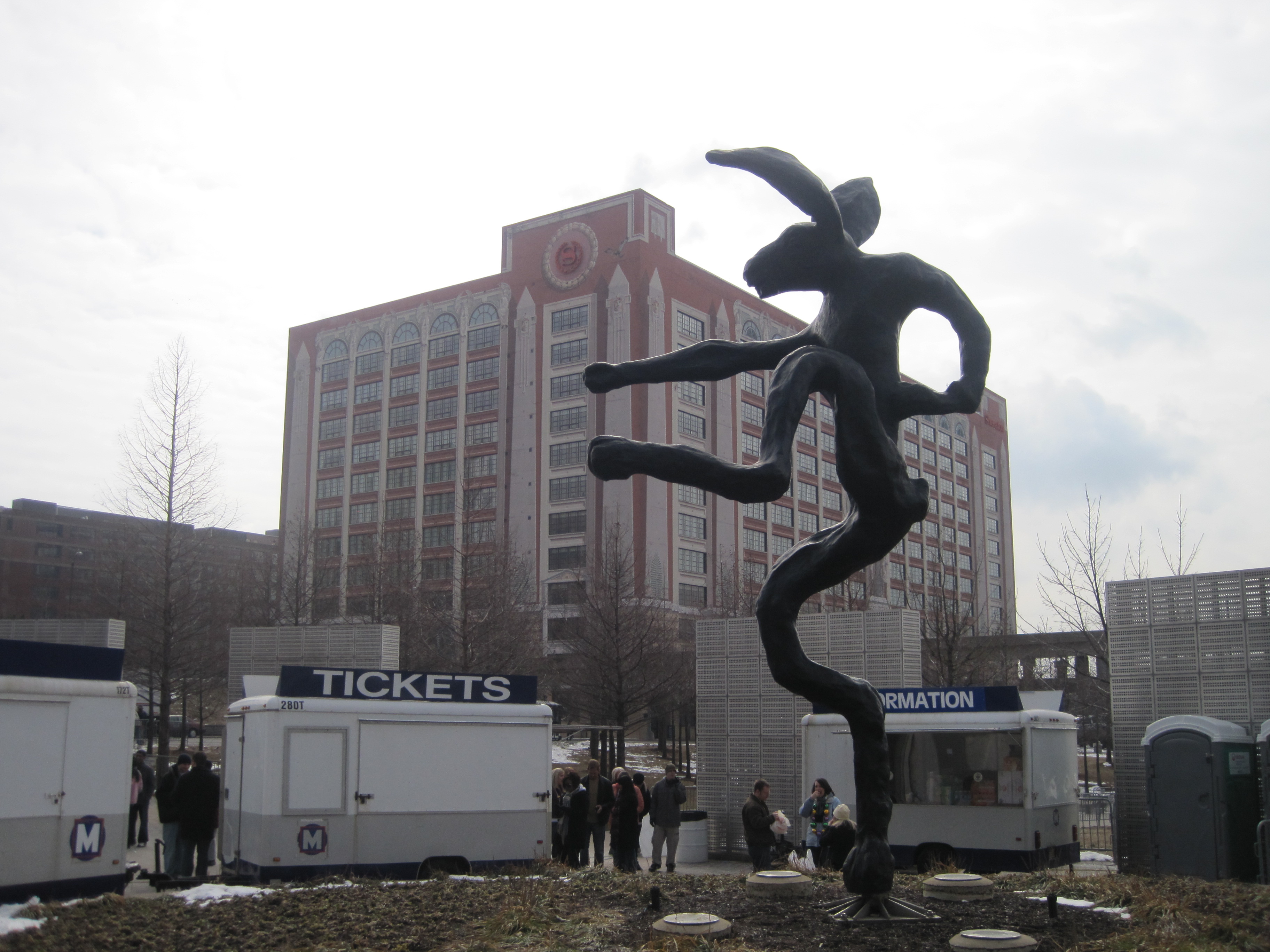
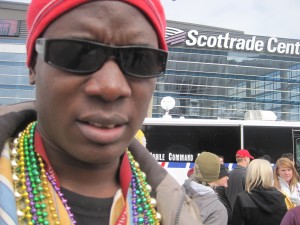
I’ll save an article on this first-in-a-lifetime experience for later, but here are a few pictures from over two hundred that I took at the Mardi Gras celebration in St. Louis Missouri yesterday 13th February 2010.

The Mardi Gras, meaning “Fat Tuesday” in French refer to events of the Carnival celebrations, beginning on or after the Epiphany and ending on the day before Ash Wednesday, and was initially a celebration of the last night of eating richer, fatty foods before the ritual fasting of the Lenten season.

Viewer discretion advised. Why this is necessary itself is still beyond me. Alright, enjoy.

What’s Crackin’

The month of February in the United States is Black History Month, a month where activities are arranged to remind the country of the contributions of the African diaspora to the progress of the United States.

The month has also been tagged the “Discover Languages Month” by the American Council on the Teaching of Foreign Languages (actfl). It is for this second reason that I will be speaking in the Plasma Lounge of the Foreign Languages Department on Wednesday 3rd February to an audience of staff, students and colleagues on the topic  “Exploring Yoruba Through American Eyes“.

Nobody knows this yet, but I haven’t finalized my presentation yet. Shhhh. Now you know. So if you don’t see me here in the next couple of days, you know what I’m doing. Wish me luck.

In other news, I got a call from the proprietors of Nubia Cafe who have chanced on this blog and my account of my first visit there to eat pounded yam. What do they want? Having also read what we’re doing on this blog to raise money for Jos and for Haiti, they are extending an invitation to me to come exhibit my photography in the premises of the restaurant in St. Louis during this month, maybe on a weekend. I think it’s a good idea, don’t you?

Besides the above, everything else is fine, and cool. Well, “cold” is more like it. We are getting snow once again.