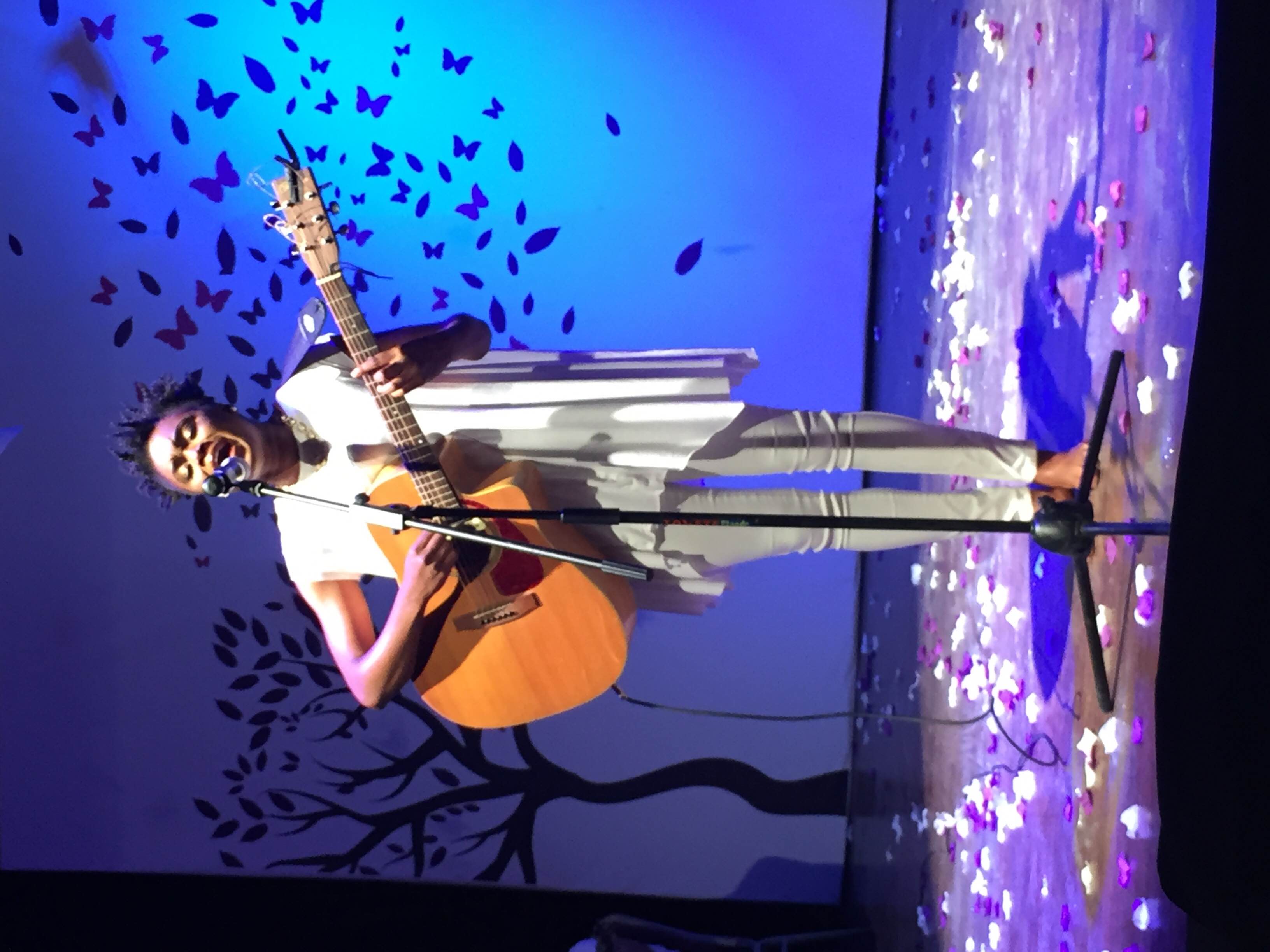
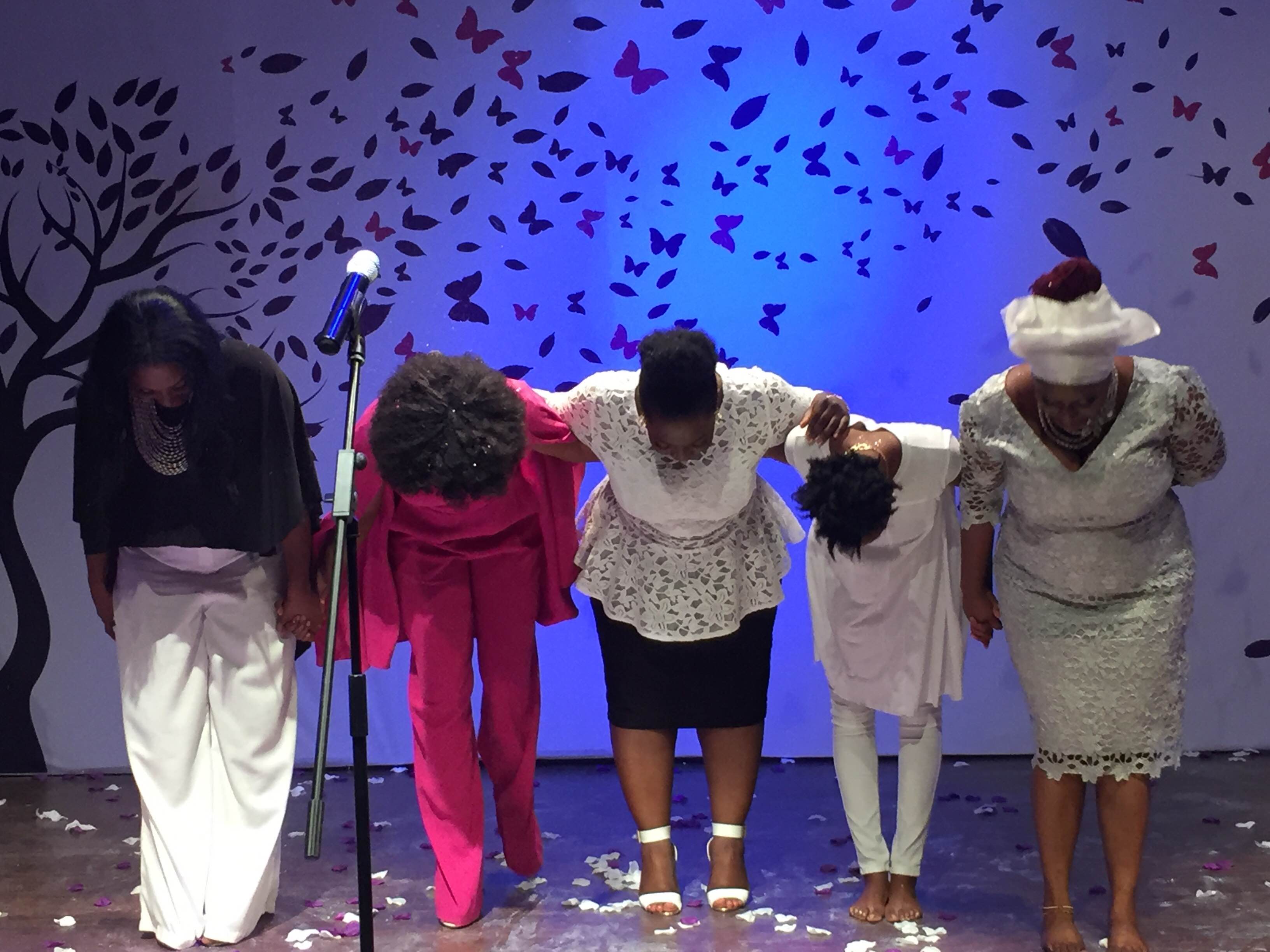
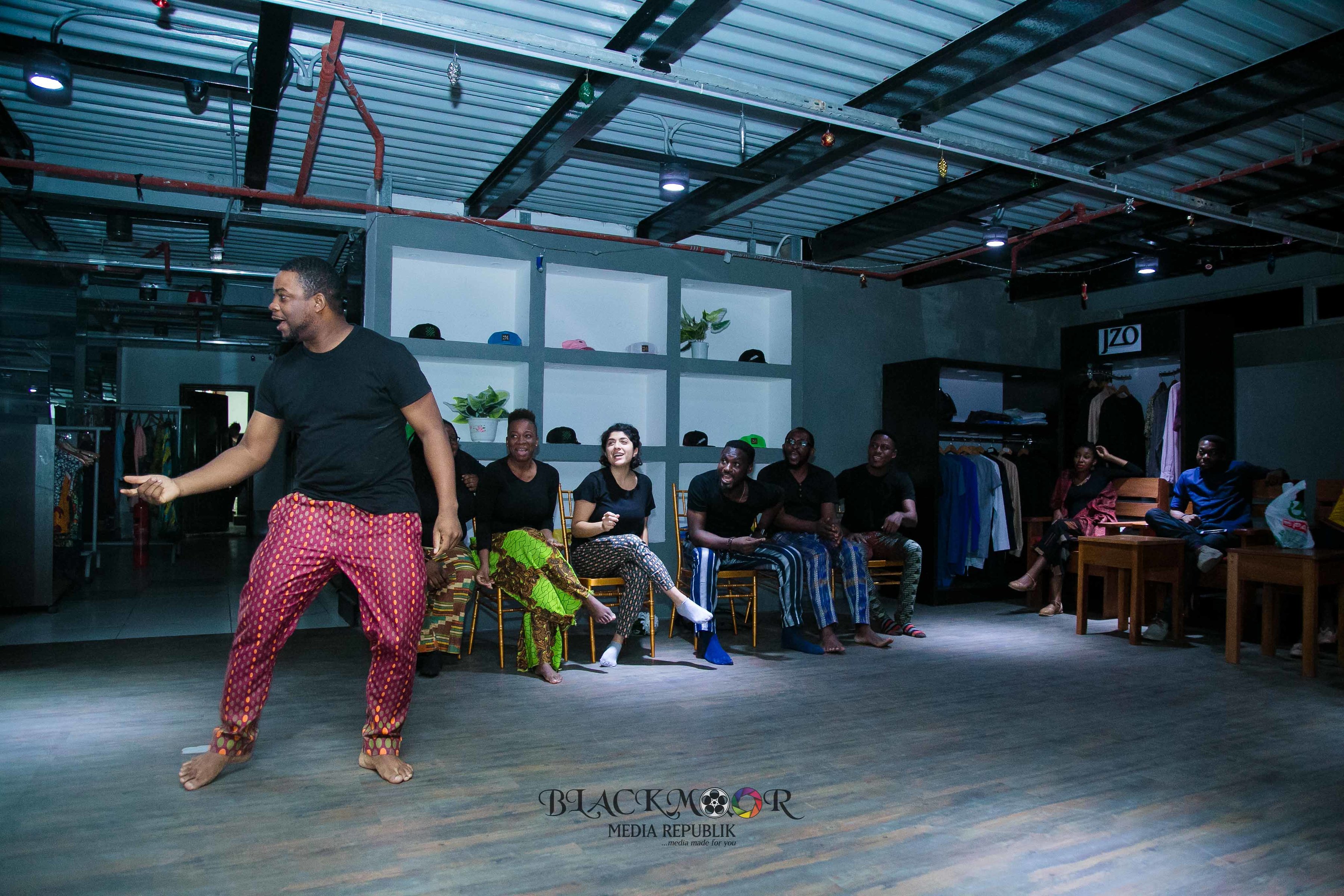
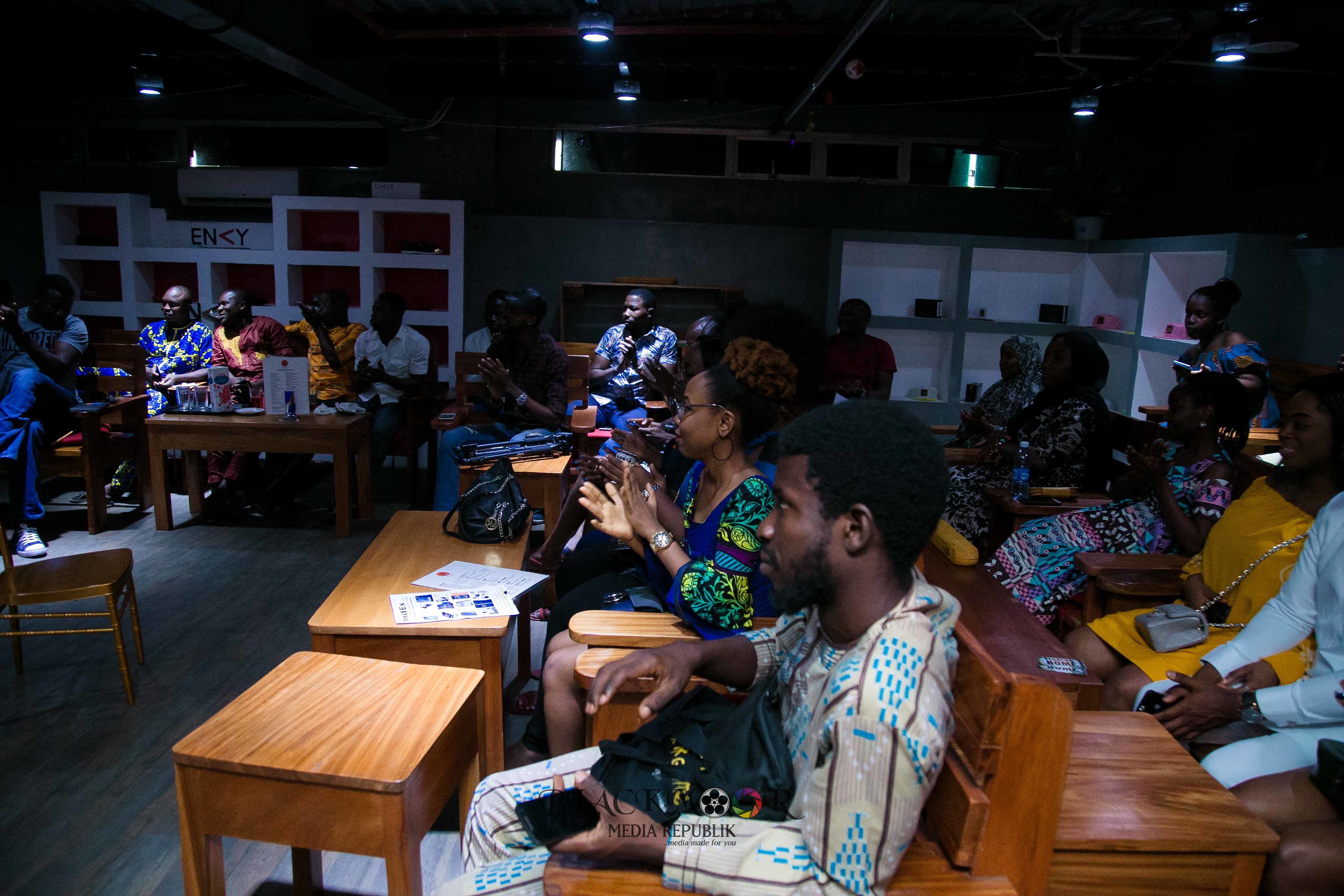
 I watched the Lagos performance of Efe Paul’s Finding Home earlier in December. It held at an underground bunker in Ìlúpéjú and featured an array of bold and exciting voices, including some of Nigeria’s best spoken word acts.
The concept of the show always fascinated me since I first came across it in November 2014. Then it featured a different cast, including Sheila Ojei, and Bassey Ikpi (who has now relocated to the United States), among others. But the format was the same: a show designed around migration and movement, and built from the ground up with the words and stories of the individual poets and performers who make up the cast, and who are at liberty to create characters to advance the theme.
I found that not only fascinating but innovative. But I wasn’t able to see it.
 Spoken word performance is a relatively young genre in Nigeria, but you won’t know by watching its biggest headliners perform, be it at art events in Abẹ́òkuta or opening events at Freedom Park, be it reciting inaugural poetry for the Nigerian president or harnessing the power of metaphors to sell the services of a commercial bank. The words move, and excite, and provoke, and instruct. From Wana Udobang’s emotive and playful dexterity to Chika Jones’ soft cadences that packed a punch; from Efe Paul’s baritone and theatrical evocations of truths to Títílọpẹ́ Ṣónúgà’s vulnerable but assertive tenderness; from Sage Hassan’s intense rebelliousness to Dike Chukwumerije’s eclectic experimentations, those who have braved the wilderness of this new and fascinating stage have brought with them a range of creative expressions before only seen in drama. So, when a play was constructed from these kinds of creative manifestations and fashioned around a contemporary theme, the result is always interesting to see.
Finding Home is, thus, not about one thing. It’s about many: a young man who takes all his savings in order to move to a new world in search of the golden fleece, a young woman who marries for visa, an immigrant who was ratted out for deportation by someone of their skin colour, or refugees who found themselves in the bottom of the ocean rather than the promised land. These kinds of stories are what the show is about, told mostly in the first person, with sound effects, mimesis, and playacting, in ways that carried the audience along with the ups and downs of each tragedy or triumph.
We leave because we have learned that staying still will kill you faster than moving.
So when home becomes a mad song from a broken guitar,
And it feels like the entire universe is playing you,
Let your fading footsteps become drum beats of victory and let them say: He was a good man, but when home becomes the stench from a rotting carcass, even the best men, leave.– Chika Jones
There were other innovations. The show was performed in a semi-circle, for instance, with the actors facing different parts of the “stage” at different times. This gave it a sense of familiarity and intimacy, but also a kind of limitation. It will be interesting to see how it is realized on a flat conventional stage.
There was also an innovative but sometimes frustrating foreign language element.
One of the actors, Tanasgol Sabbagh, performed only in German – a brilliant invention that both illustrated the international dimension of the theme and the fact that the play had recently been shown in Germany, courtesy of the Goethe Institut. But in Lagos on this cool Sunday night, surrounded by bilingual speakers of only English and another Nigerian language, her part felt almost alien. And yet in that alienation is another realization of an important dimension of home or homelessness. How many immigrants, like those portrayed in many tragic instances in the play and in real life, get the chance to be fully understood before being sold off to slavery, or strapped to airplane seats and deported (in the best case scenario), or killed in cold blood in the back alleys of drug and gang-controlled slums of Europe and America?
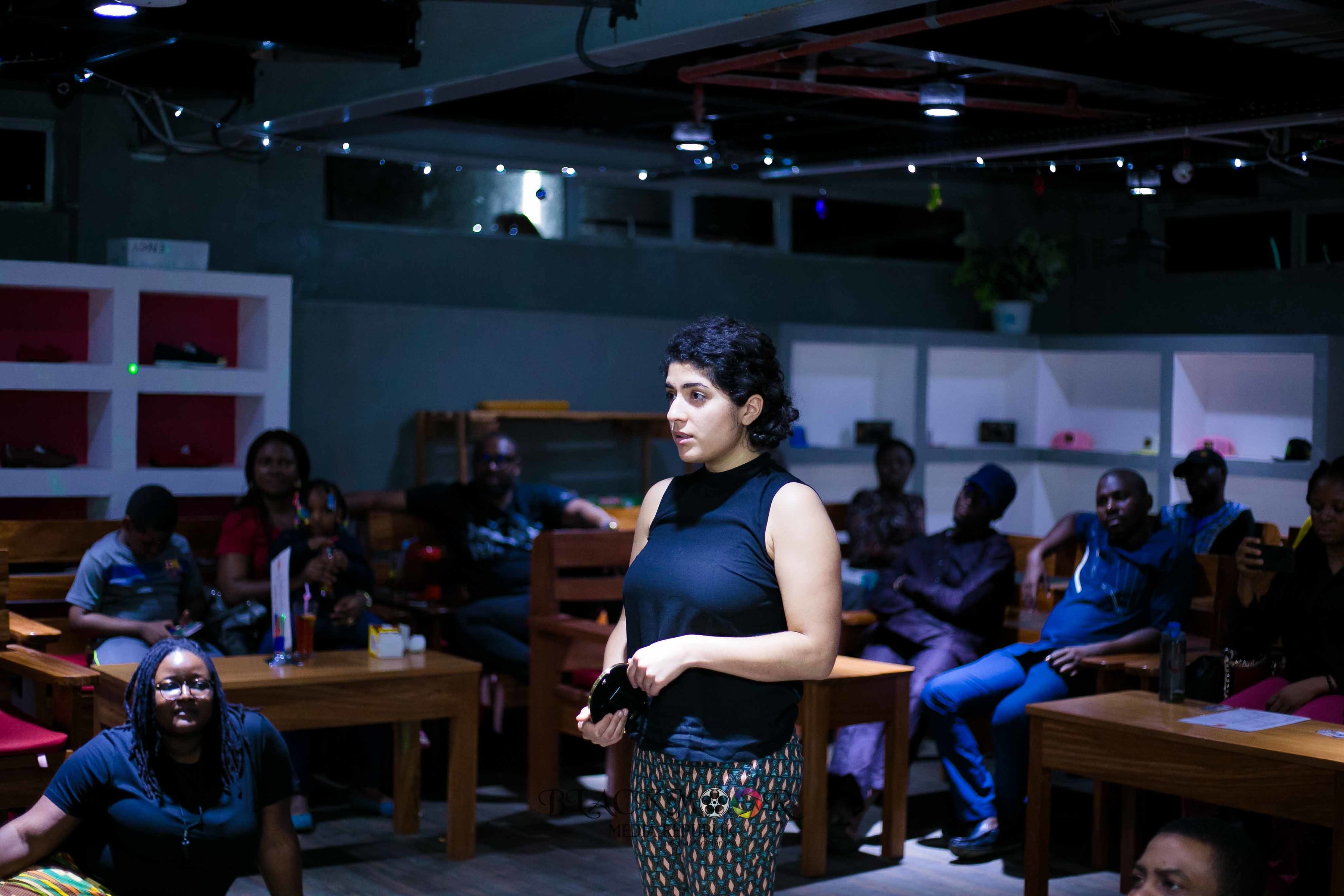 The play, then, was both a communal contemplation of loss and survival as it was an examination of conditions that continue, all around the world today (accentuated, of course, by the prevailing news at the time, of the sale of Nigerians in Libya as modern-day slaves) to dehumanize immigrants, their stories, their bodies, and their condition. It was also an important twist on the character of spoken word as being just a one-man craft. Under the creative director of Fẹ́mi Elúfowójù, the cast showed what can be done when creativity and cooperation are harnessed to economy. There wasn’t much costume change, and much of the show played out in the plain site of the audience without any negative impact on the plot movement or overall message.
Is Finding Home a drama or a poetry production? Don’t ask. I’ll certainly see it again. I just hope there’s more music next time, by the characters, even if they are sad ones.
___
Cast members: Efe Paul Azino, Chika Jones, Títílọpẹ́ Ṣónúgà, Ndukwe Onuoha. Obi Ifejika. Adeṣọlá Fakile. Tanasgol Sabbagh and Fẹ́mi Lẹ́yẹ.
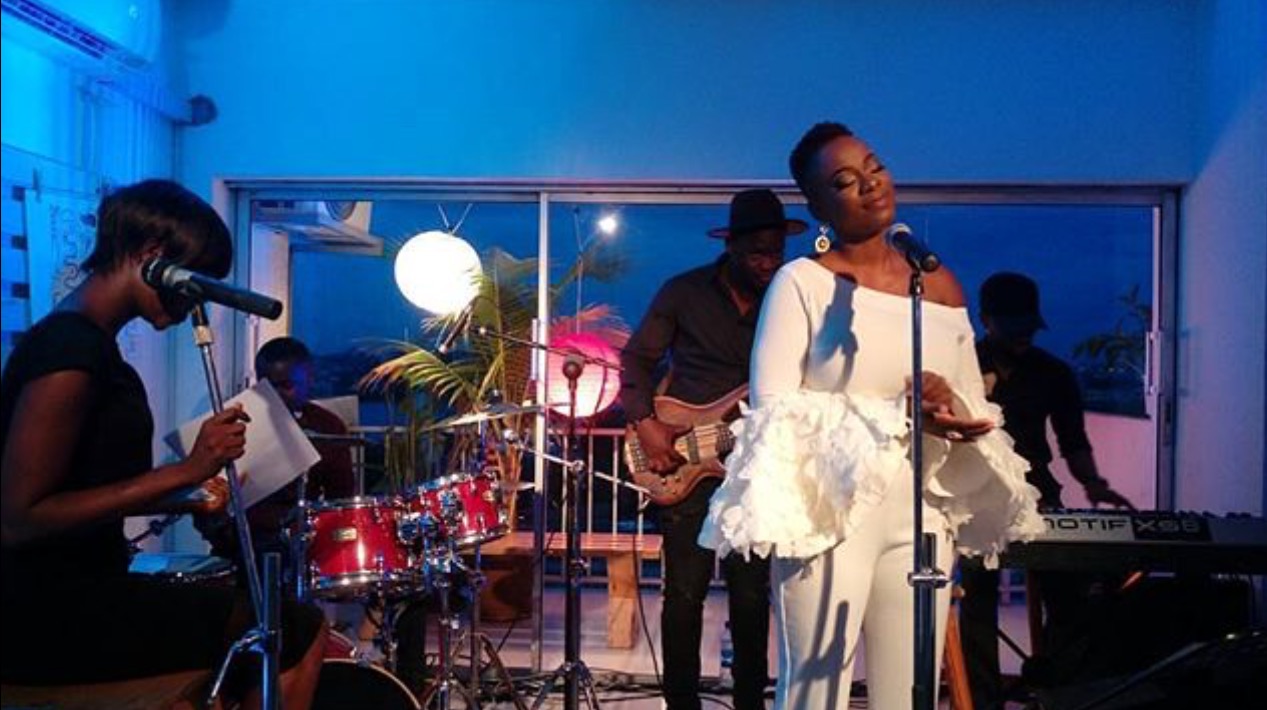
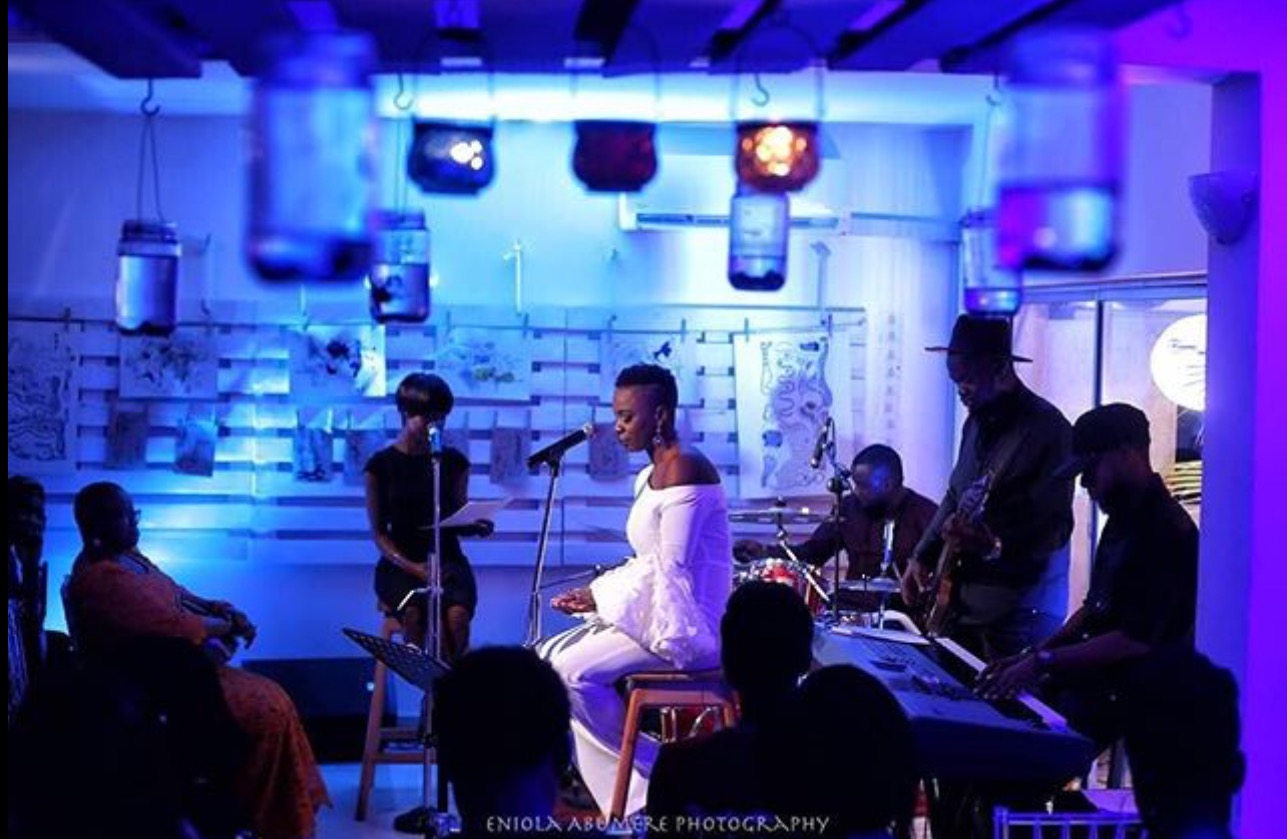

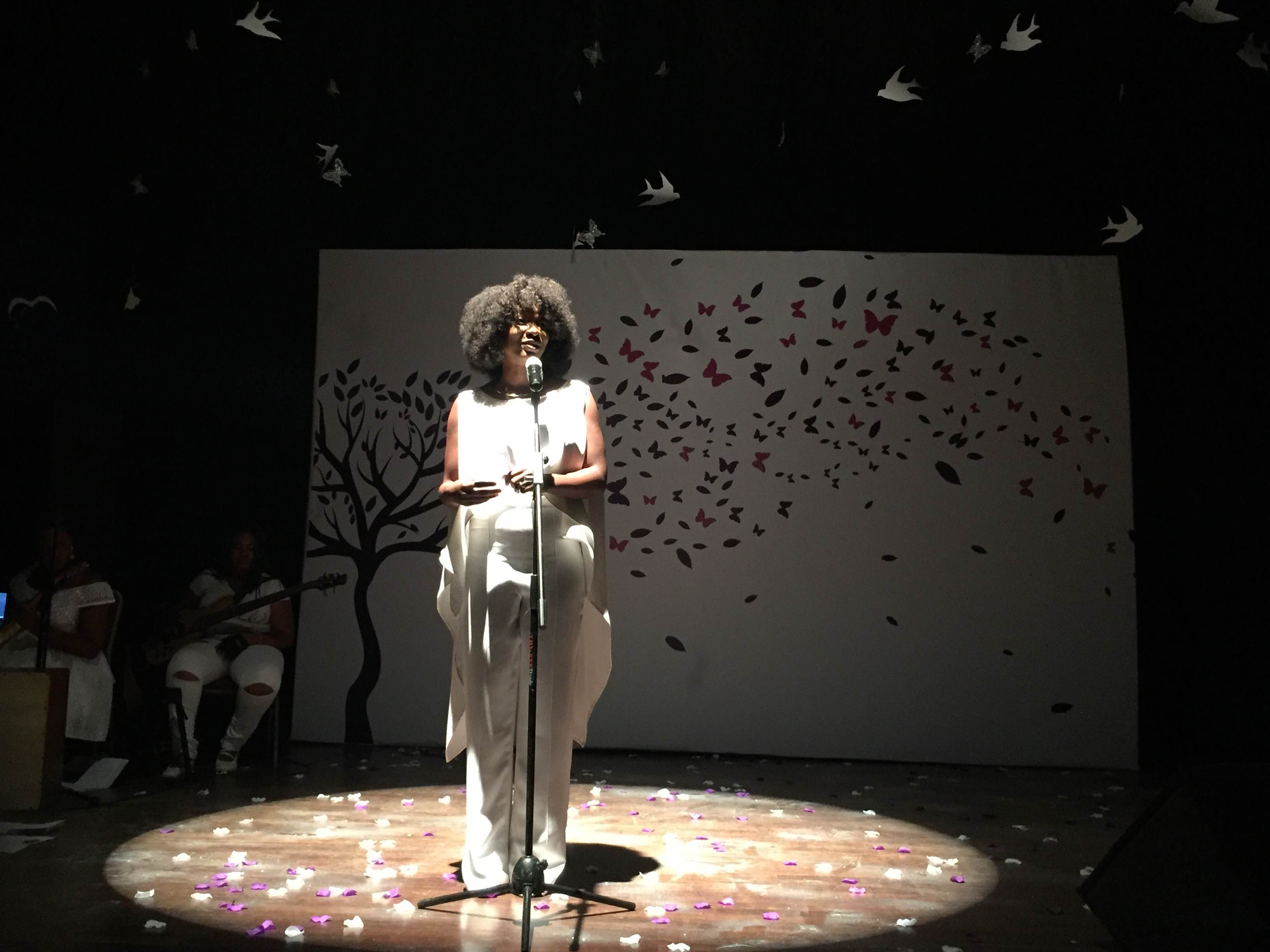
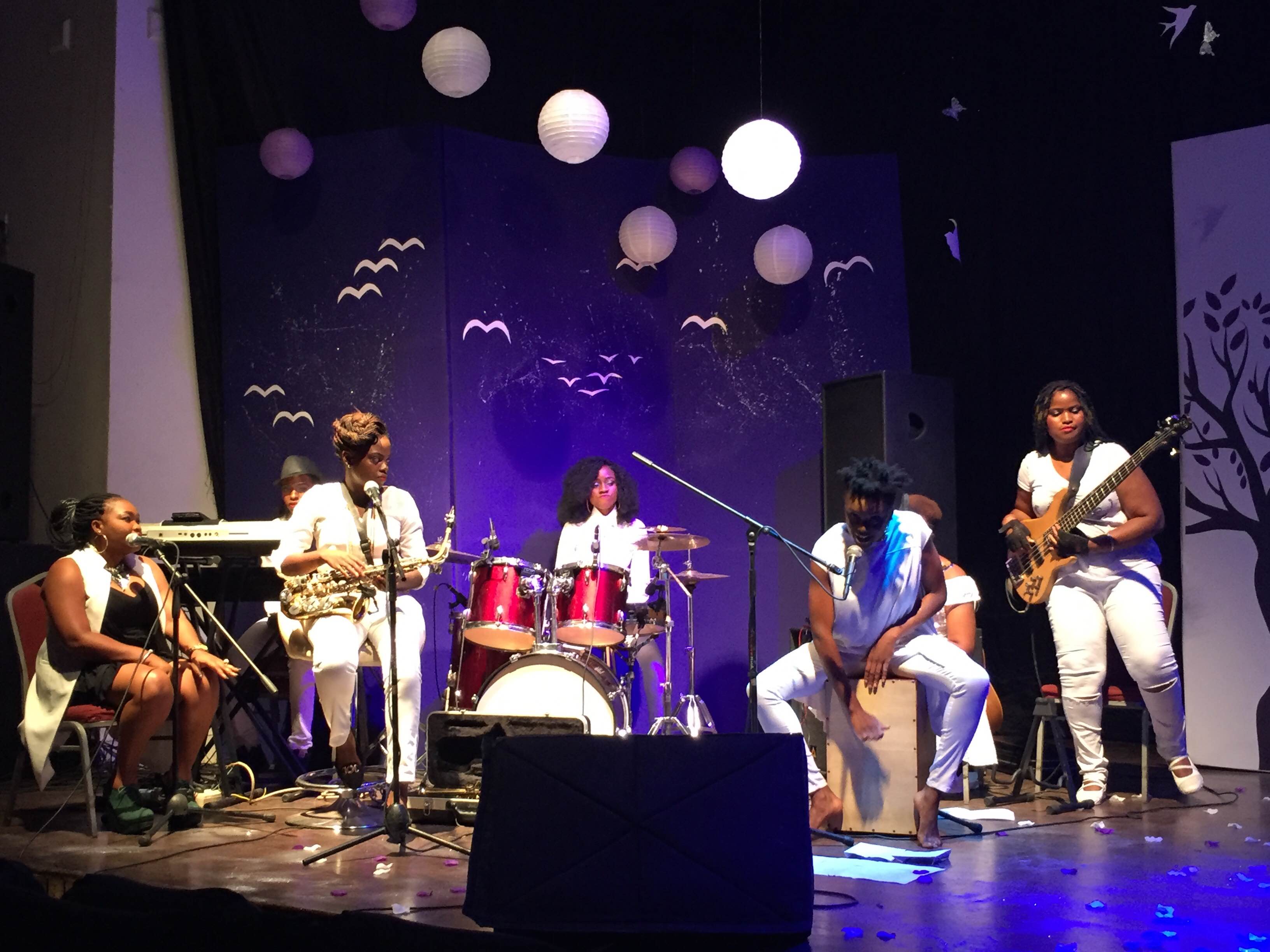
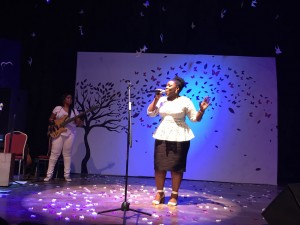 Títílọpẹ́ talks about healing in her fourth piece, advising us against covering up the wounds till they fester and rot but to rather open them up. “Speaking is an act of survival”, she encourages talking about such harrowing experiences as a way of getting past them. She then closes saying once we’re done opening up, we should leave it be and walk away from it. Falana then takes the stage for another powerful musical interlude.
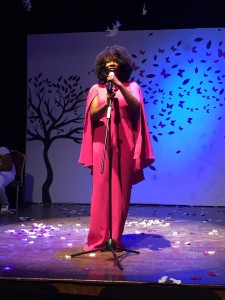 By the time Títílọpẹ́ delivers the next piece the white outfit has transformed into a stunning pink variation which seems to mark the end of innocence and the birth of passion, strength, love and insight. Now she bears a message for us the men. With rapt attention I listen as Títílọpẹ́ tells us the men “the woman is working and if she finds you working too she just might let you love her”. The message of appreciation for the woman resonates loudly and we nod in agreement, all the while applauding.