At the Korean DMZ

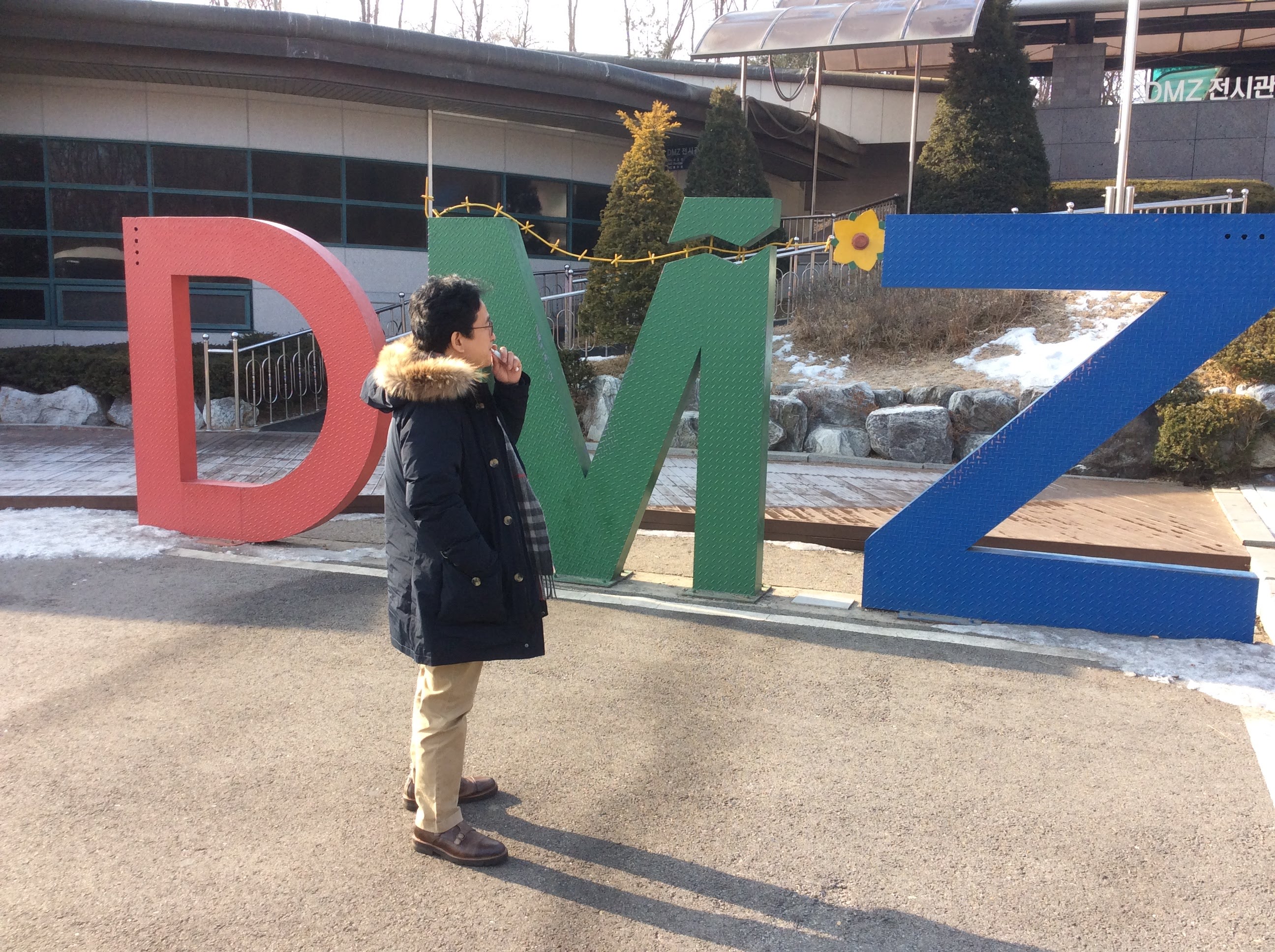
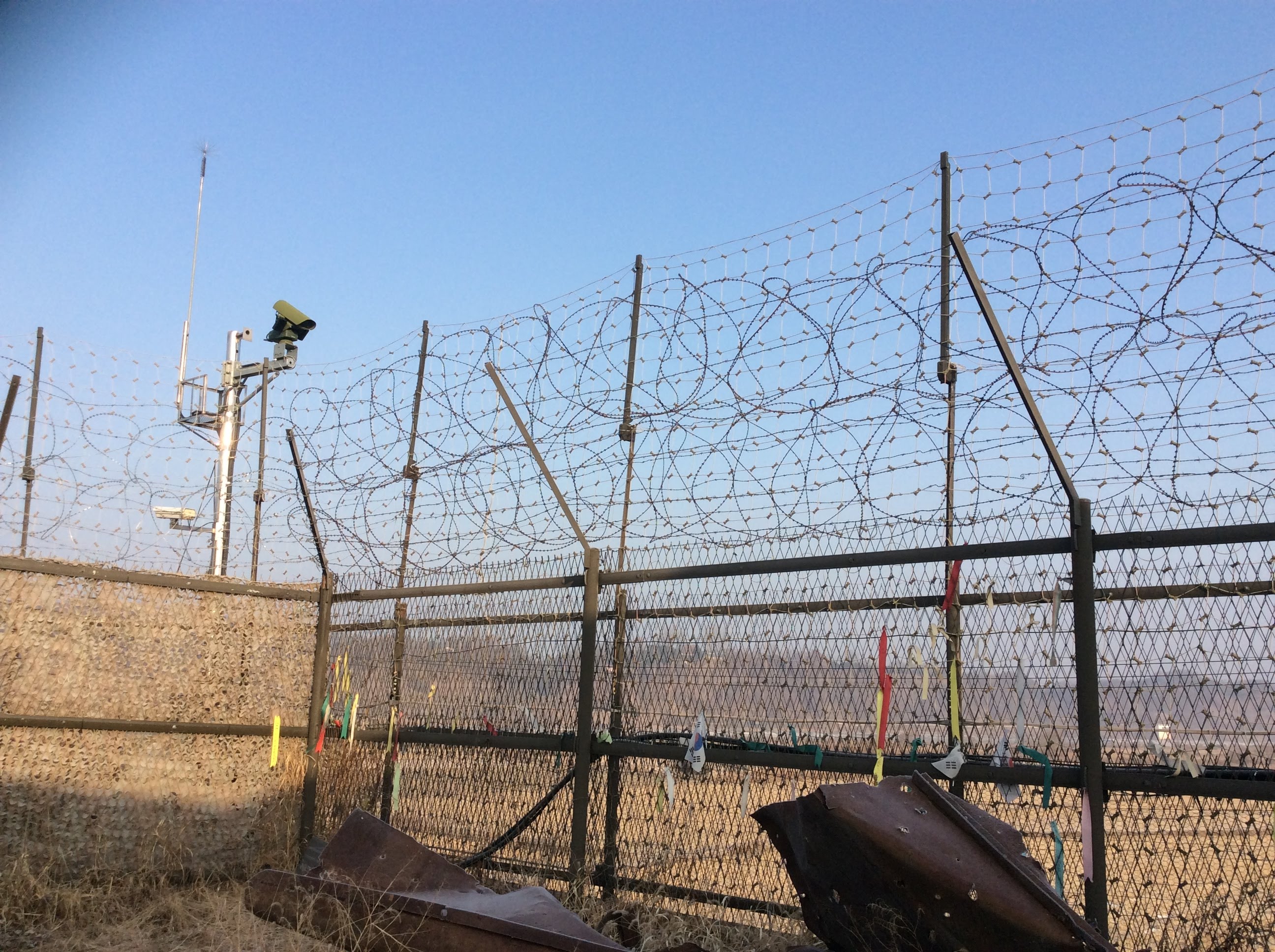
Visiting the Korean Demilitarized Zone (DMZ, as it’s commonly called) was, I think, one of the most exhilarating parts of my trip. Nowhere else in the world, perhaps, is as illustrative of tension and hostility between two countries as the DMZ is. It is the world’s only remaining demilitarized zone laid bare in a 250-km long border barrier between what is now known as North Korea and South Korea.

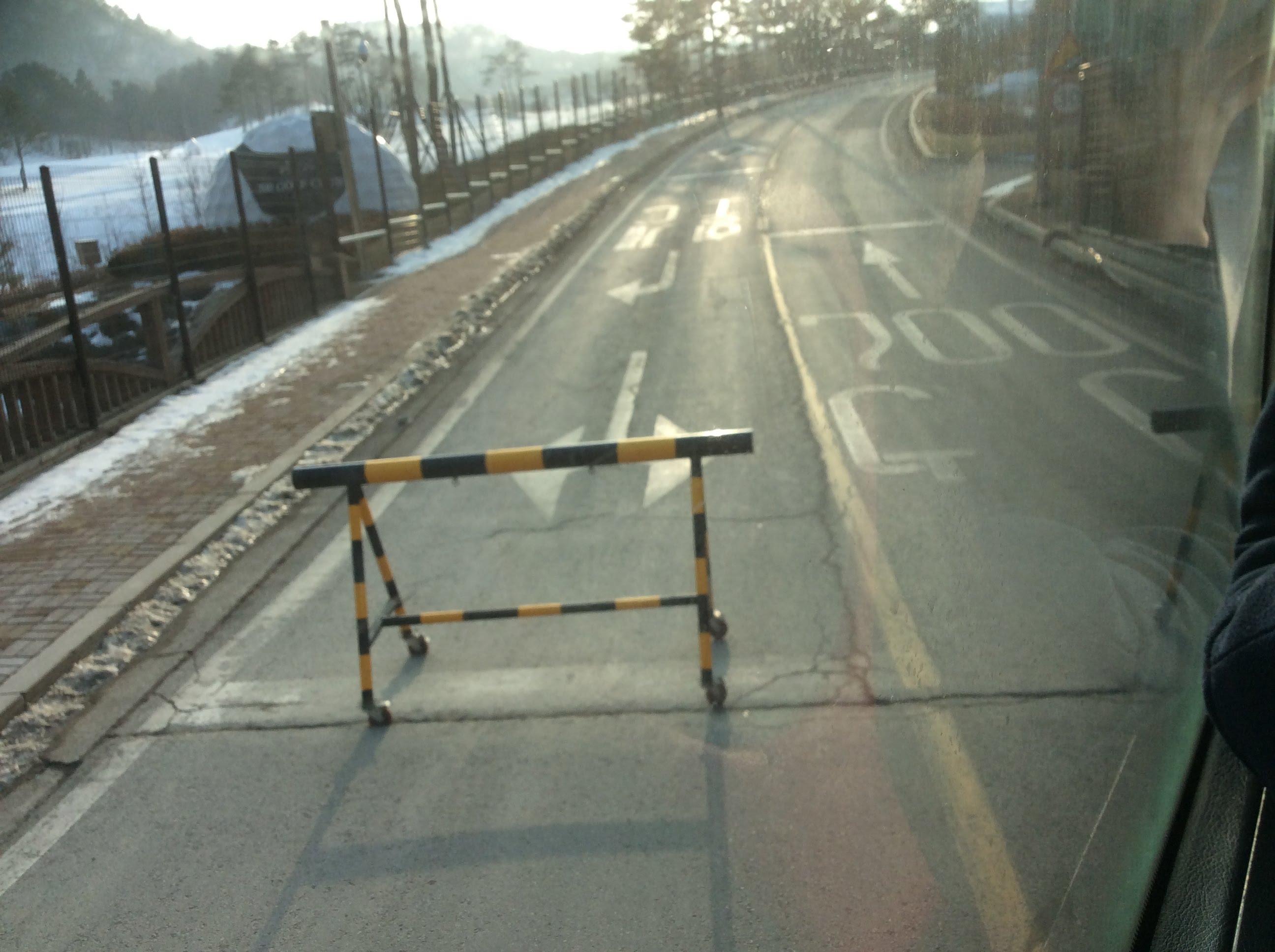
Parts of the DMZ are open to guests, though subject to last-minute cancellations in many instances. On the day of our visit, the Olympic delegation from the North had just passed through the Civilian Control Line, on the way to Seoul on a historic visit. Had we arrived there just a few minutes earlier, we may have been delayed to make way for them.

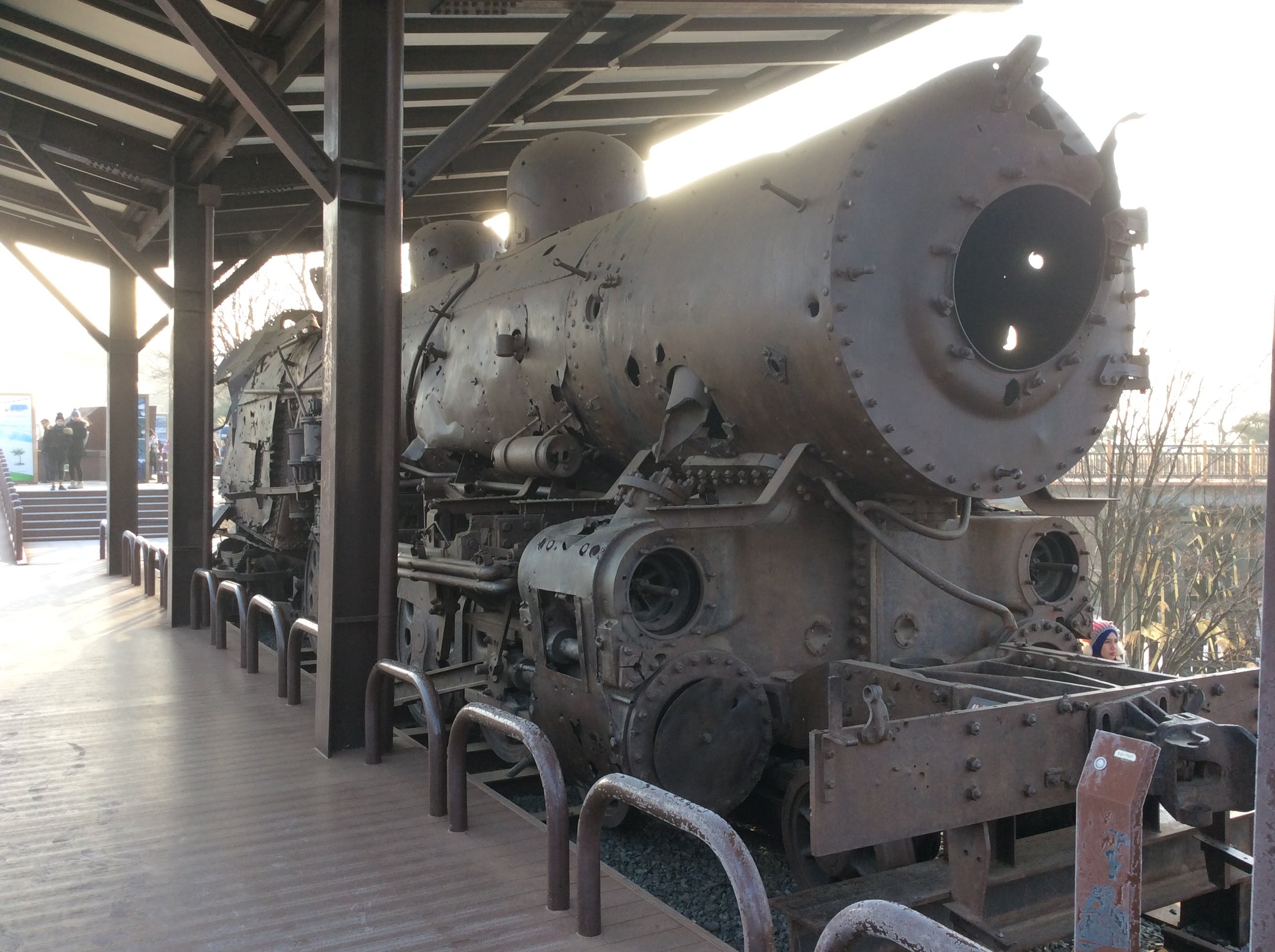
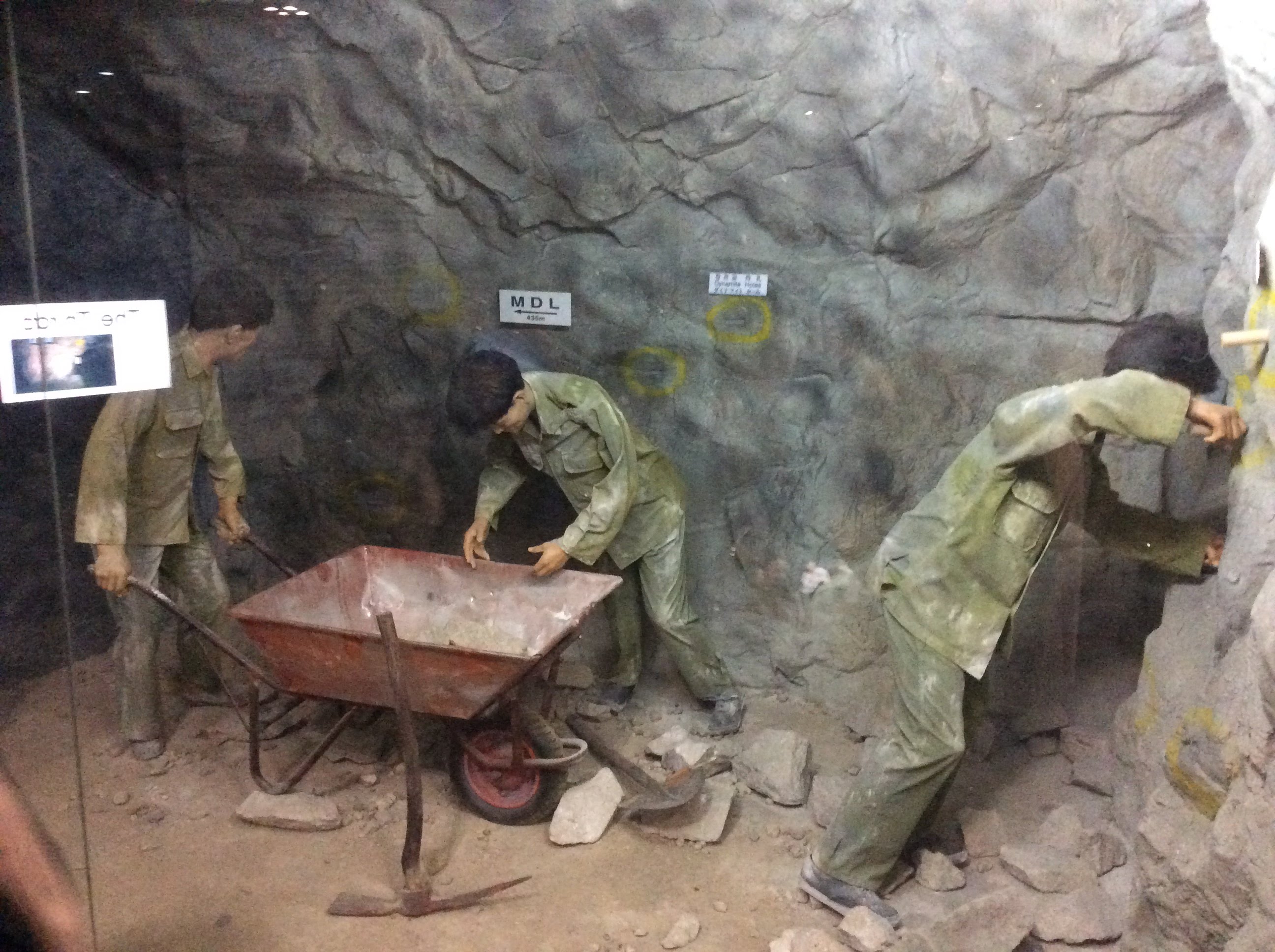
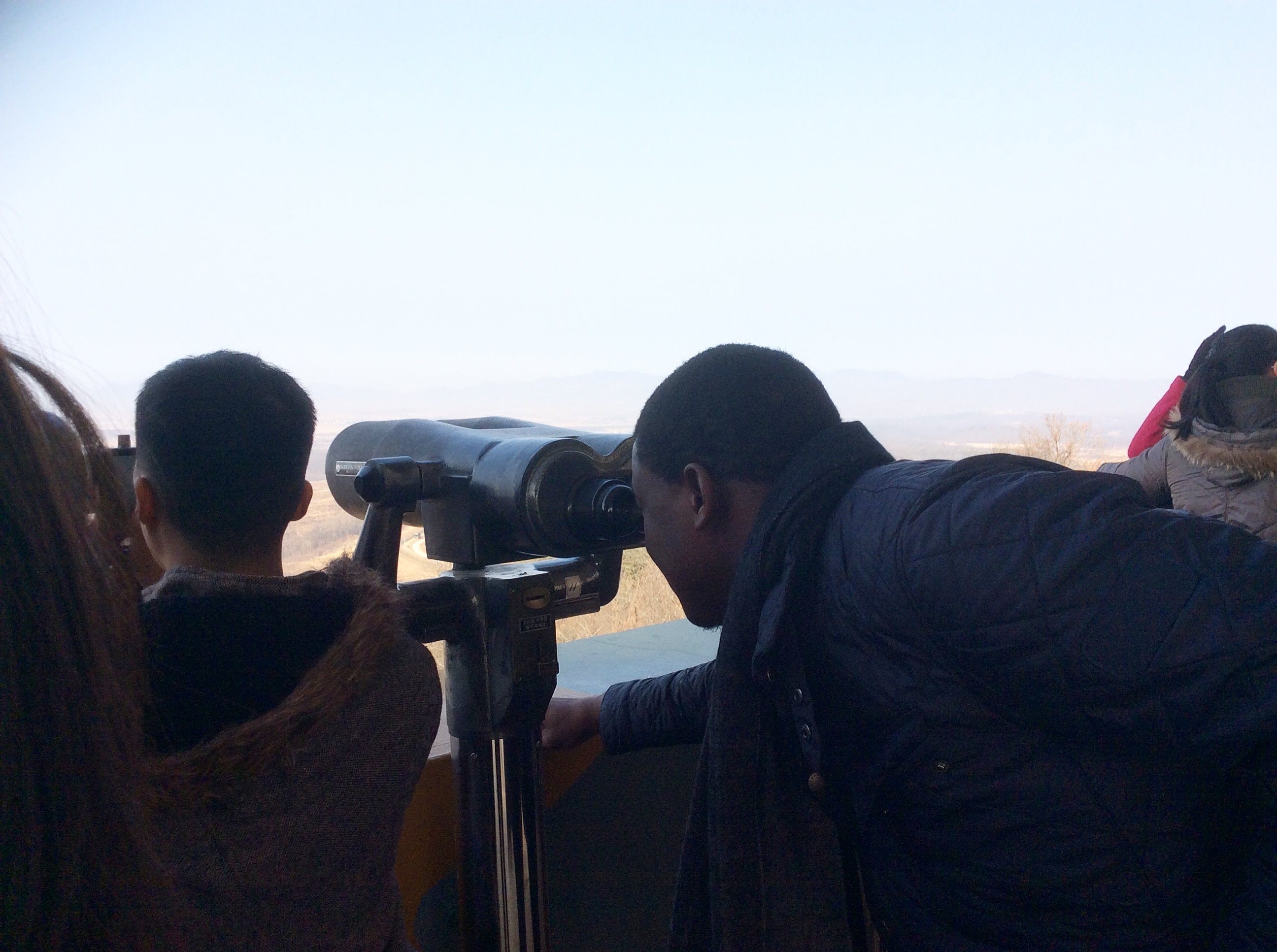
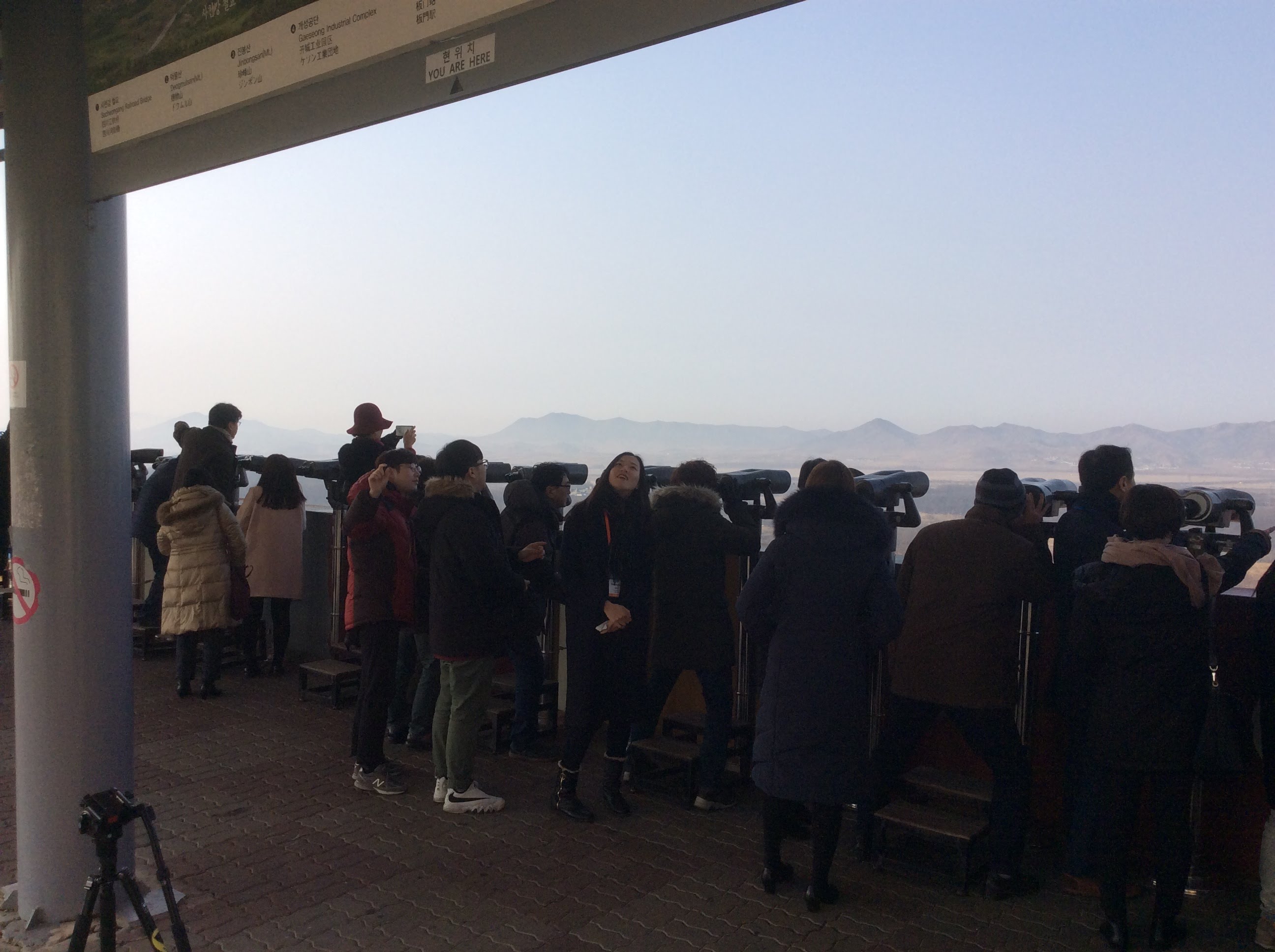
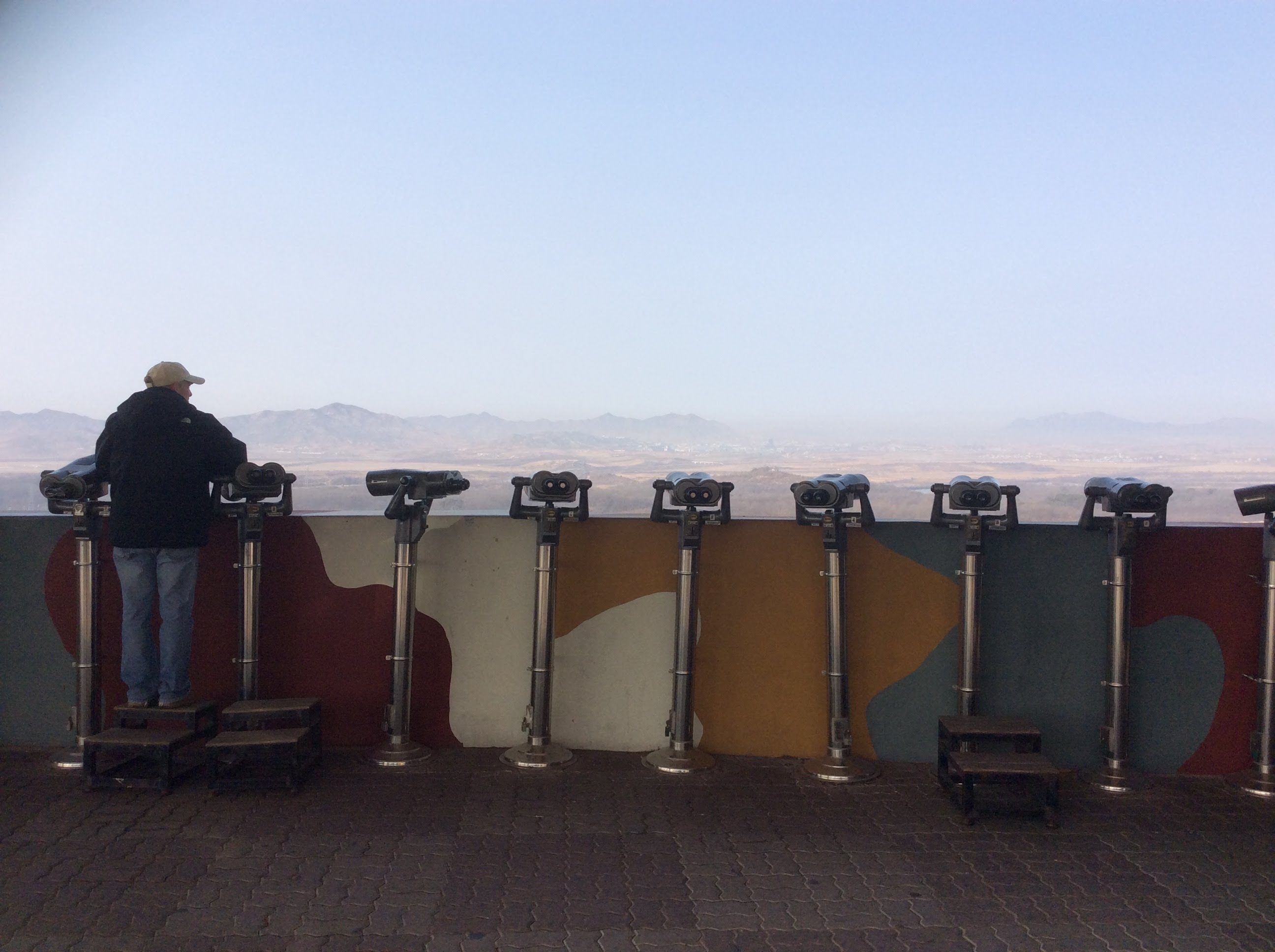
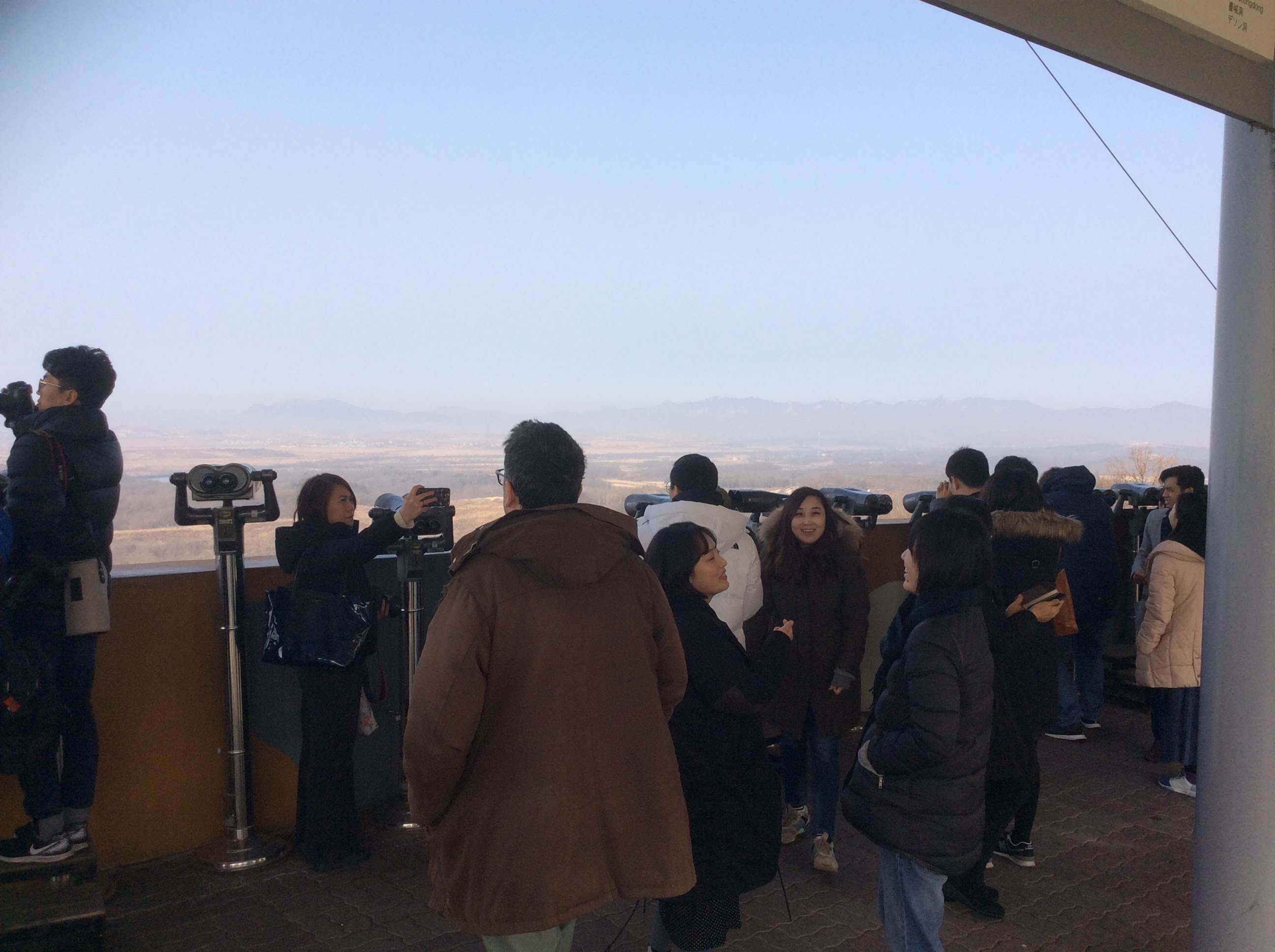
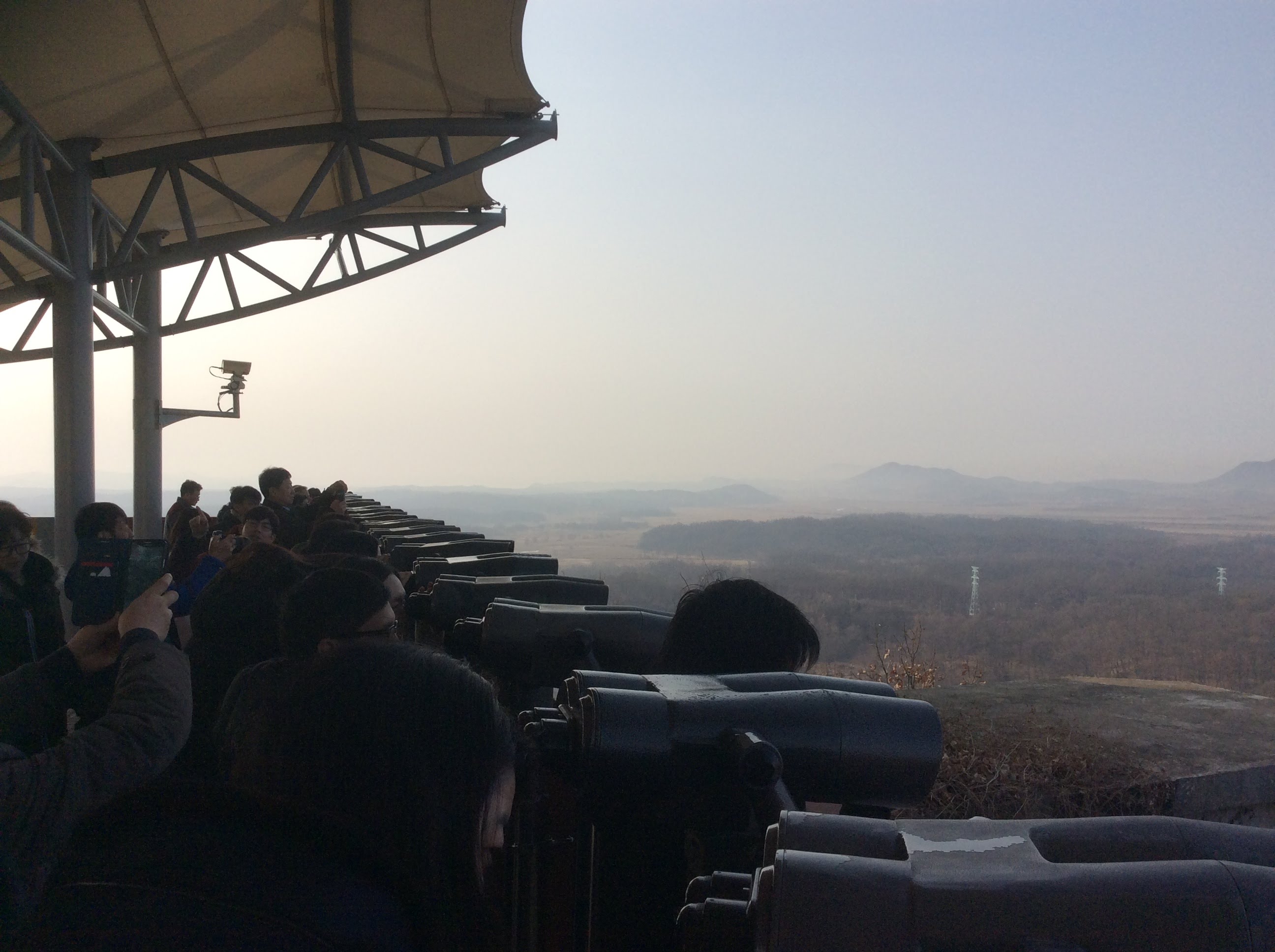
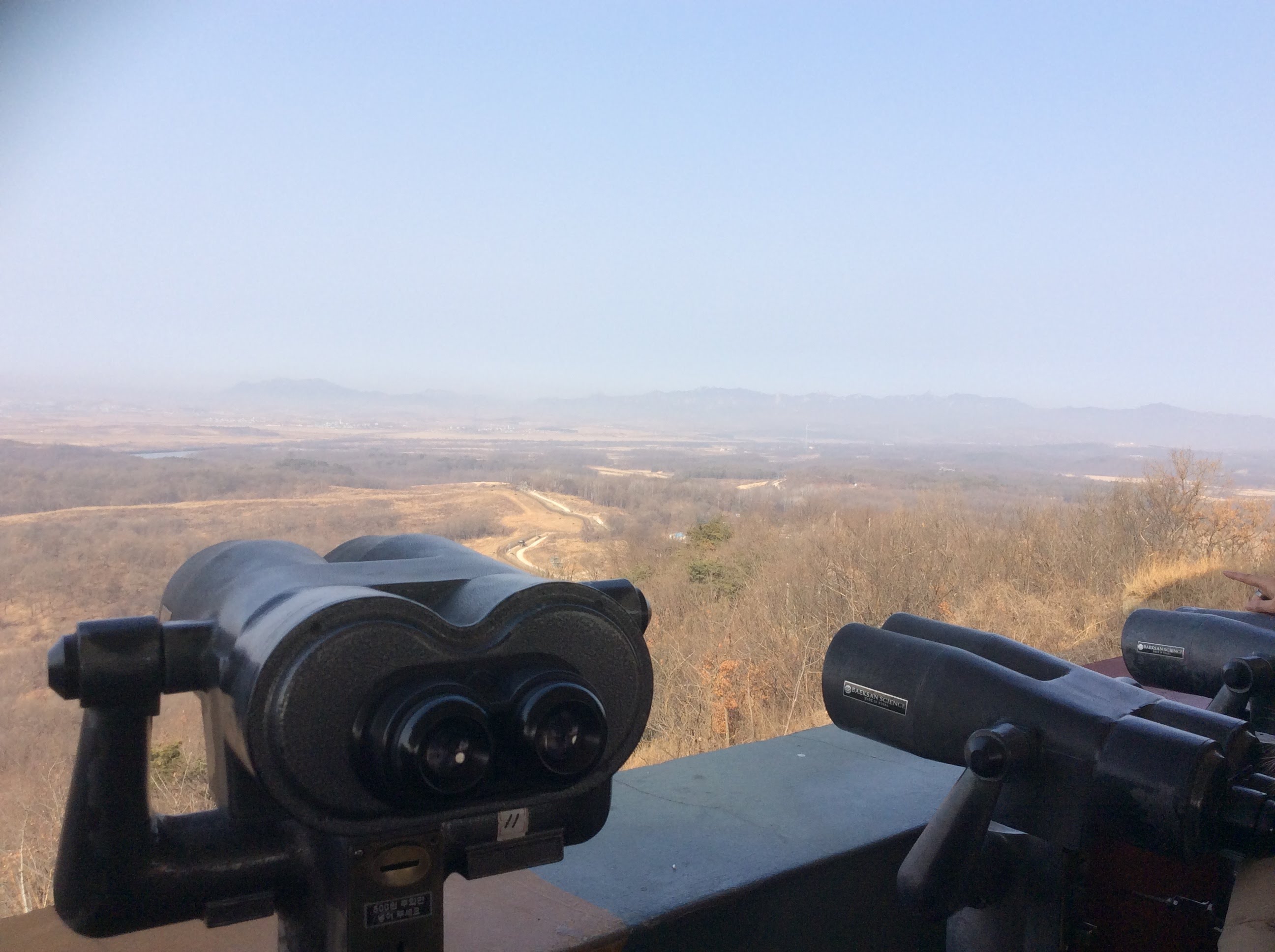
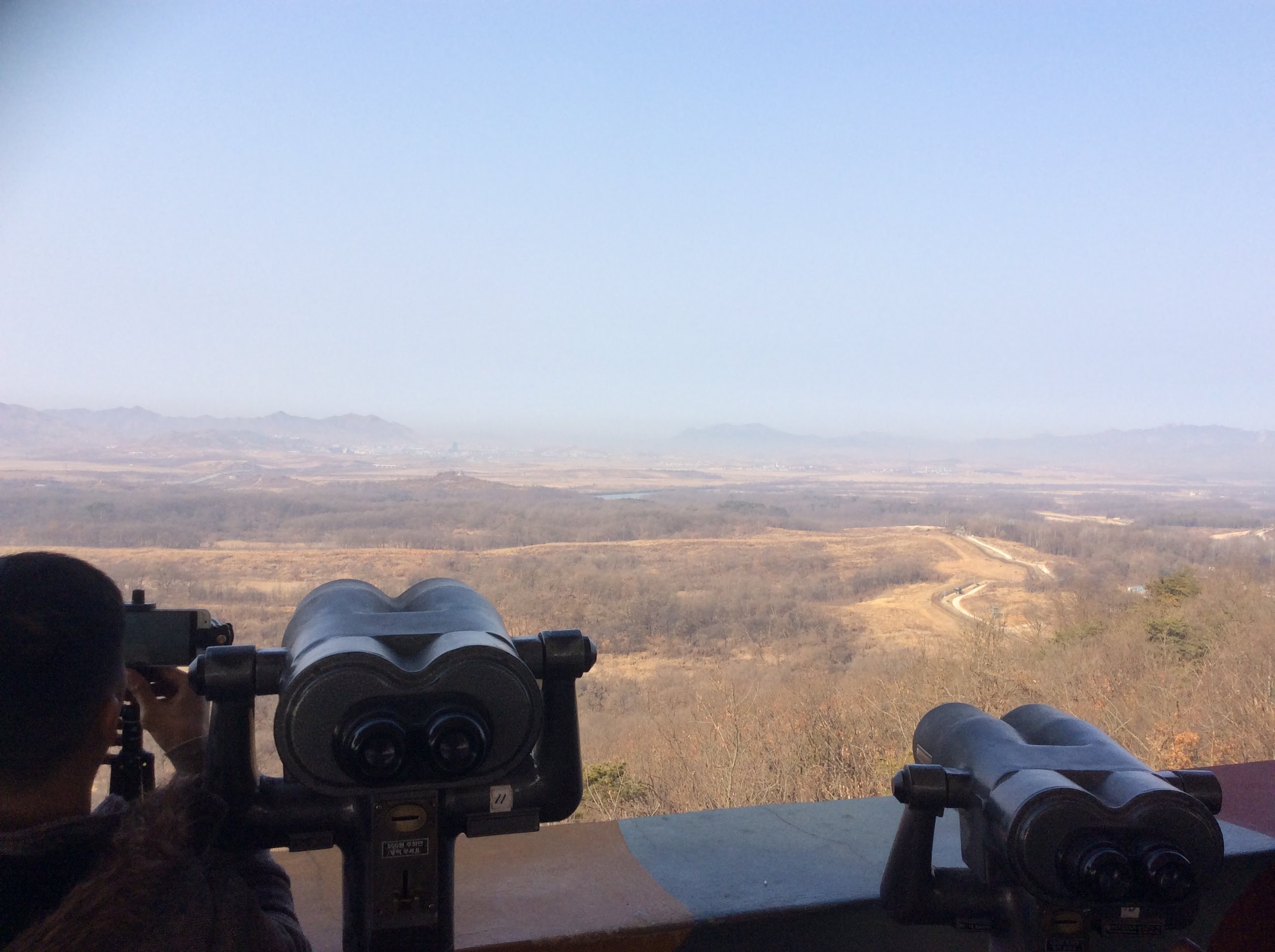
The parts of the South where visitors can visit have a number of interesting landmarks, including an observatory post from where one can peep into North Korea and see its Propaganda Village and a flag, erected to be taller than anything else near it, placed strategically near the border. There, there is a small museum showing how the Korean conflict started, the many skirmishes between both of them over the years, and other relevant information. Over the years, the North Koreans had plotted to take over the South using many sly tactics. One of them is the use of a tunnel, four of which have been discovered before they did too much damage. Guests to the DMZ can take a look at some of them, and even take a walk in them, since they’ve been preserved for touristic purposes.

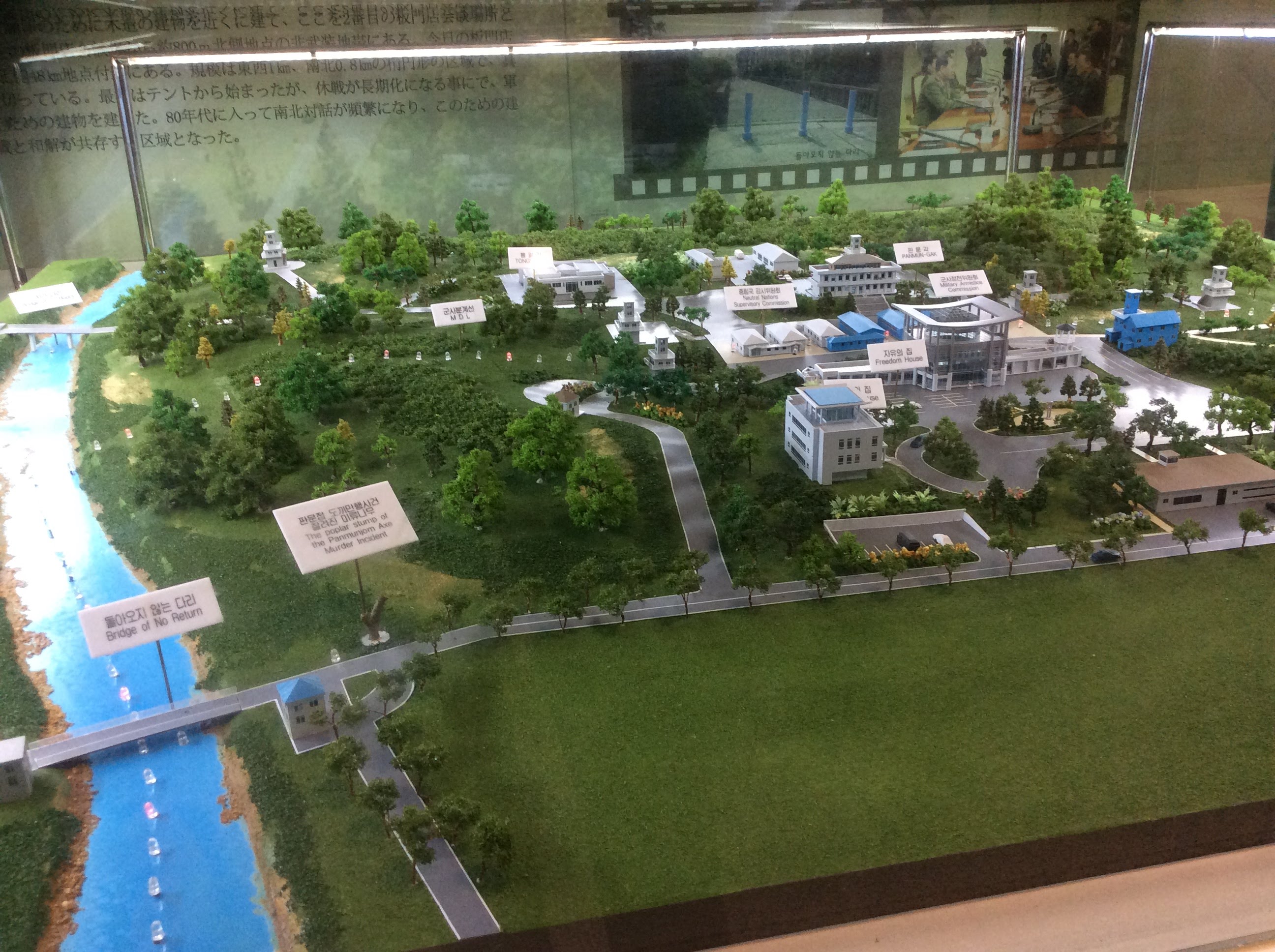
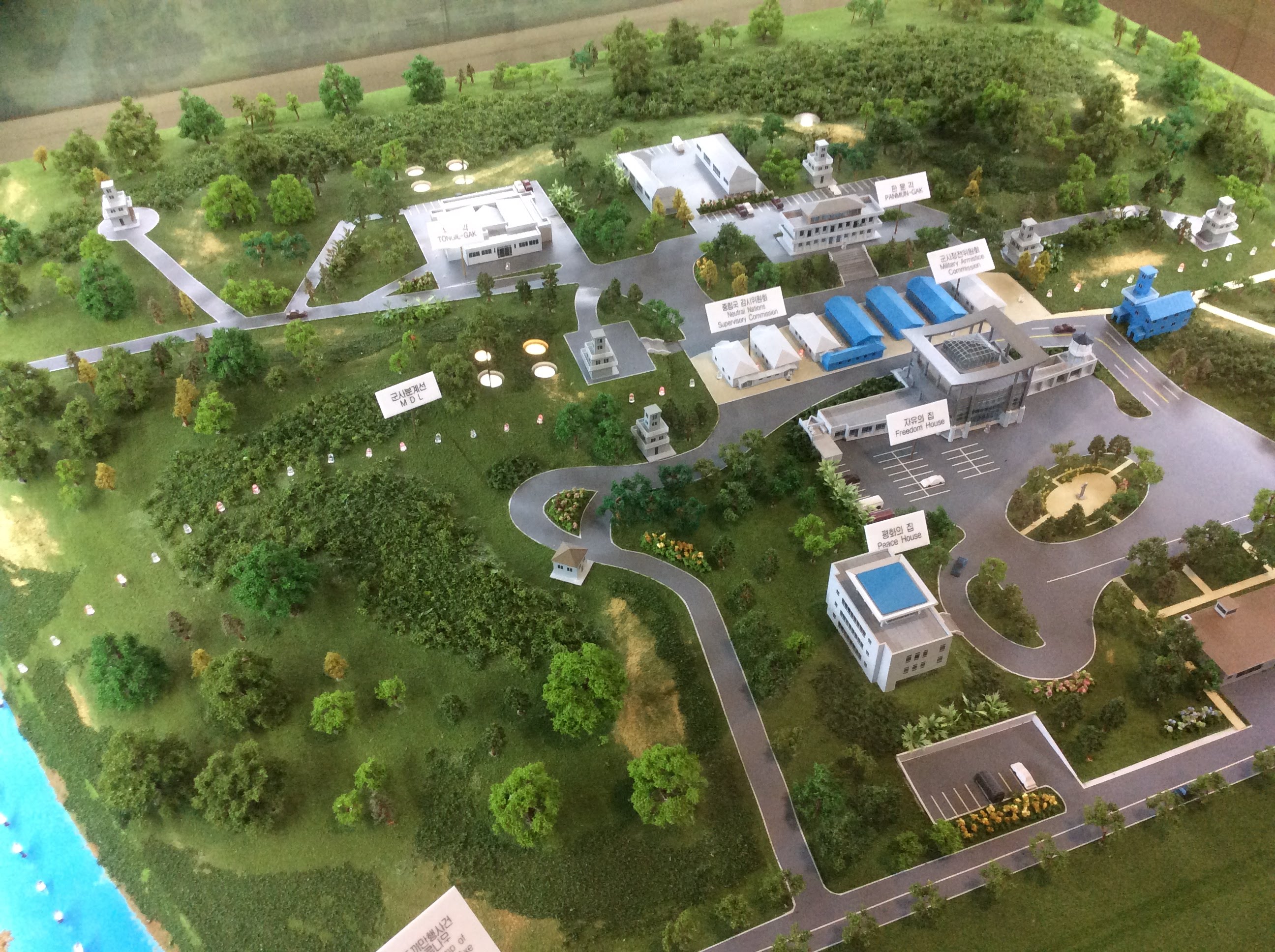
A place I thought I was going to visit, but learnt isn’t much open to the public, is Panmunjom with the famous blue house split across two national boundaries, and where most high-level diplomatic meetings between the countries usually take place. From Paju, where the observatory was, Panmunjom was a few miles out of view even of the mounted telescopes.
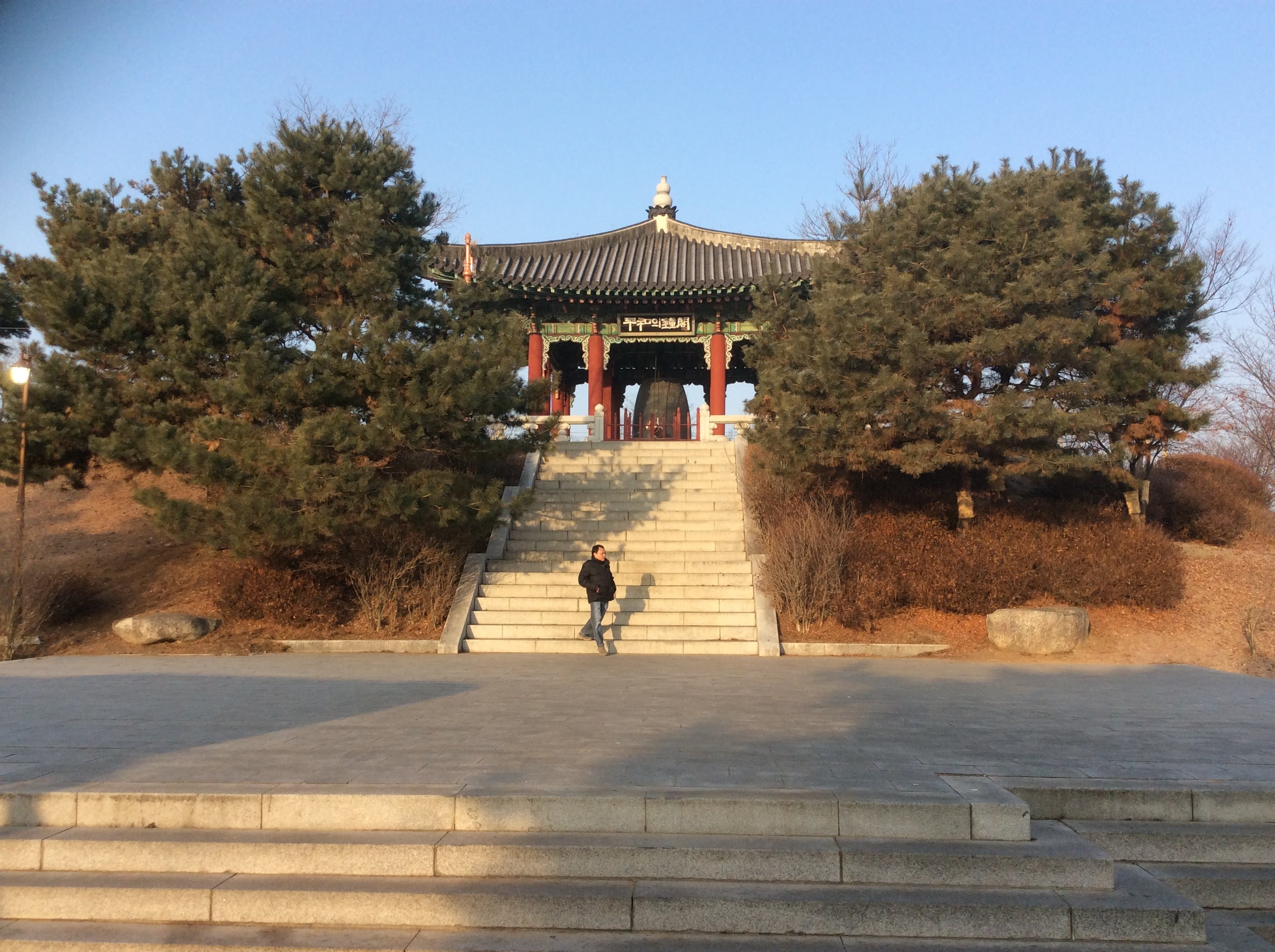
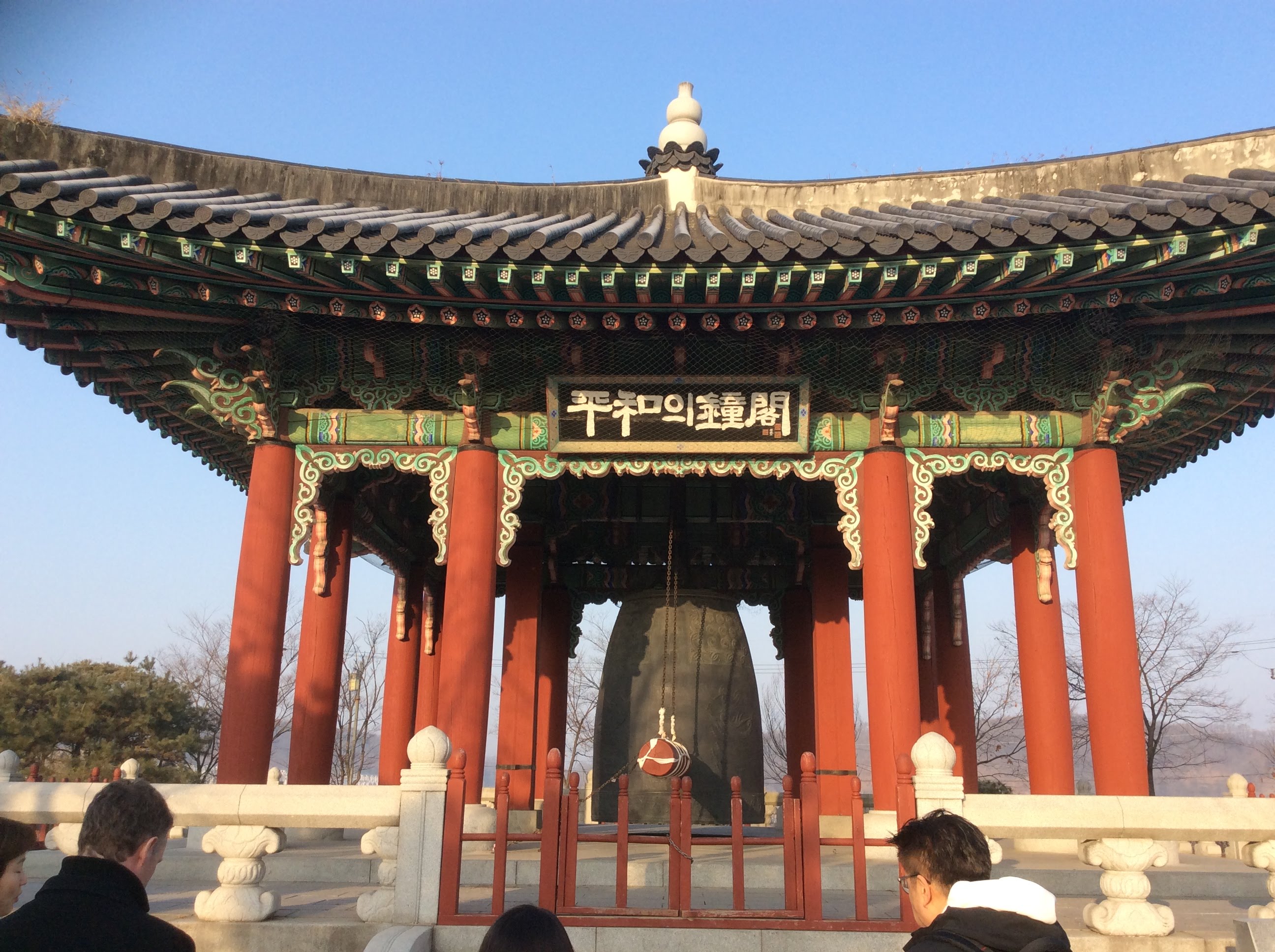
One thing that was exciting to discover is that, due to the state of war between the two Koreas and the untouched nature of the wilderness in the DMZ, it has grown over the years to become something of a nature park. Exotic birds and animals of diverse natures now live in the four-kilometre-wide minefield that separates the two Koreas. It has been proposed that in the case of future unification, the two countries agree to keep the DMZ as a heritage site of protected flora and fauna.

I can get behind that, as well as the idea of returning to the country after a state of peace has finally returned. Hope is frail but it’s hard to kill, as the saying goes. From the conversations with ordinary Koreans throughout the trip, it appears that I’m not the only one with at least a desire for a better future in that part of the world. May it be soon, and may the cost not be too high for the world to bear.
My Korean Nostalgia

It has been about two weeks since I returned from the Korean Peninsula as a guest of the Ministry of Culture for the PyeongChang Humanities Forum, a culture Olympics of sorts, but my heart has remained in the country. It had dawned on me, long before I got on the plane that took me out of Incheon Airport, that this is a special place. From the first welcome, through all the stops at Seoul, Pyeongchang, Busan, and other places in-between, the country warmed itself (a curious word since it was freezing cold in the subzeroes for the duration of my trip) into my bones. And now, I realize that I will never be able to read any news story about the Korean crises without a personal pull.

There is a story in the Wall Street Journal this morning about a successful concert at the at the Gangneung Arts Center by the North Korean orchestra attended by an audience of South Koreans of all generations in which the prospect of peace and unification again came within reach, even if only sentimentally. While I was in Korea, we had taken a trip to the Demilitarized Zone and learnt through a television in the bus, right before entering the Civilian Control Line, that a delegation from the North had entered the country through the same entrance just a few minutes earlier. They had been sent by Kim Jong Un as an advanced team to prepare grounds for sending the athletes that the North had agreed to have participate in the Ice Hockey event under the same (unification) flag along with the South, and in the same team. It warmed my heart up. (This has happened, by the way).

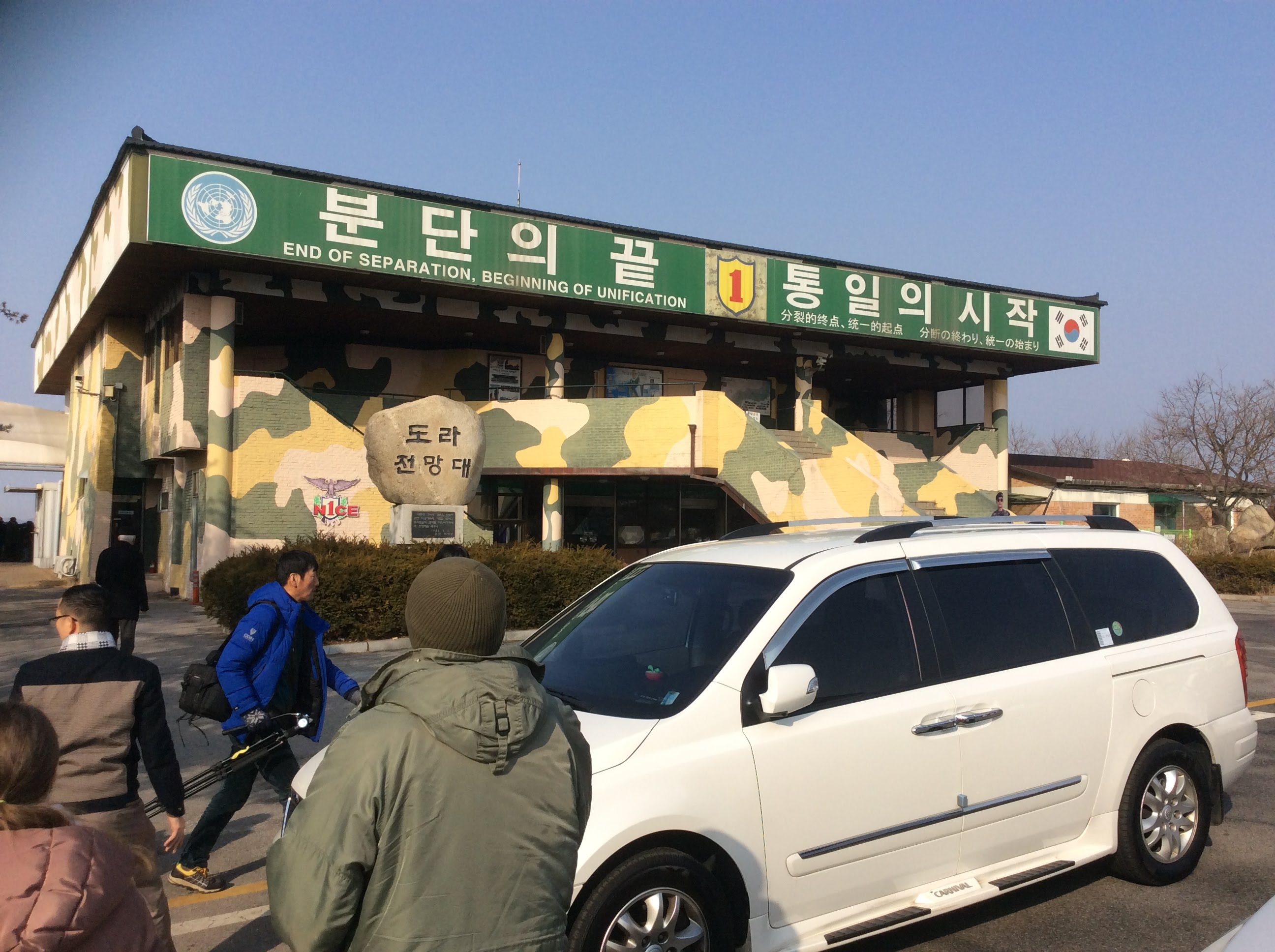
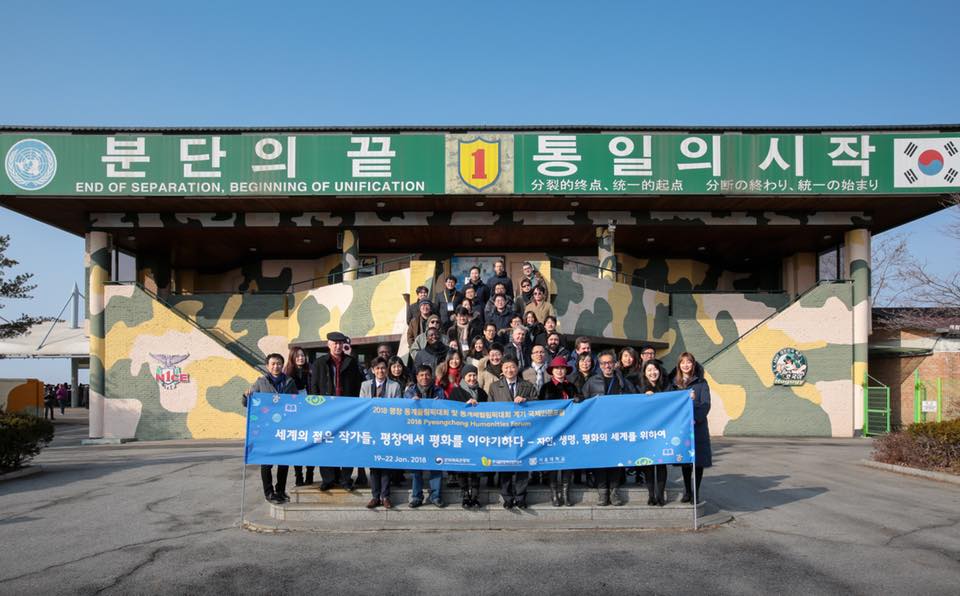
Almost everywhere we visited in South Korea, but none more pronounced than the DMZ areas, there is a palpable sense of hope for an eventual unification of the two countries under peaceful terms. It sometimes felt too jarring when compared to the rhetoric I’d been familiar with, from outside looking in, about a prospect of war that appeared real almost every day and with every tweet from the POTUS. Almost everywhere at the DMZ had something about ‘unification’ or ‘freedom’. The road we were on was called Freedom Road. There was a house at Paju that had boldly written on it “End of Separation, Beginning of Unification” in English, Chinese, and Korean. It’s unlikely that any North Korean would see it from across the border a few miles from there, but it showed an attitude that permeates everywhere I looked. The people of the South would want nothing more than a chance to reunite with their long lost national siblings.

A question I’ve been asking since I’ve been back is not just the North feels the same way (we have seen many defections to know that some appetite for this exists) but whether the outside forces will let it happen. In this case, we have China on the one hand whose communist hegemony is threatened by a unified Korea under capitalistic/democratic terms, Russia (which, to my surprise at its enormous size, does share a national border with North Korea as well) on another who has formed an inscrutable relationship with Kim Jong Un and would want nothing more than another outpost with which to poke the US, and then the administration of Donald Trump in America who have done nothing more than stoke flames of war in a transparent attempt at shoring up support for their unpopular domestic and conservative agenda. Listening to the media tell us about the possibility of peace, it comes through an inevitable path of war or denuclearization where America wins and Kim Jong surrenders to the will of Mr. Trump. The latter seems improbable, leaving us only the possibility of war. But the situation on the ground didn’t seem to offer only this binary. Watching Koreans live their life as normally as anyone can, with nothing resembling the worrying anticipation with which others around the world look at the peninsula brings up the possibility that some other less inflammatory resolution to the conflict can be found. I don’t know what it is, but maybe we should ask the Koreans rather than saber-rattle from afar as we’re wont to do. By ‘we’, I mean Donald Trump and the US.

In any case, this was supposed to be a recollection of my fond memories of Korea, and not a rant on global politics. When I watch the winter games on television today, I will remember walking through the ski village in Pyeongchang, watching the workers prepare the venues for the athletes, and wondering why anyone will leave their house to come compete in such a cold weather. But I will also retain a hope for the eventual unification of the country on more favourable terms to those who live in it and whose futures are tied to its peace and security, away from the many competing interests of the global powers.

Lunch At Beomosa

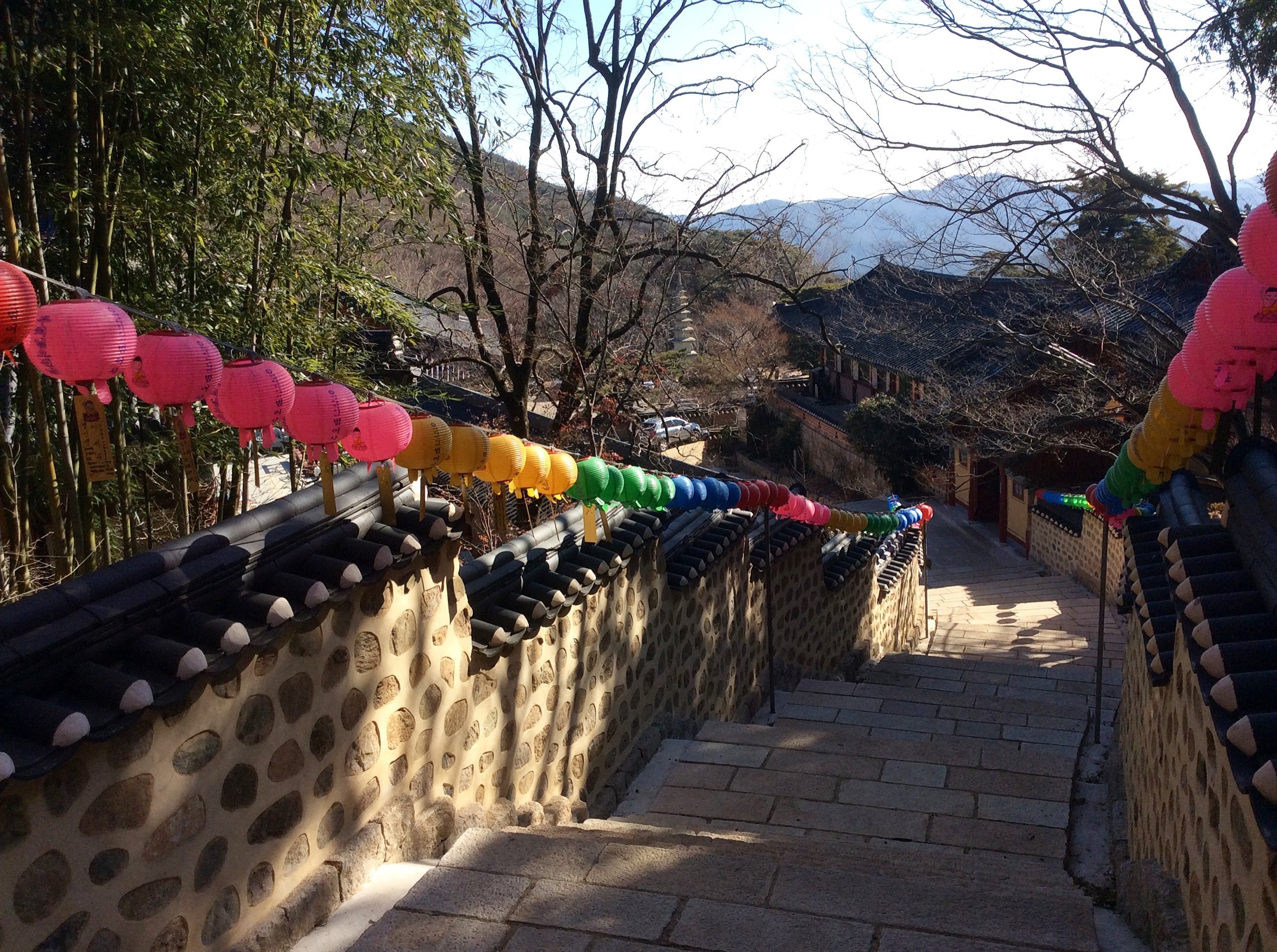
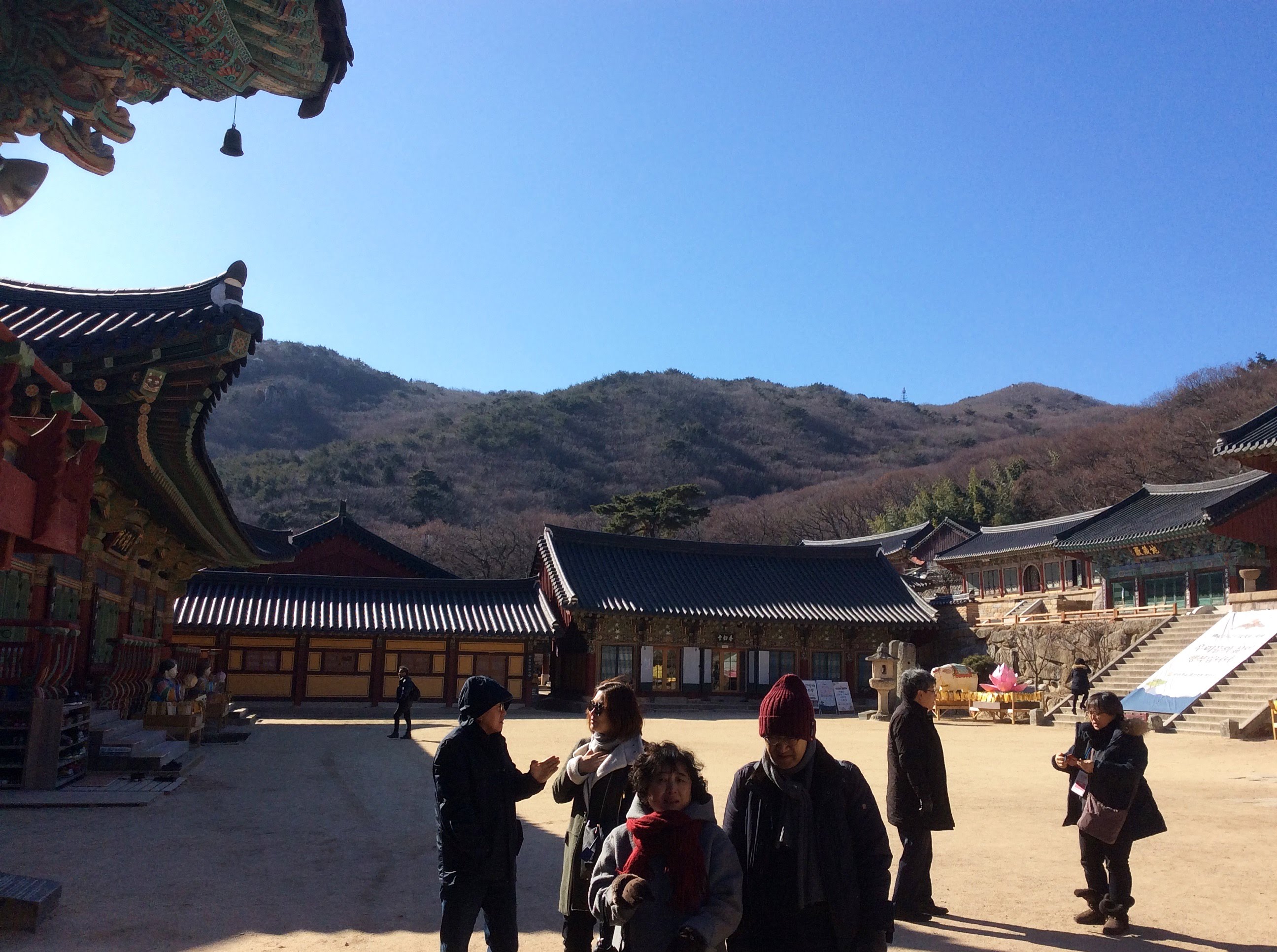
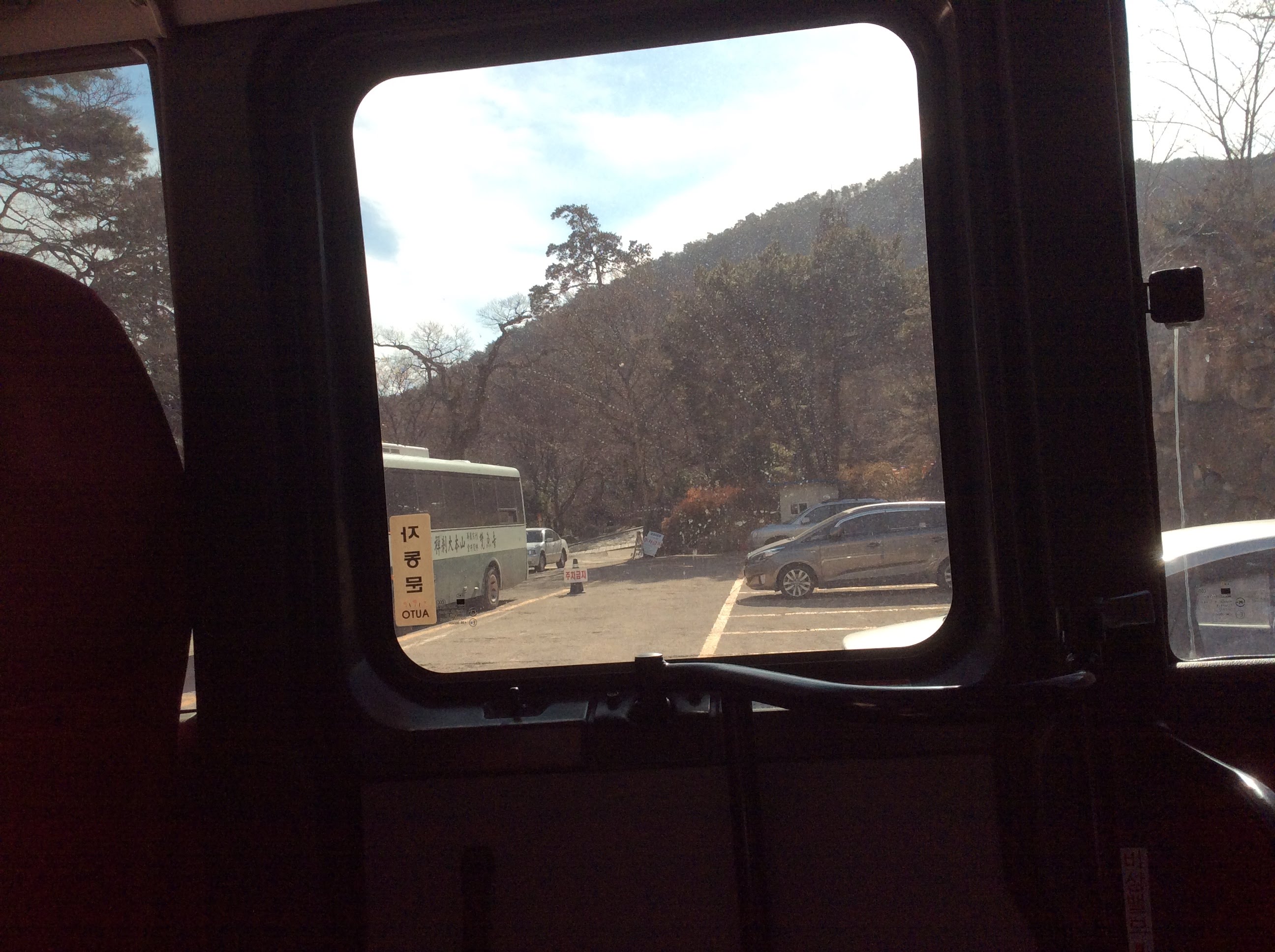
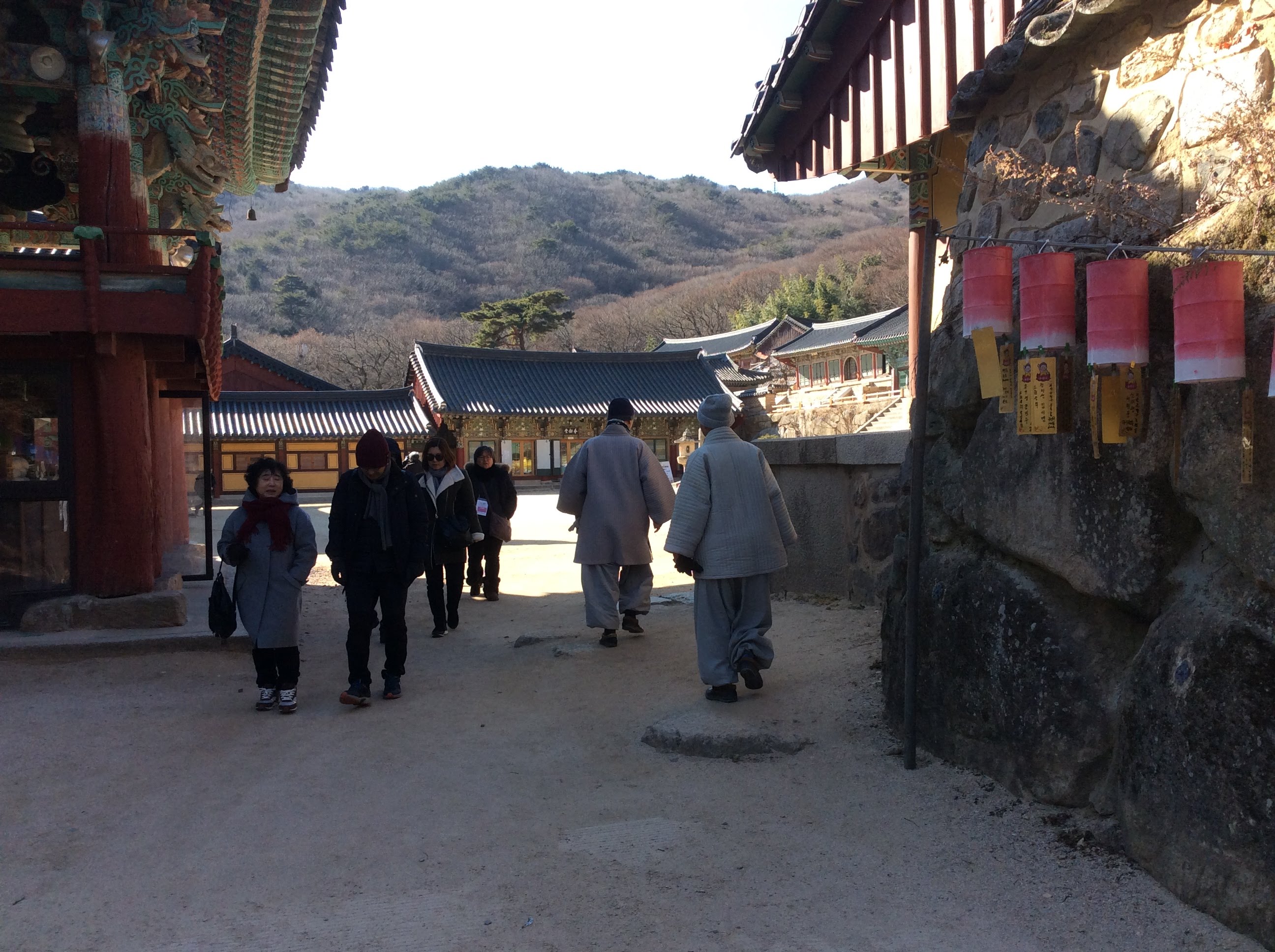
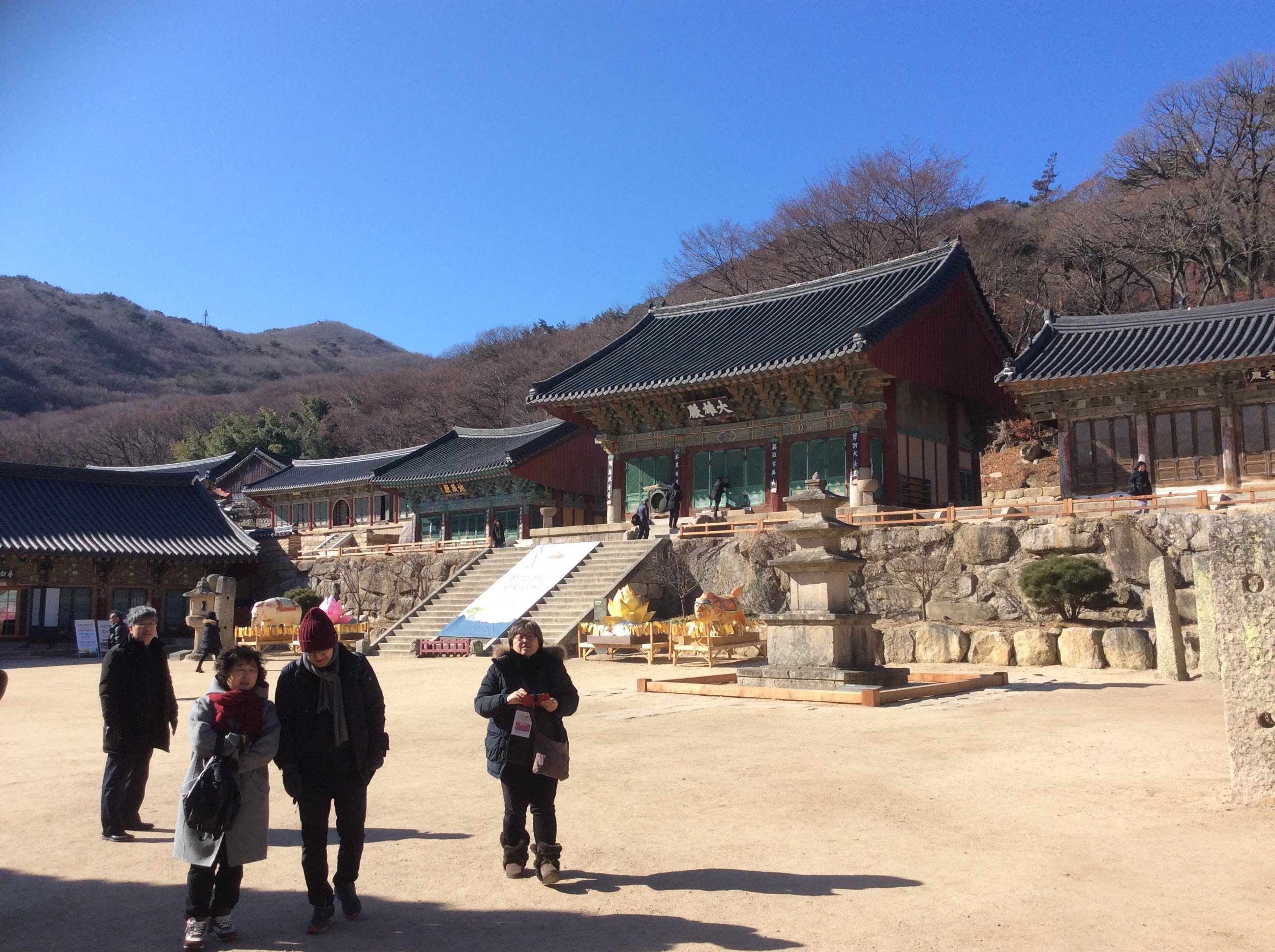
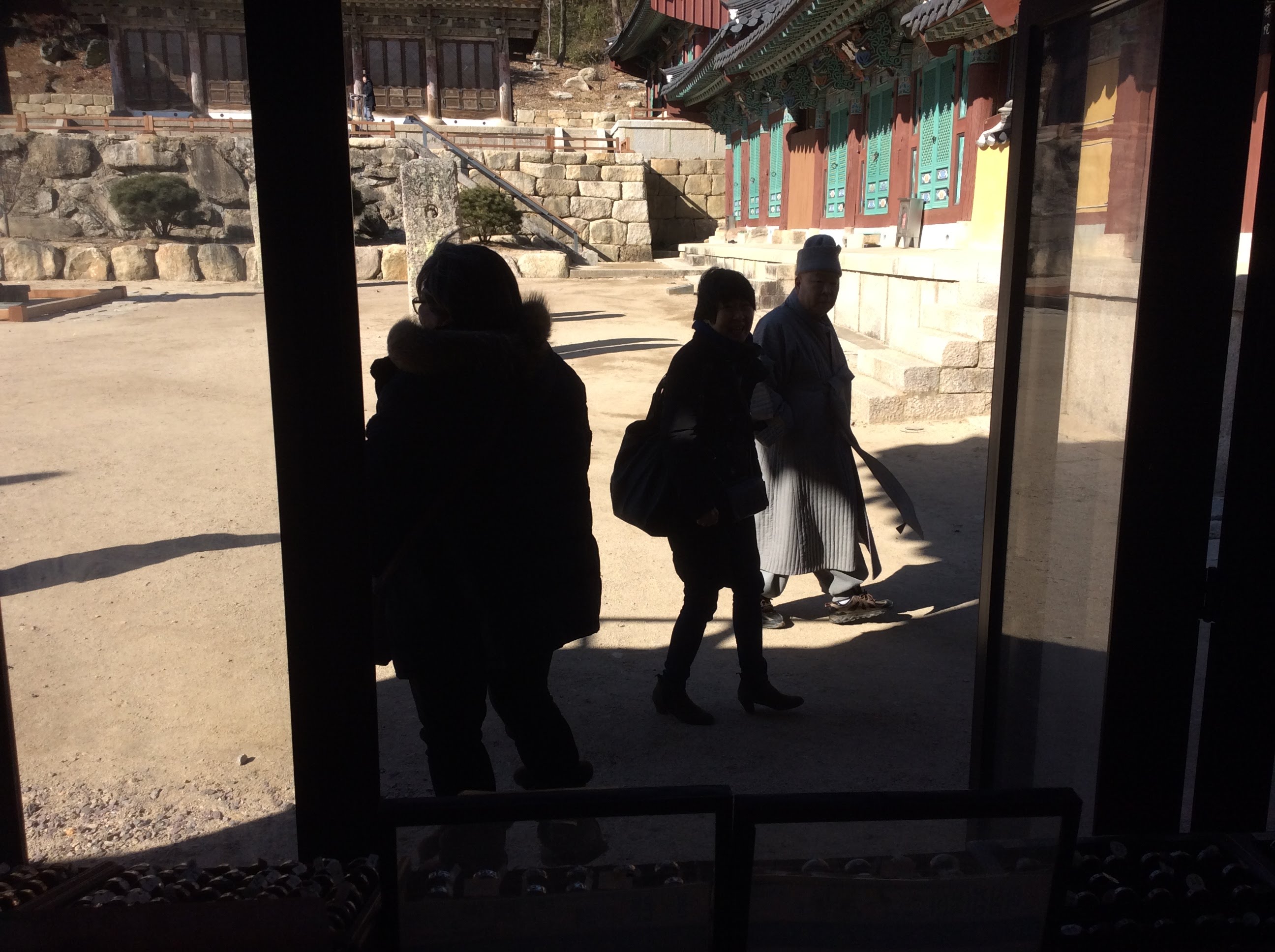
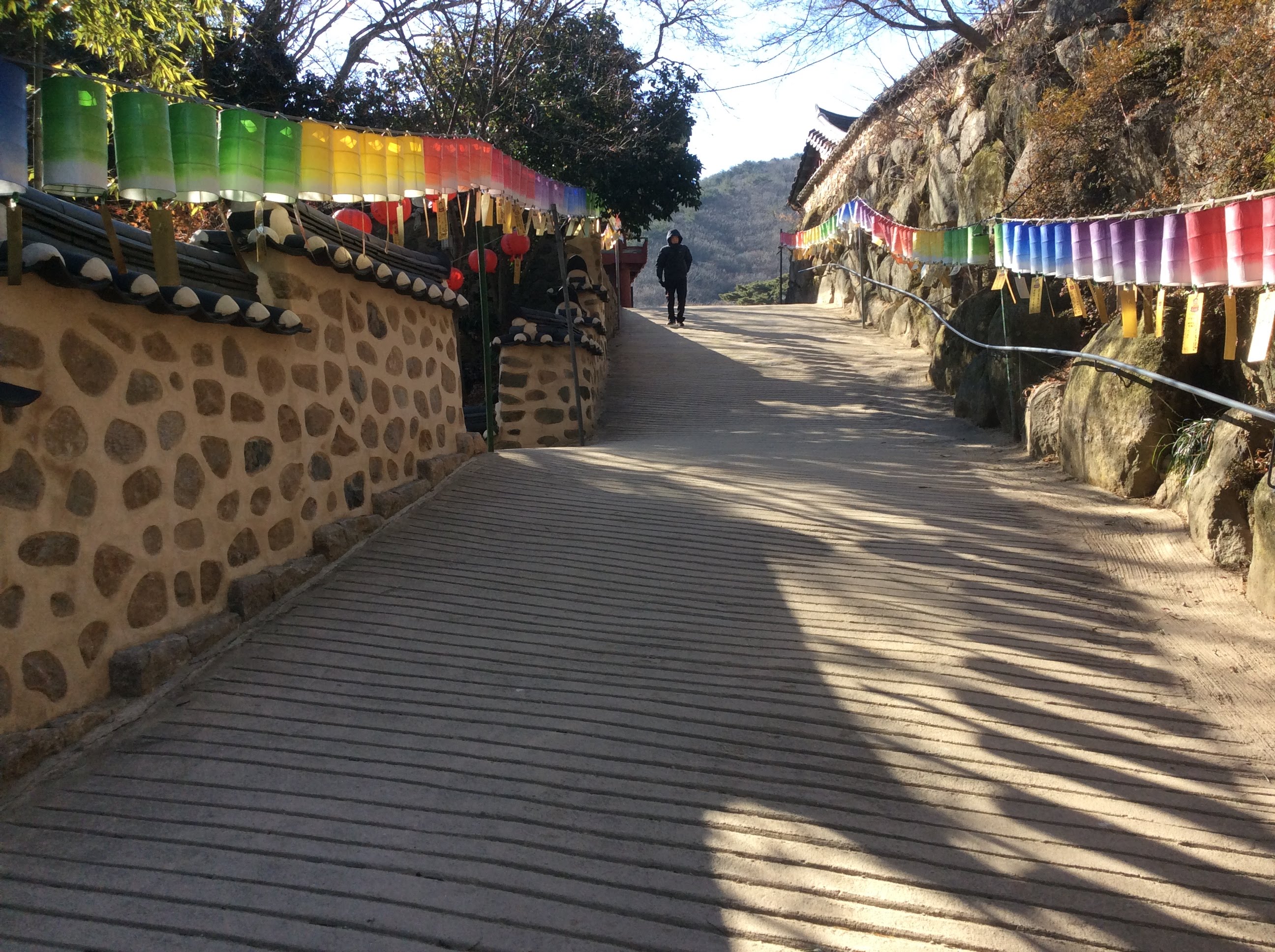
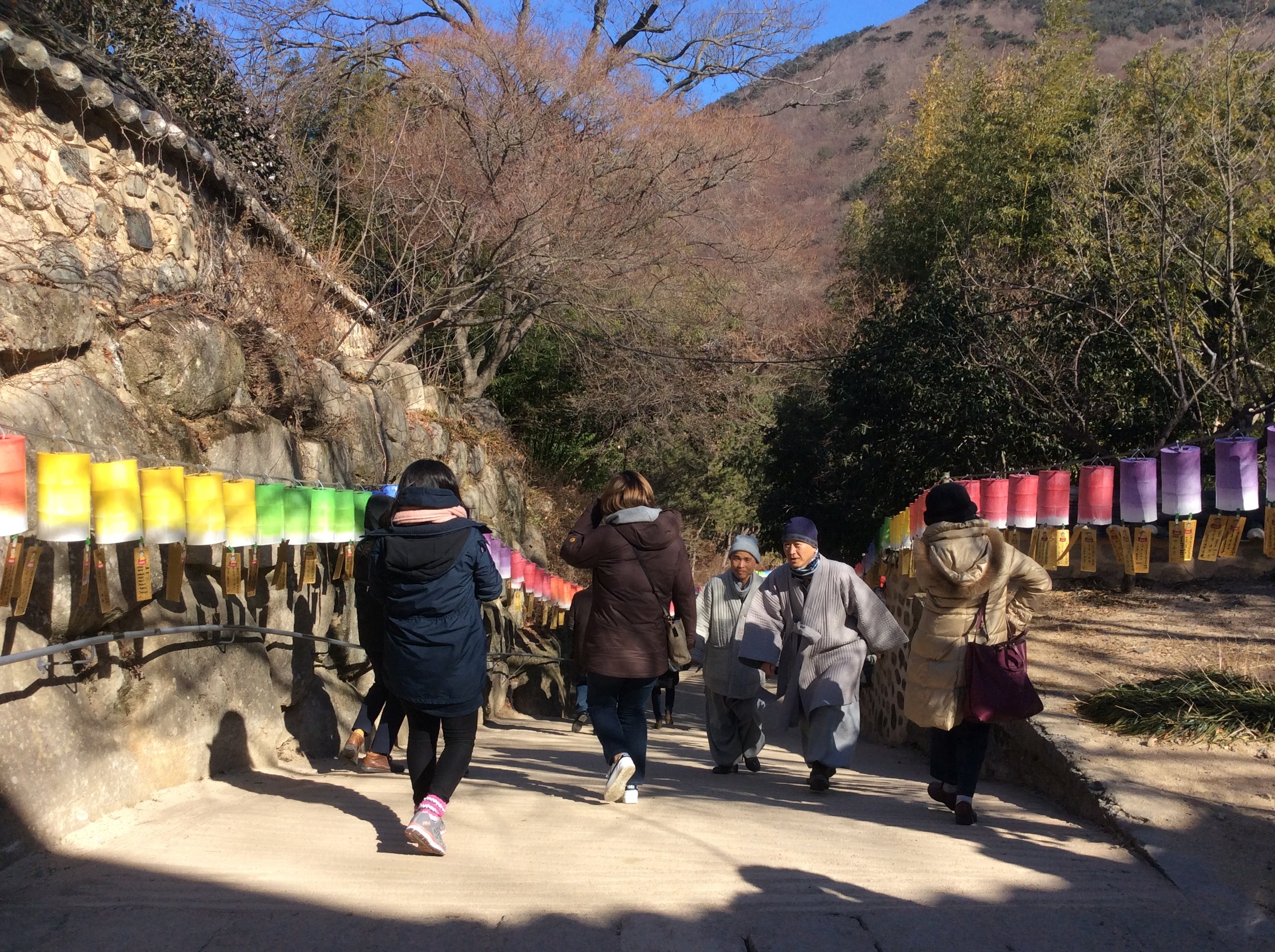
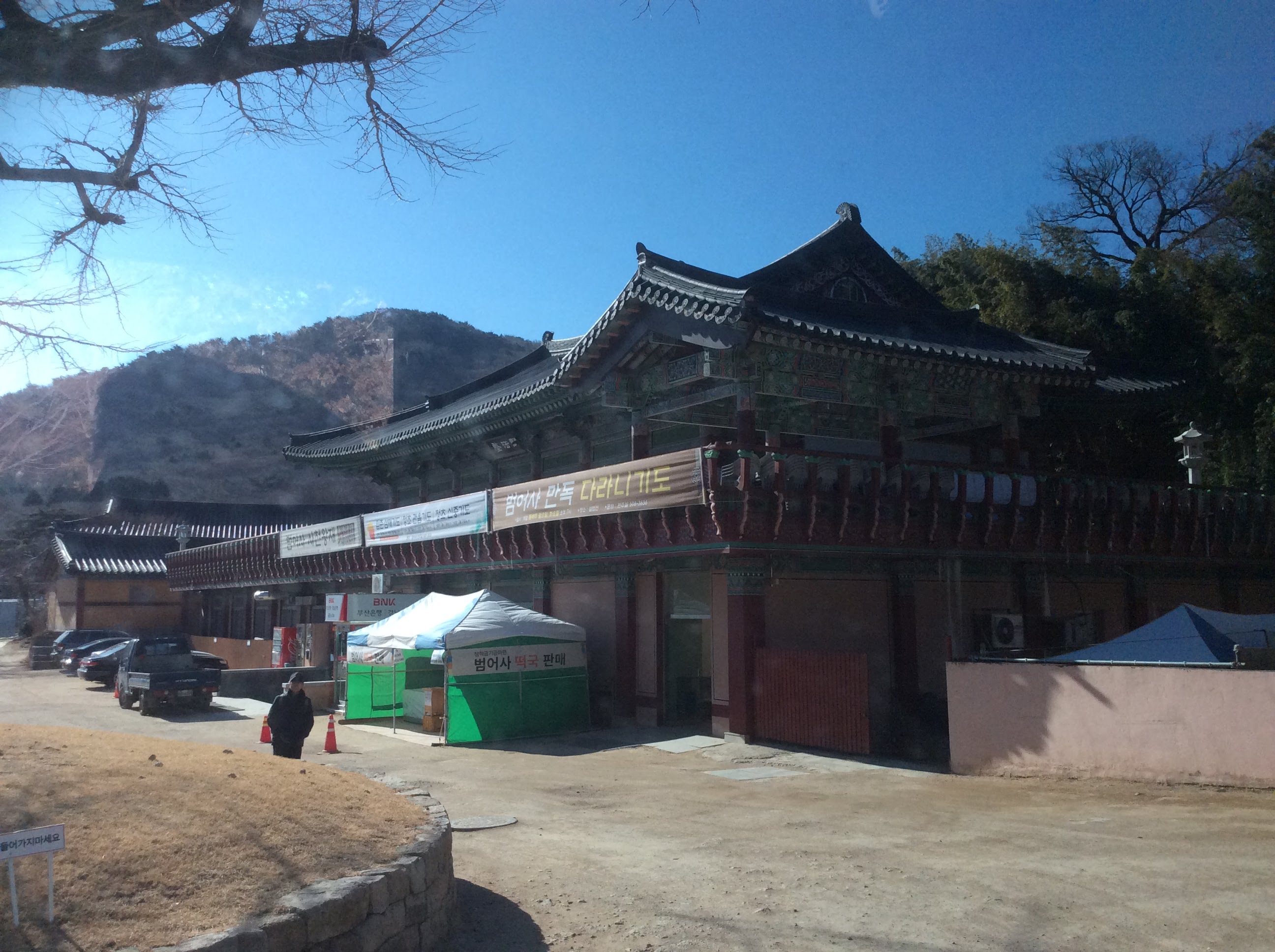
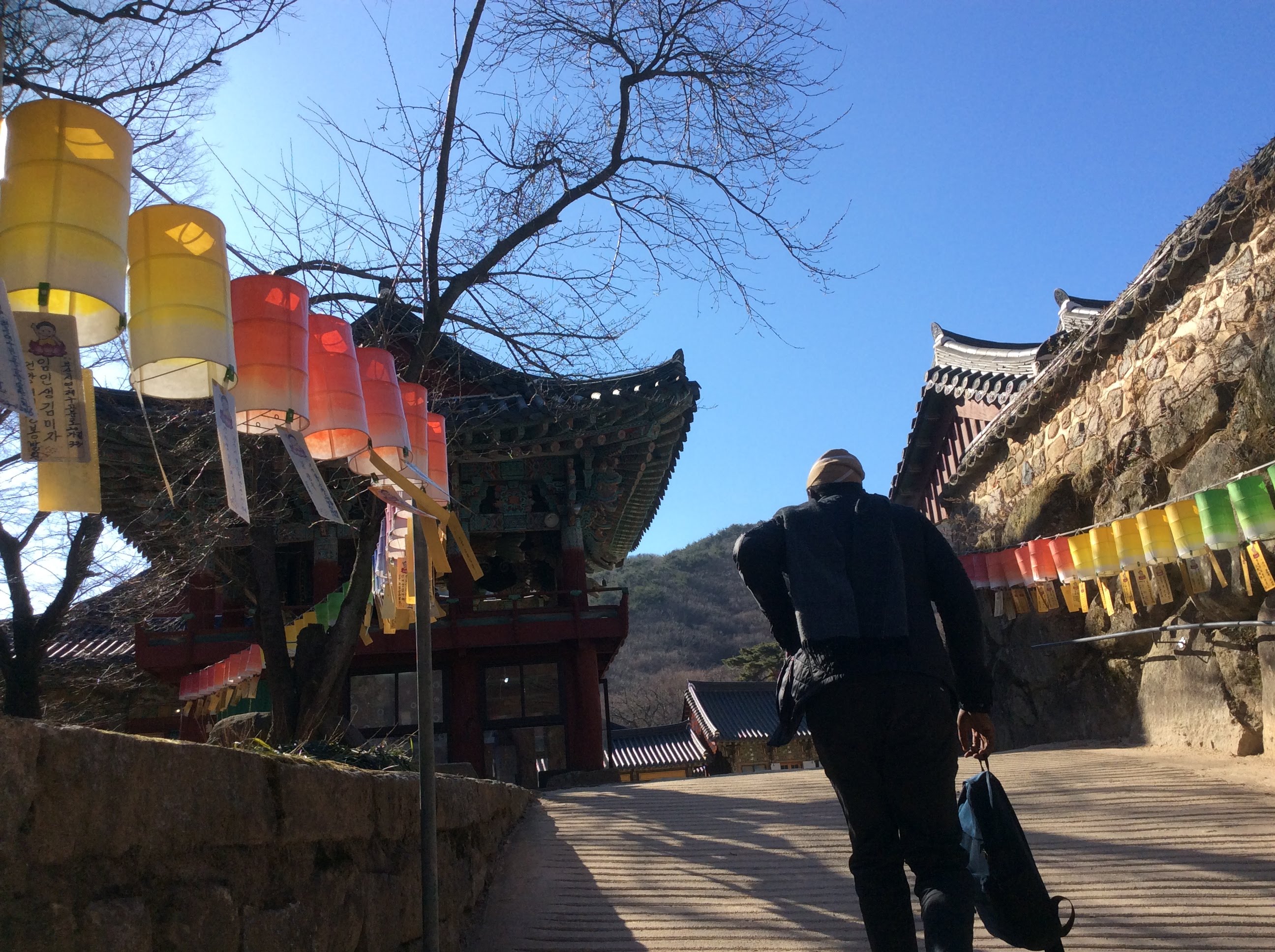
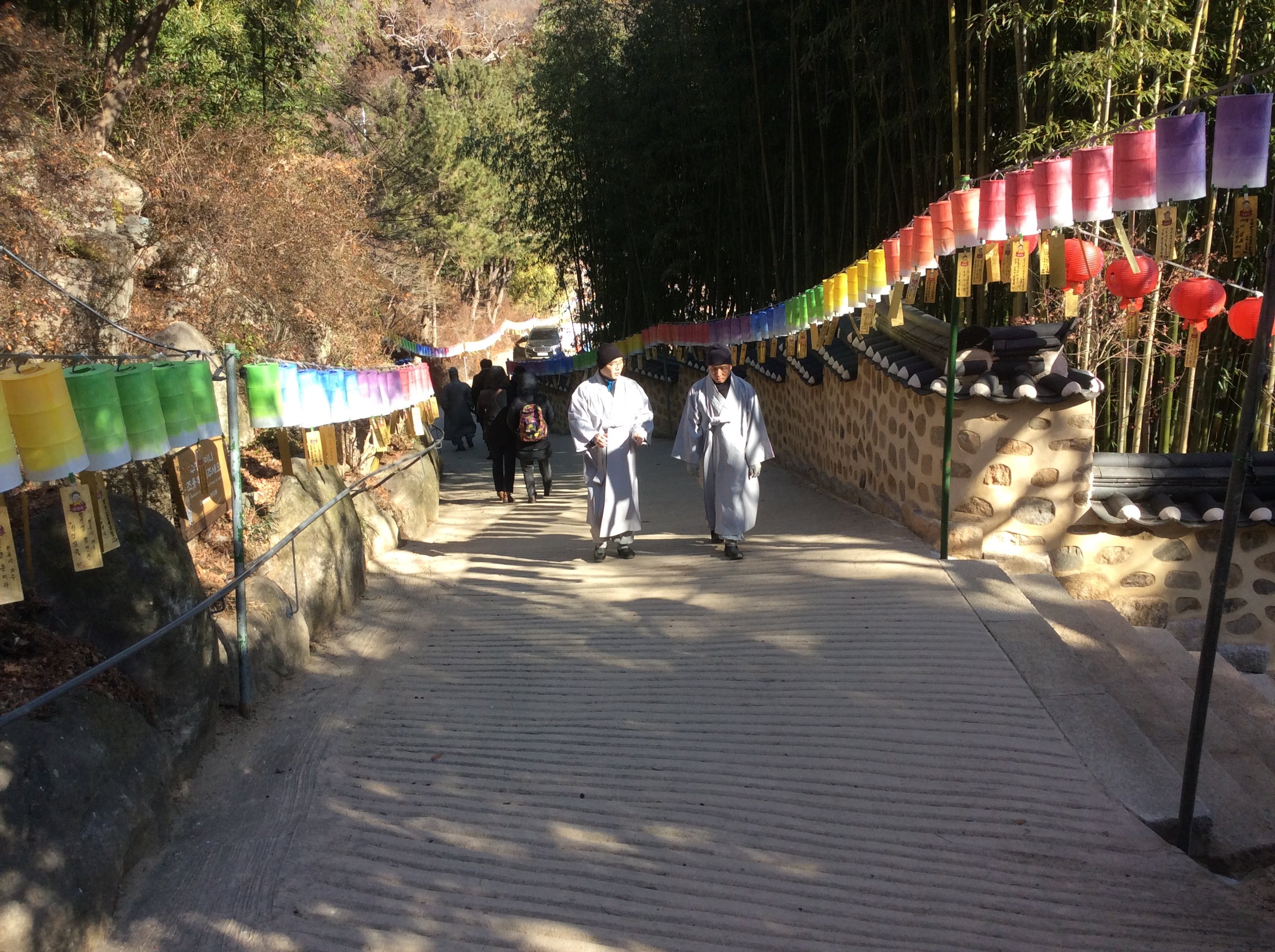
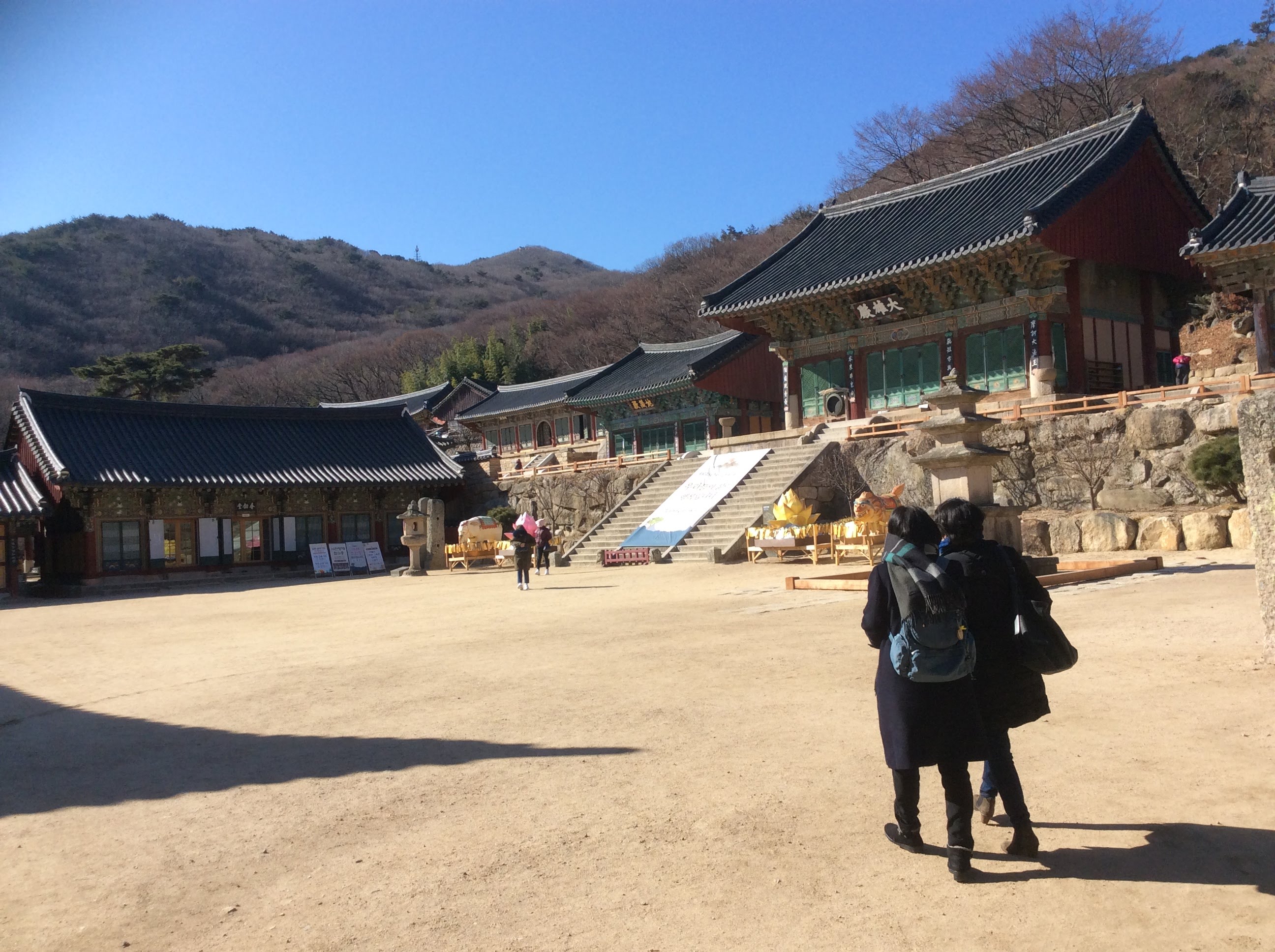
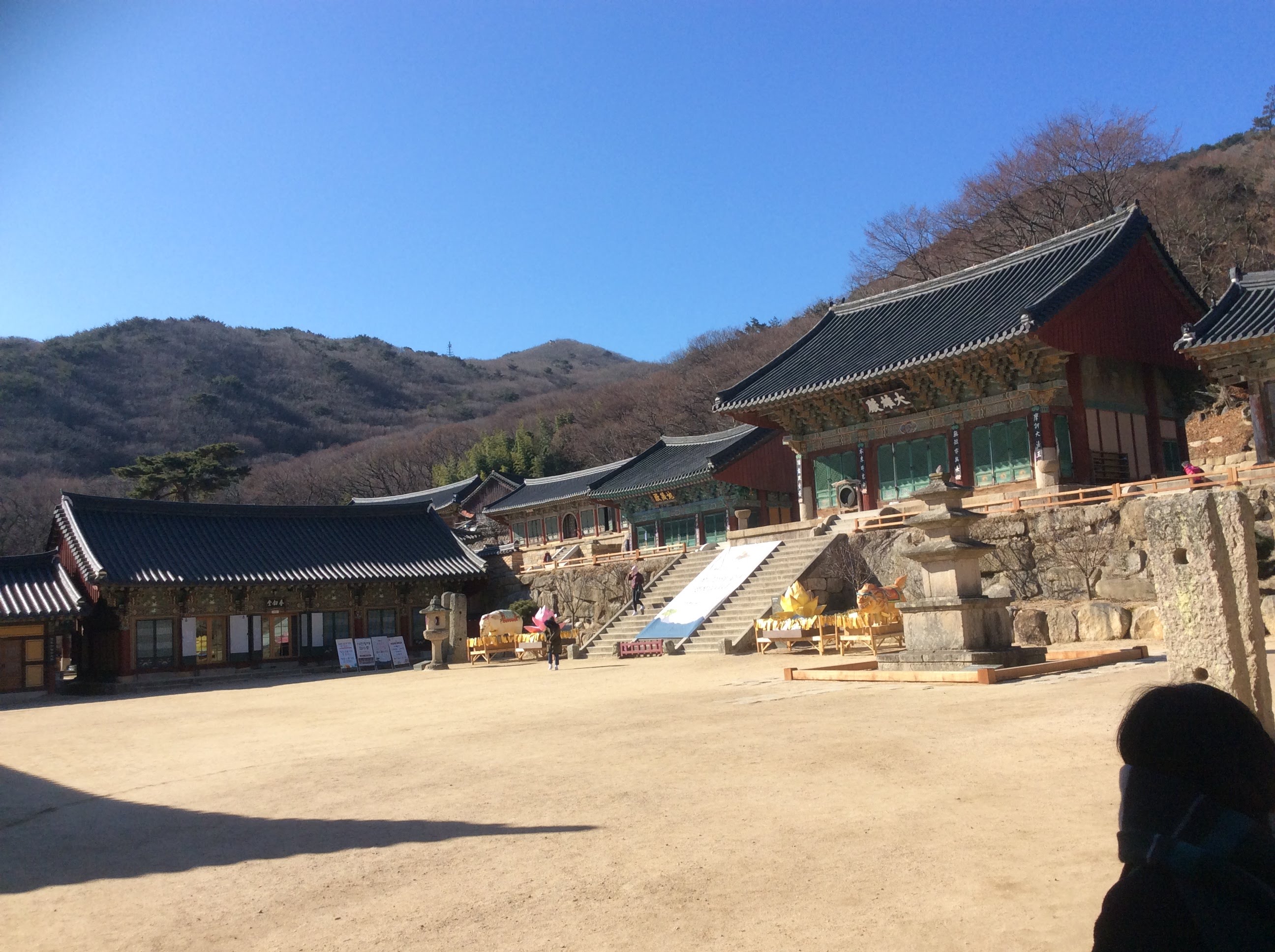
The Beomosa Temple is one of the oldest and most renowned temples in Korea, and in Buddhism. It is located on the slopes of the Geumjeongsan Mountain and was built around 678AD. The original temple was burnt down during the Japanese Invasion of Korea in 1592, but others have been built on the same spot to replace it, with renovation efforts done on some of the items that survived the inferno. One of its most famous treasures is a larger-than-life statue of Buddha, located in one of the halls, where tourists and visitors come to pray or meditate.


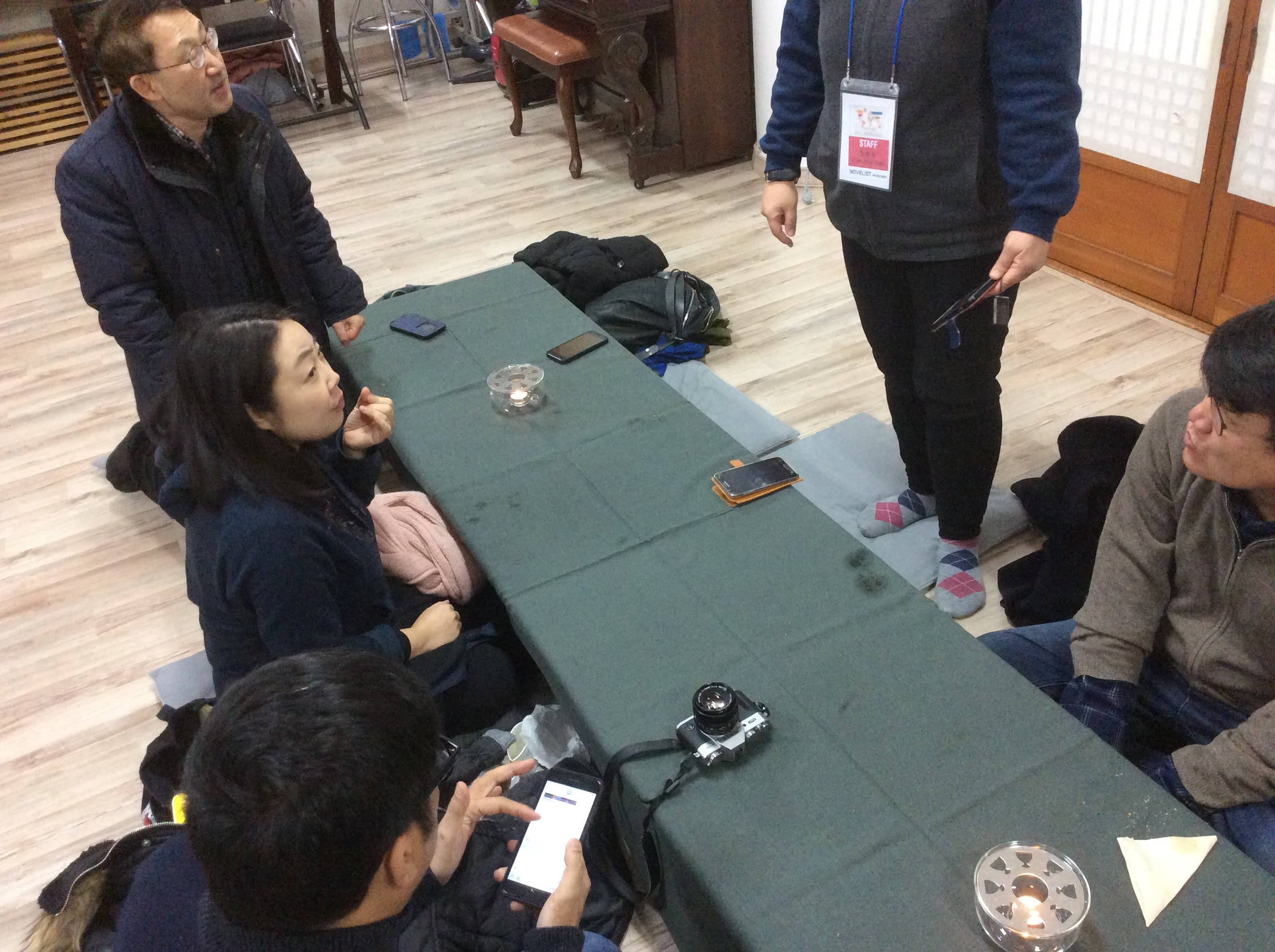
I was at Beomosa, pronounced like [po-mo-saa], recently, visiting with writer and scholar colleagues from different countries who were in Busan for a literature festival/workshop titled New World Literature Beyond Eurocentrism. It was a chance to discuss issues of relevance in the global conversations around the direction of literature. I was on a panel with writers from the Philipines, China, Mexico, and Korea my contribution focused on my work as a writer and linguist in Nigeria and the challenges of African language literature. (The title of this my recent interview with AfricanWriter.com makes the case perhaps more concisely).

The name of the temple – Beomosa – means “Nirvana fish” in Korean, named after a fish reputed to have been found in a river on top of the mountain – a river said to have housed Buddha himself at some point in prehistory. It was my first time in any Buddhist temple, and a rare privilege to have my first visit be at one of Buddhism’s holy places. I learnt a lot about what Buddhism is and what it’s not. It was also interesting to learn that its purpose “to end all suffering” had long been wrongly translated. Our guide said that the better translation would be “to end all unsatisfactoriness”, which made more sense. Most religions of the world profess a kind of longing for the afterlife. Or, at the last, some sort of paradise. In Buddhism, that is an enlightenment that can only come from within. Not by prayers to anyone, not even to Buddha, but a pursuit of an internal state of transcending human disquiet.


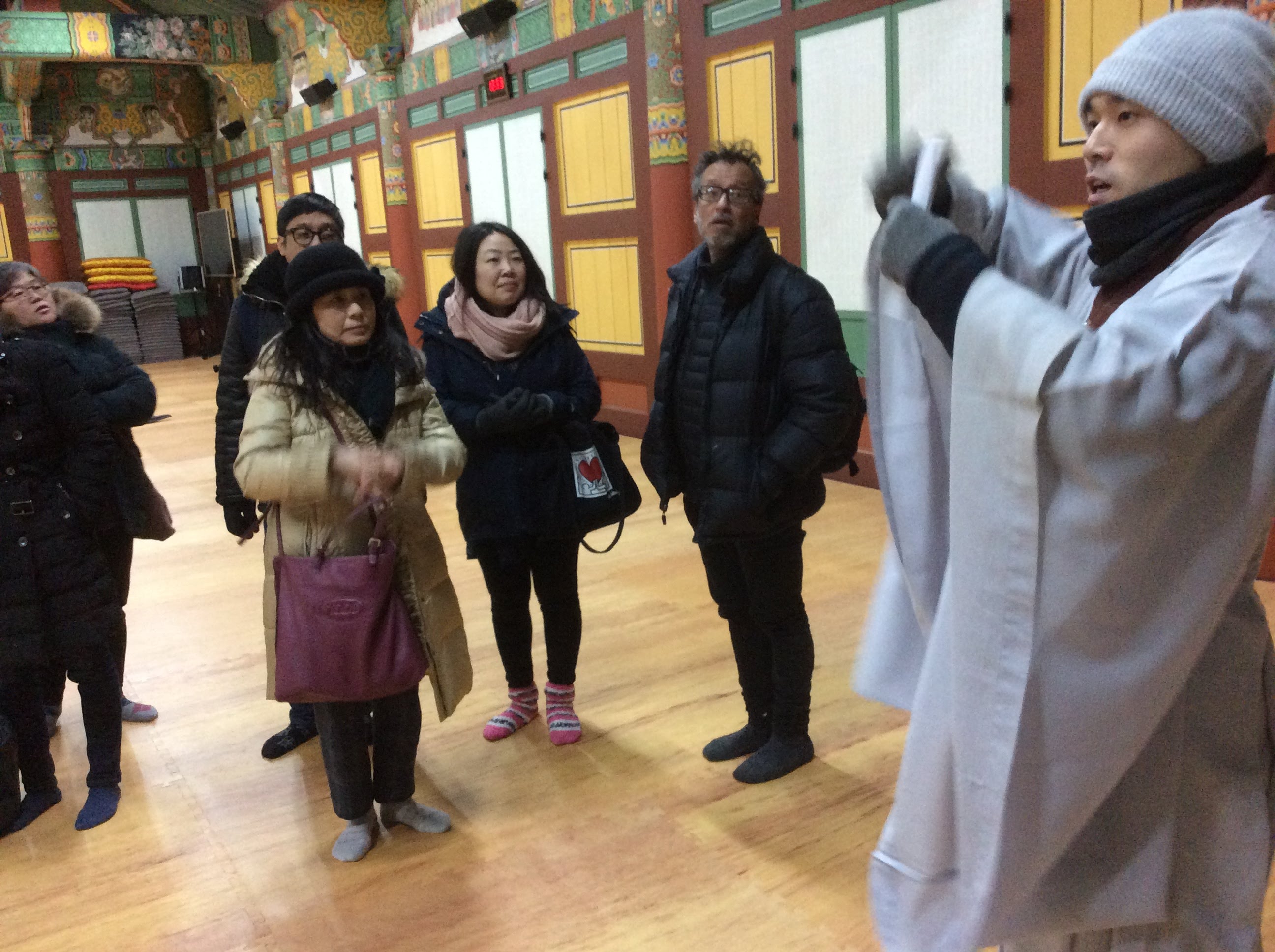
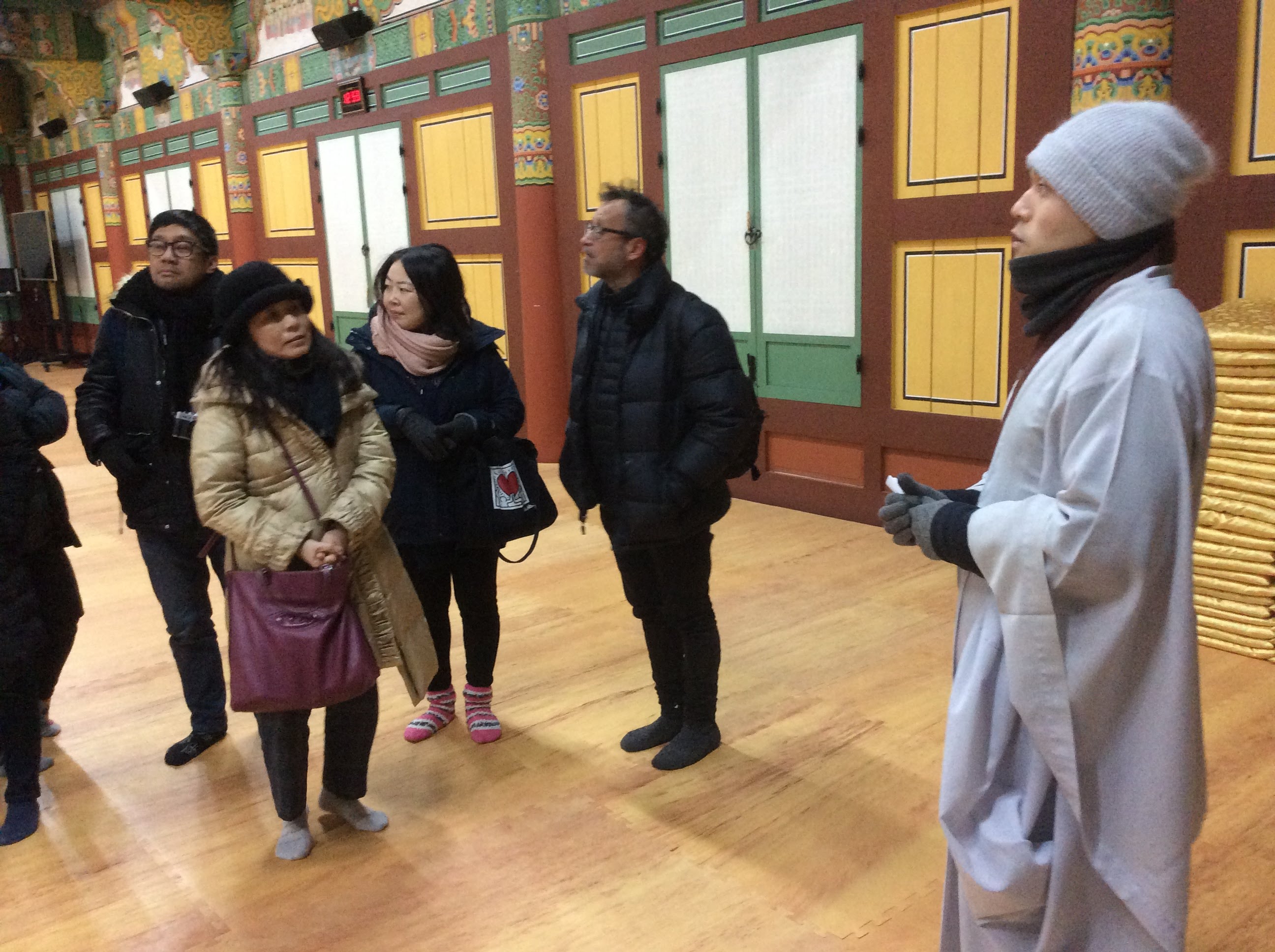
Our guide was a young monk, about 27-ish. He was born in Korea but spent much of his childhood and adult life in the Central Illinois area around Champaign, attending the University of Illinois, Urbana. His accent gave him away pretty quickly, though, according to him, this was the first time he would be using the English language since he returned to Korea just three years ago to become a Buddhist monk.  The language of the temple (and of the environment) is Korean and Chinese. He provided us an overview of the temple, its ancient and contemporary history, and his role as an apprentice monk. A question I wanted to ask, but didn’t, was how he came to the decision to leave the modern life behind in America to become a monk in this remote part of the world. What I managed to ask was whether there are people who begin this journey to become a monk and then give up half-way. The answer is “yes”, but his passion and conviction left me in no doubt that he wouldn’t be one of them.


The temperature in Busan on the day of the visit felt like Antartica, but it was around -12 degrees. Not much of a difference to the Nigerian who has been familiar with only two seasons: wet or dry, each hovering around 30 degrees Celsius. Korean travel writer and translator Kim Soo Woo had looked at me with motherly concern earlier in the morning as I came out of my hotel wearing about four shirts over the other. “This won’t be enough,” she suggested. “It would be reaaaaaly cold.” Do I have something else to wear on these four shirts before putting on a jacket? I went back into my room and found a sweater I had thankfully brought along from Lagos, so I slid into it. And yet, on this mountain, beaten left and right by the chilly wind that still managed to pierce deep into my bones through the clothes, I wished that I had more clothes to hide under.

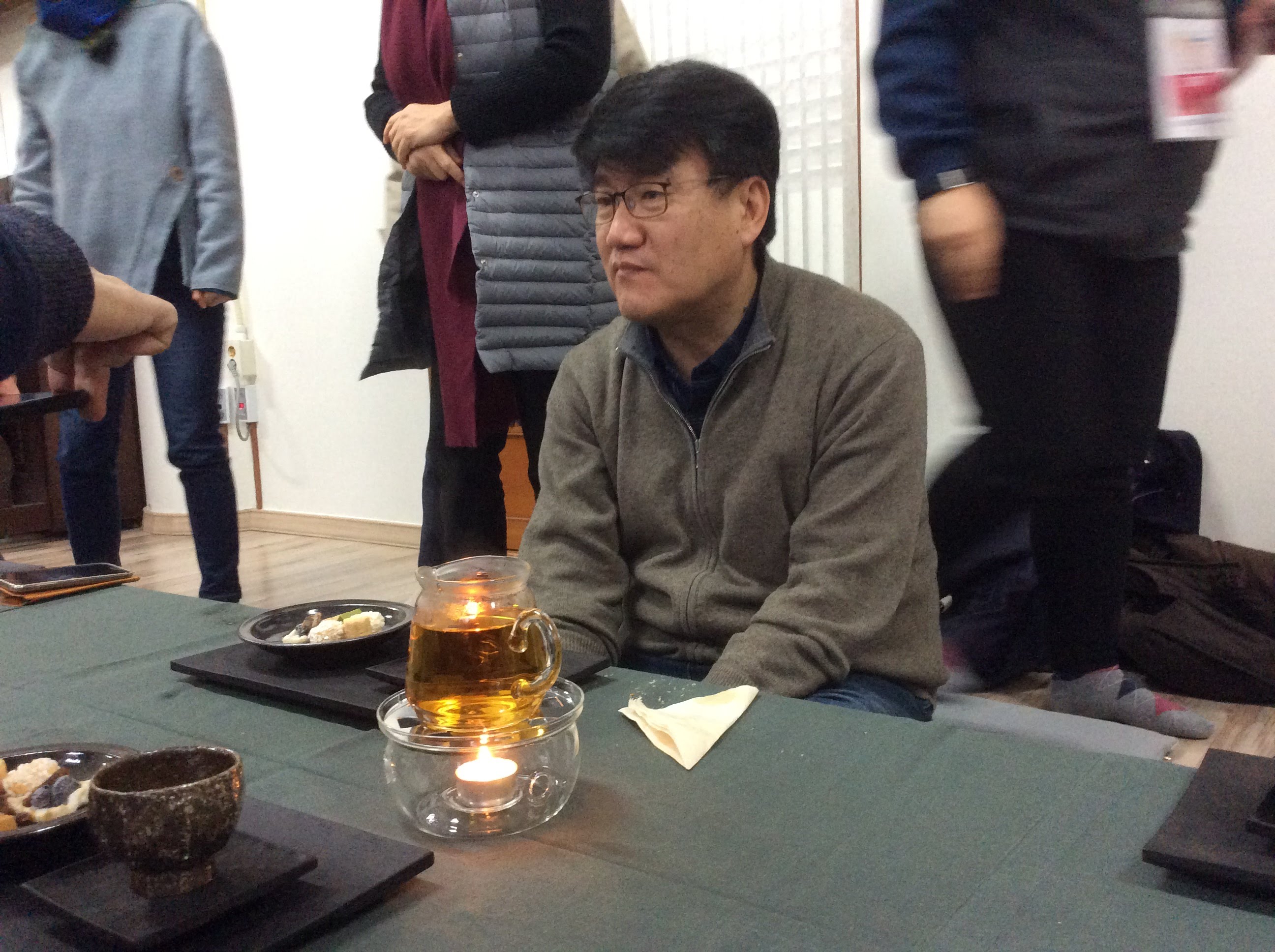
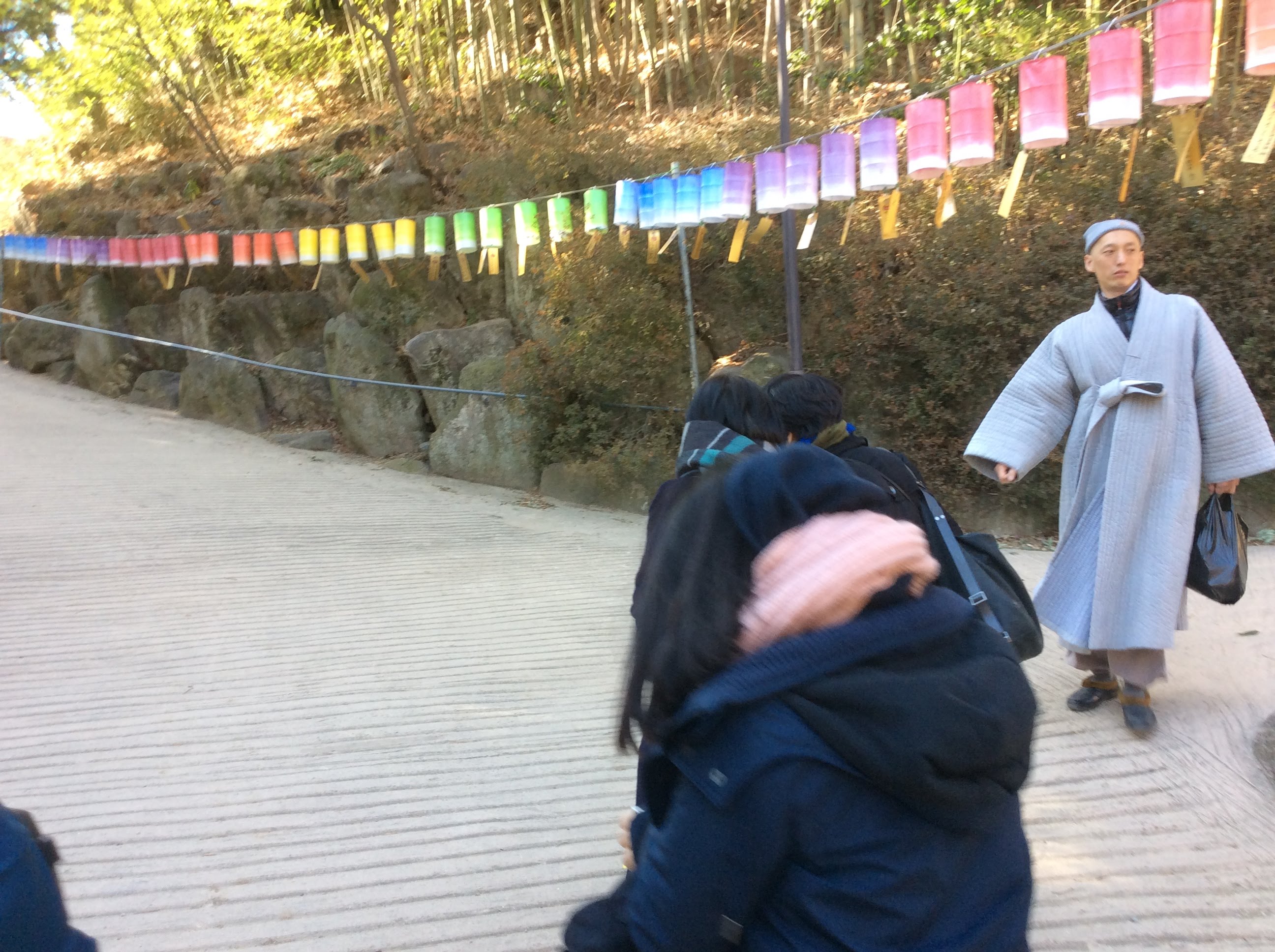
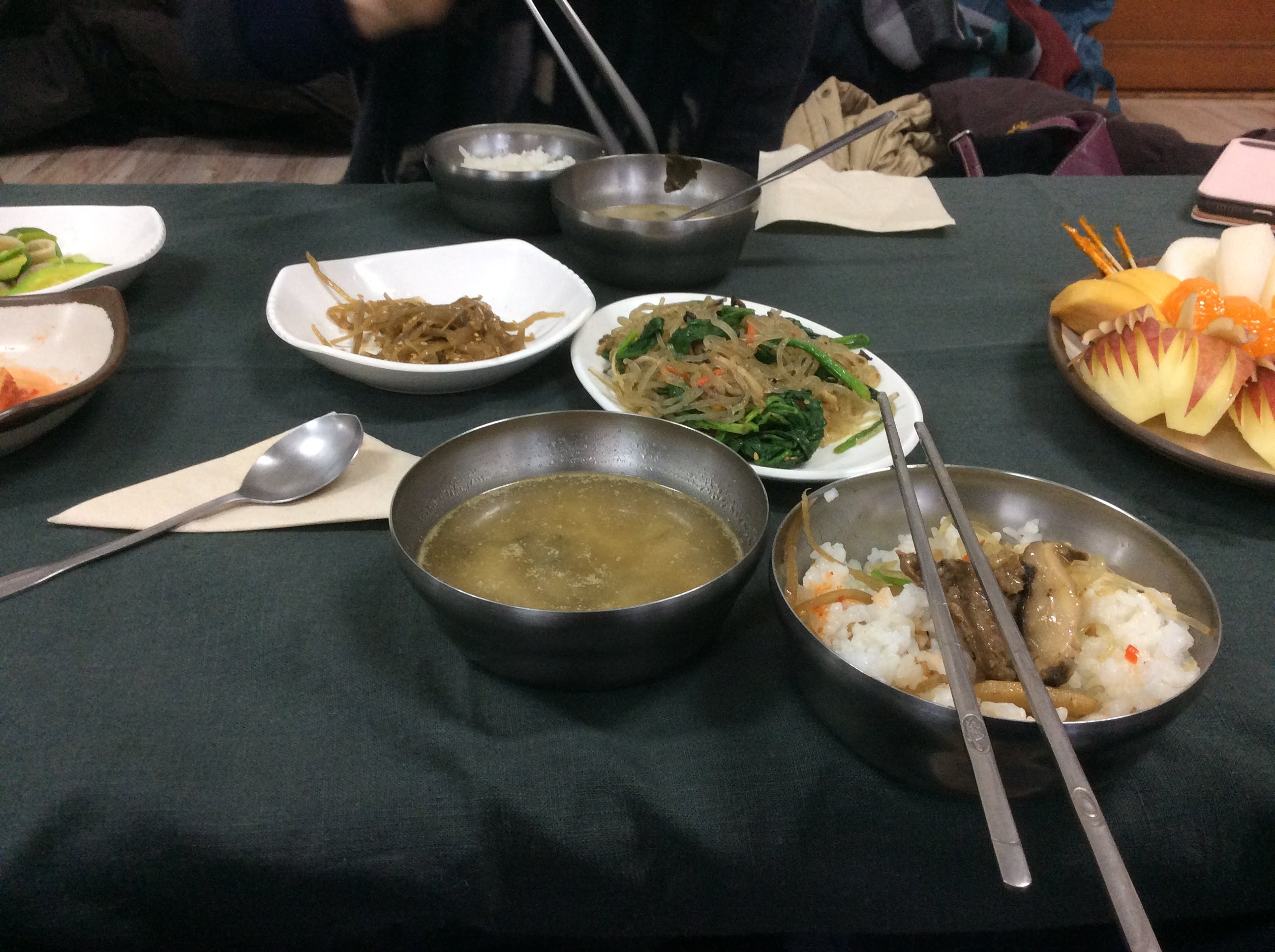
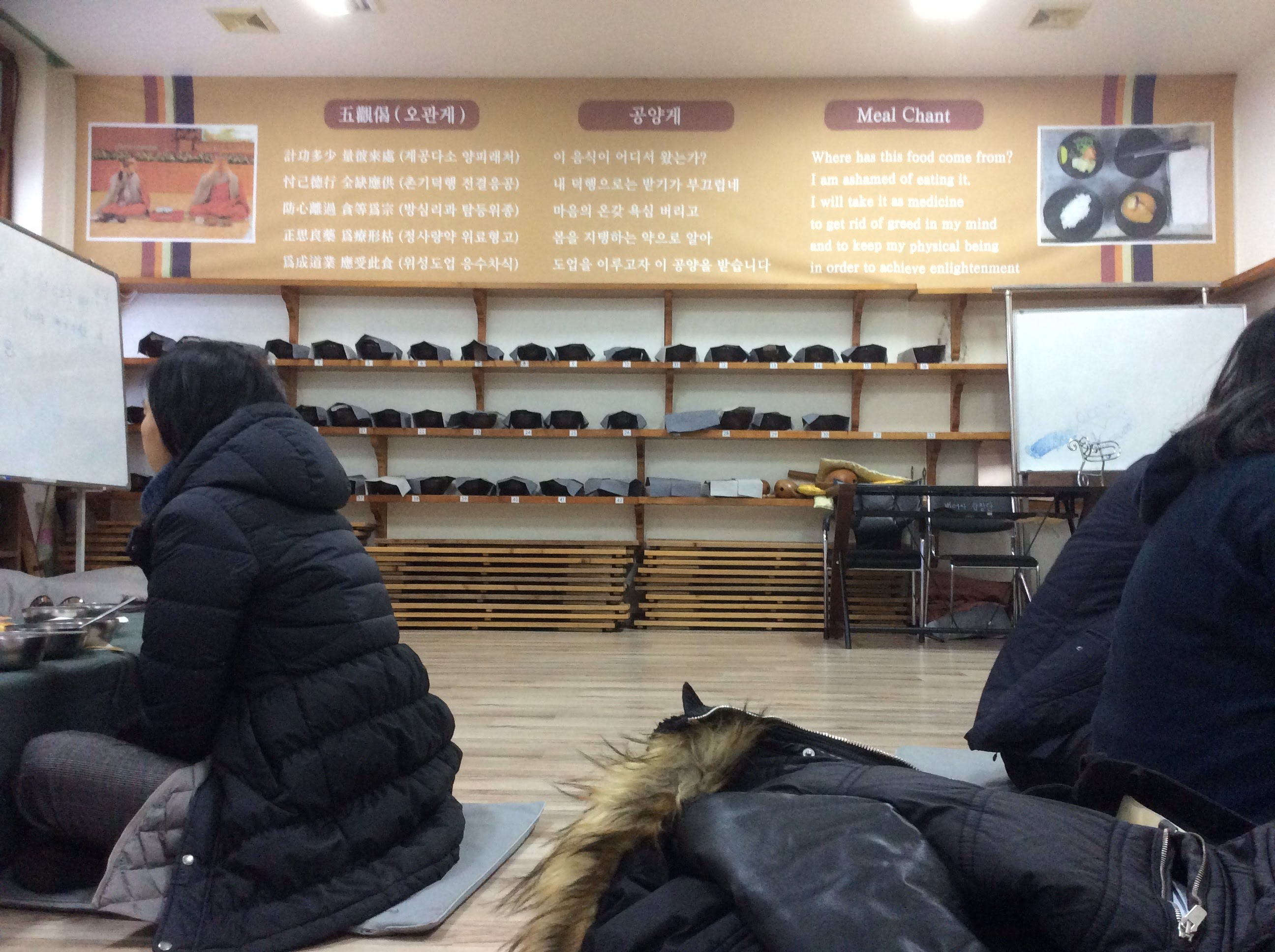
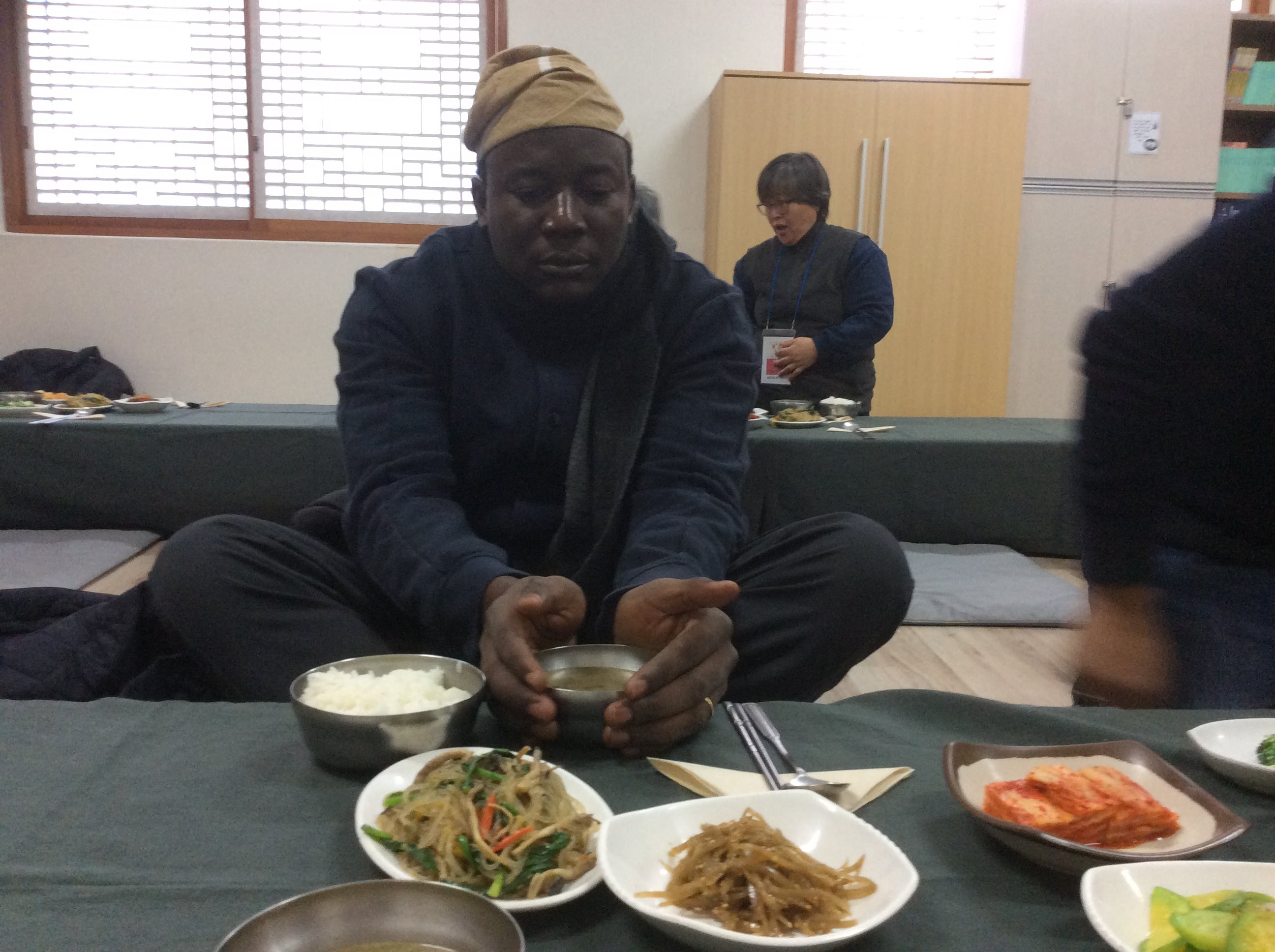
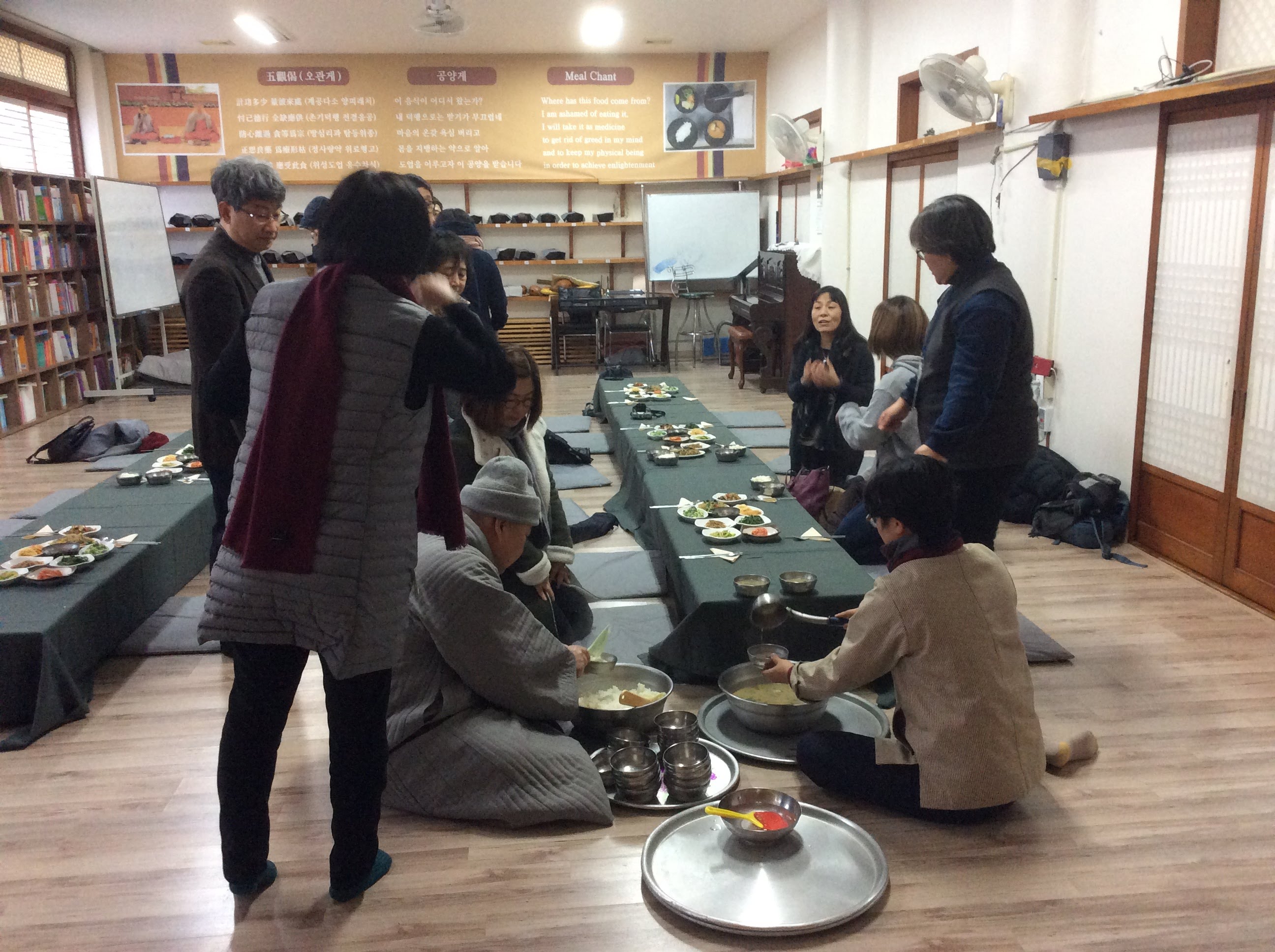
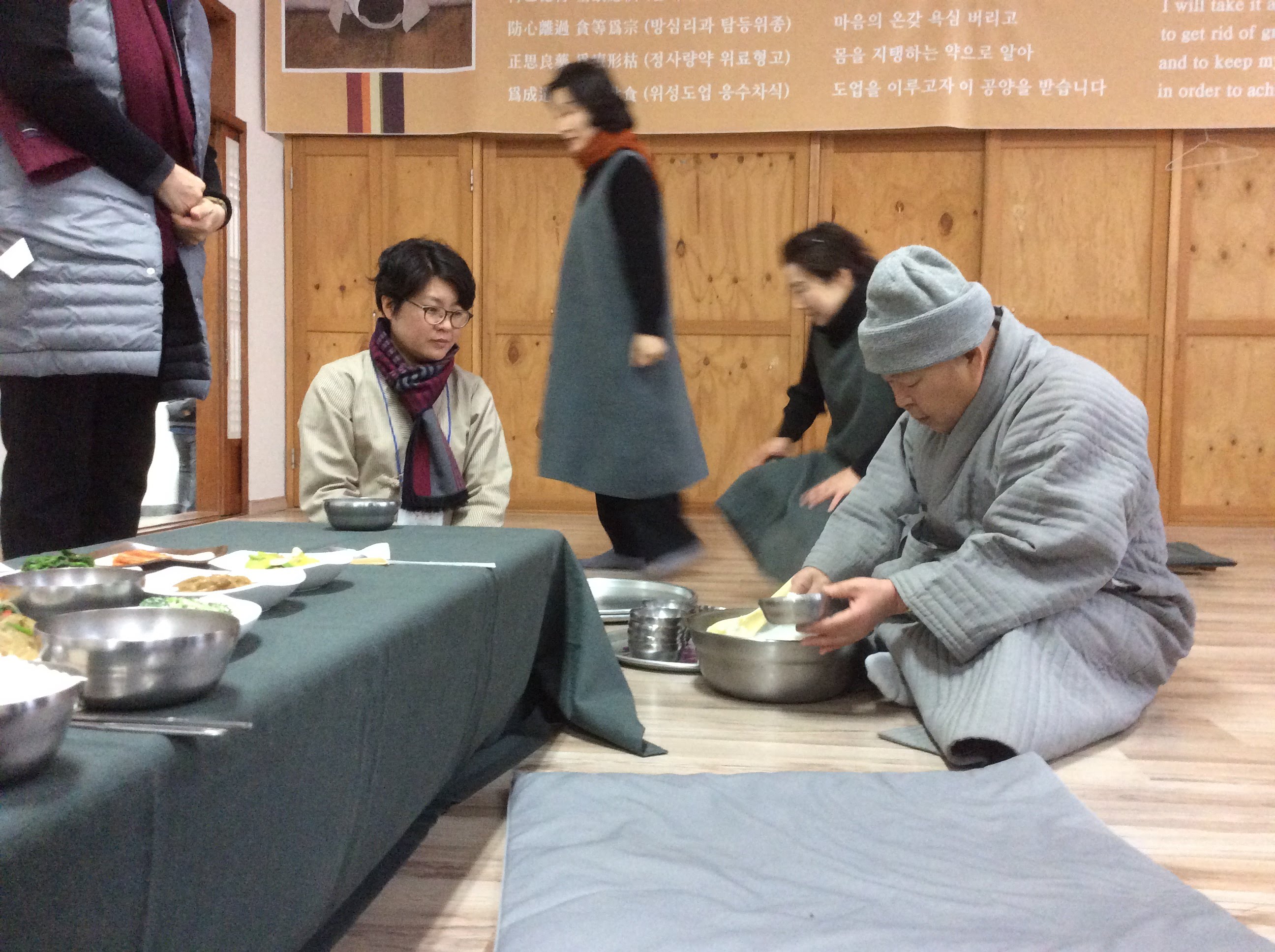
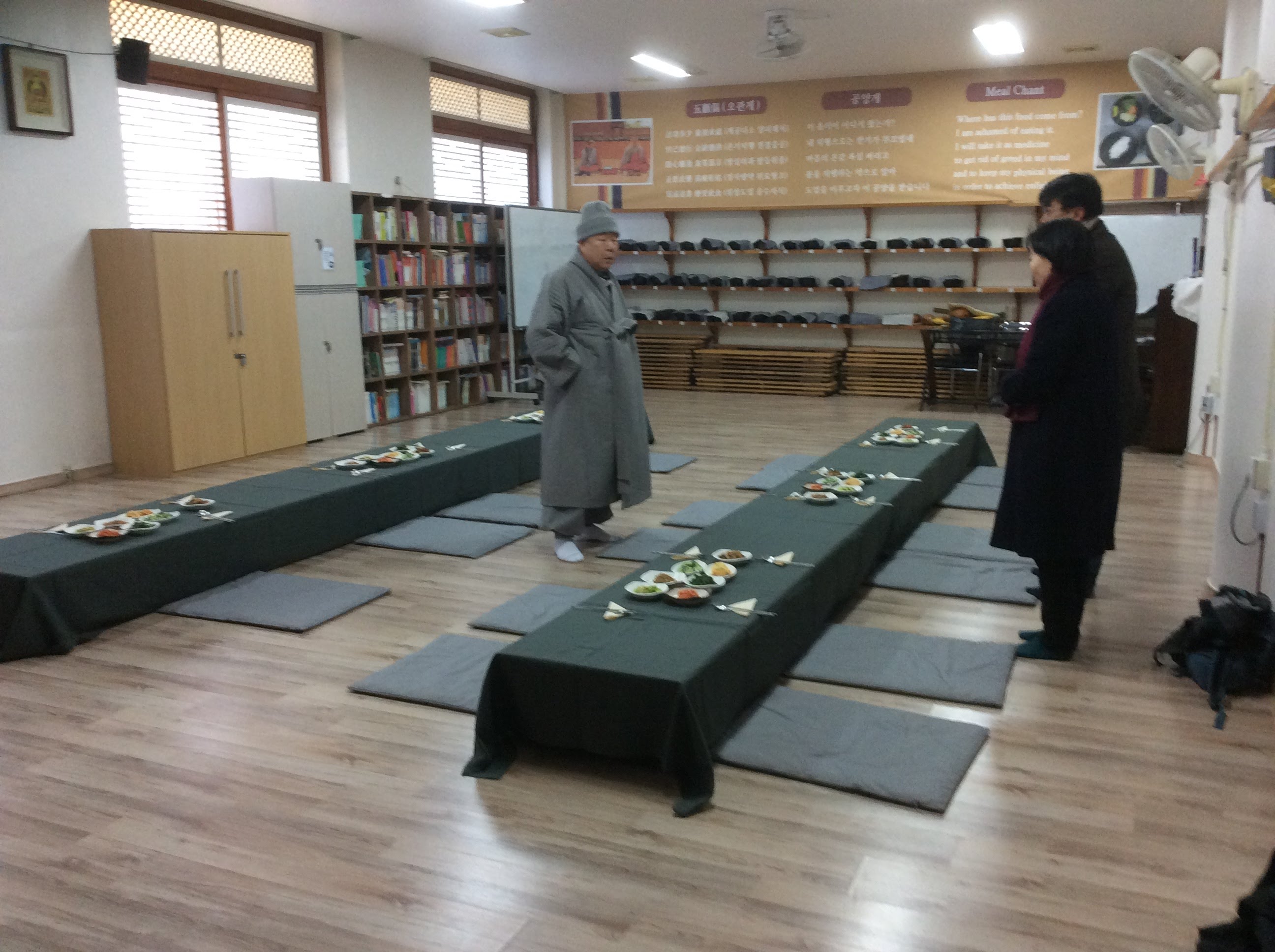
The monks had a special outfit which, I suspect, also had inside insulation. They seemed comfortable in their skin and in this environment. The temple would certainly be a more interesting place to visit in the fall or at any other time of the year, but they didn’t seem discomforted in any way. When it was lunch time, we gathered into the dining hall, and into an inside room open only to the elderly monks and their visitors. It was another rare privilege. On the wall of the dining room is the “meal chant”, in Korean, Chinese, and in English, which says:

Where has this food come from?

I am ashamed of eating it.

I will take it as medicine

to get rid of greed in my mind

and to keep my physical being

in order to achieve enlightenment.


It was delicious food, but I don’t know if the spirit of Buddha would have appreciated this concession of mine to the purpose of food as more than just a means to enlightenment.