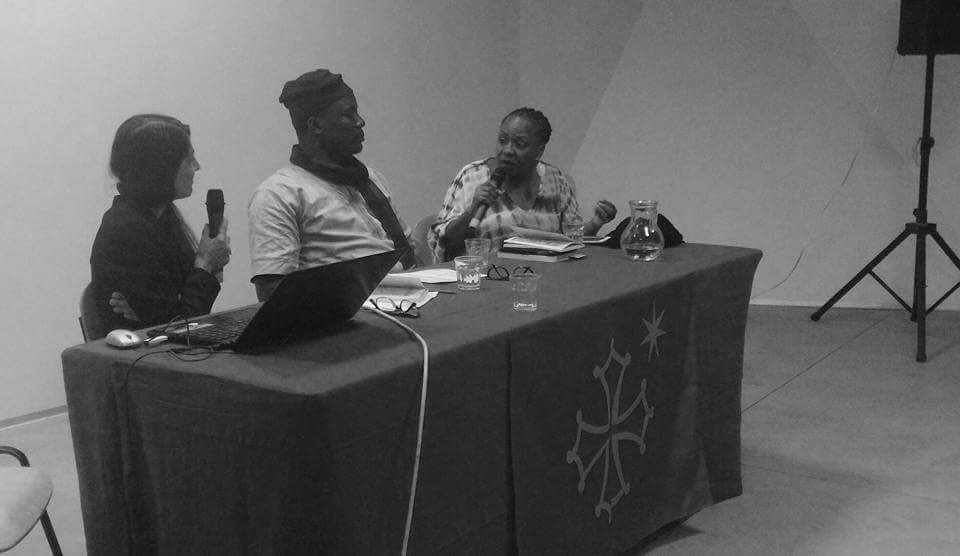
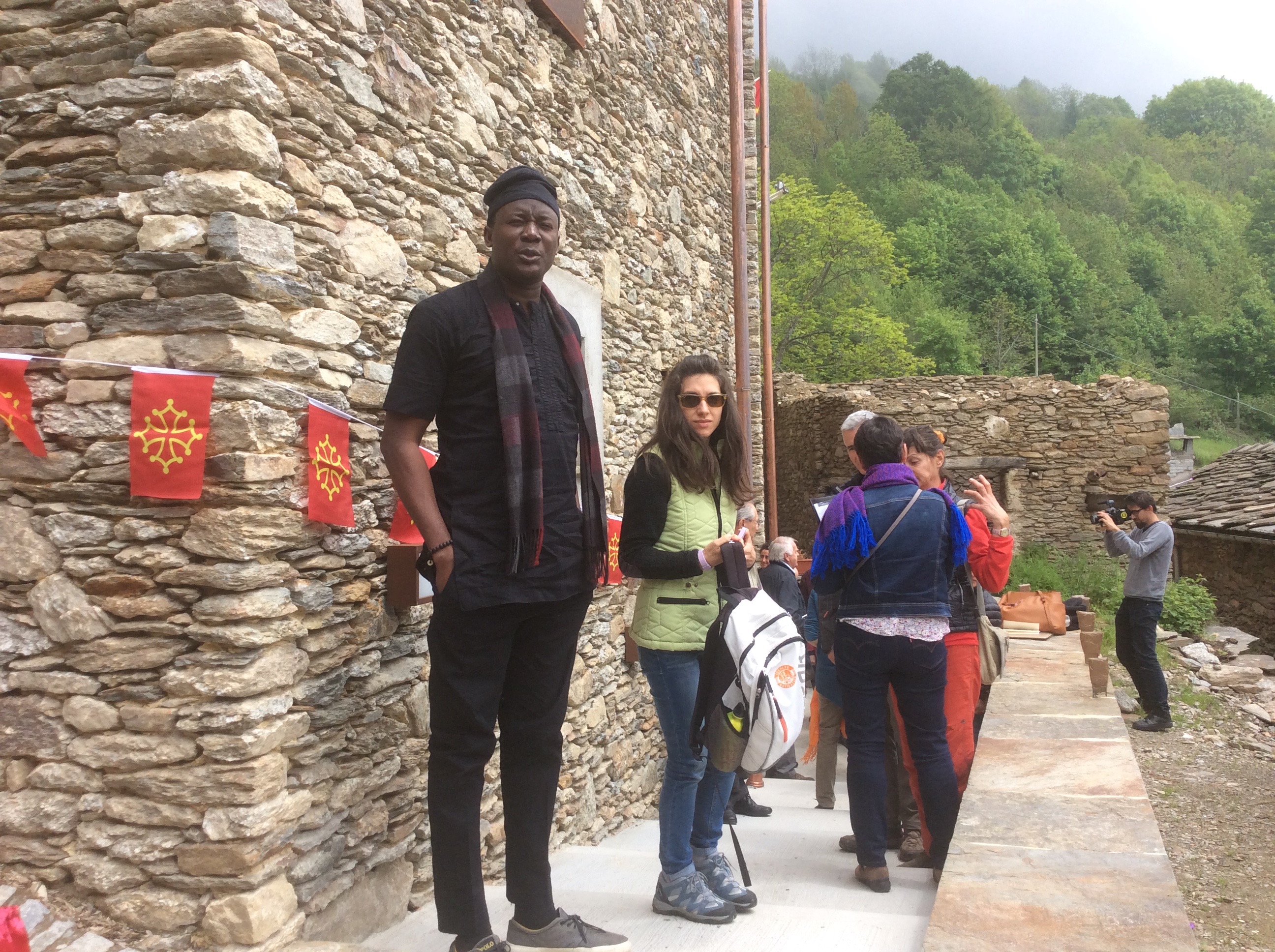
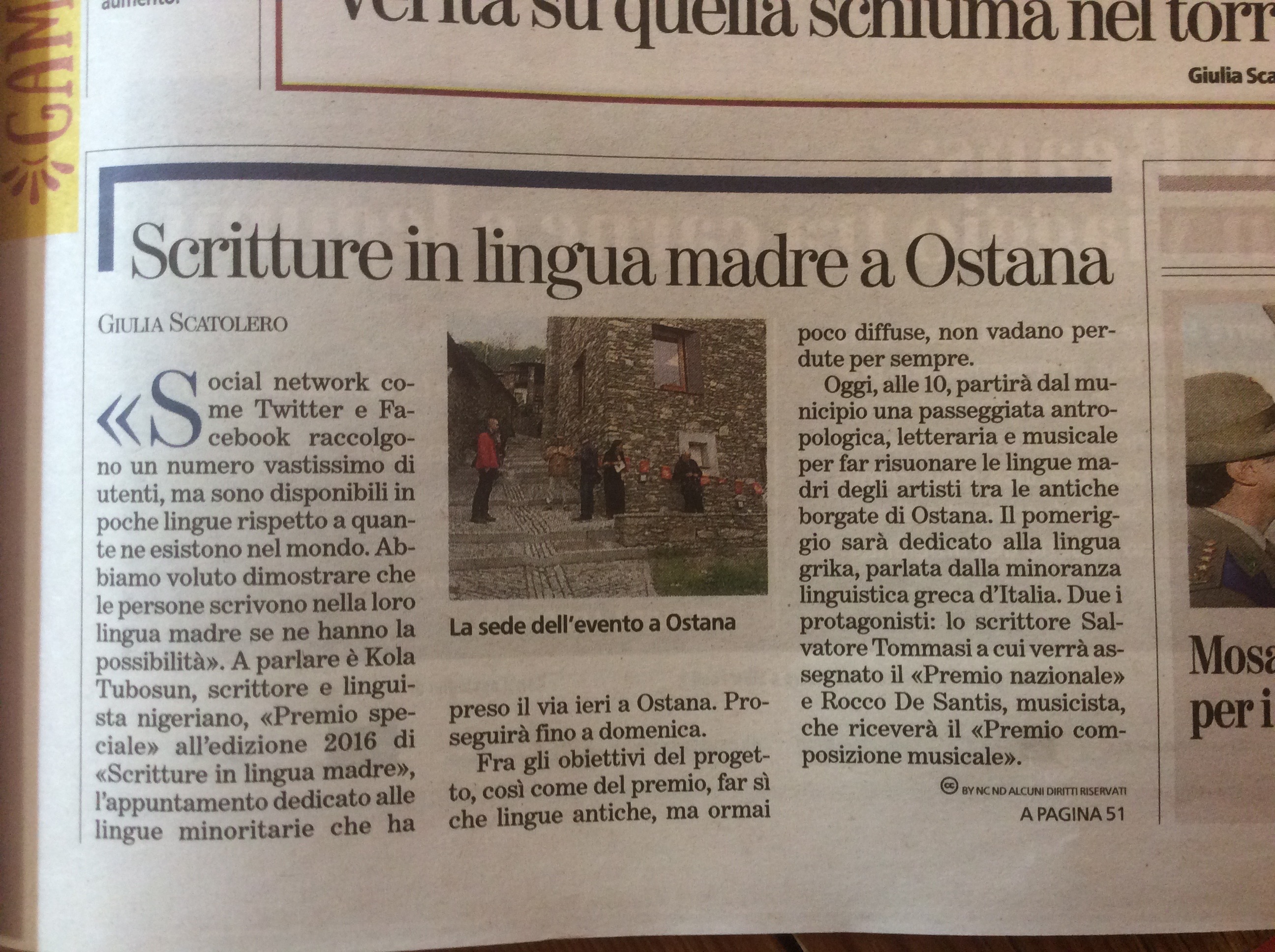
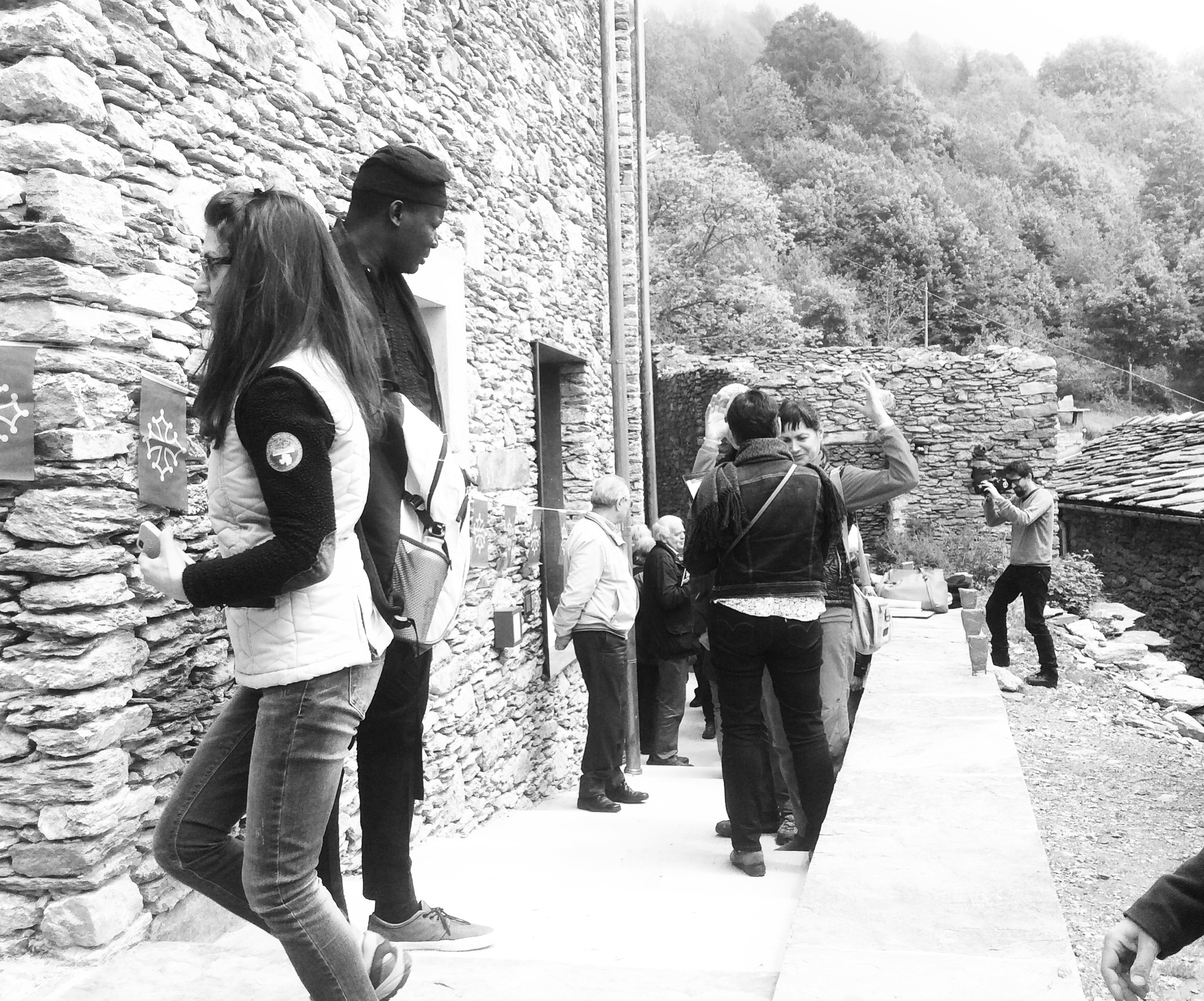
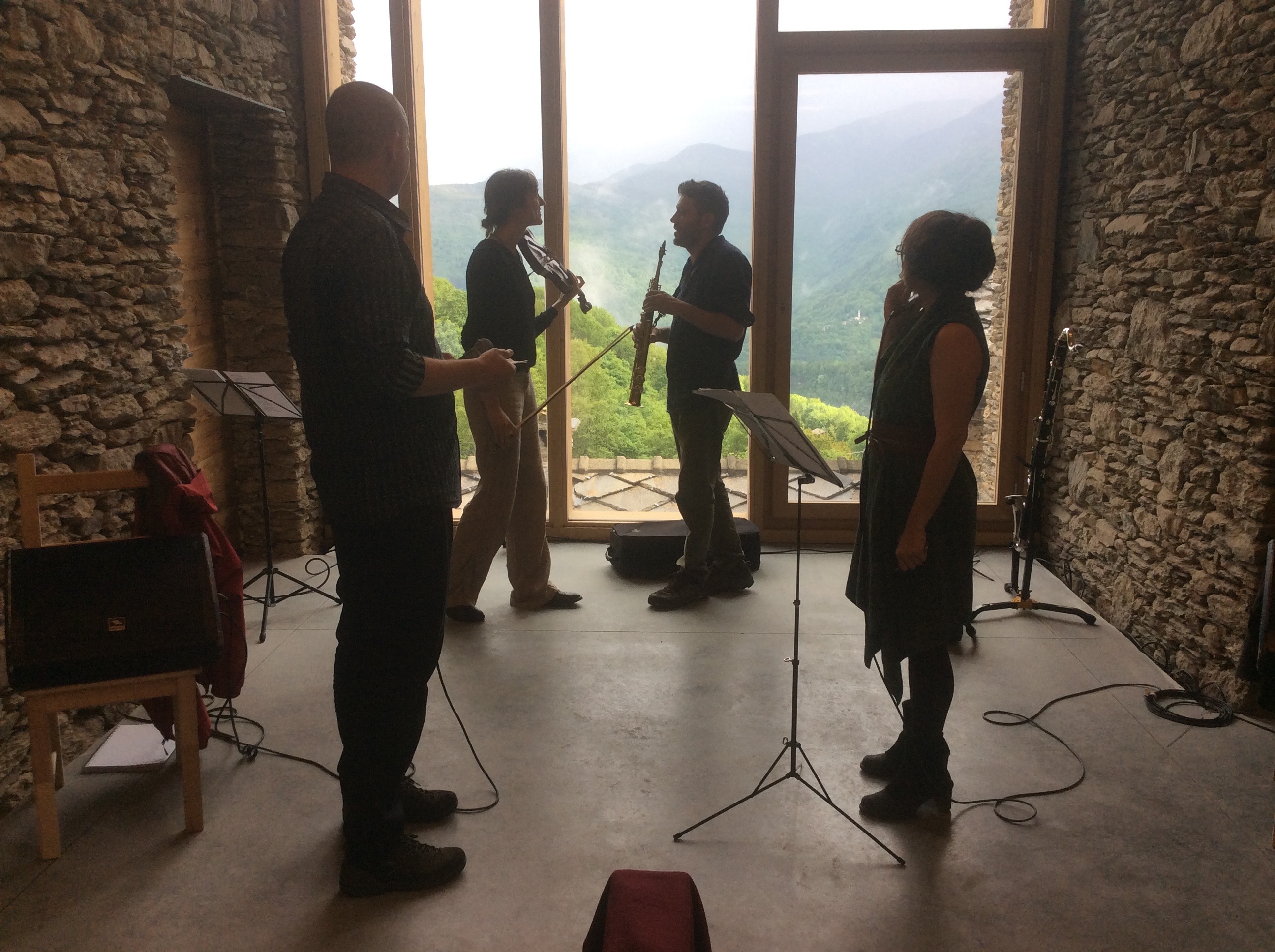
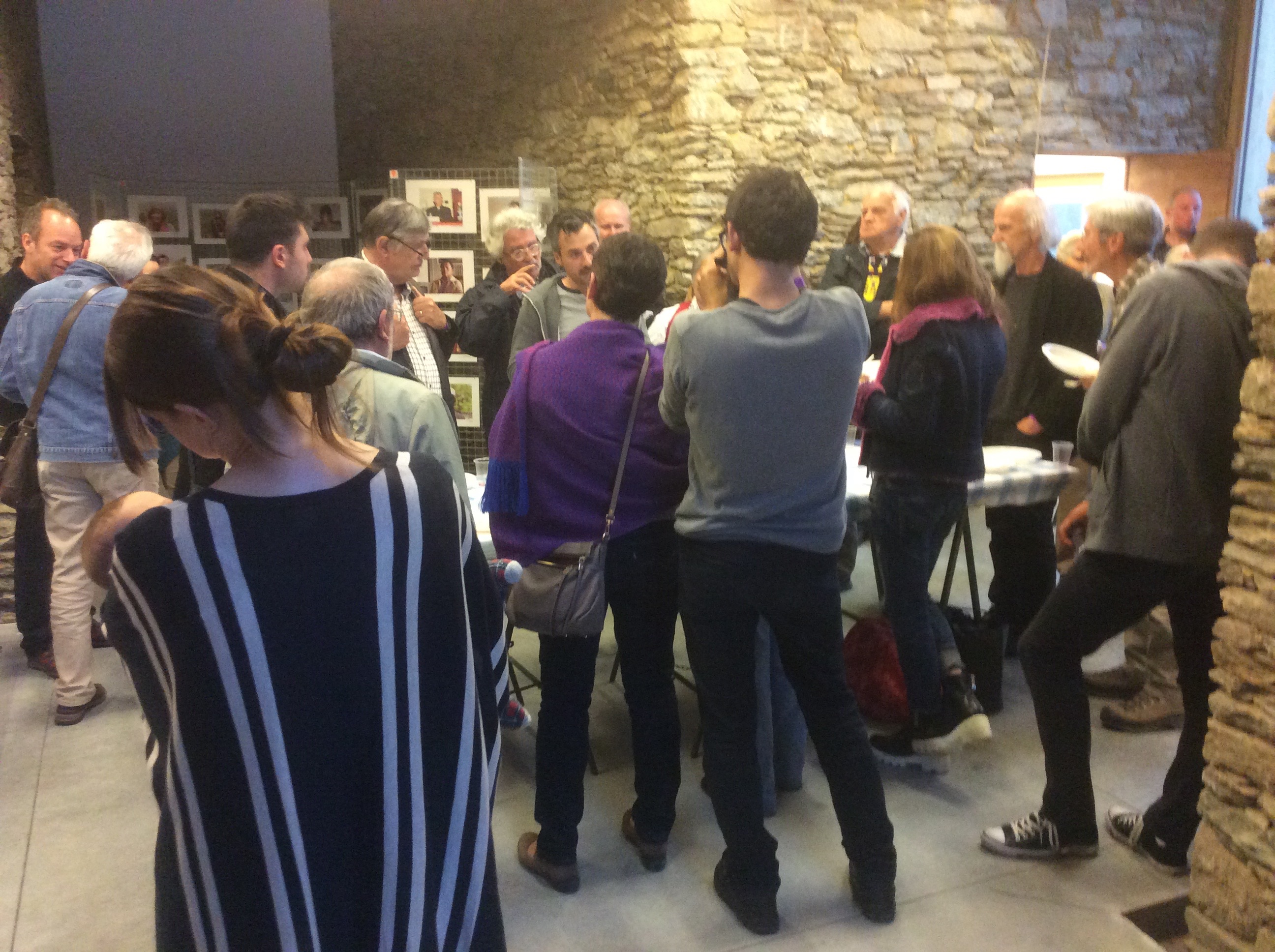
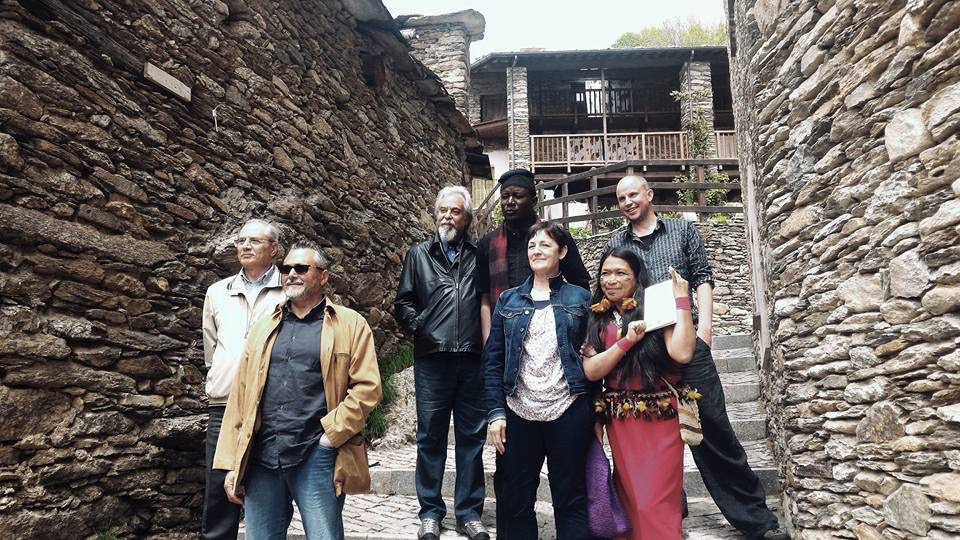
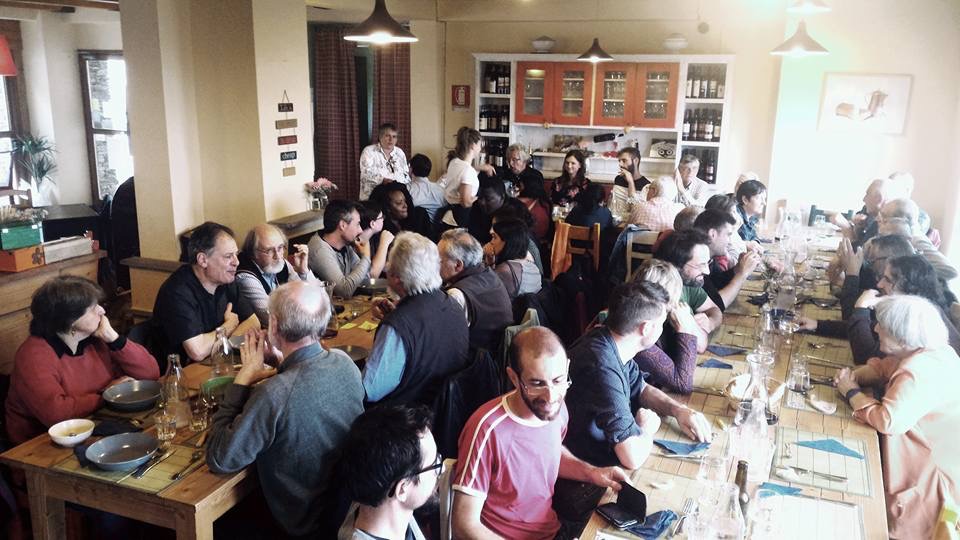
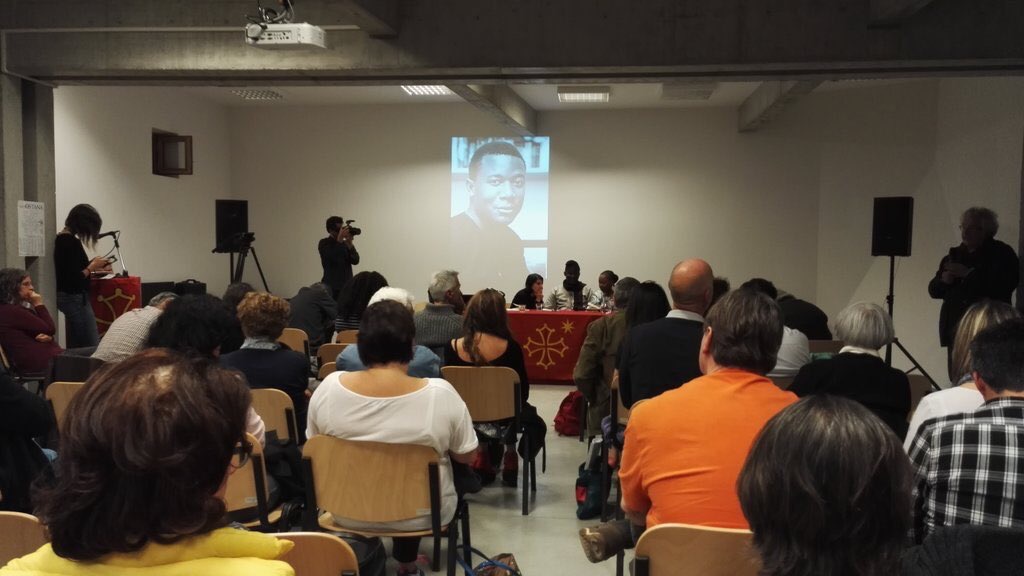
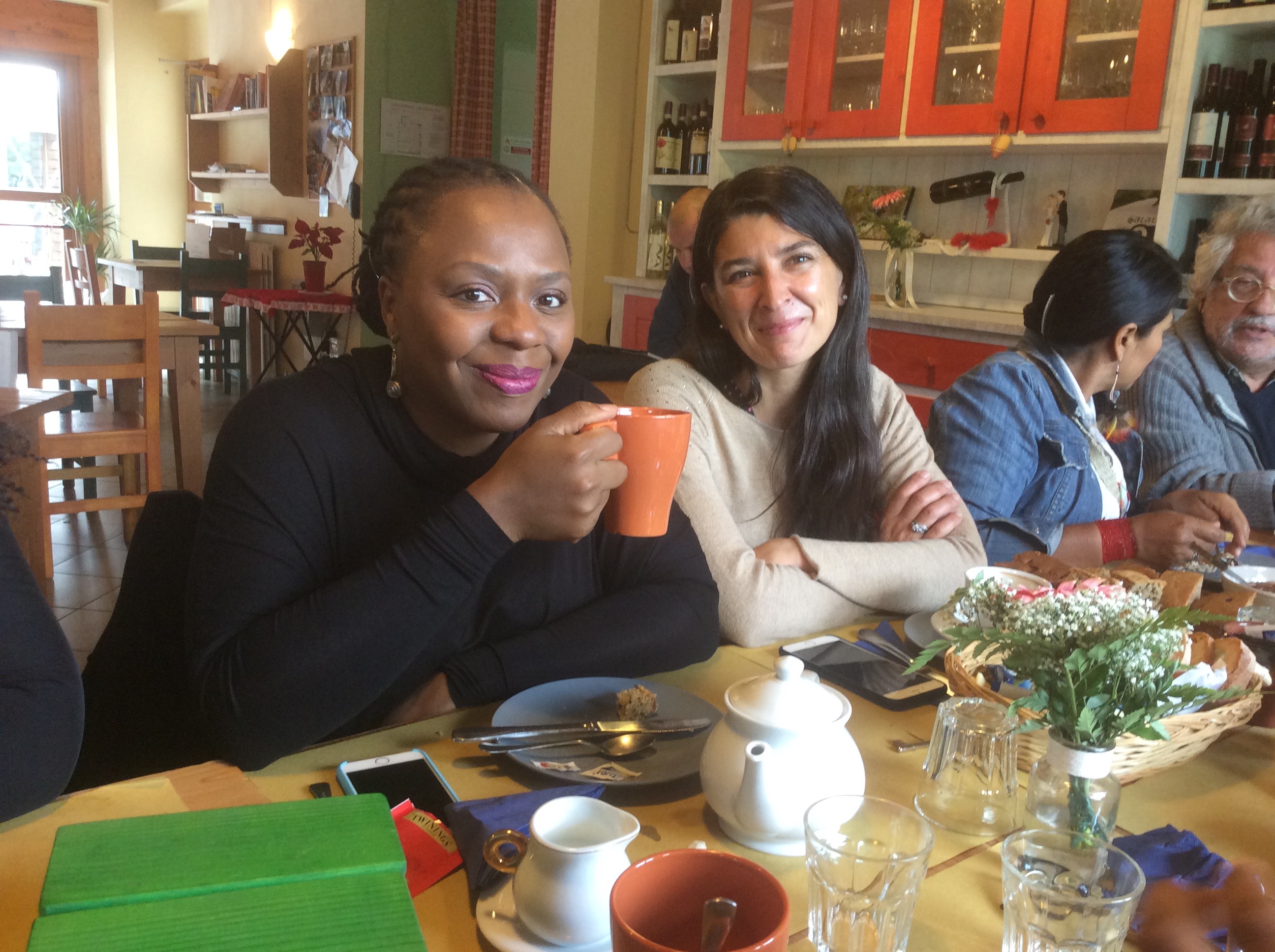
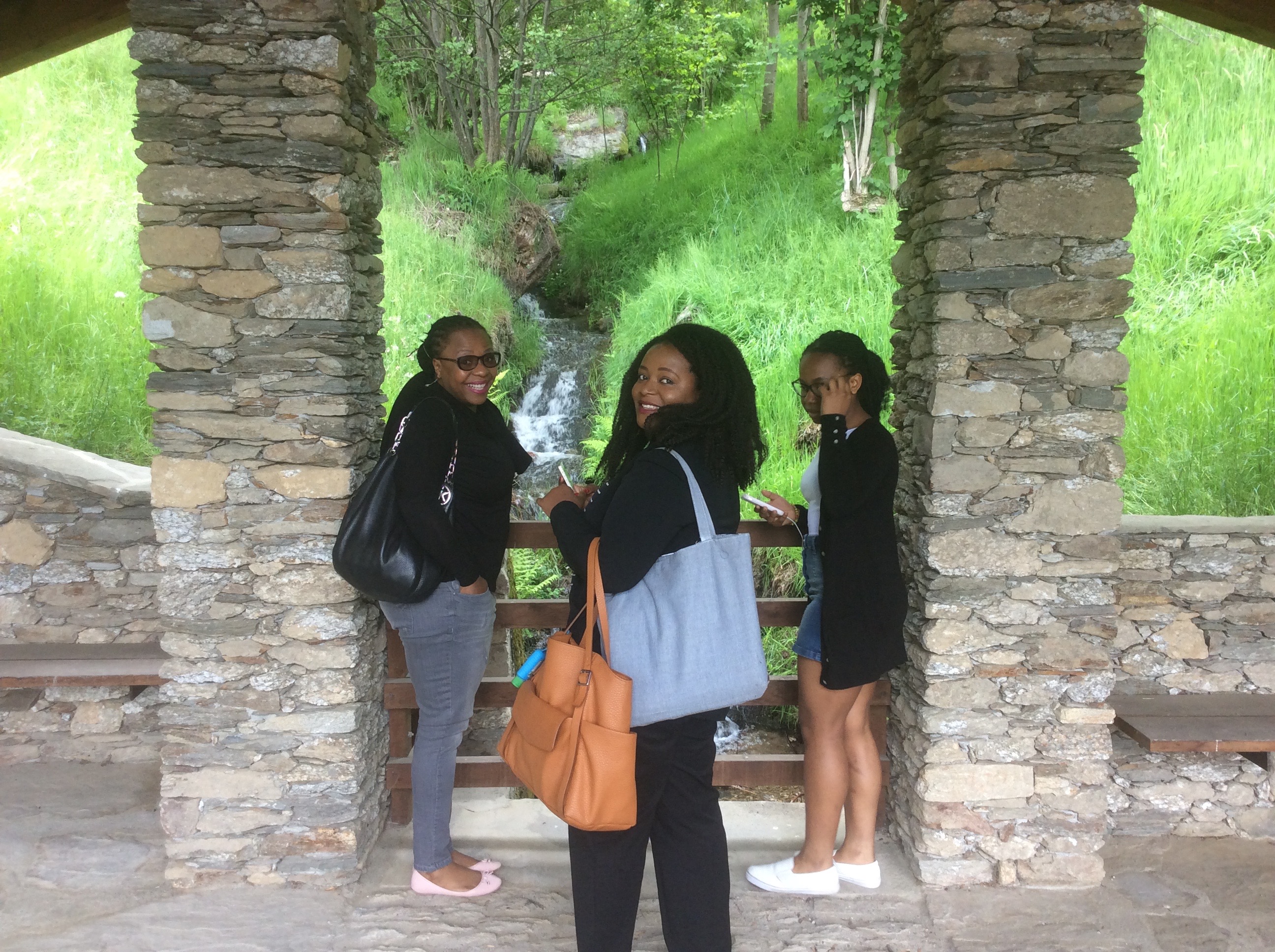
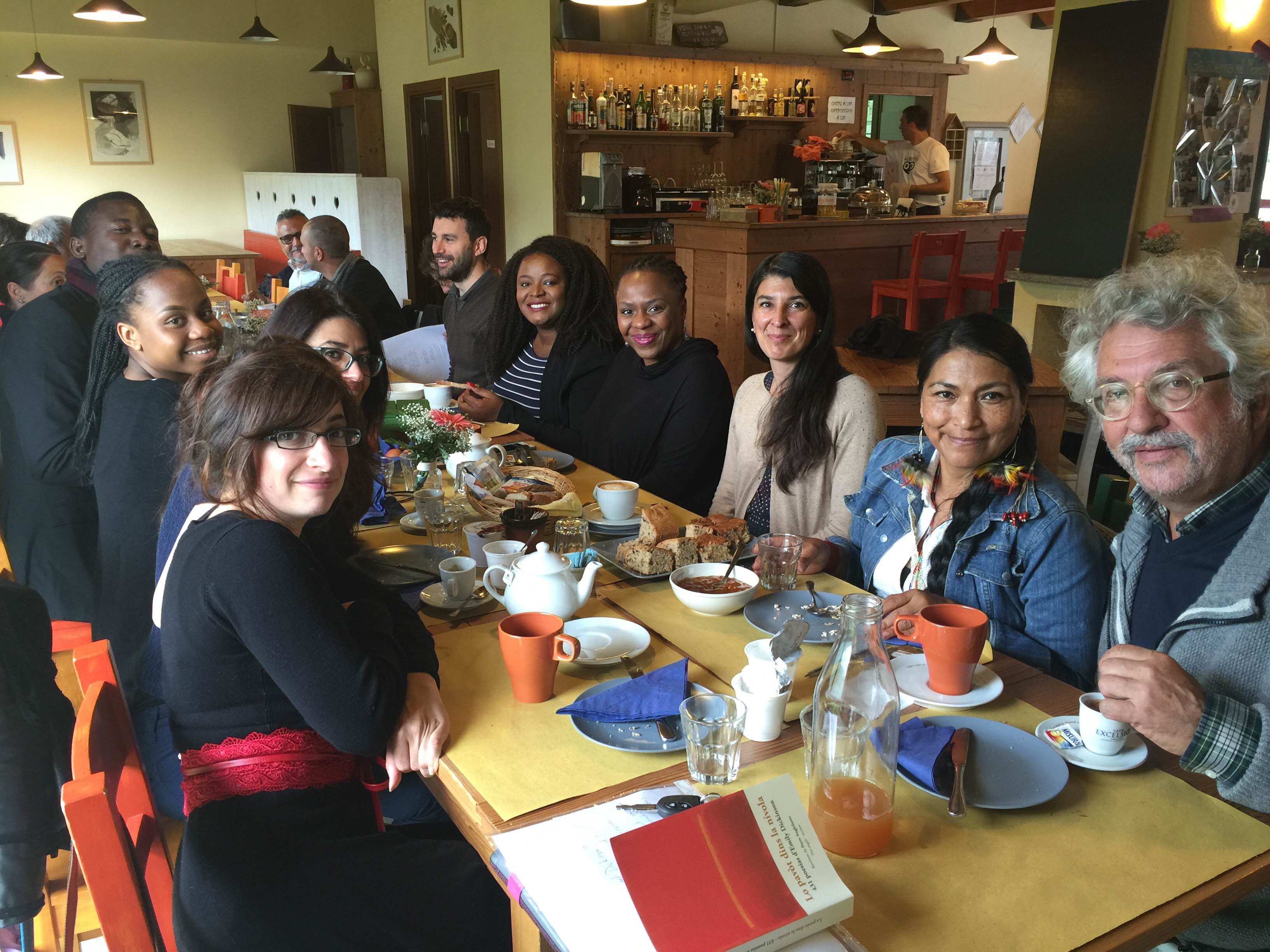
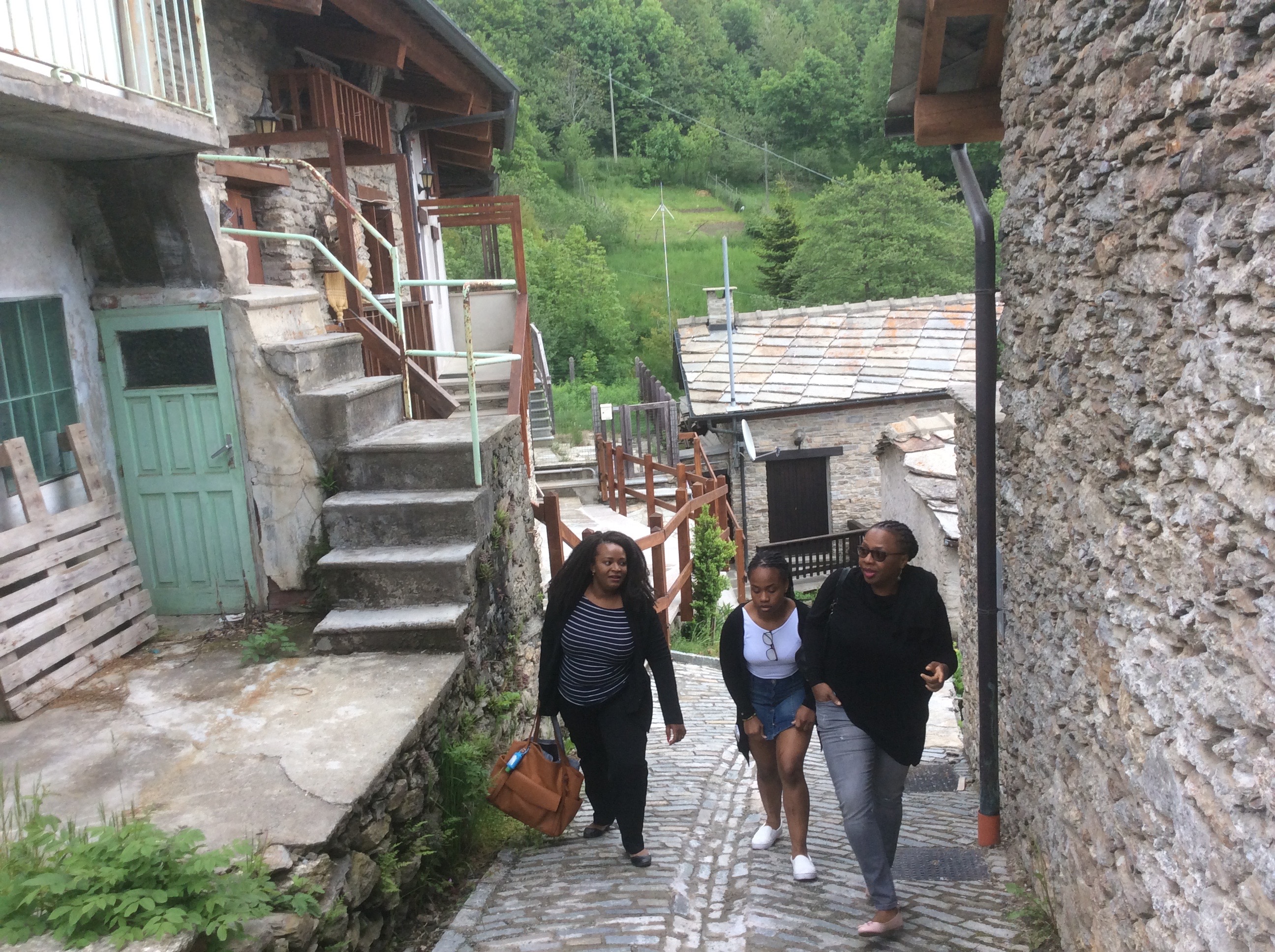
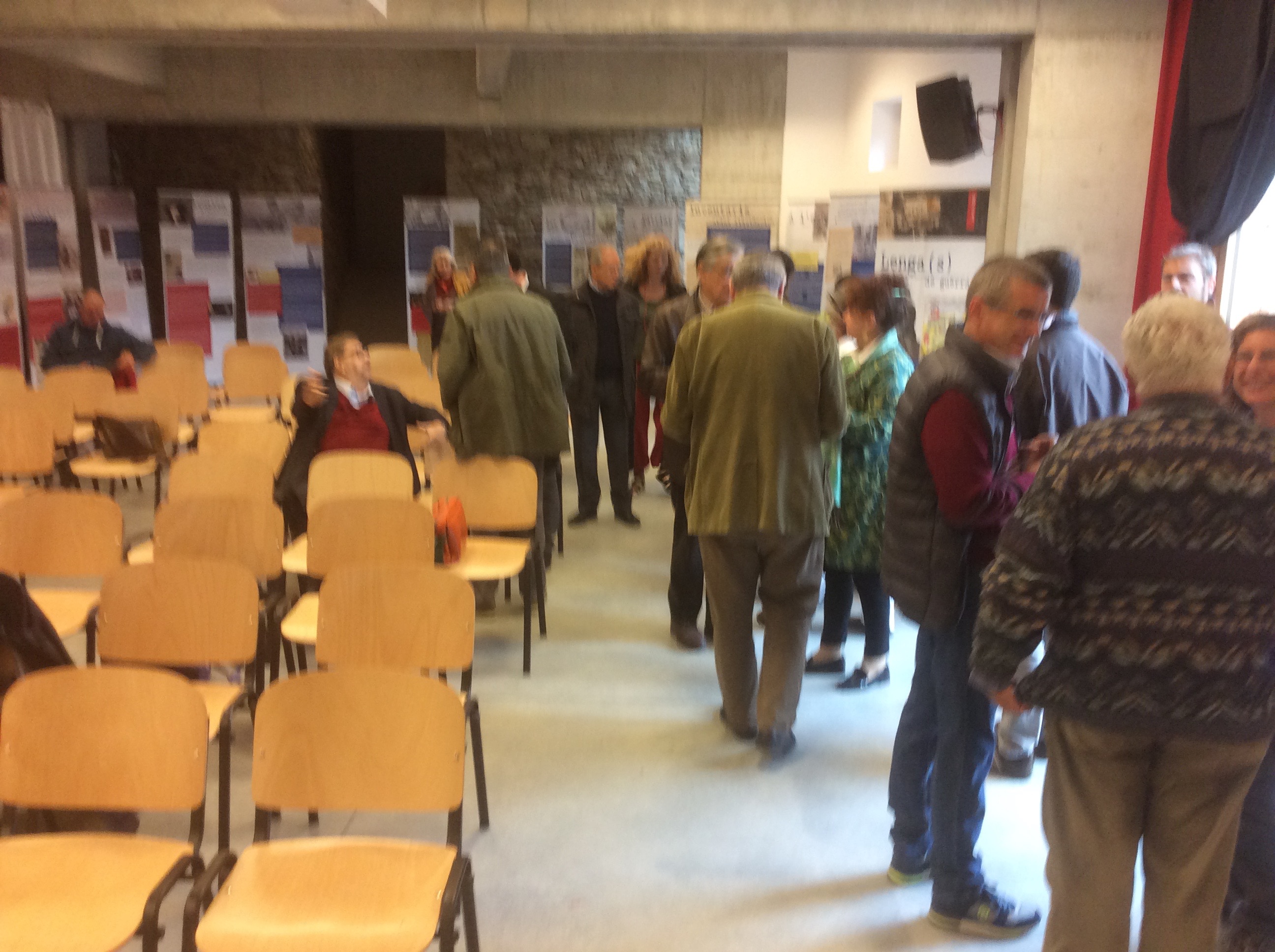
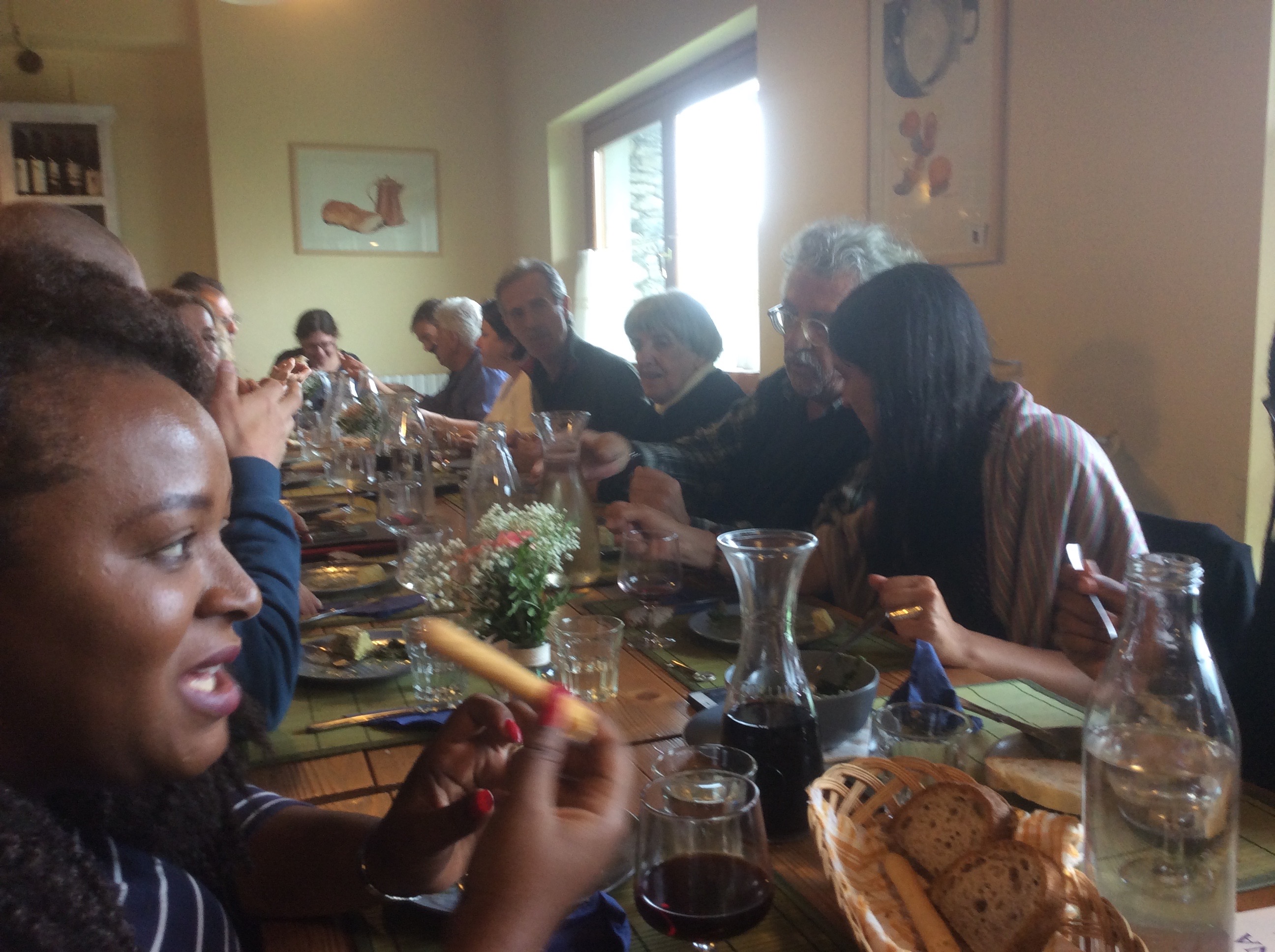
 Here are some of my favourite shots from Ostana, Cuneo, a trip I’ve written about extensively already. These shots feature informal and formal activities around the Premio Ostana Prize which lasted almost all week. In it are my wife, sponsor, Valentina Musmeci, Lọlá Shónẹ́yìn, colleagues, visitors and fellow prizewinners.
One of the most memorable things from my trip to Italy a month ago was meeting Pablo, the first child born in that village in 28 years. It was doubly memorable because it wasn’t expected.
Booking our trip and then hearing the announcement felt surreal at first, and then started to feel like the beginning of a pilgrim’s journey. A meeting with itinerant shepherds earlier in the week should have intensified this second layer of significance. As with the famous biblical magi coming from thousands of kilometres just to meet this new arrival, I approached my trip with an added delight: Here we come, all the way from the South-East (in West Africa), bringing small gifts and greetings to meet the earth’s significant new addition.
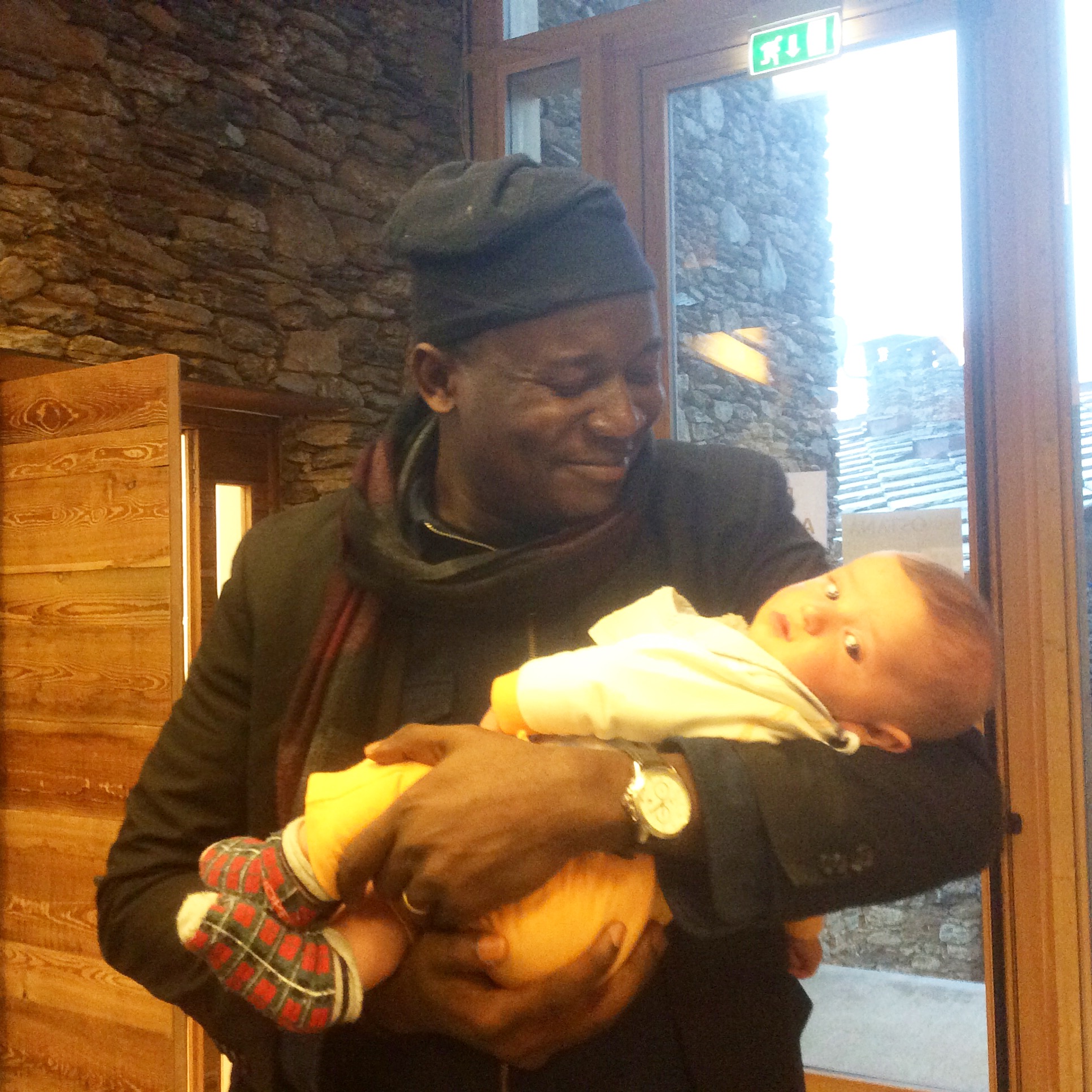
Serendipity is a weird and curious thing, for there was no other way to explain the perfect collision of a planned trip to a remote and relatively unknown town in a country one had never been before with the birth of a new baby, the first in 28 years, in that exact same town, at around the same time as one’s trip. And what – if not for nature’s unfathomable mischief – could have arranged that the parents of this famous baby would be the employed managers of the mountain refuge where the event organisers chose to lodge us?
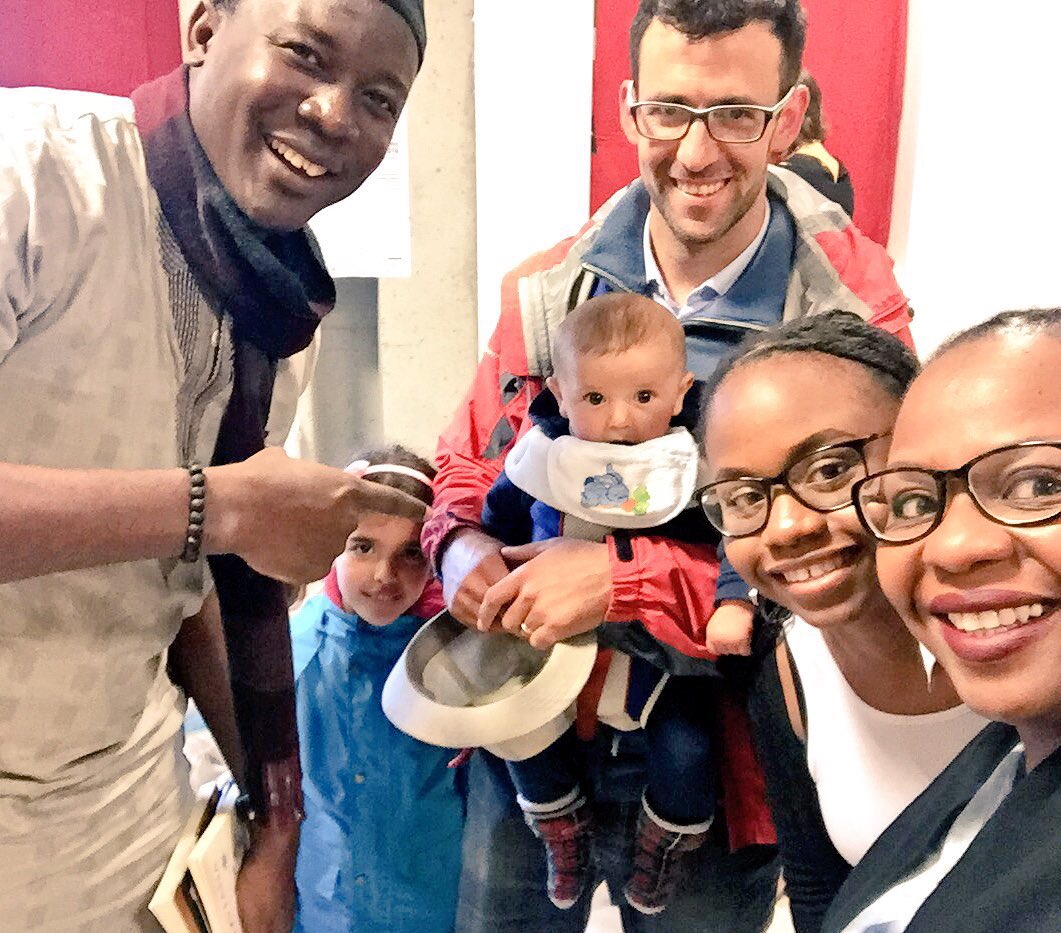
Sylvia, Pablo’s mom, is the manager of Rifugio Galaberna, a lovely mountain refuge with lodging and feeding services for travellers, tourists, and paying visitors. She speaks English, Italian, and some French. Her husband, José, is a physiotherapist who also helps out at the refuge, but works on his practice in Ostana and in neighbouring towns. As a couple, they presented a model of cooperation, friendliness, and grace. They were gracious enough to let us take as many pictures with the new child as we wanted.
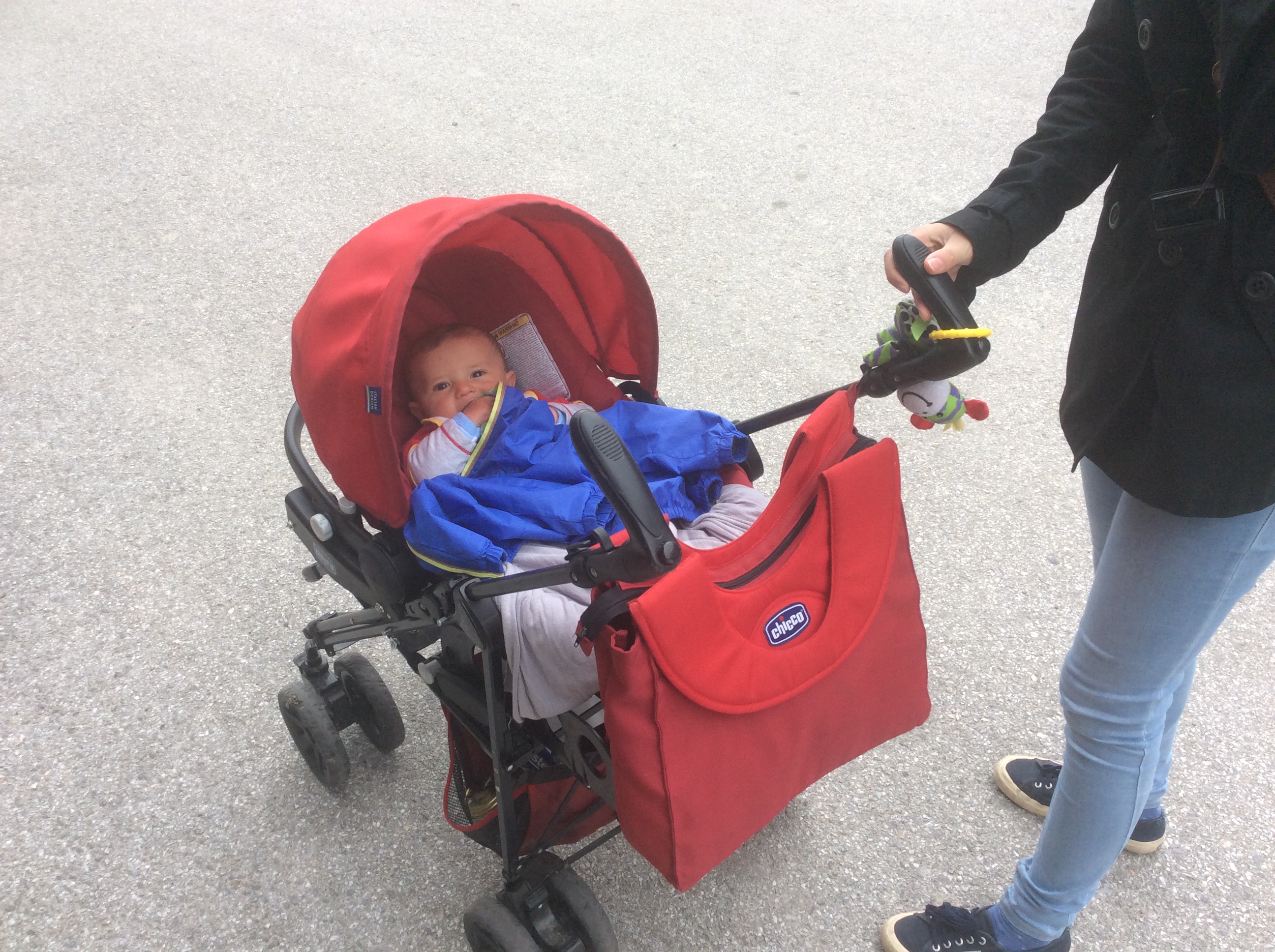
The birth of a child is a wonderful thing. Wonderful, also, is such an arrival in such a beautiful place as Ostana. On some level, I’m jealous that he gets to develop some of his earliest memories in such a place, taking in some of the most delightful sights and sounds, of mountains and cow bells, and among such charming people.
Most wonderful, of course, is the privilege to have shared some of those days in this kind of delightful company.
__________
Photos by blogger and Lọlá Shónẹ́yìn.
It is 5.47am in Ostana, Cuneo, a small town in Italy (close to the border with France). It has only seventy-four inhabitants, and became world-famous earlier this year from the arrival of a baby, Pablo, its first in 28 years. It is also regarded as one of the most beautiful Italian towns. I am here all the way from Lagos, Nigeria, in order to receive a “Special Prize” called the Il Premio Ostana in Lingua Madre (The Premio Ostana Prize for Mother tongue Literature), organised by a small community organisation who has, for eight years, organised cultural and literary art activities in celebration of the language of the region, Occitan, and other minority languages of the world.
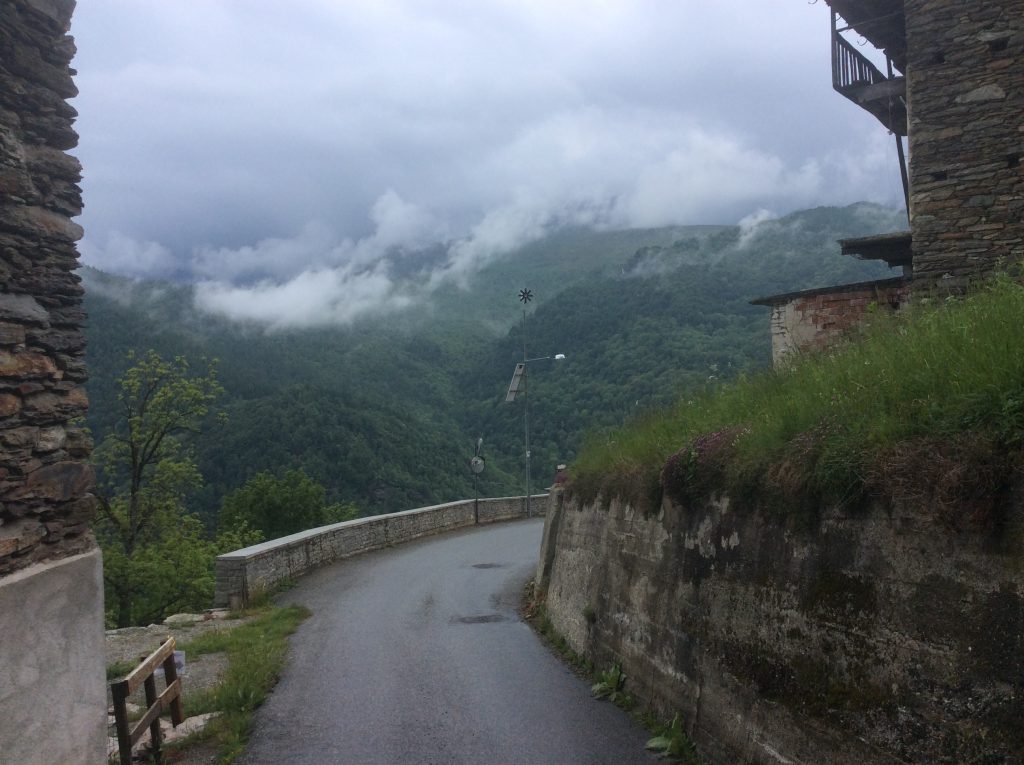
Although it is barely six am, it is already bright, and the view from my room overlooking some of the tallest mountains in the Alps is breathtaking. The mountain closest to me, shaped like a pyramid with a paramount top, is called Monviso, or “my face” because of the way it is arranged with other peaks around it to look like the human face. The name of the mountain is in Occitan, like many phrases one hears thrown around this place. When the clouds are not covering its peaks as they have done for much of my time here, we see its caps, dotted with greens from trees, and patches of black from the face of rock formations from hundreds of years back. Down at the foot of the hill from where I sit on my bed, a man of middle age is tending a small garden with a long hoe. If I open the glass windows, fresh breeze as cold as fifteen degrees, wafts into the room forcing us to hug the bed covers a little tighter.
The trip from the airport in Turin was a fascinating one, taking about two hours, and journeying through some of the most beautiful views of Italy. Travellers in Nigeria would have felt a similar sense of wonder traveling to parts of Nassarawa, or Ondo states where rocks and hills line each side of the road like guardian masquerades. But this is not Idanre, as the clashing of tongues around one’s ears will immediately reveal. This is the Italian Alps, in a region that once was autonomous as “Occitania”, spanning the land from this north-western part of Italy into the other part of southeastern France, united by a common language and culture. Over time, as the nation of France and Italy formed a stronger national identity, they imposed an artificial border that divided Occitania into two, one part staying in France and the other in Italy. And over time, the influence of the stronger languages and culture began to intrude until Occitan became just an endangered minority language needing protection.
This, in many ways is similar to the story of many African languages, from Yorùbá to Hausa to Swahili, forcibly broken down and eventually watered down by colonial boundaries that kept its speakers having to learn a bigger, more imposing language at the expense of the local one. Where the difference lies is in what has been done over time to acknowledge and mitigate the problem of endangerment by the people who care about it. In Ostana, for the last eight years, concerned stakeholders have come to this mountainous region to celebrate the language, and – more importantly – to celebrate other people working on other endangered languages around the world, making resources and networks available for a shared approach to keeping the languages alive.
Yesterday, at a public panel, Nigerian writer Lola Shoneyin described the state of languages in Nigeria, the history of our regressive attitude to mother tongue education, and the problem that has caused in both our educational and also, sadly, in our political culture. She cited the Ife Six-Year Primary Project, headed by Professor Babatunde Fafunwa the result of which proved that students can and should be educated in their mother tongues for a better educational experience, and how that ideal is now totally lost, and the research result swept under the carpet by succeeding government administrations. During the Question and Answer segment where I was interviewed by a member of the event’s organising body, I also pointed to the ideals that were written in our constitution and our National Policy on Education encouraging education to be conducted in the mother tongue for a few first years of the child’s life, and how that had ended up being just a suggestion rather than a policy statement, and how the National Institute of Nigerian Languages (NINLA) – a body established to train language teachers from every part of the country – had become just a toothless tiger. Members in attendance were appalled to know that over the last thirty years, the Nigerian educational system (particularly in the South) has slowly degenerated from a time when subject can even be taught in the mother tongue in a number of government primary schools, to now when Nigerian languages – even as subjects no longer exist in the syllabi. “It is the opposite here,” someone volunteered. Thirty years ago, no one spoke Occitan, but now it has come back as a language of common use. I got the same experience in Wales, just a few months ago, where Welsh-medium schools have sprung up to supplant and surpass many English-only schools, with impressive results.
Around me in Ostana are varying tongues. Our driver from the Turin airport spoke English as a fourth language, after Provinçale (French version of Occitan), Italian, and French. His colleague spoke only French and Italian. The conversation in his car consisted of him making a point and then running into a language block, unable to remember what English word he needed to use to communicate a point. He’d then translate himself into Italian for his colleague who sometimes then gave him the word in French. My wife and I speak a smattering of French and we’d sometimes then understand it, suggesting the appropriate word in English. Or we won’t get the word right and the conversation would move on only for the process to repeat itself again in a few minutes. For a linguist, it was the ultimate beautiful thing, especially since none of these occasional misunderstandings prevented us from fully bonding and sharing other less untranslatable experiences among ourselves. But it was also a celebration of the beauty in the diversity of our tongues and worldviews. My wife noted halfway into the trip, with mock wonder, how it was that none of the road signs we had seen was written in English. Welcome to Italy. But also, welcome to the real world where education and enlightenment isn’t judged only on the basis of competence in just that one language.
I wondered myself a few minutes later what would be said of a town in any part of Nigeria where all the signs there are written in the one language common to the speakers living in the area, and how we’d have resorted to that common pejorative in order to tarnish that hypothetical village: “tribalism”. We would have reacted as though the town is saying to outsiders: “Do not come in here because you speak a different language. We hate you!” But we would be wrong. The experience I have had traveling all over the world, especially in places where value is placed on the local language, from Kenya to Wales to Ostana, leads me to a better understanding of this hypothetical town’s message to the world: “Come here and share with us the experience of our language and culture. Bring your language with you, by all means, but come in ready to share in ours, in celebration of life and this important diversity.”
And from that, we can learn a whole lot!
______________
First published on Premium Times on June 3, 2016.
Two Thursdays ago, about fifteen hundred feet above sea level, I was beholding one of the most picturesque landscapes in Italy from a vantage point in Ostana, a town 60km Southwest of Turin where I’d gone for a week-long celebration of the diversity of language, among other things. It was an elective choice. The Monviso, the most famous rock head in the area, had obscured itself among the clouds for so long during the week that my patience had run out waiting to get a complete view. The problem was that this, like other days, was not going to work either. Rain had just begun to fall.

But that wasn’t a deterrent for an intransigent guest insistent on a wholesome experience of this strange and charming place. Having spent the previous days in warm and stimulating company, in festival days with Italian and Occitan conversations and activities, the legs had begun to make other demands on one’s curious mind: what would it be like to walk down this hill on foot? Who would one meet on the road, and what kind of reaction would this African stranger elicit, especially for a native resident unaware of the international festival taking place way up the hill. All the trips up the hill where daily festival interactions took place (aside from feeding) from the Rifugio Galaberna (where we made lodging) always happened through rides in the vehicle of one of the festival participants.
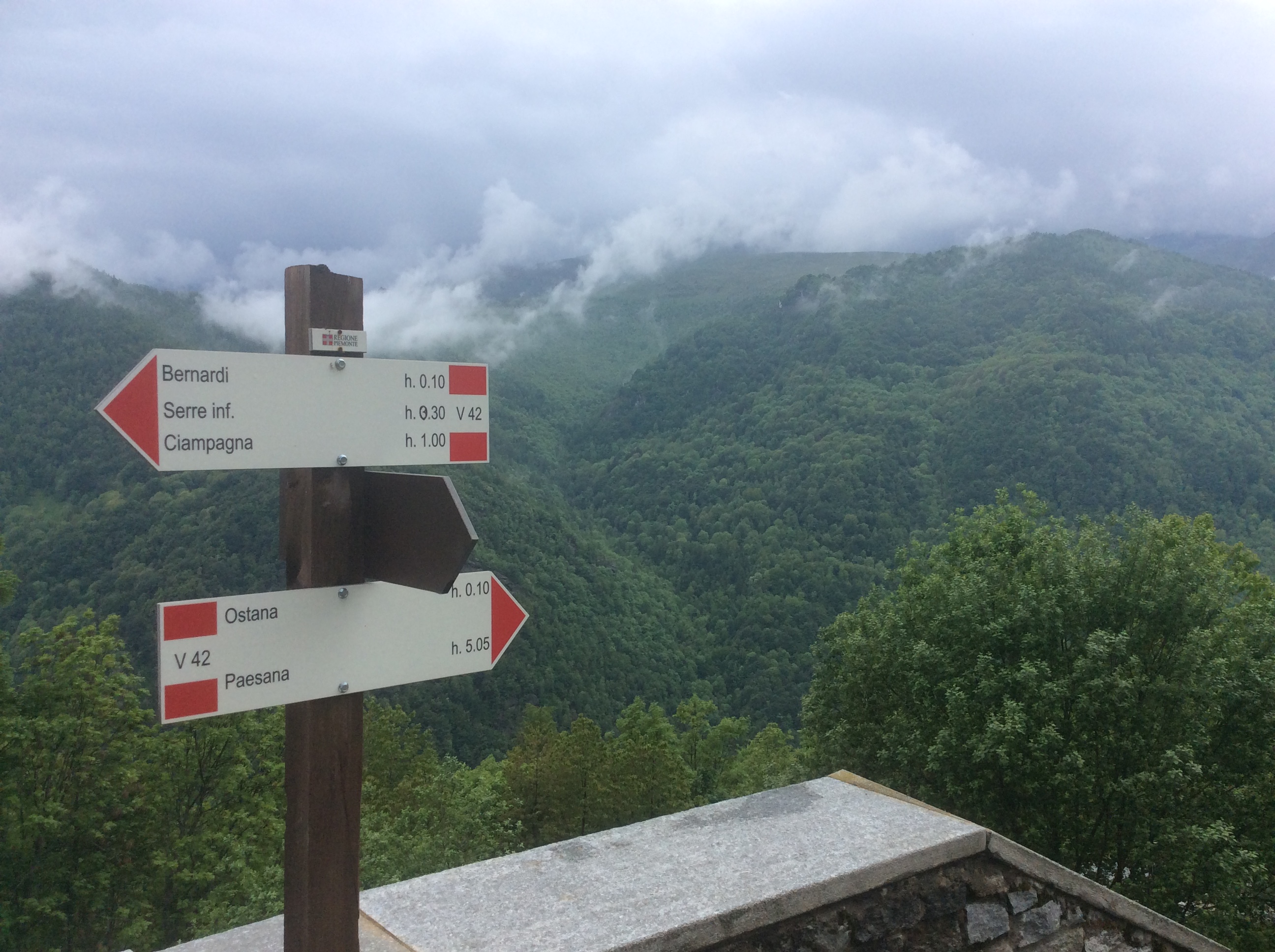
And walking down the hill wasn’t as bad as previously thought – if one removes slipping on the wet grass and almost splitting one’s limbs apart as a likely disadvantage. It was the price of short-cutting the winding road to walk instead through the grassy corners that ran through small chalets on the side of the hill. And with the drizzling cold rain dripping onto my back, the only other positive left in the air was the anticipation of a room warm enough to spend the rest of the afternoon in the company of a fellow traveller from Lagos, my wife, who had elected, since that morning, to spend the day alone resting from the previous day’s extroverted engagement. And then, the bells!
I’ve heard of “cow bells” and seen them in animated advertising for its eponymous brand of milk in Nigeria, Cowbell Milk, but I had never heard nor seen them before, so the clanging that called me from on top of the hill had an initial promise of a surprise carnival of which I, as a stranger, had just not been made aware. Maybe there was a masquerade too, and a dance. It could have been a nice relief from the now boring walk down a lonely road down a pretty hill. I was joined, a few minutes later, by Valentina, my host and sponsor, who had begun to look for me to come for a photo shoot for prizewinners which had been slated for that afternoon. As a researcher, she had once followed a herd of shepherd up the hill for months in order to document their habits. So she, too, enarmoured by the clanging below, abandoned her vehicle and walked with me towards the charming sound. And there they were: herdsmen and their cattles!
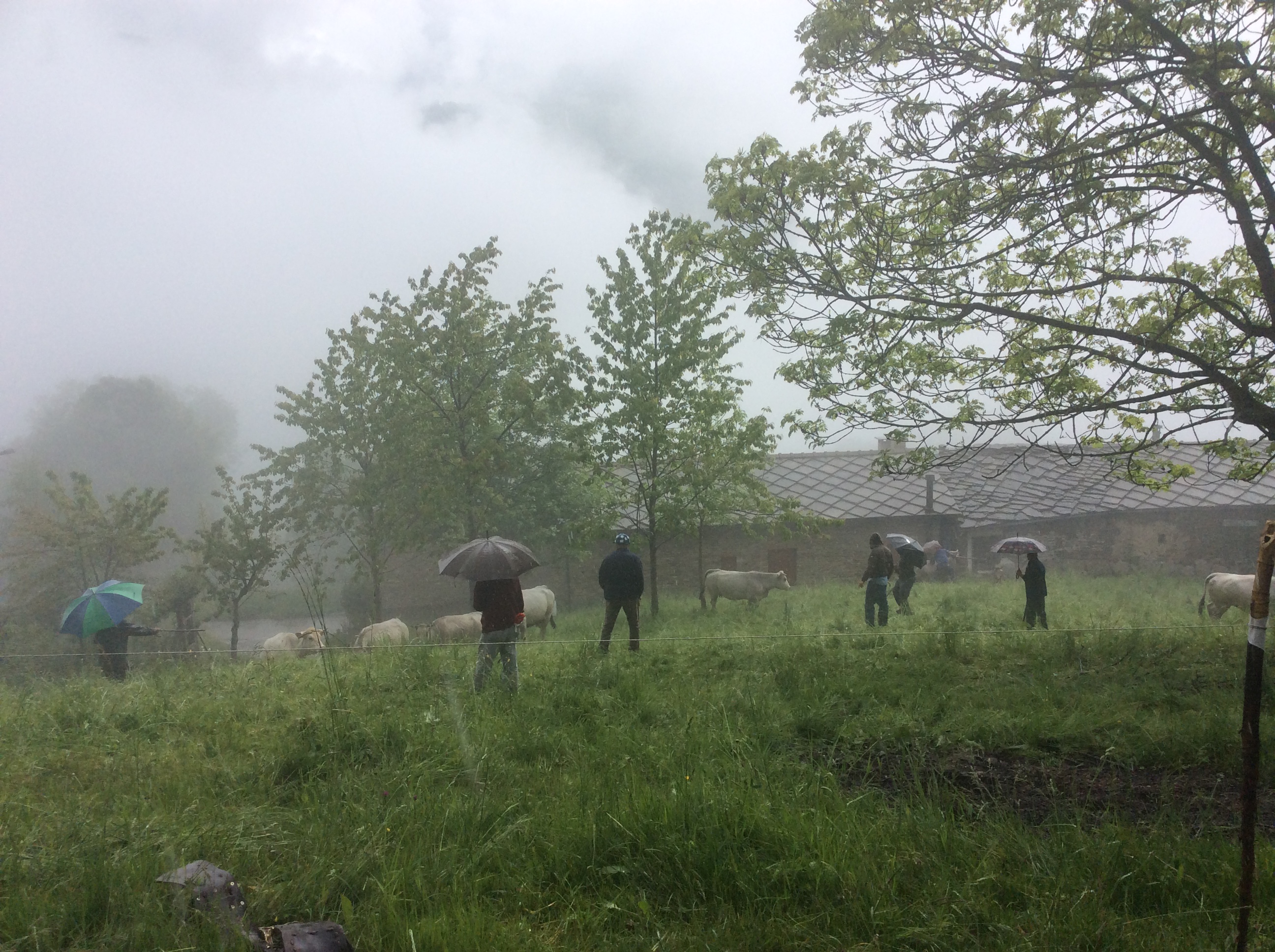
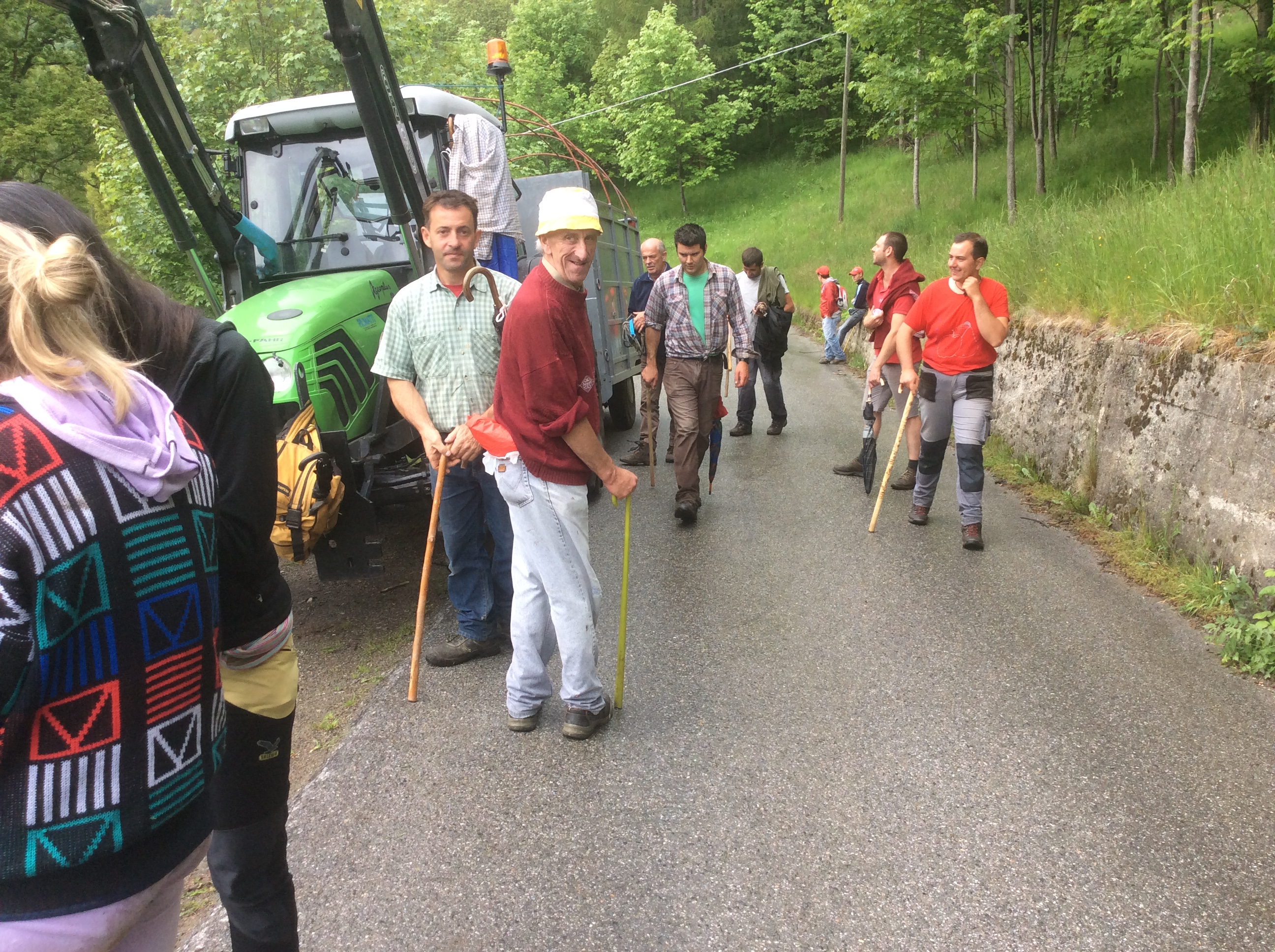
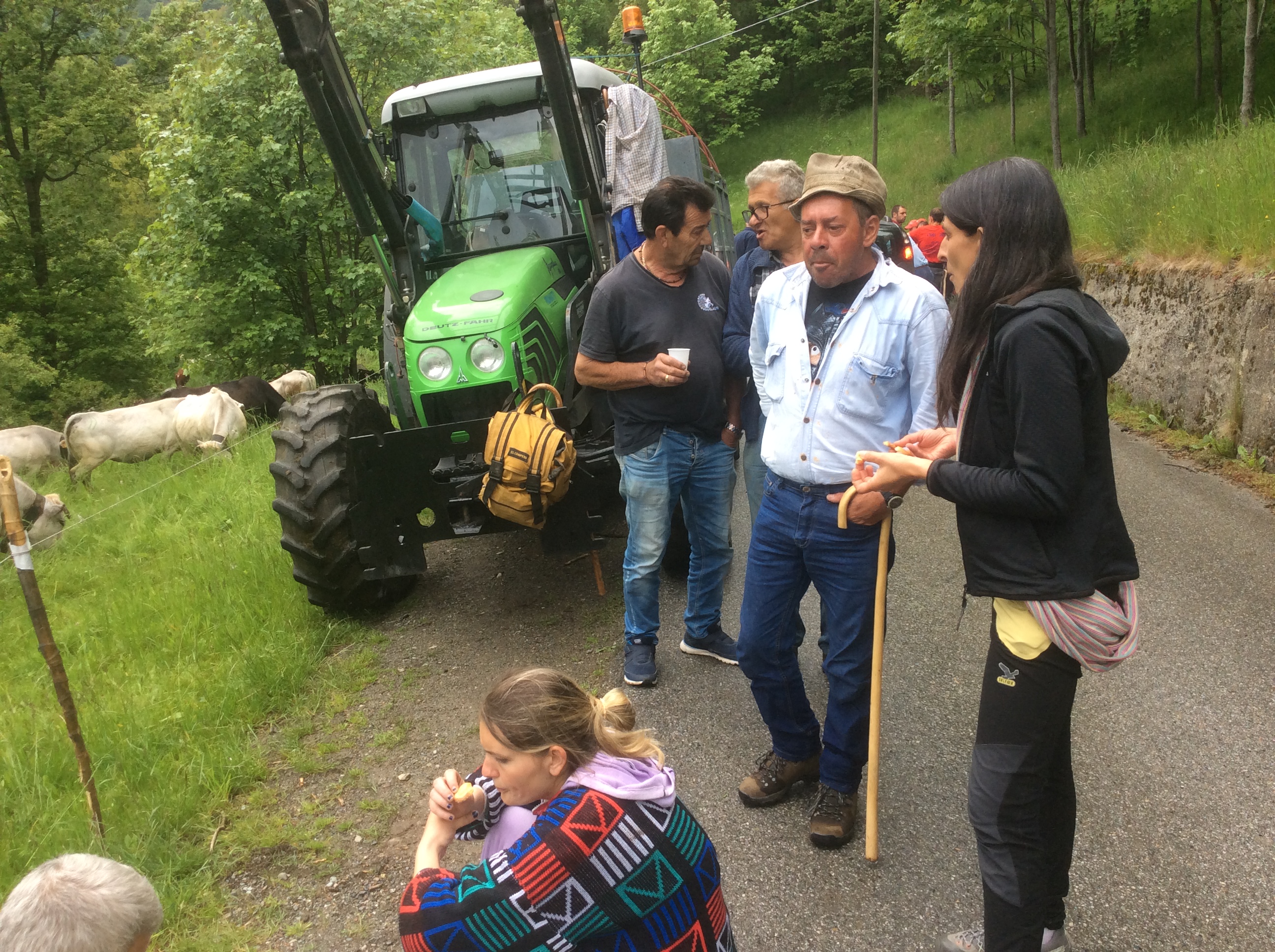
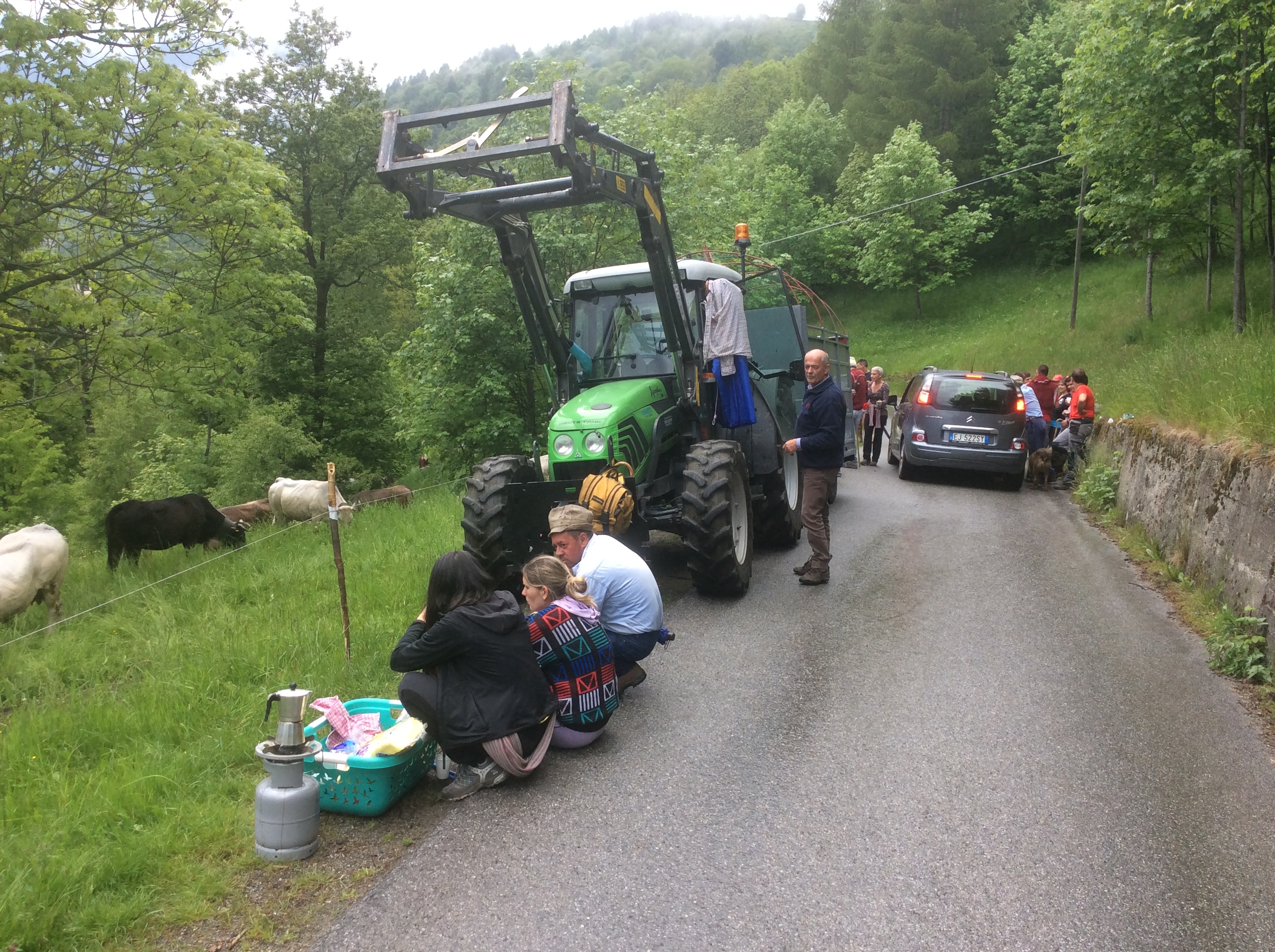
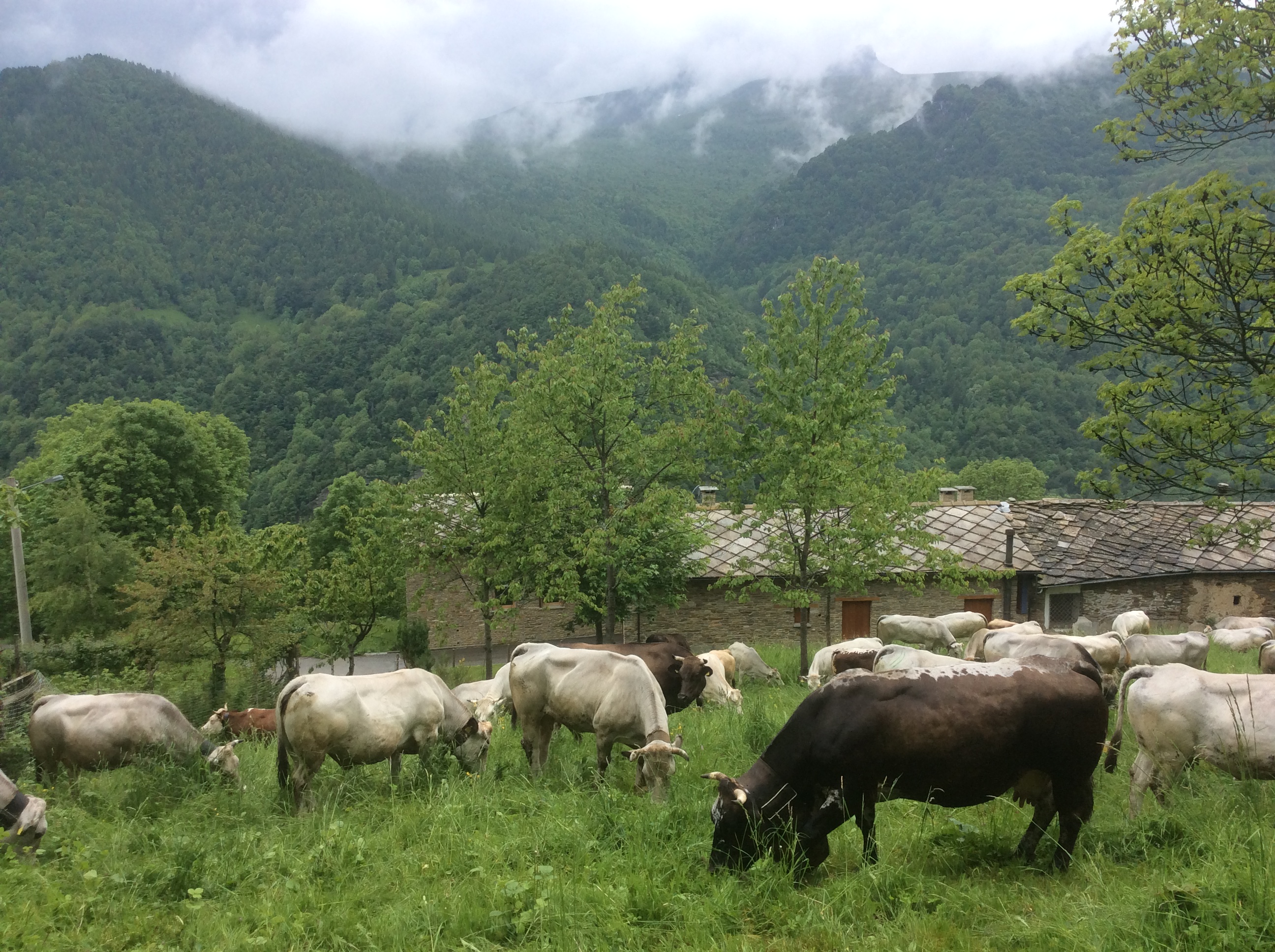
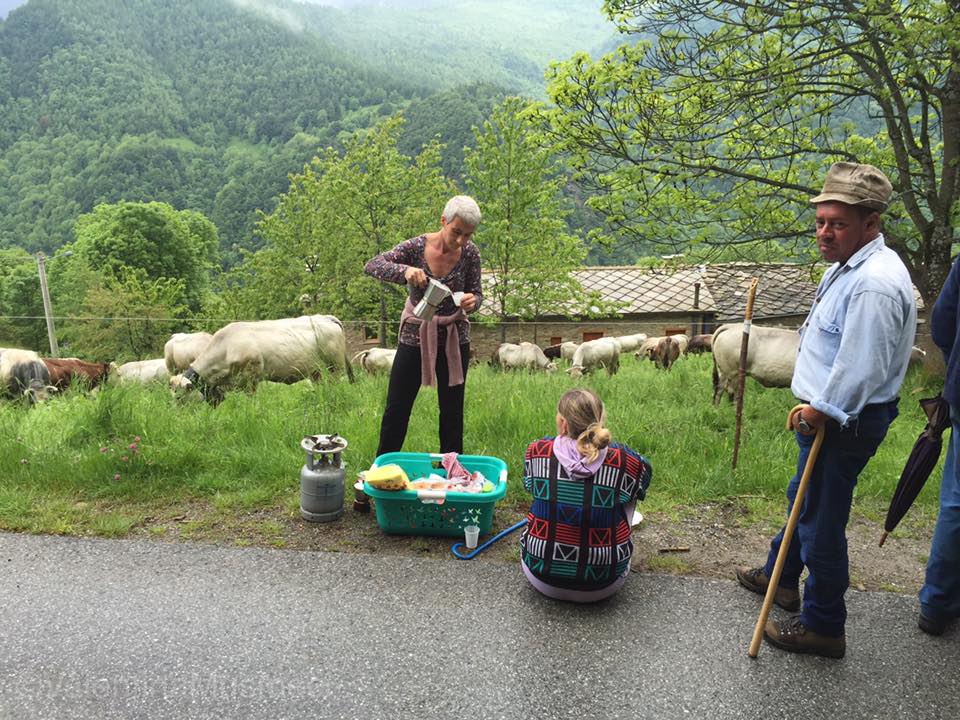
This migration, we learn, starts at this time of the year, when the leaves are green and summer is ripening, and lasts for four months during which the cattle and their herders trudge up the hill on foot until they reach its summit, in early fall, for access to all the greenery as far as eyes can see. And when winter begins, then return home, perhaps more rapidly this time, in time for milking and selling the cows as the case may be. But this slow, deliberate, march is a celebrated fact of life for the mountain shepherd and his family. From observation, the roles seem well marked: the woman/women take care of the feeding and well-being of the men, keeping a steady flow of hot coffee on a gas stove, and charming every passer-by with a taste of that and other snacks, and conversation. The men watch the animals, with the help of herding sticks and hunting dogs.
There are small cars too, following the herd like guardians. They will be used as places of rest during the day or during the night if nightfall ever finds them in uncomfortable locations. In this case, they were able to leave the cows at this choice pasture in order to return in the morning and continue the journey. It didn’t hurt either that there is some place where the herders can hide whenever the elements got too harsh. In short, it was a sophisticated set-up, befitting of such a lifestyle in such a region. But can’t help wondering what it was like before the tools of technology made it easier to be a shepherd with a vehicle.
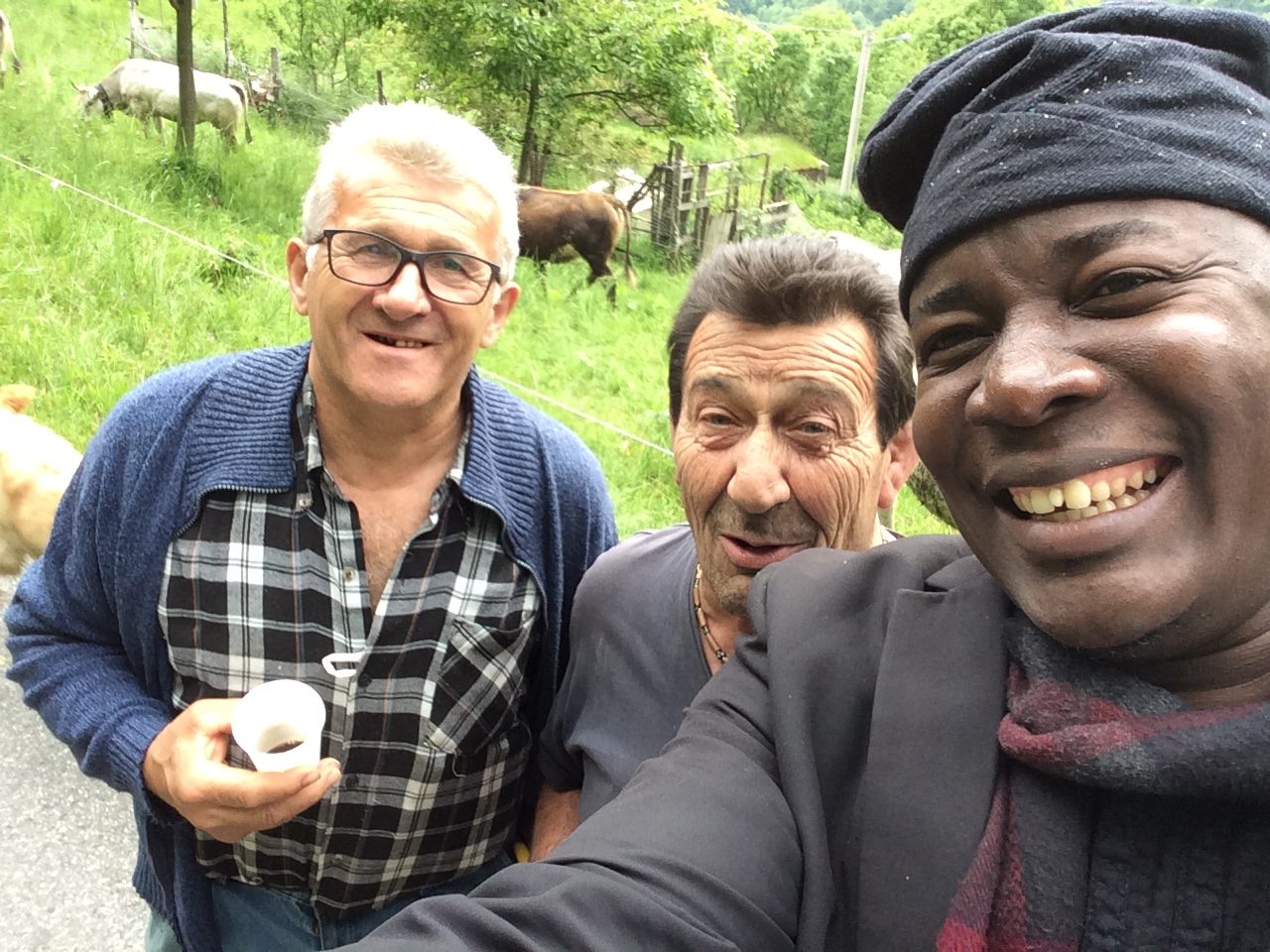
The men and women, like most residents of this area, speak Italian and French, two languages capable of all relevant needs, until the party encounters a stranger who only speaks English and Yorùbá with a smattering of French. Yet communication takes place, in the most ribald of ways as one would expect of a team of mostly male shepherds. Two young teenage children of the patriarch seemed more enchanted by what they’d assumed to be an interracial couple of Valentina and me, and would not let go. “Amante!” they screamed in mischief as we found our way back, out of their grip, back up the mountain. “No! Amigo!” I replied, in whatever language that translated.
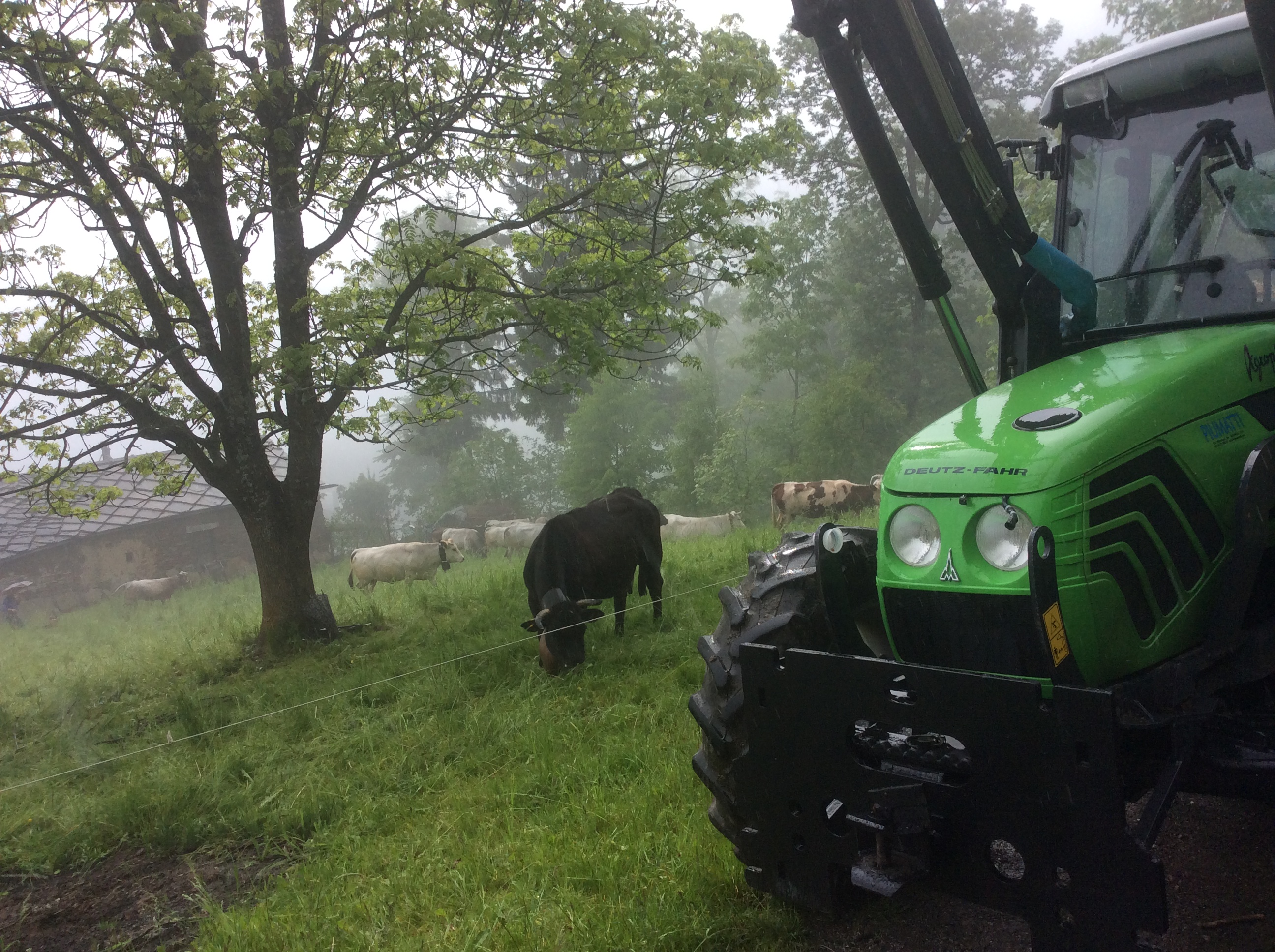
Later that evening, we heard the next day, some of the cows found their way down the hill, perhaps through sleepwalking, and had to be rescued with a truck that the shepherds always had nearby. The next morning, the clearing around the path where the cows grazed the previous day – and their dung deposits all around, including on the road – had shown how much damage a bunch of hungry cattle could do. “Thankfully,” I volunteered, they don’t trespass onto private properties. Someone told me not to be so confident. The only saving grace is that trespassers are dealt with appropriately enough to deter erring herdsmen from taking laws into their hands. Herdsmen also pay a form of tax for being able to graze on public lands, even if not in cash, at least in warmth and respect for the host communities. Shepherd culture might be the same everywhere, I thought. At the crux of their existence is a travelling gene and a desire to bridge boundaries while supporting the ecosystem through a dialogue with the land and animal relationship with it. But I also immediately conceded that the friendliness and warmth of this variant is a welcome departure from what is currently familiar.
____
Photo from the blogger and Valentina Musmeci