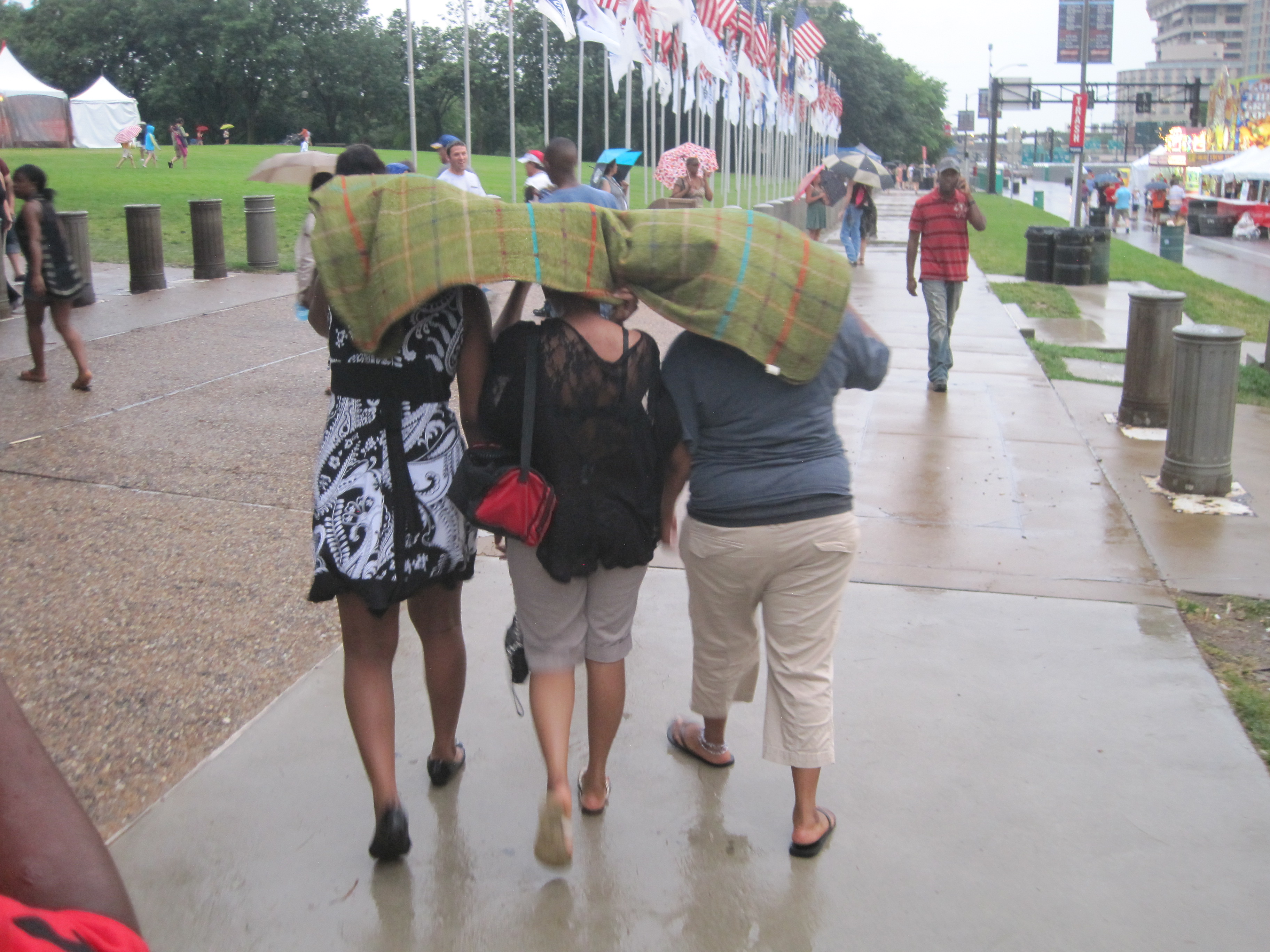
 A lighted street, an alley. A road closed for construction or a botched concert featuring a boy rock band. I have always wondered what makes a city run, what makes it what it is. What makes it tick – the soul and the fabric of its existence and sustenance. An underground tunnel, a monument. Hotels with distinguished butlers and visiting guests. Cars, concrete, curbs. Lights. People walking around with a thousand different motives and stages of contemplation. A gathering of friends at Hooter’s. Fireworks. Sparklers. Fourth of July. The hovering however-you-define-it American Spirit.
There is all humanity represented sometimes within a square mile. The angry driver. An open sewer covered with a wire mesh. Laughing, nervous children chaperoned by parents. A stranger smoking outside a tall building. Stacked rows of mobile bathrooms. Traffic lights. Taxis in city colours. Noise. The reported crime rate that rivals any other across the country. A wrong turn towards an abandoned railway and the occasional hair-raising contemplation of the consequences of abandonment. Old city. New city. Open city. St. Louis, or a thousand others. The beating heart of humanity condensed in one spot in time and history. One minute, and a slice of a much larger story.
*Open City is the title of a new acclaimed book by Nigerian writer Teju Cole about an immigrant in New York City. This post is only a creative anticipation of the novel’s premise.