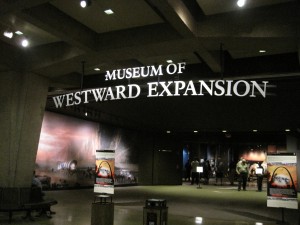
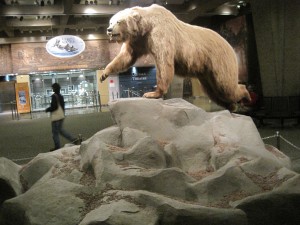
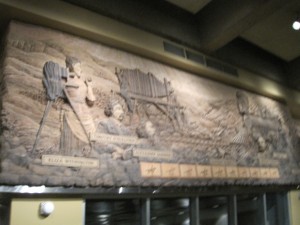
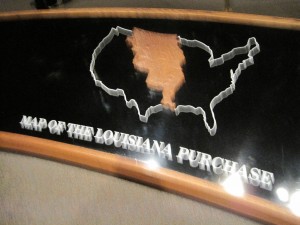
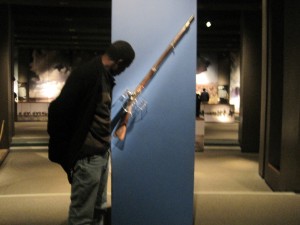
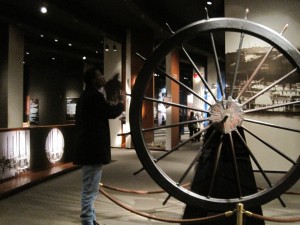
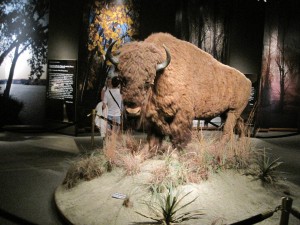
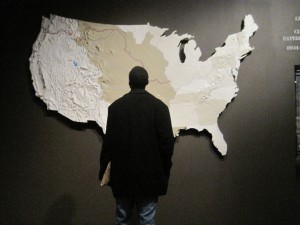
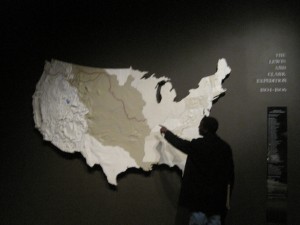
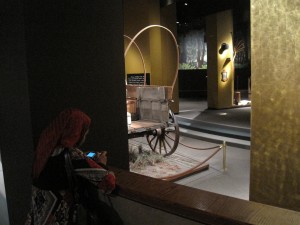
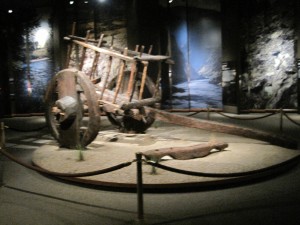
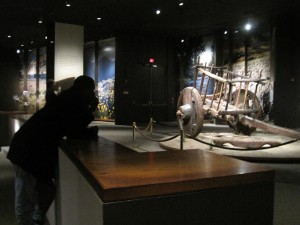
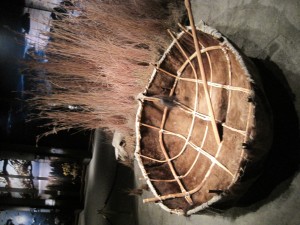
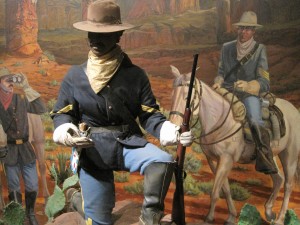
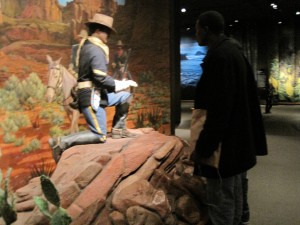
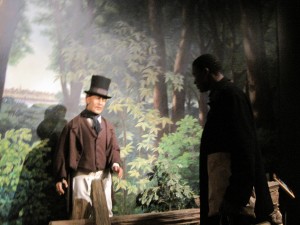
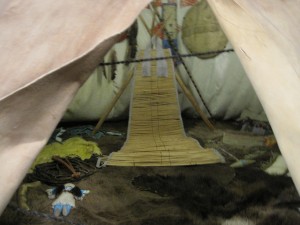
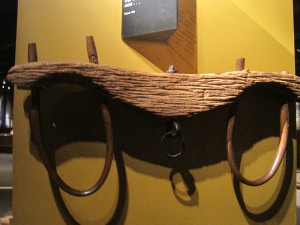
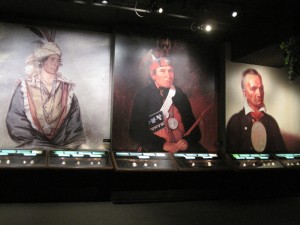
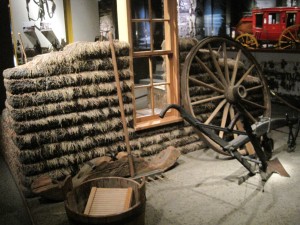
 The Jefferson Memorial in St. Louis comprises of more than just the Gateway Arch. Beneath the large steel architectural wonder that is the Arch is the Odyssey Theatre and the Museum of Westward Expansion. It was in the theatre where we saw the movie of the recreated account of the Lewis and Clark expedition. The Museum of Westward Expansion has real-life replicas of things used during the expedition, things obtained from the native Indians, guns, carriages, animals, maps, and animated robots dressed and speaking like the characters they represent.
The way the Indians lost their land to the invading Europeans was a rather curious one – quite similar to the African experience. The white Americans approached them with a prepared text from the President, informing the awed natives that their land now belonged to an entity called the United States of America, and that more white people would soon come to displace them, and settle them in new places. To seal the “treaty”, the natives were given silver and gold coins that were said to represent coming in peace. The truth of the matter however was that the natives didn’t understand what the invaders were saying. All they wanted was to live in peace, so they agreed to everything without making sense of it. They probably thought that their guests were just going to settle among them in peace. Big mistake. By the time they realized it, it was too late. The land belonged to someone else, and they had to go elsewhere hungry, homeless and dispersed from their environment and means of livelihood. How messed up is that?
The African experience was different only in the fact that we were not totally annihilated, and after a while, the land was given back – except of course in places like South Africa, Kenya, Zimbabwe and some parts of southern Africa. The Native American Indians were not so lucky. It must have been the presence of malaria that made Africa such an uninhabitable place for the “visitors”, that after about a hundred years of exploitation, the invaders were as willing to go away as the Africans were willing to have them leave. But here is the similarity: artifacts, mineral resources, labour and artworks belonging to the great kingdoms were – mostly forcibly – taken over and given to the King, the State or the President as the case may be. It ceased to belong to the original owners from the time they however unwittingly agreed to accept the new folks into their midst.
Real, real curious, that word: civilization and enlightenment. If you asked the people of the great old kingdom of Benin, they would gladly give back (European) “civilization” to have back the original casts of their famous artworks now residing in the British Museum in London or the people of Egypt the great bust of their famous kings now resting in German museums. It’s a time like this when this saying rings most true: “As long as the deer family is unable able tell its story, the history of the hunt will always glorify the hunter.” – an old African saying.
.
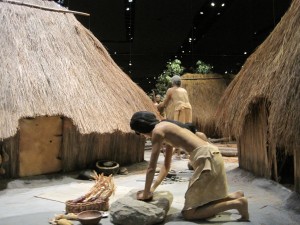
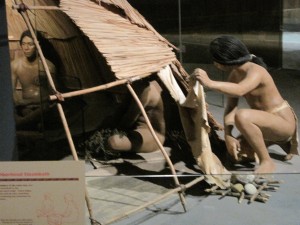
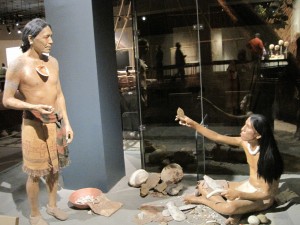
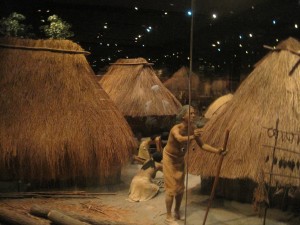 Occupying over 2,200 acres of land space near Collinsville, Illinois, is an old Native-American settlement called Cahokia. It was so named after a tribe of indigenous and ingenuous native people who occupied the spot thousands of years ago and built a city that was at a time bigger than the city of London. Today, due to a reason not yet fully discovered and reconstructed, the city of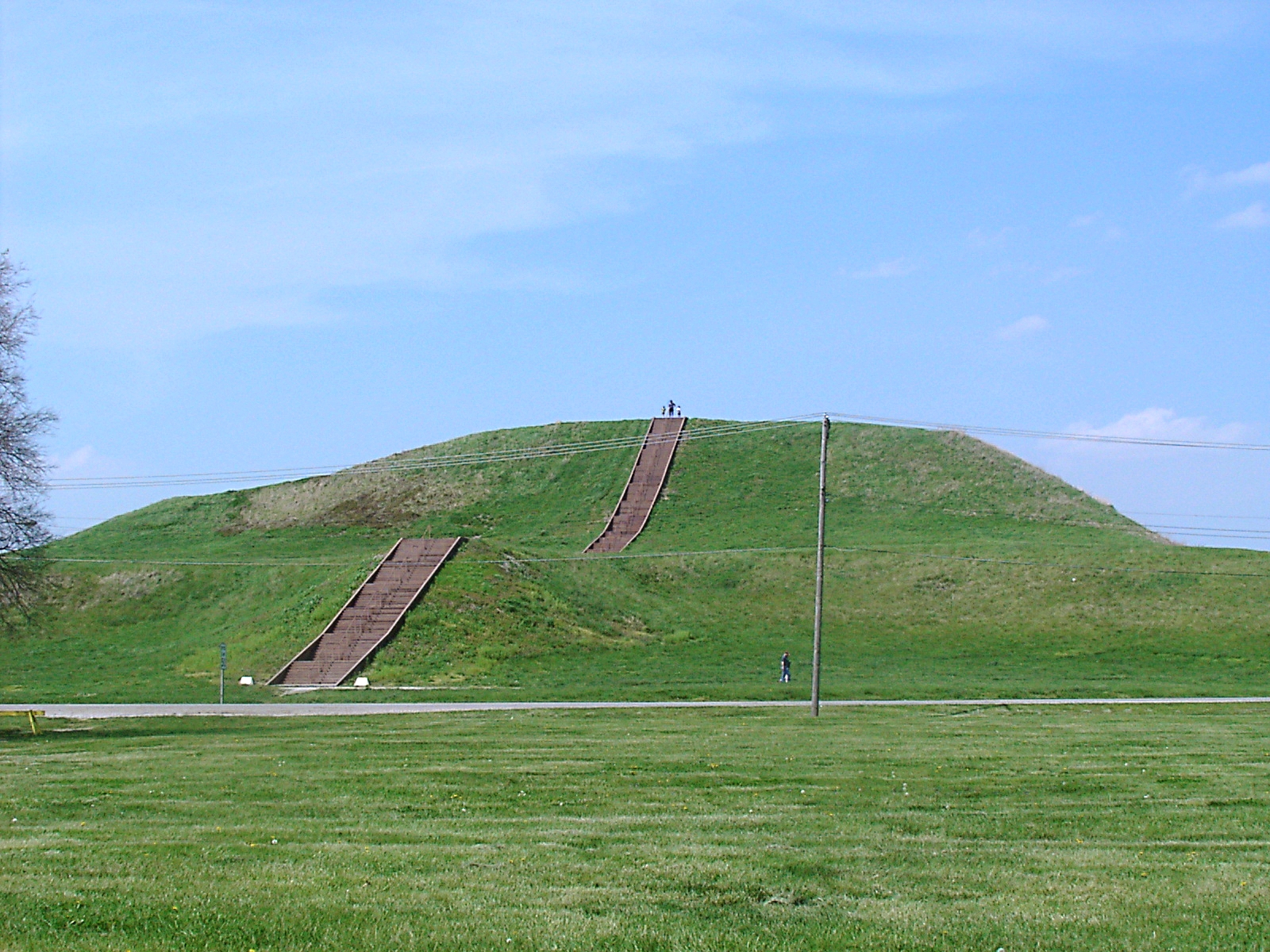
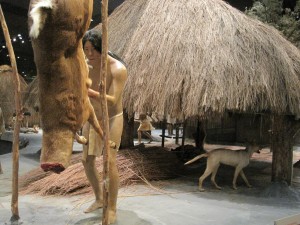
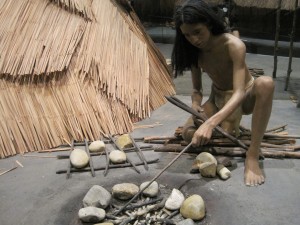
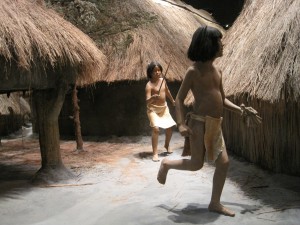
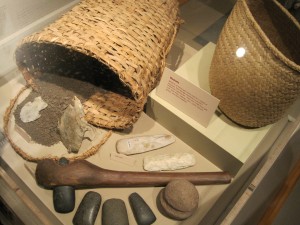 The site is basically an expanse of land with many mounds – or let’s say man-made hills. Excavations done there over the years have produced evidence that archeologists have used to learn all they now know about the place, their tools, their clothings, their burial practices and their system of government.
 Another most thrilling discovery I made was this: a spinning toy belonging to old Cahokia which was made of a little round wheel and a short thread that runs through it. It worked like this: with a little spin by one of the two hands that hold the thread on each side, the wheel rolled on for a while, and when the user pulled the thread apart, the wheel spins by itself clockwise, anti-clockwise, and then clockwise again in perpetuity as long as the user kept pulling the thread apart in either directions. Those who grew up in rural, or at least fun and playful neighbourhoods, in Western Nigeria would remember the same replica which was fashioned with the cap of soda bottles made flat and punctured with two holes. Check out the picture to the right and tell me if you see a difference. Holding it in my hand today brought back a cold thrill of an almost forgotten past. And yet, here I was Cahokia, and not in Akobò.