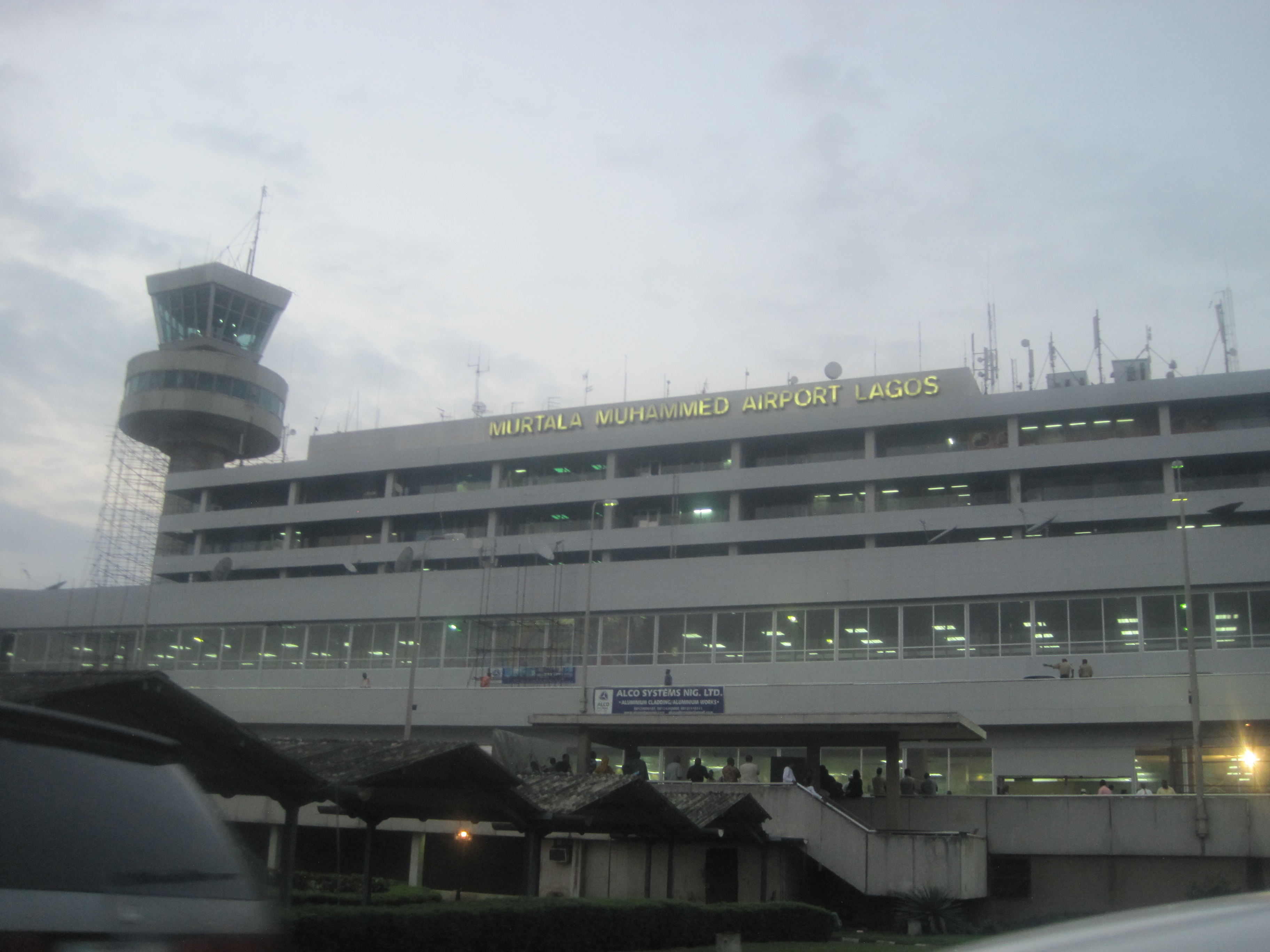
Until a few months ago, the only way to access the Murtala Muhammed Airport in Lagos as a guest was to park one’s car in an old and decrepit parking lot that was remarkable for its inadequate space, its pothole-ridden mud pavements, and its general soreness to the eyes. Alternatively, in order to pick up an arriving guest, one could keep driving around the arrival terminal for as long as it takes for one’s guest to get out after waiting for about half an hour (or more) to pick up their bags, or one could pay the 400 naira (it was kind of an extortion) fees and park in the said parking lot, and then walk to the terminal about a quarter mile away to await one’s guest’s arrival. At the arrival itself, one waits standing among a crowd of other patiently waiting guests. In the heat of an African evening, standing outside presents great and unnecessary inconvenience. Airport officials regularly came around to upbraid someone who had overstepped the lines of the guest area, or another who had sat on a concrete slab that wasn’t meant for sitting on. For many guests, it was better to stay in one’s car at the rowdy parking lot nearby and hope that one’s returning traveler has a mobile phone with which to call whenever they are done with baggage clearing.
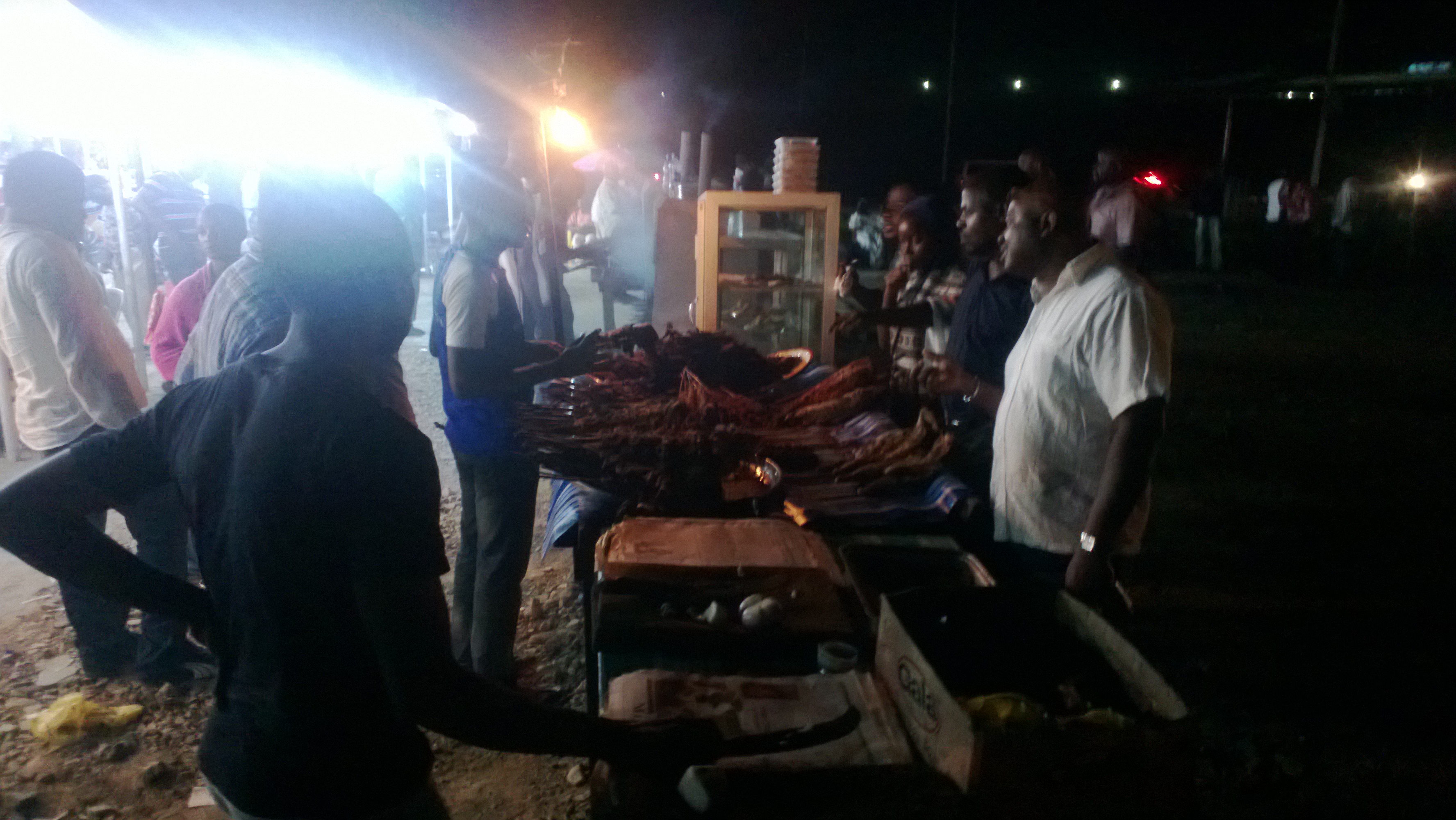
OLD: Customers buying suya, changing money, enjoying the night in the glow of light.
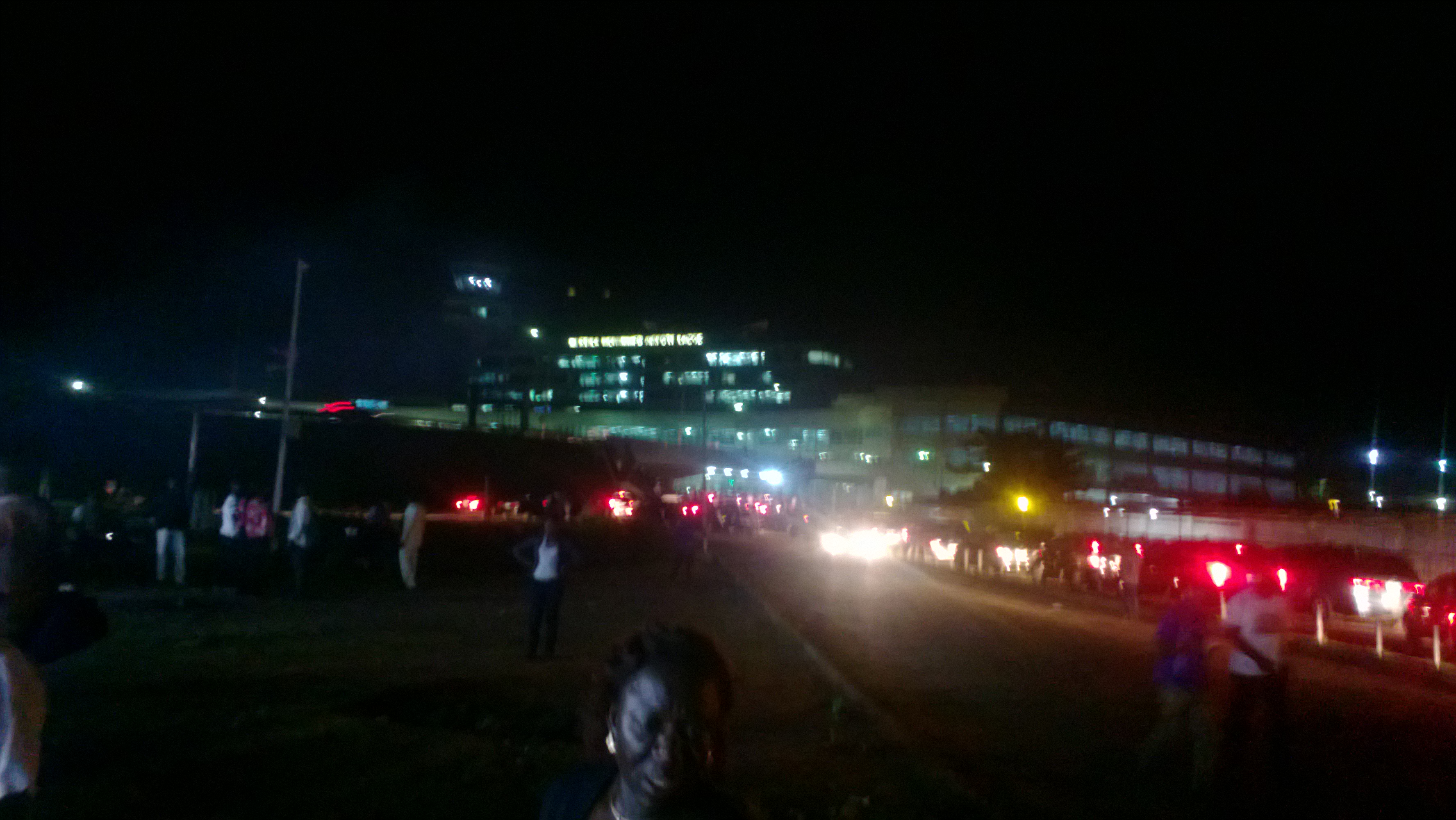
OLD: The airport from around the old parking lot (and suya spot)
At the entrance to the said parking lot outside the terminal was a suya stand and a row of shops where one could buy anything from soft drinks, cookies, and cigarettes, to any foreign currency. At night, it was a market scene lighted by the light from the faraway terminal and a glow from the shops and the coal fire used for roasting meat. Crowds of money changers, idle travelers, and guests of traveling men and women moseyed around in droves. It was mini chaos, but chaos all the same: an African night marked by heat, noise, and people. Driving out of the parking lot after one’s business is done, the guard who collected money earlier on entering the premises doesn’t notice one anymore, and one drove into the night with a feeling of having been dispossessed of something a little valuable without knowing what exactly it was.
Because of the terrible arrangement that got the parking lot in that location in the first place, many would have wondered a number of things: why the amount collected daily had never been put to any good use in upgrading the facility, whether the money went back into the coffers of the state or into a private pocket, and whether the fact that the parking lot had become insufficient in catering to the number of daily visitor cars at the airport shouldn’t have moved a caring federal government to deliver on its promise to completely upgrade the airport into a world standard complete with a top class parking lot that gives value for money.
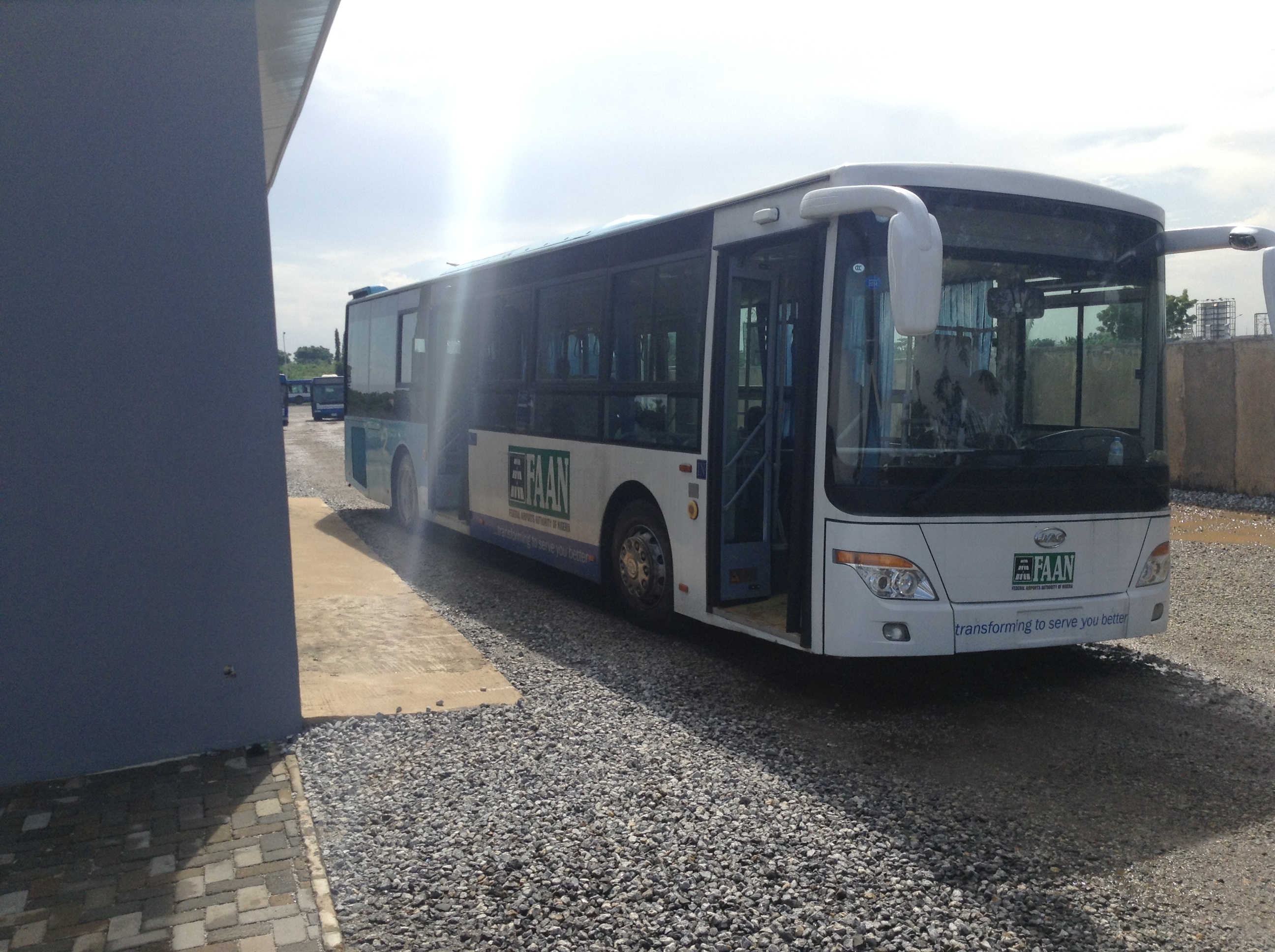
TODAY: One of the new shuttle buses
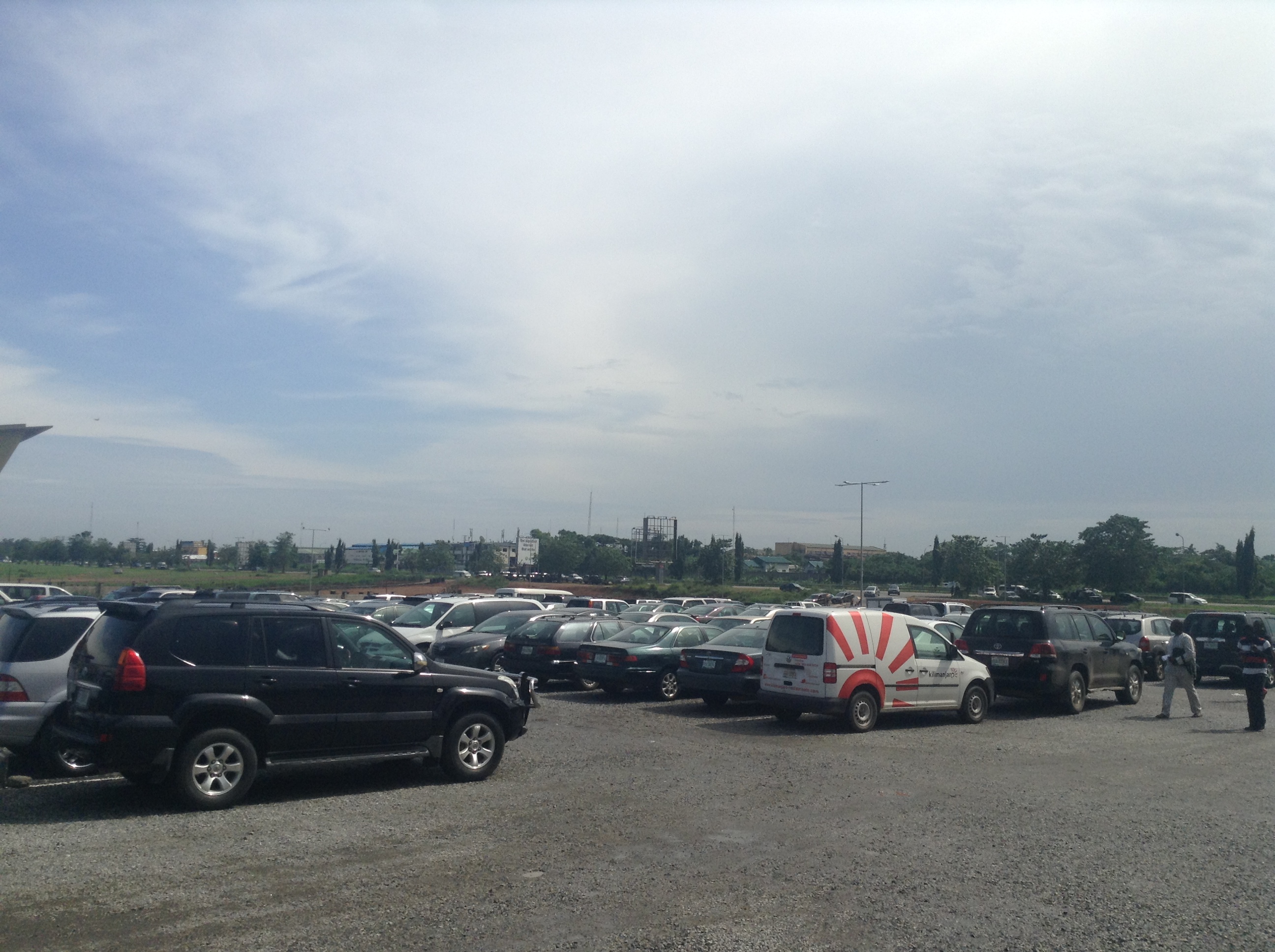
A view of the now organized parking space with ruled demarcated lines.
Visiting the airport a couple of weeks ago presented a surprise: the old parking lot has now been demolished, replaced by a well-organised, safely removed, and less cluttered one about a mile away from the airport terminal. There is also a shuttle bus that transports commuters/travelers/visitors from the new parking lot to a spot close to the terminal from where they can safely walk in. Gone are the night crawlers. Gone are the suya sellers and the money changers (many travelers might feel inconvenienced by these. A friend of mine once recalled, fondly, one time when he missed his flight because he was waiting to buy suya). Gone, also, is the terrible mud road. The shuttle bus goes through a newly constructed inside road and delivers passengers and their guests back at the parking lot in under five minutes, where they can pay for their parking, and leave in an orderly fashion.
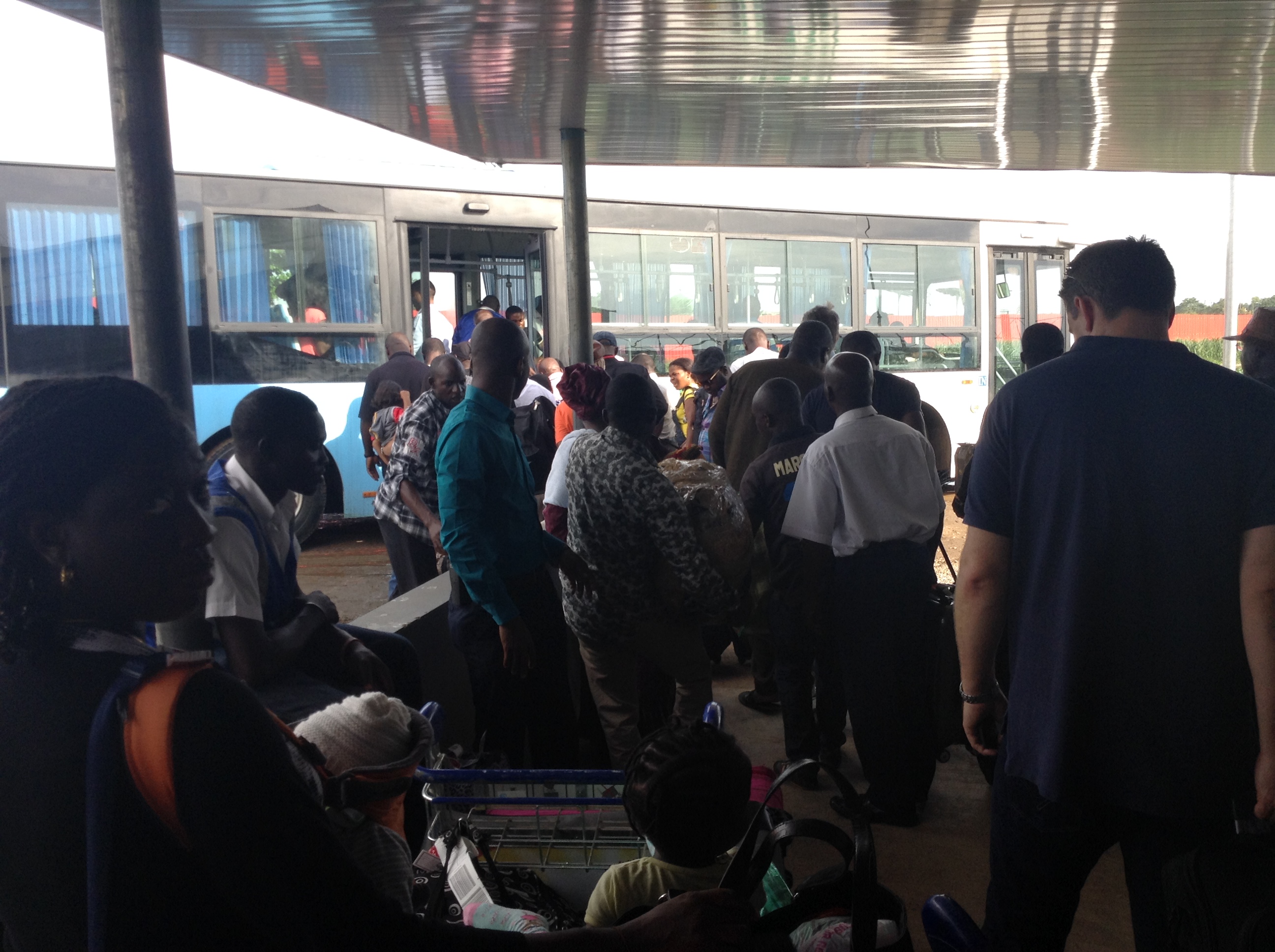
A crowd of travelers and their loved ones about to board the shuttle bus back to the parking lot.
There is a snag though: there are not enough shuttle buses. Sure, when you’re entering the airport alone after having parked in the said lot, it is an easy ride into the terminal, since people usually come into the airport in trickles. But after a major flight or two has offloaded its passengers and crew into the arms of their loved ones in the arrival lounge, commotion begins. There are occasional golf carts to transmit some from inside the arrival lounge to the bus pick-up location, but how many people can a golf cart sit? And how many golf carts would we need to carry everyone even when many have have already decided to walk with their luggage already risking robbery or vandalism? At the pick-up location, the crowd mills in a throng. And suddenly, the comfortable shuttle bus that sat about ten people on the first leg of the journey now has to accommodate about thirty-five people or more (passengers, their loved ones, and their luggage).
Because travelers are typically tired, and because many of them are arriving with a number of luggage bags, the shuttle bus pick-up point now (inevitably) features area boys willing to help them load the bags into the shuttle buses and offload them at the parking lot (for a fee, of course! Who do they work for? What are the guarantees that they won’t steal from passenger bags when he/she isn’t looking?) The only reason why their presence is inevitable is that the struggle to get a good space in the bus when competing with a number of other people mandates that the traveler has more than one pair of hands. So, is this necessary? After tipping the first luggage help within the terminal, paying for a push cart to move luggage bags outside the terminal, paying police or custom officers who choose to keep asking the tired traveler “Sir/Madam, what have you brought for us?”, does the traveler still need another person to tip (who likely works for the government)?
If it is a work in progress, this is an encouraging start. The old parking lot was atrocious, and is best lost to memory. The new one is great and well done. The only thing left is a nice and orderly transition from the terminal into the new parking lot in a comfortable and orderly fashion.
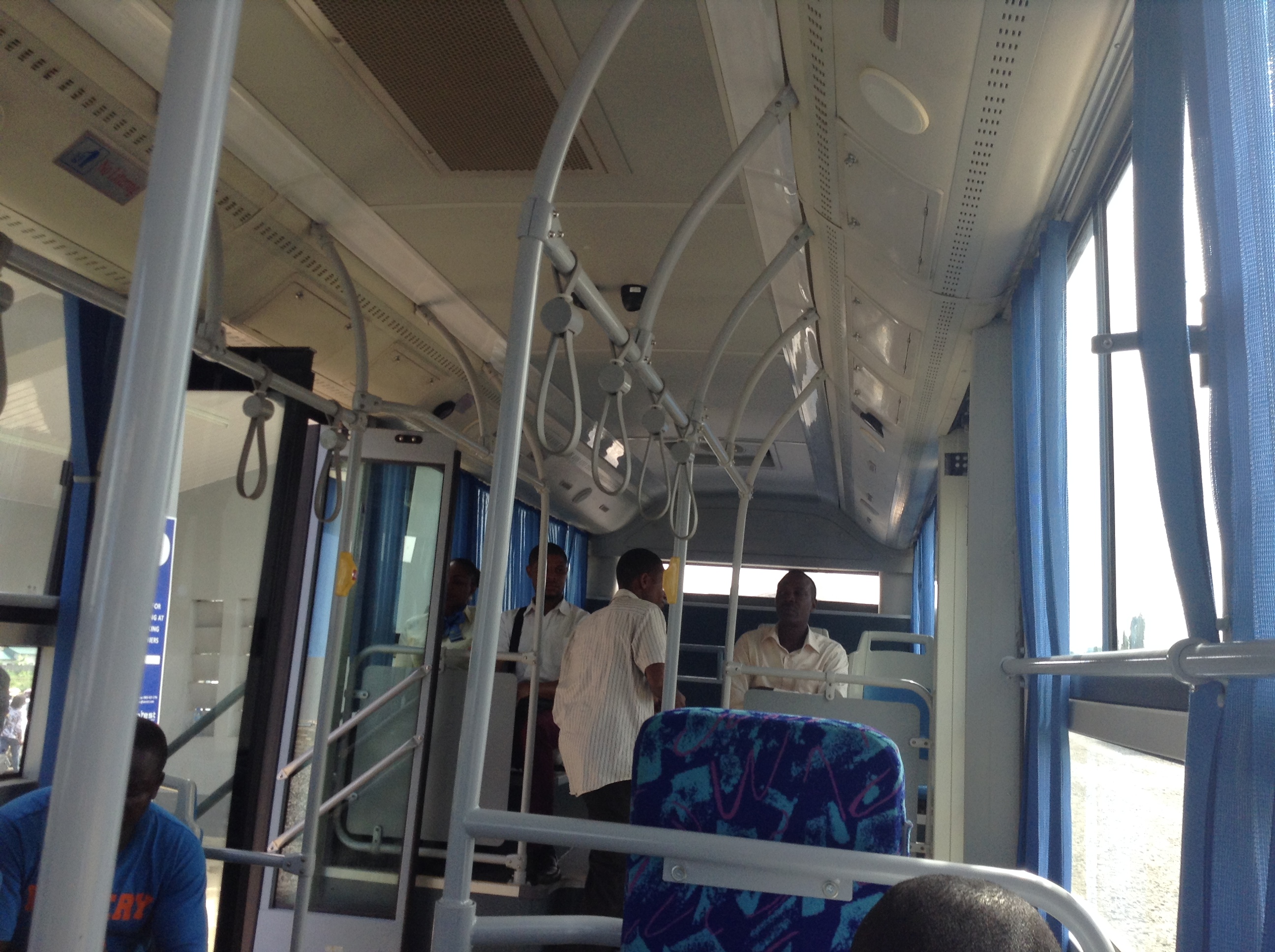
Inside the shuttle bus on the way into the terminal.
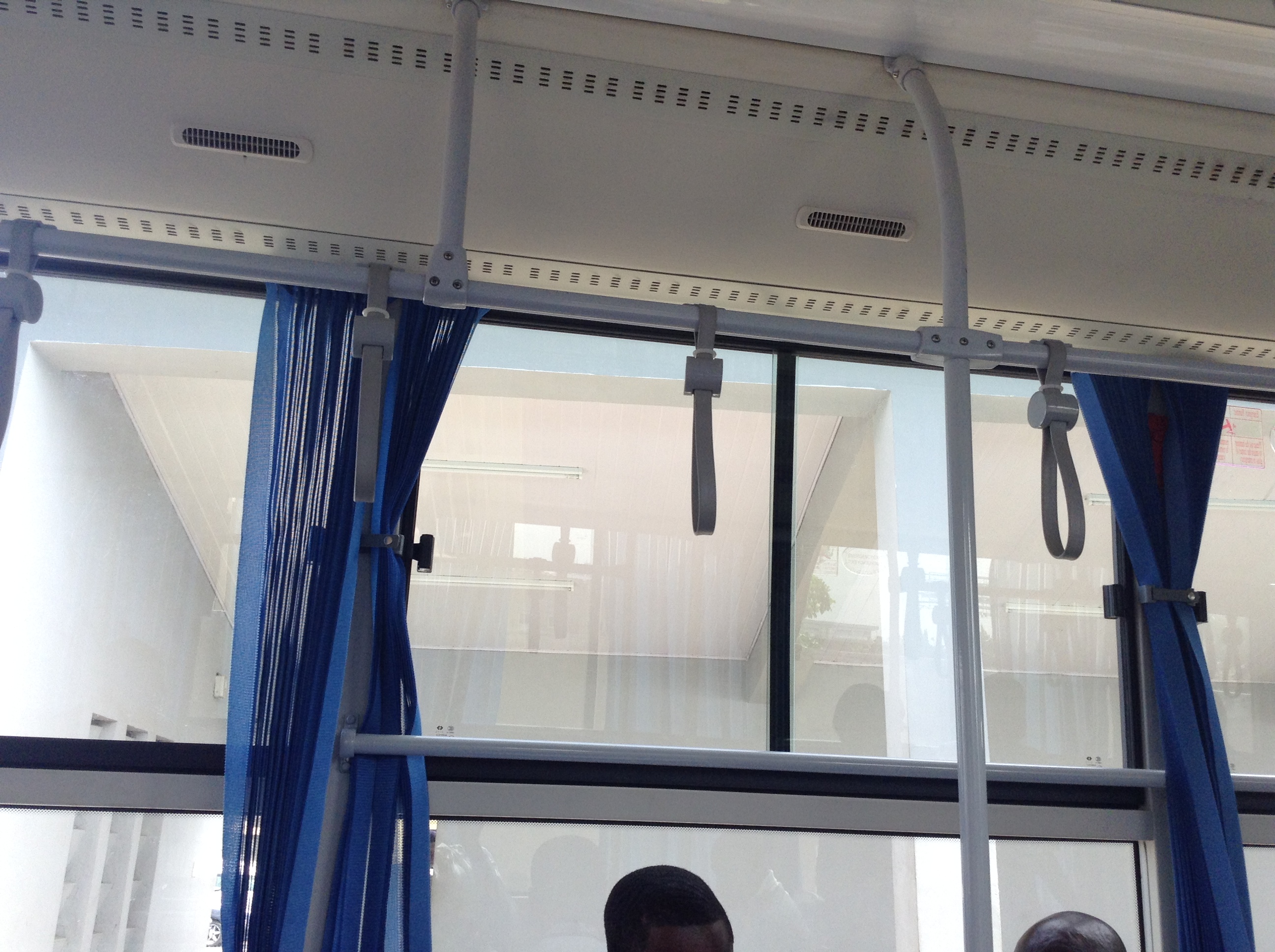
The buses are new and well equipped.
An idea that makes sense is to NOT have the loved ones of travelers come into the terminal AT ALL. They say their goodbyes at the parking lot while their loved ones are transported by shuttle into the airport alone. The same applies on return: they stay at the parking lot while the nice buses bring their loved ones back to them. Many things are achieved: the terminals are tidier and more secure, the shuttle buses last longer and are saved from early wear, and the rides are more comfortable. Everybody wins.
To satisfy African longings for communality and a bustling avenue for goodbyes, an entertainment venue can be built around the parking lot. The parting goodbyes and welcomes can be done there. But the ride to and from the terminals should be for passengers alone.
_________
The airport, built during the second world war, was named in 1976 after the then recently assassinated head of state General Murtala Rahmat Muhammed.