Bring Flowery Back!

My best moments from the movie Lincoln (which I have now managed to see after many weeks of pining in Lagos) were the parliamentary sessions where lawmakers debated and offered their opinions on the proposed Thirteenth Amendment.

I have not yet seen the full movie Iron Lady, but the parts I have looked forward to the most (from what I’ve seen in the trailers) are the bombastic debate scenes in the British House of Parliament. It is unquantifiable, the pleasure of the spectacle: lawmakers jousting with their best verbal weapons to the loud cheers and jeers of their audience. No doubt like the Roman Senators that long ago predated them, the congressmen made language beautiful to hear, and its use (for ill or for good) pleasant to behold.

Here is one from the real life British Parliament

The example in the movie Lincoln was a little disconcerting for me to understand since the American Presidential system (as opposed to the British Parliamentary system) has made it such that debate in the House of Representatives – being deliberately representative – is now much more decorous than the movie portrayal. What happened in the intervening years? The loss of the power oratory? Political correctness after the many years of political assassinations? Laziness? What?

Here is another example from the Jamaican Parliament, sent to me by a friend:

Beautiful, isn’t it?

If I had a magic wand, I would turn all world democracies into Parliamentary systems, if only to squeeze out of their lawmakers (and thus representatives of the language and culture) the last juice of their lingual soul almost always laid bare in the moments of fiery legislative debates on the floor of the house. As per the United States, look no further to the present constitution of the Senate and the House of Reps. The last time one of them tried to interrupt the president with a two-word interjection, the whole country went into a collective apoplexy. (See Wilson, Joe).

As far as Nigeria is concerned, the last great hope for such grand language use is the former Rep. Patrick Obahiagbon (See below). Not half as flowery as the British Parliamentarians (but far more entertaining, and consistent than his fellow Reps in the Nigerian House), and sometimes wrong in the usage of the heavy words he had chosen as vessel for his bombastic performances, he carried the flag for as long as he could until he was voted out.

We should bring flowery back.

I thank Lincoln for this (however unintended) incentive.
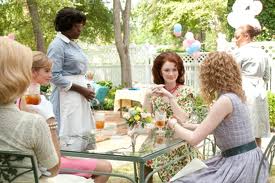
Reviewing “The Help”

A group of young southern housewives (all brought up by black maids working for meagre payment) gathered around to play bridge every week in each other’s house drinking wine and having fun. Beneath this facade is a series of complex relationships which included jealousy, in-fighting, pretense, hate, and compassion, courage, inferiority, humour, discrimination, ignorance, among very many others. The time was early to late 60s, and the place was Mississippi. The movie is an adaptation of “The Help” a best-selling novel written by 40 year old Kathryn Stockett.

I saw the movie today and it was a moving experience. (I have written a short review on Nigerianstalk.org.) My attention was first called to the movie in May at a house party at a professor’s house. She’s a 70 year old history professor here who occupies a vivid memory span of some of the event recalled in the book. I recommend the movie to everyone who is interested in a few more nuances of the race relations in the South of the 60s and their implications for today’s society. It is an important story.


The Fiddler on the Roof

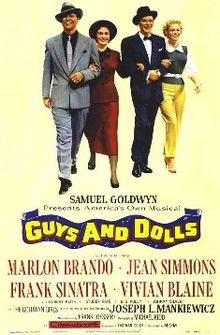
I have chanced upon a large collection of very old movies some of which I should have seen a long while ago but couldn’t because of inaccessibility. As much as I can, I will tell you my views on them, and the impact they had on me (for those that do make an impact, that is). The last week has been a tour of Guys and Dolls, a movie featuring Frank Sinatra and Marlon Brando (before he became the large framed guy we grew up knowing). The 1955 musical is famous for being the only movie in which the two famous men starred together, and the only one in which Marlon Brando sang. The story is nuanced and playful, but very entertaining, and timeless.

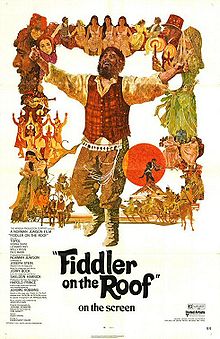
The other new memorable film I saw, also a musical, is The Fiddler on the Roof, a powerful story of family, love, tradition and the departure therefrom, and the story of the Jewish persecution in Tsarist Russia. I am always inevitably drawn to stories that have real life historical background because they constantly remind that we’re not just watching a movie, but learning from the story of a people that lived during a trying period in the larger history of the world. This story, based on the life of Tevye, a poor Jewish man with five daughters, is set in 1905 and tells of the endurance and transience of tradition, the strength of love’s bond, the perseverance of humanity in the face of persecution, the conviviality of family life, and the presence of hope in every dire situation. It was particularly interesting for me to discover that the persecution of Jews in Russia did not start during the Second World War but had been there far much earlier. And when you see a whole village trooping out on their feet in the cold winter out of a place where they’d lived for generations into the outside world to places unknown, your heart breaks. Add to this a letting go of a father of her daughter who had abandoned the faith and family tradition by marrying a Christian secretly, then you get a scene of denouement with a powerful emotional finish.

I can’t tell you more of any of them without letting out the plot, but I must strongly recommend them for whomever is interested in musicals, history, love, laughter and a few teardrops. You may also come off with a strong love for a few of the songs in The Fiddler on the Roof. My favourite is “Sunrise, Sunset.” and “If I were a rich man”, but you may also like “Tradition” and “Matchmaker.” As for Guys and Dolls, watch out for “Luck be a Lady” and a few other jazz classics.

Ten stars out of ten.

Casablanca

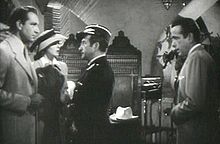
There are very many memorable scenes in this movie which I was seeing for the very first time but these two stand out. One is the emotionally charged scene of utmost patriotism in the face of danger and oppression. The German soldiers were singing Die Wacht am Rhein and Victor Lazlo comes to overshadow it with the beautiful and heartfelt rendition of La Marseillaise that would make the head of anyone swell, French or not. A very defining scene in fact. I couldn’t get enough of it. (The irony of this scene to a viewer like me lies, of course, in the fact that both the German and the French folks were engaged in that phychological fight for superiority while occupying Morocco, a country that technically belonged to neither of them.)

The other is a very tender love scene full of nostalgia and affection. A black man (perhaps from America, having fleed from the discrimination of the South) played a moving slow rendition of a now favourite song. It was my pleasure to discover on iTunes today that the song As Time Goes By has been remade after the movie by greats like Frank Sinatra, Nat King Cole, Billie Holiday and Louis Armstrong among many others. Even Kenny G did an instrumental version. A great song by many standards, and the movie gives a very strong emotional background to its appreciation. Play it Sam.

Full of laughter, drama, intrigue, action, romance and bravery, with very superb acting by Humphrey Bogart,  Ingrid Bergman and Paul Henreid Casablanca has suddenly become one of my most favourite movies of all time. A wonder I’m seeing it now just for the very first time.

Arugba

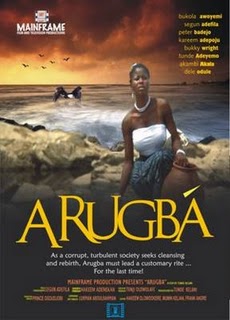
Set against the background of a corrupt society, the story of the votary virgin designated to “carry the calabash” for one last time before settling down into matrimony is enticing on its face. Add to that the intrigues of puberty and University life, the corrupt and often lecherous leaders (many of who have real life equivalents in Nigerian politics), historical figures in short cameos, and a multi-award winning director known for equally engaging films, and you have a winner, right? Yes, if you are a skillful playwright looking for a nice plot to use in writing the next bestselling play. No, if all you want is a screen flick that tries very hard to please everyone (UNICEF, Cultural experts, Movie buffs, Local language activists, suckers for love stories laced with music, and pretty much everyone else).

What I’m trying to say here, of course, is that I wasn’t much impressed with the movie except with the super acting by the seasoned actors (Lere Paimo, Kareem Adepoju, Bukky Wright, Peter Badejo, and the new Bukola Awoyemi), the song Afi fila perin , the major plot (which is the cleansing of a town as tied to the symbolic act of the virgin votary), and the picture quality. Everything else seemed distracting, especially the flashbacks. The sub-plots looked like poorly-handled attempts to situate everything in this quasi-imaginary world in which the events took place in the events of our real life. We see Obasanjo. We see Bola Ige. We see Abiola. We didn’t need to see them, but we did. Nothing else in the overall plot of the movie prepared or compensated us for the distraction. And even the love story which is the major subplot did not always convince. It surely didn’t live up to the standard of Ajani and Asake in O Le Ku handled by the same director.

The flashbacks were the main distraction. I did not see the point in keeping the details kidnapping attempt on Adetutu till the end. It should have been enlightening then, but it wasn’t, because we had already consoled ourselves – having seen her hale and hearty – that she had already survived in one piece; and the minor intrigue of the women who wanted her removed on the rumour that she had been raped did not really impress. What about the king’s inglorious offer to Adetutu earlier in the beginning? We didn’t know much about it until the end, for no justifiable reason. Other distractions included the sub-sub plot of the Islam and Christian adherents at the beginning and the end, Adetutu’s jealous rival (played by Kafat Kafidipe), the Oral Rehydration Therapy that eventually never saved a child from dying, the jealous housewives in the king’s palace, the spirits seen at the beginning and at the end coming out of the (supposed) Osun river to play with Adetutu (when we know for a fact that the story is not science fiction) among many others. I’m an ardent fan of Mainframe, but here, I see only minor resurrections of what we liked about Saworoide, Koseegbe, Campus Queen, and even O Le Ku. But that’s where the love ends. At the end of the movie, I did not stand, smile, ponder and send a text to my friends to go get a copy. I merely rewound it to listen to the song Afi Fila Perin many times again, then go to bed.

Now, this is what I suspect: there were too many consumer constituencies to cater for by this offering. And in the end, it ruined what could have been the best story since Death and the King’s Horseman (which is not even a movie yet, as it should be) a classic meeting of tradition with “civilization” and the fallouts thereof. So many possibilities… Maybe if Tunde Kelani had written the story himself, or at least passed it through the hands of Akin Ishola, Bamiji Ojo, Wole Soyinka, or Bayo Faleti…

There, my KTrotten Tomatoes! Two stars out of five. Okay, maybe three. Maybe.