 I translated a poem for my Slovenian poet and musician from English into Yoruba a few weeks ago. It was a very short but humorous piece of work. I’ve also recorded it for him in my own voice.
But while we were looking for an appropriate background sound for the poetry recital, he sent me the following:
“I put the voice of birds. This would actually stress that you read in an African language and it would give some jungle atmosphere.”
Even though the bird effect turned out pretty well in the end, I really couldn’t stop wondering about what his reasons for it really reflects. It sounds like there is definitely a wrong assumption somewhere in there. Or maybe it’s just me. There are birds in England, India and Canada too, right? If birds and the “jungle atmosphere” is enough to identify an African language, what animals would be required to make noise in the background if I were to read in an American language? A bear, perhaps? Hard rock? Or a gun shot? How far do we go until such assumptions just turn into a bunch of pointless categorizations?
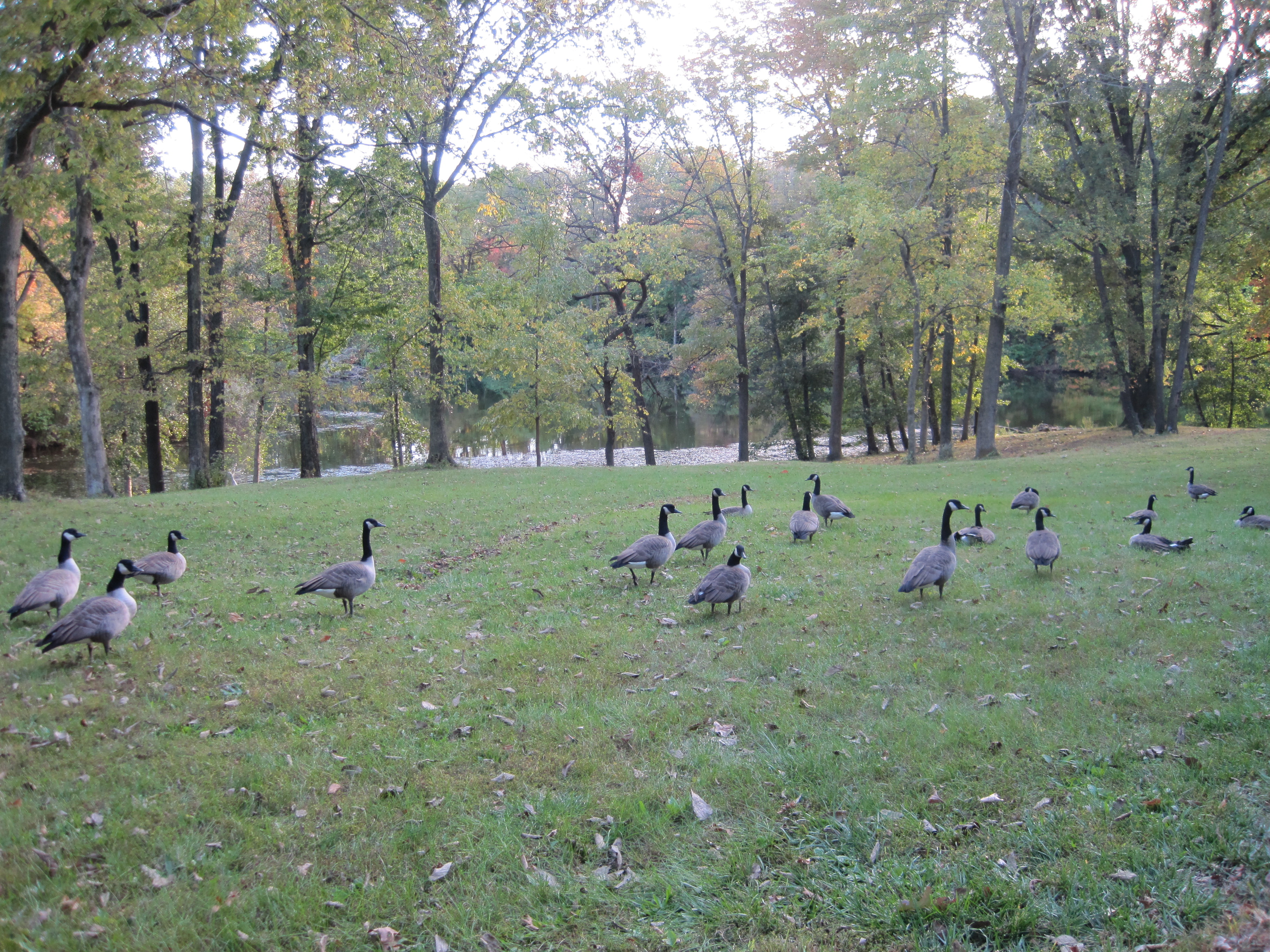 It was not long ago that I discovered that many people here wouldn’t really believe that I’d never seen animals in the wild until I came to the United States. (I saw a monkey, a chimp, a gorilla, a zebra, a lion, an elephant, a camel, a fox, and an ostrich for the first time in a public zoo of what later became my University in Ibadan. I was about eight years old then. I later saw some baboons in the wild when I went to Kenya in 2005, but before then, beside dogs, chicken, cats, cattle and sheep, most of the animals I’ve seen have been in confinement.) Cougar Village alone however has a large population of deer, geese, raccoons, cats and squirrels than I’ve ever seen anywhere, walking free without confinement. And the geese are wilder than any I’ve ever seen anywhere. One day in the winter, I saw a lonely fox walking by itself on the highway close to where humans might be found walking innocently on a lonely day. Maybe Cougar Village was the kind of jungle he meant!