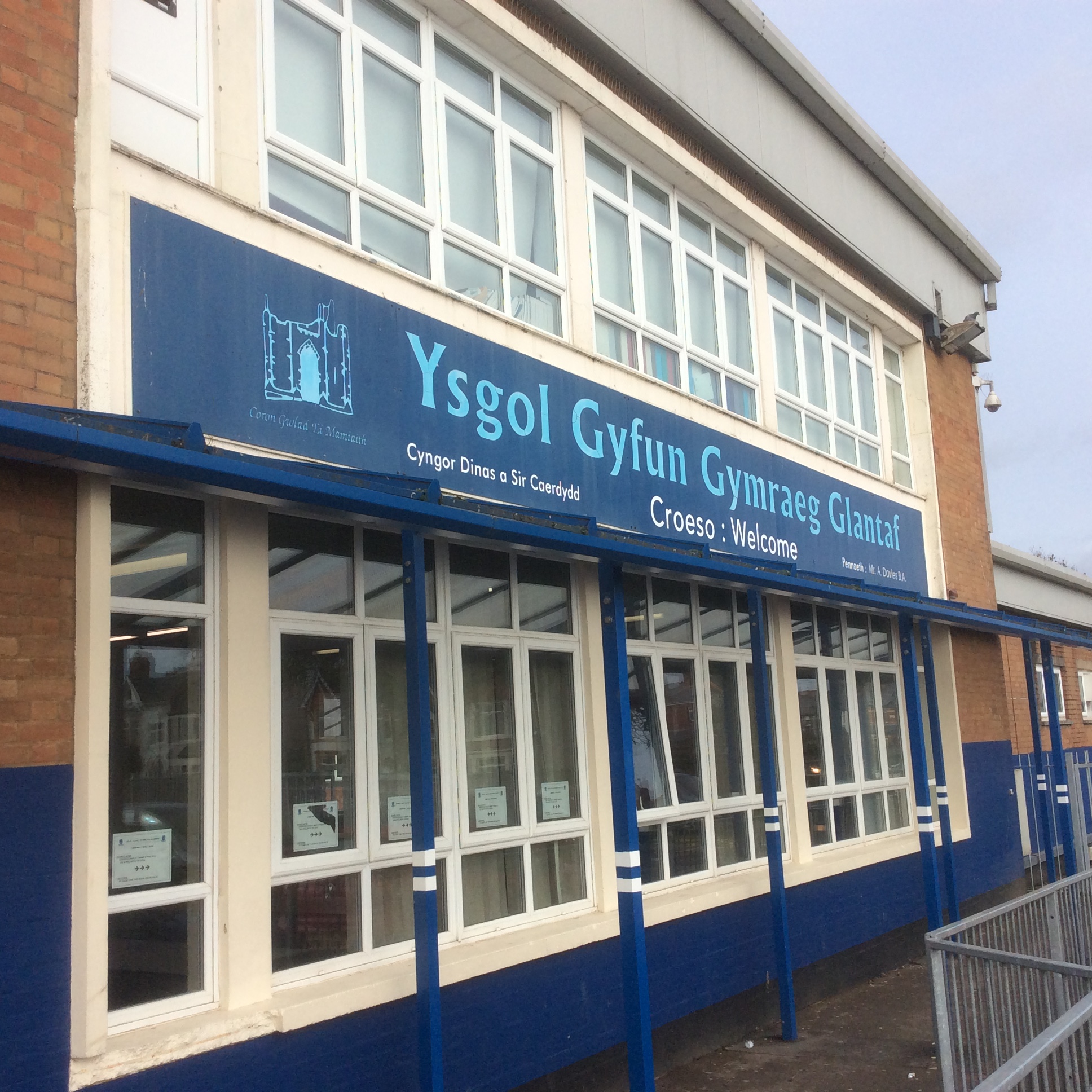
 The curious linguist in me was on high alert during my tour of the Ysgol Glantaf Welsh-medium School in Cardiff where every subject but English itself is taught in Welsh. I spotted, quite early, that the word Ysgol in the name referred to “school” and was pronounced almost the same way (thanks to my guide Jeremy); that “alright” was used a lot in the classes, perhaps because of a lack of a common Welsh equivalent that could do the job better; and – as was called to my attention while at Radio Cymru – the word “lot” remained the same in English as in Welsh, to the consternation of many conservative Welsh speakers concerned about the dilution of the language. I picked up a few more new knowledge: the “f” sound is pronounced as “v” so “Glantaf” is actually [glantav], and whenever “d” is doubled as “dd”, the sound is the voiced dental fricative, as we have in “those” and “them”. And finally, to my delight, I realised that “Cymru”, the native word for “Wales” is pronounced more like “Camry.”
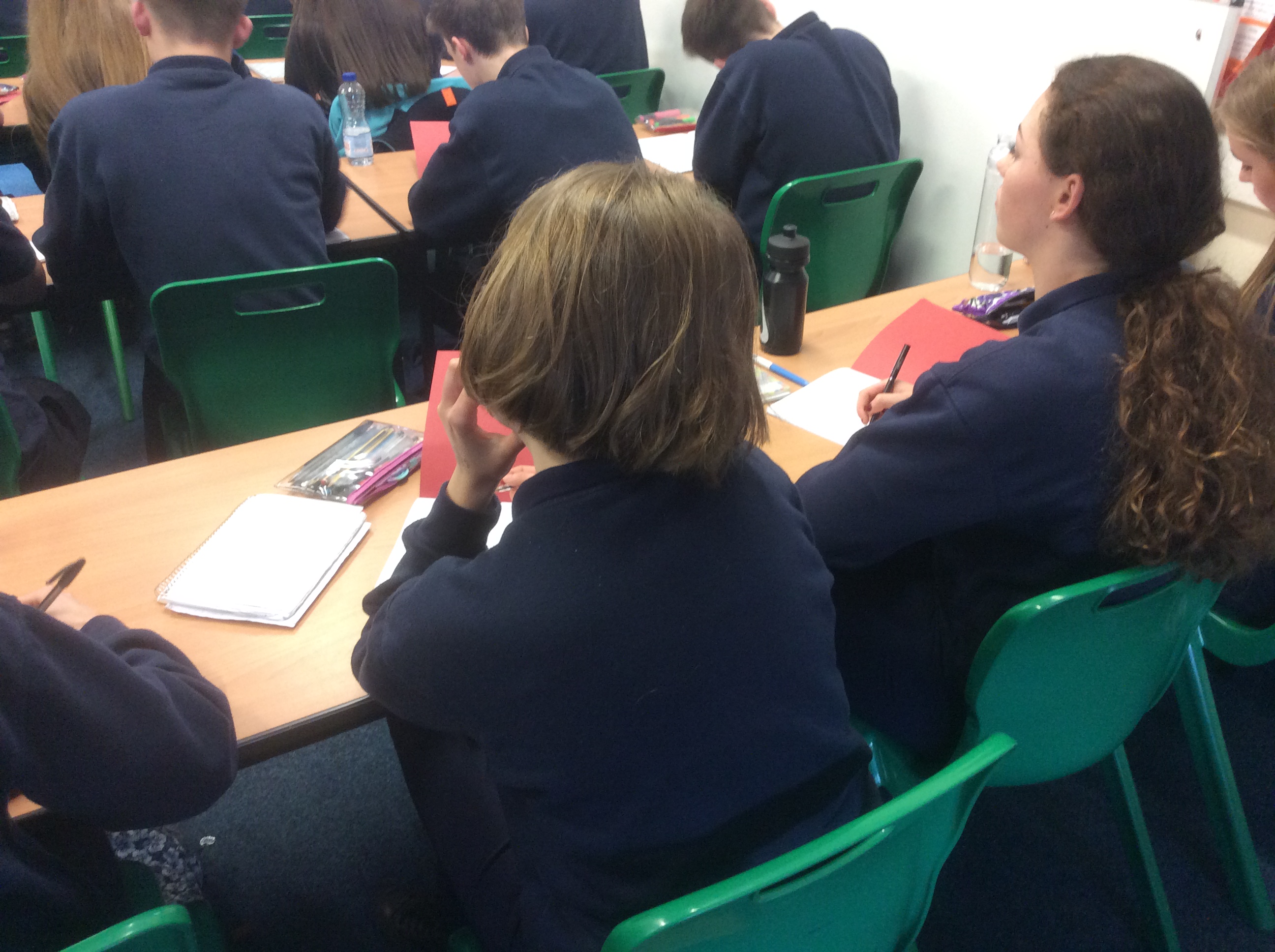
Walking around a few classes I was privileged to attend as an observer, one of the questions I put to the students was what language they would prefer to learn in if they had a choice. The overwhelming response was “Welsh”. This came not just from native Welsh students but also from students of English-speaking homes. “Why?” I followed up, now genuinely curious as to whether this was just a way to impress this visitor from Nigeria. One of the reasons I remember is that “it is easy to read and spell. The sounds correspond more to the spelling.” I remember this because it refers to one of the famous complaints about the nature of English, but also because it made me acknowledge the role of accessibility in the assessment of a language as a tool for learning. As a Nigerian with a life-long tussle with the English language and a fairly competent grasp of its grammar, the claim of a one-to-one correspondence between the spelling of Welsh and its pronunciation is a little curious (See: “Cymru” above), but the enthusiasm of the student was hard to ignore.
 In the end, the idea of a thriving culture of mother tongue education in a language not English – in a British country, no less – impressed me more than anything else I came across in my ten days in Britain. From the days of the Treachery of the Blue Books to the period of the Welsh Not, the country of Wales seems to be back on its footing on the way to a truly vibrant cultural identity. See what happened when one British journalist mistakenly spited Welsh-medium education through a carelessly worded phrase!
In Nigeria, the policy of mother tongue education is scoffed at with one common argument, notable in its emptiness when applied to the Welsh example: “Using the mother tongue to educate a child in a country of so many languages will lead to a fractured and disunited country in the future, a drawback to true national development.” Well, the United Kingdom almost got fractured last year, and the Welsh weren’t the culprit! Scotland, which spearheaded the move, isn’t as big on its indigenous language use (with less than 2% of its population speaking Scottish Gaelic), and perhaps even fewer speaking Scots as a first language. Wikipedia says none of these languages has formal recognition nor is used as a medium of instruction in Scottish schools. So, there goes the argument for language as the only means of national integration!
I note, with sadness, the absence of any school in Nigeria today where any Nigerian language is used as a medium of instruction from start to finish. Nowhere where Physics, Chemistry, Mathematics, or any other technical discipline is taught in a Nigerian language. Could that have contributed to the 70.67% failure rate of English and Mathematics at last year’s year-end results? Your guess is as good as mine. But we have ourselves to blame for not looking for new ways to change a system that is obviously not working as expected. What is education, after all, if not a means of empowering the child?
 This is my 200th blog post!
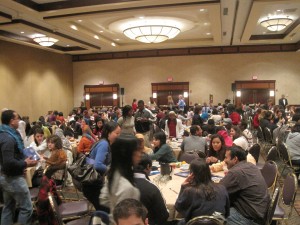 Meanwhile, the conference itself is very warm gathering of 409 Fulbrighters from 49 countries teaching hundreds of languages all over the country. I have met old friends who remember me, and those who don’t. I have also met new ones who had heard about me and those who hadn’t. There will be more conference sessions tomorrow, and more feeding sessions too, until Saturday when the conference officially ends. We have learnt about Social Networking for the Foreign Language Classroom, Writing for Publication in Foreign Language Journals, and Scenarios & Strageties: Addressing Individual Student Concerns. Tomorrow, there will be more… Before this conference ends, we will meet with some representatives from the State Department. No, I don’t think that there is a chance to see the Secretary of State, so that’s that, already crossed out.