A Vote of Thanks

My visit around (some parts of) the country could not have been possible if not for support, solicited and unsolicited by many people along the way. Half of the trip was motivated by impulse so I really appreciate the help of friends and colleagues who welcomed me with open arms without reservation, and were willing to be at my beck and call for the past three weeks.

There was Dr. Shaban in Ife, Anja and Yun Hsin at Ikare, Prof and Mrs. Oyebade at Akungba, Peter, Chiedu and Bode at Ilorin, Laolu and Mr. Olaniyan at Abuja, Zainab, Samson and Comfort in Kaduna, Alben at Nassarawa; Rotji, Yilrot and Joshua in Jos, and everyone who sent me helpful tips on Facebook, some of which I used, and some that I didn’t. Thanks should also go to Yemi, Chris, Laitan and Godwin who bailed me out when I needed their help.

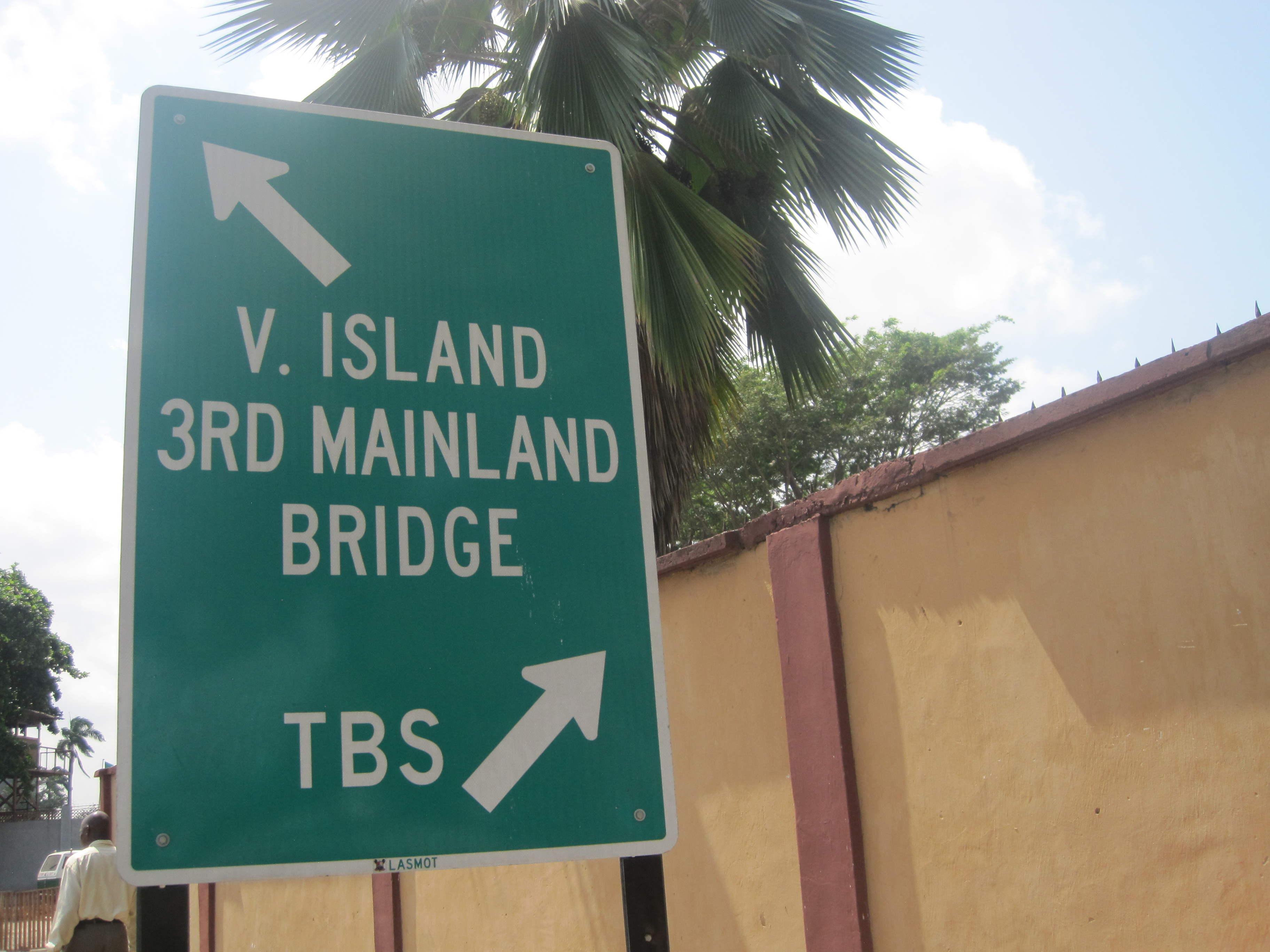
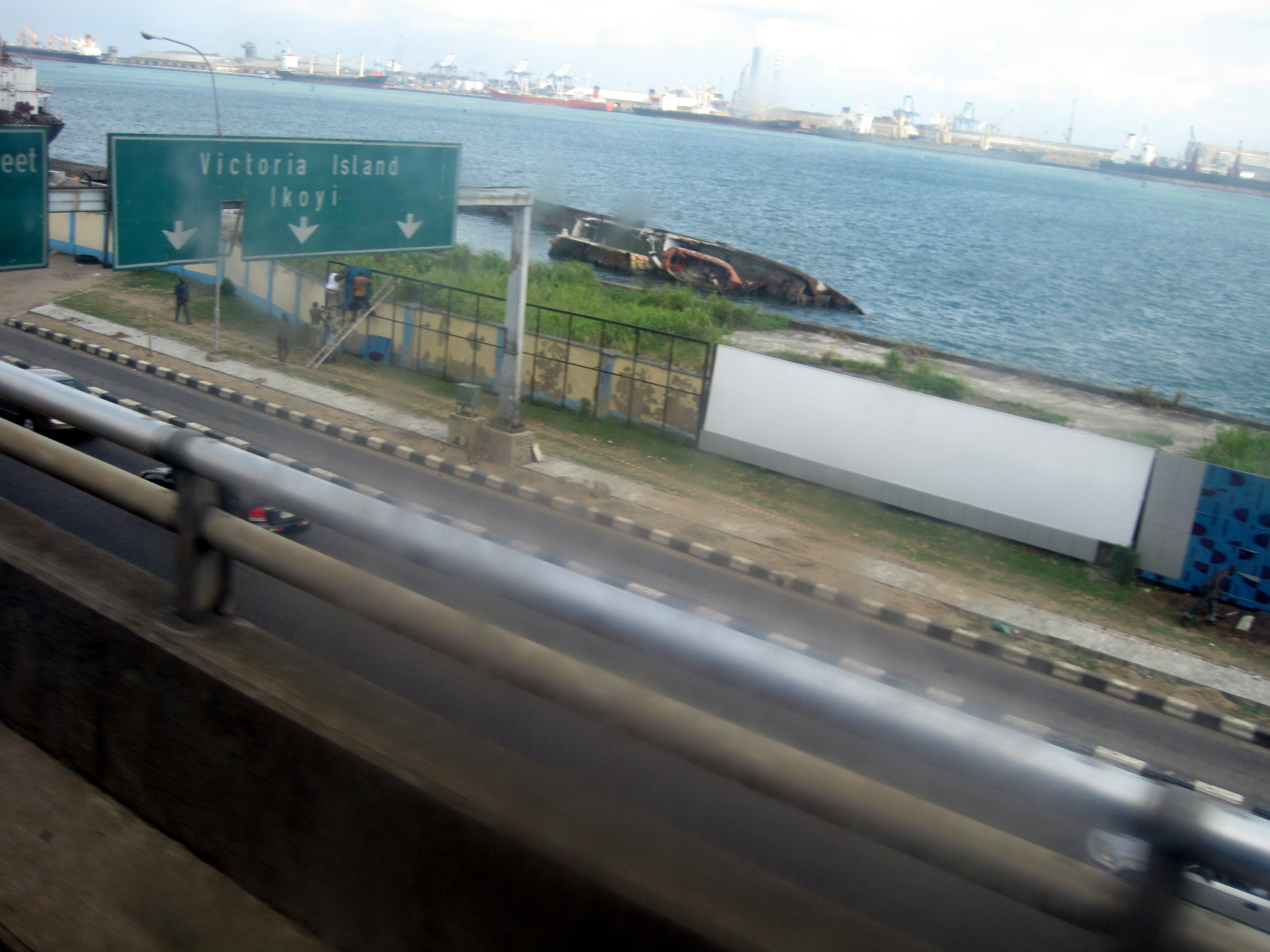
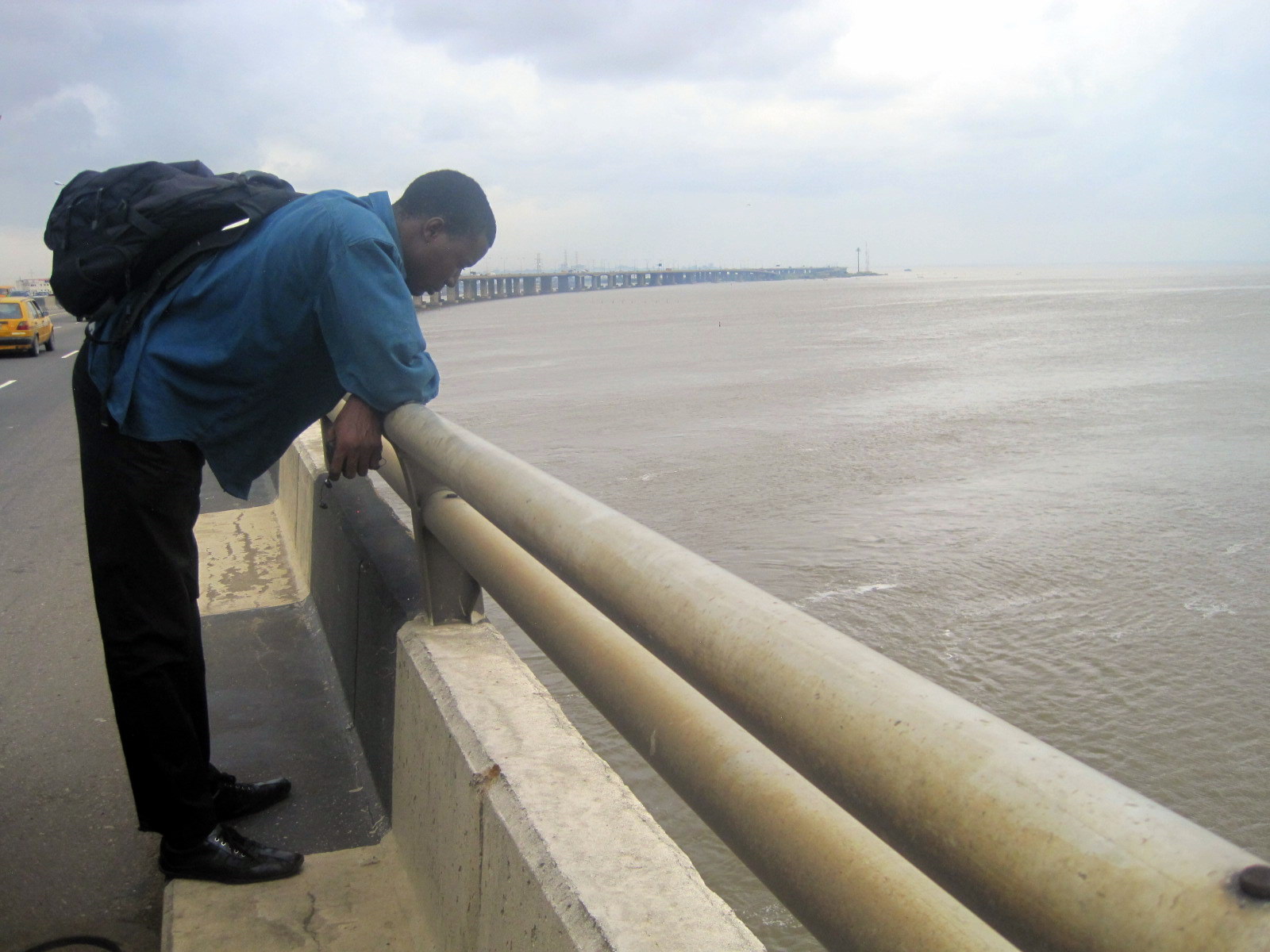
So now, I’m back in Lagos for the weekend, and what did I see? A bus from the Island carrying me and a host of other passengers ran out of fuel right in the middle of the supposed longest bridge in Africa: The Third Mainland Bridge. For thirty minutes, we were there waiting for him to go to the mainland and find fuel. I spent much of the time taking pictures of the bridge and the water which was something I’d always loved to do anyway. It wasn’t such a waste of time after all, and I didn’t succeed in falling into the lagoon. That would have been a poetic end to a journey around the country.

In any case, I’m back, more refreshed. How have you all been?

The LAWMA Sweeper

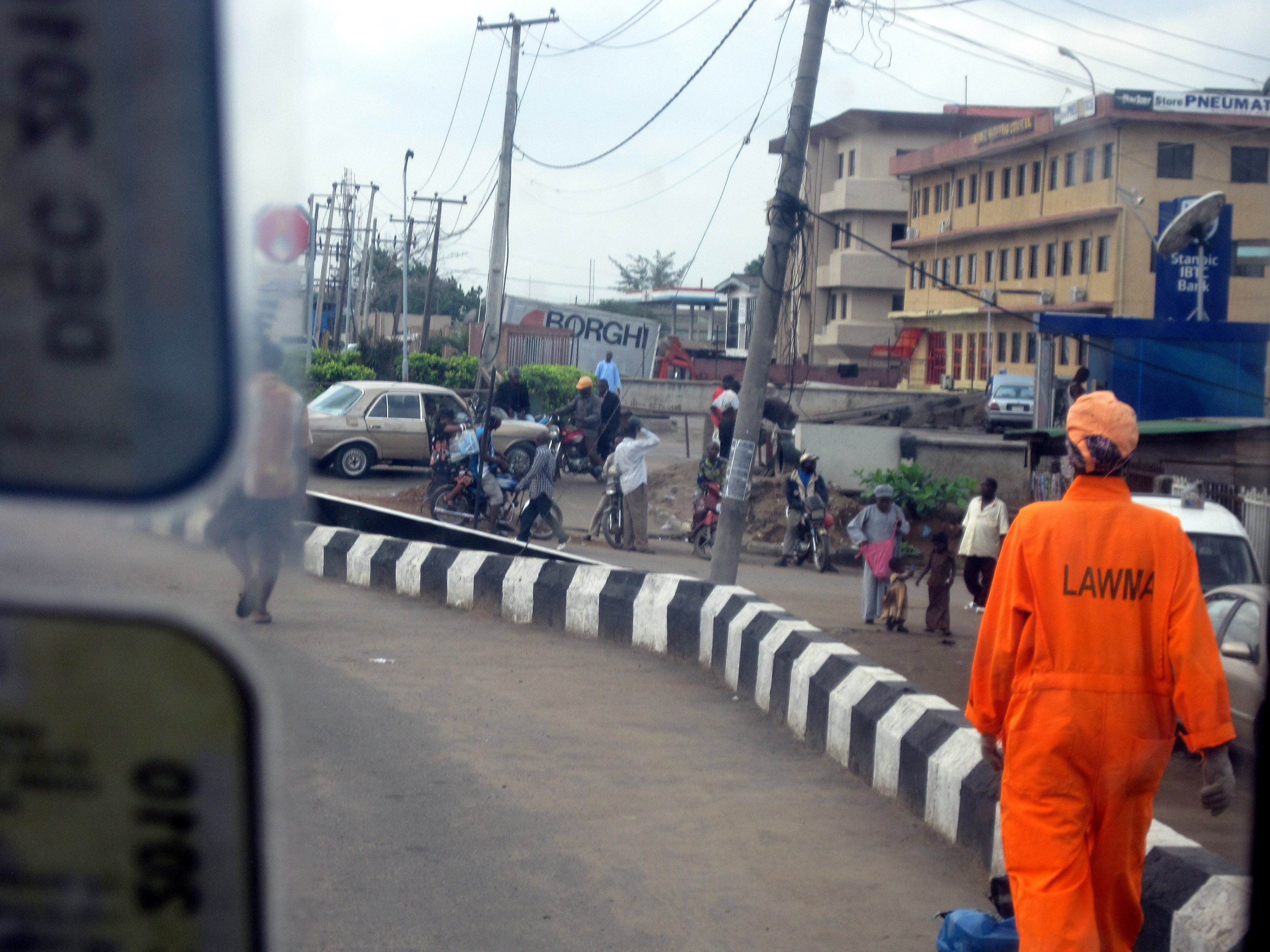
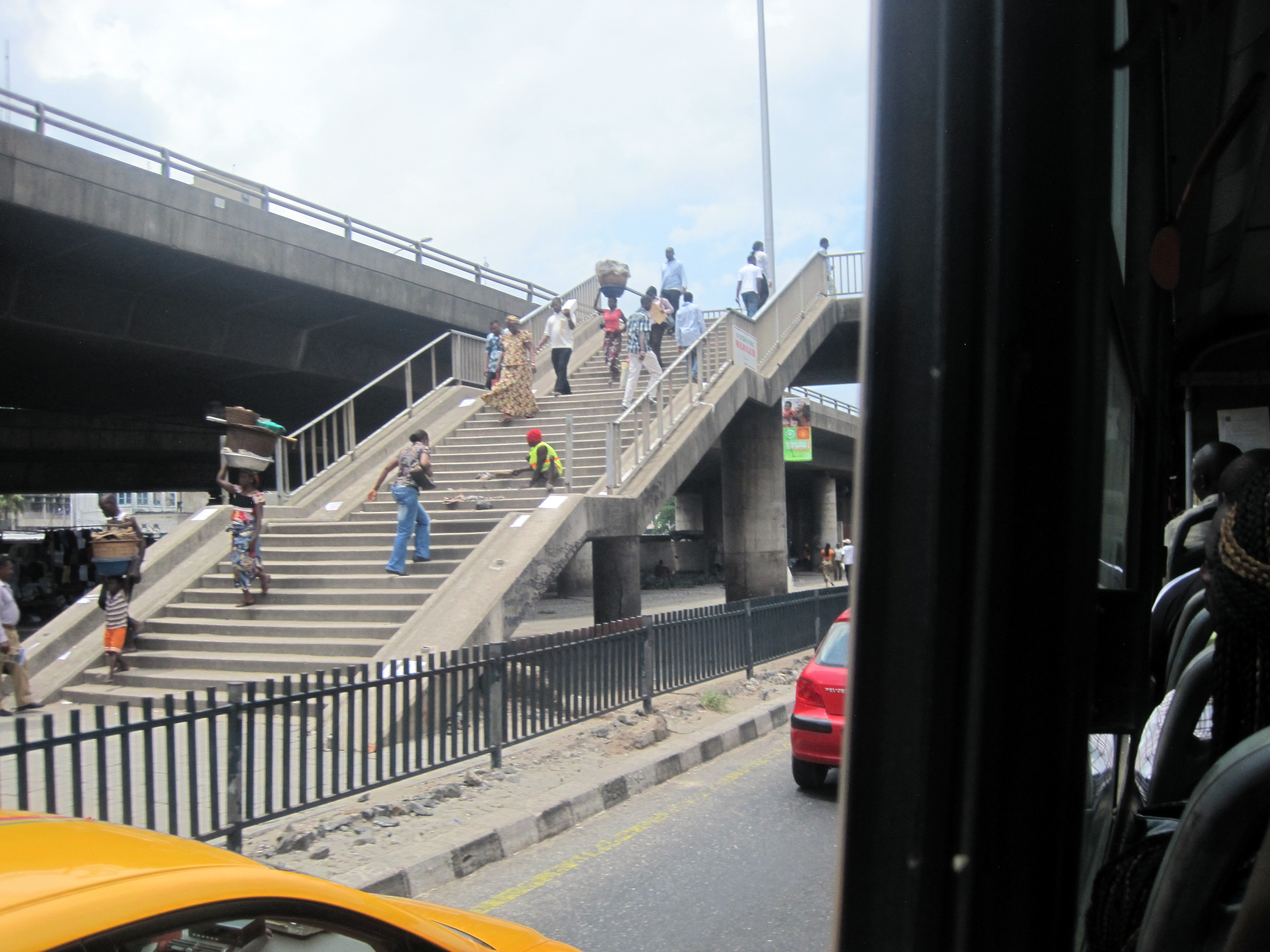
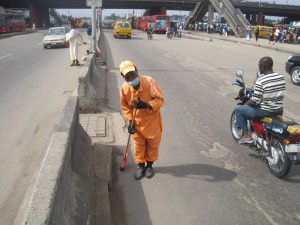
I’d been getting sneak shots of these Lagos State Waste Management Authority cleaners throughout my stay in Lagos, but sometimes earlier in the month as I walked past the pedestrian bridge at Oshodi and spoke to a few of them.

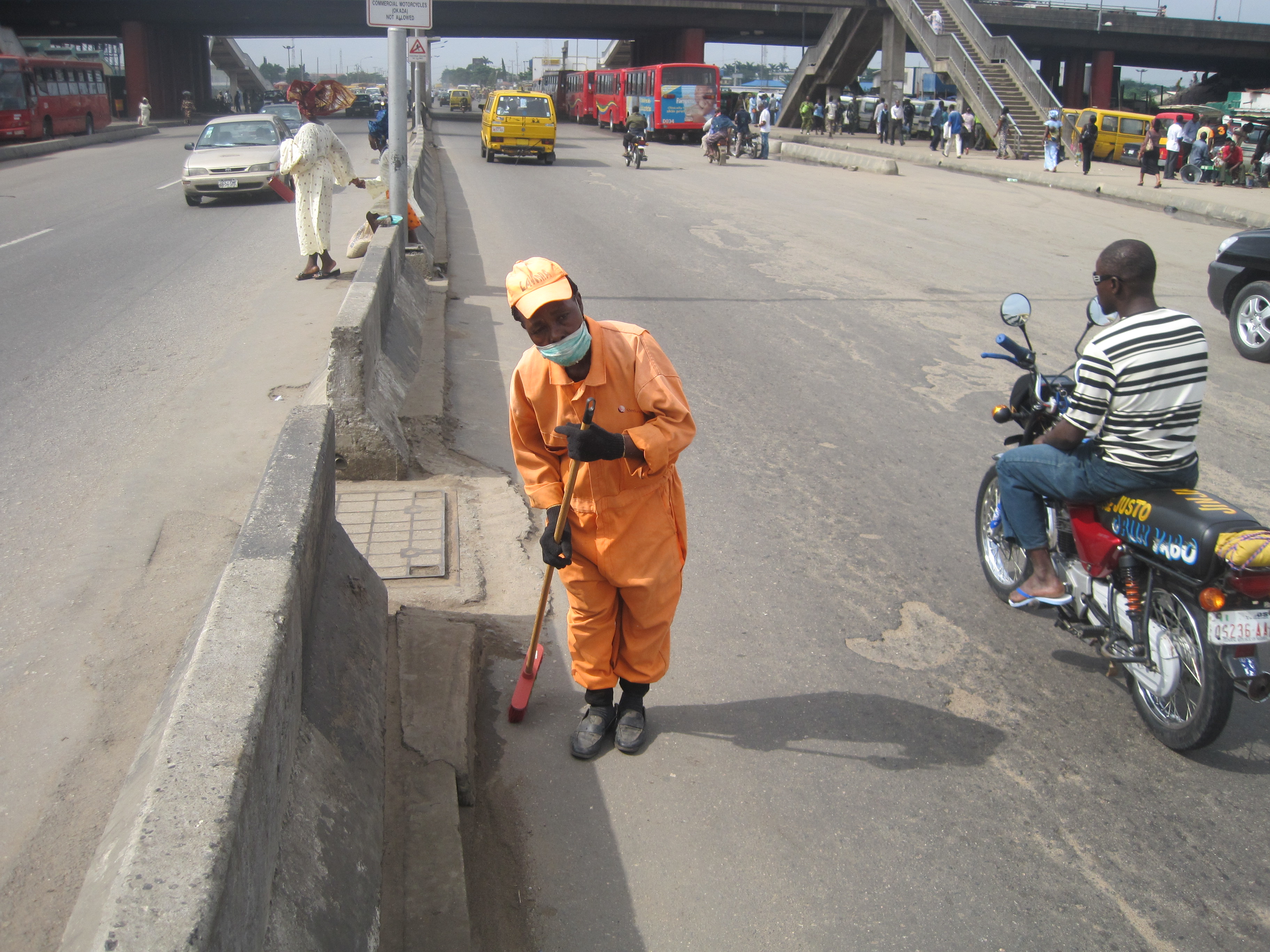
It was a Sunday and everyone else was either going to church or heading to their daily duty posts. I was heading to Badagry. A few minutes stop was not going to kill me, so I waited. I approached her, half wondering if I could be considered a nuisance by any of the policemen on patrol on the other side of the road.

“Good morning ma. Do you mind if I take your picture while you’re working now?”

“No, I don’t,” she said, but she looked at me as if to ascertain my motive. “No problem.”

“Thank you very much,” I said, “I’m writing something for publication and I’d like to capture you while doing your work.”
“No problem.”

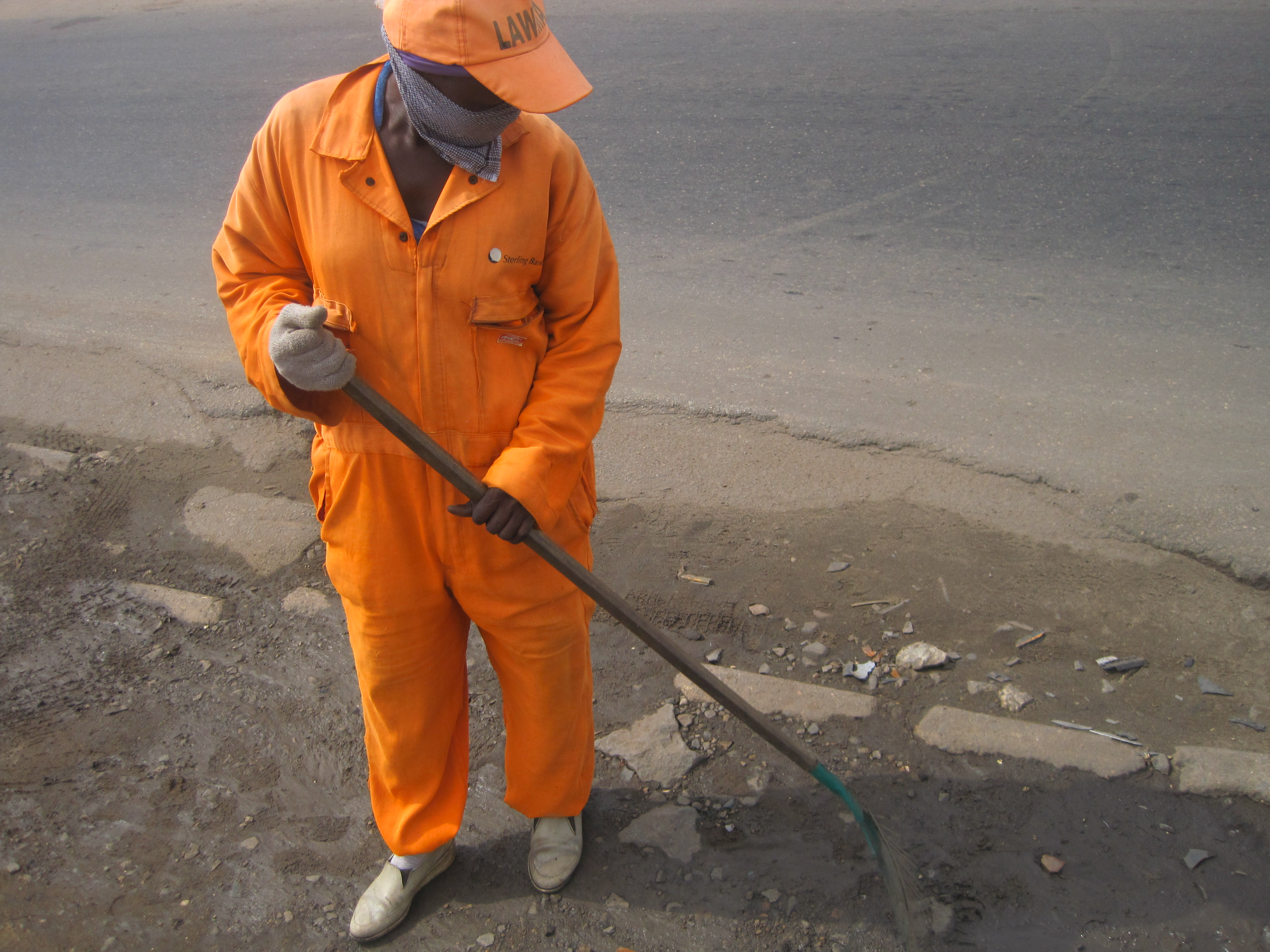
I went away from her as she stood by the concrete demarcation in the middle of the road sweeping dirt. All around were activities. Some people were crossing the road towards us, and some away from us. I made a few snapshots from different angles while keeping an eye on the policemen who – if they’d seen me could have been tempted to ask a few questions of their own. After a while, I was satisfied. I returned to her.

“What’s your name, ma’am?”

“Patricia Okoro.”

“Do you live around here?”

“Yes. I live at Abeni Bakare. Mafoluku.”

“How do you enjoy the job you do here? Do you like it?”
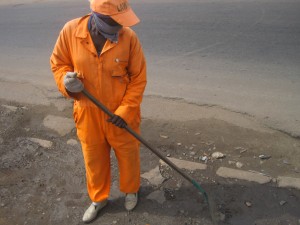
“Yes, I do,” she said. I believed her. “It is not much, but it allows me to take care of the things I have to.”

“I hope you don’t mind me asking. How much do you earn per month?”

“Ten thousand naira.”

That is $60. Per month.

“Really? For the whole day?”

“No, only for half a day. I stop work at two pm every day. It is from six am to two pm  only.”

“Oh, so you’ve been here since 6am today?”

“Yes.”

I asked her if there were those who worked for the whole day.
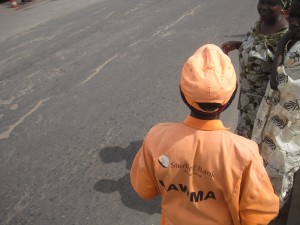
“Yes,” she said. “They earn twenty thousand.”

She won’t work the whole day because she needed to rest.

I asked what she was doing before she became a street sweeper and she said she didn’t have a job. She had been a porter and a trader, but none of them gave her as much pay, satisfaction, and free time that working with LAWMA did.

A few minutes later, she took the broom, picked up the trash bin and moved to the other side of the road. She didn’t say goodbye and I didn’t stop her. She had been stoic for the most part of the conversation perhaps because she was on the job, and busy, but she did convey a striking appearance of dignity. She may not have been the most cheerful person working on that Sunday morning when everyone else was relaxing in the way they knew best, but she had presence, and a hardworking spirit that remained with me long after I went my way.

I met a few more of them later although some of them refused to be photographed, but they all talked to me. I went away from the area with a certain respect for them, mostly women, working hard every day around the state for such stipend just to make ends meet. And they are the ones who keep the city clean.
BookJam At Silverbird

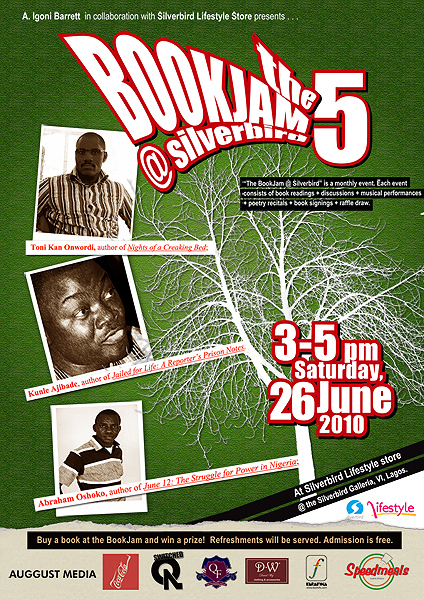
“The BookJam @ Silverbird” is a monthly event that consists of book readings, discussions, musical performances, poetry recitals, book signings and a raffle draw.

The BookJam is hosted by A. Igoni Barrett and the Silverbird Lifestyle store.

The 5th edition of “The BookJam @ Silverbird” will hold between 3 to 5 pm on Saturday 26 June, 2010 at the Silverbird Lifestyle store, Silverbird Galleria, Victoria Island, Lagos.

The guest writers are:

  • Toni Kan Onwordi, author of Nights of the Creaking Bed;
  • Abraham Oshoko, author of June 12: The Struggle for Power in Nigeria;
  • Kunle Ajibade, author of Jailed for Life: A Reporter’s Prison Notes.

Admission to the BookJam is free. Members of the audience who purchase books during the event stand a chance to win a special prize in a raffle draw.

For more information send an email to auggustmedia@gmail.com.

What a Day!

I have just returned from the US Consulate in Lagos for the pre-departure orientation of the new departing scholars of the several dozen Fulbright programmes in Nigeria. All of them have been chosen after keen scrutiny and fierce competition, and will now be spending varying number of weeks in the United States in the coming weeks. The shortest of the programmes end in two weeks while the longest lasts up to ten months. All fully funded, with health insurance, travel allowance, monthly stipend, transportation and a lifetime of networking opportunity. There were a total of 53 Nigerian grantees this year, and they were chosen from nineteen partner Universities in Nigeria. We’re told that there are also about 11 American Fulbrighters in Nigeria for this year. But they weren’t at the Nigerian pre-departure orientation, for obvious reasons.

It felt good to be back in that compound after one year. It was also of some pleasure to find that half of the departing FLTAs were those that were turned down last year when we all made the shortlist. Their persistence has paid off, and they are now heading out in a few weeks.  A happy reunion. I had about forty-five minutes to talk with them about my experience and answer all their questions. The questions were some of the same I had last year: Do I need to take plenty Nigerian food along? Will I be able to use my Nigerian phone while abroad? Just how many Nigerian type clothes do I need to take along? Will I be able to survive on the stipend and still make some savings? Among several other questions. There were some other fun ones too: Should I date a white person? How do I go about it? How cold is a cold weather? How will I live without my Nigerian telephone for one year etc. It was a fun gathering. I have asked them to keep in touch while they’re abroad. I won’t tell them about this blog just yet.

I also made a very wonderful discovery: I have become the second president of the Union of Campus Journalists of my old University to become a Fulbrighter. I was surprised. I was happy. I was warmly intimated with an almost forgotten past when I found out that the other Fulbright Alumni brought to speak to the departing folks was none other than Sheriff Folarin, the president of UCJ from 1994-1996. I knew him while I was the president of the student club between 2002-2004. He was a lecturer in the department of History. Now he’s a PhD holder, lecturing at a University in Ota. A sign of progress, and the leadership building capabilities of that then-just-a-minor-University Journalism club. I also discovered today that another past president of the club (1993-1994) Laolu Akande is the New York bureau chief of the Nigerian Guardian. Now I have to find him when next I find myself in the Big Apple. The point here is that before the Fulbright, there was the UCJ – that now-not-so-little University club of young student journalists that provided an early intimation for me and for its many products now all over the country in different professional capabilities for a life of service and adventure.

The press was then eventually invited into the meeting, and they got to ask questions of the departing travellers, and us the returning ones. One question that the guy from Radio Lagos Mititi (who made me speak unadulterated Yoruba for the first time in months) and the woman from Radio Nigeria both asked me at different times, without seeing each other, was “Since you have been back, what have you done to positively impact the country?” Good question, right? Not really. I’ve only been back for two weeks. And I’m not the Messiah. But now I know that there is an unwritten expectation to become something positive, immediately.

And so it begins.

Cheers to the new guys.

Lagos, Last Week

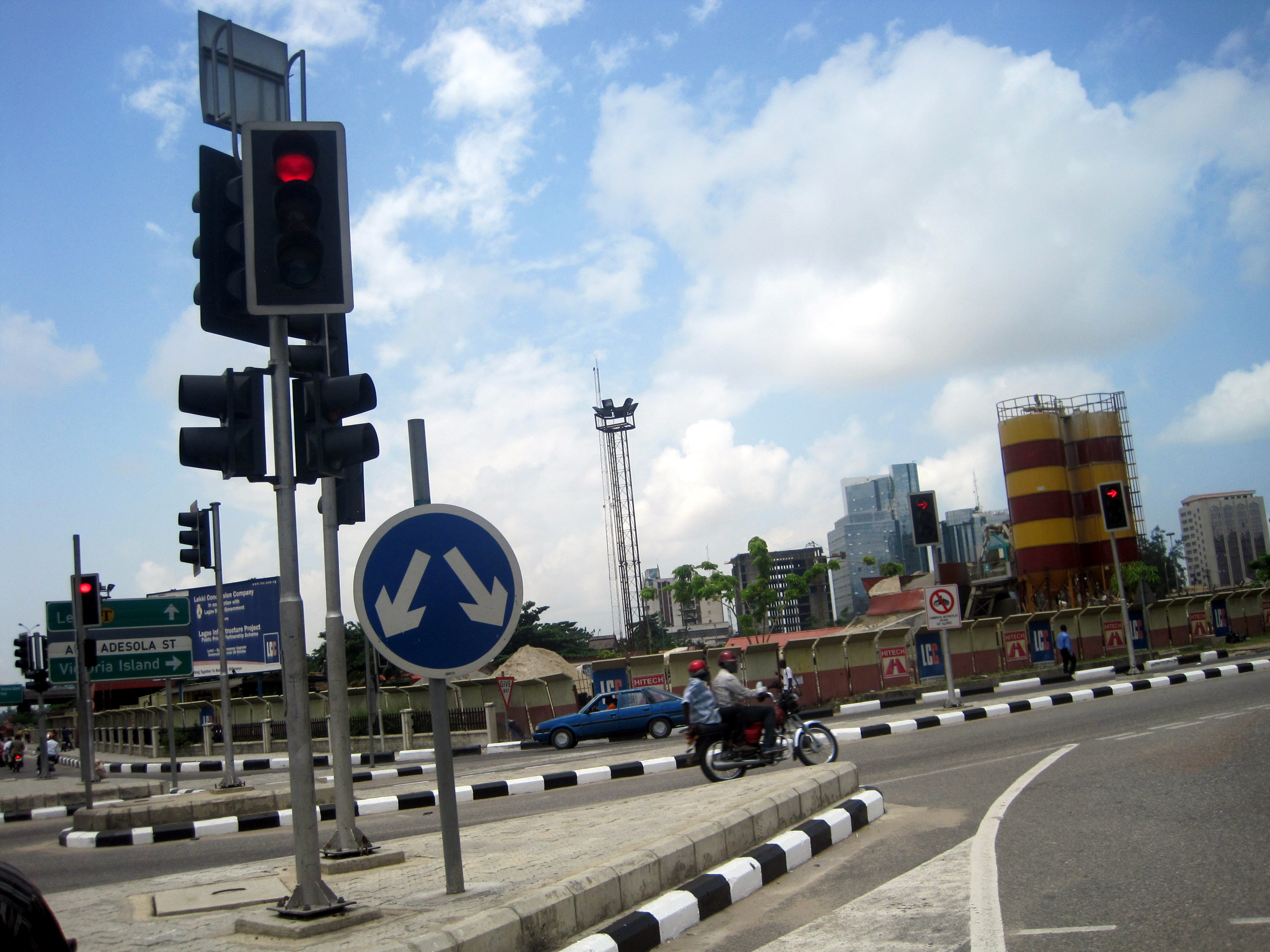
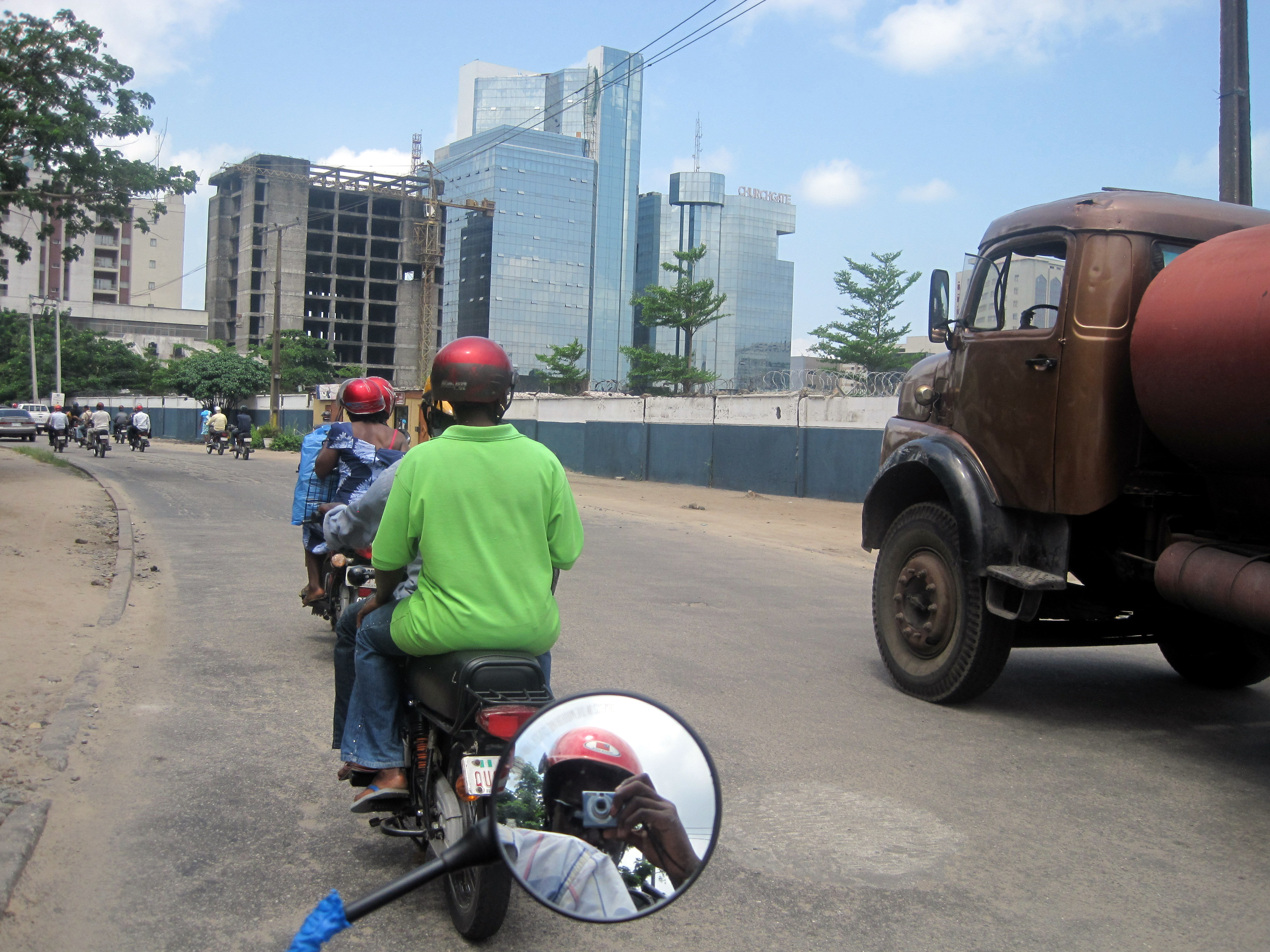
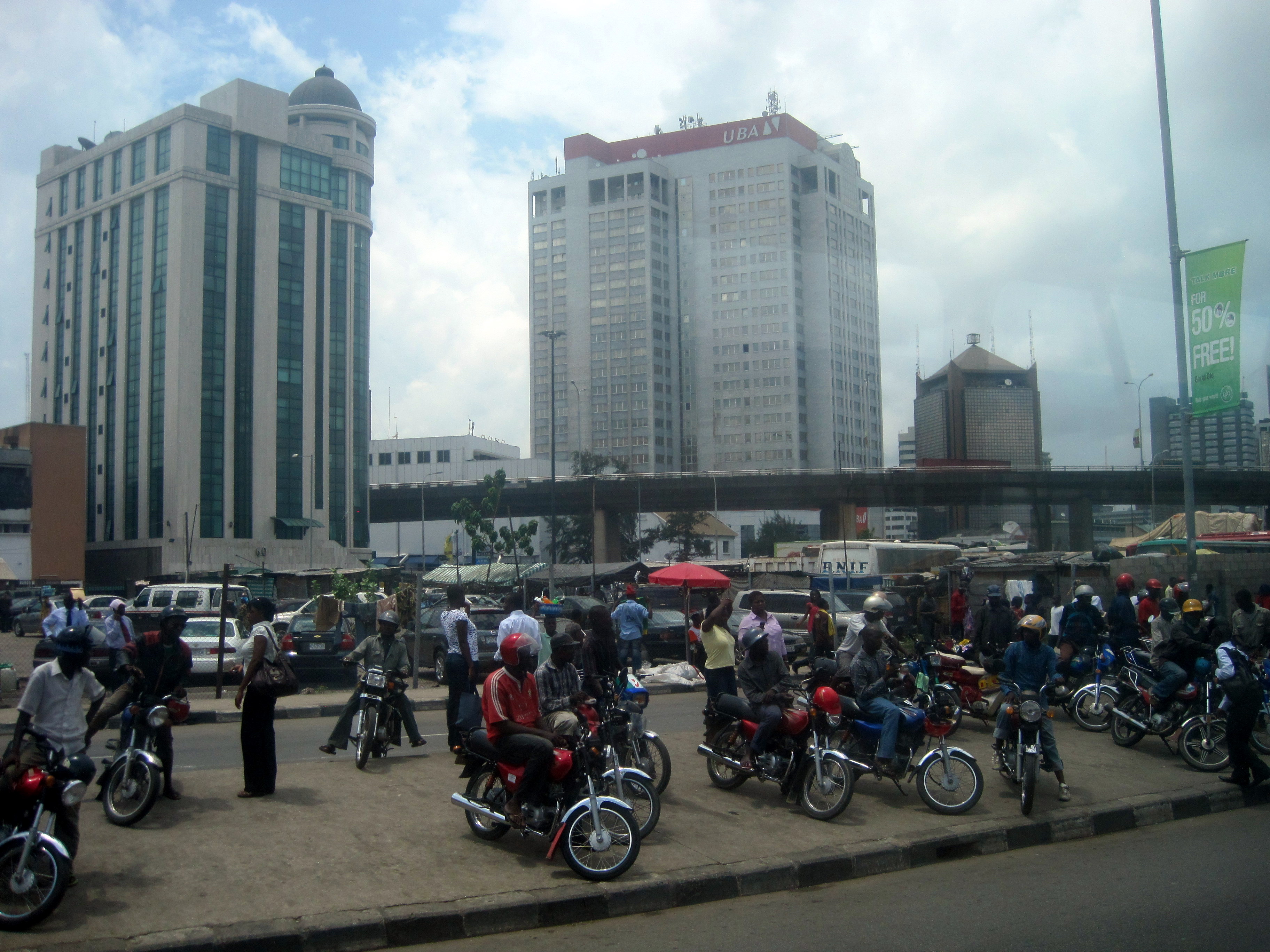
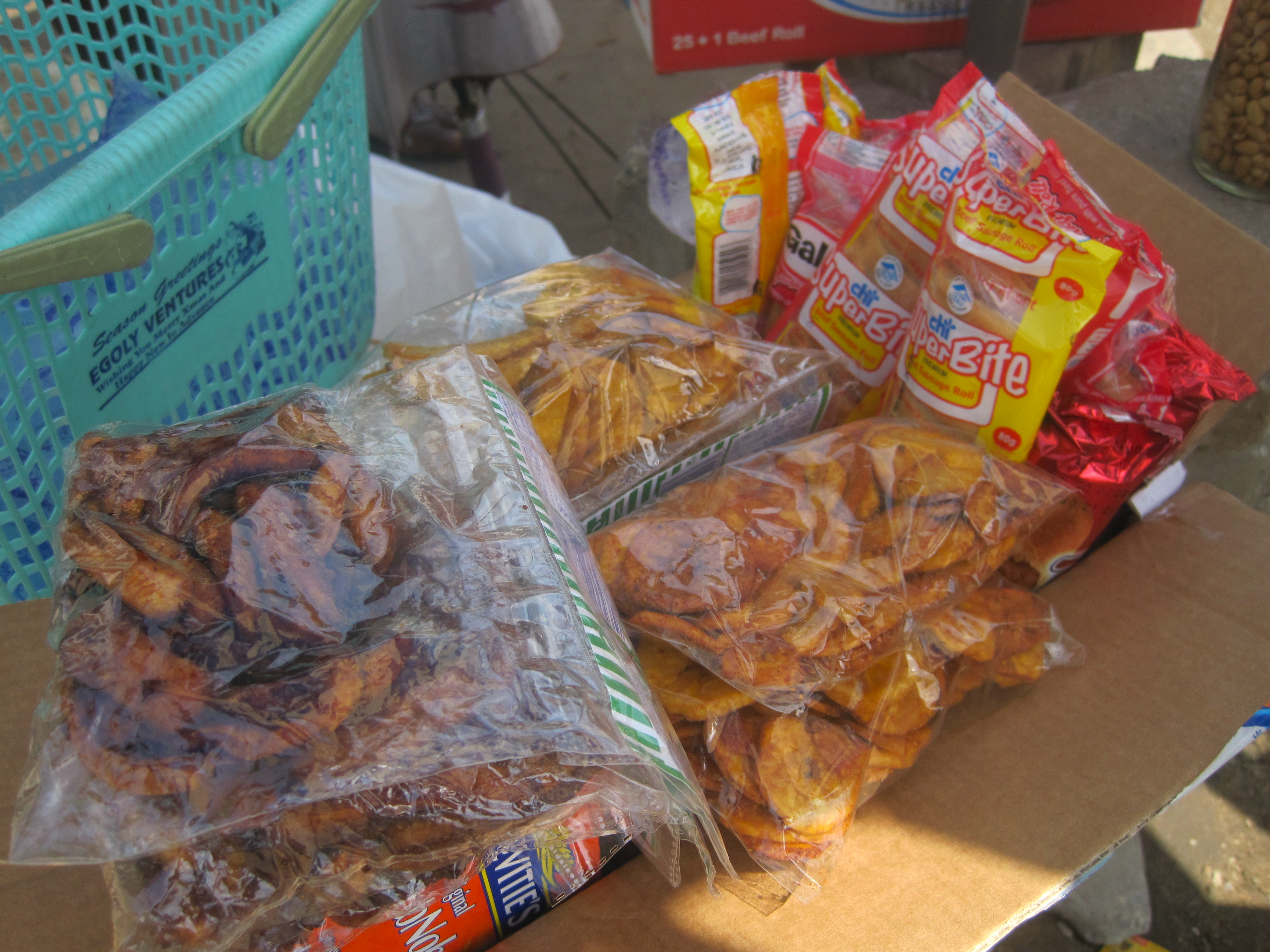
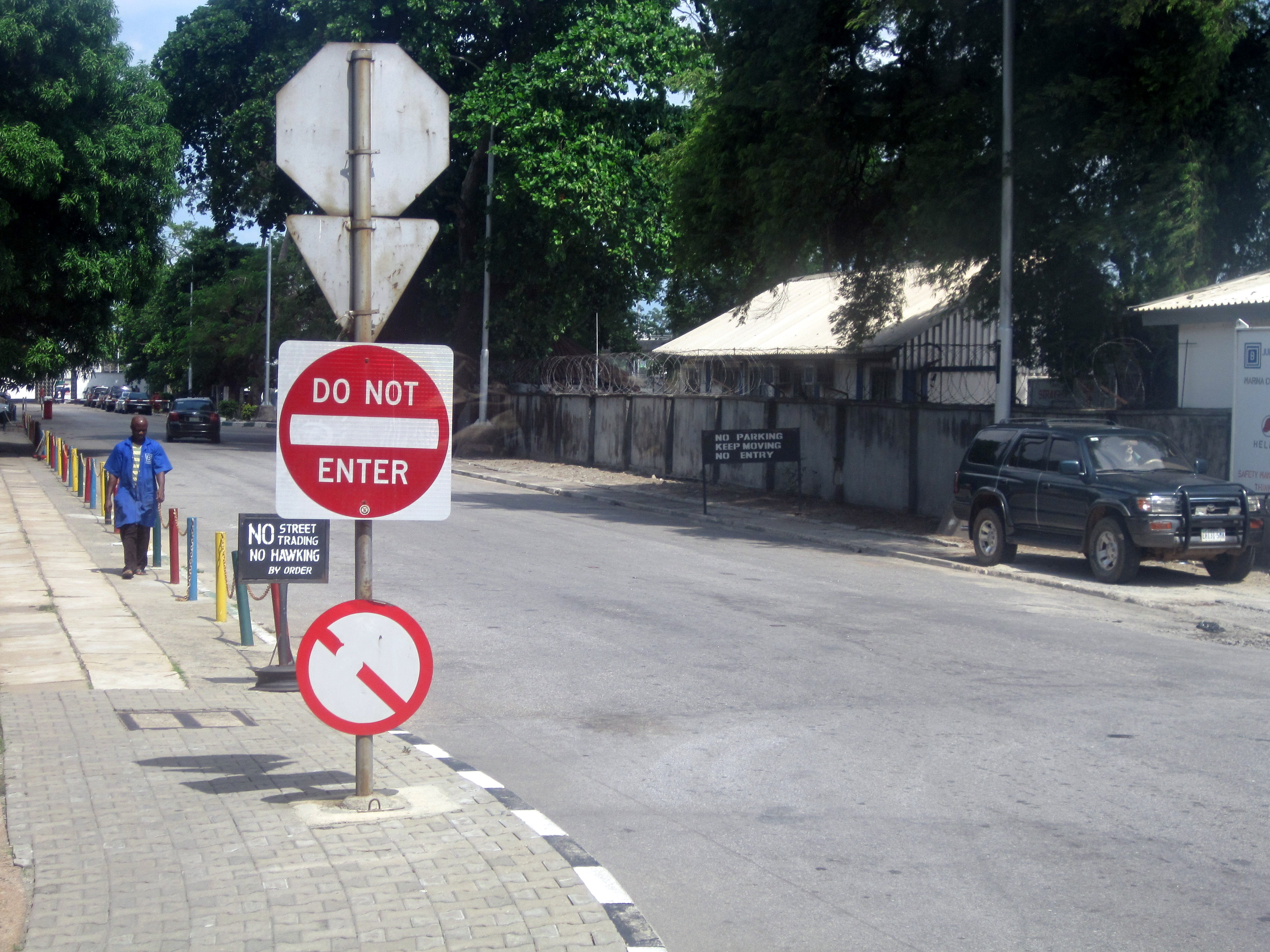
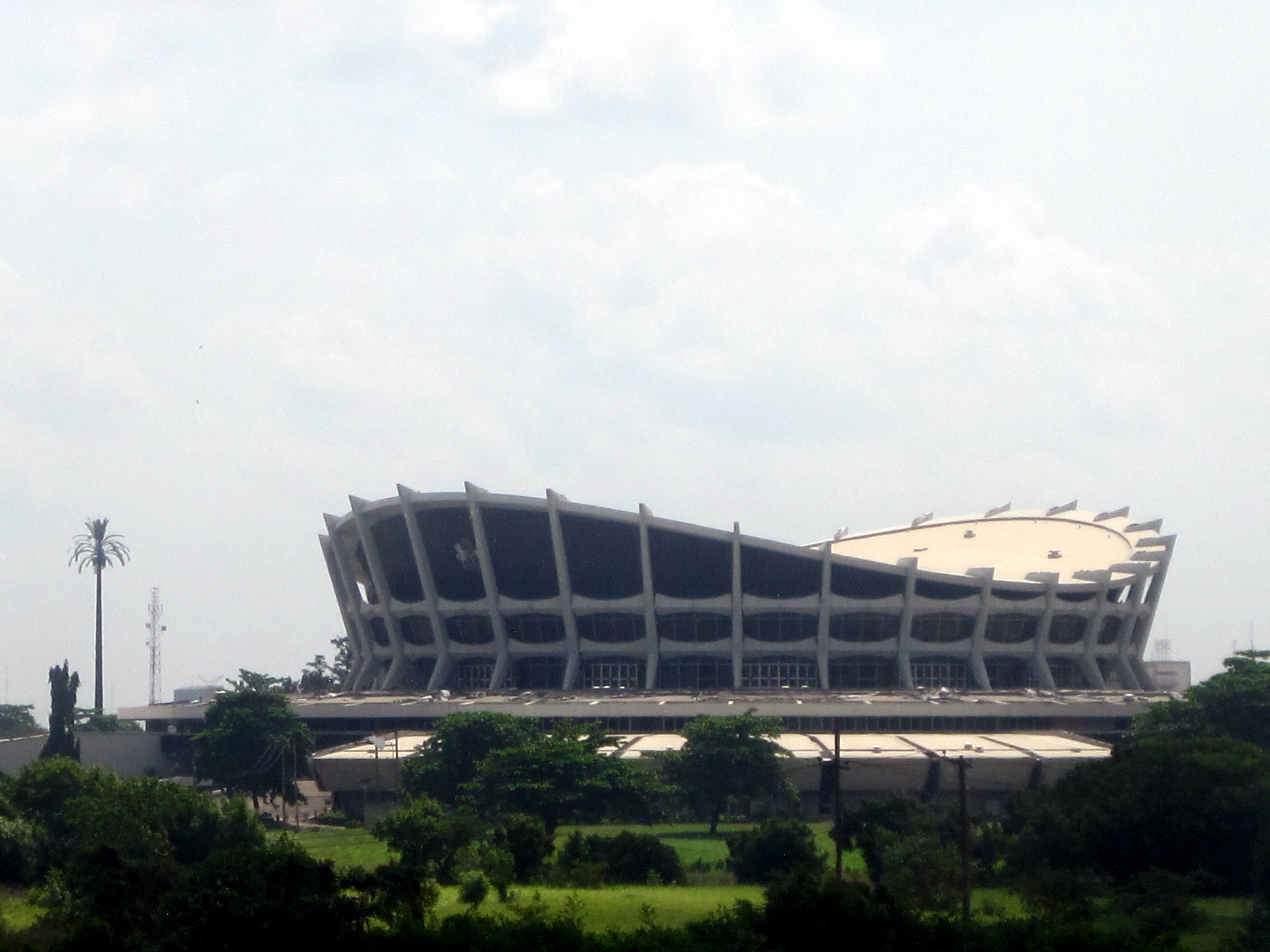
I managed to capture a little of Lagos on my camera last week.

(Most of the parts captured in this photo post were in the business district of the Island, definitely well managed than many other parts of the mainland that elicited my earlier complaints. In any case, it should be said that the city has greatly improved under a new leadership. I could say the same for my state here. But that’s a story for another day.)

In one of these pictures, you will see the Lagos Lagoon, a pedestrian bridge, commercial motorbikes, plantain chips (snacks), and – in the last shot – the National Theatre.

This is Lagos. Well, some parts of it. Enjoy.