I am reading “As I Please”, a collection of essays written by George Orwell between 1943 and 1945 and edited by Sonia Orwell and Ian Angus. In the first essay titled The English People, the author explains some benefits and demerits of being an Englishman speaking English:
“But there are also great disadvantages, or at least great dangers, in speaking English as one’s native tongue. To begin with, as was pointed out earlier in this essay, the English are very poor linguists. Their own language is grammatically so simple that unless they have gone through the discipline of learning a foreign language in childhood, they are often quite unable to grasp what is meant by gender, person, and case. A completely illiterate Indian will pick up English far faster than a British soldier will pick up Hindustani. Nearly five million Indians are literate in English and millions more speak it in a debased form. There are some tens of thousands of Indians who speak English as nearly as possible perfectly; yet the number of Englishmen speaking any Indian language perfectly would not amount to more than a few scores. But the great weakness of English is its capacity for debasement. Just because it is so easy to use, it is easy to use badly.”
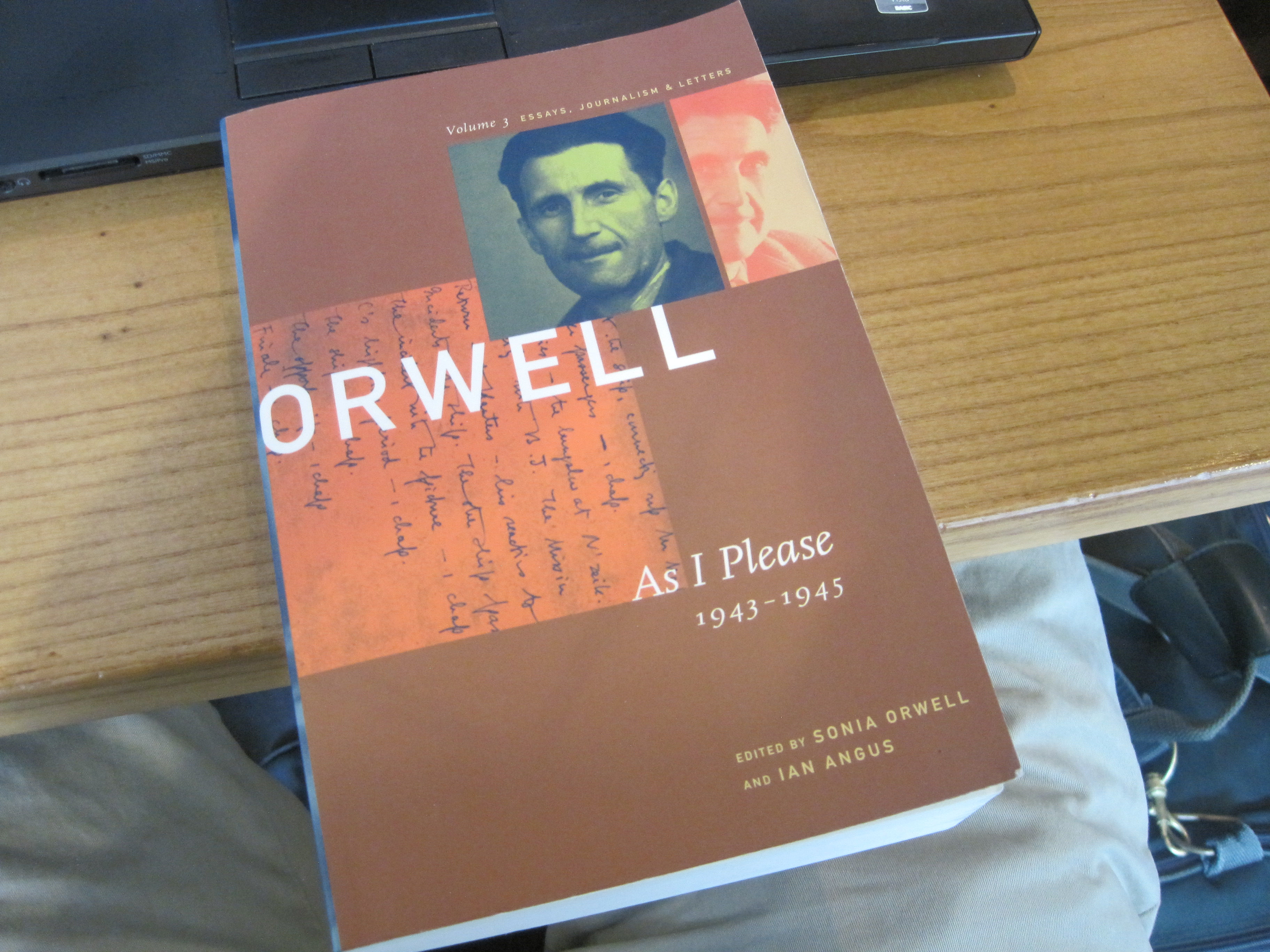 In the essay with parts that read like an epilogue to his earlier essay Politics and the English Language, Orwell complains about English being influenced by “American” pop culture words. Although written about six decades ago, it is fascinating how Orwell’s perception of the English life, language, and culture seems to remain as applicable now as it was then, even seeming applicable to other new post-colonial societies elsewhere.
Here is another quote:
“The temporary decadence of the English language is due, like so much else, to our anachronistic class system. “educated” English has grown anaemic because for long past it has not been reinvigorated from below. The people likeliest to use simple concrete language, and to think of metaphors that really call up a visual image, are those who are in contact with physical reality. a useful word like bottleneck, for instance, would e most likely to occur to someone used to dealing with conveyor belts: or again, the expressive military phrase to winkle out implies acquaintance both with winkles and with machine-gun nests. and the vitality of English depends on a steady supply of images of this kind. It follows that language, at any rate the english language, suffers when the educated classes lose touch with the manual workers. As things are at present, nearly every englishman, wheatever his origins, feels the working-class manner of speech, and even working-class idioms, to be inferior…”
An engaging read.
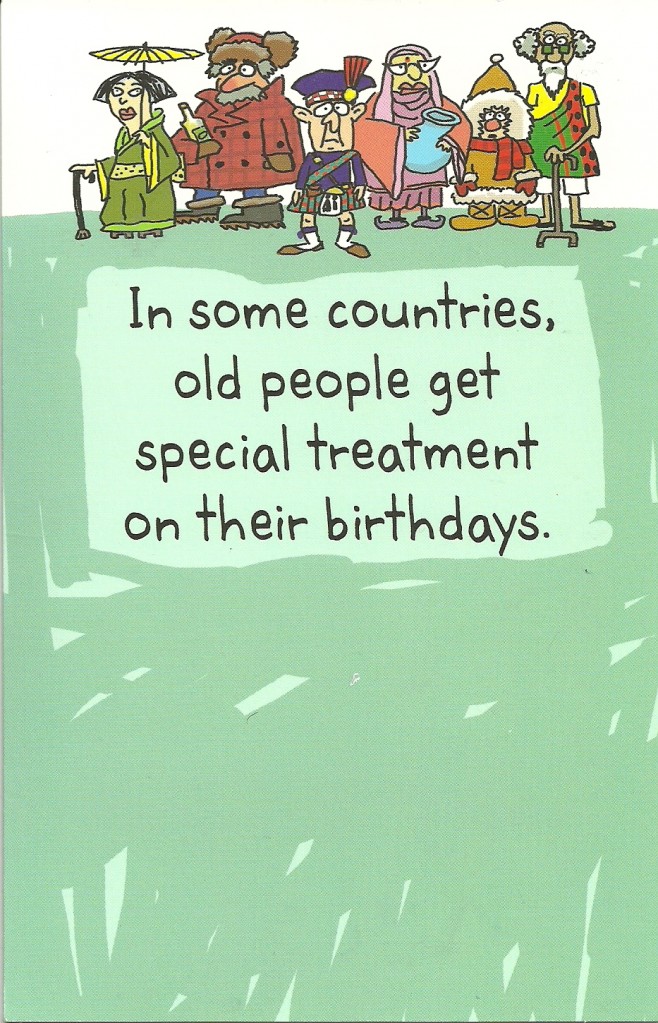 Considering how much you beat the living shit out of me while we were growing up, even for the filmsiest reasons, 😀 please consider this form of public greeting a mild recompense for all those fun times. Sorry, the plane ticket to Britain is beyond me at this moment, or I’d have come over to deliver these cards myself* ;). You’re my only brother after all – as far as I know (haha), and it would have been fun to catch up. But heck, have a blast with your family. I wish you the very best on this your special day. May the rest of your days be the best of your days!