It Rained Today

It rained today as soon as the day warmed up enough. Or maybe I was deceived by the wetness on the ground. For all we know, the snow could just have melted and given the appearance of the after effects of rain. The undeniable fact is that it felt wet and warm, and the air smelled fresh and beautiful. Like spring. No, like the beginning of the raining season in a tropical place.
How do seasons operate? Smells of rain stays the same wherever you go. One day you’re running in shorts in the mud of loam in the back garden of a big house, planting corn and peas and swatting roaming bees around your head, and on another, you’re looking behind your back in a lakeside house in the winter aftermath of rain with the eerie feeling of having smelt this before. The humid air, the smell of leaves and the general atmosphere of creation.

So, back to that garden, there was a notable incident that had the little boy staring for long moments at a black heap of loam where he had just buried two pieces of corn. And with a feeling of satisfaction at the work gone before – clearing the little garden, making the required ridges, adding humus from a nearby poultry farm – he stared at the ground and felt proud of himself, until a voice sounded from the house. It was his mother, peeping through the window. “It looks like you’re waiting for it to sprout already. Give it a few days. It doesn’t grow immediately.”

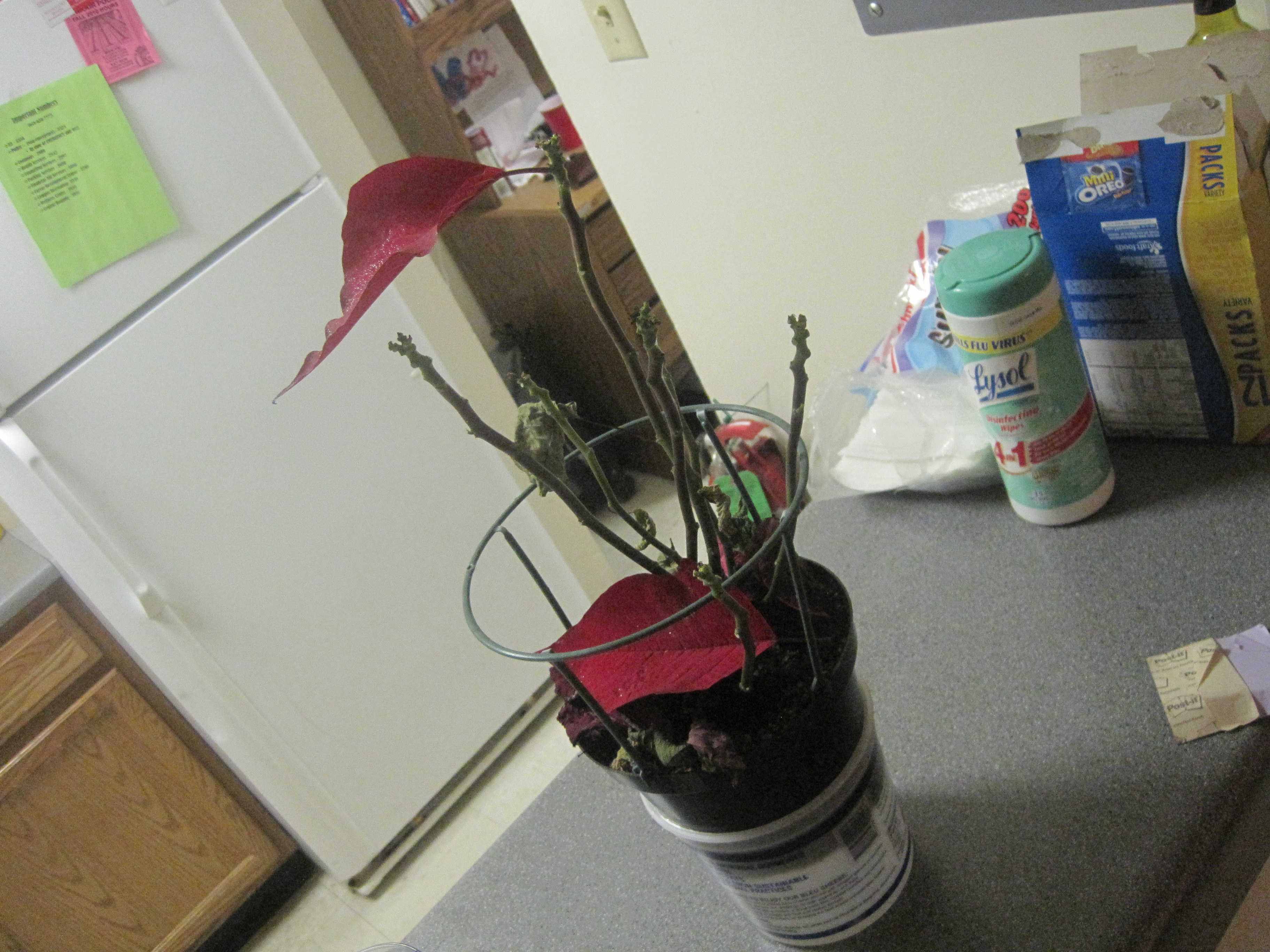
It is the smell of rain that usually defines those times. After months of dryness, the first few days of rain comes with a freshness that can’t be described. Add that to the pleasure of tilling the soil in an innocent attempt at farming, and you have the poetry of the season. It is sweet to the senses. The flower I tried to raise in my apartment a few weeks ago however has not survived. It may have to do with the house warmer and the absence of sunlight. Yet, life’s pleasures endure.
A Different Kind of Hoe

This is my post #400.

I have now lost count of how many times I used a perfectly clean English expression only to later discover that it meant something totally different in American English. Once upon a time, the “black book” was a place to write names of people you don’t like. But while telling a story of my first really brutal treatment in the hands of a woman bus driver in Edwardsville, I mentioned in passing that she had now entered my black book, and my students’ eyebrows went up. A black book, I was later informed, is a book where men wrote the name of their objects of desire. Surely that was new to me, and I immediately corrected myself. If I had a black book, the woman bus driver won’t be in it, definitely. Nine months ago, the only time you’d ever have heard me use the word “flashing” would be while remarking that someone had been calling my mobile phone without allowing me to pick it up before hanging up. In Nigeria, as in many other countries, that is “flashing”. I’m now aware – as I have actually been for a while even before coming here, from watching American movies – that flashing doesn’t have much to do with phones at all as with body parts. No, I don’t want to be saying that anyone has been flashing now. No sir, that’s why I have a voicemail. 😀

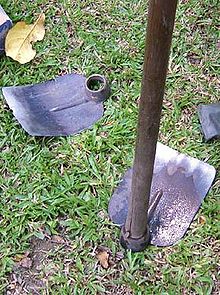
“This is a hoe.” Picture from Wikipedia

The influence of the mass media and their obsession with sex may have done irreparable damage to the innocence of words today. It is nows harder than ever to communicate without the risk of saying something totally different. Growing up in Nigeria in the eighties and nineties, I remember vividly that soda (soft drink) covers used to be called “crown corks” and that on radio during promotion, the jingles always were something like “Look under your corks and you might win a gift of…” (Hint: Nigerians typically don’t pronounce the ‘r’ in these kinds of words). Even to me today, that doesn’t sound to the ears as innocent as used to before, as neither is the use of pussies or doggys to refer to pets. Whatever happened to the language?

I am thinking of these things today only because during yesterday’s class, I was asked to tell the students the meaning of Ìwé kíkọ́ láìsí ọkọ́ àti àdá kò ì pé o and other lyrics of the song that they had learnt for the past three weeks from the class tutor. I painstakingly wrote out the translation on the blackboard (“learning from books without hoes and cutlasses is not a complete education”) and then suddenly realized that I could be wrong to assume that they all knew what kind of farm implements used in rural areas in Nigeria. The song itself came out an old culture of farming, and the grown folks who composed it had hoped to remind the young ones that farming is just as important as schooling. And so I asked, pointing to the writings on the wall. “You know what a cutlass is, right?” They didn’t. “What about a machete?” They did. “Alright, the cutlass is almost like a machete, and it’s used to cut down trees and to farm.”

And then it came. “What about a hoe?” Silence. Giggles. Laughter. Stares of horror.

He mentioned a hoe!

Then someone said, “yes” he knew what it was. I was at first relieved, until a few seconds later when I discovered that he actually didn’t, and it was my turn to be shocked. He definitely knew what he knew. And what he knew is neither used on the farm nor is supposed to be used in decent speech. Sigh. This is what has happened to my beloved English language. Oh, but how exactly did we get here? I’m going back to speaking only Yorùbá from now on, except that when written without sub-dots, the word for hoe in my language doesn’t fare better either on the scale of cleanliness.