The Nigerian Prize For Literature 2016: The Judges’ Report

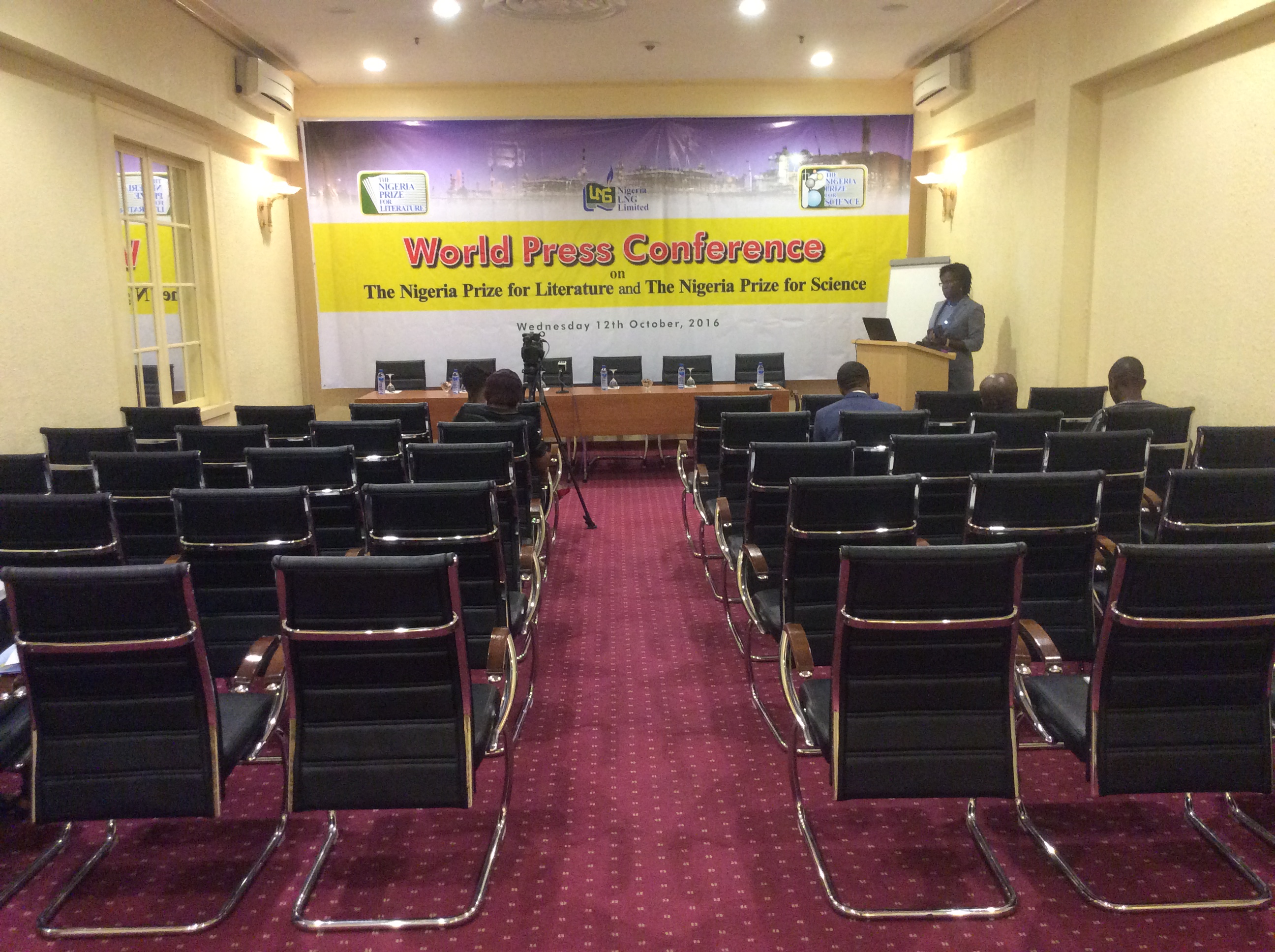
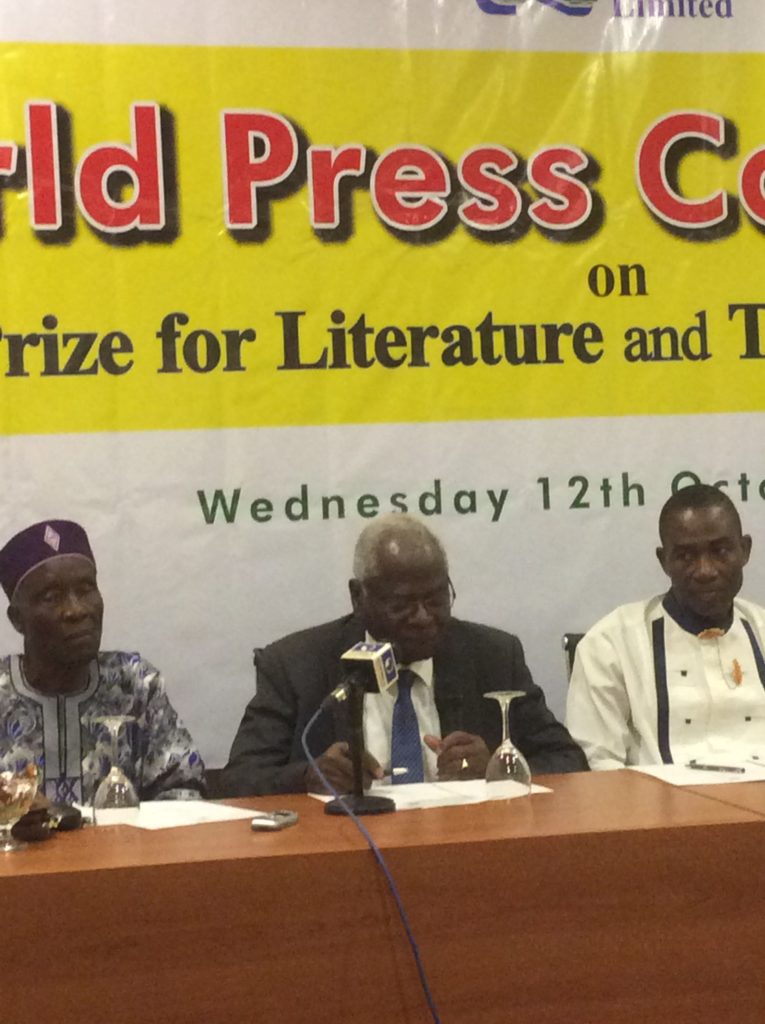
Editor’s note: Today, at Sheraton Hotel, Ikẹjà, Lagos, the winner of the 2016 Nigeria Prize for Literature was announced as Abubakar Adam Ibrahim for his novel Season of Crimson Blossoms (Parressia, 2015) and for the “competent manner in which Ibrahim demonstrated the execution of his work.” Here is the full speech given by Emeritus Professor Ayọ̀ Bánjọ, the Chairman of the Advisory Board for the Prize, on the justification for the prize, and other commentary on the whole judging process.

_____________
image

__________

GENERAL COMMENTS ABOUT THE 2016 COMPETITION BY PROFESSOR AYỌ BÁNJỌ

The Nigeria Prize for Literature is an annual competition which awards annual prizes to winning entries in the literary genres of Prose Fiction, Drama, Poetry and Children’s Literature on a rotational basis.

This year, the genre in focus is Prose Fiction. The following advertised rules were applied during the process of short listing and selecting the winning entry.  

Eligibility: The competition is open to all Nigerians anywhere in the world. This does not mean that writing about other peoples and cultures in a foreign setting is acceptable.

Relevance should be interpreted as consistency with the goals and aspirations of the Nigerian nation and its peoples – specifically, respect for their traditions and their identity as Africans.

Publishing: The prize is meant to encourage local publishing and book distribution, among other goals. Books published outside the country are eligible for entry. Only properly published texts are acceptable. However, efficient editing and good presentation of text are considered essential parts of publishing and are taken into account during the process of evaluation. The quality of the language is important, and errors of style and grammar are  considered major blemishes; these errors may not pass as typographical errors.

Genre: for this year’s competition, a basic distinction is drawn between fiction – that is imaginative prose which may incorporate factual materials and non-fiction like history, biography and sociological tracts which sometimes feature in the submissions for the competition.

This year’s completion has attracted a strong field with such high quality that even without this current shortlist of 3 books there would have still been a winner.
image

COMMENTS ON SHORTLIST OF THREE BOOKS

All the three shortlisted texts cover a wide range of urgent societal and cultural issues such as the status of women in a patriarchal society, the education of youths, the search for identity, the danger of youth unemployment, corruption, insurgency, religious hypocrisy, migration, broken homes and single parenthood and attendant impact on women and children who are usually at the receiving end of most of these problems.

  • Chika Unigwe’s Night Dancer, tells the familiar story of the continuing marginalization of women in Igbo society. The author shows a strong awareness of this context by  the flavoring of the narrative with linguistic and cultural insertions. The novel tells the story of Mma, a young woman’s anguished search for her roots from the opening of the novel when she feels that she has been denied by her mother, until she gradually discovers that her mother had been deeply hurt by both her matrimonial and maiden families. In the course of Mma’s adventures in excavating her identity and her mother’s past, she is predictably confronted by the same cultural inhibitions that her mother had rebelled against. Mma’s own denunciation of those traditions and her belated adulation of a mother she had despised at the beginning of the novel is a slow and painful process of discovering the truth of her family background, and a radical change in her perception and understanding of this background. All this is aimed at validating Unigwe’s passionate call for the extension of the frontiers of women’s space in society.
  • Elnathan John’s Born on a Tuesday is a book about contemporary Northern Nigerian Society as seen through the eyes of a young man. The narrative is told from within a deviant community seen through the first person consciousness of street boys, popularly described as al-majiri. Virtually abandoned by parents and community the  young boy, who tells the story in his own words, finds his survival through a brotherhood of other street boys. Their small outcast community is exploited by politicians and the brutally victimized as scapegoats by law enforcement agencies.  They inevitably patronized and taken over by leaders of religious sects and become a source of recruitment terrorist groups. One of the strong points of the novel is its insight into the social mechanisms that lead to national crisis and terrorism or the social processes that give rise to religious fundamentalism and political hypocrisy, corruption and exploitation.
  • Abubakar Adam Ibrahim’s Season of Crimson Blossoms is a very skillful and sympathetic narrative handling of a most psychologically and emotionally painful between an aging widow, who seeks release from her culturally imposed sexual repression, and a young outcast leader of a group of “weed” – i.e. hard drug – dealers who are ready thugs for politicians. In the background as immediately cause of the widow’s troubles, is the violent history of ethnic hatred and conflicts in Jos, placed within the larger context of contemporary Nigerian history with its complex and sometimes violent intertwining of politics, religion and culture. The novel moves from its evocative and passionate first sentence through a web of anxious moments to a tragic and painful conclusion with hardly a moment of respite.  All through its projects through is main action, the implications of certain key social issues for younger audience – key issues such as early marriage, drug abuse and impact of relationships on human action. It is a novel whose narrow domestic action has wider universal relevance beyond its relevance for its immediate setting.

On behalf of the advisory board of the Nigeria Prize for Literature and of the judges and international consultant, I have the pleasure of announcing as the winner of this year’s entry, Season of Crimson Blossoms by Abubakar Adam Ibrahim.

________

The award ceremony will take place early next year.
Three Writers Shortlisted for the Nigerian Literature prize

elnathanOut of the total of 173 entries received for the NLNG-sponsored Nigerian Literature Prize 2016, a shortlist of three has been released. This announcement follows an initial shortlist of eleven which was released in July. The three shortlisted entries, in alphabetic order, are:

  • Born on a Tuesday (Elnathan John)
  • Night Dancer (Chika Unigwe), and
  • Season of Crimson Blossoms (Abubakar Adam Ibrahim).

Born on a Tuesday, published by Parresia Books, is a story about contemporary northern Nigeria which has over the years experienced religious violence and carnage as seen through the eyes of a young man. Born on a Tuesday is Elnathan John’s first novel. John is a writer, lawyer and a Civitella Ranieri Fellow. He has also been shortlisted twice by the Caine Prize for African Writing.

unigweChika Unigwe’s Night Dancer, published by Jonathan Cape, focusses on the young protagonist’s search for identity and her consequent reappraisal of her mother’s values. This is Chika Unigwe’s second time on the fiction shortlist. She won in 2012 with her novel On Black Sisters’ Street. Unigwe sits on the Board of Trustees of pan-African literary initiative Writivism, and was recently appointed a judge for the Man Booker Prize, 2017.

Season of Crimson Blossoms is a novel set in conservative northern Nigeria. It focusses on unusual love affairs between characters, as well as ambiguities in religion and politics. Published by Cassava Republic Press, Season of Crimson Blossoms is Ibrahim’s debut novel. Ibrahim has won the BBC African Performance Prize and the Amatu Braide Prize for Prose. He is a Gabriel Garcia Marquez Fellow (2013) and a Civitella Ranieri Fellow (2015).


More from the press release:Abubakar-Adam-Ibrahim

“The Nigeria Prize for Literature has since 2004 rewarded eminent writers such as Gabriel Okara for his volume of poetry, The Dreamer, His Vision (co-winner 2005 – poetry); Professor Ezenwa Ohaeto, for his volume of poetry, Chants of a Minstrel (co-winner 2005 poetry); Ahmed Yerima (2006 – drama) for his book Hard Ground;  Mabel Segun (co-winner 2007 – children’s literature) for her collection of short plays Reader’s Theatre; Akachi Adimora-Ezeigbo (co-winner 2007 – children’s literature) with her book, My Cousin Sammy; Kaine Agary (2008 – prose) for her novel Yellow Yellow; Esiaba Irobi (2010 – drama) who won the prize posthumously with his book Cemetery Road; Adeleke Adeyemi (2011 – children’s literature) with his book The Missing Clock and Chika Unigwe (2012 – prose), with her novel, On Black Sisters’ Street, Tade Ipadeola (2013 – poetry) with his collection of poems, The Sahara Testaments and Sam Ukala (2014-drama) with his play, Iredi War.”

The eventual winner of the competition will be announced at a World Press Conference in October, 2016.

Congrats to the shortlisted writers.

________

Photo Credit: Bookslive.co.za, GuardianUK, PulseNG

NLNG Releases a Shortlist of 11 for 2016

According to the Advisory Board for The Nigeria Prize for Literature, led by Emeritus Professor Ayo Banjo, 11 Nigerian authors have been shortlisted for this year’s Literature Prize for Prose Fiction, worth $100,000. This initial shortlist was drawn from 173 books.

Here are the authors (resident in the country and outside) and their work in the shortlist:

  • Chika Unigwe (winner of the prize in 2012): Night Dancer (2014).
  • Ogochukwu Promise (author of over fifteen novels): Sorrow’s Joy
  • Yejide Kilanko (a writer of poetry and fiction): Daughters Who Walk This Path.
  • Ifeoma Okoye (a writer and author of children’s literature): The Fourth World
  • Sefi Atta (author of Everything Good Will Come): A Bit of Difference
  • Abubakar Adam Ibrahim (writer and journalist): Season of Crimson Blossoms
  • Ifeoluwa Adeniyi (radio broadcaster): On the Bank of the River
  • Elnathan John (lawyer and writer): Born On A Tuesday
  • Aramide Segun (winner of an ANA Prose Prize): Eniitan Daughter of Destiny
  • Maryam Awaisu (radio presenter): Burning Bright
  • Mansim Chumah Okafor (author of two previous books of fiction): The Parable of the Lost Shepherds

The list was presented by the chairman, panel of judges for this year’s prize, Prof. Dan Izevbaye, well-respected literary critic and a professor of English Language at Bowen University, Iwo. Other members of the panel of judges include Professor Asabe Usman Kabir, Professor of Oral and African Literatures at Usmanu Danfodiyo University Sokoto and Professor Isidore Diala, a professor of African Literature at Imo State University, Owerri and first winner of The Nigeria Prize for Literary Criticism.

“The Nigeria Prize for Literature has, since 2004, rewarded eminent writers such as Gabriel Okara (co-winner, 2004, poetry), Professor Ezenwa Ohaeto (co-winner, 2004, poetry) for The Dreamer, His Vision; Ahmed Yerima (2005, drama) for his play, Hard Ground; Mabel Segun (co-winner, 2007, children’s literature) for her collection of short plays Reader’s Theatre; Professor Akachi Adimora-Ezeigbo (co-winner, 2007, children’s literature) for her book, My Cousin Sammy; Kaine Agary (2008, prose) for her book Yellow Yellow; Esiaba Irobi (2010, drama) who clinched the prize posthumously with his book Cemetery Road; Adeleke Adeyemi (2011, children’s literature) with his book The Missing Clock; Chika Unigwe (2012, prose), with her novel, On Black Sisters Street; Tade Ipadeola (2013, poetry) with his collection of poems, The Sahara Testaments and Professor Sam Ukala (2014, drama) with his play, Iredi War.”

What We’re Getting Right in African Literature

I have read only a few chapters in Elnathan John’s new book Born on a Tuesday, and I already formed a few opinions not just about the author and the publishers, but about the direction of literature on the continent. They are good opinions, by the way, and they were a long time coming too. See the following excerpt from the book’s first paragraph:

“Gobedanisa and I had gone into a lambu to steal sweet potatoes but the farmer had surprised us while we were there. As he chased us, swearing to kill us if he caught us, he fell into a bush trap for antelopes. Gobedanisa did not touch him. We just stood by and watched…”

BOAT_largeNotice anything? You have just read half a paragraph in English in which a non-English word was treated like every other word, and not made self-conscious through italicisation or gloss. This is a marvellous and remarkable thing! A smart reader might figure that “lambu” means either “farm” or “garden”. Or not. (The answer, according to a friend, is “irrigation farm”, but I didn’t know that until I asked, which is the whole point. If you live in the Nigeria and you can’t find anyone around you who speaks Hausa, then you need new friends. And what kind of Nigerian are you anyway? If you live anywhere in the world and Google can’t help you with the meaning of a word, or someone who can, you need a new computer and new friends).

Thankfully, the book is filled with many instances like this, like a chapter titled “Dogon Icce” (tall tree), and a number of other Hausa and Arabic-based expressions that the author leaves the reader to research on their own in order to enjoy a more fulfilling reading experience. And why not? What is an almajiri, and why is knowing what it means and who an almajiri is important to enjoying the story? What is a dan daudu, and why should the author spend his time translating it to you when he has a story to tell? What is santi? And if the English language is incompetent to render it to your monolingual mind, why should the author feel compelled to do anything else about it but let you figure it out for yourself?

Let’s hear it from Ikhide Ikheloa who has — in fairness — kept this issue at the forefront of African literary discussion for a number of years:

“African writers should perhaps learn to be more insular, I mean who italicizes akara and explains it as “bean cake” in the 21st century? If the reader is too lazy to use Google, tough luck. But then, to be fair, after all these years of railing at African writers, I now realize that African writers who choose to publish in the West are not negotiating from a position of strength; the editor is Western, the publishing company is Western and the audience is Western. It makes marketing sense. It doesn’t make it any less maddening. Imagine if Tolstoy in War and Peace had taken the time to italicize and explain every word foreign to the African reader. That book would have been way more than 50,000 pages. But then to be fair Nigeria has precious few indigenous publishing houses, what is a writer to do? You want to be published? Take the crap from the Western paymasters.” – From A review of E.C. Osondu’s This House is Not for Sale

All you need to do to see how tenacious Mr. Ikheloa has been on the matter is merely to type “italicize” into the search box on his blog. I did it, and the result was enormous. But he has a point, which is that in order to placate an industry whose nonchalance for our stories — in spite of its lip service to it — is unshy and pernicious, many authors have sold out by consciously dumbing down their literary capability for a token of “wider comprehension” (whatever that means). Literary facility has been exchanged for global acceptability which has, in turn, produced works of highly inarticulate form — not for a lack of viable content, but for the timidity of language and style. So, to have Elnathan’s book give a giant finger to old habits is a brilliant and satisfying triumph, but it’s only the beginning. For one, it is a surrender to the primacy of English as our most efficient literary vehicle albeit now an encompassing one. Having him write completely in Hausa, today, would still have been seen as extreme, which need not be the case.

But while we’re celebrating this interlanguage compromise, there are a few more doors that need to be knocked down. One of them is the habit of publishing Yorùbá (or other tonal African) names without the appropriate tone marks! It was understandable when the publishing gatekeepers were old British men to whom those names were nothing but arranged letters. We bought into it when Nigerian publishing executives followed suit, reinforcing the idea that tone marks were only for indigenous language texts. Now that we know better — and now that we have accepted the role of English in expressing our most genuine cultural and human experiences — there is no excuse not to make it as robust, capable, and representative, as possible.

So, here is a salute to Cassava Republic, and Elnathan John, for a bold (but ultimately merely sane) decision. Here’s to more writers following. And here’s to doing more, because we’re not there yet.


_____

(Photo credit: Cassava Republic)

At Elnathan John’s Book Party

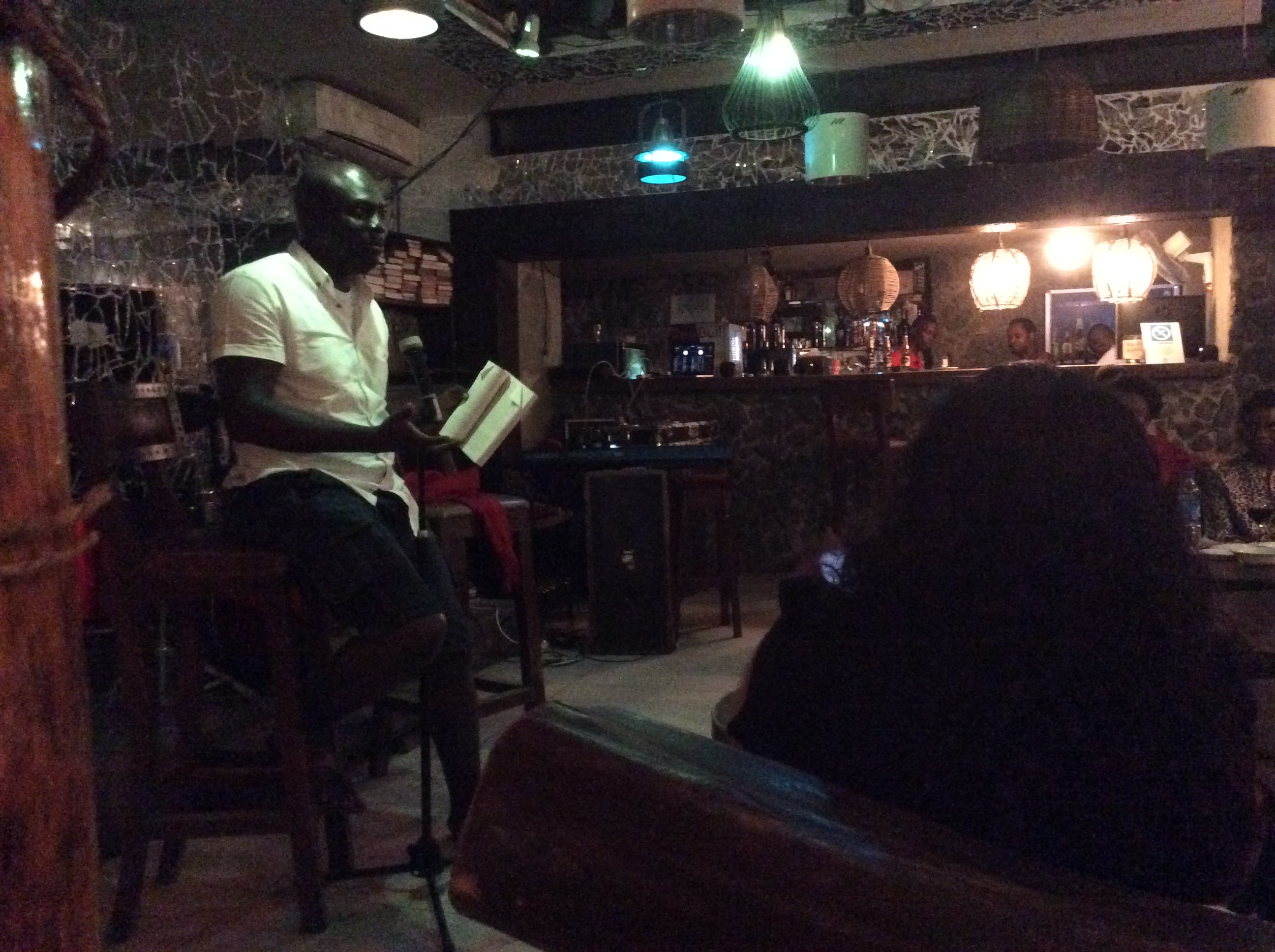
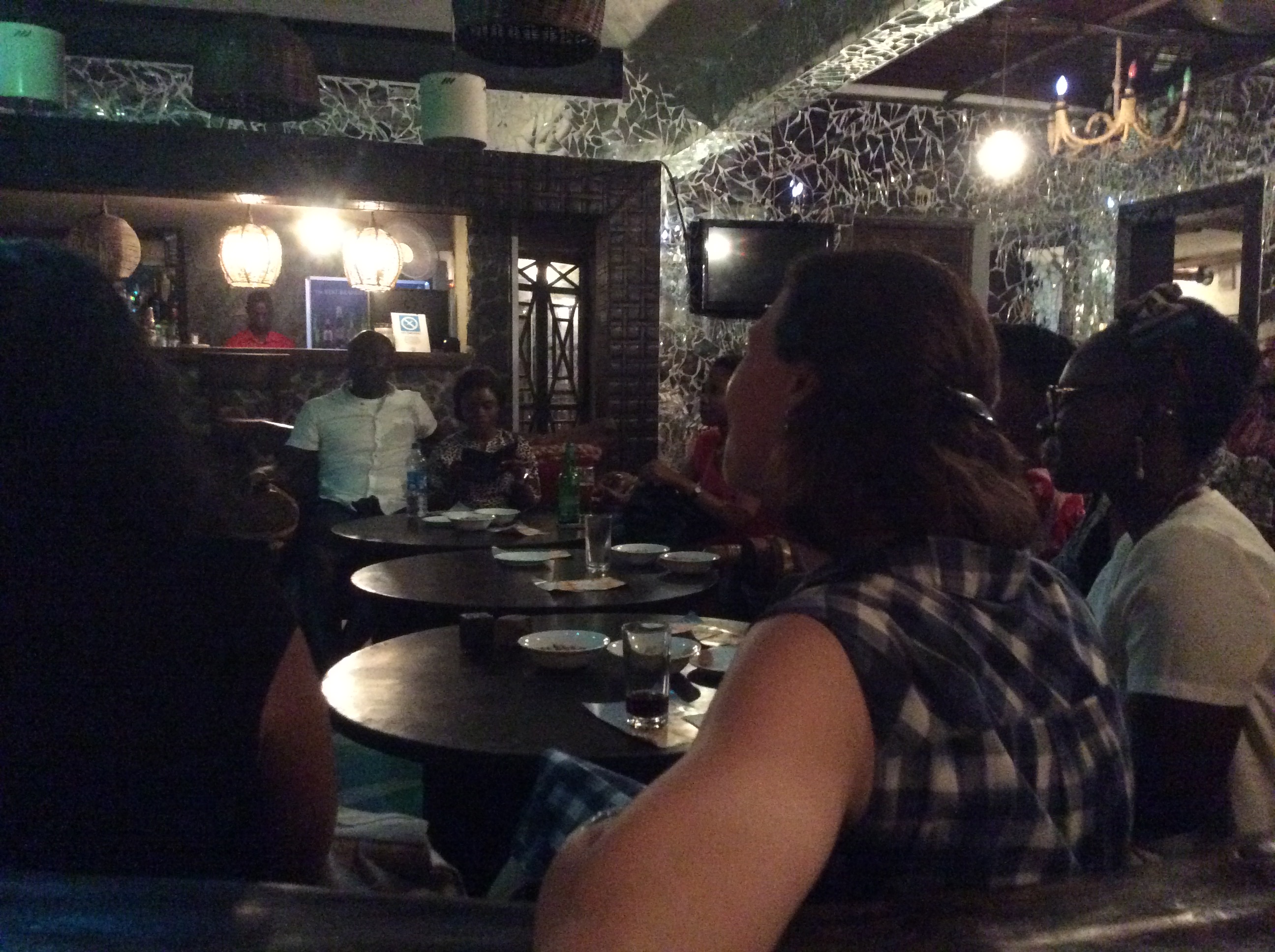
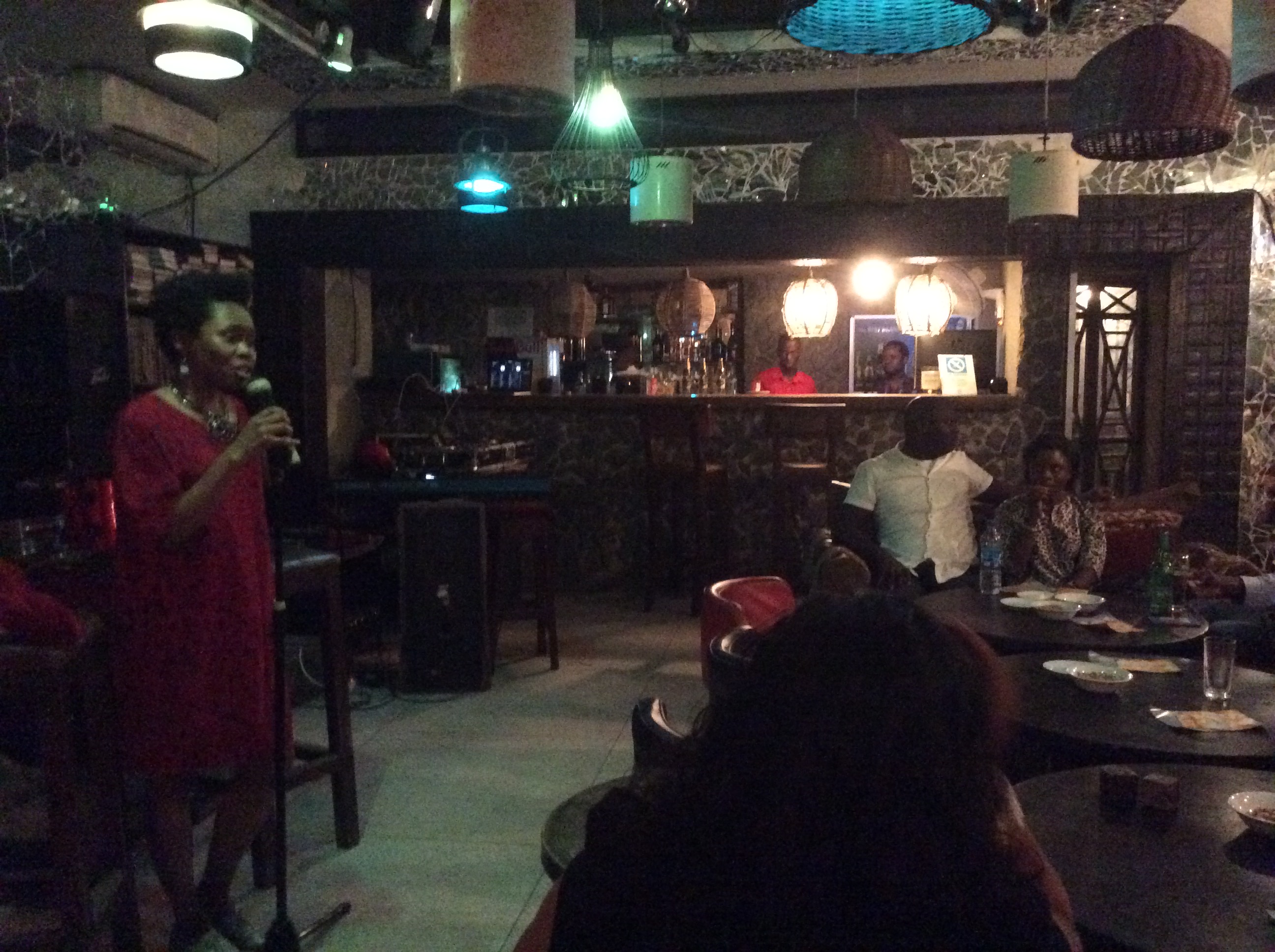
2015-11-13 20.34.19Tonight, I attended the book party for Elnathan John’s new book Born on a Tuesday (Cassava Republic, 2015). The event held at Bogobiri House in Ikoyi and was well attended by friends, writers, and other well-wishers who came to listen to the author talk about and read from his debut novel. The novel was written as an extension of a short story “Bayan Layi” which was shortlisted for the Caine Prize in 2013. (I reviewed it here and here). The author has been shortlisted for the prize one more time, in 2015.

Elnathan had a chance to talk about the process of writing the book, which came from his obsession with understanding Sufi and Salafi movement – branches of Sunni Islam, and with telling the untold stories from Northern Nigeria to an audience that either didn’t care enough for it, or just isn’t sufficiently exposed. This personal curiosity, the author said, had burdened him for a while until he finally got the chance to address it in form of a short story and later to expand it into a novel form after encouragement by the reading public and by Cassava Republic Press who will also be publishing the book in the UK earlier next year.

2015-11-13 20.28.21He then read excerpts from the work, including a part where Dantala, the main character of the novel, spent considerable time considering whether or not to continue to kill lizards because of a religious encounter with the Sheik even while he had no such scruples about killing human beings. (There was also a mild detour to get his publisher, Bibi Bakàrè-Yusuf, to pronounce “Dantala” like a Hausa speaker would). He also read a part about “santi”, an expression relating to delight and longing for food which Elnathan admitted cannot successfully be translated into English. The conversation also eventually addressed what it means to be literate — especially if one already speaks (and can write) other local languages, but not English. The audience then got to ask questions, and eventually get their books signed.

2015-11-13 20.27.34The event which was memorable to me because of its celebration of a work that paid attention to understanding the beginning, costs, and complexities of violence in religion, has now taken a new dimension now that I am home, and learning of an ongoing terrorist attack in Paris, France. It all feels like an unreal web of weirdly-timed coincidences, and the heart sinks again into despair. On the one hand is a night where literature attempts to do what politics (and guns) perhaps had failed to do, and on the other is a reemergence of force as a wailing voice of the unheard and the resentful, taking innocent lives with it. Perhaps literature will suffice to enlighten and create a better future. Or, perhaps, that is just futile resignation and avoidance of more direction action. But we have this piece of literature now, and reading it just got a tad more imperative.

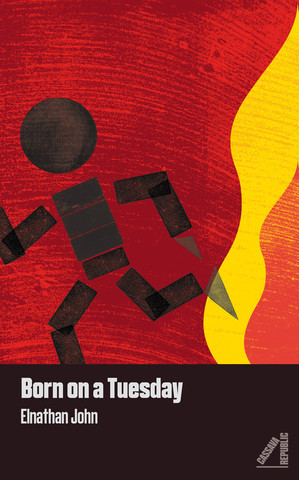
The book costs 2,000 naira and is 264 pages long, including acknowledgements. The cover is designed simply as a fiery flame from which a shadowy figure of a young man is seen to be fleeing. Blurbs on the back were written by Táíyé Selasi (Ghana Must Go), Petinah Gappah (The Book of Memory), Elliot Ackerman (Green on Blue) and Molara Wood (Indigo). “Narrated in Dantala’s raw yet inquisitive voice,” the summary reads on the book flap, “this astonishing debut novel explores brotherhood, religious fundamentalism and loss, and the effects of extremist politics on everyday life in contemporary Northern Nigeria.” It promises to be an engaging read.

Meanwhile, let’s spare a thought for Paris tonight.