East St. Louis (Illinois) Sesquicentennial: Ten Talking Points

by Eugene B. Redmond, February 23, 2011 . . . Re: 150th Birthday Celebration, April 1.

1.         we arrive, we arrive

we cross-fertilize

we derive, we survive

2. For a thousand years, Native Peoples (“mounds” builders) inhabit both sides of the Mississippi River. In “Illinois,” these “Mississippians” build the largest city in “America” (circa 1250 AD)—with a population exceeding that of London at the time. (Fast Forward: “Native” culture survives/pervades Metro East today via mounds, namesakes (sports teams, rivers, streets) museums (lectures/tours), conferences and annual pow wows.)

3. 1600-1800: After French Jesuits settle in “Cahokia” (late 1600’s), other Europeans follow, including Captain James Piggott, who operates the first Mississippi River ferry business (1790’s). A few hundred Africans are among settlers. (Fast Forward: During the 20th Century, ESL’s “Piggott” Avenue nurtures Scotia Calhoun Thomas (entrepreneur), James Rosser (college president) and Jackie Joyner-Kersee, among others.)

4. 1800-1860: Flood of Immigrants. Belleville incorporates as a city (1850). ESL, evolving through name changes, social and economic processes, is overwhelmed by flooding and a tornado at mid- and late-century. City becomes industrial/commercial center. Fledgling “Negro” self-help groups, one-room schools, churches and settlements (like Brooklyn and Quinn AME Church ) are created. (Fast Forward: Brooklyn is renown for its Harlem Club where Duke Ellington, Shirley Brown and Albert “Blues Boy” King perform.)

5. 1861: From “Illinois City” to “Illinois Town” to “East St. Louis” . . . the “Village” is born on April 1.

(Fast Forward: ESL, criss-crossed by railroads, is second after Chicago in RR and meat packing industries.)

6. 1861-1900: Civil War begins. U.S. transitions from agriculture to industry, driving a commercial-industrial revolution in ESL. 1871: Creation of National Stock Yards. Eads Bridge opens (1874). First mayor, John Bowman (1865), is assassinated in 1885. Centennial of St. Clair County is celebrated (1890). Captain John Robinson leads battle for schools (for “coloreds” plus Lincoln and Garfield); “Negro” lodges, churches (Macedonia, Mt. Olive, St. John A.M.E.) and professionals increase. ESL’s population rises to nearly 30, 000 (with several hundred African Americans). (Fast Forward: During 19th and 20th Centuries, ESL is “transfer” point for goods and soldiers. John Robinson Elementary School and Homes open on Bond Avenue. As a “ premiere avenue for Blacks during the 1920’s,” according to Jeanne Allen Faulkner, Bond is also home to mid-20th Century Lincoln High School and the Cosmo Club where Chuck Berry’s career is launched.)

7. 1900-1925: More flooding. Meat packing industry moves to town of National City on ESL’s northwest end and, like Monsanto (Sauget) on the southwest flank, incorporates as a separate entity, depriving ESL of a rich tax base. In 1917, a gumbo of social, political, economic and racial factors causes the Race Riot. (St. Louis [MO] Chapter of Urban League is formed the year after the Riot.) Of U.S. cities with populations of 50,000-plus, ESL is the second poorest. Even so, it is among fastest growing cities in the country: Its population doubles every 10 years (reaching 75, 000 in 1930). 1924: ESL NAACP chapter is organized.

8. 1926:  Miles Dewey Davis III is born in Alton (IL). The Davises move to East St. Louis in 1927.

9. 1926: In sympathy/empathy re: victims of the Riot of 1917, Duke Ellington co-writes/records “East St. Louis Toodle-Oo.” … The song later appears on a Steely Dan album, Pretzel Logic. [Throughout 20th and 21st Centuries, movies, TV shows, books, ballets/stage plays (like Katherine Dunham’s Ode to Taylor Jones III and Frank Nave’s East Boogie Rap) and publications, such as Drumvoices Revue, focus on ESL.]

10. 1926-present: After struggles for jobs and freedom, equal housing and education (Black-based and citywide schools); after “Miles/tones” and “Negro firsts” like the Paramount Democratic Organization and Dr. Aubrey Smith’s election to the Illinois House of Representatives (1930’s); after creation of “Negro” newspapers, being named an All American City (1940’s-1960’s) and more floods, the rest is history . . .

_________

Eugene B. Redmond is the poet laureate of East St. Louis founder of the EBR Writer’s Club and a retired professor of English from SIUE.
East St. Louis

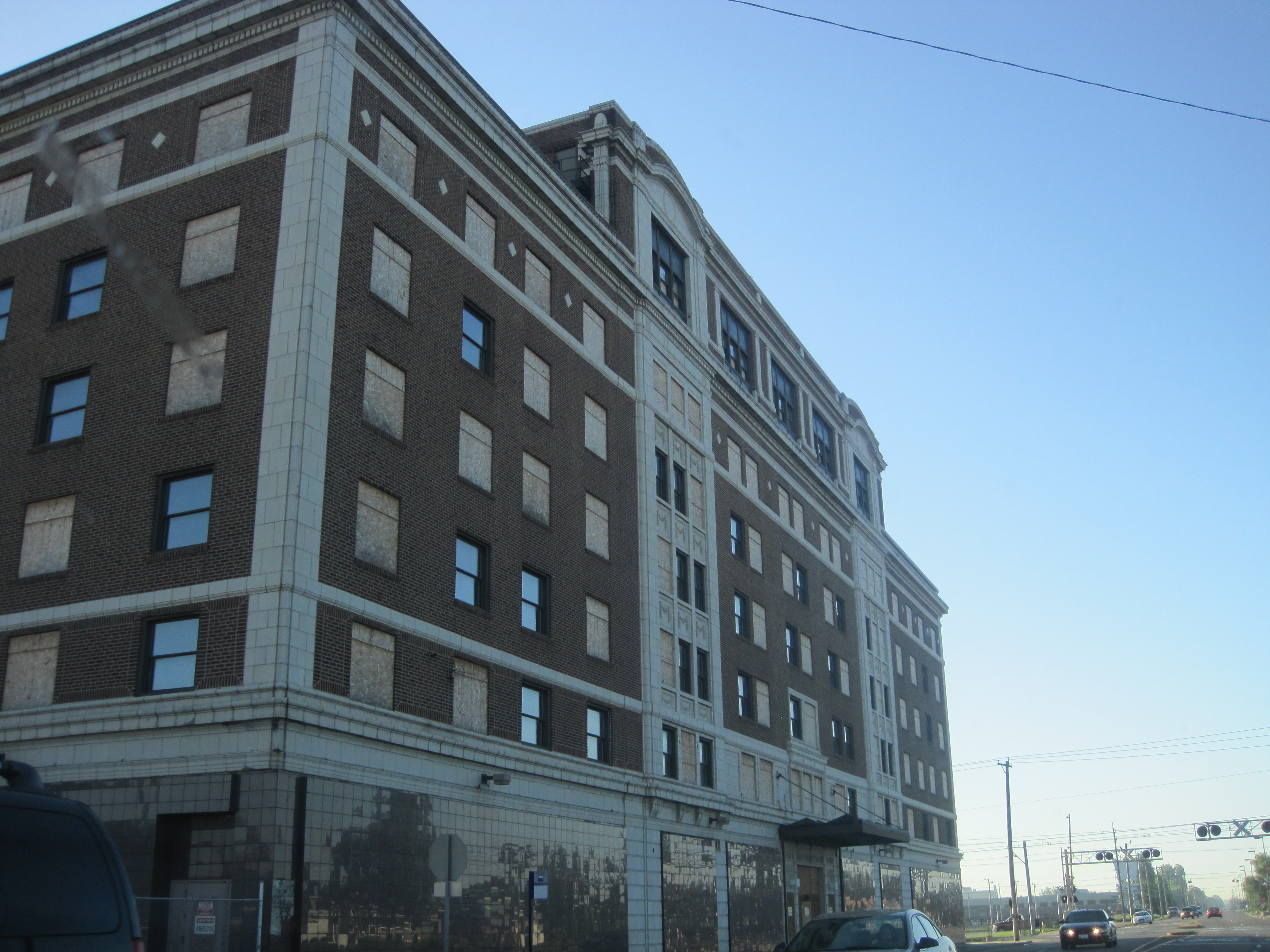
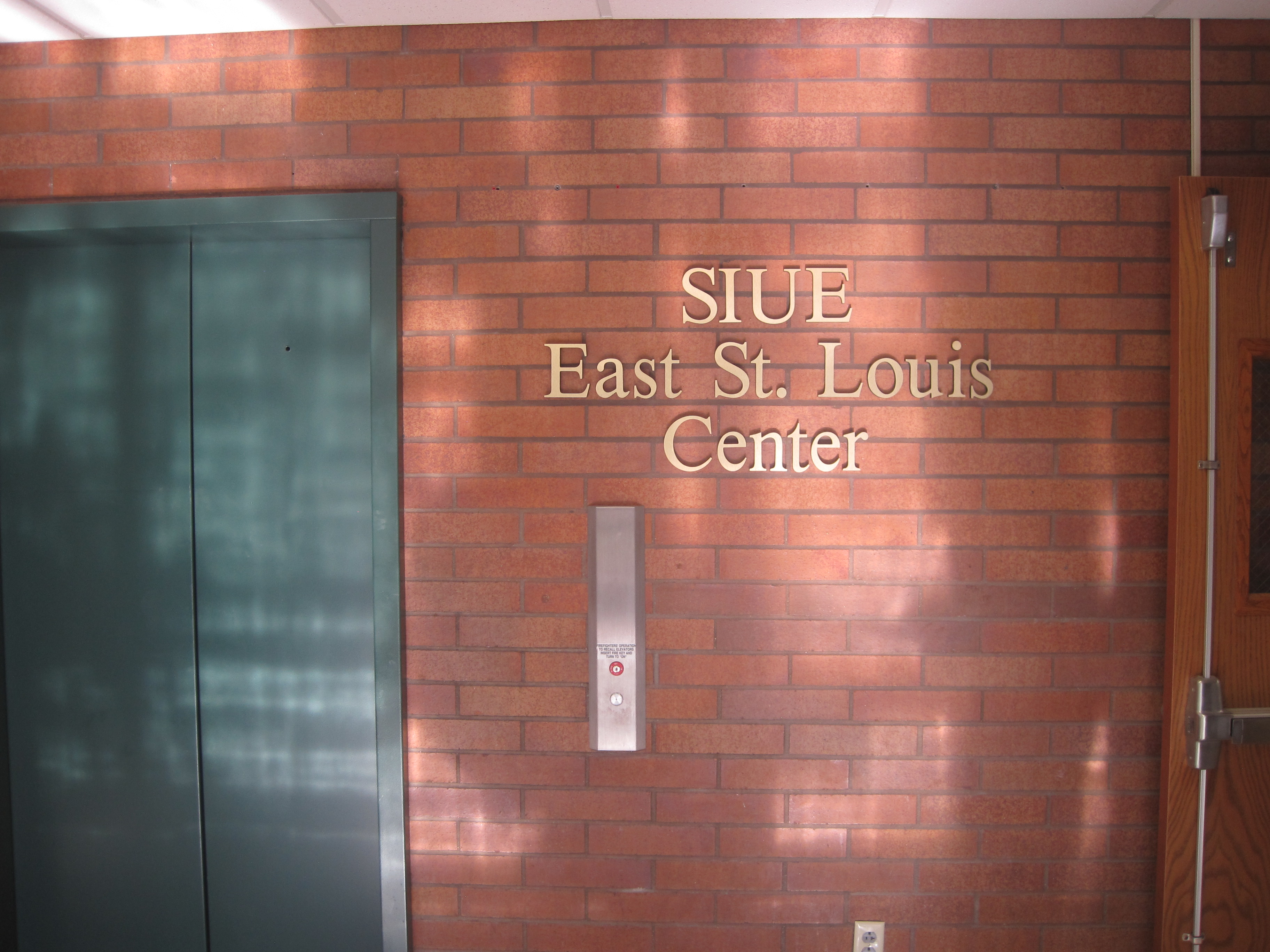
My visit to the East St. Louis Centre of the University yesterday was memorable although very short. It was preceded with a short trip into the neighbourhood of what used to be one of the most prosperous cities in the Midwest. Now it is littered with decrepit houses and abandoned factory warehouses. Many of the abandoned houses had been tagged with graffiti and street art which reminded me that I was in a neighbourhood that is now home to some of the most impoverished, yet resourceful citizens of the state. For a moment while driving through the government housing projcts, I thought I was in one of those Brooklyn type neighbourhoods I’ve seen so many times in movies, with wall art, basketball, fast trains, and violence. There was no violence here. Only silence, from the passage of time, and migrations.

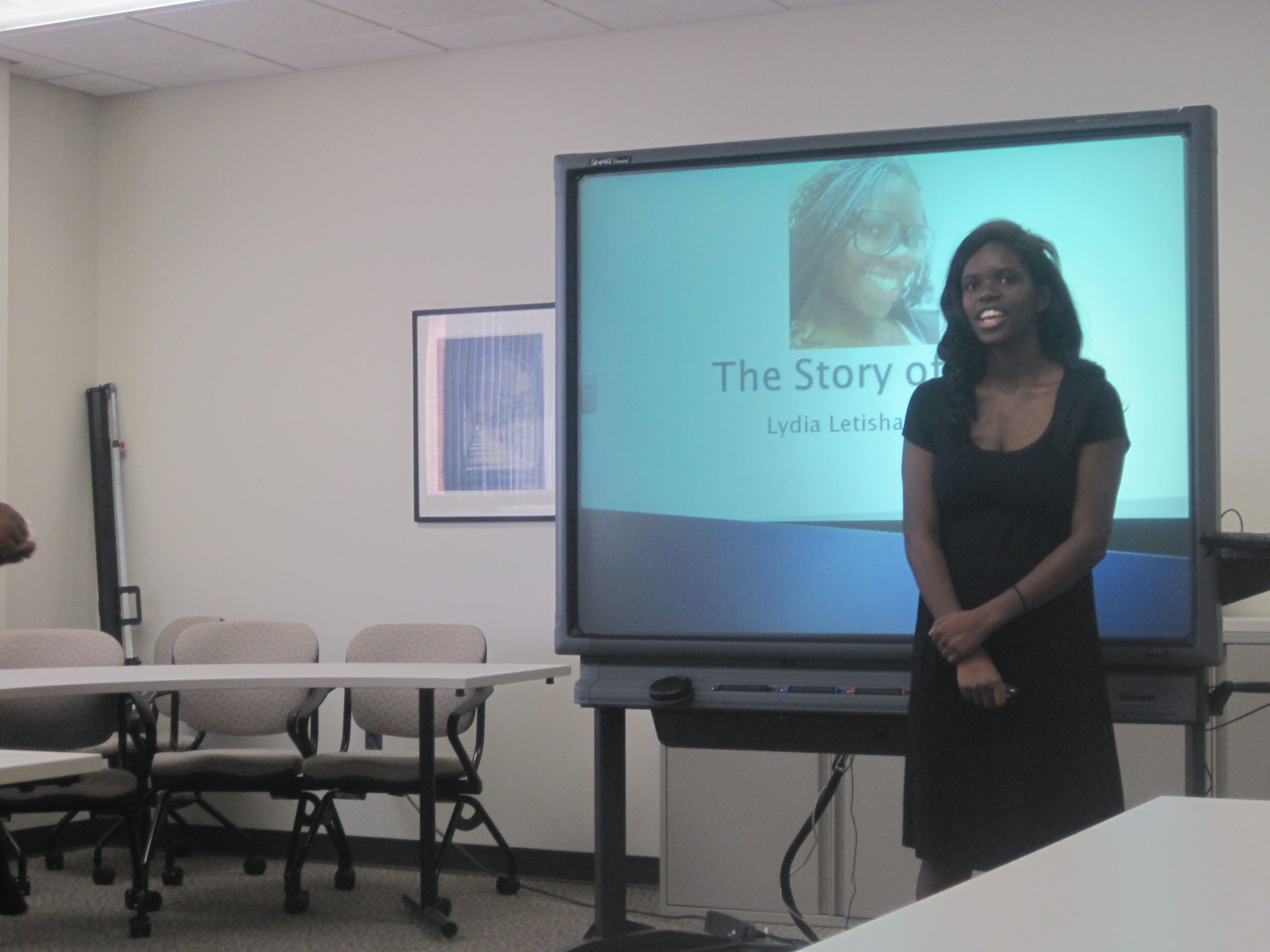
At the Charter School where we had gone to watch a Portfolio presentation by graduation students (all within the 18-19 age range), we met some of the most talented students. The presentation/performance was like a final year project where they had to face a panel and talk about their ideas, motivations, and achievements. Each one of them, as young as they were, brought a very dynamic angle to their presentation and some of them were very emotional. At such a young age, it made me proud that rather than being distracted or going into bad things common to people of their age in other cities and towns, these children were working hard to secure a good future. One of the students was an eighteen year old boy whose fraternal twin brother was already incarcerated. “People think we’re opposites,” he said, “I am here trying to make a good life for myself while he is there in jail.”

We watched each powerpoint presentation narrated by the student and gave valuable suggestions. We also asked them questions on every aspect of their presentation that wasn’t clear, and they answered.

The Charter School is fully funded by the government and serve as a support system for parents who can’t afford to send their children to private schools. The only thing that runs through these students however is not poverty at all, but ambition, skill, hope, brilliance and confidence.

It just happened yesterday that we were in time for the Portfolio presentations. The University Centre is used for several more things than just the Charter School. It houses the Eugene Redmond Writers club, and they meet there regularly for poetry readings, spoken word performances, dance, drama etc. East St. Louis itself is just a riverside city of over 31,000 people. It’s called East St. Louis because it is the last part of Illinois bordering on the eastern part of the River Mississippi just before the city of St. Louis itself that lay on the other side, in the state of Missouri.

Departures

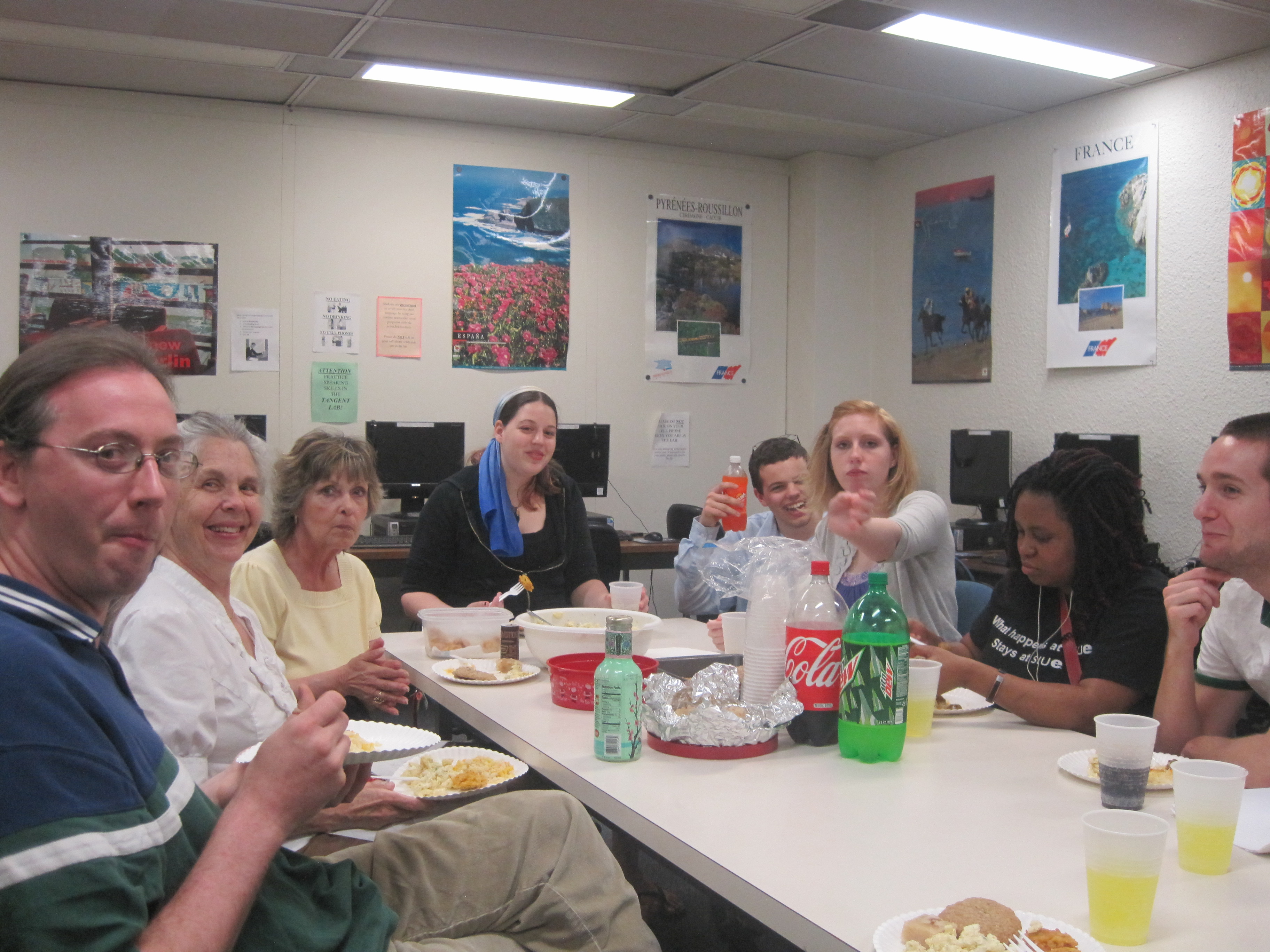
Today, I attended a potluck lunch in my department to mark the end of the semester. It was a gathering of friends and colleagues most of who work in the foreign language teaching lab. On Saturday, I had attended a get-together of international students who had arranged to send us (Reham and I) forth from the US with a small get-together. Both events reminded me of the transience of time, the value of friendship, and the strength of communality. We ate, we chatted, and we exchanged ideas. A few of them, I might not see again in a long time. Many others, I would be seeing again soon. In short it has been a week of goodbyes.

A week ago, Reham and I were hosted in the house of Prof Schaefer the International Programmes Director for the first time. I met his wife, and another scholar from Ibadan who was just completing his PhD thesis. I also met their cats, and got a chance to admire the beauty of their well situated, and well decorated house with artworks from all over the world. He had collaborated with universities and communities in Nigeria for many decades. On Friday this week, there will be a final get-together with the staff of my department to celebrate one of us, and an informal send-forth for both Reham and I. I look forward to it.

Today, I will be visiting the University Centre in East St. Louis. Famous for many of its arts and culture events like poetry readings, spoken word performances, drama etc, the centre boasts of patrons like Eugene B. Redmond the publisher of the famous Drumvoices Revue, among many greats. I’ve never made it to that campus of the University, and I hope to rectify that today.

Do You Speak English?

If I were to rank all the awkward questions that I’ve been asked since I came here, I’d rate this one the highest: “Do you speak English in Nigeria?”, along with its many variants of “How do you learn to speak this well/this fluently?” and “I like your accent.” I have got inured to its silliness over time, and learnt to enjoy it as a compliment whenever I hear it. So I respond instead with “Oh, thank you.” Sometimes for effect, I also add “Oh, I like your accent too” just to relish the priceless expression of shock or incredulity that immediately shows on the face of the person to which it’s directed. “Who? Me? What do you mean that I have an accent? I’m American…” as if accents were either a disease, or only one person’s idiosyncrasy. I have realized that many people, even in the university (well, not students of language), do not know that there are many accents of American English, depending on where one resides. St. Louis English accent is definitely different sounding from Boston accent, Chicago accent or Mississippi accent that all have their own peculiarities of more than just pronunciation but also grammar. In any case, whenever I’m bored, I occasionally like to relish the pleasure of trying to distinguish accents and speech peculiarities. It’s not easy for me, needless to say, since I’ve not lived in the United States for more than just four months.

Away from accents for a little while. Less than two weeks ago, I was sitting in a bus stop at 5th and Missouri Metrolink train station waiting for the scheduled bus to take me from there back to Collinsville, and later to Edwardsville. Those familiar with the area would know how dangerous it could be at certain times of the day. It is in a part of Illinois called East St. Louis, just on the border of the state. It was evening, and it was cold. There were people around, but it didn’t give me any illusion of safety even as I put my iPod on and listened to some calming music. I was alert. There was a young African-American woman sitting beside me on the bench in the bus stop. A few seconds later, a young African-American man in sagged jeans and with a really loud phone, of perhaps around 24-25, who I’d seen prancing around talking to everyone passing by even when they didn’t stop to give him audience came towards me and said something. He was addressing me. I was listening to some of Fela’s best ballads. He was talking. I heard him clearly, but I didn’t pick out what he said, so I removed the earplugs and looked at him. I didn’t smile. He repeated what he was saying, and I still didn’t understand it, yet it sounded vaguely like English, so I gave up. I asked him to say it again and he did, for the last time. As she saw that I honestly didn’t understand him, the lady beside me looked at the young man and said “No, he don’t smoke/have weed.” What? That was what he’d been asking me (and the many other people) all the while, whether I had marijuana to share? Good Lord have mercy. Why didn’t he just say so in English? Well, he eventually left because I immediately turned my attention back to my music, and ignored his presence. Yet in me I wondered what would have happened if I’d said more than a sentence, and he’d discovered that I was not American, but an African with a heavy/strange English accent. Would that have made me a bigger target for mugging? There was a laptop in my bag, and there were my debit cards, along with my iPod and mobile phone. And my distinguished Nigerian passport. As I got on the bus a few long minutes later, I understood why George Bernard Shaw said that Britain and America are two countries divided by a common language.

And so today – thanks to patience, persistence, and prayers – I checked my account balance to find that my money has been refunded. Thanks providence. However, the part of it that inspired this post was in the email response I got from the bank representatives. I had sent them a complaint in an email, stating that I had made a transaction on Monday to the tune of a thousand dollars. From the response I got back, I have found out that it may be possible that American English doesn’t have any such expression as “to the tune of” in their language. Is this the case? I don’t think so too, but even if it is not, it doesn’t remove from the fact that Bernard Shaw could have been right after all.

Please read. It’s unedited, except for my account balance ;).

Dear KT, Thank you for contacting customer service. With reference to your e-mail, we regret to inform you that we do not see a transaction of over thousand dollars for “the tune” but there was a transaction on hold from SIUE Bursar’s Office, EDWARDSVILLE, IL, for $1,057.87 on 04th January 2010. This amount is already credited back to your account on 08th January 2010 and your current balance is $xxxx.xx. Whenever a transaction is on hold and if the merchant does not approve the transaction then the amount is released back to your account in 3-5 working days. Regards JP Morgan.

At The Barber’s Shop

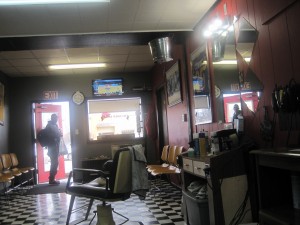
IMG_3143I will be the first to admit that the cliché of the “Barber’s Shop” experience topped my list of reasons to go and get a haircut yesterday downtown Edwardsville. You see, I’m one of those less-than-hairy folks who, even in the farther side of twenties, still has a shrub for beard, and even less – just a few strands of hair – for moustache. It has at least saved me the expense of large combs and shaving sticks, and I’ve delighted in being almost perpetually clean-shaven. In the case of this travel, it has so far saved me the ordeal of a regular haircut, and my three month-old head of hair still looked like one cut just a few weeks ago.

But I got self-conscious and started asking everyone if they thought that my hair was too long, and due for a cut. And they all said “yes”, yet I stalled, first because I wouldn’t stop trying to convert $20 into Naira and telling myself that it was too expensive, and second because I had considered it a strenuous chore to have to ride go the distance just to get a haircut which I didn’t think that I needed. In any case, my curiosity about the American Barber’s Shop, which had gained fame from movie portrayals finally goaded me on Friday towards CUT-N-UP, an African-American barber’s shop a little distance from campus.

The barber spotted me as a tourist just five minutes into my haircut. I would not stop taking pictures so he asked: “How long are you here for?” and I laughed. Then we got talking about other things. Where he’s from: East St. Louis. What else does he do: Dee-Jaying and record producing. He has been in the hair cutting business for seventeen years, and he has a son who is sixteen. Being from East St. Louis – one of the poorest neighbourhoods in Illinois, he told me of how he decided so early in life that he would not depend too much on his school high school certificate, but put his skills into use. Living in Edwardsville for the past seventeen years has taught him the benefits of self-employment. He goes back to East St. Louis occasionally, he says, to visit his folks, but can’t think of settling back there because of the overall feeling of hopelessness and laziness that pervades the environment: his words. This is not the first time I’m hearing of the gruesomeness of living conditions in that area of Illinois called East St. Louis. My secondary supervisor, Professor Afolayan goes to the neighbourhoods at least once a month to give talks to young residents about the advantages of education and zeal. I’ve now registered my intention to visit the place and see for myself. But the images are not flattering. And if any of the words I’ve heard are anything to go by, it’s not a place to go to alone, or at night – just like some parts of Nigeria where, like East St. Louis, creativity however manages to emerge once in a while.

There’s not much else to report about the ambience of the barber’s shop besides mirrors, posters, signs (one says: “if you don’t want a messed-up haircut, DON’T MOVE”), a cable channel showing the NBA games, comfortable chairs and magazines to read. Oh, they didn’t collect electronic payment, and the barber engaged me in a conversation throughout – just like in the movies. The difference was that, in this case, he’s far younger than most movie-made barber figures, and he had a Bluetooth headset on which he also talked to another person, all in a language very appropriate for the domain. My main problem now is that I now wish that I had left my bushy hair the way it was before. True, a few people have told me that I look much better now that the almost jungle is gone. Problem is, they are Americans who are already used to cold air licking  their heads at this time of the freezing season. Me not, and I now have to go around with this soft fleece winter cap everywhere I go. I will survive, I think. I hope.