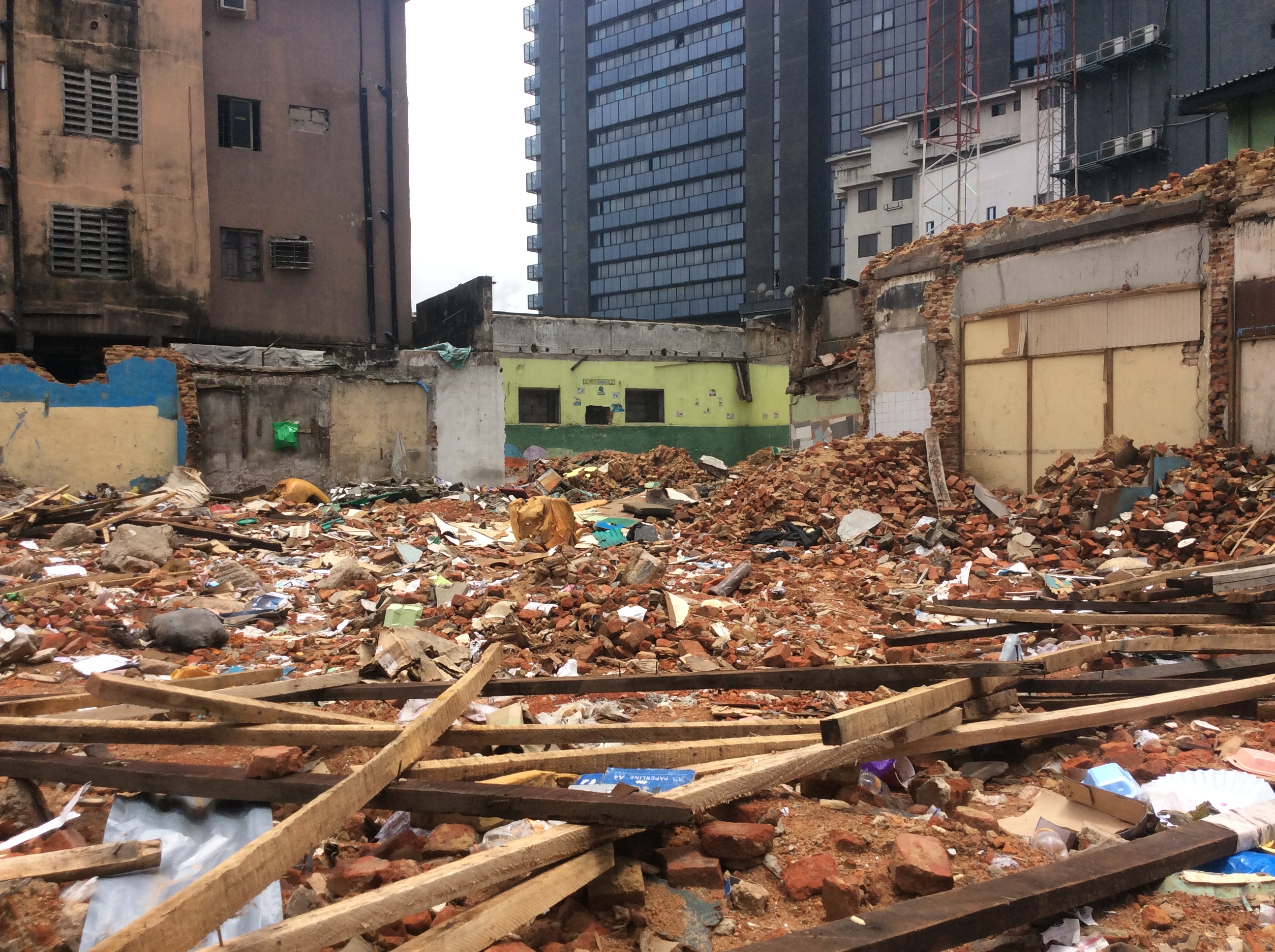
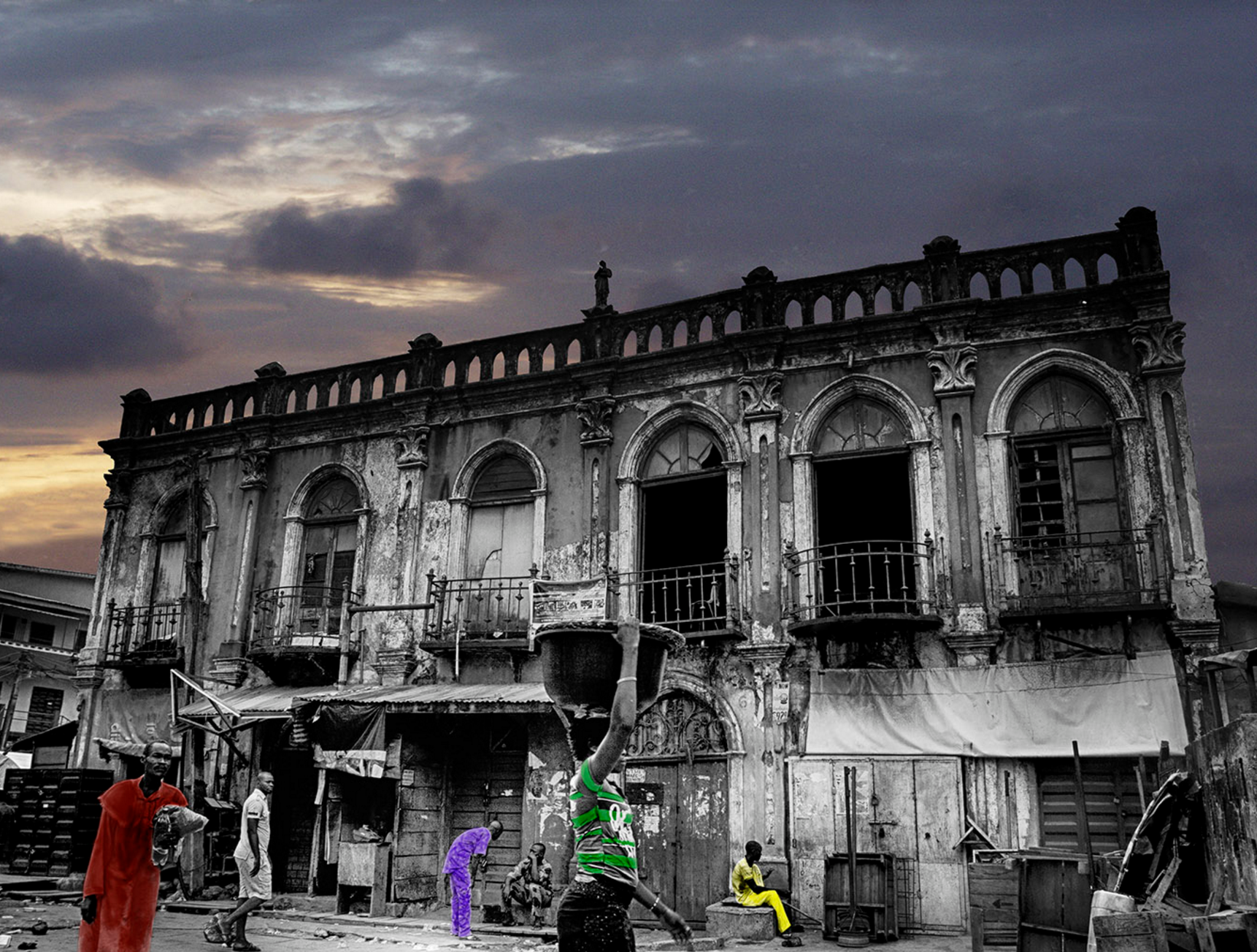
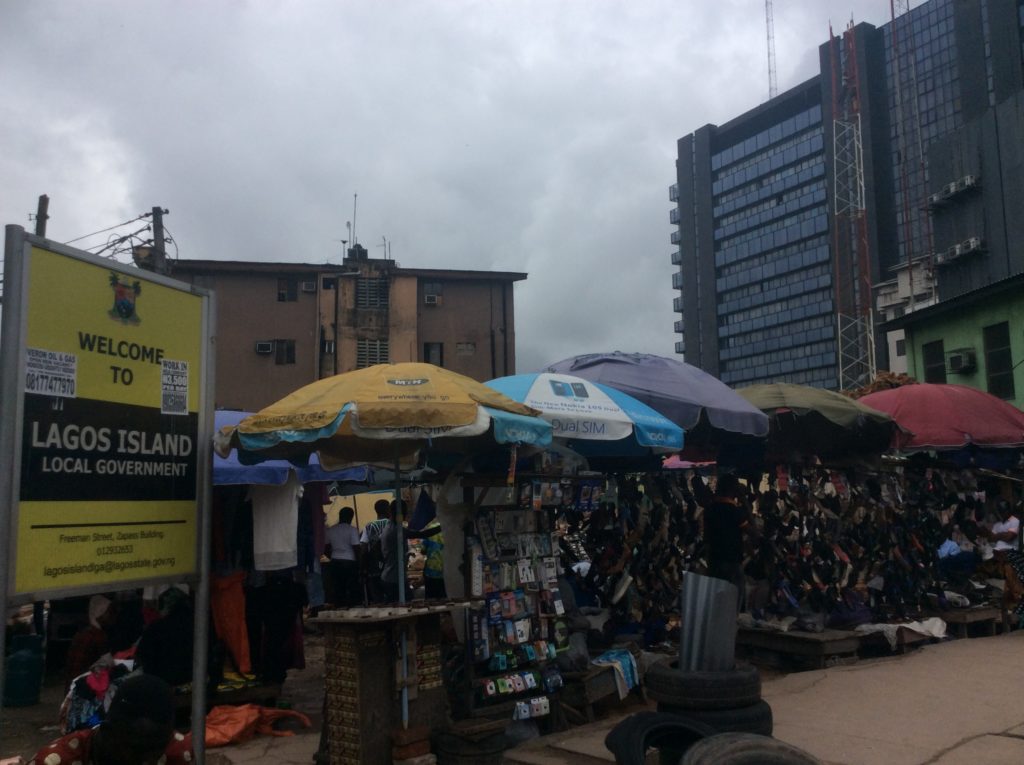
I spent a few hours on Thursday talking to officials of LASPPPA and LASBCA, two ministries in the Lagos State government in charge of managing and supervising the building or demolition of buildings/structures across Lagos State. The day before that, I spent some time again at the Ground Zero on Lagos Island where the Ọláìya Family House (Ilọ́jọ̀ Bar/Casa di Fernandez) used to be. The green sign erected on Sunday by the State Government warning off intruders had been taken off the property, stolen overnight by unknown persons. All that is left on the property now are crumbs of stone and dirt. Other than that, the space remained as it was on Sunday. Busier, this time, as traders set up their wares and went by their day.
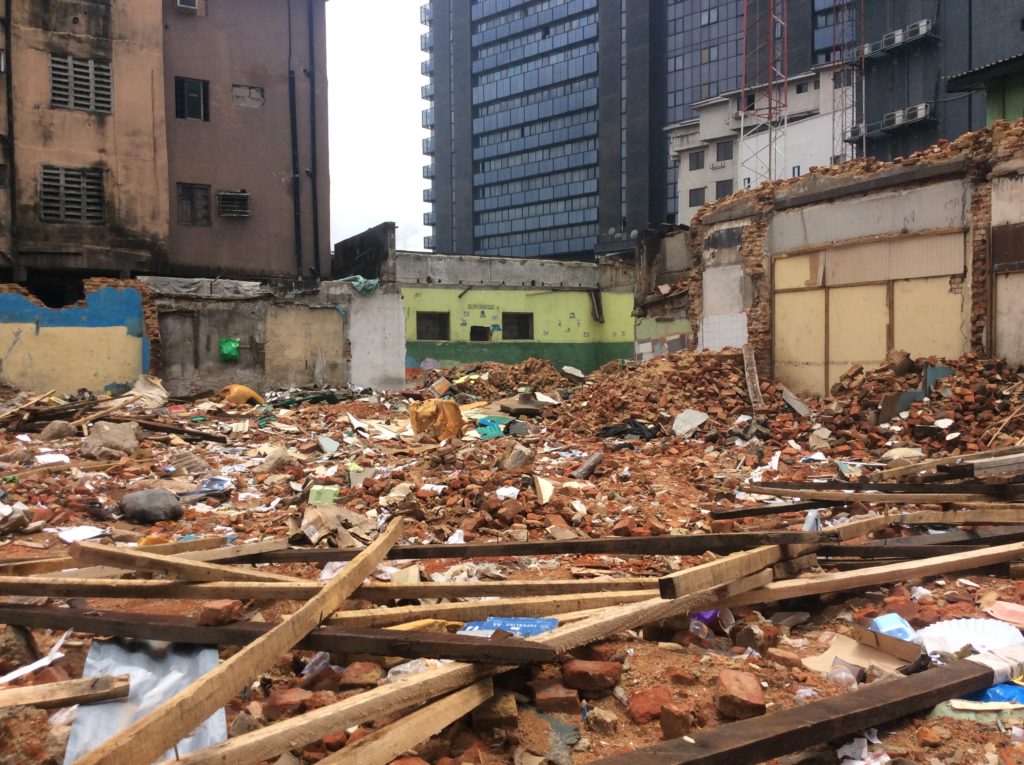 Photo taken today at the demolition site. The signboard by the state government is gone, stolen overnight.
 Normalising An Absence
I walked around, speaking with a few of the shop owners. A few observed me with suspicion for a while. They must have become used to the renewed attention that their locale now receives from all and sundry. Before Sunday, September 11th, all they had were tourists and foreigners curiously interested in an ancient structure. They were not always sure of why the building got that much attention. After all, it was crumbling at all sides, and was always in danger of falling into pieces by itself. A resident observer told me last Sunday that he had always assumed that the building actually belonged to foreigners still, considering how many times he’d seen white people surveying or taking pictures of it.
Many of the current neigbours around on this day seemed already resigned to the inevitable, already moved on with the knowledge that what was done was irreversible, no matter what they said or did. The puff-puff seller seemed disinterested in the topic altogether when I approached him. The building once stood there, and now it’s no more. That is all there is to it and there’s nothing more to talk about. Like his other colleagues, he was not present when the demolition took place. He came back after the holidays to find a different landscape, and has since reconciled to that reality. “It was an old building anyway,” another volunteered. “We have been waiting all these years for the Federal Government who promised to repair it. They didn’t come. Better to pull it down now than have it collapse by itself eventually.” Doesn’t he think it would have been better repaired than demolished? “I think they will build a new one,” he said, speaking as if intuitively aware of some secret plan.
I asked around if anyone knows the identity of the developers behind the demolition. No one did. “They don’t come here anymore. Since the State Government placed that green sign that the property is off-limits, we have not seen them.” I asked what had become of the signpost which was there as early as Sunday. “It was there as late as yesterday night, actually.” A man said. “We came here this morning and couldn’t find it anymore. But we know that nobody can do anything here unless the State knows about it.” Do you know what they plan to build on the grounds? “A shopping center, maybe? I think the family decided that they could make more money with a business structure than an old building which paid no one.” A sign that was photographed a few days after the building was demolished pointed to this theory that the demolition was ordered by the Ọláìyá Family itself, in contravention of the federal mandate on monuments.
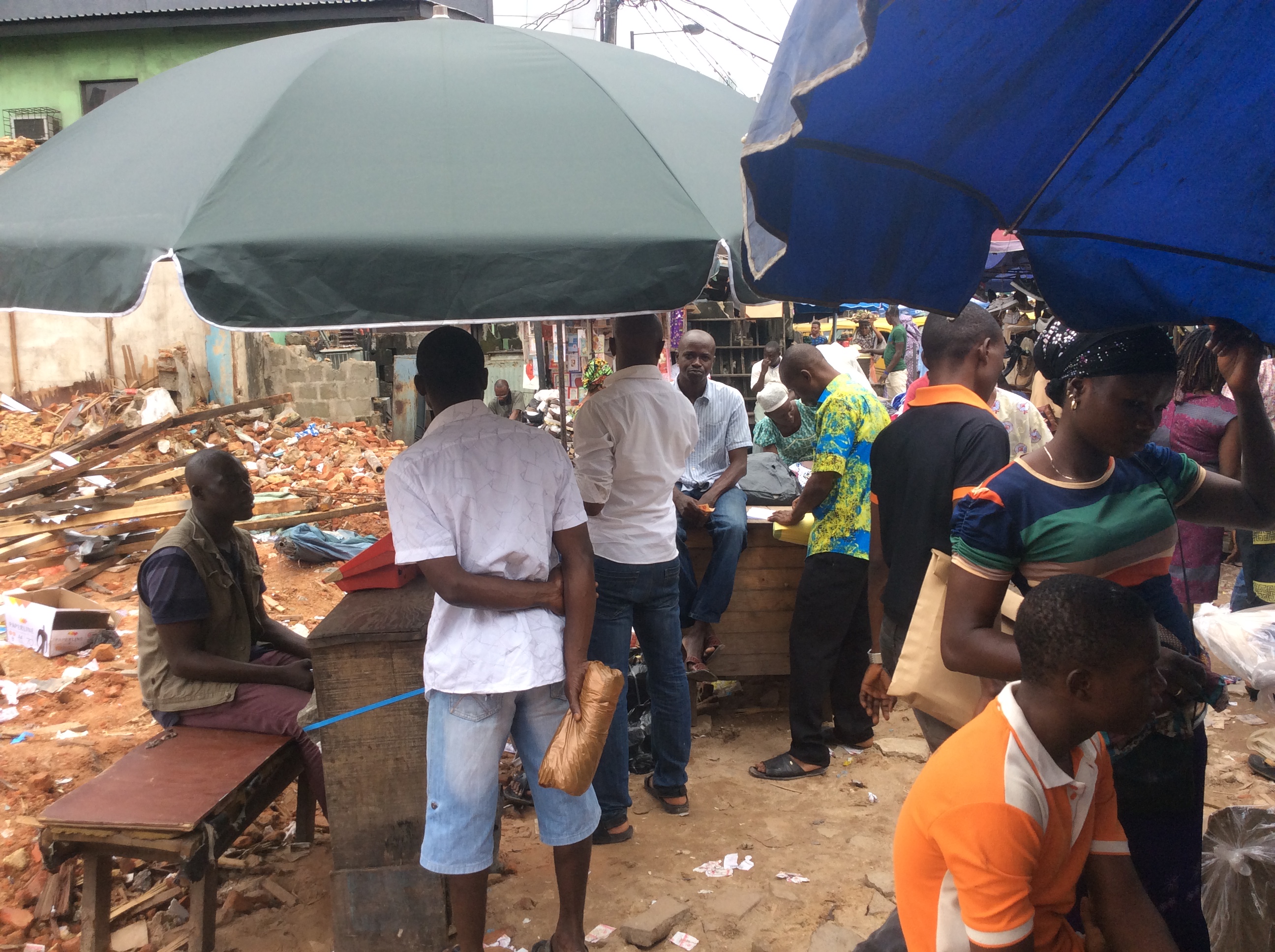
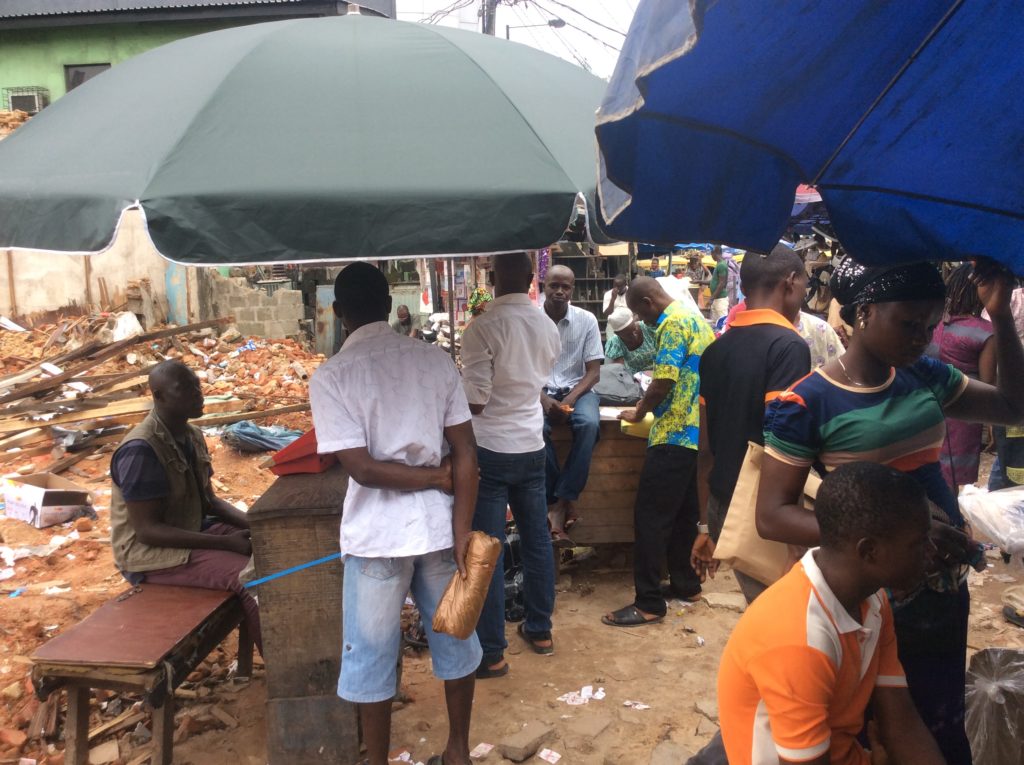 The shops that used to be within the building are now desks and umbrellas.
What They Lost
To the part of the building that used to face Tinúbú Square is now a wall of bodies, sitting, squatting, setting up wares and conducting marketplace banter and business. There, huddled around a table, I found some men whose properties were destroyed with the demolition. Their subdued anger and resignation was evident as was their resilience and stoicism. Some talked freely while some stopped themselves mid-sentences as if unsure of the usefulness of an opinion, as if too sufficiently pained by a bullying they’re incapable of rebuffing. All of them had known of a controversy surrounding the building. They had known that some people wanted the building pulled down, but they hadn’t really expected it. They sure didn’t know that while they packed their properties to travel home for the holidays, a caterpillar was being rented to begin work breaking down their shops shortly after breakfast on Sunday.
One man, Igbo, who chose not to disclose his name, said he had left a small desktop computer in his shop when he left for the holidays. Along with his shop, it was gone when he returned. What he lost was more than a hundred thousand naira. “What will my talking do?” he asked when I asked how he felt. “Would they give me the money back?” For him, the legacy of the building wasn’t as much concern as a blatant destruction of his means of livelihood. “We were all here on Friday, unaware that they had planned this evil deed all along and were just waiting for us to leave.” Why did he think the police wasn’t alerted when the demolition started so the culprits could be stopped? “I don’t know. Perhaps the government people had all travelled. But the developers were here all day and they didn’t care for our properties.”
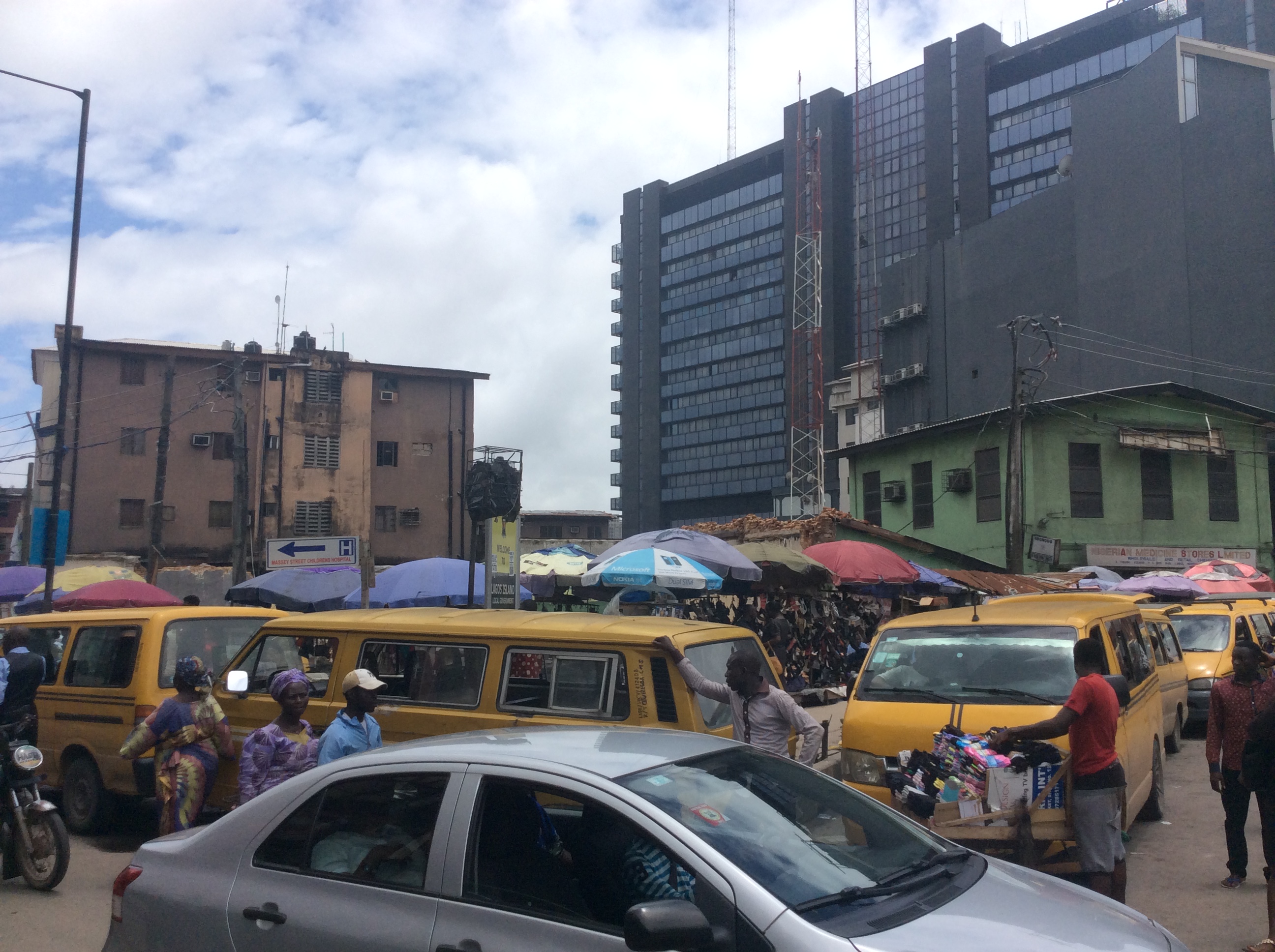
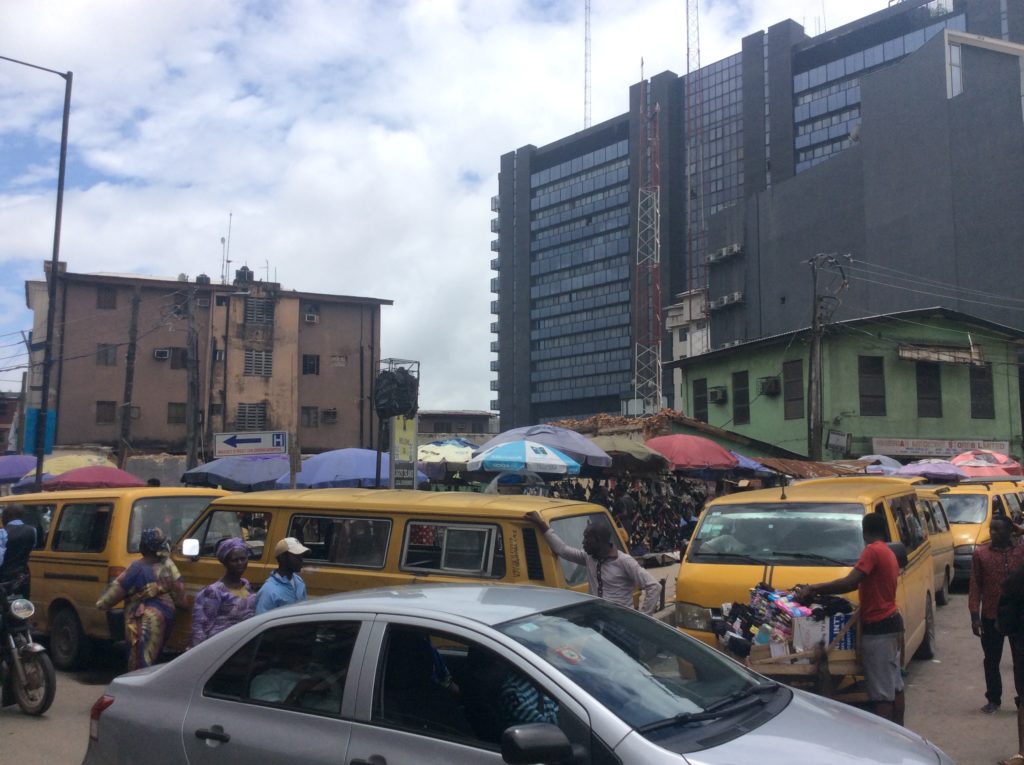 The demolished building is barely visible now behind the umbrellas
Another trader, Mr. Ọláṣùpọ̀ Awobuyìdé, who operated a lottery shop in the building seemed the most upset. He also seemed the most stoic, for a man who had lost not just property but a family treasure. His grandmother was part of the Ọláìyá family, and he had great memories of living and interacting with the house. While we spoke, a woman came by who seemed to recognise him than he did her. In a minute, she identified herself as a distant family member, asking for other relatives by name. She said she had come when she heard of the demolition. She had memories of having lived in the house many decades ago and was sad to see the property go. After she left, I asked Mr. Awóbuyìdé who she was. “One of our old relatives,” he said. “from London.”
Ọláṣùpọ̀ was in Sango Ọ̀tà, about 80km northwest of Lagos, over the Eid weekend when he received a call from a relative. Their family house was now being demolished. Did he know about this? He had known of some controversy surrounding the building. But after many months and years of rumours and false starts, he had grown skeptical of reports that the demolition would actually take place. And even though he had taken care to move many of his important properties off the premises, just to be safe, he had not imagined that this weekend would be it. Too far away to be of any help, both of them resigned, over the phone, to mourning what could not be salvaged. In his own shop, he claimed, were properties in excess of one hundred and fifty thousand naira. How does he feel about it? “God knows best”.
What Does The State Know?
LASPPPA is the Lagos State Physical Planning Permit Authority whose job, under the section 109 of the Lagos State Urban and Regional Planning and Development law 2010, involves giving approval for any “development, any alteration, amendment, addition, repair and/or renovation to an existing building.” LABCA is the Lagos State Building Control Agency whose job is “to ensure that basic minimum standards are maintained in building construction and renovation in order to ensure that existing buildings are safe, healthy, accessible and habitable…” Both agencies work together and are solely responsible for anything relating to permits to build or demolish buildings in the state, and the standard of such a building or demolition project.
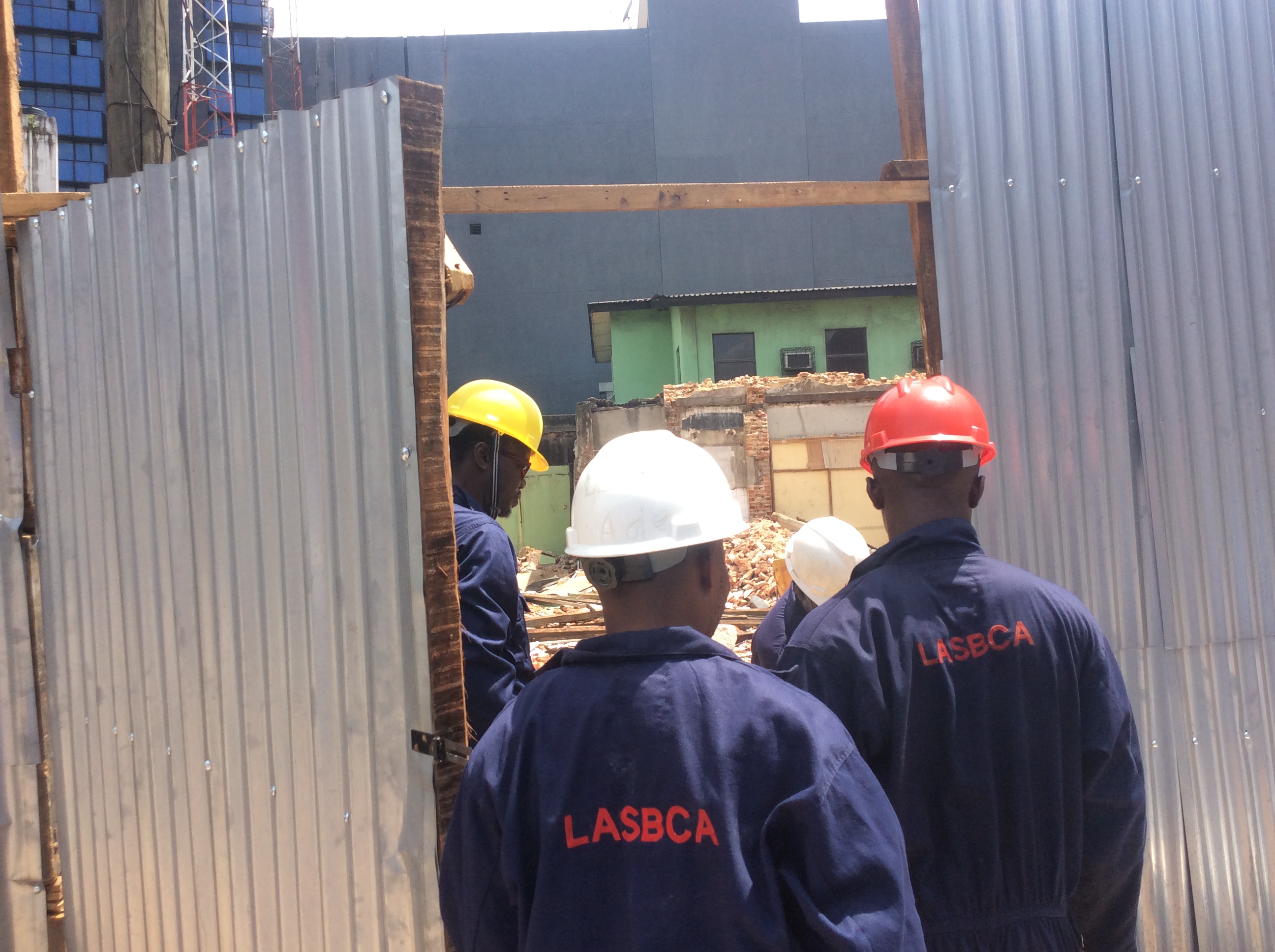
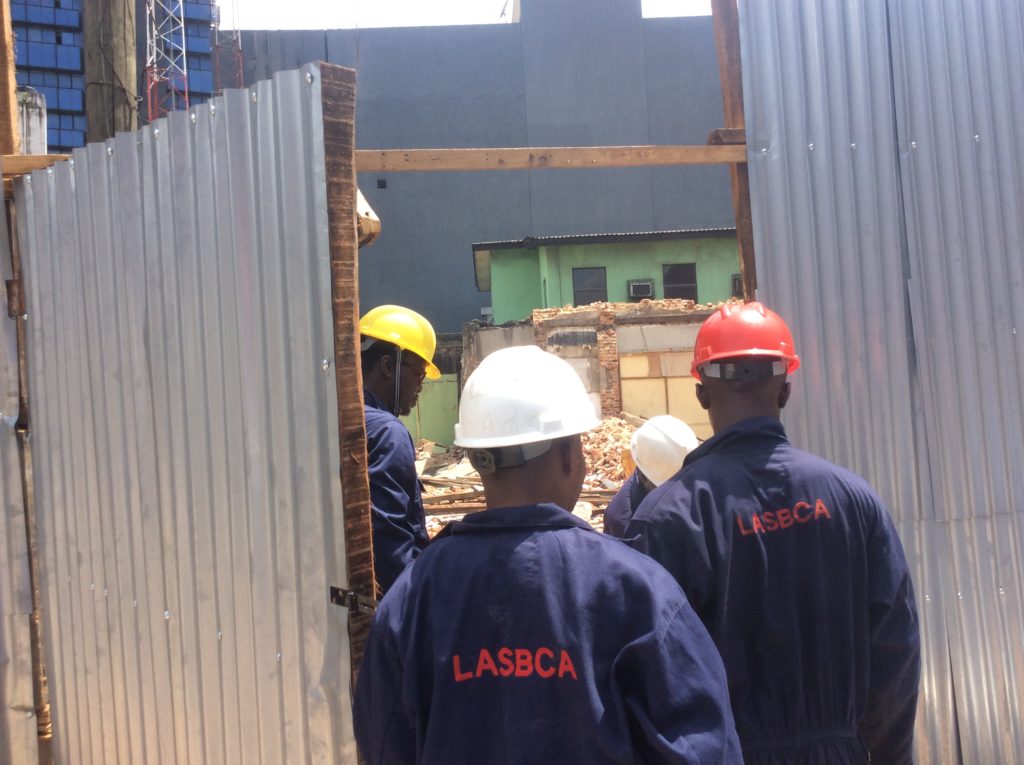 Men of the Lagos State Building Control Agency demolishing an illegal fencing on Sunday, September 18.
It was why the responsibility fell on these ministries to come, on Sunday, September 18th, to pull down the “illegal” fencing around the demolition site. If anyone in the state had got an official permit to pull down Ilọjọ Bar, such a permit would have had to have come from the LASPPPA. Such a demolition would also have had to have been supervised by LABCA. This, according to the officials of the ministry didn’t happen, so we have to – for now – take their word for it. The demolition took place on a Sunday before a major public holiday when most public officials had left town. But how could anyone have pulled down a public building – a national monument at that – without anyone knowing or alerting the authorities while it was in progress? It’s even harder to take the word of the government for it when, just a few days before this demolition news surfaced, the state had pulled down another building, also without sufficient notice (though the government claims otherwise), and upending the lives of traders who never saw it coming.
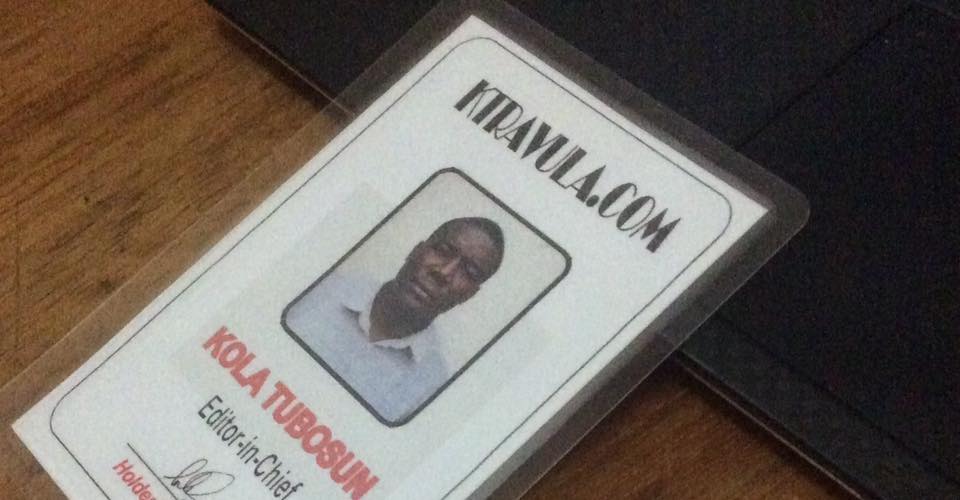
My trip to the office at GRA Ikẹja was in order to ask a few questions along these lines and clarify a few things concerning this yet unexplained demolition. A day before, I had made myself a laminated identity card that finally identified me as a “journalist” with my name and photo, hoping that it would be of help. It wasn’t, but it got me in through the door. The officials talked to me kindly but cautiously, refusing to be quoted on the record, and refusing to be recorded because they haven’t been authorized to speak officially on the matter. They were also unable to answer many of the questions I had, though they encouraged me to ask them anyway, which I did. Their answers were noncommittal and not very useful.
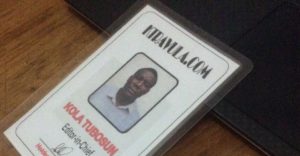 My new ID card.
My intention of going there was actually to speak directly to the general managers, Mr. Ọládọ̀tun Lásojú and Mr. Rẹ̀mí Oni-Orísan of the LABCA and LASPPPA respectively. I made this clear in my request to the officer who took my phone call, and I had got confirmation that this would happen. But on getting there, I was told that both of the men I hoped to see were at meetings at Alaùsá and couldn’t attend to me in person. The PRO of both ministries however promised to get answers for me if I would sent the questions via email. I have now done so and will update this piece as soon as I hear back.
What Happened to History?
When Ilọjọ Bar was built in Lagos Island in 1855, there was no “Nigeria”. That would come fifty-nine years later. Slave trade had only been abolished in the British Empire just 48 years earlier with the Slave Trade Act of 1807, though it still thrived in the southern United States. Abraham Lincoln, the eventual abolitionist, was a politician and lawyer from Illinois just recently disappointed by a recent loss in a Senate race of the previous year. The building had stood in that spot overlooking Tinúbú Square, witnessing the passage of time, and wearing the history of a people and a place like a prized ornament. It is gone now, replaced by stones and dust, and the anguish of a dejected, disappointed people. Gone with it is a visual representation of a whole lot of history that will never come back.
When, in April 2015, ISIS destroyed monuments of over 2000 years old in Hatra, the world was sufficiently outraged at the callous lack of concern for what were simply a physical bearers of years of human accomplishment. In art and craft, in architecture and in writing and in music, we document the progress of humanity. By preserving them for the next generation, we tell them that we value their right to know where their ancestors have been, and hope that it serves as a guide to what we expect of them in the future. In March 2016, a similar case of a deliberate attack happened in Timbuktu, another historical site, spurring a war crimes trial. The response to these show the value placed by the world on the sustenance of stories through historical monuments. Here in Nigeria, the opposite seems to be the case. The current recession has even led some to consider selling national assets to raise funds.
The attack on Lagos Island is unfolding as a terrorist act. Not in the commonly accepted sense of the word, with a foreign religion as motivation, but not any less malicious either. The symbolism isn’t lost that the demolition took place on 9/11, a day now globally recognised for its significance in the fight against global terrorism after two buildings were destroyed in New York in an attack against a country and a culture. The reason for this current demolition might eventually show a more benign provenance – a minor family disagreement that ballooned into national and international significance. But the meticulous planning that went into its clandestine realisation shows something more than a harmless mistake. If the state knew about it and is refusing to acknowledge it, this makes it an even worse transgression, elevating a mere incompetence to a the level of a felony or at best an abuse of public trust.
What exactly is going on in Lagos? On Saturday, September 24, news broke that the J.K. Randle Memorial Hall, Onikan, which is also a historical building on the Island, has been pulled down. In a phone call with Bashorun J.K Randle, the head of the family, the demolition came as a surprise and without the assent of the family. Who has the answers? Does the governor? Do the commissioners? Will they address these matters in a timely manner? More disturbingly, are there more buildings to go by the way of demolition soon? Which are they? Have the owners been consulted and have all proper processes been observed? Can the public know and have appropriate debates over it? Can the Governor of Lagos say, uniquivocally, that he is not trying to demolish all historical structures for short term commercial purposes?
Life Calmly Goes On
Business on Lagos Island goes on now as it always does, daily, marking time with the bustle of legs, voices, and hopes. But at Tinúbú Square, a notable absence marks an empty tooth, like Wọlé Ṣóyínká describes it, in the otherwise welcoming smile of an old, colourful, but still dignified city. Unless, of course, there is a deliberate decision in government to render the state free of any physical record of its past, in pursuit of some cheap materialistic or cosmetic ambitions.
________
This piece was published in syndication on The Guardian and Premium Times on September 25, 2016. My earlier report on the demolition can be found here and here. The continuing part of this reporting is titled “A Tragedy of Confusing Interests“.
All photos are property of KTravula.com
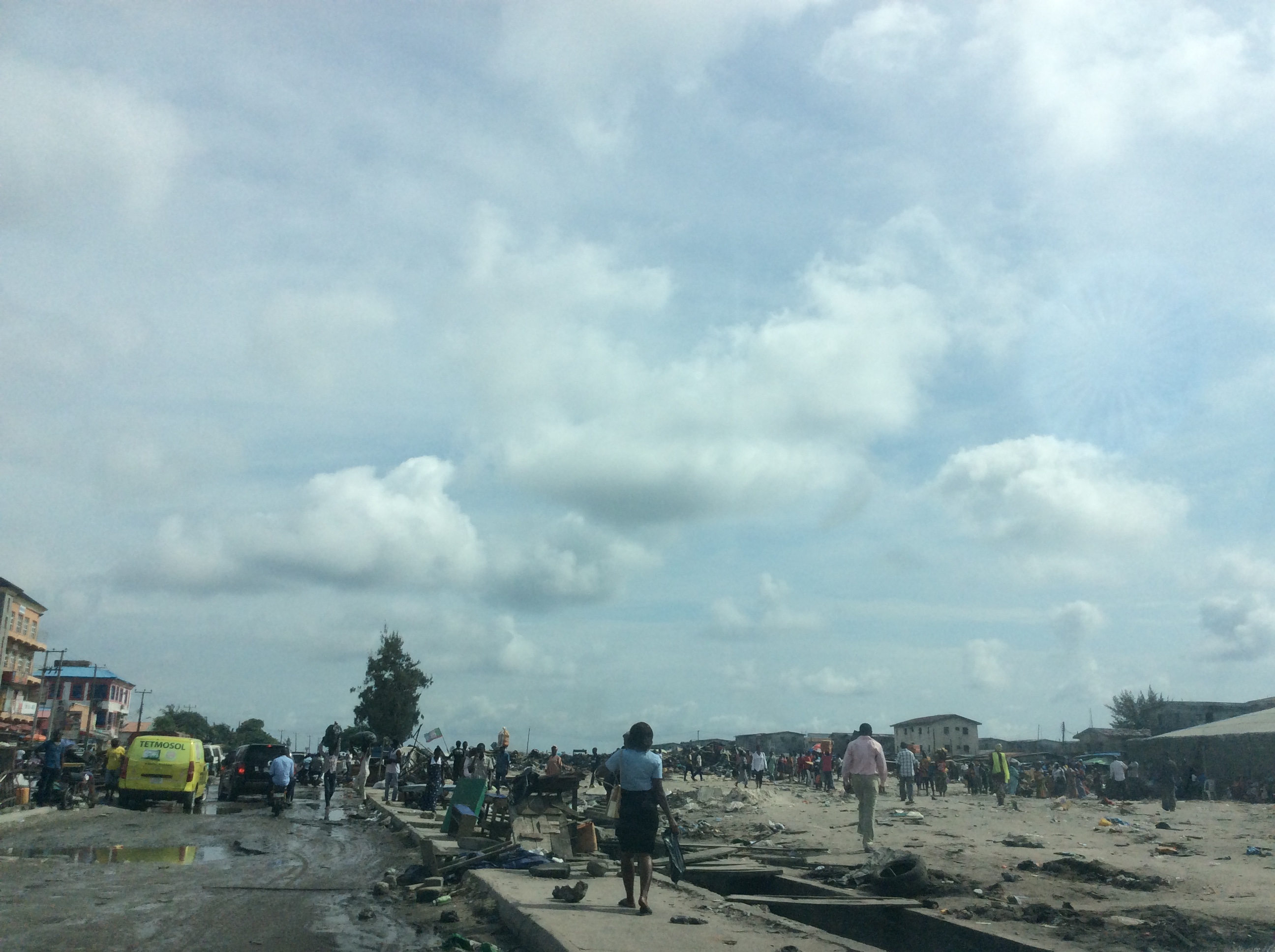 Driving by the Jákàńdè area of Lekki (5th roundabout) on Sunday, I noticed a few people with placards at the roundabout standing around with signs like “this is a peaceful protest, leave us alone here” or something to that effect. Behind them was a stretch of destruction that looked like a heavy storm had just passed through. (I’ve been to aftermaths of real life tornadoes, so I know). Behind them lay piles of debris as far as the eyes could see from the roundabout, made of brown roofing sheets and wood.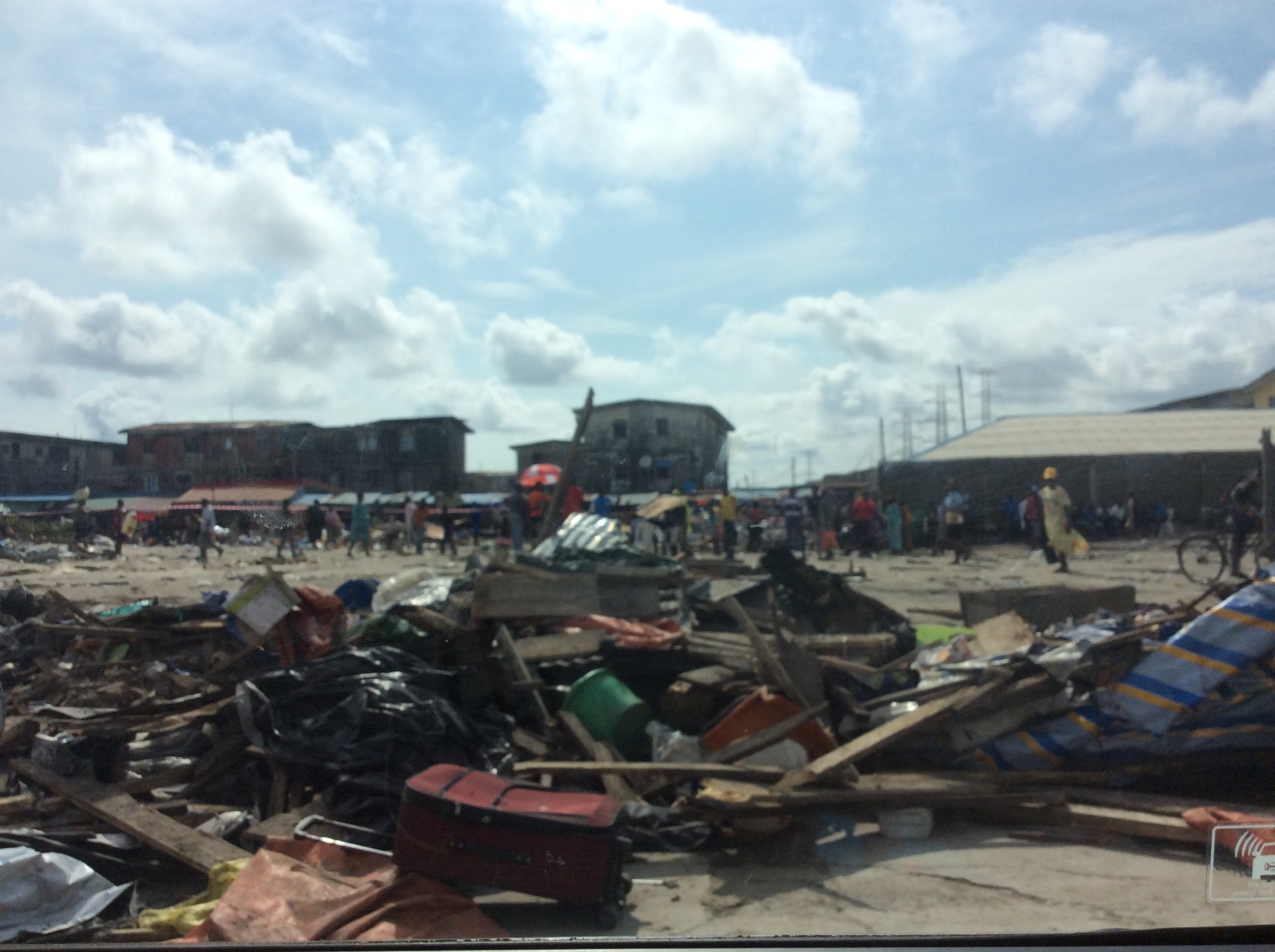
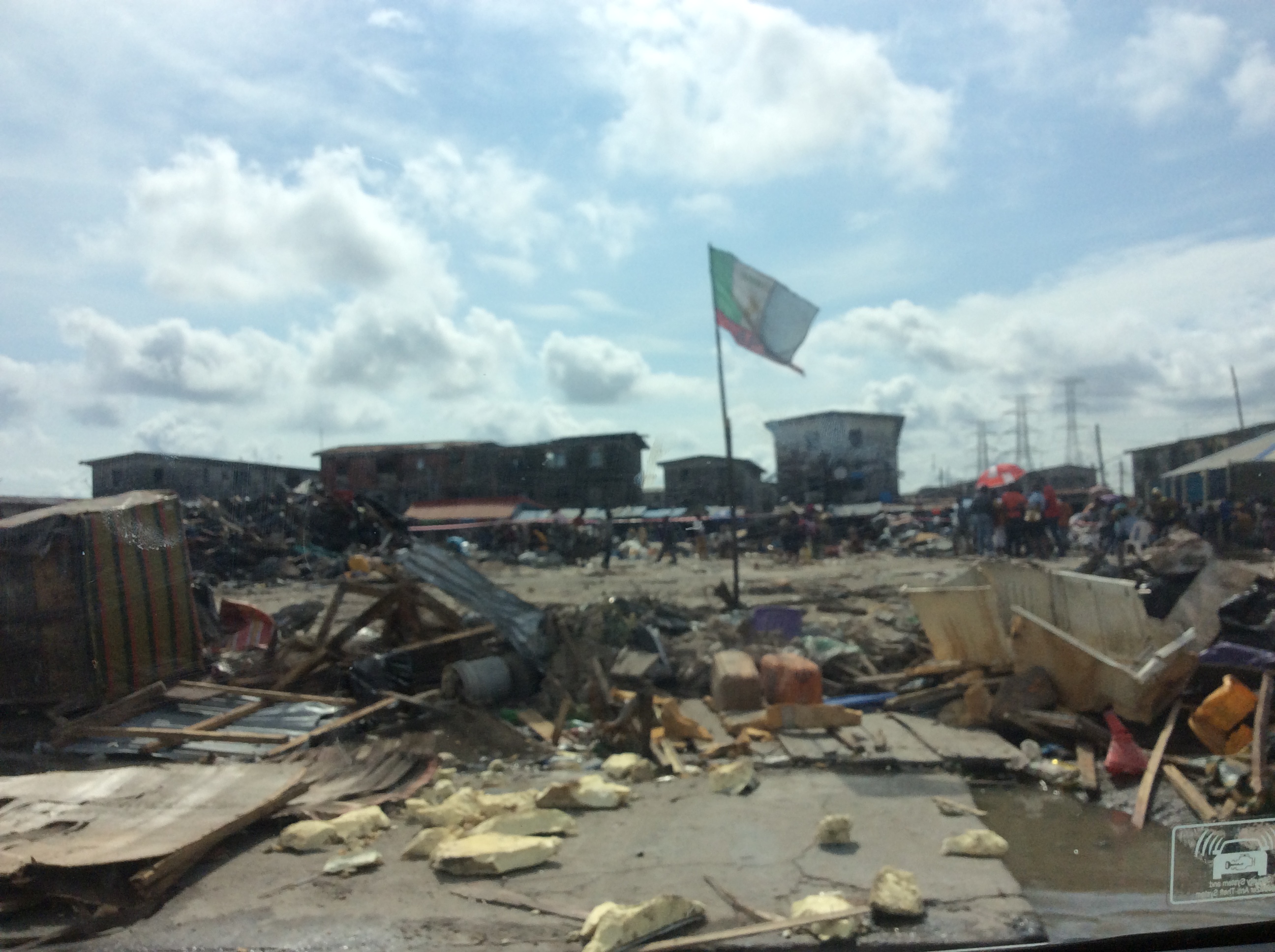
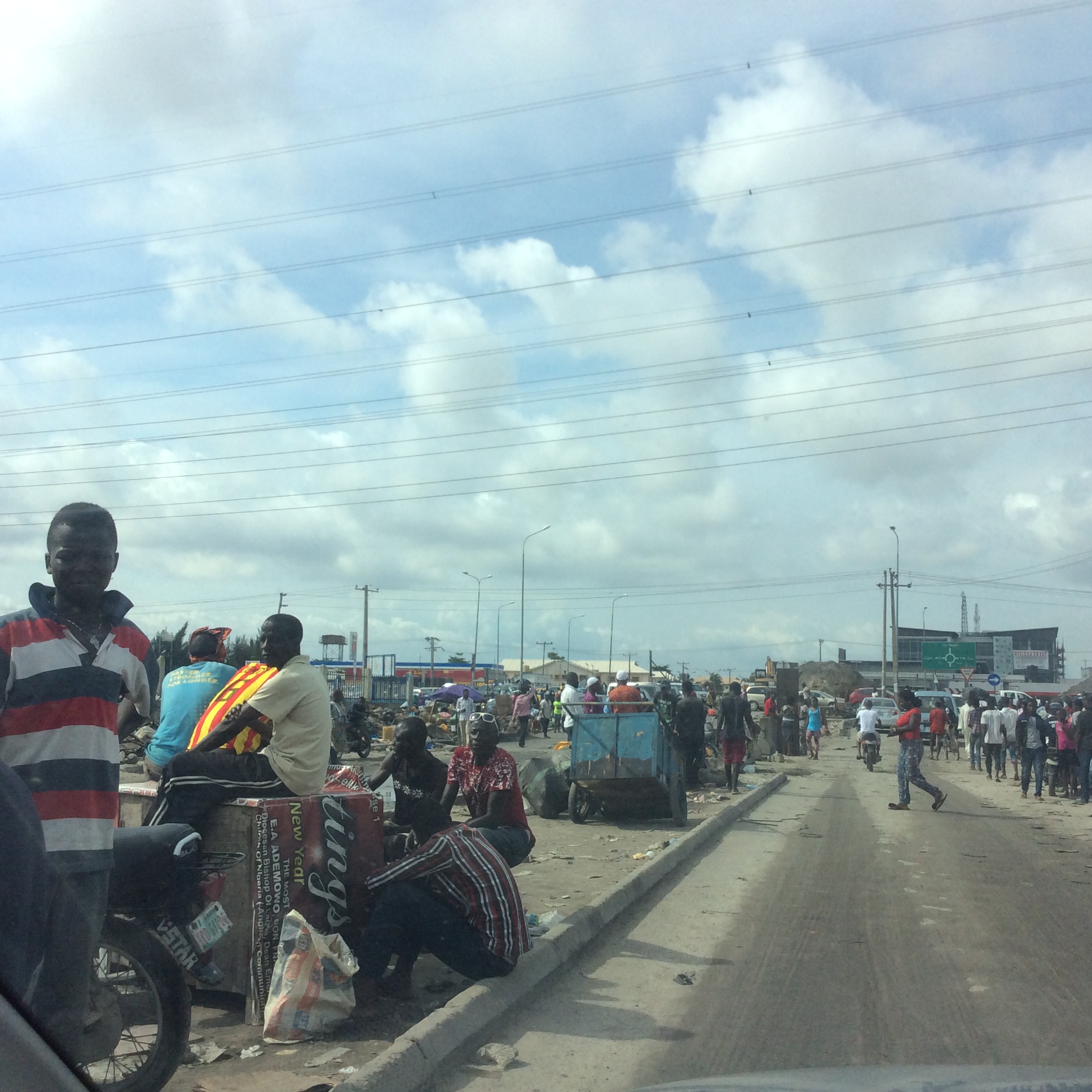 I wondered while driving through the beach road yesterday what the real cost would end up being. So far, we already have regular cases of carjacking and traffic robbery in early mornings and late evenings. There have also been kidnappings. According to the state government, these shanties are the real causes of such violence as they hide criminals who use them as springboards and hiding places. Demolishing their home and kicking them out would reduce violence and allow free passage of people. There is some allure in that thinking. Past upgrade of hitherto crime-ridden places in the state and the corresponding success in their removal of crime has shown the success of such an endeavour. Plenty spaces under abandoned bridges have been turned into public parks with lighting and security, making them easy to walk under at night without incident. But still, rendering homeless hundreds of residents at just 72 hours’ notice will no doubt have its own consequences. As I tried to read the despondence on the faces of all those I saw sitting around the open spaces, I wondered what those consequences would be in the long run.
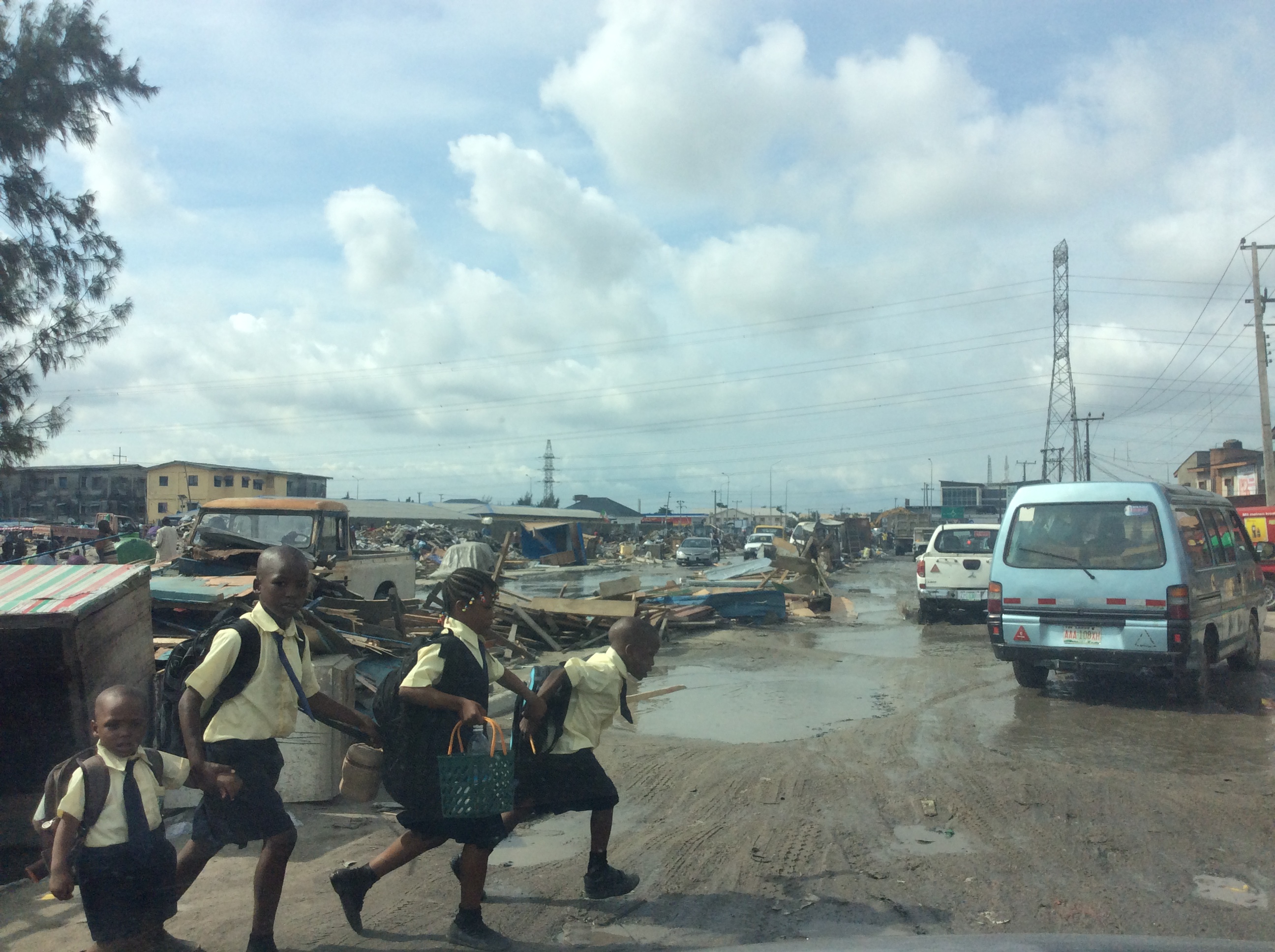 But in this case, unlike that of the demolition of the national monument at Lagos Island or other cases still under the outrage of surprised owners angry at the state’s seeming high-handed behaviour in destroying them, there seems to be an overwhelming public interest. But unless something of relevance is erected in this spot, all these gains will be lost soon enough. A sustained involvement in the redevelopment of the now levelled area would be a welcome event indeed.