Q: How do I prepare for teaching class, usually?
A: I don’t.
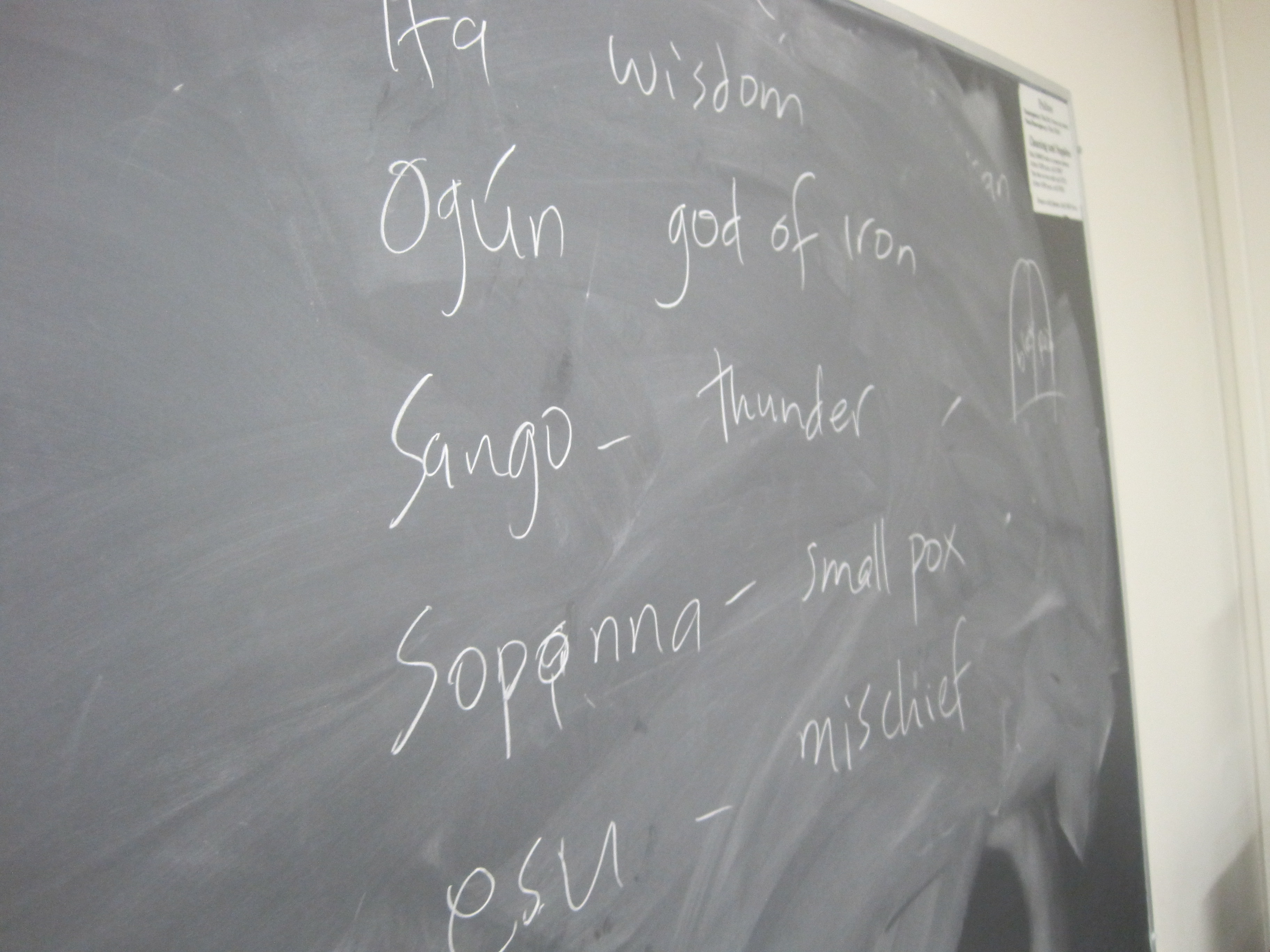 Well, that’s not true, technically. It’s just a short response. I spend all waking hours, especially at weekends usually mentally mapping the format of the next class that by the time it’s Saturday evening, I’m in an almost panic mode, worrying whether I’ve done enough even though I’ve been noting things down and recalling examples that could help pass the messages across better. But I don’t study much just for the class. I follow relevant links that I find online or offline, and I follow up on new and old leads. Yesterday I looked through the first chapters of Je Ká Ka Yoruba, the text for the language teaching again, and tried to see if there was something there that I hadn’t seen before or taught before. I needed to cover much of the weekly syllabus because of the Martin Luther King holiday that fell on Monday, effectively reducing my week by half.
Before I went to bed at 3am on Sunday night, I managed to read the first chapter of A Mouth Sweeter Than Salt for the very first time in one sitting. Last semester, I had only just glanced through that chapter because I had too much to read then. I got much of the ideas of it from the students’ summaries and what we discussed in class. Lazy, I know. But after reading it yesterday, I understood why anyone could be forgiven for trying to avoid reading it. For an avid reader, each sentence is a treasure of lore. It tells of some thing or the other that the author has either not talked about before earlier, or that he wants to say again in another way. I agree, the chapter could have been a little shorter, but you should read it. You should read it. It brings memories of things parents talk about. Reading it, I felt like I was listening to a seasoned elder speak of his childhood in a closely knit extended Yoruba family. If I could meet the writer, I would ask him too many questions. Or I would just sit at his feet, just listening to him talk. He is a good writer. He’s a good story teller too. Why is this book not read in Nigerian schools? Oh, I forgot, Wole Soyinka’s Ake has already taken control of that spot in autobiographical narratives in colonial and pre-colonial Nigeria. Their experiences are not the same, but they are similar, as I pointed out in class, lest they get the idea that everyone of us in Nigeria – just like this writer – do not know our exact date of birth. Alright, go and get the book, and read.
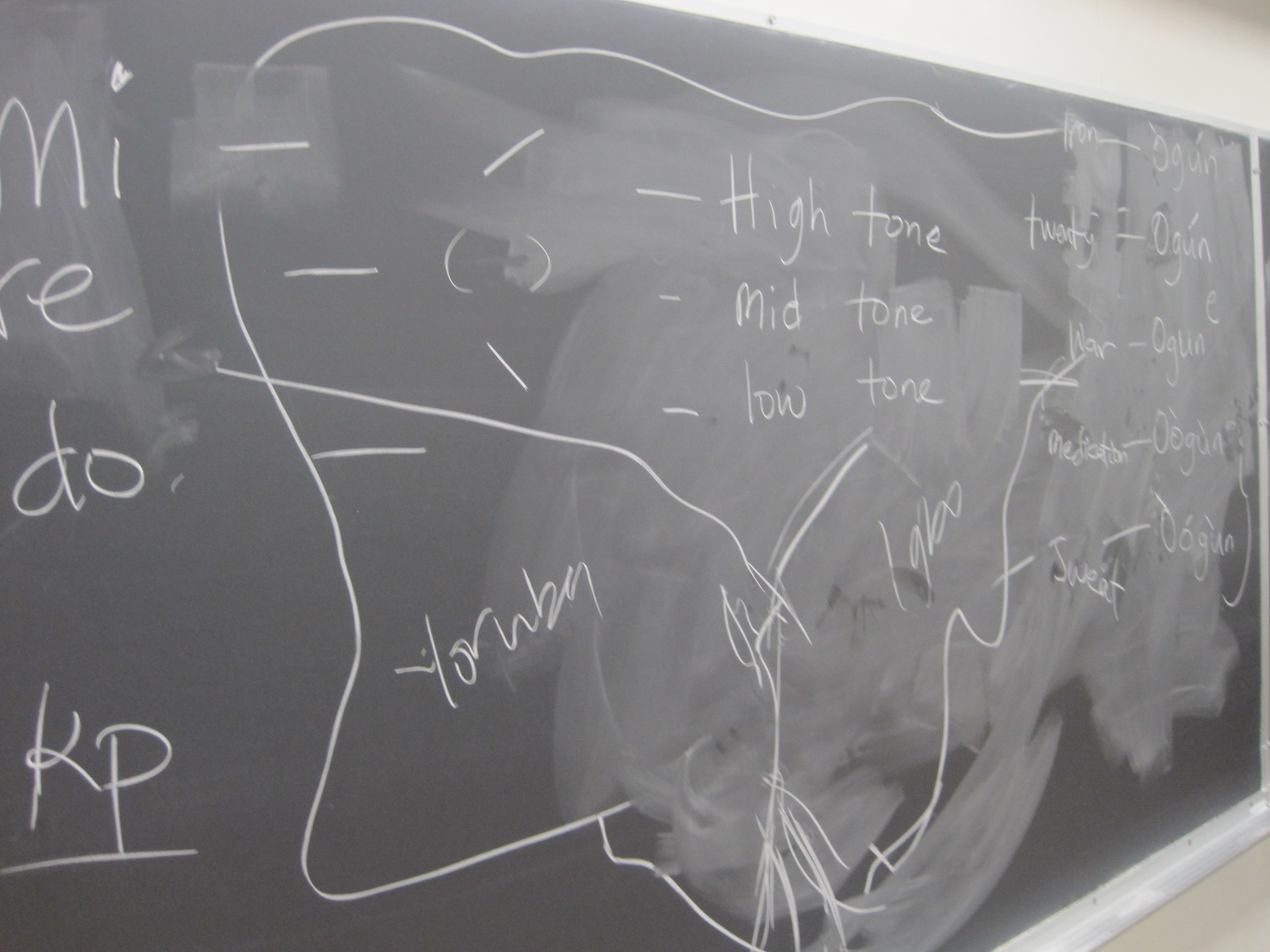
There is nothing new I want to tell you about today’s class. It stated on time and it ended on time. No other student has dropped off beside Gretchen who had dropped out after a first class. She left us for a class in Finance, so we’re nineteen now. Still, the textbooks are not sufficient. Many will have to share. We can’t complain. Now we can greet, introduce ourselves, respond in Yoruba and ask few introductory questions in Yoruba as well. It’s a start. These students are more agile, a little faster to learn than the last ones. I think. I could be wrong. They got the “kp” and “gb” far easily, for sure. Maybe it is because of the size of the class that gives this positive feeling and active participation. It is turning out to be a blessing after all. We may not be able to joke around as much as we did last semester, but we will try. I may find it harder to learn everyone’s names on time as I want to. It will take a while, but I’ll get there. Today we met esu, ifa, Obatala, and Sango. Next week, we’re meeting Wole Soyinka, and maybe later Suzanne Wenger. Maybe it’s not a bad idea to have such a large class. It feels warm enough. I love it.
I think that the most memorable thing I have found as a pattern is that I usually wake up early whenever I have to teach a class, notwithstanding when I go to bed. It’s a good thing. Maybe that’s why I’m tired on Thursdays…
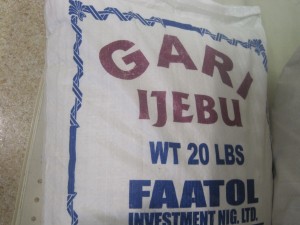 It was just as well a case of serendipity, because when I went out
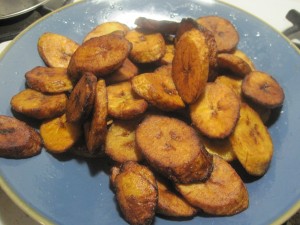
 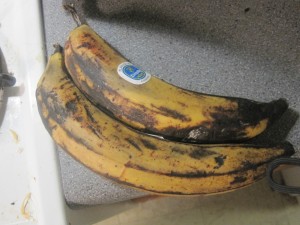 It was serendipity because just last week, the class consensus was an almost riotous but endearing request for Nigerian food before the end of the course. And as much as I tried to dodge the issue citing inability to get the foodstuff as well as the problem of conveying it to class in hot condition, I still wanted to give them an experience of the taste of Nigerian food and I despaired in me about how impossible it was going to be, especially since I feared a possible lawsuit from anyone that might find discomfort after a meal, and hold the teacher – me – responsible. But they made it clear that they wanted it too, so I spoke with Tola – a former FLTA (now a graduate student in the University) who said that we could work something out only if I could find the foodstuffs, and perhaps obtain a written consent from them absolving us of liability. It would prove not to be necessary in the end, as I luckily got sufficient plantain from the African shop, and woke up early enough today to prepare it to the best of ktravula‘s kitchen standards.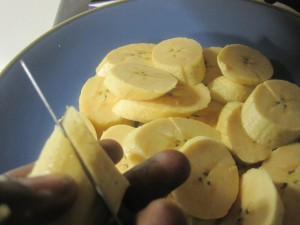
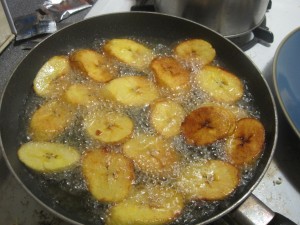
 With this, my teaching class for this semester has now come to an end. The class that
 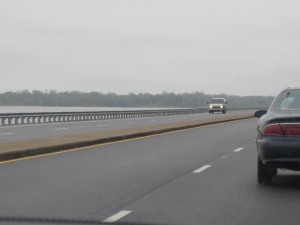 Today, I went to the Principia College, Elsah Illinois with two professors from SIUe and another international student from here. Retired Professor Wilson had been invited to give a talk on diversity to a few students in the University, and it turned out to be a nice experience. The campus of the College (called University in Nigeria) is located at a site off the river road and overlooking the great Mississippi River. No words can describe the grandeur of the river as seen from the road while driving. I’m much convinced that it would look and feel so much better while on a bicycle. According to Prof Wilson, Mark Twain the writer used to come over to the river to get inspiration. Oh well.
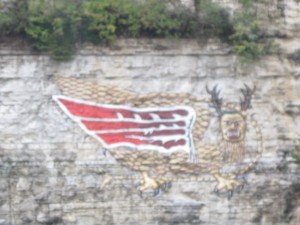 The journey to Principia took a little over thirty minutes from the SIUe campus, and we had to pass through a few small towns including Alton and Elsah, each with a repertoire of historical information, especially about the Native Americans that made the area their habitation for many years before their forceful dispersal. Alton has the famous Clark Bridge, and the even famous painting of a prehistoric piasa bird on the face of the cliff also overlooking the Mississippi river. According to Wikipedia, Alton has “its steep-sloped streets filled with silos, railroad tracks, and brick commercial buildings”, and it counts among its famous former residents Miles Davies, the legendary trumpeter/musician, Elijah Lovejoy, an abolitionist who was murdered in 1937 for his role in anti-slavery movements (and after whom the Library at SIUe is named), and James Earl Ray, the murderer of civil rights activist Martin Luther King Jnr.
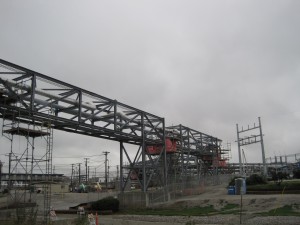 One of the notable sights on the way from Edwardsville are the many oil refineries in Illinois that litter the way. “Those refineries refine the crude oil from Nigeria”, the professor quipped “before they are sold in the United States at different rates.” The crude oil is brought from different parts of the world – and indeed from Nigeria – in large ocean vessels, are refined, and sold as “gas”. What he didn’t know until I told him was that the finished petroleum products are also sold back to Nigeria – like chocolate products – at exorbitant prices whenever the steam engines of Nigeria’s refineries go down and the continent’s petroleum giant finds it hard to refine its own products. Passing through those areas of Illinois that I’ve never been before only reminded me of Nigeria’s Niger Delta: plenty smoke in the air, and plenty smell of gas – a depleting environment under serious gas pollution.
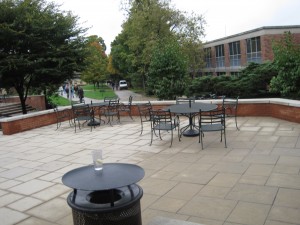 The Principia College is an institution for