Chris and I seem to have come a long way. We met after one of my first classes in the Fall semester, and even the first chance meeting was auspicious from the start. He has inquired how and where I had learnt to speak in English. Now, only a few weeks to my departure, I look at him and wonder how much fun we’ve had and how much I’ll miss the good times we shared from Missouri to Illinois, meeting different kinds of people from different parts of the world. What I’d miss the most are our weekly rendezvous as Starbucks sometimes in company of a few new friends, and sometimes alone, sharing wonders of the world. He’s an uncommon American – not that I have known many Americans on a personal level – but because he has an open-minded approach to the world. Could it be because he’s widely travelled, to Europe and to Mexico, or because being a descendant of immigrant German and Irish settlers, he already appreciates the benefits of diversity? I should marry him, and then both of us would be Nigerians and Americans at the same time :D.
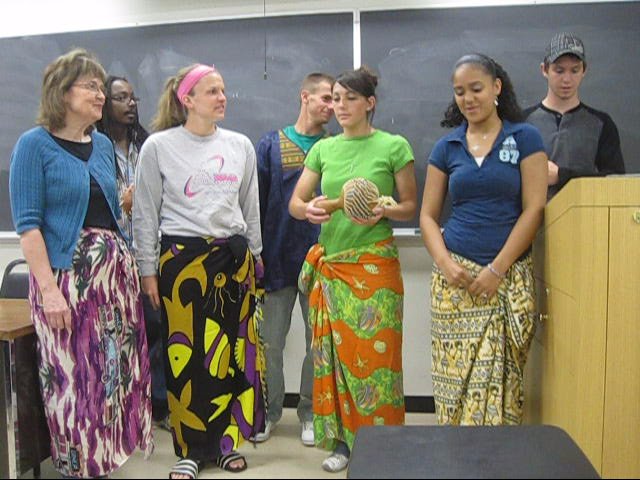 At today’s last class which ends my teaching this semester, and – oh, this session too, there was a singing presentation that was attended by the journalists from the Alestle campus newspaper who asked me almost all questions under the sun. The song the students sang were Ise Agbe N’Ise Ile Wa, Ki Loo Le Se Olurun Mi, Osuba Re Ree O and one more which was a total surprise to me – an American remix of the Ise Agbe song. They had learnt and rehearsed the songs with the help of a student tutor who is a Yoruba student of a different department, and today, I was listening to the songs for the first time from my students, much impressed. I’ve got their permission to put it on YouTube and I will do so in a few hours.
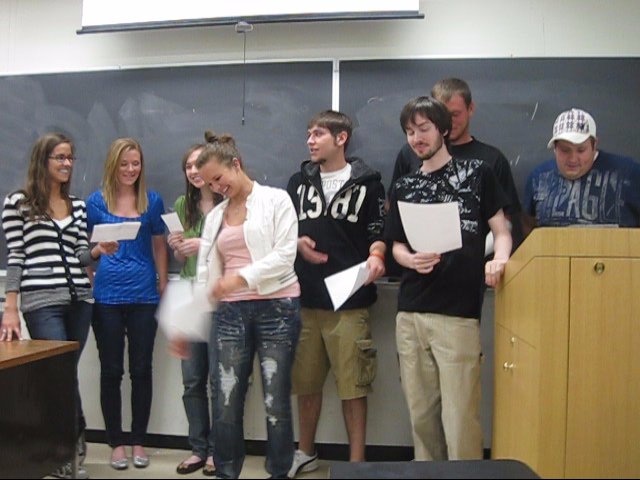 What was emotional for me was reading their perception of the class in a final paper, and how it fit or surpassed their expectation for the semester when they signed up for it. Like it happened last semester, most of them had signed up for the class without a knowledge of what awaited them on the other side. What made them wait till the end, they said, was that their interest was sustained, and for that I’m happy. I hope the next professor of the subject is as lucky as me to have so many fun students as I did, and to have a great one year learning and sharing different experiences of the American life.